产业升级

Search documents
电力数据显示南方五省区产业发展“含金量”提升
Zhong Guo Xin Wen Wang· 2025-12-24 12:08
Group 1 - The total electricity consumption in five provinces of Southern China (Guangdong, Guangxi, Yunnan, Guizhou, Hainan) reached 1,649.6 billion kilowatt-hours from January to November, representing a year-on-year growth of 5.4% [1] - In November, the manufacturing sector's electricity consumption in the Southern Power Grid region increased by 3.5% year-on-year, with specific industries such as instrument manufacturing, specialized equipment manufacturing, and electrical machinery showing growth rates exceeding 8% [1] - In Guangdong, a major manufacturing province, the electricity consumption of high-tech and equipment manufacturing grew by 5.1% year-on-year in November, with the automotive manufacturing sector leading at a growth rate of 13.7% [1] Group 2 - The demand for green transformation among enterprises is accelerating, as evidenced by the establishment of the Green Electricity and Green Certificate Service Center in Nanning, which has connected with 1,212 enterprises for green energy needs [2] - The electric vehicle charging and swapping service sector in the Southern five provinces saw a significant year-on-year growth of 49.1% in November, indicating a rapid advancement in the application of electric vehicles and enhancing the internal momentum for the development of the electric vehicle industry [2]
章俊:新“新三样”领衔,构筑中国产业发展新基座
2 1 Shi Ji Jing Ji Bao Dao· 2025-12-24 08:44
Core Viewpoint - The article discusses the transition of China's economic growth model from "factor expansion" to "innovation-driven" development, highlighting the emergence of new key industries: robotics, artificial intelligence, and innovative pharmaceuticals, referred to as the new "three new samples" [1][19]. Industry Transition - The new "three new samples" signify a shift in focus from merely producing and scaling to defining technological pathways and standards, emphasizing the importance of intellectual property and competitive advantage in technology [2][6]. - The transition reflects a systemic reassessment of growth paradigms and competitive logic, driven by diminishing returns from traditional factor input and the emergence of new growth dividends centered on technological breakthroughs [1][2]. Overcoming the "Middle-Income Trap" - The "middle-income trap" is characterized by a reliance on capital deepening and labor input for productivity gains, leading to diminishing returns. The new "three new samples" aim to reshape the mechanism of productivity formation through efficiency leaps rather than factor accumulation [3][19]. - Artificial intelligence, robotics, and innovative pharmaceuticals collectively enhance productivity by embedding technology into production processes, thereby fostering continuous efficiency improvements [3][19]. Structural Opportunities - The new "three new samples" represent strategic points for China to extend its influence in the global industrial chain, avoiding passive "follower" paths and instead actively participating in shaping global standards and governance [6][7]. - Robotics, AI, and innovative pharmaceuticals are positioned as foundational technologies that can drive comprehensive upgrades across various sectors, enhancing overall productivity [5][19]. Robotics Industry Insights - China has developed a robust robotics industry with significant market depth and breadth, leading in application scenarios and deployment across various sectors [8][9]. - The country possesses a complete and responsive robotics supply chain, which is crucial for rapid expansion and innovation in the industry [8][9]. AI Development Challenges - While China leads in AI application, it faces challenges in foundational technologies such as core algorithms and computing power, which are essential for achieving comprehensive leadership in the field [11][19]. - The vast data resources available in China provide a unique advantage for AI development, but they cannot substitute for breakthroughs in core technologies [11][19]. Innovative Pharmaceuticals Progress - The growth in outbound transactions indicates that Chinese pharmaceutical companies are moving beyond passive roles in the global market, although the proportion of original drugs remains low [12][13]. - The industry is gradually transitioning from a focus on generics to original innovative drugs, with improvements in capabilities for target selection and early clinical validation [12][13]. Addressing Core Technology Dependencies - To mitigate risks associated with reliance on foreign core components, China must prioritize independent research and development while also building a diverse technological ecosystem [14][17]. - The dual approach of fostering independent innovation and creating collaborative networks is essential for enhancing the resilience and strategic flexibility of the industry [17][18]. Future Technological Foundation - The new "three new samples" are expected to provide a sustainable technological foundation for future industrial development, integrating robotics, AI, and innovative pharmaceuticals into a cohesive framework [19][21]. - Robotics will serve as a physical platform, AI as the cognitive engine, and innovative pharmaceuticals will address critical health needs, collectively shaping the next generation of industrial capabilities [20][21].
深圳外贸规模保持内地城市首位 集成电路、锂电池出口高速增长
Nan Fang Ri Bao Wang Luo Ban· 2025-12-24 08:00
Core Insights - Shenzhen maintained its position as the leading city in mainland China for import and export scale, reaching 4.12 trillion yuan in the first 11 months, with a year-on-year growth of 0.6% [1] Group 1: Trade Overview - Exports totaled 2.5 trillion yuan, while imports reached 1.62 trillion yuan, showing a growth of 7.7% [1] - General trade accounted for over half of the total trade, with a value of 2.2 trillion yuan, representing 53.5% of Shenzhen's total import and export value [1] - Bonded logistics saw a growth of 6.8%, with a total of 1.1 trillion yuan, making up 26.7% of the total [1] - Processing trade amounted to 796.9 billion yuan, growing by 3.3% and accounting for 19.3% [1] Group 2: Enterprise Contributions - Private enterprises contributed nearly 70% of the total trade, with an import and export value of 2.82 trillion yuan, representing 68.4% [1] - Foreign-invested enterprises showed a rapid growth of 14%, with a total of 1.17 trillion yuan, accounting for 28.3% [1] - State-owned enterprises had an import and export value of 133.6 billion yuan [1] Group 3: Trade Partners - The top ten trading partners accounted for nearly 80% of Shenzhen's total trade, with a combined value of 3.24 trillion yuan, growing by 2.1% [1] - Trade with Hong Kong, Taiwan, the EU, South Korea, Japan, and the UK showed various growth rates, with Hong Kong at 709.97 billion yuan (10.7% growth) and the UK at 63.8 billion yuan (0.1% growth) [1] Group 4: Export Growth by Sector - Mechanical and electrical products exports reached 1.9 trillion yuan, growing by 4.3% and accounting for 76.1% of total exports [2] - Traditional electronic information products, including computers and components, saw exports of 292.61 billion yuan (8.9% growth) and 83.44 billion yuan (6.5% growth) respectively [2] - Integrated circuit exports surged by 40.8% to 217.75 billion yuan [2] - Emerging industries such as lithium batteries and 3D printers also experienced significant growth, with exports of 76.86 billion yuan (31.3% growth) and 7.84 billion yuan (30.4% growth) respectively [2] Group 5: Import Growth by Sector - Mechanical and electrical products imports totaled 1.32 trillion yuan, growing by 9.5% and accounting for 81.5% of total imports [2] - Integrated circuit imports reached 736.3 billion yuan, growing by 19.7% [2] - Agricultural product imports grew by 9.9% to 89.4 billion yuan, with significant increases in grain (96.1% growth) and seafood (35.5% growth) [2]
山西文水:“一黑一白”的产业突围战
Xin Jing Bao· 2025-12-24 07:23
Core Viewpoint - Wenshui County is undergoing an industrial transformation driven by two key sectors: steel structure and white liquor, showcasing a new model for county-level economic upgrading in China. Group 1: Economic Performance - In 2024, Wenshui County achieved a GDP of 12.92 billion yuan and fixed asset investment of 4.18 billion yuan, with an investment growth rate of 11.8% [1] - The county has over 100 steel structure enterprises and produces nearly 200,000 tons of high-quality white liquor annually, indicating a robust industrial base [3] Group 2: Industry Highlights - The white liquor industry in Wenshui has historical roots dating back to the Han Dynasty, with significant advancements in brewing techniques over the centuries [2] - The steel structure industry has evolved from traditional craftsmanship to intelligent manufacturing, with over 160 enterprises and an annual production capacity of 456,000 tons, capturing nearly 30% of the national market share [3][5] Group 3: Technological Advancements - Wenshui's steel structure sector is embracing smart manufacturing, integrating technologies like the Internet of Things for enhanced production efficiency [4] - Companies like Xinyuanchang Steel Structure Co., Ltd. are leading the way in intelligent construction, having established the first smart beam yard in Taiyuan [5] Group 4: Brand Development - Wenshui is transitioning from a "base liquor county" to a "brand strong county," with local brands like Zongjiu and Fenxi exploring innovative products and market expansion [7][9] - The county is leveraging its cultural heritage and natural resources to enhance the quality and branding of its white liquor products [9] Group 5: Future Prospects - Wenshui aims to attract international attention and investment, with plans to enhance its industrial image on global platforms [10] - The county is committed to fostering partnerships and collaborations to further develop its key industries and expand into overseas markets [10]
交易团风采丨『福建日报』闪耀进博舞台 诠释“敢拼会赢”
Xin Lang Cai Jing· 2025-12-24 06:29
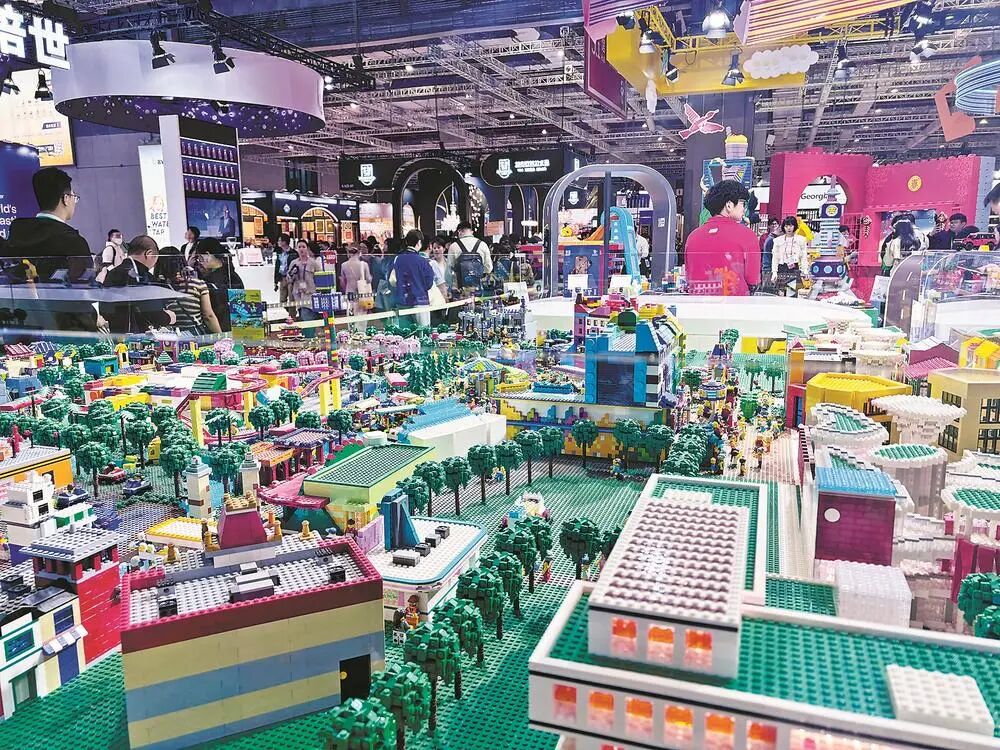
Group 1 - The eighth China International Import Expo (CIIE) is being held in Shanghai from November 5 to 10, showcasing China's commitment to high-level opening-up and cooperation [5] - The expo serves as a platform for observing China's vast market advantages and has maintained stable intent purchasing amounts compared to the previous year, with financial credit support increasing by 3% [5] - The event highlights the participation of various enterprises, including the Fujian trading group, which aims to leverage the expo to showcase its procurement potential and promote the spirit of innovation [5] Group 2 - LEGO has created a "play city" at the expo, featuring iconic Shanghai architecture and launching five globally debut products inspired by Chinese traditional culture, which have garnered interest from both local and international consumers [6] - Sanming City Senxiaosen Toy Co., founded by a former short video blogger, has rapidly expanded its business and become an authorized online distributor for LEGO, achieving over 20% annual revenue growth [7] - The company has established a long-term talent development plan with Sanming College and is set to become a leading online distributor for LEGO in China, aiming to influence LEGO consumption trends [7] Group 3 - Yihai Kerry Group, a long-time participant in the expo, is focusing on health-oriented products and sustainable development in its offerings, reflecting a shift in consumer demand towards functional and low-carbon food options [9] - The company has invested in various sectors in Fujian since 2002 and is actively expanding its operations, including projects in egg production and rice processing [9] Group 4 - The "China White·Dehua Porcelain" exhibition showcases exquisite porcelain craftsmanship, with a focus on attracting domestic consumers amid changing international trade dynamics [10] - Dehua has over 4,000 ceramic enterprises, and the exhibition aims to highlight the region's rich cultural heritage and craftsmanship through various themed displays [10] Group 5 - The Sanming city exhibition features traditional Sha County snacks, promoting a new commercial model that combines tasting experiences with online and offline sales channels [11] - The initiative aims to modernize the presentation of Sha County cuisine, making it more appealing to younger consumers while preserving its cultural significance [11]

多件“长虹造”入驻中国国家博物馆
Xin Lang Cai Jing· 2025-12-24 04:23
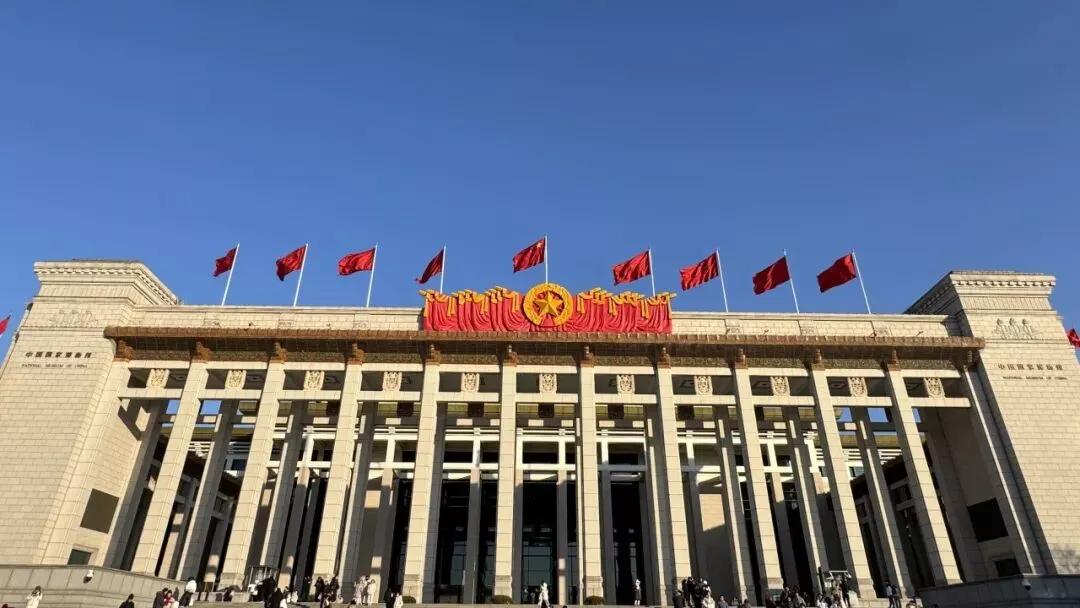
Core Viewpoint - The manufacturing industry is fundamental to national strength and the backbone of the real economy, with China's manufacturing scale ranking first in the world after decades of rapid development [1]. Group 1: Exhibition Overview - The "China Manufacturing Achievement Exhibition" is organized by the Ministry of Industry and Information Technology and the National Museum of China to showcase the achievements in core technologies, industrial foundations, and innovation ecosystems in China's manufacturing sector [1][5]. - The exhibition focuses on breakthroughs in core technologies, industrial upgrades, and the construction of innovation ecosystems, featuring seven categories of exhibits including major technological equipment, smart equipment, and green manufacturing [5]. Group 2: Featured Exhibits - Three notable exhibits include Changhong's first color television, Meiling's first refrigerator in Anhui Province (BY-158), and Changhong's screw robot with visual recognition capabilities [3][5]. - The Meiling BY-158 refrigerator, launched in 1984, marked a significant milestone in Anhui's home appliance manufacturing and the broader industrial rise in central China [8]. - Changhong's self-developed large-screen color TV broke production records in the early 1990s, earning the title of "Color TV King" and significantly altering the television industry landscape in China [8]. Group 3: Technological Innovations - Changhong's innovations include a smart manufacturing line for personalized production and the AI TV "Chasing Light Q10Air," which enhances user experience [11]. - The Changhong screw robot, featured in the exhibition, demonstrates advanced capabilities such as visual recognition for autonomous operation, improving efficiency by 40% and reducing defect rates to below 0.01% [11]. Group 4: Historical Significance - The exhibits serve as living testimonies to the evolution of China's manufacturing industry, reflecting the transition from manual production to intelligent and efficient manufacturing solutions [13]. - The upcoming exhibition aims to convey the journey of China's manufacturing from "catching up" to "keeping pace" and "leading" in the global market [13].

【榆林】前11月供港澳活牛突破千头
Shan Xi Ri Bao· 2025-12-24 00:41
Core Insights - The article highlights the significant growth in live cattle exports from Yulin to Hong Kong and Macau, with a record-breaking number of cattle exported in 2023 [1] Group 1: Export Growth - From January to November, Yulin Customs supervised the export of 68 batches and 1,069 live cattle to Hong Kong and Macau, representing year-on-year increases of 41.7% and 45.5%, respectively [1] - This marks the first time that the export volume of live cattle from Yulin has surpassed 1,000 heads, setting a historical record [1] Group 2: Quality Control Measures - Yulin Customs has been actively supporting leading enterprises in expanding their business since it began supervising live cattle exports in 2020, guiding four enterprises to obtain registration for cattle breeding facilities for export to Hong Kong and Macau [1] - The customs authority has implemented a "three-strengthening" approach to enhance the quality of exported live cattle, which includes strengthening disease prevention, source management, and customs facilitation [1] Group 3: Future Preparations - Yulin Customs plans to continue aligning with the standards of the Hong Kong and Macau markets, further enhancing supervision to ensure the quality of live cattle [1] - Preparations are underway for the peak supply periods around New Year's Day and the Spring Festival in 2026 to ensure stable supply [1]
提档升级求突破 争先晋位谱新篇
Xin Lang Cai Jing· 2025-12-23 23:14
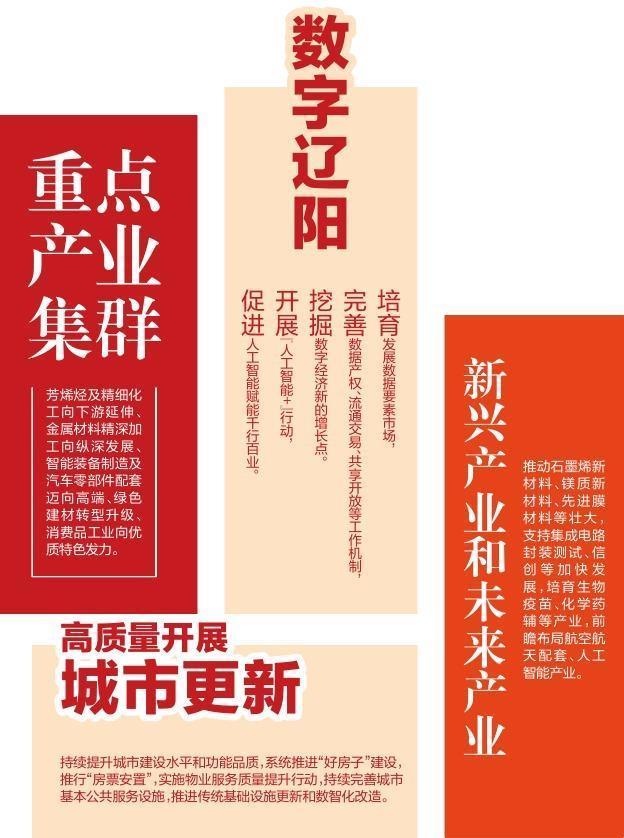
Core Viewpoint - Liao Yang aims to achieve high-quality development by solidifying its foundation and fully exerting efforts to keep pace with national and provincial development, transforming challenges into opportunities for modernization and economic growth [6][12]. Group 1: Economic Development Strategy - Liao Yang is focused on achieving a GDP exceeding 100 billion by the end of the current five-year plan, emphasizing the need for a consensus on the urgency of progress [7]. - The city plans to implement the central government's directives and provincial requirements, concentrating on high-quality development themes to enhance economic growth, innovation, cultural appeal, and regional collaboration [7][8]. Group 2: Infrastructure and Business Environment - The city will prioritize optimizing the business environment by improving enterprise satisfaction, simplifying approvals, reducing costs, and addressing inefficiencies to make business operations easier [8]. - Liao Yang aims to foster a supportive ecosystem for businesses of all sizes, enhancing local enterprises' capabilities and attracting external investments [8]. Group 3: Urban and Rural Development - The city plans to improve living conditions by developing high-quality housing, communities, and urban areas, while also addressing rural modernization to enhance infrastructure and services [9]. - Efforts will be made to ensure that public services in education, employment, and healthcare meet the needs of the population, thereby enhancing overall well-being [9]. Group 4: Industrial and Project Development - Liao Yang will focus on industrial upgrades by leveraging local resources and opportunities in emerging sectors such as low-altitude economy and aerospace [10]. - The city intends to align project planning with national policies to increase the success rate of project implementation, ensuring high-quality projects support economic growth [10]. Group 5: Consumer Activation and Reform - The city will capitalize on opportunities to integrate culture, tourism, and sports to stimulate consumer spending, particularly in sectors like senior economy and winter sports [10]. - Liao Yang plans to address systemic issues in its economic structure through targeted reforms that enhance investment and economic activity [10]. Group 6: Open Cooperation - The city aims to deepen cooperation within the Shenyang metropolitan area and enhance cross-border trade, focusing on attracting people, goods, and capital to boost economic activity [10].
一滴菜籽油的蜕变
Xin Lang Cai Jing· 2025-12-23 20:11
门源油菜花海。资料图片 18岁的他在北山乡沙沟脑村的小作坊里,守着燃煤的铁锅翻炒菜籽,一天下来只能榨出几十斤油,满脸煤灰 不说,油价还得看收购商脸色。 改变,始于"十四五"的春风吹进门源油菜地。 产业升级的浪潮里,门源县以政策扶持、技术改造补贴为助力,推动油菜加工从小作坊向规模化转型,我也 在这时迎来了属于自己的黄金时代。靳正峰受聘来到香满金门源公司,成了现代油脂加工线上把控品质的"关 键先生"。当政府技改补贴引入的全自动高原冷榨生产线运抵厂区,我看着他围着这个"铁家伙"转了一圈又一 圈,回家时轻轻拍了拍陪伴自己20多年的老式榨机,满是不舍却又满怀期待。 如今,我们的生产车间明亮洁净,恒温恒湿。靳正峰不再需要赤膊挥汗,控制台成了他的新"战场",可那双 辨火候的"火眼金睛",仍是精密仪器无法替代的坚守。"如今大不一样喽!"靳正峰看着金灿灿的我汩汩流 出,语气里满是自豪,"用天然气,受热均匀,油质更纯、更亮。这门源油,总算能以它本来的金色面貌,走 向全国了。" 油香四溢。本报记者 刘程锦 摄 本报记者 刘程锦 我是一滴菜籽油,诞生于海北藏族自治州门源回族自治县的青海香满金门源粮油食品有限公司,身上藏着高 原的清风 ...

即使全世界不买美债,美国也可以印美元过好日子,美国逼迫大家买美债,完全是一个阴谋,它通过资本优势控制全球经济
Sou Hu Cai Jing· 2025-12-23 16:38
但咱们关起门来说点大实话,这事儿要是真这么简单,坐在那栋大楼里管外汇的几百个顶尖聪明人,难道还不如咱们这帮在手机屏幕前敲键盘的懂行?这里 面不仅不是阴谋,反而是一个让人特别难受的阳谋,是那种你明知道坑在哪,还得硬着头皮往里踩的死局。 我问你个问题,你有没有发现,最近网上特别流行一种说法,觉得只要全世界都不买美债,美国立马就得完蛋,或者说我们手里的那些美元如果不买美债, 拿去买芯片、买矿产,咱们的高科技早就起飞了? 我昨天刷到这几句话的时候,盯着屏幕愣了好一会儿,感觉这逻辑听着特别解气,像是咱们手里攥着美国人的命门,只要轻轻一捏,对方就得跪地求饶。 我查了一下美国财政部发布的最新国际资本流动报告,也就是那个TIC数据,现在外国投资者持有的美债大概是8万亿美元左右,而美国现在的国债总额已 经飙到了35万亿美元以上。 这说明什么?说明这所谓"全世界买美债"的大盘子里,外国人早就不是绝对的大头了,真正的大头是美国国内的机构和美联储自己。你说如果不买美债,美 国能不能印钱过日子?理论上能,美联储可以直接下场买,这叫债务货币化。 但为什么他们不敢敞开了印?因为印钱是有代价的。我也琢磨过,要是美联储真把这就剩下的大几万亿债 ...