
AI泡沫

Search documents
金价大跳水!美联储放鹰,12月降息概率腰斩!桥水、花旗接连减持英伟达,“AI泡沫争论”趋向白热化!
雪球· 2025-11-15 04:31
Group 1 - The article discusses the recent volatility in the US stock market, influenced by factors such as market liquidity, the hawkish stance of the Federal Reserve, inflation uncertainty, and debates surrounding the "AI bubble" [3][4]. - Major US stock indices showed mixed performance, with the Dow Jones down 0.65%, S&P 500 down 0.05%, and Nasdaq up 0.13% [2][5]. - Institutions have been selling off Nvidia shares significantly, with Bridgewater reducing its holdings by 65.3% in Q3, amidst growing concerns about the sustainability of the AI boom [7]. Group 2 - The article highlights that despite concerns over the "AI bubble," the tech industry remains optimistic about the long-term potential of AI, with many companies actively adopting AI technologies [7]. - The market's expectations for a rate cut by the Federal Reserve in December have decreased significantly, with the probability dropping from 94.4% a month ago to 45.8% as of November 14 [8][9]. - The article notes that the recent hawkish comments from Federal Reserve officials have contributed to a decline in precious metals prices, with COMEX gold futures down 2.75% and silver down 5.31% [10][11]. Group 3 - Berkshire Hathaway's Q3 13F report reveals that Warren Buffett has reduced his stake in Apple from 280 million shares to 238.2 million shares, while also initiating a new position in Alphabet with 17.8 million shares [12][13]. - This move is seen as surprising given Buffett's traditional value investing approach, indicating a potential shift in investment philosophy towards embracing technological advancements [14][15]. - The article emphasizes that Buffett's investment in Alphabet reflects an understanding of the changing landscape and the importance of adapting to new market realities [15].








市场激辩AI泡沫将破 软银清仓、桥水减持!英伟达走势成焦点
Di Yi Cai Jing· 2025-11-15 03:57
Core Viewpoint - SoftBank's liquidation of Nvidia shares, amounting to $5.83 billion, has raised concerns about a potential AI bubble burst in the market [2] Group 1: SoftBank's Actions - SoftBank's decision to sell its Nvidia shares is primarily to fund its investments in AI projects, including a $40 billion investment in OpenAI and participation in the "Star Gate" project with Oracle [4] - The founder of SoftBank, Masayoshi Son, expressed regret over selling Nvidia shares in 2019, indicating a lack of timing in trading decisions [4] Group 2: Hedge Fund and Institutional Actions - Bridgewater Associates significantly reduced its Nvidia holdings by nearly two-thirds in Q3, along with substantial reductions in Alphabet, Amazon, and Microsoft stocks, citing increasing risks to market stability [2] - Citigroup also disclosed reductions in its holdings of major tech companies, including Nvidia, Microsoft, Apple, and Amazon, while raising Nvidia's target price from $210 to $220 per share [2] Group 3: Market Sentiment on AI Bubble - Discussions around an AI bubble have intensified, with industry leaders warning of exaggerated market valuations and potential downturns [3] - Notable figures, including Michael Burry, have expressed concerns about the sustainability of AI infrastructure investments and the overestimation of profits by major companies [3] Group 4: Future Projections and Market Potential - A report from Accel predicts that by 2030, new AI data center capacity will reach 117 GW, necessitating approximately $3.1 trillion in revenue to cover nearly $4 trillion in capital expenditures [5] - AMD's CEO forecasts that the data center chip and system market could expand to $1 trillion by 2030, with annual revenue from data center chips reaching $100 billion within five years [5] - Nvidia is expected to release its Q3 earnings report soon, which will be critical in assessing the trajectory of AI spending and the potential for an AI supercycle [5]

市场激辩AI泡沫将破,软银清仓、桥水减持!英伟达走势成焦点
Di Yi Cai Jing· 2025-11-15 03:49
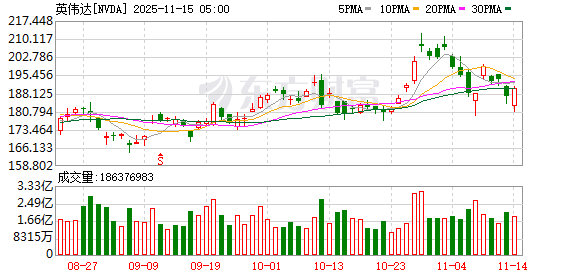
Core Viewpoint - Concerns about a potential AI bubble are rising as major investors, including SoftBank and Bridgewater, significantly reduce their holdings in Nvidia and other tech giants, indicating a shift in market sentiment towards AI investments [1][2][3] Group 1: Investor Actions - SoftBank has liquidated its entire stake in Nvidia, cashing out $5.83 billion, which has raised alarms about the sustainability of AI valuations [1] - Bridgewater has cut its Nvidia holdings by nearly two-thirds and also reduced its positions in Alphabet, Amazon, and Microsoft by over 50% and 35% respectively, citing increasing risks to market stability [1] - Citigroup has also disclosed reductions in its holdings of Nvidia, Microsoft, Apple, and Amazon during the third quarter, although it raised Nvidia's target price from $210 to $220 per share [1] Group 2: Market Sentiment on AI Bubble - Discussions around an AI bubble have intensified, with industry leaders expressing concerns over inflated valuations in the absence of substantial revenue [2] - Michael Burry, known for predicting the 2008 financial crisis, has voiced worries about the overestimation of profits in AI infrastructure and has taken short positions against Nvidia and Meta [2] - Some industry executives argue that the current market environment reflects a financial bubble driven by transformative AI technologies, suggesting that investments in AI will yield long-term benefits despite current financial risks [4] Group 3: Future Projections and Financial Implications - A report from Accel predicts that by 2030, new AI data center capacity will reach 117 gigawatts, necessitating nearly $4 trillion in capital expenditures and approximately $3.1 trillion in revenue to cover these costs [5] - AMD's CEO forecasts that the data center chip and system market could expand to $1 trillion by 2030, with Nvidia's stock price fluctuating around $190.17 per share, reflecting investor caution ahead of its upcoming earnings report [5][6] - The upcoming Nvidia earnings report is seen as critical for assessing the trajectory of the AI supercycle and related expenditures [6]
桥水抛售英伟达65.3%持股,多家机构同步减持
Di Yi Cai Jing Zi Xun· 2025-11-15 01:23
Group 1 - The core point of the article highlights that Bridgewater, the world's largest hedge fund, significantly reduced its holdings in chip giant Nvidia by 65.3% in the third quarter [2] - Major institutions such as Barclays and Citigroup also decreased their positions in Nvidia, indicating a broader trend among large investors [2] - The ongoing debate regarding the "AI bubble" has intensified, especially following SoftBank's sale of Nvidia shares [2]
股市震荡!比尔·盖茨、李彦宏发声!
Sou Hu Cai Jing· 2025-11-15 01:18
Group 1 - The article discusses the resurgence of concerns regarding the "AI bubble," drawing parallels to the internet bubble of 2000, as stated by Bill Gates, who emphasizes that while AI technology breakthroughs are real, many companies may be overspending without sustainable business models [2] - Major tech stocks in the U.S. experienced declines, with Tesla down 6.64%, Nvidia down 3.58%, and Microsoft down 1.54%, indicating market apprehension towards the AI sector [2] - Baidu's founder, Robin Li, mentioned at the Baidu World Conference that the AI industry is transitioning from an unhealthy "pyramid" structure to a healthier "inverted pyramid," where the value generated by applications must significantly exceed the costs of underlying technologies [2] Group 2 - The digital transformation is reshaping work patterns, social interactions, and wealth structures, with technologies like AI, blockchain, and the metaverse becoming increasingly relevant [3] - The digital ecosystem is complex, comprising not only familiar applications like social media and e-commerce but also advanced technologies such as AI and blockchain, which have their own operational rules and development logic [9] - The book "Digital World Survival Guide" aims to provide insights into navigating opportunities and pitfalls in the digital landscape, offering a framework for innovation and survival in the digital age [11]

桥水抛售英伟达65.3%持股,多家机构同步减持
第一财经· 2025-11-15 01:18
全球最大对冲基金桥水周五公布截至今年三季度末的持仓报告。 报告显示,桥水在三季度大幅减持 芯片巨头英伟达,减持比例高达65.3%。与此同时,巴克莱、花旗等多家大型机构同样减持了英伟 达,加之此前软银抛售英伟达股份,这场关于"AI泡沫"的争论日趋白热化。 2025.11. 15 本文字数:249,阅读时长大约1分钟 来源 | 新浪 财经 推荐阅读 地方国资扎堆出售房产 - 12:47 41 11:00 1 11:00 17 10:00 1 LELILILIZ F grammand : 1, 1 S 15 ps e g an 0 7 1 1000 微信编辑 | 夏木 第 一 财 经 持 续 追 踪 财 经 热 点 。 若 您 掌 握 公 司 动 态 、 行 业 趋 势 、 金 融 事 件 等 有 价 值 的 线 索 , 欢 迎 提 供 。 专 用 邮 箱 : bianjibu@yicai.com (注:我们会对线索进行核实。您的隐私将严格保密。) ...
10月各线城市房价普降,中国茶饮市场增速放缓 | 财经日日评
吴晓波频道· 2025-11-15 01:03
Group 1: Financial Data and Trends - In October, China's new social financing (社融) increased by 815 billion yuan, a year-on-year decrease of 597 billion yuan, with a cumulative total of 30.9 trillion yuan for the first ten months of 2025, which is 3.83 trillion yuan more than the same period last year [2] - The total amount of RMB loans increased by 14.97 trillion yuan in the first ten months, with 220 billion yuan added in October [2] - The broad money supply (M2) reached 335.13 trillion yuan at the end of October, growing by 8.2% year-on-year, while the narrow money supply (M1) was 112 trillion yuan, up 6.2% [2] Group 2: Consumer Spending and Retail - In October, the total retail sales of consumer goods reached 46,291 billion yuan, a year-on-year increase of 2.9%, with a month-on-month growth of 0.16% [4] - Online retail sales from January to October totaled 127,916 billion yuan, growing by 9.6%, with physical goods online retail sales accounting for 25.2% of total retail sales [4] - The "National Subsidy" program's completion at the end of September may have impacted consumer spending, as many consumers postponed shopping plans due to not receiving subsidies [5] Group 3: Real Estate Market - In October, new home prices in China saw a month-on-month decline, with 64 cities experiencing price drops, while only 7 cities reported price increases [6] - From January to October, real estate development investment totaled 73,563 billion yuan, a year-on-year decrease of 14.7% [6] - The sales area of new residential properties decreased by 7.0% year-on-year, indicating ongoing weakness in the real estate sector [6][7] Group 4: Industry Insights - The growth rate of China's tea beverage market has slowed to 5%-7%, contrasting sharply with previous growth rates exceeding 20% [8] - The introduction of salty milk tea by major brands reflects a trend towards product diversification in response to market saturation [8][9] - The tea beverage industry is transitioning from a growth phase to a cyclical phase, with companies focusing on maintaining market share rather than seeking new growth [9] Group 5: Company Performance - JD Group reported a third-quarter revenue of 299.06 billion yuan, a 15% year-on-year increase, surpassing market expectations [10] - The adjusted operating profit margin for JD Group significantly decreased to 0.1%, down from 5% in the previous year, due to increased marketing expenses [10] - JD is exploring overseas markets and diversifying its revenue streams, although this expansion may face challenges due to global trade barriers [11][12] Group 6: Cryptocurrency Market - The cryptocurrency market experienced a significant downturn, with Bitcoin prices dropping below $97,000 and a total liquidation amount of approximately 72 billion yuan [14] - The correlation between Bitcoin and the Nasdaq index remains high, indicating that Bitcoin's price movements are closely tied to broader market sentiments [14] - The recent decline in Bitcoin prices is attributed to a combination of reduced risk appetite and negative sentiment towards technology investments [15] Group 7: Stock Market Overview - The stock market experienced a decline, with the Shanghai Composite Index falling by 0.97% and the ChiNext Index dropping by 2.82% [16] - Market sentiment has shifted towards risk aversion, influenced by external factors such as concerns over the U.S. Federal Reserve's interest rate decisions [17] - The upcoming earnings report from Nvidia is anticipated to be a focal point for market participants [17]


“英伟达市值要冲8万亿美元”的背后
吴晓波频道· 2025-11-15 01:03
Core Viewpoint - The article discusses the current state of the AI industry, highlighting the potential bubble and risks associated with the rapid investment and speculation in AI technologies, drawing parallels to past financial crises like the internet bubble and subprime mortgage crisis [5][6][29]. Group 1: AI Industry Overview - Nvidia is set to release its Q3 earnings report, with 91% of Wall Street analysts rating its stock as a "buy" and HSBC raising its target price to $230, while Loop Capital Markets predicts a target of $350, potentially pushing Nvidia's market cap to nearly $8 trillion [3][4]. - The AI industry is experiencing a surge in investment, with 58% of venture capital directed towards AI companies this year, indicating a trend towards "purely speculative" companies heavily reliant on AI [12][16]. Group 2: Bubble Characteristics - According to economist Brent Goldfarb, the AI sector exhibits characteristics of a bubble, scoring an 8 out of 10 on his bubble scale, which includes uncertainty about profitability, reliance on speculative companies, and grand narratives surrounding AI's potential [8][17]. - The uncertainty in AI profitability is highlighted by OpenAI's significant losses, with a reported net loss of approximately $11.5 billion in Q1 2025, raising concerns about the sustainability of AI business models [9]. Group 3: Financial Operations and Risks - The article draws parallels between current AI investment strategies and the subprime mortgage crisis, noting that tech companies are using complex financial structures to fund AI infrastructure, which could lead to significant risks if the market turns [19][20]. - Morgan Stanley predicts that by 2028, total spending on data centers could reach $2.9 trillion, while the projected annual revenue from generative AI may only be $1 trillion, indicating a potential mismatch between investment and returns [20][26]. Group 4: Market Dynamics and Future Outlook - The article emphasizes that major tech companies view AI investment as a necessary gamble for survival, with leaders like Jeff Bezos and Andy Jassy suggesting that missing out on AI could be more detrimental than the risks of a bubble [29][30]. - The current investment climate is characterized by a rush to capitalize on AI advancements, with companies willing to take significant risks in hopes of achieving long-term dominance in the market [30].

金价大跌!AI巨头反弹
Zhong Guo Zheng Quan Bao· 2025-11-15 00:38
当地时间11月14日,美股三大指数涨跌不一,道指收跌逾300点,纳指反弹收高。大宗商品方面,国际 金价下跌,油价上涨。 分析人士表示,受美联储鹰派立场、通胀不确定性及"AI泡沫争论"等因素影响,当前市场风险偏好总体 受抑。 中概股多数下跌,纳斯达克中国金龙指数跌1.61%,万得中概科技龙头指数跌2.28%。高途集团、小鹏汽 车跌超5%。 大宗商品方面,国际金价大跌。据Wind数据,当地时间11月14日,国际贵金属期货普遍收跌,COMEX 黄金期货跌2.62%报4084.4美元/盎司,本周累计上涨1.86%;COMEX白银期货跌5.21%报50.4美元/盎 司,本周累计上涨4.69%。 国际油价上涨。美油主力合约收涨2.15%,报59.95美元/桶,周涨0.18%;布伦特原油主力合约涨1.97%, 报64.25美元/桶,周涨0.97%。 市场人士表示,近期持续承压的科技股交易当日显现企稳迹象。周四,美国主要股指集体下跌,科技巨 头股一度遭遇大幅下挫。而到周五,人工智能龙头股英伟达与甲骨文均成功扭转前一交易日跌势。投行 韦德布什证券报告表示,在科技股投资者经历过"又一个艰难而残酷的交易日"之后,此次科技股抛售反 ...
投机主题都在抛!高盛交易台:周四美股动量交易创DeepSeek冲击以来最大跌幅
美股IPO· 2025-11-14 23:10
Core Viewpoint - The recent sell-off in the market, particularly affecting high-beta momentum trading strategies and AI-related stocks, is attributed to multiple pressure factors, including profit-taking ahead of Nvidia's earnings report, concerns over AI infrastructure investment returns, hawkish comments from the Federal Reserve, corporate layoffs, and year-end portfolio adjustments [1][7][9]. Group 1: Market Performance - The Nasdaq 100 index fell over 2% on Thursday, marking a decline in five out of the last six trading days, with market sentiment shifting towards a defensive stance [2][4]. - High-beta momentum trading (GSPRHIMO) experienced a 7% drop, the largest single-day decline since the DeepSeek event, indicating significant pressure on speculative sectors like AI and cryptocurrency-related stocks [1][4][5]. Group 2: Contributing Factors - Five key factors triggered the recent market downturn: profit-taking before Nvidia's earnings, concerns about inflated power demand in data centers related to AI, hawkish statements from Federal Reserve officials, corporate cost-cutting measures, and the seasonal pressure of year-end portfolio adjustments [9][10][11]. - The market is currently awaiting clearer signals, such as Nvidia's earnings performance and the Federal Reserve's monetary policy direction, to assess when the sell-off might stabilize [7][11]. Group 3: Investment Strategies - High-beta momentum strategies are currently showing a significant correlation with high short interest and high residual volatility, while their correlation with high-quality factors is notably lower than usual [12][14]. - Goldman Sachs' momentum strategy has shifted towards high-beta and cyclical sectors while shorting healthcare, making it particularly vulnerable during this sell-off [14][15]. - The skepticism surrounding AI is increasing, with notable events such as Oracle's credit default swaps widening and SoftBank selling Nvidia shares, impacting the AI thematic basket [15].
