
可再生能源

Search documents
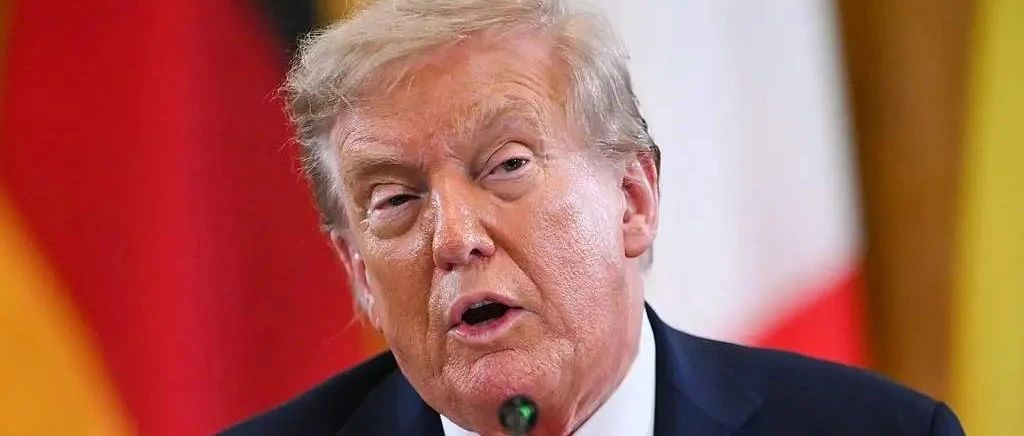
特朗普称美国不会批准太阳能或风能项目
Hua Er Jie Jian Wen· 2025-08-21 02:44
Group 1 - The core viewpoint is that President Trump has announced a refusal to approve wind and solar projects, indicating a significant policy shift against renewable energy in the U.S. [1] - Trump's comments have caused panic among renewable energy companies, as they fear that project approvals, previously considered routine, will now face delays [1][3] - The Trump administration has tightened federal approval processes for renewable energy projects, centralizing decision-making authority with Interior Secretary Doug Burgum [1][3] Group 2 - The shift in policy comes amid increasing supply-demand imbalances in the U.S. electricity market, particularly affecting the PJM Interconnection grid, which serves 13 states [2] - The PJM Interconnection auction last month saw a 22% increase in the price of new electricity capacity compared to the previous year, with Trump attributing rising electricity prices to the expansion of renewable energy [3] - Despite Trump's claims, data from the Lawrence Berkeley National Laboratory indicates that solar and storage are the fastest sources to alleviate supply gaps, with these projects making up the majority of queued connections to the grid [3] Group 3 - Trump's administration has proposed the "Great Beautiful Act," which aims to terminate investment and production tax credits for wind and solar by the end of 2027, crucial for the expansion of renewable energy in the U.S. [3] - Tariffs on steel and copper imposed by the Trump administration have increased construction costs for wind and solar projects, adding systemic pressure on the renewable energy sector [3] - The U.S. Department of Agriculture has announced it will cease support for solar projects on farmland, further compounding challenges for the renewable energy industry [3]

?美国清洁能源前景遭重挫! 特朗普豪言不再批准太阳能或风能项目
Zhi Tong Cai Jing· 2025-08-21 02:23
Core Viewpoint - The U.S. clean energy sector faces significant setbacks as President Trump declares that his administration will not approve any solar or wind energy projects, despite rising electricity demand in certain regions [1] Group 1: Federal Government Actions - The U.S. federal government has tightened the approval process for renewable energy projects, centralizing decision-making authority under Interior Secretary Doug Burgum [1] - Trump's statements are likely to exacerbate concerns among renewable energy companies regarding the ability to secure federal permits for projects [1][2] Group 2: Electricity Pricing and Supply - Electricity prices in the PJM Interconnection region have surged, with new power capacity auction prices rising by 22% compared to the previous year, attributed to the retirement of coal resources and increased demand from AI data centers [2] - Solar and battery storage systems are identified as the fastest sources to alleviate supply-demand gaps, despite the current political climate [2] Group 3: Impact on Data Centers - The imposition of high tariffs on steel and copper has increased the costs of solar and wind projects, potentially leading to higher electricity costs for large AI data centers [3] - Major tech companies like Google and Microsoft, which rely on clean energy for their data centers, may face challenges in achieving their carbon reduction goals due to the crackdown on renewable energy [3] Group 4: State-Level Initiatives - States like California may continue to advance offshore wind and large solar projects, provided they do not require federal land or key federal permits [4] - California has implemented state-level fast-track processes for renewable energy projects, allowing for expedited environmental reviews and approvals [5]
美国清洁能源前景遭重挫! 特朗普豪言不再批准太阳能或风能项目
Zhi Tong Cai Jing· 2025-08-21 02:19
Core Points - The Trump administration has decided not to approve solar or wind energy projects, citing concerns over land use and a preference for traditional fossil fuels [1] - The federal government has tightened the permitting process for renewable energy projects, centralizing authority under Interior Secretary Doug Burgum [1][2] - The price of new electricity capacity in the PJM Interconnection has increased by 22% compared to last year, indicating rising electricity costs [2] - Renewable energy companies are worried that the new federal policies will hinder their ability to obtain necessary permits [1][2] - The termination of support for large solar projects on farmland by the USDA may further increase costs for renewable energy projects [3] Industry Impact - The high tariffs on steel and copper imposed by the Trump administration have significantly raised the costs of solar and wind energy projects [3] - Major tech companies, such as Google and Microsoft, may face rising electricity costs due to the suppression of renewable energy, impacting their carbon reduction goals [3] - California and other states may continue to push for solar and wind projects at the state level, especially if they do not require federal land or permits [4][5] - California's "AB205" law allows for expedited permitting for large-scale renewable energy projects, indicating a state-level push for clean energy despite federal restrictions [5]
美国清洁能源前景遭重挫! 特朗普豪言不再批准太阳能或风能项目
智通财经网· 2025-08-21 02:14
Core Viewpoint - The Trump administration is unlikely to approve solar or wind energy projects, citing concerns over land use and supporting traditional fossil fuels, which may exacerbate worries among renewable energy companies [1][2] Group 1: Renewable Energy Policy - The federal government has tightened the permitting process for renewable energy projects, now centralized under Interior Secretary Doug Burgum, giving him final decision-making authority [1] - Trump's "One Big Beautiful Bill Act" aims to terminate investment tax credits and production tax credits for wind and solar energy by the end of 2027, which have been crucial for the expansion of renewable energy in the U.S. [2] Group 2: Impact on Energy Costs - The price of new electricity capacity in the PJM Interconnection auction increased by 22% compared to last year, indicating rising electricity costs amid tightening supply [2] - High tariffs on steel and copper imposed by the Trump administration have significantly raised the costs of solar and wind projects [3] Group 3: State-Level Initiatives - States like California may continue to push for solar and offshore wind projects as long as they do not require federal land or key federal permits, contrasting with the federal stance [4] - California's "AB 205" law allows for expedited environmental review and permitting for large-scale solar and wind projects, demonstrating a state-level commitment to clean energy [5] Group 4: Data Center Energy Demand - Major tech companies' demand for renewable energy is driven by their carbon reduction goals, and the suppression of renewable energy could lead to increased electricity costs for large AI data centers [3] - The rapid expansion of AI data centers, which are critical for the operation of generative AI applications, underscores the importance of a reliable electricity supply [3]
环联连讯(1473.HK)获正大家族谢展先生加持, 捕捉AI高效能运算、IoT及可再生能源科技的衍生需求
Cai Fu Zai Xian· 2025-08-21 01:56
Group 1: Industry Overview - The global AI and HPC market is experiencing robust growth, with the data center industry currently valued at $242.7 billion and expected to double to over $584 billion by 2032 [1] - The widespread application of IoT and AIoT is driving the demand for advanced data transmission technologies, while breakthroughs in renewable energy are providing cost-effective and sustainable power solutions for data centers and IoT [1] - Key stocks in AI computing, IoT, and renewable energy sectors, such as NVIDIA, Zhongji Xuchuang, and Constellation Energy, are reaching historical highs, indicating strong market performance [1] Group 2: Company Positioning - The company integrates cutting-edge technologies to provide comprehensive communication and data transmission solutions for AI data centers, green energy, WiFi, IoT, and telecommunications [2] - The company has made significant advancements in technologies like linear drive pluggable optics (LPO) and next-generation WiFi 8, establishing a leading position in the industry [2] - The company reported a 53.8% year-on-year revenue increase to HKD 2,128.2 million for the fiscal year 2024/25, achieving a historical high, with net profit turning positive at HKD 30.5 million [2] Group 3: Strategic Developments - The company completed a placement of 199 million shares at HKD 0.180 per share, raising approximately HKD 35.3 million for further business expansion in AI technology [3] - Mile Green Company Limited, a significant shareholder post-placement, is led by prominent figures with extensive backgrounds in renewable energy and data center investments, enhancing the company's strategic positioning [3][4] - The entry of Mile Green is expected to bring financial benefits and strategic synergies, accelerating the company's expansion in Southeast Asia and solidifying its leadership in the next-generation AI computing and HPC market [4]
持续完善衍生工具箱 提供风险管理解决方案
Qi Huo Ri Bao Wang· 2025-08-21 00:57
Core Viewpoint - The 2025 China (Zhengzhou) International Futures Forum highlighted the latest developments in the biofuel market, focusing on policy trends, production patterns, and innovations in trading tools, as well as key advancements in shipping decarbonization [1] Group 1: Market Developments - The Chicago Mercantile Exchange Group has established a comprehensive derivatives system covering the entire biofuel industry chain to meet the rapidly growing market demand [1] - The derivatives system includes futures and options products for raw materials such as corn, soybean oil, and European rapeseed oil, as well as fuel products like RBOB gasoline, ultra-low sulfur diesel, ethanol, and biodiesel [1] Group 2: Strategic Goals - The development of the biofuel market requires a balance among policy compliance, raw material sustainability, and cost control [1] - The Chicago Mercantile Exchange Group aims to continuously improve its toolbox of derivatives and provide risk management solutions to support global energy transition and low-carbon goals [1] Group 3: Industry Impact - The innovation and development of the biofuel industry chain are providing strong momentum for green shipping and transportation decarbonization in the context of accelerating global climate action [1]

特朗普:美国将不再批准光伏或风电项目
财联社· 2025-08-21 00:28
Core Viewpoint - The Trump administration is unlikely to approve solar or wind energy projects, even in areas with insufficient electricity supply, which raises concerns among renewable energy companies about the future of their projects [3][4][5]. Group 1: Government Policy Impact - Trump stated that his government will not approve renewable energy projects that disrupt farmland, indicating a shift in policy towards renewable energy [4]. - The federal government has tightened the permitting process for renewable energy, consolidating approval authority under the Department of the Interior [4]. - The Trump administration has previously canceled several clean energy incentives, which were crucial for the development of renewable energy in the U.S. [5]. Group 2: Market Reactions and Concerns - Renewable energy companies are worried that projects that were previously expected to receive approval may now face significant hurdles [5]. - Trump attributed rising electricity prices in the U.S. to renewable energy, citing the retirement of coal plants and increasing demand from data centers as contributing factors [5]. - In a recent capacity auction, the price for new power capacity in the PJM Interconnection increased by 22% year-over-year, highlighting supply-demand tensions in the market [5]. Group 3: Renewable Energy Project Viability - According to the Lawrence Berkeley National Laboratory, solar and battery storage projects are the most effective solutions to alleviate supply-demand gaps, yet they face increased regulatory challenges [5]. - The U.S. Department of Agriculture announced the termination of support for solar projects on agricultural land, further complicating the landscape for renewable energy development [5][6].

早报 | 育儿补贴免征个人所得税;歌手千百惠病逝;优化不主张加班高管?钉钉回应:消息不实;美联储公布货币政策会议纪要
虎嗅APP· 2025-08-21 00:20
Group 1 - Trump reiterated that the U.S. will no longer approve solar or wind energy projects, citing concerns over farmland destruction and rising electricity prices due to renewable energy [2] - The federal government has tightened the federal permitting process for renewable energy, raising concerns among companies about project approvals [2] - Trump attributed rising electricity prices to the retirement of traditional coal plants and increasing demand from data centers and other industries [2] Group 2 - Several shopping malls in Beijing have introduced "father-baby rooms" to accommodate fathers, reflecting a shift in societal norms regarding parenting [3][4] - The introduction of these facilities has sparked discussions among the public about shared parenting responsibilities [3][4] Group 3 - Elon Musk announced that Tesla will not produce the six-seat Model Y in the U.S. before the end of 2026, and may never produce it due to the development of autonomous driving technology [5] Group 4 - The Boston Celtics have been acquired by an investment group led by William Chisholm, with a valuation of $6.1 billion, marking a significant change in ownership [6][7] - He Yujun expressed enthusiasm about being a part of the team and sees potential for growth in the Chinese market [7] Group 5 - Israel has approved the construction of new housing units in the E1 area and the West Bank, which has drawn criticism for potentially undermining peace talks with Palestine [8] Group 6 - OpenAI's CFO reported that the company achieved over $1 billion in monthly revenue but continues to face challenges related to AI computing power shortages [12][13] - OpenAI's revenue is expected to triple this year, reaching $12.7 billion, driven by the demand for AI capabilities [12][13] Group 7 - Guangzhou has introduced a new policy allowing commercial housing loans to be converted to public housing loans, aimed at reducing the financial burden on homebuyers [27]

韩政府决定扩大可再生能源普及
Shang Wu Bu Wang Zhan· 2025-08-20 15:37
Core Viewpoint - The South Korean government is expanding its renewable energy initiatives, aiming to increase the installed capacity of renewable energy and implement various support policies to promote electric vehicles and other sectors towards decarbonization [2]. Group 1: Renewable Energy Goals - The South Korean government has decided to raise the renewable energy installation target for 2030 [2]. - The new targets will be reflected in the "2035 National Greenhouse Gas Reduction Target (2035 NDC)" and the "Sixth Basic Plan for New Renewable Energy" [2]. Group 2: Support for Electric Vehicles - The government will continue to provide subsidies and support policies until electric vehicles account for 30% of new car sales [2]. - The electricization strategy will also extend to construction machinery, agricultural machinery, and shipbuilding sectors [2]. Group 3: Coal Power Phase-Out - The government plans to phase out 40 coal-fired power plants that have been in operation for over 30 years by 2040 [2]. - This initiative aligns with President Lee Jae-myung's commitment to abolish coal-fired power generation by 2040 [2]. Group 4: Decarbonization Strategy - The government aims to achieve both greenhouse gas reduction and enhanced industrial competitiveness through a "Decarbonization Transition Strategy" [2]. - A "Carbon Neutral Industry Law" will be developed based on this strategy [2].
韩政府公布新能源电力输电基础设施建设计划
Shang Wu Bu Wang Zhan· 2025-08-20 15:37
Core Points - The South Korean National Assembly's Planning Committee has proposed a "Five-Year Policy Plan" aimed at achieving economic growth and carbon neutrality through the establishment of a nationwide high-voltage direct current (HVDC) power transmission network centered around the renewable energy cluster in the Honam region [1] - The plan includes increasing renewable energy installed capacity from the current 35.1 GW to 78 GW by 2030, and expanding transmission lines from 37,169 circuit kilometers to 48,592 circuit kilometers by 2030 [1] - The initiative also involves the expansion of agricultural, industrial parks, and water-based photovoltaic bases, as well as the construction of offshore wind farms and dedicated ports [1] - The establishment of "RE100" industrial parks in South Jeolla Province and southeastern Gyeonggi Province will provide one-stop services for export companies, including carbon emissions calculation and carbon reduction support [1]