
AI医疗

Search documents
【私募调研记录】健顺投资调研迈瑞医疗、迪阿股份
Zheng Quan Zhi Xing· 2025-09-01 00:08
Group 1: Company Highlights - Mindray Medical has launched the world's first clinically implemented critical care large model, named Qiyuan Critical Care Model [1] - Mindray has established a subsidiary focused on animal healthcare [1] - In the field of medical imaging, Mindray's "Ruiying Cloud++" has partnered with DeepSeek to officially release the "Ruiying·AI+" solution [1] Group 2: Diya Co. Performance - In the first half of 2025, Diya Co. achieved a revenue of 786 million yuan, a year-on-year increase of 0.97%, and a net profit of 76 million yuan, up 131.61% [1] - The number of upgraded Hongjin theme stores has reached 76, with average sales growth of approximately 36% post-renovation [1] - Sales growth in first and second-tier cities exceeded 40%, while same-store sales growth in third to fifth-tier cities approached 20% [1] - Diya Co. has launched its first equity incentive plan, set to be implemented annually over four years [1] - Internationally, the Paris store will also serve R&D and design functions, while the U.S. market focuses on New York, Los Angeles, and San Francisco, with plans to open 1-2 new stores in the second half of the year [1]

【私募调研记录】彤源投资调研迈瑞医疗、迪阿股份
Zheng Quan Zhi Xing· 2025-09-01 00:08
Group 1 - Tongyuan Investment recently conducted research on two listed companies, Mindray Medical and Dia Shares [1] - Mindray Medical launched the world's first clinically implemented critical care large model, "Qiyuan Critical Care Model," and established an animal medical subsidiary [1] - In the field of medical imaging, Mindray's "Ruiying Cloud++" has partnered with DeepSeek to officially release the "Ruiying·AI+" solution [1] Group 2 - Dia Shares reported a revenue of 786 million yuan for the first half of 2025, a year-on-year increase of 0.97%, and a net profit of 76 million yuan, a year-on-year increase of 131.61% [1] - The number of upgraded Hongjin theme stores increased to 76, with average sales growth of approximately 36% post-renovation [1] - Sales in first and second-tier cities grew over 40% year-on-year, while same-store sales in third to fifth-tier cities increased nearly 20% [1] - Dia Shares launched its first equity incentive plan, set to be implemented annually over four years [1] - The company plans to open 1-2 new stores in the US market, focusing on New York, Los Angeles, and San Francisco [1]
政策力挺+技术领跑!翔宇医疗脑机接口叩开千亿康复蓝海
Zheng Quan Shi Bao Wang· 2025-08-31 10:45
Core Viewpoint - Xiangyu Medical (688626.SH) has shown significant growth in the rehabilitation medical device industry, with a focus on brain-computer interface technology and a strong commitment to research and development [1][2][4]. Financial Performance - In the first half of 2025, the company achieved total revenue of 359 million yuan, with 173 million yuan in the second quarter, and a net profit attributable to shareholders of 35.39 million yuan [1]. Industry Position - Xiangyu Medical is one of the few comprehensive enterprises in China's rehabilitation medical device sector, providing products, integrated clinical rehabilitation solutions, and professional technical support [1]. - The company is recognized as one of the first "little giant" enterprises in the national specialized and innovative category [1]. Technological Development - The company has made early investments in brain-computer interface technology, focusing on non-invasive applications in rehabilitation [2]. - In the first half of 2025, the company invested 91.15 million yuan in research and development, accounting for 25.39% of total revenue, with a year-on-year increase of 38.8% [4][5]. - The company has filed for 117 new patents, bringing the total to 1,933, including 22 new invention patents [5]. Market Outlook - The rehabilitation medical device industry is projected to exceed 220 billion yuan in total revenue by 2025, indicating strong market demand [7]. - The brain-computer interface market is expected to reach 3.8 billion yuan by 2025 and 5.58 billion yuan by 2027, with a compound annual growth rate of 20% [7]. - Long-term projections suggest that the brain-computer interface market in China could surpass 120 billion yuan by 2040, with a compound annual growth rate of 26% [7]. Strategic Collaborations - The company has established partnerships with universities and research institutions for the development and transformation of brain-computer interface technologies [3]. - Xiangyu Medical has launched 13 brain-computer interface devices at recent industry forums, gaining significant attention [6].

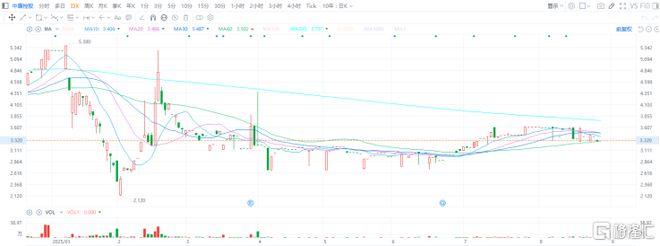
中康控股(02361.HK)的三大预期差:业绩、AI辨识度与生态价值
Xin Lang Cai Jing· 2025-08-30 02:21
Core Viewpoint - The recent policy from the State Council to promote AI in healthcare significantly boosts the AI medical industry, indicating a favorable environment for companies like Zhongkang Holdings [1][10]. Group 1: Company Performance - Zhongkang Holdings reported a revenue of 150 million yuan in the first half of the year, a decrease of 7.3% year-on-year, and a net profit of 24.5 million yuan, down 42.1% year-on-year [3]. - The company is undergoing a strategic "deep squat," focusing on building a comprehensive intelligent system in the healthcare sector, which requires substantial upfront investment [3]. - R&D expenses increased by approximately 14.4% year-on-year, indicating a commitment to enhancing computing infrastructure and expanding high-level R&D talent [3]. Group 2: Market Perception and Valuation - Zhongkang Holdings has a market capitalization of only 1.5 billion HKD and a price-to-sales ratio of 3.4, suggesting significant undervaluation [4]. - The market has not fully recognized the company's deep and forward-looking investments in AI, leading to a discrepancy in expected growth potential [5]. Group 3: AI Integration and Business Model - The company integrates AI into its core operations, providing a one-stop AI-driven solution for various clients in the life sciences sector [5]. - Zhongkang has developed advanced AI models and platforms, including the Zhuomuniao medical model and Tian Gong No.1 commercial model, which enhance its service offerings [5][6]. Group 4: Ecosystem and Growth Potential - The company is building a robust "ecological flywheel" effect, where data, models, scenarios, and users interact to create significant value [6][9]. - The accumulation of healthcare data through partnerships allows Zhongkang to train precise AI models, enhancing service efficiency and attracting more users [7]. - The potential for exponential growth exists as the ecological flywheel accelerates, driven by the increasing demand for intelligent solutions in the healthcare sector [9][10].

塞力医疗: 2025年半年度报告
Zheng Quan Zhi Xing· 2025-08-29 16:52
Core Viewpoint - The report highlights the significant decline in revenue and profit for Thalys Medical Technology Group in the first half of 2025, attributed to strategic business restructuring and external market pressures, while emphasizing ongoing investments in smart healthcare and AI technologies for future growth [3][4][5]. Financial Performance - The company reported a revenue of approximately 583.5 million yuan, a decrease of 40.20% compared to the same period last year [3][4]. - The total profit for the period was a loss of approximately 51.93 million yuan, a decline of 495.76% year-on-year [3][4]. - The net profit attributable to shareholders was approximately -56.12 million yuan, down from -4.77 million yuan in the previous year [3][4]. - The net cash flow from operating activities was -79.17 million yuan, worsening from -48.88 million yuan year-on-year [3][4]. Industry Context - The healthcare industry in China continues to grow steadily, driven by increasing healthcare spending, an aging population (22% aged 60 and above), and supportive government policies [5][6]. - The medical device market is projected to reach approximately 2.4 trillion yuan by 2029, with a compound annual growth rate of 16% [7]. - The implementation of DRG/DIP payment reforms is pushing healthcare institutions towards refined operational management, while the demand for high-quality medical services remains concentrated in top-tier hospitals [7][8]. Strategic Initiatives - The company is focusing on transforming traditional medical supply chain services into intelligent healthcare solutions, with increased R&D investments in smart hospitals and medical big data analysis platforms [4][10]. - Thalys Medical is actively expanding its market presence in regions like Henan and Sichuan, while also exploring opportunities in Yunnan, Chongqing, and Guizhou [10][11]. - The company has established partnerships with major hospitals and is recognized as a key player in the SPD (Supply Chain Management) and IVD (In Vitro Diagnostics) sectors, enhancing its competitive edge [10][11]. Technological Advancements - The company is leveraging AI and big data technologies to develop comprehensive smart hospital solutions, aiming to improve operational efficiency and resource allocation in healthcare institutions [12][13]. - Thalys Medical is also investing in brain science and digital therapy, with significant growth expected in the cognitive disorder digital therapy market, projected to reach 4.2 billion USD by 2025 [14][15]. - The company is collaborating with various institutions to advance AI applications in clinical decision-making and disease management, enhancing its service offerings in the healthcare sector [18][19].

创新药回暖,港股通医疗ETF富国(159506)盘中涨幅达3.89%
Mei Ri Jing Ji Xin Wen· 2025-08-29 04:16
Core Insights - The Hong Kong stock market for healthcare is experiencing a rebound, with significant activity in innovative drugs and AI healthcare sectors, as evidenced by the performance of various ETFs and stocks [1] Group 1: Market Performance - The Hong Kong Healthcare ETF (富国 159506) saw an intraday increase of 3.89%, with component stocks such as WuXi Biologics and Angelalign rising over 7%, and MicroPort Scientific gaining over 6% [1] - The Innovative Drug ETF (富国 159748) recorded an intraday increase of 3.03% [1] Group 2: Industry Developments - The National Medical Products Administration reported that China's pharmaceutical industry ranks second globally, with approximately 30% of the world's innovative drugs currently under research [1] - Since the start of the 14th Five-Year Plan, 387 pediatric drugs and 147 rare disease drugs have been approved for market, addressing the medication needs of key populations [1] Group 3: Investment Outlook - Institutions suggest that the recent adjustments in the Hong Kong pharmaceutical sector have cleared some risks, indicating that the current fluctuations are short-term and do not alter the long-term industry logic [1] - Continuous positive policy developments and the accumulation of clinical data for domestic innovative drugs are enhancing their global competitiveness, with expectations of more multinational business development transactions in the year [1] - Investors are encouraged to consider the Hong Kong Healthcare ETF 富国联接基金 (联接 A: 020110, 联接 C: 020111) [1]
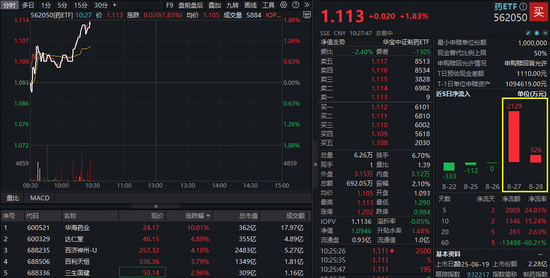
制药板块强劲反弹,华海药业涨停!场内唯一药ETF(562050)冲击2%,超2400万元资金提前埋伏!
Xin Lang Ji Jin· 2025-08-29 02:37
8月29日早盘,制药板块表现活跃,华海药业涨停,达仁堂、百济神州涨超4%,百利天恒涨超3%。 把握中国制药价值重估机遇,配置工具认准场内唯一药ETF(562050)及其联接基金(024986)。聚焦 A股50大龙头药企,重仓创新药(60%),兼顾高壁垒仿制药及中药,且完全不含医疗和CXO。 把握牛市低位补涨机遇,配置工具认准A股最大医疗ETF(512170)及其联接基金(012323)。聚 焦"医疗器械(52%)+医疗服务(40%)",与AI医疗高相关,覆盖6只CXO龙头股。 风险提示:医疗 ETF 及其联接基金被动跟踪中证医疗指数,该指数基日为 2004.12.31 ,发布于 2014.10.31 。药 ETF 被动跟踪中证制药指数,该指数基日为 2011.12.30 ,发布日期为 2013.7.15 。文中指数 成份股仅作展示,个股描述不作为任何形式的投资建议,也不代表管理人旗下任何基金的持仓信息和交 易动向。基金管理人评估的医疗 ETF 、药 ETF 的风险等级为 R3- 中风险,适宜平衡型( C3 )及以上投资 者,医疗 ETF 联接基金的风险等级是 R4- 中高风险,适宜积极型( C4 )及以上投资 ...

康众医疗与孛璞半导体达成战略合作
Zheng Quan Shi Bao Wang· 2025-08-29 01:41
Core Viewpoint - Kangzhong Medical and Shanghai Bopu Semiconductor Technology Co., Ltd. have signed a strategic cooperation agreement to collaborate on optical sensing and Optical Circuit Switching (OCS) technology in the AI medical field, aiming to innovate and scale the next generation of medical data collection and computing network technology [1] Group 1 - The strategic cooperation agreement was signed on August 29 [1] - The collaboration will focus on research and industrialization in the AI medical sector [1] - The partnership aims to promote innovation and large-scale implementation of new medical data collection and computing network technologies [1]

A股公司密集公告!多家公司上半年净利润大增
Zhong Guo Zheng Quan Bao· 2025-08-28 23:28
Group 1: Government Policies and Economic Outlook - The Central Committee of the Communist Party of China and the State Council announced the establishment of a sustainable urban construction and operation financing system, emphasizing the integration of local government responsibilities and various funding channels [2] - The National Bureau of Statistics predicts that by the end of this year, the added value of the digital economy is expected to reach approximately 49 trillion yuan, accounting for about 35% of GDP [5] Group 2: Company Performance - Wancheng Group reported a significant increase in net profit by 50358.8% in the first half of the year, with revenue reaching 22.583 billion yuan, a year-on-year growth of 106.89% [4] - Jincai Hulian's net profit increased by 2063.57% to 32.8078 million yuan, despite a revenue decline of 22.30% to 468 million yuan [4] - XGIMI Technology achieved a net profit increase of 2062.34% to 88.6622 million yuan, with revenue of 1.626 billion yuan, a growth of 1.63% [5] - Guolian Minsheng reported a net profit increase of 1185.19% to 1.127 billion yuan, with revenue of 4.011 billion yuan, a growth of 269.40% [5] - Lingzhi Software's net profit increased by 1002.2% to 112 million yuan, despite a revenue decline of 3.04% to 516 million yuan [5] - Anker Innovation reported a net profit increase of 33.80% to 1.167 billion yuan, with revenue of 12.867 billion yuan, a growth of 33.36% [5] Group 3: Company Buybacks and Investments - Daqin Railway plans to repurchase shares worth 1 to 1.5 billion yuan for cancellation and reduction of registered capital [6] - Shengtun Mining intends to repurchase shares worth 500 million to 600 million yuan for employee stock ownership plans [7] - Spring Airlines plans to repurchase shares worth 300 million to 500 million yuan for employee stock ownership plans [7] - Zhongcai Technology announced investments of 1.751 billion yuan for a low-loss dielectric fiber cloth project and 1.806 billion yuan for another project [8]
贝瑞基因(000710):解码生命经纬,智绘基因新篇
NORTHEAST SECURITIES· 2025-08-28 12:44
Investment Rating - The report initiates coverage with a "Buy" rating for the company [3][4]. Core Insights - The company focuses on reproductive health and genetic disease testing, providing a comprehensive solution of "products + services" and is a leading player in the domestic genetic testing field [1][15]. - The market for life science sequencing solutions in China is expected to grow at a compound annual growth rate (CAGR) of 14.9% from 2018 to 2023, reaching 138.8 billion yuan by 2033, indicating potential for the company's continued market penetration [1]. - The company is leveraging its data and technology to build competitive barriers in the AI healthcare industry, with the AI medical market projected to reach 11.43 billion yuan by 2025 and 28.61 billion yuan by 2027 [2]. Summary by Sections Company Overview and Business Layout - The company, established in 2010 and listed in 2017, began with non-invasive prenatal testing (NIPT) and has expanded into genetic disease testing and research services [15]. - It utilizes high-throughput sequencing and third-generation HiFi sequencing technologies to provide genetic testing services and related equipment, reagents, and software [15]. Industry Development and Core Business - The company’s core business includes high-throughput sequencing technology and third-generation sequencing services, focusing on reproductive health and genetic disease testing [40]. - The company has established a comprehensive service model for hospitals and third-party laboratories, integrating advanced sequencing technology with AI applications [40]. Financial Performance and Forecast - The company’s revenue is projected to be 1.05 billion yuan in 2025, with a gradual increase to 1.42 billion yuan by 2027, while net profit is expected to improve from a loss of 140 million yuan in 2025 to a profit of 400 million yuan in 2027 [3][4]. - The company’s gross margin has shown an upward trend, increasing from 42.72% in 2022 to 46.86% in 2024, driven by a higher proportion of reagent sales [29]. AI Medical Sector - The company is positioned to capitalize on the AI medical sector, with its GENOisi™ intelligent model facilitating a smart data management and clinical decision-making process [2][20]. - The AI medical market is rapidly expanding, supported by favorable domestic policies, and the company aims to leverage its extensive clinical data and self-developed algorithms for commercial applications [2].
