
智能家居

Search documents
【私募调研记录】诚盛投资调研国博电子、乐歌股份等4只个股(附名单)
Zheng Quan Zhi Xing· 2025-04-22 00:06
Group 1: Guobo Electronics - Guobo Electronics has improved its gross margin through cost control and product structure adjustments, despite revenue fluctuations due to macroeconomic factors [1] - The company reported a normal increase in inventory as part of production reserves, with stable prices for mainstream products and good capacity utilization [1] - Guobo is actively participating in key projects and is expanding into satellite and low-altitude fields, with RF chips already applied in drone products to meet the demands of next-generation mobile communication technologies [1] Group 2: Lege Co., Ltd. - In 2024, Lege Co., Ltd. faced a challenging environment with a revenue growth of 45.33% but a net profit decline of 46.99%, primarily due to reduced non-recurring income and increased R&D investment [2] - The company has expanded its overseas warehouse operations to 662,100 square meters, serving 1,175 enterprises and shipping over 11 million items, with a capacity utilization rate of 60%-70% [2] - Lege plans to maintain steady progress in 2025, focusing on smart home and overseas warehouse dual main businesses while enhancing brand building and talent optimization [2] Group 3: Baike Biotech - Baike Biotech experienced significant declines in performance in 2024 and the first quarter of 2025, with decreases of 32.64% and 39.96% respectively, mainly due to the impact on shingles vaccine sales [3] - The company aims to enhance market awareness of the shingles vaccine and solidify its position in the chickenpox vaccine market while expanding into international markets [3] - Baike anticipates an increase in R&D investment and sales expense ratios in 2025, followed by a gradual decrease [3] Group 4: Mona Lisa - Mona Lisa is facing multiple challenges in 2024 due to changes in trade environments and real estate adjustments, leading to a 16.34% decline in sales volume and revenue [4] - The company has seen a 20.72% decrease in operating costs, primarily due to lower direct material and fuel costs, and has implemented cost reduction and efficiency measures [4] - Looking ahead to 2025, the industry faces challenges from weakened demand, but urbanization and stock housing renovations present new opportunities [4]


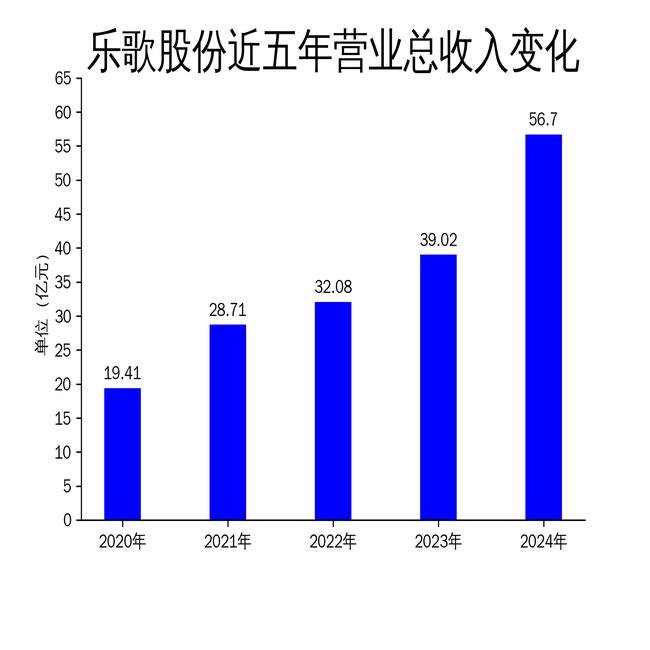
乐歌股份2024年营收增长45%,净利润却大幅下滑47%
Jin Rong Jie· 2025-04-21 02:19
Core Viewpoint - Lege Co., Ltd. reported significant revenue growth in 2024, but faced a substantial decline in net profit, raising market concerns about its financial health [1][6]. Revenue Performance - The total operating revenue reached 5.67 billion yuan, marking a year-on-year increase of 45.33% [1]. - Over the past five years, the company's revenue has shown a consistent upward trend, with 2024 being the highest recorded [2]. Profitability Analysis - The net profit attributable to shareholders was 336 million yuan, a sharp decline of 46.99% year-on-year [1]. - The non-recurring net profit was 200 million yuan, down 20.45% compared to the previous year [1][6]. - The decline in net profit is attributed to reduced non-recurring income, particularly from the sale of overseas warehouses [6]. Business Segment Performance - The main business includes smart home and smart office product sales, which have driven significant revenue growth [4]. - The company has expanded its product line, including height-adjustable desks and ergonomic chairs, which are well-received in the market [4]. - Despite revenue growth, the company faces increasing cost pressures due to higher R&D investments and operational costs associated with expanding overseas warehouse services [4][5]. Overseas Warehouse Business - The overseas warehouse logistics service has rapidly developed since 2020, benefiting from the growth of cross-border e-commerce [5]. - The company has served over 1,000 cross-border e-commerce sellers, contributing to its revenue growth [5]. - However, the rapid expansion of this segment has led to profit pressures due to high shipping costs and increased investments in warehouse infrastructure [5]. Future Challenges - The company must optimize its cost structure and improve operational efficiency to address rising cost pressures [6]. - There is a need to accelerate the release of warehouse capacity and enhance profitability in the overseas warehouse business [6]. - Continued investment in R&D is essential for launching innovative products to maintain market competitiveness [6].

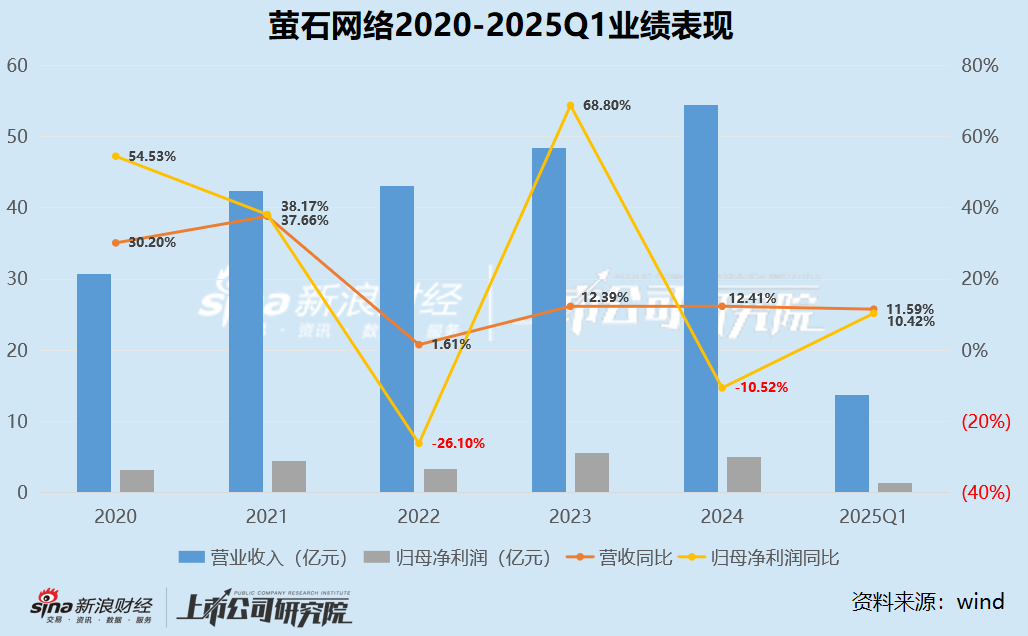
萤石网络核心产品营收、产销量、毛利率同时下滑 2024年净利缩水10.52%、高企费用承压
Xin Lang Zheng Quan· 2025-04-18 09:55
Core Insights - The core viewpoint of the articles highlights the financial performance and challenges faced by Yingzi Network, a company spun off from Hikvision, as it navigates a competitive smart home market while experiencing fluctuations in revenue and profit margins [1][3]. Financial Performance - In 2024, Yingzi Network achieved operating revenue of 5.442 billion yuan, a year-on-year increase of 12.41%, but the net profit attributable to shareholders fell by 10.52% to 504 million yuan, marking the second decline in net profit since its IPO [1][3]. - For Q1 2025, the company reported operating revenue of 1.38 billion yuan, up 11.59% year-on-year, and a net profit of 138 million yuan, reflecting a growth of 10.42% [1]. - The overall revenue growth has been consistent since the company's listing, but the growth rate has been slowing down, with annual increases of 1.62%, 12.39%, 12.41%, and 11.59% from 2020 to Q1 2025 [3]. Product and Market Dynamics - Yingzi Network has expanded its product offerings in the smart home market, including innovative smart cameras, smart locks, cleaning robots, and wearables, but faces intense competition from major players like Xiaomi, Huawei, and traditional appliance manufacturers [1][2]. - The company's reliance on smart home cameras has been a concern, as revenue, sales volume, and gross margin for this product category declined in 2024, with revenue dropping to 2.948 billion yuan, a decrease of 1.38% year-on-year [7]. - Despite rapid growth in other product lines, such as smart entry and service robots, which saw revenue increases of 47.87% and 265.12% respectively, their overall scale remains small compared to the dominant camera segment [7]. Cost and Profitability Challenges - The company's gross margin has shown relative stability, with figures of 36.42%, 42.85%, 42.08%, and 42.55% from 2022 to Q1 2025, but profitability has been inconsistent due to rising expenses [5]. - Research and development expenses increased significantly, reaching 814 million yuan in 2024, with a year-on-year growth of 11.35%, while sales expenses also rose to 858 million yuan, up 26.66% [5]. - The company's operating cash flow saw a drastic decline, with net inflow of only 548 million yuan in 2024, nearly halving from the previous year, and a net outflow of 65 million yuan in Q1 2025 [6]. Investment and Future Outlook - Yingzi Network's investment project for a smart manufacturing base in Chongqing has faced delays, with only 51.53% of the planned funding utilized by the end of November 2024, pushing the project's completion date to December 2025 [6]. - The company continues to face pressure from high operational costs and market competition, which may further impact its profit margins in the future [5][6].

萤石网络亮相2025智能家居产业高质量发展大会
Zhong Guo Chan Ye Jing Ji Xin Xi Wang· 2025-04-18 08:57
Core Insights - The conference "2025 Smart Home Industry High-Quality Development Conference" was held in Hangzhou, focusing on the theme "Connecting Everything, Empowering the Future" to explore new paths for high-quality development in the smart home industry [1] - The Chinese government has introduced policies to encourage innovation in the smart home sector, emphasizing product interoperability, enhancing smart home product configurations, and establishing unified industry standards [1] - The company,萤石网络, aims to build a comprehensive smart home ecosystem through technological innovation and a diverse product range, focusing on user safety, convenience, health, and comfort [1][4] Product Ecosystem - 萤石网络 has developed a "2+5+N" product ecosystem, concentrating on smart video and visual technology, driven by AI and萤石物联云, featuring five core self-developed AI interactive products [2] - The smart home camera is a key component of the ecosystem, with萤石网络 pushing for upgrades towards visualization, scenario-based applications, interactivity, and intelligence [2] - In 2024, the company will launch the S10 video call camera and the TAMO mobile pet care camera, targeting daily care and emotional communication for the elderly and children, and providing innovative features for pet owners [2] Smart Entry Products - Smart entry products serve as the first point of interaction between users and their homes, integrating audio-visual technology, smart recognition, and AI capabilities into smart locks, doorbells, and intercoms [3] - The company will introduce a self-developed facial recognition video lock in 2024, addressing blind spots in monitoring and enhancing security and convenience for users [3] -萤石网络 is also exploring smart service robots to improve user experience in smart homes, while smart wearables and control products enhance safety and convenience through visual and AI interaction [3] User Data and Market Impact - As of the end of 2024,萤石物联网公有云 has over 190 million registered users, with more than 65 million monthly active users and over 300 million IoT device connections [3] - This substantial user base and device connectivity reflect strong market recognition of萤石网络's products and provide a solid foundation for ongoing service optimization and technological iteration [3] Future Outlook -萤石网络's participation in the conference highlighted its technological achievements and commitment to leading the smart home industry towards high-quality development [4] - The company plans to continue focusing on technological innovation and enhancing its one-stop smart home service system to create new possibilities for smart living [4]
LG电子终止手机所有服务 退出手机市场已三年多
Zhong Guo Jing Ying Bao· 2025-04-17 22:38
Core Viewpoint - LG Electronics has officially exited the mobile phone market by terminating software support services, marking the end of its mobile business after years of losses [1][3]. Group 1: Termination of Services - LG Electronics announced the cessation of mobile software upgrade services (FOTA), update center services, and LG Bridge, effective from April 14, 2023, with a final deadline for software upgrades set for June 30, 2025 [1]. - The termination of these services means that existing LG phone users will no longer receive software updates or support, indicating a complete withdrawal from the mobile market [1][3]. Group 2: Historical Context - LG's mobile business began in 1995 and peaked during the feature phone era with the popular "Chocolate" series, once ranking as the third-largest mobile manufacturer globally [3]. - Since the second quarter of 2015, LG's mobile division has reported continuous losses for 23 consecutive quarters, accumulating a total loss of 5 trillion KRW (approximately 29.36 billion RMB) by the end of Q4 2020 [3]. Group 3: Future Focus and Patent Monetization - Post-exit from the mobile sector, LG Electronics is focusing on electric vehicle components, connected devices, smart home technology, robotics, and artificial intelligence [4]. - The company holds a significant number of Standard Essential Patents (SEPs) and has generated substantial revenue through patent licensing, earning 890 billion KRW (approximately 4.592 billion RMB) in Q1 2022 alone [4]. - In recent years, LG has been monetizing its mobile-related patents, selling various U.S. standard patents to companies like OPPO, TCL, and Vivo, with notable transactions occurring between 2023 and 2025 [5].
成都家居市场景气度跟踪反馈
2025-04-15 14:30
Summary of Conference Call Industry Overview - The conference call primarily discusses the home furnishings industry, particularly focusing on the sales performance of soft furnishings brands such as 麒麟门 (Qilinmen), 穆斯 (Mus), and 孤家家居 (Gujia Home) in the Tianfu New Area [2][3][4]. Key Points and Arguments - **Sales Performance**: - Qilinmen's sales for 2024 are projected to be around 10 million yuan, with monthly sales ranging from 800,000 to 1 million yuan [2]. - The average selling price for mattresses is approximately 3,500 yuan, while the combined average price for beds and mattresses is around 8,000 yuan [3]. - The conversion rate for customers entering the store is about 30%, indicating effective marketing strategies [4]. - **Consumer Behavior**: - The demand for mid-range products is high, aligning with the preferences of younger consumers [5]. - The customer demographic spans a wide age range, with a significant portion being from the 70s to 90s [10]. - **Government Subsidies**: - The 2024 subsidy program allows consumers to receive direct benefits without the need for coupon grabbing, enhancing consumer participation [3]. - The subsidy amounts can reach up to 4,000 yuan per person, with a maximum of 1,500 yuan per transaction [5]. - The government is encouraging the purchase of high-efficiency products, with subsidies of 30% for certain categories [13][14]. - **Market Competition**: - The competition between online and offline markets remains stable, with consumers valuing convenience and price online, while preferring quality and experience in physical stores [6]. - The impact of promotional activities and local subsidies is significant in driving customer traffic and sales [7][8]. - **Product Development**: - There is a focus on promoting AI mattresses, with factory prices around 20,000 yuan, aiming to capture a larger market share [8]. - The product range includes various price points, catering to different consumer needs, with mattresses priced from 4,000 to over 100,000 yuan [9]. Additional Important Content - **Marketing Strategies**: - The brands are utilizing live streaming and community group buying to enhance customer engagement, although the effectiveness of these strategies varies [4]. - Seasonal promotions, such as those during the 315 shopping festival, have shown to significantly boost sales [10]. - **Future Outlook**: - The companies aim for a growth target of 30% in sales for 2025, indicating optimism despite current market challenges [11]. - The concentration of subsidies towards compliant leading enterprises may further enhance their market position [14][15]. - **Recommendations**: - The call suggests focusing on companies involved in smart home products and those with strong customization capabilities, such as 欧派家居 (Oppein) and 索菲亚 (Sofia) [15]. This summary encapsulates the key insights from the conference call, highlighting the dynamics of the home furnishings industry, consumer trends, and the impact of government policies on market performance.

家电出口前十玩家的焦虑,赴港香江电器能否打破“沃尔玛依赖症”?
3 6 Ke· 2025-04-12 09:23
Core Viewpoint - The article discusses the transformation of Chinese home appliance manufacturers, particularly focusing on Xiangjiang Electric's attempt to shift from an OEM model to establishing its own brand in the competitive global market [2][12]. Group 1: Company Overview - Xiangjiang Electric, originally a plastic products manufacturer, transitioned to the home appliance sector in 2012, focusing on ODM/OEM operations [4][5]. - The company has faced challenges due to high customer concentration, with its top five clients contributing 74.9% of revenue by mid-2024, leading to weakened bargaining power [10][12]. - Revenue from electric home appliances has shown a decline, with figures of 11.27 billion, 9.00 billion, and 9.32 billion from 2021 to 2023, representing 76%-82% of total revenue [5][6]. Group 2: Financial Performance - Xiangjiang Electric's total revenue fluctuated from 14.8 billion in 2021 to 10.97 billion in 2022, and then to 11.88 billion in 2023, reflecting a "V-shaped" recovery [6][7]. - The company's profit has improved, with net income rising from 71.8 million in 2021 to 121 million in 2023, and projected to reach 140 million in 2024 [7]. Group 3: Market Challenges - The company has struggled with a lack of brand premium, relying heavily on low-margin manufacturing profits, with ODM/OEM revenue constituting 93.7% to 96.3% of total income from 2021 to 2024 [10][12]. - Research and development investment has been low, with R&D expenses below 3% of revenue, indicating a reliance on manufacturing over innovation [12][13]. Group 4: Strategic Initiatives - To address its challenges, Xiangjiang Electric plans to enhance its OBM business by acquiring brands in the home appliance sector, particularly in North America and Europe [13][14]. - The company is exploring new marketing channels, including cross-border e-commerce and offline experience stores, to boost its brand presence [14][15]. - The upcoming IPO is seen as a crucial step for Xiangjiang Electric to support its transition towards a more autonomous brand strategy [16].
上证智能家居指数报3134.80点,前十大权重包含海信视像等
Jin Rong Jie· 2025-04-11 08:02
Core Viewpoint - The Shanghai Smart Home Index has shown a decline of 13.88% over the past month, while it has increased by 4.46% over the last three months and 0.99% year-to-date, reflecting the overall performance of listed companies in the smart home sector [2]. Group 1: Index Performance - The Shanghai Smart Home Index reported a value of 3134.80 points [1]. - The index is based on a sample of companies involved in smart home components, terminal devices, system integration, and related services, with a base date of June 29, 2012, set at 1000.0 points [2]. Group 2: Index Composition - The top ten weighted companies in the index include: Aojie Technology (3.98%), Chipone Technology (3.6%), Rockchip Electronics (3.35%), Hengxuan Technology (2.53%), Quectel Wireless Solutions (2.5%), Espressif Systems (2.48%), Will Semiconductor (2.44%), XGIMI Technology (2.41%), Jiechang Drive (2.4%), and Hisense Visual Technology (2.39%) [2]. - The index is composed entirely of companies listed on the Shanghai Stock Exchange, with the information technology sector making up 58.04%, consumer discretionary at 25.15%, communication services at 10.51%, and industrials at 6.29% [3]. Group 3: Index Adjustment Mechanism - The index samples are adjusted biannually, with adjustments occurring on the next trading day after the second Friday of June and December each year [3]. - Weight factors are generally fixed until the next scheduled adjustment, with special circumstances allowing for temporary adjustments [3].

180元,我买了台格力绝版手机:难怪董明珠也带不动货
36氪· 2025-04-07 00:12
Core Viewpoint - The article discusses the controversial rebranding of Gree's stores to "Dong Mingzhu Health Home" and reflects on the company's past attempts in the smartphone market, highlighting the challenges and failures faced by Gree in this sector [4][5][92]. Group 1: Gree's Branding and Market Position - Dong Mingzhu, as the face of Gree, has tightly linked her personal brand with Gree, which is evident in her recent rebranding efforts [5][6]. - The rebranding to "Dong Mingzhu Health Home" has sparked significant public debate, similar to past controversies surrounding Gree's ventures, such as its smartphone business [4][6]. Group 2: Gree's Smartphone Journey - Gree's foray into the smartphone market began in 2015, aiming to leverage the growing trend of smart home connectivity [10][11]. - The first Gree smartphone, the "Dong Mingzhu Phone," was launched with specifications that were inferior to competitors but priced higher, leading to poor sales performance [12][13][18]. - Despite the lackluster sales, Dong Mingzhu expressed a commitment to continue the smartphone business, indicating a belief in the long-term potential of Gree's self-developed products [21][88]. Group 3: Product Analysis and Market Comparison - The Gree Damsun G5, released in December 2020, was criticized for its high price point of 2999 yuan, which did not align with its performance and features compared to competitors like Redmi K30 5G [83][84]. - The Gree Damsun G5's specifications, including a Snapdragon 765G processor and a mediocre camera system, failed to impress in a competitive market where other brands offered better value [42][68][80]. - The smartphone's market presence was further diminished by a lack of software updates and poor user experience, leading to a significant drop in consumer interest [56][91]. Group 4: Industry Context and Future Outlook - The smartphone industry is currently facing intense competition, with established brands engaging in price wars and smaller brands finding niche markets [93]. - Gree's smartphone efforts have been characterized as lacking direction and sincerity, with products that do not resonate with consumer needs or market trends [91][92]. - The article concludes that Gree's smartphone venture may ultimately be remembered as a failed experiment, overshadowed by the more successful strategies of other companies in the industry [94].


北京石头世纪科技股份有限公司 2024年度募集资金存放与实际使用情况的专项报告
Zheng Quan Ri Bao· 2025-04-06 22:50
Group 1 - The company raised a total of RMB 451,866.68 million through the issuance of 16,666,667 shares at a price of RMB 271.12 per share, with a net amount of RMB 436,812.68 million after deducting issuance costs [1][2] - As of December 31, 2024, the company has used RMB 4,374,137,598.70 of the raised funds, with a remaining balance of RMB 372,384,830.97, which includes interest income and cash management returns [2][10] - The company has established a special account for the management of raised funds, and has signed tripartite and quadripartite supervision agreements with relevant parties to ensure proper use of the funds [3][4] Group 2 - The company has not used raised funds to replace pre-invested project funds or to temporarily supplement working capital during the reporting period [5][6] - The company has approved the use of temporarily idle raised funds for cash management, with a total amount not exceeding RMB 18 billion, ensuring that it does not affect the construction and use of investment projects [7][8] - As of December 31, 2024, the company has used RMB 29 million of raised funds for cash management [8] Group 3 - The company adjusted the investment amount and implementation method for the "self-built manufacturing center project," reducing the total investment and raised funds investment by RMB 15,278.03 million and RMB 22,732.81 million, respectively [12] - There were no external transfers or replacements of raised funds investment projects during the reporting period [14] - The company has disclosed that there are no significant issues in the use and disclosure of raised funds [15] Group 4 - The company operates in the smart cleaning appliance industry, which has seen rapid growth driven by technological innovation and increasing consumer demand [58][59] - The global smart vacuum cleaner market is projected to grow, with shipments expected to reach 20.6 million units in 2024, a year-on-year increase of 11.2% [58] - The industry is characterized by high competition and a focus on technological advancements, with major brands holding a significant market share [61][62]
