AI床垫

Search documents
国内政策VS消费-26年最新政策导向和消费机会解读
2026-03-06 02:02
Summary of Key Points from Conference Call Records Industry and Company Overview - The conference call discusses the macroeconomic policies and consumption opportunities in China for 2026, focusing on the government's growth targets and policy directions. Core Insights and Arguments 1. **Growth Target and Policy Shift**: The growth target for 2026 is set at 4.5% to 5%, with a shift from speed to quality, emphasizing sustainable growth. The expected growth rate over the next five years is projected to remain above 4% [1][3]. 2. **Unified Market Construction**: The construction of a unified market is accelerating, with policies against "involution" and monopolies. Price governance has been initiated, particularly in the automotive sector, aiming to stabilize and gradually increase the Consumer Price Index (CPI) [1][4]. 3. **Consumption Promotion Tools**: The government plans to establish a special fund of 100 billion yuan to stimulate consumption, alongside new school holiday systems to boost cultural and tourism consumption [1][6]. 4. **Service Consumption Focus**: Service-oriented consumption is identified as a key investment theme, with the restaurant industry expected to benefit from the easing of overcapacity and price recovery in 2026 [1][8]. 5. **Tax Reform and Consumption Tax**: Fiscal reforms will focus on shifting the consumption tax collection process, which may impact high-end consumer goods like liquor. This is expected to strengthen the competitive advantage of leading companies with pricing power [1][5][15]. 6. **Export Opportunities**: The logic of going abroad is evolving from manufacturing to branding, with expectations of a beta market starting in May 2026 as currency pressures ease [1][14]. Additional Important Insights 1. **Policy Integration**: The 2026 government work report and the 15th Five-Year Plan outline a more integrated approach to policy, with a clearer framework compared to 2021 [2]. 2. **Investment and Employment Goals**: The investment sector is expected to support a positive cycle of investment, employment, income, and consumption, with a target of creating over 12 million new jobs in 2026 [6]. 3. **Traditional and New Industries**: The 2026 policy emphasizes the importance of traditional industries while also highlighting new sectors like AI and smart economy, indicating a balanced approach to economic development [7]. 4. **Downstream Market Dynamics**: The report notes that the consumption capacity in lower-tier cities is relatively healthy, with lower debt burdens and a strong acceptance of new consumption models [12][13]. 5. **Consumer Behavior Trends**: There is a structural shift in consumption from goods to services, with significant potential in sectors like tourism, dining, and education [8][11]. This summary encapsulates the key points from the conference call, providing insights into the macroeconomic landscape and consumption trends in China for 2026.
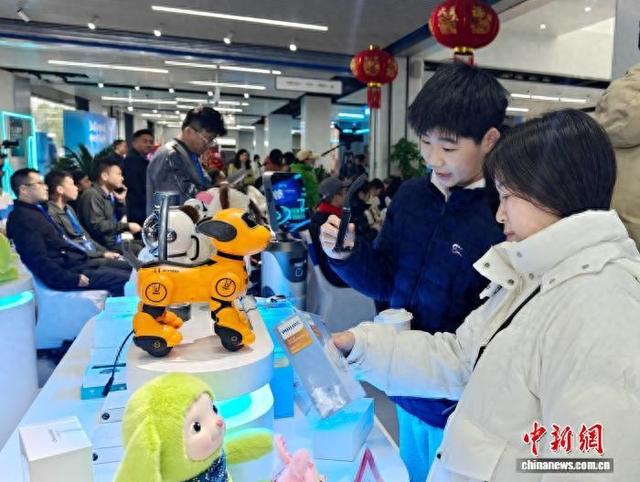
(新春见闻)科技融入生活 AI打开中国民众新春消费新空间
Xin Lang Cai Jing· 2026-02-14 08:16
Core Viewpoint - The integration of AI technology into daily life is driving a new growth point in China's consumer market during the Spring Festival, with a notable increase in the purchase of various smart robots and AI products [1][3][4]. Group 1: Consumer Trends - Consumers are increasingly purchasing smart toys, chess-playing robots, and health-monitoring robots tailored for different age groups, reflecting diverse gifting needs for the New Year [3][4]. - The demand for AI consumer products is being fueled by modern family needs for interaction, companionship, and social engagement, leading to a surge in sales of AI devices [3][4]. - Online platforms are capitalizing on the Spring Festival shopping surge, with promotions like JD's "AI Toy Family Pack" targeting various consumer scenarios [3][6]. Group 2: Product Offerings - Popular products include caregiving robots with emergency call features, AI pet companions for children, and smart cooking appliances that generate seasonal health recipes [3][4]. - At the Silver Age New Year Goods Festival, items like mite-removing robots and AI mattresses that monitor health metrics are becoming popular choices for gifting [3][4]. - The trend of renting or purchasing cleaning robots is emerging among younger consumers to alleviate household chores [4]. Group 3: Market Dynamics - The Spring Festival has accelerated AI consumption in county regions, with nearly half of AI orders originating from these areas, indicating a shift in consumer behavior [6]. - The convenience of AI-driven services, such as ordering food through voice commands, is becoming a new way of shopping during the festive season [6].

国信证券晨会纪要-20260213
Guoxin Securities· 2026-02-13 01:12
Group 1: Core Insights - The report highlights the growth of the silver economy, particularly in the home appliance and light industry sectors, driven by the increasing demand for elderly care products enhanced by AI technology [7][8] - The demand for home care products is expected to rise significantly, with projections indicating that sales of home care devices for elderly individuals living alone will reach 14 million units by 2030, with a compound annual growth rate of 16% [7] - The report identifies three main categories of home care products: life care, emotional companionship, and health safety, which are essential for meeting the needs of the aging population [7] Group 2: Industry Analysis - The home care device segment is positioned as a critical entry point into the elderly care ecosystem, with advancements in AI technology improving monitoring and alert systems for elderly individuals [7] - The report discusses the potential market for elderly care robots, estimating that the market size for care robots in both domestic and international markets could reach tens of billions, driven by the increasing number of elderly and disabled individuals [8] - Smart mattresses are identified as a promising product category, with the domestic mattress market expected to reach approximately 65.9 billion RMB by 2024, and smart mattresses projected to increase their market penetration significantly [9] Group 3: Company Highlights - The leading company in the elderly care technology space is Yingzi Network, which offers a comprehensive home care solution through its "Yingzi Elderly Smart Body" product, integrating various functionalities such as health data monitoring and safety alerts [8] - Other notable players in the elderly care robot market include Ousheng Electric, which specializes in basic care robots, and major technology companies like Midea Group and Haier, which are expanding their product offerings in the elderly care sector [8] - The report emphasizes the strong growth potential for companies involved in the production of smart mattresses, with leading brands like Xilinmen and Mousse Holdings making significant advancements in AI-driven sleep solutions [9]
家庭耐用品篇:乘智能化之风,家电家居助力养老护理
Guoxin Securities· 2026-02-12 09:17
Investment Rating - The report rates the silver economy industry as "Outperform" compared to the market [1]. Core Insights - The demand for elderly care products is increasing due to the rising proportion of individuals aged 65 and above, as well as the growing number of elderly living alone and those with disabilities. AI technology is enhancing product capabilities and expanding market demand [1][12]. - The report categorizes elderly care durable goods into three main areas: daily living assistance, emotional companionship, and health safety [21]. Summary by Sections Elderly Care Durable Goods Overview - The report highlights the increasing demand for smart elderly care devices, including nursing robots, companion robots, home care equipment, and AI mattresses, driven by the aging population and technological advancements [1][12]. Home Care Equipment - AI is enhancing the functionality of home care devices, which are crucial for monitoring elderly individuals, especially to prevent falls. The market for independent care devices is projected to reach 14 million units by 2030, with a compound annual growth rate of 16% [2][32]. - Leading companies in this sector include Yingzi Network, which offers a comprehensive home care solution through its "Yingzi Elderly Smart Body" product [2][19]. Elderly Care Robots - The market for nursing robots is expected to reach a scale of hundreds of billions, with significant growth driven by policy support and the introduction of new products across various segments [3][43]. - Key players include Ousheng Electric, which specializes in nursing robots, and Rongtai Health, known for its massage therapy robots [3][42]. Smart Mattresses - Smart mattresses are identified as a potential growth category due to their low penetration rate and high demand. The domestic mattress market is expected to reach approximately 65.9 billion RMB by 2024, with smart mattresses projected to increase in market share [4][12]. - Leading companies in this segment include Xilinmen and Mousse Co., which are developing AI-driven sleep solutions [4][50]. Policy Support - The report outlines various government policies aimed at promoting the integration of technology and elderly care, including subsidies for home modifications and the development of smart elderly care products [24][26]. - The Ministry of Civil Affairs and other departments have issued measures to encourage the development of elderly care robots and related technologies [26][27]. Market Demand Projections - The report estimates that by 2030, the number of elderly individuals requiring care will significantly increase, leading to a robust demand for nursing robots and related technologies [45][43]. - The total market demand for elderly care robots in China and abroad is projected to exceed 200 billion RMB [45][43].


市场简报:智享深睡未来,AI床垫引领健康消费新浪潮-20260106
Tou Bao Yan Jiu Yuan· 2026-01-06 12:16
Investment Rating - The report does not explicitly state an investment rating for the AI mattress industry Core Insights - The AI mattress industry is positioned as a significant development direction in the sleep industry, with a focus on personalized sleep solutions that align with consumer trends towards health and smart experiences [3][15] - The market for AI mattresses is expected to transition from a high-end niche to mainstream adoption as technology improves and costs decrease [3][28] Summary by Sections Industry Overview - AI mattresses integrate sleep science with AI and IoT technologies, offering features like real-time monitoring of sleep data and automatic adjustments to mattress parameters [2][3] - The core selling point of AI mattresses is their ability to provide personalized sleep solutions based on individual body characteristics and sleep habits, contrasting with traditional spring mattresses that offer passive support [3][4] Technical Composition - AI mattresses consist of four core components: AI chip, drive engine, flexible support unit, and surface skin layer, which work together to create a feedback loop for optimal sleep support [7][10] - The cost structure of AI mattresses shows that over 50% of the costs are attributed to core intelligent hardware, indicating a high level of technological intensity [8] Market Development - The AI mattress industry is currently in a critical phase of transitioning from technology validation to market expansion, with leading brands like Mousse and Xilinmen integrating advanced sensors and algorithms [15][28] - The market size for smart beds in China is projected to grow from 2.18 billion to 3.36 billion yuan from 2020 to 2024, with a compound annual growth rate of 11.4% [28][30] Consumer Demand - The demand for sleep health solutions is rising, with 48.5% of the adult population in China experiencing sleep issues, creating a significant market opportunity for AI mattresses [21] - Features such as sleep relaxation massage are highly favored by consumers, indicating a focus on enhancing user experience through technology [26] Future Trends - Future developments in the AI mattress industry are expected to focus on technological advancements, ecosystem collaboration, and targeted solutions for specific demographics [29] - The market penetration of AI mattresses is anticipated to accelerate due to the involvement of tech companies and the integration of smart home ecosystems [28][29]
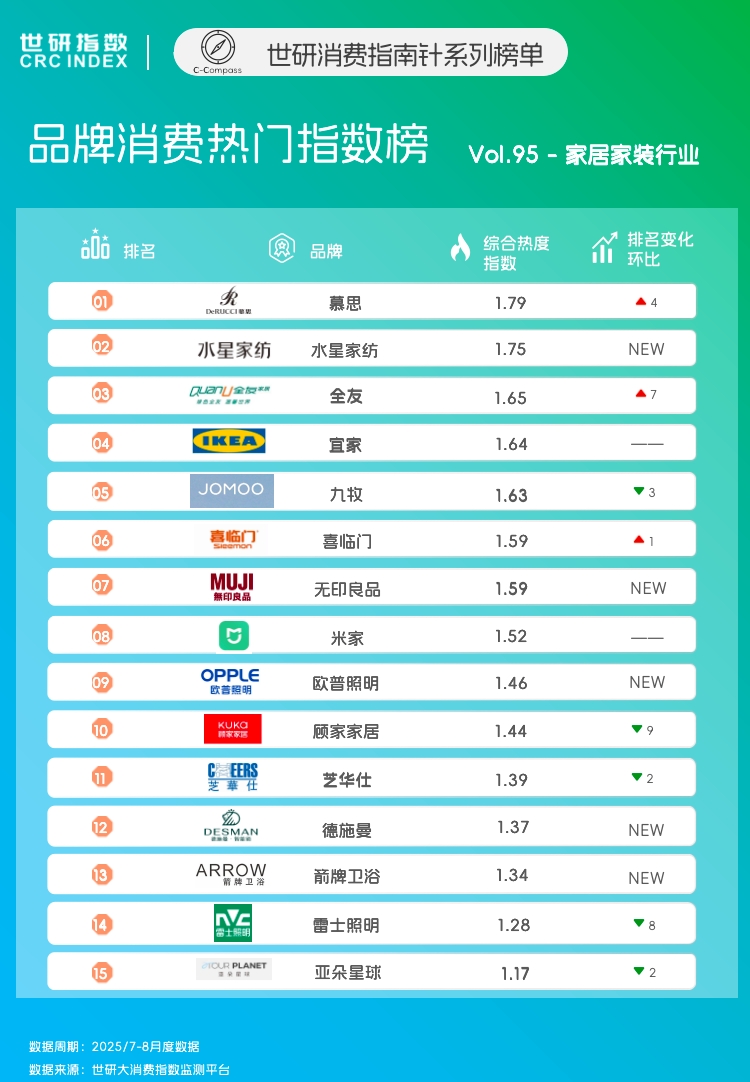
告别被动睡眠,AI床垫开启“主动关怀”|世研消费指数品牌榜Vol.95
3 6 Ke· 2026-01-06 07:57
Core Insights - The home furnishing and decoration industry is transitioning from "smart products" to "smart living," emphasizing emotional connections and lifestyle proposals rather than just functional satisfaction [1][3] Group 1: Brand Performance - The top three brands in the comprehensive heat index are Mousse (1.79), Mercury Home Textiles (1.75), and Quanfu (1.65) [2] - The rankings indicate a competitive landscape where brands are focusing on emotional engagement and lifestyle integration [4] Group 2: Technological Innovation - Leading brands are leveraging technology and innovative models to enhance emotional connections with consumers, moving from "smart" to "wisdom" [3] - For instance, Xilinmen partnered with Qiangna Technology to launch the "Baobao・BrainCo" AI mattress, which assesses users' physical and mental states in real-time [3] - Deshiman is focusing on self-developed technology and scenario-based services, with its Kirin R9 series smart locks featuring AI models for proactive decision-making [3] Group 3: Lifestyle Solutions - Brands like Kuka Home, Mousse, and Quanfu are shifting their focus from individual products to comprehensive lifestyle solutions [4] - Kuka Home has implemented a "one-stop integrated home 3.0 system" addressing consumer pain points related to customization and trust [4] - Mousse is creating a "healthy sleep ecosystem" through various cultural initiatives, while Quanfu targets Gen Z's self-expression through vibrant, modular products [5]


吴晓波:“AI闪耀中国”2025(年度演讲全文)
吴晓波频道· 2025-12-29 01:26
Core Viewpoint - The article emphasizes that the AI revolution is a significant competition that will impact national fortunes, highlighting the rapid advancements and implications of AI technology in various sectors [2][22]. Group 1: AI Development History - The concept of artificial intelligence was first introduced in 1956 at the Dartmouth Conference, marking the beginning of a long journey in AI research [11]. - Key milestones include the introduction of deep learning by Geoffrey Hinton in 2006 and the launch of GPT-3.5 in 2022, which significantly advanced AI capabilities [17][18]. - The article notes that AI has now entered everyday life and industries, with significant developments in China and the U.S. [18][19]. Group 2: AI Investment Landscape - By 2025, the U.S. is expected to invest over $350 billion in AI infrastructure, while China’s investment is projected to reach 630 billion RMB [41]. - The article highlights that the U.S. currently dominates AI computing power, holding 74.5% of global capacity, compared to China's 14% [43]. - The investment in AI infrastructure in China is compared to the historical investment in high-speed rail, indicating a significant commitment to AI development [41]. Group 3: AI Applications and Innovations - The article discusses the emergence of AI in various industries, including banking, where Shanghai Bank has become the first AI-native mobile bank [75]. - It highlights the rapid growth of AI-driven content production, such as AI-generated comics, which have seen a 600% increase in production [67]. - The use of AI in sectors like healthcare, logistics, and manufacturing is emphasized, showcasing its transformative potential [78][81]. Group 4: Competitive Landscape - The article outlines the competitive dynamics between the U.S. and China in AI, with both countries pursuing different strategies: the U.S. focusing on closed-source models and China on open-source models [54][55]. - It mentions that by 2025, over 80% of the world's large models will be developed in the U.S. and China, with significant advancements in image generation and text capabilities [46][49]. - The competition extends to autonomous driving, with both countries making strides in developing self-driving technologies [57]. Group 5: Future Trends and Predictions - The article predicts that the next decade will see the emergence of four trillion-dollar markets in China, including the robotics sector, which is expected to play a crucial role in manufacturing upgrades [118][120]. - It discusses the potential for AI to redefine personal capabilities and the importance of adapting to new technologies in various industries [72][98]. - The article concludes with a call for recognition of the ongoing AI revolution and its implications for the future [58].
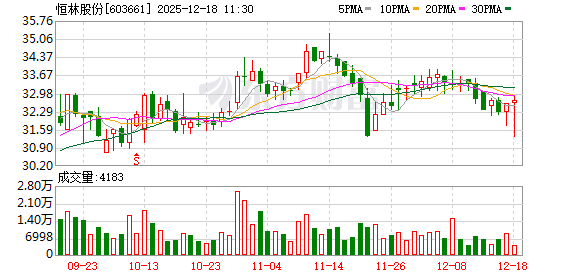
恒林股份ESG得分创历史新高,业绩有望进入高成长期
Zheng Quan Shi Bao Wang· 2025-12-18 03:36
Group 1 - The core viewpoint of the report indicates that the home furnishing sector is under pressure due to the reduction of national subsidies in the third quarter, with the soft home furnishing industry showing greater resilience compared to custom home furnishing [2] - Looking ahead, the custom home furnishing sector is expected to recover as leading companies actively seek solutions, and the return of national subsidies in the fourth quarter may further stimulate downstream demand [2] - The soft home furnishing sector is accelerating its AI product development, with the smart mattress market projected to reach nearly 60 billion yuan by 2030, reflecting a compound annual growth rate of 15% from 2020 to 2030 [2] Group 2 - In the A-share finished home furnishing industry, companies such as Henglin Co., Ltd., Mengbaihe, Xiangxin Home Furnishing, and Zhiou Technology have more than five institutional ratings, with consensus forecasts indicating net profit growth exceeding 20% for both 2026 and 2027 [2] - From an ESG perspective, Henglin Co., Ltd. achieved a record high score of 8.53, ranking first in the industry [2] - Henglin Co., Ltd. is actively responding to the "dual carbon" strategy and global green development initiatives, integrating environmental concepts into product design and material applications, and leading the home furnishing industry towards a sustainable era [4]

中央济会对消影响:新消成率先受益,政助力增型利机会显现
SINOLINK SECURITIES· 2025-12-14 07:35
Investment Rating - The report rates the industry as "Buy" [1] Core Insights - The new consumption growth opportunities are expected to differ significantly from the previous cycle (2016-2019), with a focus on AI-driven consumption, emotional value, global brand expansion, and experiential upgrades [1] - The overall weak recovery of domestic demand is anticipated to be influenced by both economic and policy cycles, with a projected recovery in consumption starting in 2026 [1][2] - The report highlights the importance of structural policy changes to enhance consumer spending capacity and promote new consumption formats [1][2] Summary by Sections 1. Sub-sector Trends - Xiaomi Group is positioned to benefit from the systemic opportunities in the domestic smartphone market due to talent loss at Apple [10] - The pet food market is experiencing a shift towards new product formats like "fresh steamed grain," which saw significant sales growth during the Double Eleven shopping festival [13] - AI and 3D printing are emerging as key areas for growth, with educational applications expected to drive demand [18][19] 2. Macro Consumption Data Tracking - In November, the Consumer Price Index (CPI) increased by 0.7% year-on-year, with a notable rise in service sector prices [30] - The Producer Price Index (PPI) decreased by 2.2% year-on-year, indicating ongoing deflationary pressures in the manufacturing sector [30] 3. Long-term Consumption Themes - The report identifies four main themes for future consumption growth: AI-driven consumption, emotional value in new services, structural upgrades in consumption, and the silver economy [1][16] - The silver economy is highlighted as a significant growth area, with policies increasingly focusing on the needs of the aging population [16] 4. Market Performance - The pet food market's gross merchandise volume (GMV) reached 3.1 billion yuan in November, reflecting a year-on-year growth of 15% [48] - Sales of Stanley products on Amazon showed substantial growth, particularly in the U.S. market, with a year-on-year increase of 168.73% in November [20][21]
“供需适配”将释放多少消费潜力
Sou Hu Cai Jing· 2025-12-02 00:48
Core Viewpoint - The article discusses China's new implementation plan aimed at enhancing the adaptability of supply and demand in consumer goods, focusing on collaborative efforts between supply and demand sides to stimulate consumption potential and drive economic growth [3][5]. Group 1: Implementation Plan Overview - On November 26, six government departments released a plan with 19 key tasks to enhance supply-demand adaptability, focusing on expanding new markets, exploring existing markets, segmenting markets, empowering scenarios, and optimizing the environment [3][5]. - The plan emphasizes a shift from a one-sided consumption stimulation model to a collaborative approach, addressing structural contradictions in consumption and promoting high-quality economic development [3][5]. Group 2: Market Insights and Data - As of now, China has a total of 230 million consumer goods varieties, with over 100 categories like home appliances and furniture leading global production [5]. - The plan aims to create three trillion-yuan-level consumption sectors and ten hundred-billion-yuan-level consumption hotspots by 2027, focusing on areas such as elderly products, smart connected vehicles, and consumer electronics [8][9]. Group 3: Consumer Trends and Needs - The plan highlights the need for supply to match diverse consumer demands, particularly for different age groups and lifestyles, indicating a shift from quantity expansion to structural optimization in the consumer market [11][12]. - The elderly population in China is projected to reach 310 million by the end of 2024, with the elderly goods market expected to grow from 2.6 trillion yuan in 2014 to 5.4 trillion yuan by 2024, reflecting a compound annual growth rate of 7.3% [12]. Group 4: Technological Integration - The plan emphasizes the integration of artificial intelligence (AI) in consumer goods, aiming to enhance precision in supply and demand matching through AI applications across the industry [14][17]. - AI is expected to transform traditional supply methods into personalized manufacturing, allowing for rapid and flexible production that meets evolving consumer preferences [14][16].