物理AI

Search documents
主题策略|物理AI加速智驾与人形机器人产业变革
中信证券研究· 2025-04-12 01:16
Core Viewpoint - The combination of Co smo s and Omi n i v e rs e is expected to accelerate the development of physical AI, driving advancements in the intelligent driving and humanoid robot industries [1][7] Group 1: Industry Development - The evolution of CAE software and the CUDA ecosystem demonstrates that iterative improvements in simulation and development tools can significantly accelerate industry development, shorten R&D cycles, and lower engineering implementation thresholds [1][7] - The demand for physical AI is clear, and its widespread application could reduce the time and physical resources required for training in intelligent driving and humanoid robots [7] Group 2: Investment Opportunities - Three investment themes are suggested: 1) Hardware suppliers for Co smo s and Omi n i v e rs e 2) The supply chain of intelligent driving and humanoid robots 3) Main manufacturers of intelligent driving and humanoid robots [1][7] Group 3: Technological Advancements - Co smo s provides a series of physical AI models that offer end-to-end scalability for complex training systems, utilizing 20 million hours of real-world data to create realistic synthetic videos for training [3] - The integration of Co smo s with the Omi n i v e rs e platform allows developers to create 3D scenes and generate realistic videos, enhancing the quality of training resources for intelligent driving companies [4] Group 4: Market Projections - The penetration rate of L3 intelligent driving is expected to reach 20% by 2029, an increase of 4 percentage points compared to non-physical AI-assisted scenarios, with the market for intelligent driving simulation software projected to reach 13.9 billion yuan by 2034 [4] - The global market for large language models in humanoid robotics is anticipated to exceed 100 billion dollars by 2028, driven by partnerships with leading humanoid robot manufacturers [5]



机器人3.0时代 黄仁勋出招
2 1 Shi Ji Jing Ji Bao Dao· 2025-03-27 06:26
Core Insights - The core focus of the articles is on NVIDIA's strategic push into the robotics sector, highlighting the launch of the open-source humanoid robot model, Isaac GR00T N1, and its implications for the future of robotics and AI integration [1][3][15] Group 1: NVIDIA's Robotics Strategy - NVIDIA is positioning itself as a leader in the robotics industry, emphasizing the importance of AI infrastructure for the development of robots [2][12] - The company aims to create a comprehensive ecosystem for robot development, integrating hardware and software solutions to facilitate the training, simulation, and deployment of robots [5][6][14] - NVIDIA's CEO, Jensen Huang, believes that the next wave of AI will be embodied intelligence, which will significantly enhance the capabilities of humanoid robots [12][15] Group 2: Isaac GR00T N1 Model - The Isaac GR00T N1 is the world's first open-source humanoid robot model, designed to provide robots with general skills and reasoning capabilities [3][4] - This model features a dual-system architecture that combines intuitive and logical processing, allowing for rapid responses and complex decision-making [3][4] - The GR00T N1 model is expected to be widely applicable across various industries, including industrial handling and precision inspection [3][4] Group 3: Market Potential and Competition - The humanoid robot market is projected to reach nearly $4 billion by 2028, with Goldman Sachs forecasting a market size of $38 billion by 2035, indicating rapid growth in the sector [13][14] - Despite the optimistic outlook, the industry faces challenges such as high hardware costs and the need for algorithm optimization [14][15] - Competitors like Google and Figure AI are also making strides in the robotics field, but NVIDIA currently holds advantages in data completeness and deployment flexibility [13][14]
对话2025最火具身智能团队:2个自动驾驶第一人带队,1.2亿美元天使融资震动江湖
量子位· 2025-03-26 10:29
Core Viewpoint - The article discusses the emergence of a new startup in the field of embodied intelligence, which has recently raised $120 million in angel funding, setting a record in China's embodied intelligence sector. The company, TARS, is led by a highly experienced team from the autonomous driving industry, aiming to create a reliable AI and robotics solution that integrates advanced technology into everyday life [2][3][7][12]. Group 1: Company Overview - TARS, founded by industry leaders Chen Yilun and Li Zhenyu, aims to build a trustworthy super embodied intelligence system that integrates AI into human production and life [12][18]. - The company has completed a record-breaking $120 million angel round financing, led by prominent venture capital firms, indicating strong market interest and confidence in its potential [3][7][8]. Group 2: Team and Expertise - The founding team is described as a "dream team" with extensive experience in the autonomous driving sector, which is crucial for the company's success in embodied intelligence [4][12]. - Key figures include Chen Yilun, a former CTO of Huawei's autonomous driving division, and Li Zhenyu, a senior vice president at Baidu, both of whom have significant achievements in their respective fields [11][16]. Group 3: Technology and Innovation - TARS is developing a core technology engine called AWE (AI World Engine), which is likened to a GPT model for embodied intelligence, focusing on human-centric data collection to enhance AI capabilities [15][37]. - The company emphasizes the importance of creating a complete data acquisition mechanism to ensure the reliability and effectiveness of its AI systems, distinguishing itself from competitors [39][45]. Group 4: Market Potential and Vision - The founders believe that embodied intelligence will be a key driver of global industrial upgrades in the next decade, positioning TARS to capitalize on this trend [12][51]. - The article highlights the growing interest and investment in embodied intelligence, suggesting it could be the next major technological wave following AI and autonomous driving [2][3].

百万年薪抢人,vivo为何押宝家庭机器人?
3 6 Ke· 2025-03-26 03:27
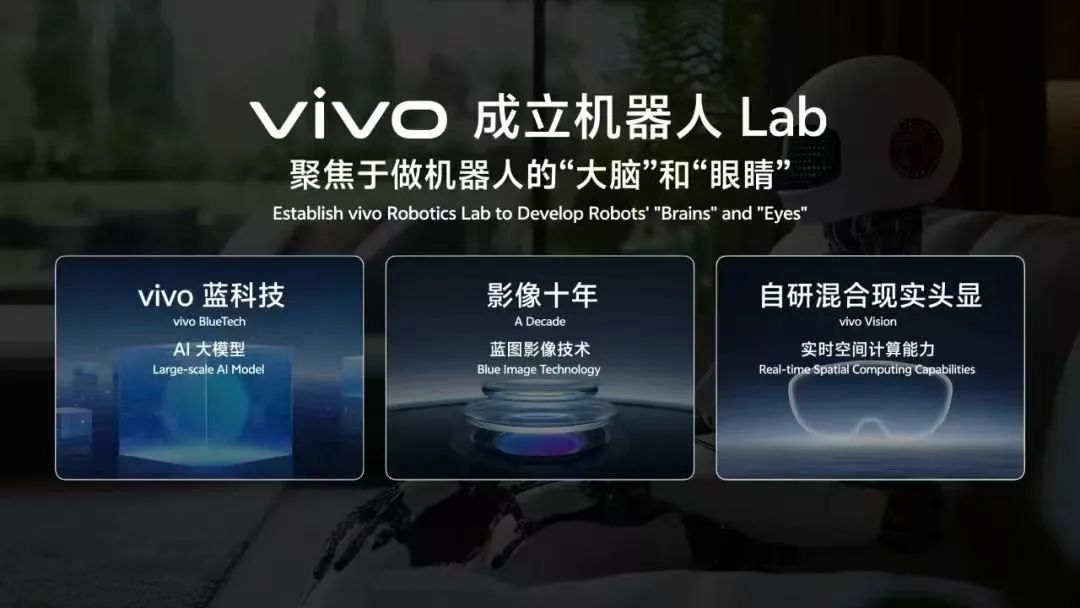
Group 1 - The core focus of vivo is to enter the household robotics market, with significant recruitment efforts for talent in robotics, offering salaries exceeding 1.2 million yuan for key positions [1][3] - The household robotics market is seen as a high-potential area due to increasing demand driven by aging populations, with the Chinese government prioritizing the development of household service robots [3][15] - vivo aims to leverage its existing technology in AI and imaging to develop robots that can understand environments and respond to user needs, with a timeline of 3-5 years for prototype development and over 10 years for ideal product launches [3][6] Group 2 - vivo's experience in mobile technology provides a strong foundation for its robotics ambitions, particularly in AI capabilities that enhance robots' understanding of human language and physical environments [6][7] - The company has established a robotics lab focused on training AI agents, which will serve as the "brain" for future robotic products, building on its previous investments in AI research [8][14] - vivo's advancements in imaging technology, such as 3D imaging and TOF sensing, are crucial for spatial awareness in robots, enabling better interaction with the physical world [9][12] Group 3 - The competitive landscape includes major players like Apple and Samsung, who are also investing in robotics, indicating a broader industry shift towards this technology [15][16] - The robotics industry is experiencing rapid growth, with increasing investment and interest from startups, suggesting a potential market explosion driven by advancements in AI [16][18] - vivo's strategy emphasizes the integration of digital and physical worlds through robotics, similar to its approach in the smartphone industry, leveraging its user base and technological expertise [18][19]

晨报|两个关键时点
中信证券研究· 2025-03-24 00:12
Group 1 - The article highlights two key timing points for investment opportunities in 2025: the first is in early April when external risks are expected to materialize, creating trading opportunities, particularly in the technology sector due to its weak macroeconomic correlation and strong industrial catalysts [1] - The second key timing point is mid-year when the economic and policy cycles of China and the U.S. are expected to synchronize, potentially leading to a fourth round of economic stimulus in China since 2013, which could alleviate valuation pressures on core Chinese assets [1] - The article suggests that the market may experience a significant style shift as traditional core assets begin to show performance inflection points, marking one of the most important style transitions since 2021 [1] Group 2 - The article emphasizes the importance of focusing on low-position themes with stable performance, such as low-position consumption themes, AI+ themes, and commercial aerospace, as high-position themes are expected to experience volatility [3] - It is recommended to pay attention to the implementation of consumption stimulus policies and the upcoming AI platform and product meetings by internet companies, which could serve as catalysts for investment [3] - The article outlines a thematic recommendation portfolio consisting of ten stocks for investors to consider, focusing on those with strong order certainty and relatively low valuation levels [3] Group 3 - The article discusses the impact of the AI revolution on China's economy, noting that short-term capital expenditures related to AI are expected to significantly boost macro demand, with a projected increase of 149.8 billion yuan in capital expenditures from major domestic firms by 2025 [5] - It highlights that the current wave of AI capital expenditure could serve as an additional driving force for traditional economic cycles, enhancing productivity across various industries [5] - In the medium to long term, the AI revolution is anticipated to increase overall productivity growth by 1-2%, although it may reduce the number of jobs created per unit of GDP growth [5] Group 4 - The article identifies three major opportunities in the real estate sector, including sufficient supply-side reform, unprecedented positioning of large-scale consumption, and consistently positive market transaction data [15] - It draws parallels between the automotive industry's previous policy measures and future expectations for real estate policies, suggesting that insights from the automotive sector could inform the direction of the real estate market [15] - The article indicates that the overall demand for traditional Chinese medicine is expected to remain strong due to policy support and an aging population, with industry consolidation likely to favor leading companies [20]


计算机|物理AI:下一代AI形态,军事仿真新引擎
中信证券研究· 2025-03-24 00:12
Core Viewpoint - Physical AI is the next generation of AI that can understand physical rules and generate vast training datasets, with potential applications in intelligent driving, robotics, and military sectors [1][2][8] Summary by Sections Definition of Physical AI - Physical AI is defined as the ability to understand and comply with various physical laws, enabling dynamic interaction and autonomous operation between virtual and real worlds [2] - It can accelerate CAE simulation, support digital twins, and synthesize physically compliant scene data for training models in humanoid robots, autonomous driving, and military applications [2] NVIDIA's End-to-End Physical AI Practice - NVIDIA's Omniverse serves as the next-generation "soft core," evolving into a comprehensive physical simulation platform by integrating the PhysX5 physics engine and the Cosmos simulation engine [3] - This platform provides end-to-end support for industrial applications, allowing developers to train models, create virtual environments, and deploy applications [3] - NVIDIA announced collaborations with General Motors for future autonomous vehicle fleets and released the open-source humanoid robot model Groot N1 [3] Military Simulation and Domestic Developments - Physical AI is accelerating the intelligentization of military simulations, with applications across the entire lifecycle of military operations [4] - Domestic company Suochen Technology has launched the "Tiangong·Kaiwu" physical AI platform, mirroring NVIDIA's approach and offering comprehensive solutions for various industries [5] Military AI Market Outlook - China's defense budget for 2025 is approximately 1,784.7 billion yuan, with a consistent annual growth rate of around 7.1% to 7.2% from 2022 to 2024 [6] - The military AI sector is expected to experience structural reversals as the country enhances its military informationization and AI capabilities [6] Investment Strategy - Investment opportunities are identified in companies with algorithm advantages and engineering experience in the simulation field, as well as those with core data resources and application experience in military AI [8]
空间智能:AI从虚拟到现实
2025-03-23 15:02
Summary of Conference Call Records Industry Overview - The conference call discusses the **space intelligence** industry, focusing on advancements in AI technology and its applications in industrial design and home CAD software. [1][2][3] Key Points and Arguments 1. NVIDIA Omniverse Platform - The **NVIDIA Omniverse platform** utilizes ray tracing technology and physical simulation to enhance manufacturing efficiency for high-cost industrial products like airplanes, rockets, and cars. It provides real-time simulation and collaborative design capabilities. [1][4] 2. Domestic Simulation Companies - Companies like **Sotun Technology** are transitioning from graphics to simulation through large models and CAX integration, aiming to meet industrial process needs and improve production efficiency. The main development logic includes domestic substitution, mergers, and physical AI. [1][6][8] 3. Market Growth in Home CAD Software - **Qunke Technology's** CoolJiaLe leads the home CAD software market, with a market size of **3 billion yuan** in 2023 and a compound annual growth rate (CAGR) of **17%** from 2019 to 2023. AI technology is lowering design barriers and addressing non-standard design challenges. [1][9] 4. AI Empowerment in Home Design - AI technology is continuously iterating home CAD software, enhancing rendering capabilities and efficiency. Qunke Technology's MoniCore platform deploys key tasks on GPU clusters for realistic rendering. [10] 5. Robotics Training and AIGC - Qunke Technology's **spatialverse platform** provides a digital environment for robots, enabling complete closed-loop training from cognitive understanding to action interaction. This positions the company favorably in the robotics training and AIGC sectors. [11] 6. Industry Collaborations - **Juran Home** is integrating NVIDIA's AI Universe platform and Huawei's Harmony ecosystem to enhance 3D digital asset interoperability, benefiting from the AI-driven transformation in the home industry. [3][12] 7. Future of Industrial CAD - Industrial CAD is expected to experience rapid development by **2025**, becoming a crucial part of space intelligence through CAX integration, which will enhance design efficiency and reshape industrial processes. [3][14][21] 8. Challenges in 2D to 3D Conversion - Multi-modal large models face challenges in converting 2D images to 3D due to the lack of precise spatial attributes. Solutions involve using specialized tokens for coordinate conversion and generating numerous renderings for accurate outputs. [18] 9. International Progress in AI and CAD - Overseas companies like Autodesk and Dassault are making significant strides in integrating AI with CAD, enhancing model generation and real-time data processing capabilities. [19] 10. Domestic Software Companies' Potential - Domestic innovative software companies are expected to achieve substantial growth, with projected revenues reaching **1 billion yuan** by 2025 and a target market value between **15 billion to 20 billion yuan**. [20] Other Important Insights - The integration of space intelligence with CAD is anticipated to enhance design efficiency and profitability, potentially becoming a competitive advantage for industrial enterprises. [15][16] - The application of space intelligence in the construction industry is evolving, with significant improvements in design, construction, and operation management through AI and digital twin technologies. [23][24][26]
群核科技亮相GTC,创始人黄晓煌回应卖英伟达股票创业:光谈钱就没意思了
IPO早知道· 2025-03-21 11:52
这是一个基于大语言模型的3D场景语义生成框架 ——其 突破了传统大语言模型对物理世界几何与 空间关系的理解局限,赋予机器类似人类的空间认知和解析能力。 这相当于为具身智能领域提供了 一个基础的空间理解训练框架,企业可以针对特定场景对SpatialLM模型微调,降低具身智能训练门 槛。 群核科技董事长黄晓煌 表示: "我们希望打造一个从空间认知理解到空间行动交互闭环的具身智能 训练平台。本次开源的SpatialLM空间理解模型旨在帮助具身智能机器人完成在空间认知理解上的基 础训练。而去年群核科技发布的空间智能解决方案SpatialVerse,则希望进一步通过合成数据方案 为机器人搭建最接近物理真实的'数字道场',实现机器人在仿真环境中的行动交互训练。" 从GPU高性能计算到具身智能训练。 本文为IPO早知道原创 作者|Stone Jin 微信公众号|ipozaozhidao 据 IPO 早 知 道 消 息 , 群 核 科 技 于 3 月 19 日 在 GTC2025 全 球 大 会 上 宣 布 开 源 空 间 理 解 模 型 SpatialLM。 在空间和具身智能训练上,目前群核科技已与硅谷头部科技企业等在内的 ...
对话周光:自动驾驶实现AGI,RoadAGI比L5更快 | GTC 2025
量子位· 2025-03-21 06:37
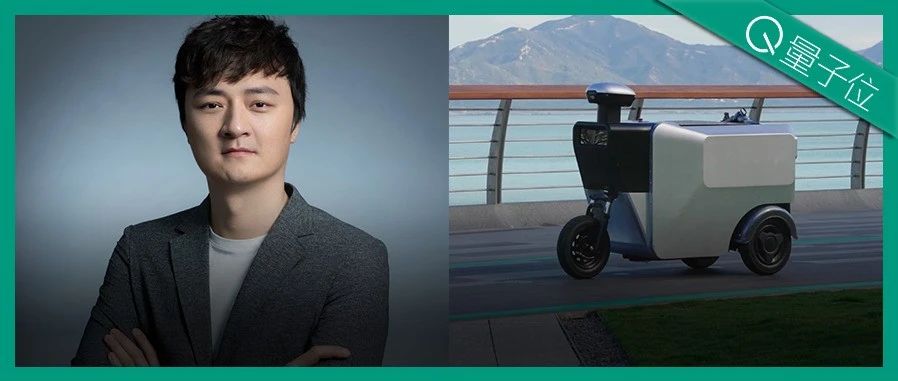
Core Viewpoint - The article discusses the introduction of RoadAGI by Yuanrong Qixing, which aims to achieve large-scale commercial autonomous driving in vertical road scenarios without relying on high-precision maps, marking a new pathway towards AGI (Artificial General Intelligence) [2][4][20]. Group 1: RoadAGI Concept - RoadAGI is presented as a new approach to achieving AGI through autonomous driving, enabling various mobile entities to operate with autonomous awareness [2][3][8]. - The implementation platform for RoadAGI is AI Spark, which allows for autonomous navigation and operation without high-precision maps [2][10]. - The first form of RoadAGI, Spark 1.0, is designed to autonomously navigate and deliver items from point to point, mimicking human delivery processes [5][7][9]. Group 2: Technological Foundation - The core technology behind RoadAGI is the Visual Language Action Model (VLA), which integrates visual and language processing to output driving behaviors and instructions [11][13][14]. - VLA is expected to be mass-produced by mid-2023, enhancing the capabilities of mobile entities in delivery scenarios [11][12][22]. - The technology allows for a "door-to-door" delivery process, closing the loop in delivery logistics, which was previously limited to "building-to-building" [15][17]. Group 3: Strategic Positioning - Yuanrong Qixing positions itself not merely as an autonomous driving company but as an AI company, with autonomous driving being a commercial application of its broader AI capabilities [19][20][69]. - The company has successfully transitioned away from reliance on high-precision maps, capturing a 15% market share in urban NOA (Navigation on Autopilot) with its first mass-produced model [20][21]. - The strategic focus on RoadAGI is seen as a natural evolution of the company's capabilities, leveraging its existing data and technology to expand into new areas [22][45][71]. Group 4: Market Implications - RoadAGI is expected to have significant commercial potential, particularly in the delivery sector, where it can operate at a lower cost compared to traditional methods that rely on high-precision mapping [57][66]. - The technology is anticipated to be more adaptable and commercially viable than Level 5 autonomous driving, which has stringent safety requirements [51][79]. - The company believes that its early entry into the RoadAGI space will provide a competitive advantage, allowing it to establish a strong market position before others can catch up [64][67]. Group 5: Future Vision - The ultimate goal is to achieve true AGI by integrating physical AI with generative and language AI, creating a unified model capable of understanding and interacting with the physical world [86][88]. - The company envisions RoadAGI as a stepping stone towards broader applications of AI across various physical agents, not limited to vehicles [71][72]. - The development of RoadAGI is seen as a critical step in the company's long-term vision of becoming a leader in physical AI [81][89].
Ouster(OUST) - 2024 Q4 - Earnings Call Transcript
2025-03-20 23:25
Financial Data and Key Metrics Changes - In Q4 2024, the company generated $30 million in revenue with gross margins of 44%, marking the eighth consecutive quarter of meeting or exceeding guidance [11][26] - For the full year 2024, revenue reached $111 million, a 33% increase year-over-year, with a GAAP gross margin of 36%, up 2,600 basis points from the previous year [23][32] - The company ended the year with $175 million in cash and equivalents and zero debt, maintaining one of the strongest balance sheets in the industry [12][33] Business Line Data and Key Metrics Changes - Approximately 4,800 sensors were shipped in Q4 2024, with a sequential unit growth of 23%, driven by large volume purchases from automotive and robotics customers [26][27] - Software attached bookings grew over 60% in 2024, exceeding a double-digit percentage of total bookings in each quarter [16][17] Market Data and Key Metrics Changes - The company is tapping into the Intelligent Transportation Systems (ITS) market, estimating a demand for over 1 million lidar units across 300,000 signalized intersections in the U.S. [13] - The company is also working with major heavy equipment manufacturers like John Deere to support automation efforts in agriculture and construction [14] Company Strategy and Development Direction - The company aims to scale its software attached business, transform its product portfolio, and continue executing towards profitability in 2025 [35][44] - The focus for 2025 includes capturing more of the $19 billion smart infrastructure market and expanding the use case of the Blue City solution [36][37] Management's Comments on Operating Environment and Future Outlook - Management expressed optimism about the opportunities in high-performance, reliable 3D sensing solutions despite navigating volatility and uncertainty in the current climate [24][25] - The company expects to achieve revenue between $30 million and $32 million in Q1 2025, maintaining a long-term growth framework of 30% to 50% [34][44] Other Important Information - The company successfully executed against its 2024 business priorities, including expanding software solutions and advancing digital lidar hardware [16][19] - The introduction of new features like 3D Zone Monitoring and a cloud-based portal for Ouster Gemini is expected to enhance product usability and expand the addressable market [40][41] Q&A Session Summary Question: Insights on robotaxi and last-mile delivery markets - Management highlighted a resurgence in the robotaxi segment, driven by successful deployments from companies like Waymo, and noted positive trends in last-mile delivery robotics [50][54] Question: Competitive dynamics with China-based suppliers - Management stated that the competitive landscape has not significantly changed, and Ouster has maintained and grown market share while positioning itself as a strong Western provider [58][70] Question: Expected impact of tariffs - Management indicated that there are currently no expected disruptions to the supply chain due to tariffs, and the company is well-capitalized with low capital needs [116][118] Question: Details on backlog and future growth prospects - Management confirmed that the backlog supports continued growth in line with the long-term guidance of 30% to 50% [110][111] Question: Margin profile by vertical - Management noted that all four verticals are margin-positive and that software attached business is expected to enhance overall margin profiles [92][95]