信用修复政策

Search documents
大连市2025年社会融资规模新增618亿元 创近8年新高
Sou Hu Cai Jing· 2026-02-06 14:53
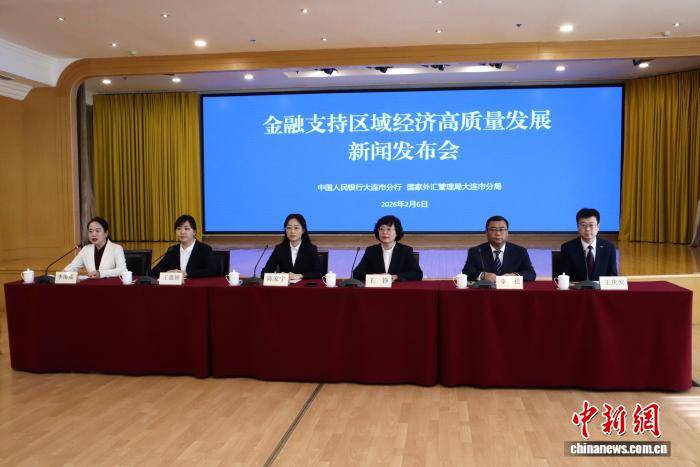
Group 1 - In 2025, Dalian's social financing scale increased by 61.8 billion yuan, marking the highest growth in nearly eight years [1][3] - The average interest rate for newly issued corporate loans in Dalian was 2.91%, a year-on-year decrease of 0.49 percentage points [3] - Loans to technology-based small and medium-sized enterprises, green loans, inclusive loans, and loans for the elderly care industry grew by 31.8%, 9.1%, 16.9%, and 25.3% respectively [3] Group 2 - In 2025, Dalian's total foreign-related income and expenditure increased by 3% year-on-year, with a net inflow of funds for eight consecutive quarters [3] - The actual cross-border RMB payments in Dalian amounted to 213.07 billion yuan, accounting for approximately 38.5% of the city's cross-border income and expenditure [3] - Dalian's cross-border RMB settlement scale represented 64% of the total in Liaoning Province, indicating strong vitality and resilience among business entities [3] Group 3 - The People's Bank of China implemented a one-time credit repair policy to support individuals with damaged credit who are actively repaying their debts [4] - In January, Dalian provided over 60,000 credit report inquiries, 1.5 times more than the same period last year, with a peak of nearly 3,000 inquiries in a single day [4] - Citizens eligible for the repair policy reported successful removal of overdue records from their credit reports, leading to the restoration of personal credit [4]

2026年货币政策如何发力 专访中国人民银行行长
Xin Lang Cai Jing· 2026-01-23 20:58
Monetary Policy Outlook - The central bank plans to implement a flexible and efficient monetary policy, utilizing tools such as reserve requirement ratio (RRR) cuts and interest rate reductions to maintain ample liquidity and align social financing scale and money supply growth with economic growth and price level expectations [2] Support for Key Areas - A special fund of 500 billion yuan will be allocated for service consumption and elderly care loans, encouraging financial institutions to innovate financial products to meet diverse consumer needs [3] - The policy support for technological innovation will increase the loan quota for technology innovation and technological transformation to 1.2 trillion yuan, including support for private small and medium-sized enterprises (SMEs) with high R&D investment [3] - The financing accessibility for small and micro enterprises will be enhanced, with an increase of 500 billion yuan in agricultural and small enterprise loans, raising the total to 4.35 trillion yuan, and a dedicated 1 trillion yuan for private enterprise loans [3] Market Stability Measures - The central bank emphasizes the importance of maintaining market stability and managing expectations, ensuring the basic stability of the RMB exchange rate at a reasonable and balanced level [4] - There will be strengthened supervision of various markets, including bond, foreign exchange, money, bill, and gold markets, along with mechanisms to provide liquidity to non-bank institutions under specific scenarios [4] Credit Repair Policy - The recently implemented credit repair policy has shown positive effects, with many individuals receiving personal credit repairs and default records no longer displayed, indicating a compassionate approach to policy [5]
1月起,这些新规影响华侨华人生活→
Sou Hu Cai Jing· 2026-01-03 12:35
Group 1: Domestic Regulations - From January 1, 2026, China will implement a provisional import tariff lower than the most-favored-nation rate on 935 items, including key components, advanced materials, and energy resources [2] - The new VAT law will take effect on January 1, 2026, consisting of 6 chapters and 54 articles, aimed at implementing the VAT law of the People's Republic of China [4] - The "Personal Information Export Certification Measures" will be enforced starting January 1, 2026, detailing the application process and requirements for personal information export certification [5] - A one-time credit repair policy will be implemented on January 1, 2026, allowing automatic adjustments to credit records for overdue payments made between January 1, 2020, and December 31, 2025, under specific conditions [6] - The revised National Common Language and Writing Law will come into effect on January 1, 2026, establishing the third week of September as the National Promotion Week for Common Language and Writing [8] - The modified "Civil Case Cause Regulations" will be effective from January 1, 2026, increasing the total number of causes to 1,055, including new categories related to data and virtual property [9] Group 2: International Developments - Mexico will increase import tariffs on non-free trade partners starting January 1, 2026, affecting a wide range of products including automotive parts, textiles, furniture, plastics, and steel [11] - Germany will raise child benefits by 4 euros per month starting January 2026, bringing the total to 259 euros [12] - Haikou Meilan Airport will launch a direct flight route to Hanoi, Vietnam, starting December 28, 2025, with flights operated by Hainan Airlines [13] - Chengdu will open its first direct flight route to Kazakhstan, with flights to Almaty starting December 30, 2025, using Airbus A320 aircraft [14]

这些新规,今起施行
Xin Lang Cai Jing· 2026-01-01 10:32
Tax Regulations - The new Value-Added Tax (VAT) Law and its implementation regulations will take effect on January 1, 2026, consisting of six chapters that clarify taxpayer obligations and tax rates [3] - Individuals selling residential properties purchased for less than two years will be subject to a 3% VAT, while those selling properties held for two years or more will be exempt from VAT [5] - The VAT law will also enhance tax incentives and clarify the standards for various VAT exemptions, requiring timely public disclosure of these policies [5] Credit Repair Policy - A one-time credit repair policy will be implemented starting January 1, 2026, allowing automatic adjustments to credit reports for overdue records that meet specific criteria [7] - Overdue records generated between January 1, 2020, and December 31, 2025, will not appear on credit reports if the overdue amount does not exceed 10,000 yuan and is fully repaid by March 31, 2026 [7] Education and Childcare - New regulations on kindergarten fees will be enforced from January 1, 2026, requiring public and non-profit private kindergartens to follow government-guided pricing, while for-profit kindergartens will have market-regulated fees [9] - A clear fee directory will be established, and any charges not listed or publicly disclosed will be prohibited [9] Electric Vehicles - A new national standard for electric vehicle energy consumption will be implemented on January 1, 2026, mandating that new passenger vehicles must not exceed 15.1 kWh per 100 km [15] - This standard is expected to improve the average driving range of electric vehicles by approximately 7% without increasing battery capacity [15] Cybersecurity and AI - The revised Cybersecurity Law will take effect on January 1, 2026, addressing the need for AI governance and development, including risk monitoring and safety regulation [19] - The law will support AI research and infrastructure development while enhancing ethical standards in AI applications [19] Legal Framework for Virtual Assets - The updated Civil Case Categories Regulation will come into effect on January 1, 2026, adding categories related to data and virtual property disputes [21] - This revision aims to refine intellectual property categories and address emerging issues in new employment forms and elder rights protection [21]

美国GDP高于预期,中国LPR维持不变
Guo Mao Qi Huo· 2025-12-29 07:51
Report Industry Investment Rating No relevant content provided. Core Viewpoints of the Report - This week, domestic commodities rebounded significantly, with most varieties seeing an uptick, including both industrial and agricultural product indices. The reasons include the poor US employment data and controllable inflation data, which may give the Federal Reserve a basis to continue cutting interest rates in the first half of 2026, leading to a recovery in market risk appetite; the domestic economic situation is weak with strong supply and weak demand, and the black - series performed worse than other sectors [3]. - Considering the latest changes in economic growth momentum and the relatively high base in the same period last year, it is expected that the economic operation in the first quarter of 2026 will still face certain downward pressure. Therefore, monetary policy is expected to end the observation period and enter the active stage to stabilize the economic operation in the first quarter of 2026 [3]. - In the short term, market sentiment has improved, and commodities have rebounded. This is due to the possible Fed rate - cuts in the first half of 2026, positive domestic policy tones after important meetings, and geopolitical factors such as the uncertainty of the Russia - Ukraine peace agreement and potential US actions against Venezuela, which will cause fluctuations in energy prices and drive a phased rebound in energy prices [3]. Summary by Relevant Catalogs PART TWO: Overseas Situation Analysis - **GDP**: In the third quarter, the US real GDP annualized quarterly - on - quarterly growth rate was 4.3%, higher than the expected 3.3% and the previous value of 3.8%, reaching the fastest growth rate in two years. The PCE price index annualized quarterly - on - quarterly growth rate was 2.9%, in line with expectations but maintaining a high level. The core driving factor for the strong growth in the third quarter was the better - than - expected performance on the consumption side. However, due to factors such as the previous federal government "shutdown", the economic growth in the fourth quarter is expected to slow down significantly, and the annual growth rate in 2025 is expected to be 2% or lower [3]. - **Employment Data**: In November, the number of non - farm payrolls increased by 64,000, better than the market expectation of 50,000. However, the unemployment rate unexpectedly rose to 4.6%, higher than 4.4% in September and slightly higher than the expected 4.5%, reaching a new high since September 2021. If the unemployment rate further rises to 4.7% in December, it may trigger the "Sam Rule" recession indicator again [3]. - **Inflation Data**: The US inflation rate in November was significantly lower than market expectations, showing a cooling trend. The CPI in November was 2.7% year - on - year, lower than the expected 3.1%, and the core CPI year - on - year dropped to 2.6%, also lower than the expected 3%. The poor employment data and controllable inflation data may give the Federal Reserve a basis to continue cutting interest rates in the first half of 2026 [3]. - **Other Regions**: In the eurozone, the PMI in December showed certain changes compared with November. In Japan, the export and import data and CPI data in November also had corresponding performance [18][22]. PART THREE: Domestic Situation Analysis - **Industrial Enterprise Profits**: According to data released by the National Bureau of Statistics on December 27, 2025, China's industrial enterprise profit data in November showed the characteristics of "slight cumulative increase, single - month pressure, and structural differentiation". In November, the revenue of industrial enterprises above the designated size was stable, but profits declined. The year - on - year decline in operating income narrowed, but the year - on - year decline in profits widened. The overall profitability still lacks effective support, and weak domestic demand remains a drag on corporate profitability [3]. - **LPR**: On December 22, 2025, the central bank issued a credit repair policy and kept the 1 - year and 5 - year LPR unchanged. The credit repair policy can accurately distinguish overdue types and optimize the allocation of credit resources, and the stability of LPR helps maintain internal and external balance. Considering the economic situation, it is expected that the monetary policy will enter the active stage to stabilize the economic operation in the first quarter of 2026 [3]. PART FOUR: High - Frequency Data Tracking - **Industrial开工率**: The report tracks the开工率 of the polyester industry chain and the blast furnace开工率. For example, on December 26, the开工 rate of PTA in the polyester industry chain was 72%, and the开工 rate of POY was 86% [38]. - **Consumer - related Data**: It also tracks data such as the wholesale and retail data of manufacturers and the inventory data of some products. For example, on December 25, certain data showed specific percentage changes [45]. - **Commodity Price Data**: The report monitors the prices of some commodities, such as the average wholesale prices of vegetables, pork, and fruits, as well as the 200 - index of agricultural product wholesale prices [47].
中金:央行信用修复政策对内银形成利好 料带动消费贷、房贷等个人信贷新增投放
Zhi Tong Cai Jing· 2025-12-24 05:57
Group 1 - The People's Bank of China has announced a one-time credit repair policy that allows borrowers to clear overdue personal credit records by repaying debts of up to 10,000 RMB by March 31, 2026, which is expected to stimulate consumption and financing demand [1] - The policy applies to overdue amounts not exceeding 10,000 RMB per instance, covering a wide range of loans including credit cards, consumer loans, and even larger long-term loans like mortgages, potentially benefiting most mortgage borrowers in China [1] - The credit repair policy is distinct from debt forgiveness, as it requires full repayment of overdue loans to restore credit ratings, thus maintaining credit constraints on borrowers who have not repaid their debts [2] Group 2 - The credit repair initiative is anticipated to stimulate demand for personal loans, including consumer loans, mortgages, and business loans, as it encourages overdue borrowers to repay their debts, improving asset quality for financial institutions [2] - The policy is designed as a one-time measure without a long-term extension mechanism, which helps mitigate moral hazard risks associated with debt repayment [2] - Overall, the credit repair policy is seen as beneficial for domestic banks, particularly state-owned banks and leading financial institutions, as it encourages overdue debt repayment and enhances asset quality [3]
每经热评丨一次性信用修复政策宽严相济 为诚实者正名也为社会增信心
Mei Ri Jing Ji Xin Wen· 2025-12-23 15:29
Core Viewpoint - The People's Bank of China has introduced a one-time credit repair policy aimed at individuals with damaged credit who have actively fulfilled their repayment obligations, providing a pathway for credit restoration while maintaining the integrity of the credit system [1][2]. Group 1: Policy Intent and Design - The policy is designed to offer a "reset" opportunity for individuals who have experienced "non-malicious" defaults due to uncontrollable circumstances, such as the COVID-19 pandemic, allowing them to recover from temporary credit issues without long-term repercussions [1][3]. - The operational aspect of the policy is user-friendly, allowing eligible individuals to benefit without needing to differentiate between loan institutions or types, and it employs an "automatic recognition" mechanism to simplify the process [1][2]. Group 2: Policy Restrictions and Accountability - The policy strictly defines the timeframe for eligibility as between January 1, 2020, and December 31, 2025, focusing on defaults caused by the pandemic and its aftermath [2]. - A cap of 10,000 yuan on overdue amounts is established to cover common small-scale defaults while preventing large-scale malicious defaults from exploiting the policy [2]. - Individuals must fully repay their overdue debts by March 31, 2026, linking credit repair to accountability and the seriousness of loan agreements [2]. Group 3: Societal and Economic Implications - The policy transcends individual relief, reinforcing the value of the credit system as a mechanism for protecting integrity and accommodating occasional difficulties, thereby encouraging more individuals to uphold credit standards [3][4]. - By enabling eligible individuals to regain access to financial services, the policy acts as an efficient "market clearing" mechanism, stimulating consumption and investment potential, which in turn supports economic growth [3][4]. Group 4: Overall Impact on Credit System - The one-time credit repair policy achieves a balance of "measured relief and strong constraints," allowing distressed individuals to regain confidence while preserving the authority and fairness of the credit system [4]. - As the policy is implemented effectively, it is expected to invigorate market participants, translating into increased investment and consumption, thereby enhancing the credit system's role in economic and social development [4].
股指期货将震荡上涨
Guo Tai Jun An Qi Huo· 2025-12-23 11:19
Report Industry Investment Rating No relevant content provided. Core Views - Through macro - fundamental and technical analysis, the report predicts the trend, resistance, and support levels of various futures contracts on December 23, 2025. For example, most equity index futures are expected to be strongly volatile, while some bond futures are expected to be weakly volatile [2]. - The report analyzes the market conditions of various futures on December 22, 2025, including price movements, highs, lows, and the impact of key price levels and moving averages. It also provides expectations for the December 2025 and December 23, 2025 trends of each futures contract [11][36][42]. - The report presents a series of macro - economic and policy news, such as the LPR remaining unchanged, central economic work conference arrangements, and regulatory policy adjustments, which are expected to have an impact on the futures market [5]. Summary by Related Catalogs Futures Market Outlook - **Equity Index Futures**: On December 23, 2025, IF2603, IH2603, IC2603, and IM2603 are expected to be strongly volatile, with specific resistance and support levels provided. In December 2025, these contracts are expected to have wide - range oscillations [2][17][18]. - **Bond Futures**: On December 23, 2025, the ten - year bond futures T2603 and thirty - year bond futures TL2603 are expected to be weakly volatile. In December 2025, the overall bond market is expected to be weak [39][40]. - **Precious Metals Futures**: On December 23, 2025, gold (AU2602), silver (AG2602), platinum (PT2606), and palladium (PD2606) futures are expected to be strongly volatile and may reach new highs. In December 2025, they are also expected to perform strongly [2][42][51]. - **Base Metals Futures**: On December 23, 2025, copper (CU2602) is expected to oscillate and consolidate, aluminum (AL2602) is expected to be weakly volatile, and other base metals futures also have corresponding trend expectations. In December 2025, different base metals futures have different trends, with some expected to be strongly volatile and others weakly volatile [2][61][67]. - **Other Futures**: Other futures such as alumina, nickel, polycrystalline silicon, lithium carbonate, etc., also have specific trend expectations for December 23, 2025, and December 2025 [72][77][80]. Macro - economic News and Policy - **Macroeconomic News**: The State Council is conducting research on the "15th Five - Year Plan" outline draft, the 12 - month LPR remains unchanged, and the central economic work conference has deployed multiple key reform tasks [3][5]. - **Policy News**: The draft of the Nursery Service Law is being reviewed, the Banking Supervision and Administration Law is being revised, and the market supervision department has issued regulations on the quality and safety of online - sold industrial products [6]. Commodity Futures - related Information - The Shanghai Futures Exchange has taken measures to cool the silver futures market, adjusting trading fees and limiting the maximum number of intraday opening positions [8]. - On December 22, 2025, international precious metals futures generally rose, oil futures prices increased due to supply concerns, and London base metals showed mixed trends [9][10].
热轧卷板产业链日报-20251223
Rui Da Qi Huo· 2025-12-23 09:31
1. Report Industry Investment Rating - The report suggests a bullish but volatile outlook for the hot-rolled coil plate market, with a recommended focus on risk control [2] 2. Core Viewpoint of the Report - On Tuesday, the HC2605 contract saw a rally followed by a pullback. Despite a decline in the terminal demand for plates, the strong performance of furnace materials provides cost support. Additionally, positive macro - policy expectations keep the hot - rolled coil futures price in an upward trend [2] 3. Summary by Related Catalogs 3.1 Futures Market - The closing price of the HC main contract is 3,281 yuan/ton, up 4 yuan; the position volume is 1,198,397 lots, up 9,846 lots; the net position of the top 20 in the HC contract is 24,516 lots, up 718 lots; the HC1 - 5 contract spread is - 1 yuan/ton, down 6 yuan; the HC warehouse receipt at the Shanghai Futures Exchange is 131,893 tons, unchanged; the HC2605 - RB2605 contract spread is 153 yuan/ton, up 2 yuan [2] 3.2 Spot Market - The price of 4.75 hot - rolled coil plates in Hangzhou is 3,320 yuan/ton, up 20 yuan; in Guangzhou it's 3,260 yuan/ton, unchanged; in Wuhan it's 3,330 yuan/ton, unchanged; in Tianjin it's 3,180 yuan/ton, unchanged. The basis of the HC main contract is 39 yuan/ton, up 16 yuan; the Hangzhou hot - rolled coil - rebar spread is - 10 yuan/ton, up 20 yuan [2] 3.3 Upstream Situation - The price of 61.5% PB fine ore at Qingdao Port is 792 yuan/wet ton, down 5 yuan; the price of Hebei quasi - first - grade metallurgical coke is 1,590 yuan/ton, unchanged; the price of Tangshan 6 - 8mm scrap steel is 2,160 yuan/ton, unchanged; the price of Hebei Q235 billet is 2,950 yuan/ton, unchanged. The 45 - port iron ore inventory is 155.0814 million tons, up 802,800 tons; the sample coking plant coke inventory is 517,800 tons, up 18,200 tons; the sample steel mill coke inventory is 6.3358 million tons, down 16,400 tons; the Hebei billet inventory is 1.1313 million tons, up 14,800 tons [2] 3.4 Industry Situation - The 247 - steel - mill blast furnace operating rate is 78.45%, down 0.16 percentage points; the blast furnace capacity utilization rate is 84.91%, down 0.99 percentage points. The sample steel mill hot - rolled coil output is 2.9191 million tons, down 168,000 tons; the sample steel mill hot - rolled coil capacity utilization rate is 74.57%, down 4.29 percentage points. The sample steel mill hot - rolled coil inventory is 834,200 tons, down 6,100 tons; the 33 - city hot - rolled coil social inventory is 3.073 million tons, down 57,600 tons. The domestic crude steel output is 6.987 million tons, down 213,000 tons; the steel net export volume is 948,000 tons, up 20,000 tons [2] 3.5 Downstream Situation - The monthly automobile production is 3.5316 million units, up 172,900 units; the monthly automobile sales are 3.429 million units, up 106,900 units. The monthly air - conditioner output is 15.026 million units, up 822,000 units; the monthly household refrigerator output is 9.442 million units, up 654,000 units; the monthly household washing - machine output is 12.013 million units, up 978,000 units [2] 3.6 Industry News - The central bank has announced a one - time credit repair policy for small - amount personal overdue information (single - amount below 10,000 yuan) within a specific period, applicable to credit cards, mortgages, and consumer loans. In November 2025, most categories of Chinese steel exports rebounded month - on - month, with a rotation in the export structure. The export of coated plates, which had led for months, declined 13.7% month - on - month to 1.753 million tons, while hot - rolled exports rebounded to the first place in monthly export volume [2]
新华财经晚报:对原产于欧盟的进口相关乳制品实施临时反补贴措施
Xin Hua Cai Jing· 2025-12-22 16:22
Group 1: Childcare Services Legislation - The draft law on childcare services was presented for the first review at the 19th meeting of the 14th National People's Congress Standing Committee, aiming to protect infants under three years old and alleviate parenting anxiety for families. The draft consists of 8 chapters and 76 articles covering general principles, childcare institutions, personnel, service provision, support measures, supervision, legal responsibilities, and appendices [1]. Group 2: Audit Rectification Report - The State Council reported on the rectification of issues identified in the 2024 annual audit, revealing that 98% of the 2,186 immediate rectification issues have been resolved by September 2025. Additionally, 1.04 trillion yuan has been rectified across various localities, departments, and units, with over 1,090 institutional improvements and disciplinary actions taken against more than 3,420 individuals [1]. Group 3: Trade Measures on Dairy Products - The Ministry of Commerce announced a preliminary ruling on anti-subsidy investigations, deciding to implement temporary anti-subsidy measures on imported dairy products from the EU starting December 23, 2025, in the form of a temporary anti-subsidy tax deposit [2]. Group 4: Economic Data - The telecommunications industry reported a total revenue of 1,609.6 billion yuan for the first 11 months of the year, reflecting a year-on-year growth of 0.9%. When adjusted for last year's prices, the total telecommunications business volume increased by 9.1% [3].