
代理式人工智能

Search documents
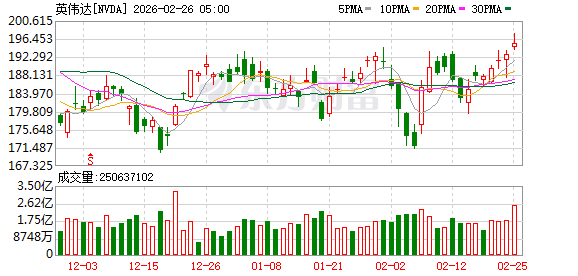
英伟达新财季数据中心业务同比增长75%
Zhong Guo Jing Ying Bao· 2026-02-26 09:42
Core Viewpoint - Nvidia reported strong Q4 results for fiscal year 2026, with total revenue increasing by 73% year-over-year, from $39.3 billion to $68.13 billion, with over 91% of revenue coming from data center business [2] Group 1: Financial Performance - Total revenue for Q4 reached $68.13 billion, a 73% increase from the previous year's $39.3 billion [2] - Revenue from the data center business was $62 billion, reflecting a 75% year-over-year growth and a 22% quarter-over-quarter increase [2] Group 2: AI and Infrastructure - Nvidia's CEO Jensen Huang highlighted a turning point in agentic AI, emphasizing that computational power directly correlates with revenue growth [2] - The computational power deployed by major cloud service providers and AI model developers has reached 90 billion watts and is operating at full capacity [2] Group 3: Supply Chain and Market Challenges - Huang acknowledged ongoing global shortages in storage chips, indicating that supply will remain tight in the coming quarters [2] - Nvidia's CFO Colette Kress mentioned that while the U.S. government has approved a limited number of H200 products for Chinese customers, no revenue has been generated from these sales yet [2]


全文|英伟达Q4业绩会实录:已经看到了Agentic AI的拐点
Xin Lang Cai Jing· 2026-02-26 09:24
Core Viewpoint - Nvidia's revenue for the quarter increased by 73% year-over-year, rising from $39.3 billion to $68.13 billion, with over 91% of revenue coming from the data center segment, primarily driven by AI chips [1] Group 1: Financial Performance - Nvidia's revenue growth is significantly attributed to the data center segment, which saw a 75% increase [1] - The company is expected to maintain strong revenue growth, with confidence in customer cash flow and capital expenditures [2] Group 2: AI and Computational Demand - The emergence of Agentic AI has led to a strong demand for computational power, equating a company's computational capacity with its revenue potential [3][4] - The shift in computing resources from traditional software to AI technology development is evident, with capital expenditures in AI expected to surpass previous levels [4][25] Group 3: Ecosystem and Strategic Investments - Nvidia's ecosystem is extensive, with collaborations across various sectors, including cloud service providers and AI-native companies [5][6] - The company is focused on expanding its AI ecosystem, ensuring that all users can leverage Nvidia's platform for various applications [5][6] Group 4: Network Business Growth - Nvidia's network business has seen substantial growth, with a reported 3.6 times year-over-year increase in revenue for the fourth quarter of fiscal 2026 [7] - The Spectrum Ethernet platform has shown significant revenue growth, indicating strong demand for Nvidia's networking solutions [7][8] Group 5: Future Outlook and Innovations - The company is committed to delivering next-generation AI infrastructure, with new architectures like Rubin expected to enhance performance and customer demand [12][17] - Nvidia's strategic focus on maintaining high gross margins is linked to delivering generational performance leaps in its products [16][17] Group 6: Market Position and Customer Base - Nvidia's top five customers contribute approximately 50% of total revenue, showcasing a strong market position among large-scale clients [19] - The company is diversifying its customer base, which includes AI model developers and various enterprise clients, enhancing its market resilience [19][20]
AI时代新战略:从传统软件到智能交付
2026-02-25 04:13
Summary of Conference Call Company Overview - **Company Name**: Yunsai Zhili (云赛智联) - **Industry**: Information Services - **Main Business Segments**: - Cloud Services and Big Data - Solutions (Urban Safety Governance, Healthcare, Education) - Intelligent Products - **Subsidiaries**: Nanyang Wanbang (南阳万邦) and Beijing Xinnuo (北京信诺) focusing on AI applications from 2023 onwards [2][3] Key Points and Arguments Financial Performance - The company is currently auditing its 2025 annual report, expected to be released by the end of March, indicating a positive performance despite a challenging economic environment [3] - Previous annual revenue for Yunsai Zhili was approximately 4 billion, with Nanyang Wanbang contributing around 1.7 billion, representing about one-third of Yunsai's revenue [8][9] AI Strategy and Development - Nanyang Wanbang is transitioning from traditional machine learning to large models and AI applications, influenced by the emergence of ChatGPT and similar technologies [4] - The company emphasizes a shift from traditional software delivery to intelligent delivery, leveraging AI for digital transformation in government and enterprises [5][19] - AI services currently account for a small portion of overall revenue but are experiencing rapid growth, with a doubling rate year-over-year [17][18] Market Trends and Challenges - Traditional software models, particularly subscription-based SaaS, are facing challenges due to the rise of AI-driven software delivery, which allows for highly customized applications at a lower cost [18][19] - The market is witnessing a shift towards AI-driven solutions, where the focus is on delivering results rather than just software code [20][39] - The company aims to integrate AI into all aspects of software delivery, enhancing efficiency and customization capabilities [34] Technological Innovations - The introduction of agent-based AI is highlighted as a significant trend, allowing for collaborative interactions among multiple AI agents to complete complex tasks [21][26] - The company is exploring the use of various AI models to optimize service delivery, adapting to client needs and market demands [38][39] Client Engagement and Service Model - Nanyang Wanbang positions itself as a service provider rather than a traditional software vendor, focusing on delivering AI-based services tailored to client requirements [39] - The company has a diverse client base, including government entities and large enterprises, and is involved in significant projects like the Shanghai Big Data Center [16][17] Additional Important Content - The company has a long-standing partnership with Microsoft, which enhances its capabilities in cloud services and software solutions [7][8] - Nanyang Wanbang's approach to AI includes a focus on data governance and quality improvement, utilizing AI to enhance operational efficiency by approximately 30% [13] - The company is also involved in training services related to data security and software applications, further diversifying its offerings [12] This summary encapsulates the key insights from the conference call, focusing on the company's strategic direction, financial performance, and the evolving landscape of AI in the information services industry.

开放代理式AI基金会成立
Xin Lang Cai Jing· 2026-02-03 08:34
Group 1 - The Open Agent-based Artificial Intelligence Foundation (OAAIF) was officially established on January 30, with ZTE Corporation as a co-founding and secretarial unit [1] - ZTE Corporation will deeply participate in the global layout and ecological construction of the foundation, collaborating with industry, academia, and the open-source community to explore future pathways for intelligent agent technology [1]
“2026北大报告”发布2026年度文化产业十大趋势
Xin Lang Cai Jing· 2026-01-13 11:31
Core Insights - The "2026 Peking University Report" outlines the top trends and characteristics in the cultural industry for 2025 and forecasts for 2026, emphasizing the importance of digital transformation and AI integration in cultural practices [1] Group 1: Cultural Industry Trends - The top ten trends for the cultural industry in 2026 include the deepening of digital governance of cultural resources, utilizing technologies like AI and 3D modeling for better preservation and sharing of cultural heritage [2] - AI agents are expected to empower individual creators in the cultural and tourism sectors, lowering barriers to entry and enabling them to thrive as "super individuals" in the industry [2] - Globalization of local culture is driving the upgrade of cultural exports, with successful examples like Li Ziqi's videos and other cultural products that effectively communicate Chinese stories while minimizing cultural discount [2] Group 2: Policy and Market Dynamics - The "14th Five-Year Plan" is set to enhance the synergy between policy support and market vitality, fostering a critical phase of integration in the cultural industry [3] - Cultural data is transitioning from a supportive tool to a core driver of brand development, enhancing market competitiveness through the analysis of user behavior and resource activation [3] Group 3: Technological Integration - The widespread application of intelligent robots in the cultural and tourism sectors is expected to enhance visitor experiences and address labor shortages due to aging populations [3] - The integration of AI in creative processes is reshaping the production of cultural products, allowing for automated content generation and new business models [5] Group 4: New Business Models and Experiences - The fusion of cultural tourism with various industries is creating new business scenarios, such as immersive experiences and pet-friendly travel options, which cater to emotional consumer needs [4] - Cultural innovation is moving towards practical applications, with new formats like night markets and immersive theaters engaging younger audiences and transforming cultural consumption [4] Group 5: Key Terms and Characteristics - The top ten keywords for the cultural industry in 2025 include terms like "data intelligence empowerment" and "emotional value consumption," reflecting the evolving landscape of cultural consumption [6] - Key characteristics highlight the dominance of emotional economics, the rise of national trends, and the deep integration of AI across the cultural industry [6]
AI“变身”黑五购物代理:价格战升级,零售商面临史上最强比价压力!
Zhi Tong Cai Jing· 2025-12-01 01:45
Core Insights - The article highlights the significant impact of artificial intelligence (AI) on consumer spending during the holiday shopping season, with a record online expenditure of $11.8 billion on Black Friday, much of which was facilitated by AI-driven tools [1] - Major companies like Walmart, Amazon, and Google are advancing their AI shopping assistants beyond traditional chatbots, aiming to provide personalized recommendations and streamline the purchasing process [1][2] Group 1: AI Impact on Holiday Shopping - AI is estimated to influence global sales by $73 billion during the holiday season, accounting for 22% of total sales, an increase from $60 billion the previous year [1] - Despite advancements, the overall impact of AI on holiday shopping remains limited as not all retailers have effective tools and consumer adoption is gradual [2] Group 2: AI Tools and Features - OpenAI has enhanced ChatGPT with a shopping research feature that offers personalized buying guides, particularly effective for complex products [2] - Google has upgraded its AI search tool to answer detailed natural language queries, allowing users to find products more efficiently compared to traditional search methods [3] Group 3: Price Tracking Innovations - Amazon has introduced a 90-day price history tracker and price alerts for shoppers, while Google has launched an advanced price tracking tool that allows for detailed requests [5] - New pricing tools are expected to increase competitive pressure on retailers, as consumers become more aware of price alerts [5] Group 4: Seamless Shopping Experience - Companies are developing AI tools that enable a seamless shopping experience, allowing consumers to browse and purchase within the same application without visiting retailer websites [6] - OpenAI's new instant checkout feature allows users to purchase recommended products directly through ChatGPT, while Walmart and Target have similar functionalities [6] Group 5: Automated Purchasing Options - Google's AI price tracker includes a "buy for me" option that can automatically complete purchases when prices drop, applicable to various retailers [7] - Google has also introduced an automated AI calling feature to inquire about product availability at local stores, initially focusing on specific product categories [7]


人工智能深度融入企业运营 中国财会复合型人才需求激增
Huan Qiu Wang Zi Xun· 2025-11-24 06:19
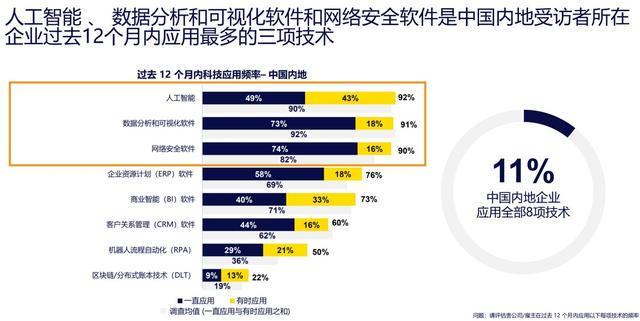
Core Insights - The widespread adoption of generative artificial intelligence (AI) has significantly lowered the application barriers for businesses, providing mature and reliable technology options that accelerate the intelligent upgrade across various industries [1][4] - A recent survey by the Australian Accounting Association revealed that 92% of surveyed companies in mainland China have deployed AI tools, a substantial increase from 72% the previous year, with 21% fully integrating AI into their business processes, leading the Asia-Pacific region [1][4] - The rapid development of AI is reshaping corporate technology strategies and fundamentally altering the core competencies required in finance and accounting roles, pushing human resource structures towards a more "composite and intelligent" direction [1][4] AI Application Trends - The survey covered 1,117 finance, accounting, and financial professionals across nine major Asia-Pacific markets, with 244 valid samples from mainland China, indicating a high level of representation [4] - AI, data analytics, and cybersecurity software emerged as the three most widely used technologies in mainland China over the past year, with 49% of respondents indicating their companies have been consistently using AI [4] - The depth of AI application in mainland China is notable, with the highest percentage in the Asia-Pacific region of respondents indicating that AI technology is fully integrated into their business processes [4] Future Investment Outlook - 65% of respondents from mainland China expect their companies to increase AI investments in the next 12 months, a 17 percentage point increase from 2024 [5] Talent Structure Changes - The penetration of AI is restructuring the talent composition within finance and accounting teams, with 32% of respondents indicating a reduction in hiring entry-level accounting staff due to AI adoption, significantly higher than the Asia-Pacific average of 17% [7] - 18% of companies are actively recruiting composite accounting talents with AI expertise, far exceeding the regional average of 8% [7] - Traditional repetitive tasks in accounting are being automated by technologies like RPA and intelligent agents, shifting the focus towards strategic analysis, risk management, and data insights [7] Challenges for SMEs - Despite the enthusiasm for AI applications, about 40% of respondents noted low returns on technology investments, particularly among resource-constrained SMEs, which cite financial costs and low ROI as primary challenges [8] - SMEs are advised to adopt lightweight third-party tools and phased investment strategies to enhance core business capabilities while leveraging local policy support to alleviate financial pressures [8] Security Concerns - The deepening AI application has introduced new security challenges, with 74% of respondents indicating ongoing use of cybersecurity software, and 61% reporting no losses from cybersecurity incidents in the past year [9] - 35% of companies have fully integrated cybersecurity into their corporate strategy and operations, surpassing the Asia-Pacific average of 28%, indicating a high level of data protection maturity [9] Strategic Recommendations - Companies are encouraged to build data-centric, AI-driven organizational structures to enhance core operational management competencies for future competitiveness [10]
OpenAI,最新技术分享
半导体芯闻· 2025-09-11 10:12
Core Viewpoint - The article emphasizes the necessity for global-scale computing infrastructure to support the widespread adoption of artificial intelligence (AI), as highlighted by Richard Ho from OpenAI during the AI Infrastructure Summit [2][3]. Group 1: AI Infrastructure and Computing Needs - The demand for computing power in AI is expected to exceed the scales seen during the internet and big data bubbles of the late 20th and early 21st centuries [2]. - AI processing requires advanced infrastructure that can support the collaboration of numerous XPU chips, moving beyond traditional computing paradigms [3]. - OpenAI's efforts in developing proprietary accelerators and their "Stargate" project are anticipated to significantly impact AI processing technology [4]. Group 2: Model Performance and Growth - OpenAI's GPT-4 model has shown a slight improvement in computational efficiency, with future models like GPT-5 expected to approach 100% scores on the MMLU test [7]. - The computational requirements for image recognition models have increased dramatically, with GPT-4 estimated to have around 1.5 trillion parameters, showcasing exponential growth in model complexity [9]. Group 3: Future of AI Workflows - The shift towards agent-based workflows in AI will necessitate stateful computing and memory support, allowing agents to operate continuously without user input [14]. - Low-latency interconnects will be crucial for enabling real-time communication between agents, which will be essential for executing complex tasks over extended periods [14]. Group 4: Infrastructure Challenges - Current AI system designs face significant tensions in computing, networking, and storage, with a need for hardware integration to ensure security and efficiency [15]. - The future infrastructure must address issues such as power consumption, cooling requirements, and the integration of diverse computing units to handle the anticipated increase in workload [16]. Group 5: Collaboration and Reliability - Collaboration among foundries, packaging companies, and cloud builders is essential for ensuring the reliability and safety of AI systems [17]. - Testing of fiber optic and communication platforms is necessary to validate the reliability of the infrastructure needed for global-scale computing [17].

中国机器人发展领跑全球 创新赋能千行百业
Zhong Guo Xin Wen Wang· 2025-08-13 02:57
Group 1 - The core viewpoint of the articles highlights the significant transformation and innovation within the global robotics industry, particularly emphasizing China's role as a stable anchor amidst a global market contraction [2][3][5][6] Group 2 - The global industrial robot installation volume reached 553,000 units in 2022 but has been declining, with a projected decrease to 523,000 units in 2024, representing a 3% year-on-year drop [2] - Japan's industrial robot installations are expected to fall by 7% to 43,000 units in 2024, while the U.S. is projected to see a 9% decline to 34,000 units, and Germany's installations are anticipated to decrease by 5% to 27,000 units [2] Group 3 - In contrast, China's industrial robot installations are projected to grow by 5% to 290,000 units in 2024, capturing 54% of the global market share [3] - China's robot density reached 470 units per 10,000 workers in 2023, ranking third globally, surpassing Germany and Japan [3] Group 4 - The application of industrial robots in China is shifting significantly, with the share of general industry rising from 38% in 2020 to 53% in 2024, indicating broader penetration across various sectors [3] Group 5 - China possesses key advantages in the robotics industry, including a strong AI talent pool, expertise in electronics, and a robust manufacturing base, enabling the production of cost-effective and efficient robots [4] Group 6 - International cooperation is deemed essential for overcoming challenges in the robotics sector, with calls for a shift from zero-sum competition to collaborative efforts among researchers, practitioners, and end-users [5][6] - The World Robot Conference serves as a platform for showcasing global robotics technologies and fostering collaboration, demonstrating that cooperative innovation is more viable than competitive approaches [6]

百度推出首批AI数字员工 阮瑜:将推动组织生产力变革
Xin Jing Bao· 2025-08-06 12:55
Core Insights - Baidu Smart Cloud has launched the world's first AI digital employees, covering seven roles including marketing manager, repayment assistant, and recruitment specialist [1] - These AI digital employees are designed to meet the specialized and personalized needs of various industries, moving beyond traditional agent tools that are limited by mechanical responses and data fragmentation [1] - The evolution of large models is pushing AI from a collaborative Copilot role to an autonomous Agent role, leading to a new era of "Agentic" AI that will transform organizational productivity [1] Group 1 - Baidu Smart Cloud introduced AI digital employees with distinct identities and roles, showcasing their potential in various business functions [1] - The digital employees are positioned as a new form of productivity that can directly integrate into business processes and take responsibility for outcomes [1] - The transition to Agentic AI signifies a revolutionary change in how organizations will operate, with digital employees becoming integral to daily business activities [1]
