
供应链挑战

Search documents
沪上阿姨2025年业绩预增超50%,市值较上市高点腰斩
Jing Ji Guan Cha Wang· 2026-02-13 20:50
Core Viewpoint - The company "沪上阿姨" (02589.HK) forecasts a significant increase in net profit for 2025, projecting a growth of 50%-60% year-on-year, despite a substantial decline in market value since its initial public offering [2][3]. Financial Performance - The expected net profit for 2025 is estimated to be between 495 million to 525 million HKD, reflecting a year-on-year growth of 50%-60%. Adjusted net profit is projected to be between 560 million to 590 million HKD, indicating a growth of 34%-41% [3]. - The company has already distributed an interim dividend of 7.43755 HKD per 10 shares for the first half of 2025, which may impact shareholder returns [4]. Company Status - As of mid-January 2026, the total market capitalization of "沪上阿姨" has fallen to 9.17 billion HKD, representing a decline of over 50% from its peak at the time of listing. The company is currently facing challenges related to supply chain issues, brand positioning competition, and franchisee management [5]. Market Environment - The trading suspension during the Chinese New Year from February 15 to February 23, 2026, may affect short-term liquidity in the market, with normal trading resuming on February 24 [6].
AI算力“吃掉”任天堂利润:内存成本飙升,Switch 2陷入增收不增利泥潭
Hua Er Jie Jian Wen· 2026-02-03 09:18
Core Insights - Nintendo is facing unexpected challenges in the AI-driven tech landscape, particularly with rising memory costs impacting profitability despite strong sales of the Switch 2 [1] - The company reported a quarterly operating profit of 155.21 billion yen (approximately $998.5 million), significantly below analyst expectations of 180.7 billion yen, despite an 80% increase in sales to 806.32 billion yen [1] - The dual pressures of U.S. tariffs and structural supply chain challenges are eroding Nintendo's profit margins, raising concerns about its ability to maintain profitability through 2026 [1][3] Financial Performance - Nintendo's Switch 2 sales reached 7.01 million units during the holiday season, slightly exceeding analyst forecasts of 6.5 million units, but this did not translate into proportional profit growth [3] - The company maintains its full-year revenue guidance of 2.25 trillion yen and operating profit of 370 billion yen, reaffirming its sales target of 19 million units for the Switch 2 [2] Cost Pressures - Rising costs are attributed to U.S. tariffs affecting global trade and increased logistics and operational expenses, alongside a pricing strategy in Japan that has negatively impacted profit margins [3] - The shift of semiconductor manufacturers prioritizing AI data center storage over consumer electronics is leading to a supply crunch and soaring prices for necessary components [4] Supply Chain Challenges - The "memory crisis" resulting from AI demand may not only increase costs but also risk insufficient chip availability for manufacturing consoles, potentially affecting software sales as well [4] - The built-in storage of the Switch 2 is only 256GB, which is significantly lower than competitors, and rising prices for storage expansion options may deter consumers from purchasing new games [4] Market Outlook - Nintendo is exploring strategies to maintain consumer interest, such as releasing different color variants of the Switch 2, while also aiming to improve hardware profitability [5] - Analysts suggest that despite increased operational expenses, the ecosystem remains robust, and the long-term growth of the Switch 2 is critical for attracting third-party developers and players [6]

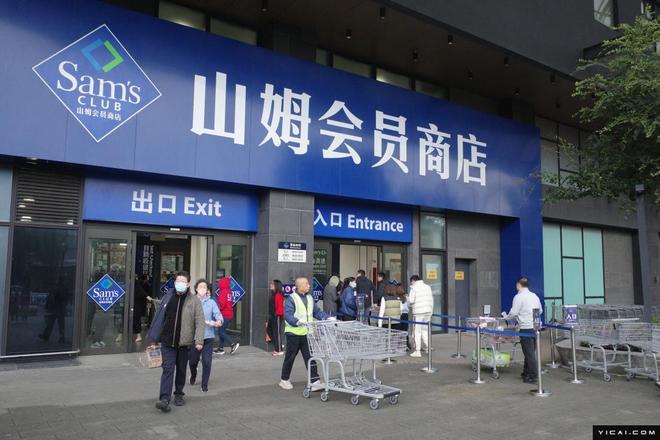
山姆食品安全风波背后,会员店面临这些挑战|乐言商业
Di Yi Cai Jing Zi Xun· 2025-12-10 08:51
Core Viewpoint - Recent consumer complaints about a rodent found in a product from Sam's Club highlight ongoing challenges in the membership store sector, emphasizing the need for improved supply chain management and consumer safety measures [1][5][6] Group 1: Consumer Perception and Membership Model - Initially, the membership fee model for stores like Sam's Club was not well accepted by Chinese consumers, making it difficult for these stores to expand in the market [1][2] - Over time, the rise of the middle-income population has led to increased acceptance of membership stores, driven by the appeal of exclusive products and high cost-performance ratios [2][3] Group 2: Competition and Product Differentiation - Membership stores face intense competition as more retailers enter the market, leading to a homogenization of popular products, which diminishes the uniqueness of offerings [2][3] - The pressure to develop market-leading products is significant, as competitors can quickly replicate successful items, creating challenges for established brands [3][6] Group 3: Supply Chain and Logistics Challenges - The recent incident involving a rodent in a product underscores the critical importance of logistics and supply chain management in maintaining product safety and consumer trust [5][6] - Membership stores must ensure that all aspects of the supply chain, from sourcing to delivery, are secure and efficient to prevent safety issues that could harm brand reputation [5][6] Group 4: Future Outlook for Membership Stores - The membership store model has potential for growth, but it requires continuous innovation in product offerings and a focus on safety in e-commerce logistics to meet rising consumer expectations [6]

航司运一位旅客赚不过苹果卖一个手机壳
第一财经· 2025-12-10 03:27
Core Viewpoint - The International Air Transport Association (IATA) forecasts that the global airline industry will achieve a net profit of $41 billion in 2026, up from $39.5 billion in 2025, marking a historical high despite ongoing supply chain challenges [3][4]. Financial Outlook - Total revenue for the airline industry is projected to reach $1.054 trillion in 2026, representing a 4.5% increase from $1.008 trillion in 2025 [3]. - Passenger traffic is expected to grow to 5.2 billion in 2026, a 4.4% increase compared to 2025 [3]. Profitability Analysis - The average net profit per passenger is estimated at $7.90 in 2026, which is lower than the historical peak of $8.50 in 2023 but remains consistent with 2025 [3][4]. - The airline industry's profit margins are notably thin, with IATA's Director General Willie Walsh highlighting that the profit from transporting one passenger is less than the profit from selling an iPhone case [4]. Cost Projections - Fuel costs are expected to slightly decrease to $252 billion in 2026, down 0.3% from $253 billion in 2025 [4]. - Non-fuel costs are projected to rise to $729 billion, a 5.8% increase from $689 billion in 2025, driven by aging fleets and supply chain disruptions [4][5]. Regional Insights - The Asia-Pacific region is estimated to generate a net profit of $6.6 billion in 2026, with China and India leading growth due to increased tourism and a growing middle class [5]. - However, the Asia-Pacific airlines have the lowest profit per passenger at $3.20, compared to $28.60 in the Middle East, $10.90 in Europe, $9.80 in North America, and $5.70 in Latin America [5]. Cargo Sector Performance - Air cargo volume is expected to reach 7.16 million tons in 2026, a 2.4% increase from 2025, defying pessimistic forecasts amid changing global trade dynamics [6]. - Despite a slight decline in cargo yield by 0.5%, it remains approximately 30% higher than pre-pandemic levels, supported by strong demand for e-commerce and semiconductor transportation [6].

空中客车:供应链方面的挑战,尤其是势必锐航空系统公司方面的挑战,正给A350和A220的增产带来压力。
news flash· 2025-07-30 15:52
Group 1 - The core issue facing Airbus is the supply chain challenges, particularly with the company Safran, which is impacting the production increase of the A350 and A220 aircraft [1]

空中客车首席执行官:我们正按照计划加快生产,交付计划将偏向延后安排,这反映了我们今年所面临的供应链挑战。
news flash· 2025-04-30 15:45
Core Viewpoint - Airbus CEO stated that the company is accelerating production as planned, but delivery schedules will be adjusted to reflect the supply chain challenges faced this year [1] Group 1 - The company is facing supply chain challenges that are impacting its delivery schedules [1] - Production acceleration is in line with the company's plans despite the challenges [1]