先进半导体

Search documents
东京电子FY26Q3跟踪报告:AI驱动DRAM与逻辑资本开支高增,中国投资重心向逻辑芯片切换
CMS· 2026-02-11 13:19
Investment Rating - The report maintains a positive outlook on the semiconductor manufacturing equipment industry, with expectations for the industry index to outperform the benchmark index [57]. Core Insights - Tokyo Electron (TEL) reported FY26Q3 revenue of 552 billion yen, down 15.7% year-on-year and 12.4% quarter-on-quarter, with a gross margin of 42.7% [1][19]. - The semiconductor production equipment segment generated revenue of 385.1 billion yen, with DRAM, NVM, and non-storage chips contributing 36%, 8%, and 56% respectively [2]. - The company raised its FY2026 full-year guidance, projecting a revenue of 2.41 trillion yen, with a gross margin of 45.3% and operating margin of 24.6% [3][34]. Summary by Sections Financial Performance - FY26Q3 revenue was 552 billion yen, with a gross profit margin of 42.7%, reflecting a decrease due to changes in product mix and increased fixed costs [1][19]. - The net profit attributable to owners was 118.5 billion yen, down 24.6% year-on-year [1]. Business Segments - The semiconductor production equipment segment saw a revenue decline of 24.6% year-on-year, while the after-sales service segment grew by 14.2% year-on-year [2]. - DRAM revenue was 138.6 billion yen, showing resilience despite overall segment declines [2][22]. Market Outlook - The global wafer front-end (WFE) market is expected to exceed 130 billion USD in 2026, driven by strong demand for AI servers and advanced semiconductor investments [3][27]. - The report anticipates a 20% growth rate in the WFE market, with significant investments in DRAM and logic chips [28][39]. Investment and Returns - The company plans to increase its capital expenditure to 240 billion yen, focusing on R&D and production capacity expansion [3][36]. - The dividend per share is projected to rise to a historical high of 601 yen, with total shareholder returns expected to reach 426.2 billion yen [38].
中国光谷启动“青桐之家” 打造全链条双创生态
Zhong Guo Xin Wen Wang· 2026-02-05 03:51
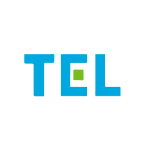
Group 1 - The "Qingtong Home" has officially started operations, serving as the first physical operational base for the "Optics Valley Qingtonghui" brand, which focuses on innovation and entrepreneurship in Wuhan's East Lake High-tech Zone [1][3] - The "Qingtong Home" will provide a comprehensive space for entrepreneurs that includes office, roadshow, and exhibition areas, and aims to create an entrepreneurial ecosystem from concept validation to industrial collaboration [3][5] - A seed fund of 20 million yuan (approximately 2.9 million USD) has been established to support concept validation, alongside financial services that include equity, debt, and guarantees [3][5] Group 2 - Six projects secured a total of 85 million yuan (approximately 12.3 million USD) in financing, covering fields such as artificial intelligence, optoelectronic chips, and commercial aerospace [3][5] - The "Optics Valley Qingtonghui" initiative has supported over 1,300 technology enterprises in its 12 years of operation, leading to the emergence of notable companies like BGI, Megvii, and Hesai Technology [5] - The initiative will focus on ten key areas by 2026, including artificial intelligence, humanoid robots, brain-computer interfaces, quantum technology, 6G communication, and advanced semiconductors, to foster hard technology entrepreneurship [5]

NextX系列:颠覆性技术周刊第4期(2025.1.24-2026.01.30):分布式城际量子传感:中国科大构建网络约束轴子暗物质
GUOTAI HAITONG SECURITIES· 2026-02-03 03:55
Investment Rating - The report does not explicitly provide an investment rating for the industry Core Insights - The report highlights significant developments in the technology sector, particularly in advanced semiconductor, artificial intelligence, and quantum technology, indicating a dynamic investment landscape Summary by Sections 1. Financing Overview - During the period from January 24 to January 30, 2026, a total of 115 financing events occurred in the technology sector globally, with 84 in China and 31 abroad. The leading sectors in domestic financing were advanced manufacturing (50 events), artificial intelligence (21 events), and enterprise services (4 events) [9] 2. IPO Updates - Several companies submitted IPO applications, including: - Hengyun Chang listed on the Shanghai Stock Exchange's Sci-Tech Innovation Board on January 28, 2026, focusing on semiconductor equipment core components [10] - Tuobida submitted an application to list on the Hong Kong Stock Exchange, specializing in smart traffic solutions [14] - Jucheng Semiconductor also applied for a Hong Kong listing, focusing on high-performance non-volatile memory chips [16] - CoolCore Microelectronics and A-Tong Robot submitted applications for Hong Kong listings, focusing on AI solutions and robotics, respectively [19][21] 3. Market Performance Tracking - The overall market indices showed a decline, with the Shanghai Composite Index down 0.44% and the Shenzhen Component Index down 1.62%. The semiconductor index fell by 0.93%, while the automotive electronics index saw a significant drop of 6.43% [24][28] 4. Advanced Semiconductor Developments - Cornell University proposed a non-invasive method for semiconductor supply chain integrity detection using out-of-band power side-channel measurements, which could enhance security against hardware threats [31] - The University of Tokyo revealed the spontaneous polarization properties of gold oxide nanosheets, which could be utilized in optoelectronic devices [35] - Arizona State University analyzed the electrical and structural responses of nine-atom-wide armchair graphene nanoribbon transistors to gamma radiation, providing insights for radiation-resistant designs [38] 5. Artificial Intelligence Innovations - Tsinghua University and ByteDance introduced a multimodal world model framework that enhances human-like reasoning through visual generation, demonstrating the potential of unified multimodal models [46] - The University of Oslo developed a robotic transesophageal echocardiography system that integrates deep learning for kinematic modeling, addressing clinical challenges [51] 6. Quantum Technology Advancements - The Chinese Academy of Sciences achieved a breakthrough with a 78-qubit processor that realizes long-lived preheated states, contributing to the field of quantum computing [6] - IBM's superconducting quantum computer validated the "Schrodinger's friend" paradox, marking a significant milestone in quantum research [6]
分布式量子传感:加州理工学院推出全光学损耗容忍的DQS方案
GUOTAI HAITONG SECURITIES· 2026-01-26 05:45
Investment Rating - The report does not explicitly provide an investment rating for the industry Core Insights - The report highlights significant advancements in various technology sectors, including distributed quantum sensing, advanced semiconductors, and artificial intelligence, indicating a robust growth trajectory in these fields Summary by Sections 1. Financing Overview - During the period from January 17 to January 23, 2026, a total of 127 financing events occurred in the technology sector globally, with 93 in China and 34 abroad. The leading sectors in domestic financing were advanced manufacturing (58 events), artificial intelligence (17 events), and enterprise services (12 events) [9] 2. IPO Updates - Extreme Vision submitted a prospectus to the Hong Kong Stock Exchange for a mainboard listing, focusing on AI visual technology solutions for various industries [12] - Keda Intelligent also submitted a prospectus for a mainboard listing, aiming to drive digital and intelligent upgrades in China's energy system through AI technology [15] - Yundong Intelligent filed for a mainboard listing, providing vehicle communication and emergency call solutions [18] - Huarui Technology submitted a prospectus for a mainboard listing, specializing in machine vision and autonomous mobile robots [22] - Jiu Wu Intelligent filed for a mainboard listing, focusing on intelligent robotic solutions for industrial scenarios [25] 3. Market Performance Tracking - The report notes a mixed performance in the stock market, with the Shanghai Composite Index rising by 0.84% and the Shenzhen Component Index increasing by 1.11%, while the ChiNext Index fell by 0.34% [28] - The semiconductor index saw a weekly increase of 2.57%, while the automotive electronics and artificial intelligence indices rose by 0.98% and 1.51%, respectively [28] - The report indicates a high turnover rate for the semiconductor and artificial intelligence indices, with turnover rates of 27.7% and 15.4% [28] 4. Advanced Semiconductor Developments - The University of Chicago introduced a high-throughput computation method for electric polarization in solids, addressing challenges in calculating effective polarization [36] - BITS Pilani and the National Autonomous University of Mexico reported a method for healing defect states in monolayer MoSe2 through oxygen passivation, significantly improving its photoresponsivity [43] - The Shanghai Institute of Technical Physics developed a high-performance exciton-polariton photodiode, achieving nearly 100% internal quantum efficiency [47]
韩国经济处于结构转型关键阶段(经济透视)
Ren Min Wang· 2026-01-21 22:38
Core Viewpoint - The International Monetary Fund and the Organisation for Economic Co-operation and Development predict that South Korea's economy is expected to achieve moderate recovery by 2026, driven by a rebound in semiconductor and high-end manufacturing exports, with a focus on emerging sectors like artificial intelligence, advanced semiconductors, and green technology [1] Group 1: Economic Transition - South Korea is undergoing a structural transformation, moving beyond traditional industries such as automotive, telecommunications, and shipbuilding, which are now in a mature phase, to high-value sectors like AI, advanced semiconductors, biomedicine, and future mobility [1] - The government is implementing a combination of policies, including tax incentives, regulatory easing, and enhanced R&D support, to systematically promote the development of emerging industries [1] Group 2: Digital and Green Transformation - Digitalization and green transformation are identified as two core pillars of South Korea's economic strategy, with a focus on addressing global climate challenges and enhancing technological competitiveness [2] - The government is collaborating with enterprises to build large AI data centers and promote the integration of AI technology into manufacturing and services, aiming for revolutionary improvements in productivity and cost structures [2] - In the digital transformation aspect, South Korea is leveraging its advanced ICT infrastructure and a mature public-private collaboration mechanism, exemplified by the "K-Cloud" project, which aims to promote domestic cloud platforms [3] - For green transformation, South Korea is constructing a "hydrogen economy ecosystem," focusing on hydrogen production, storage, transportation, and applications, including the promotion of hydrogen fuel cell vehicles and the development of low-cost clean hydrogen production technologies [3] Group 3: Regional Cooperation - Strengthening regional cooperation is crucial, as China and South Korea are significant trade partners with deeply integrated supply chains, with China being South Korea's largest trading partner for 21 consecutive years [4] - The future of South Korea-China economic relations is expected to focus on "manufacturing innovation" and "service collaboration," promoting policy communication and industrial alignment for mutual benefits [4]
2026年度上海市未来产业试验场和加速器申报工作启动
Xin Lang Cai Jing· 2026-01-21 10:25
Group 1 - The Shanghai Municipal Economic and Information Commission is organizing the application process for the 2026 Future Industry Testbeds and Accelerators to promote forward-looking layouts in future industries and encourage deep collaboration among industry, academia, and research [1][9] - The application scope includes Future Industry Testbeds focusing on six key areas: Future Intelligence, Future Manufacturing, Future Energy, Future Space, Future Materials, and Future Health [1][10] - The application scope for Future Industry Accelerators focuses on fields such as optoelectronic equipment, embodied intelligence, low-altitude technology equipment, materials and systems, satellite internet, 5G-A (6G), quantum technology, high-performance composite materials, and advanced semiconductors [2][11] Group 2 - The application requirements for Future Industry Testbeds include projects that align with international standards and demonstrate strong foresight, frontier, and advancement, encouraging projects that are slightly ahead of the current market [3][12] - Applicants must be entities with independent legal status registered in the city, possessing strong internal and external expert teams, and should apply in a consortium format with a maximum of four participating units [4][14] - The application requirements for Future Industry Accelerators include projects planned for implementation in 2025 or within the next three years, with a clear track layout and effective connection to local industrial parks [6][15] Group 3 - Future Industry Accelerators should have a hub function for innovation resources, effectively gathering national or provincial innovation platforms, leading enterprises, universities, investment institutions, and professional service organizations [8][16] - Accelerators are encouraged to focus on key links in the industrial chain, providing services such as technical validation, pilot testing, product trial production, computing power support, testing certification, and scenario applications [8][16] - The application process will be conducted online, with a deadline for submissions set for February 12 at 16:00, and applicants are advised to submit their applications early to avoid system congestion [9][18]
千吨级光刻胶树脂材料项目开工
DT新材料· 2025-12-29 16:05
Core Viewpoint - The article highlights the significance of the 2026 Future Industries New Materials Expo (FINE2026), focusing on five common demands in future industries, including advanced semiconductors, advanced batteries, lightweight materials, low-carbon sustainability, and thermal management [1]. Group 1: Event Overview - FINE2026 will feature an advanced semiconductor exhibition area, showcasing next-generation semiconductors such as diamond, silicon carbide, and gallium oxide, along with crystal growth, ultra-precision processing, and advanced packaging [1][3]. - The expo is scheduled to take place from June 10 to June 12, 2026, and will host over 800 participating companies, 200 research institutions, and 30 thematic forums covering various sectors like robotics, low-altitude economy, consumer electronics, and aerospace [4]. Group 2: Company Developments - ShangSai (Huanggang) New Materials Co., Ltd., a subsidiary of Wuhan ShangSai Optoelectronics Technology Co., Ltd., specializes in the research, production, and sales of new OLED materials, including fluorescent and phosphorescent materials, and has established a stable supply chain with major manufacturers [2]. - On December 25, a new pilot project for a thousand-ton-level photoresist resin material and new optoelectronic materials commenced in Huanggang Chemical Industry Park, with a total planned investment of 500 million yuan [1].
英特尔“救星”来了?孙正义抢先特朗普一步!软银投资英特尔20亿美元,成第5大股东?
Sou Hu Cai Jing· 2025-08-19 01:13
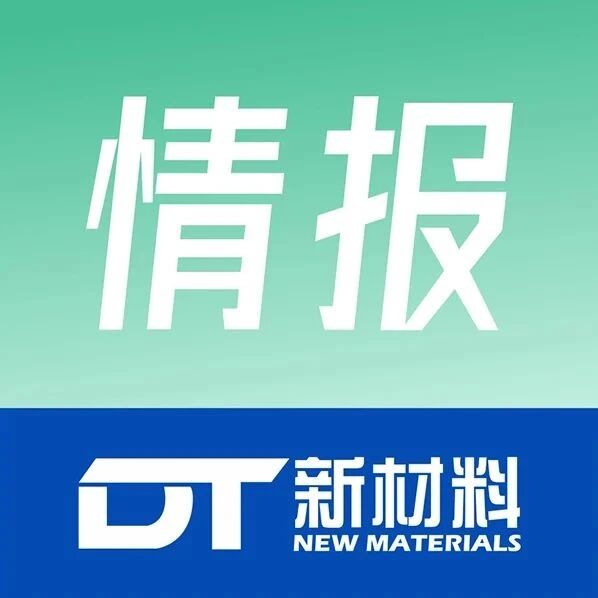
Core Viewpoint - SoftBank has made a strategic investment of $2 billion in Intel, becoming its fifth-largest shareholder, signaling confidence in Intel's role in the expansion of advanced semiconductor manufacturing in the U.S. [1][3][5] Group 1: Investment Details - SoftBank will purchase Intel common stock at $23 per share, totaling an investment of $2 billion [3]. - Following the announcement, Intel's stock price rose by approximately 4% in after-hours trading, closing at $25 [3]. Group 2: Statements from Executives - SoftBank's CEO, Masayoshi Son, expressed that this investment reflects confidence in the growth of advanced semiconductor manufacturing in the U.S., with Intel playing a crucial role [5]. - Intel's CEO, Pat Gelsinger, acknowledged the long-standing collaboration with Son and appreciated the confidence shown through this investment [7]. Group 3: Market Context - The investment comes amid discussions about Intel's position as a key supplier in the U.S. semiconductor industry, despite its struggles to benefit from the AI semiconductor boom, with a 60% decline in stock price last year [7][8]. - Intel has yet to secure major clients for its foundry business, which is essential for its stability and expansion [8].