
半导体产业自主可控

Search documents
2025年中国半导体产业投资额约为7,800亿元,同比增长17.2%
CINNO Research· 2026-03-18 23:07
Group 1 - The core viewpoint of the article is that China's semiconductor industry is expected to see a total investment of 784.1 billion yuan by 2025, reflecting a year-on-year growth of 17.2%, showcasing the industry's resilience and the commitment to a self-sufficient supply chain strategy [5][6][8] - The investment structure within the semiconductor industry is undergoing significant optimization, with notable growth in semiconductor equipment and materials, while other sectors are experiencing varied development trends [6][8] - In 2025, wafer manufacturing remains the dominant investment area at 255.87 billion yuan, accounting for 32.6% of total investment, although it has slightly decreased by 0.1% year-on-year due to saturation in mature process investments [7][8] Group 2 - The semiconductor equipment sector has seen a remarkable increase of 100.2%, becoming the only area to achieve a doubling in investment, highlighting its critical role in the industry's self-sufficiency [7][10] - The investment in semiconductor materials has surged by 59.6% to 171.3 billion yuan, indicating a continuous optimization of investment structure and a significant increase in high-end materials [7][16] - The article emphasizes that the growth in the semiconductor equipment sector is driven by domestic innovation in response to external technological restrictions, with local companies making significant advancements in key equipment areas [10][11] Group 3 - The investment distribution across China shows a high concentration, with the top five regions accounting for 57.4% of total funding, led by Shanghai with 72.82 billion yuan [12][15] - The article identifies three core factors contributing to this concentrated investment pattern: deep industrial accumulation in the Yangtze River Delta, favorable policy resources in major cities, and the emergence of regional collaborative effects [15][16] - The materials sector is highlighted as a key growth area, with third-generation semiconductor materials (SiC/GaN) receiving significant investment, reflecting a strategic shift towards high-end materials [16][17] Group 4 - The semiconductor industry is experiencing a structural transformation amid global economic downturns and geopolitical tensions, with China's unique development path emerging as a response to U.S. export controls [17][18] - The article suggests that China's semiconductor industry will enter a new phase of "fine cultivation," with future development dependent on breakthroughs in independent innovation, precise policy tools, and flexible international cooperation [18]


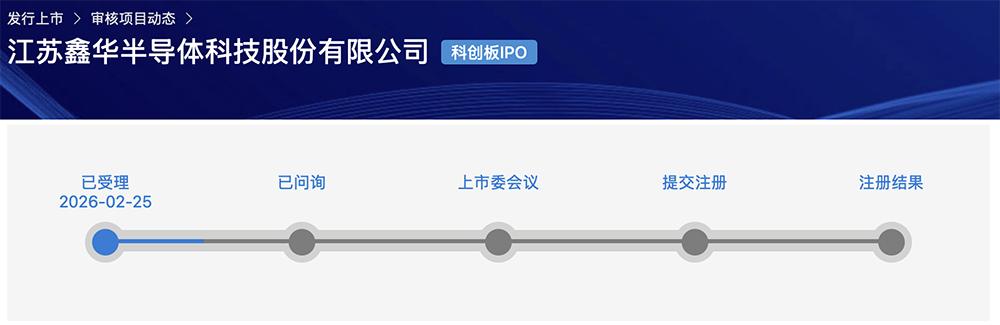
马年首个半导体IPO获受理,国家大基金持股,拟募资13.20亿
3 6 Ke· 2026-02-26 10:03
Core Viewpoint - XinHua Technology's IPO application has been accepted, marking the first IPO of the year for the Sci-Tech Innovation Board, highlighting the company's significant role in the semiconductor materials industry [1][3]. Company Overview - Established in November 2015, XinHua Technology is the largest and technologically advanced producer of electronic-grade polysilicon in China, covering various application fields including 12-inch, 8-inch, and 4-6 inch silicon wafers [3]. - The company has achieved a production capacity of 5,000 tons per year and has developed a complete set of stable mass production processes, with key product indicators meeting or exceeding international standards [3][19]. - XinHua Technology holds a market share of over 50% in the domestic high-purity electronic-grade polysilicon market for integrated circuits, ranking first [3]. IPO Details - The company plans to raise 1.32 billion yuan through its IPO, primarily to invest in projects including a 10,000 tons/year high-purity electronic-grade polysilicon industrial cluster and a 1,500 tons/year ultra-high-purity polysilicon project [4][5]. Financial Performance - Revenue figures for XinHua Technology from 2022 to the first nine months of 2025 show a growth trend, with revenues of 12.74 billion yuan in 2022, 9.46 billion yuan in 2023, 11.10 billion yuan in 2024, and 13.36 billion yuan in 2025 [6][12]. - The company's net profit for the same periods was 1.43 billion yuan, 360 million yuan, 620 million yuan, and 780 million yuan respectively [6][12]. - The gross profit margin for the main business has shown fluctuations, with figures of 20.55%, 16.84%, 23.10%, and 25.08% over the same periods [15]. Product Portfolio - XinHua Technology's main products include zone-melted polysilicon and pulling polysilicon, covering all sizes of silicon wafers and components [8][19]. - The ultra-high-purity electronic-grade polysilicon is critical for advanced semiconductor applications, including AI chips and silicon photonic chips [8]. Market Position - The company is the only domestic supplier capable of large-scale stable supply of electronic-grade polysilicon for 12-inch wafers, breaking the foreign monopoly in technology and market [19]. - XinHua Technology has established long-term supply agreements with leading domestic semiconductor wafer manufacturers, including Xi'an Yicai and TCL Zhonghuan [3][22]. Customer Base - The top five customers accounted for 71.34% of the company's revenue in the first nine months of 2025, with TCL Zhonghuan being the largest customer [21][22]. - The company maintains a high customer concentration, with significant sales to major semiconductor manufacturers [21][24]. Research and Development - As of September 30, 2025, XinHua Technology employed 136 R&D personnel, representing 14.62% of its total workforce, indicating a strong focus on innovation [17][18]. Supply Chain and Procurement - The company has a high supplier concentration, with the top five suppliers accounting for 76.78% of total procurement in the first nine months of 2025 [25][26]. - XinHua Technology's procurement strategy emphasizes local suppliers, enhancing responsiveness to customer needs and supply chain stability [27]. Shareholding Structure - XinHua Technology has no controlling shareholder, with the largest shareholder holding 25.55% and the second-largest holding 20.62% [28][30]. - The company has multiple employee stock ownership platforms, reflecting a commitment to employee engagement [28]. Industry Context - The domestic semiconductor industry has a pressing demand for high-end core materials, with XinHua Technology positioned to meet this need through its advanced polysilicon products [31][32]. - The company has made significant progress in product technology development, filling gaps in domestic supply and supporting the high-end semiconductor industry's growth [32].
延江股份拟跨界并购半导体资产 日振幅达24.9%
Zhong Guo Jing Ying Bao· 2026-01-23 10:45
Core Viewpoint - The stock price of Xiamen Yanjing New Materials Co., Ltd. (Yanjing Co., 300658.SZ) experienced dramatic fluctuations following the announcement of its acquisition plan for a semiconductor materials company, highlighting the volatility and potential risks associated with such cross-industry mergers [1][2]. Group 1: Acquisition Details - Yanjing Co. plans to acquire 98.54% of Ningbo Yongqiang Technology Co., Ltd. through a combination of issuing shares and cash payments, with funding from its controlling shareholder [2]. - The acquisition is aimed at expanding Yanjing Co.'s business into the high-end electronic information interconnection materials sector, which is crucial for integrated circuits [3]. - Yongqiang Technology has reported losses for three consecutive years, with total losses exceeding 110 million yuan, raising concerns about its profitability despite its strong technical team and client base [3]. Group 2: Market Reactions and Regulatory Concerns - Following the acquisition announcement, Yanjing Co.'s stock price surged by 20% before experiencing a significant drop, indicating market volatility and potential insider trading investigations [2][4]. - The company acknowledged the risk of regulatory scrutiny due to abnormal stock price movements, which could lead to the suspension or termination of the acquisition [4]. Group 3: Industry Trends - The trend of traditional companies entering the semiconductor sector through acquisitions has accelerated since 2025, with various firms attempting to diversify their business and capitalize on the semiconductor industry's growth potential [5][6]. - Notable examples include companies like Tanshan and Ankai Micro, which have made significant acquisitions in the semiconductor field to enhance their product offerings and market competitiveness [6][7]. Group 4: Policy and Market Dynamics - Government policies aimed at supporting the semiconductor industry, including simplified approval processes and financial incentives, are driving traditional companies to pursue cross-industry acquisitions [8]. - While some acquisitions may bring in new capital and attention to the semiconductor sector, there are concerns about the irrational aspects of the acquisition wave, with many companies lacking operational experience in the semiconductor industry [9].

日本专家直言:中国永远造不出合格光刻胶?国产突破正在改写规则
Sou Hu Cai Jing· 2026-01-18 05:20
Core Viewpoint - The debate surrounding high-end photoresists highlights the ongoing competition between China and Japan in the semiconductor materials sector, emphasizing the importance of domestic industry discourse and technological independence [1][5]. Group 1: Market Dynamics - Japanese companies dominate over 90% of the global high-end photoresist market, with major players like Tokyo Ohka Kogyo, Shin-Etsu Chemical, JSR, and Fujifilm controlling essential materials for processes from ArF to EUV [3]. - The long-standing technological advantage of Japan in photoresist production is attributed to nearly 60 years of continuous innovation in chemical synthesis, molecular design, and process optimization [3]. - China's photoresist industry has historically faced significant challenges, with a domestic production rate of less than 5% and a complete reliance on Japanese imports for high-end materials, particularly EUV photoresists used in advanced processes [3]. Group 2: China's Response - In response to technological barriers, China has adopted a dual approach of targeted breakthroughs and systematic development, prioritizing photoresists as a key area for semiconductor material innovation [4]. - Local companies such as Nanda Optoelectronics, Rongda Photosensitive, and Tongcheng New Materials have made significant progress, achieving mass production of KrF photoresists and validating ArF photoresists for small-scale sales, with domestic production rates exceeding 30% in the KrF market and double-digit growth in the ArF market [4]. - Notably, Chinese-developed EUV photoresists have entered pilot testing, achieving international advanced levels in critical metrics such as linewidth control and sensitivity optimization [4]. Group 3: Strategic Implications - The competition over photoresists transcends mere technological rivalry, as Japan seeks to stifle China's semiconductor industry growth through material monopolization, while China aims to reconstruct a self-sufficient industrial ecosystem [5]. - Despite the existing performance gaps in stability, supply capacity, and process compatibility, China's substantial market demand, ongoing research investment, and agile engineering capabilities are gradually dismantling Japan's perceived irreplaceability [5]. - The journey from laboratory innovations to large-scale commercialization for Chinese photoresists is expected to be lengthy, requiring extensive process refinement and market validation [5]. Group 4: Future Outlook - The successful validation of Chinese photoresists on a global scale would mark a significant milestone for China's semiconductor industry, symbolizing a robust response to technological hegemony [6].
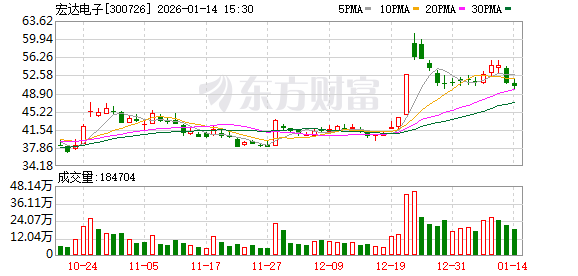
宏达电子拟10亿元投建晶圆制造封测基地
Zheng Quan Shi Bao· 2026-01-14 17:32
Group 1 - The core point of the news is that Hongda Electronics (300726) announced an investment by its subsidiary, Siwei Technology, to establish a semiconductor special device chip research, design, production, and testing company in Wuxi High-tech Development Zone, with a total planned investment of 1 billion yuan [2][3] - The project will be implemented in two phases: Phase 1 from 2026 to 2028 with an estimated investment of 300 million yuan, and Phase 2 will depend on the actual investment of Phase 1 and future market conditions, with a planned investment of 700 million yuan [2][3] - The investment aims to focus on the high-end semiconductor field, establishing a special semiconductor packaging line and a high-reliability semiconductor chip production line to meet the demand for high-quality semiconductor products in various sectors such as new energy, consumer electronics, and industrial control [3] Group 2 - The investment does not involve related party transactions or constitute a major asset reorganization, and does not require shareholder approval [3] - The project is expected to enhance the company's product matrix and create new revenue growth opportunities while supporting the domestic semiconductor industry's self-sufficiency [3] - The Wuxi National High-tech Industrial Development Zone Management Committee will provide development support policies to ensure the project's success in the Wuxi High-tech Zone [3]

宏达电子拟10亿元投建 晶圆制造封测基地
Zheng Quan Shi Bao· 2026-01-14 17:31
Group 1 - The core point of the news is that Hongda Electronics (300726) announced an investment by its subsidiary, Siwei Technology, to establish a semiconductor special device chip research, design, production, and testing business in Wuxi High-tech Development Zone, with a total planned investment of 1 billion yuan [1][2] - The project will be implemented in two phases: Phase 1 from 2026 to 2028 with an estimated investment of 300 million yuan, and Phase 2 will depend on the actual investment of Phase 1 and future market conditions, with a total investment of 700 million yuan [1][2] - The investment aims to meet the demand for high-quality semiconductor products in sectors such as new energy, consumer electronics, and industrial control, supporting the independent and controllable development of the domestic semiconductor industry [2] Group 2 - The investment does not involve related party transactions and does not constitute a major asset reorganization, thus does not require shareholder approval [2] - The project is expected to enhance the company's product matrix and create new revenue growth opportunities by focusing on high-reliability semiconductor device packaging lines and chip production lines [2] - The Wuxi National High-tech Industrial Development Zone Management Committee will provide development support policies to ensure the project's success in the region [2]
宏达电子拟10亿元投建特种器件晶圆制造封测基地
Zheng Quan Shi Bao Wang· 2026-01-14 11:34
Core Viewpoint - Hongda Electronics (宏达电子) announced an investment by its subsidiary Siwei Technology (思微特) to establish a semiconductor special device chip research, design, production, and testing business in Wuxi High-tech Development Zone, with a total planned investment of 1 billion RMB [1][2] Group 1: Investment Details - The project will be implemented in two phases: Phase 1 from 2026 to 2028 with an investment of 300 million RMB, focusing on building a testing production line in a 10,400 square meter facility [1] - Phase 2 will depend on the actual investment from Phase 1 and market conditions, planning to build a semiconductor chip production line on approximately 30 acres of industrial land with an investment of 700 million RMB [1][2] Group 2: Strategic Objectives - The investment aims to focus on high-end semiconductor fields, establishing a specialized semiconductor packaging line and a high-reliability semiconductor chip production line to meet the demand for high-quality semiconductor products in sectors like new energy, consumer electronics, and industrial control [2] - This initiative is part of a broader strategy to enhance the company's product matrix, drive revenue growth, and improve overall competitiveness in the semiconductor device autonomy sector [2] Group 3: Collaboration and Support - The project represents a significant collaboration between Siwei Technology and Wuxi High-tech Development Zone, leveraging the area's industrial ecosystem, talent resources, and infrastructure to foster innovation and expand application scenarios [2] - The Wuxi National High-tech Industrial Development Zone Management Committee will provide relevant development support policies to ensure the project's success [2]
通富微电,募资44亿扩产
半导体行业观察· 2026-01-10 03:37
Core Viewpoint - Tongfu Microelectronics Co., Ltd. plans to raise up to 4.4 billion yuan through a private placement of A-shares to enhance its competitiveness in the semiconductor packaging and testing industry, focusing on storage chips, automotive electronics, wafer-level packaging, high-performance computing, and communication sectors [1][7]. Fundraising Projects Summary - The total investment for the five projects is approximately 46.86 billion yuan, with the following allocations: - Storage chip packaging capacity enhancement project: 8.88 billion yuan investment, raising 8 billion yuan [2][3]. - Automotive electronics packaging capacity enhancement project: 10.99 billion yuan investment, raising 10.55 billion yuan [2][4]. - Wafer-level packaging capacity enhancement project: 7.43 billion yuan investment, raising 6.95 billion yuan [2][5]. - High-performance computing and communication packaging capacity enhancement project: 7.24 billion yuan investment, raising 6.2 billion yuan [2][6]. - Supplementing working capital and repaying bank loans: 12.3 billion yuan [2][6]. Storage Chip Packaging Insights - The storage chip packaging project aims to invest 8.88 billion yuan, adding an annual capacity of 849,600 pieces. The Chinese storage chip market is projected to reach 460 billion yuan in 2024 and exceed 550 billion yuan in 2025, driven by demand from AI, smart terminals, and new energy vehicles [3]. Automotive Electronics Focus - The automotive electronics project, with a total investment of 10.99 billion yuan, will add an annual packaging capacity of 50.4 million pieces. The global automotive semiconductor market is expected to grow from 72.1 billion USD in 2024 to 80.4 billion USD in 2025, supported by the rise of electric vehicles and smart driving technologies [4]. Wafer-Level Packaging Development - The wafer-level packaging project, with a total investment of 7.43 billion yuan, will increase capacity by 312,000 pieces and 1.5732 billion pieces for high-reliability automotive products. This technology is crucial for AI chips and data centers, with the AI chip market in China expected to grow at a CAGR of 53.7% from 2024 to 2029 [5]. High-Performance Computing and Communication - The high-performance computing and communication project, with a total investment of 7.24 billion yuan, will focus on advanced packaging technologies, adding an annual capacity of 48 million pieces. This project aims to meet the demands of AI, 5G communication, and edge computing applications [6]. Financial Structure Improvement - The 12.3 billion yuan raised will also be used to supplement working capital and repay bank loans, addressing the company's increasing operational funding needs and optimizing its financial structure [6].

中国金龙指数涨超4%,百度涨15%;特斯拉电动车年销量首次被比亚迪超越;宗馥莉,重任法定代表人丨每经早参
Mei Ri Jing Ji Xin Wen· 2026-01-02 23:09
Market Overview - US stock indices closed mixed, with the Nasdaq down 0.03%, S&P 500 up 0.19%, and Dow Jones up 0.66% [2] - Notable tech stocks showed mixed performance, with ASML up nearly 9% and Micron Technology up over 10%, both reaching historical highs [2] - The Nasdaq Golden Dragon China Index rose 4.38%, with significant gains in Chinese concept stocks such as Baidu up 15% and Alibaba up over 6% [2] Commodity Prices - WTI crude oil fell 0.16% to $57.33 per barrel, while Brent crude oil decreased 0.08% to $60.80 per barrel [2] - Spot gold increased by 0.24% to $4329.32 per ounce, and COMEX gold futures rose by 0.02% to $4341.90 per ounce [2] - Spot silver rose 1.4% to $72.6624 per ounce, with COMEX silver futures up 2.35% to $72.27 per ounce [2] International News - The National Integrated Circuit Fund increased its stake in SMIC from 4.79% to 9.25% [10] - BYD surpassed Tesla in annual electric vehicle sales for the first time, delivering 2.25 million units, a 28% increase year-on-year, while Tesla's deliveries fell by 8.6% to 1.636 million units [15]





中国金龙指数涨超4%,百度涨15%;特斯拉电动车年销量首次被比亚迪超越;唐代彩绘陶马倾倒,洛阳博物馆回应;宗馥莉,重任法定代表人丨每经早参
Mei Ri Jing Ji Xin Wen· 2026-01-02 23:01
Market Overview - US stock indices closed mixed, with the Nasdaq down 0.03%, S&P 500 up 0.19%, and Dow Jones up 0.66% [3] - Notable tech stocks showed mixed performance, with ASML up nearly 9% and Micron Technology up over 10%, both reaching historical highs [3] - Chinese concept stocks saw a significant rise, with the Nasdaq Golden Dragon China Index up 4.38%, and Baidu rising 15% [3] Oil and Gold Prices - WTI crude oil main contract fell 0.16% to $57.33 per barrel, while Brent crude oil dropped 0.08% to $60.80 per barrel [4] - Spot gold increased by 0.24% to $4329.32 per ounce, and COMEX gold futures rose 0.02% to $4341.90 per ounce [4] European Market Performance - Major European indices saw slight increases, with Germany's DAX up 0.13%, France's CAC40 up 0.56%, and the UK's FTSE 100 up 0.2% [5] Digital Currency Development - The digital RMB app has upgraded to version 2.0, marking a transition to a "digital deposit currency" era, enhancing user experience and asset management [7][8] Semiconductor Industry Update - The National Integrated Circuit Industry Investment Fund increased its stake in SMIC from 4.79% to 9.25%, indicating strong support for the domestic semiconductor industry [15][16] Electric Vehicle Market Shift - Tesla's global vehicle deliveries for 2025 were 1.636 million, a decline of approximately 8.6%, marking the first time Tesla was surpassed in annual electric vehicle sales by BYD, which reported 2.25 million units sold, a 28% increase year-on-year [21][22]