合伙人计划

Search documents
玩脱的眼茅:爱尔眼科“失守”
Xin Lang Cai Jing· 2026-02-09 14:08
Core Viewpoint - The article discusses the challenges faced by Aier Eye Hospital, once a leading player in the ophthalmology market, due to a recent insurance fraud scandal that has led to a significant loss of market trust and a drastic decline in its market value from a peak of 380 billion yuan to around 100 billion yuan [2][25][42]. Group 1: Company Background and Growth - Aier Eye Hospital was established in 2003 and became the first private hospital to go public in China in 2009, capitalizing on the rise of private healthcare [5][27]. - From 2015 to 2024, the company's revenue grew from 3.17 billion yuan to 20.98 billion yuan, with a compound annual growth rate (CAGR) of 23.4%, while its net profit increased from 460 million yuan to 3.01 billion yuan, also with a CAGR of 23.6% [5][27]. Group 2: Market Position and Expansion Strategy - Aier Eye Hospital is the leading player in the private ophthalmology market in China, supported by a favorable market environment and a controversial expansion model [6][29]. - The private ophthalmology market in China is nearing 100 billion yuan, accounting for about 40% of the overall market, with a CAGR of 20.7% from 2015 to 2019 [6][30]. - The company adopted an aggressive expansion strategy through a "private equity fund + partner" model, allowing it to leverage limited capital for significant acquisitions [9][32]. Group 3: Recent Challenges and Scandal - A recent scandal involving alleged insurance fraud at hospitals linked to Aier has raised questions about the company's internal controls and management capabilities [12][34]. - The company's rapid expansion has led to systemic risks and compliance issues, with multiple instances of regulatory violations reported across its facilities [12][38]. - The stock price has dropped significantly since July 2021, losing about 70% of its value, reflecting ongoing operational and reputational challenges [16][39]. Group 4: Future Outlook and Strategic Recommendations - Aier Eye Hospital must focus on core ophthalmology services, reduce unnecessary cross-sector investments, and enhance internal controls to regain market trust [24][43]. - The company is attempting to rectify its issues by conducting compliance checks and restructuring its investment strategies [19][42]. - The ophthalmology market still holds potential, and Aier's established position could allow it to recover if it shifts its focus from aggressive expansion to quality improvement and compliance [40][41].



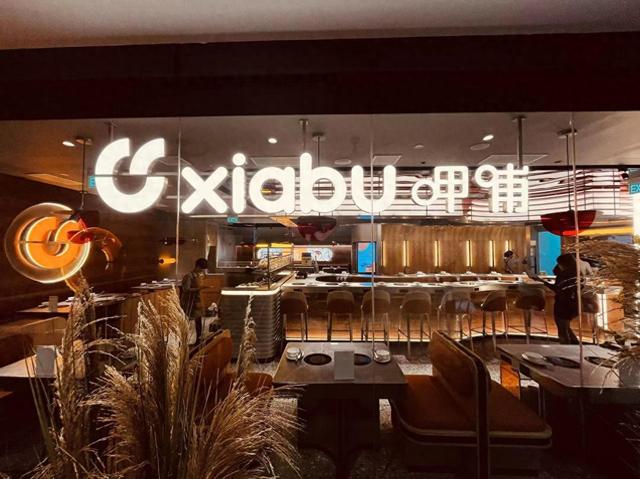
呷哺呷哺“凤还巢”合伙人门店增至13家,营收同比增长超30%
Huan Qiu Wang· 2025-12-23 09:58
Core Viewpoint - The company is launching the second round of the "Feng Huan Chao" partner program, demonstrating its commitment to employee engagement and profit-sharing, which has led to rapid expansion and positive feedback from employees [1][3][6] Group 1: Program Launch and Expansion - The second round of the "Feng Huan Chao" partner program is set to officially start in December, following the successful implementation of the first round in July, which resulted in 13 partner stores and over 50 internal partners [1] - The program has generated significant enthusiasm among employees, with many eager to participate in the second round due to the success of the first batch of partners [3] Group 2: Employee Benefits and Incentives - The company has reduced the management fee rate by 2% for partner stores and changed the dividend distribution from quarterly to monthly, enhancing the financial benefits for partners [3] - The program is part of a strategic initiative aimed at creating a more favorable incentive mechanism for employees, ensuring their interests are prioritized [3] Group 3: Performance and Operational Improvements - The first batch of partner stores reported a revenue increase of over 30% year-on-year and a profit margin exceeding 30%, showcasing the effectiveness of the partner model [4] - Employees, now acting as partners, have shown increased motivation, leading to improved operational efficiency and reduced food waste through proactive management [4] Group 4: Shared Growth Philosophy - The core philosophy of the "Feng Huan Chao" program is to share the company's growth results with employees, particularly frontline workers, emphasizing the importance of talent in driving business success [6] - The selection criteria for partners focus not only on performance metrics but also on personal qualities such as resilience and empathy, ensuring that partners align with the company's values [6]
呷哺呷哺合伙人门店增至13家
Bei Jing Shang Bao· 2025-12-22 07:43
Core Insights - The company has launched its second round of the "Feng Huan Chao" partner program in December, expanding the number of partner stores to 13 and internal partners to over 50 [1] - The management fee rate for partner stores has been reduced by 2%, and the dividend distribution period has been changed from quarterly to monthly, encouraging more employees to participate [1] - Revenue from the first batch of partner stores has increased by over 30% year-on-year, with profit margins exceeding 30% [1] Operational Strategy - The partnership model allows the company to maintain control over food quality and service experience while granting stores flexibility in operations and decision-making [1] - Stores can adjust food ingredients based on local market demands and quickly adapt strategies in response to market changes, significantly shortening response times [1] - The transformation of employees into partners has led to increased work motivation, with staff extending closing hours, optimizing resource management to reduce food waste, and improving overall operational efficiency [1]
亏损同比收窄七成,呷哺呷哺缓过一口气
Hua Er Jie Jian Wen· 2025-08-29 09:21
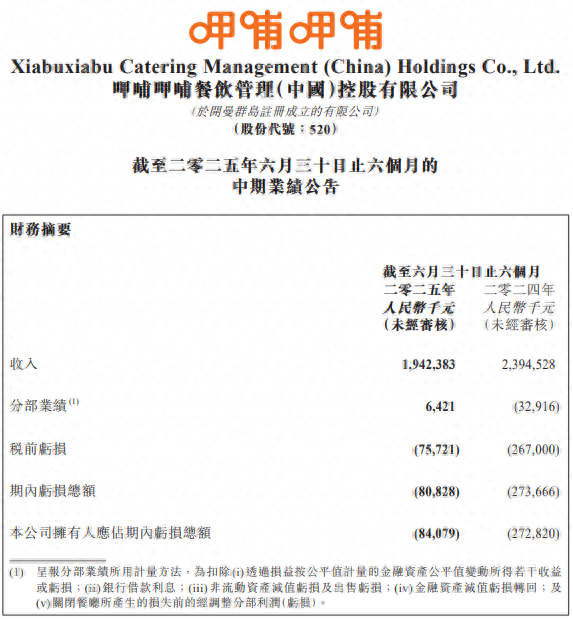
Core Insights - Company has shown signs of recovery with a significant reduction in net loss, down to 80 million yuan from 273 million yuan year-on-year, despite a revenue decline of 18.9% to 1.942 billion yuan in the first half of 2025 [1] Cost Management - The reduction in losses is primarily attributed to cost-cutting measures in the supply chain and logistics, including strategic partnerships with key suppliers, price-locking strategies for bulk ingredients, and the use of a digital procurement platform to enhance efficiency and transparency [2] Operational Efficiency - The optimization of restaurant structure has significantly contributed to profit recovery, with a 13% reduction in total stores to 937, focusing on eliminating inefficient locations and strategically opening new stores in high-potential areas [3] - Core costs have decreased notably, with raw material costs down by 186 million yuan (22.5%) and labor costs reduced by 148 million yuan (18.1%) [3] Asset Impairment - Asset impairment losses from closed and underperforming stores have decreased significantly by 130 million yuan, a reduction of 64.1% year-on-year [4] Brand Strategy - The company has differentiated its brands, with the "Coucou" brand maintaining a high-end strategy and achieving a 6 yuan increase in average spending, while the "Xiabuxiabu" brand has attracted more customers by lowering per capita consumption, increasing table turnover from 2.3 to 2.6 [5][6] Store Expansion - The "Xiabuxiabu" brand has reversed the trend of net store closures, opening 32 new locations and achieving a net increase of 3 stores, with over 40% of new stores located in first-tier cities [7] Partnership Program - The company is implementing a "Feng Huan Chao" partner program aimed at refined operations and efficient expansion, recruiting new store partners from both internal staff and external talent, with a profit-sharing mechanism to motivate management [8] - As of August, 5 partner stores have been established, primarily in the Beijing-Tianjin-Hebei region, with strong performance indicators such as profit margins above 30% and monthly revenues exceeding 350,000 yuan [8]
呷哺呷哺上半年收入19.4亿元,外卖成新增长极
Huan Qiu Wang· 2025-08-29 07:19
Core Viewpoint - The company has achieved significant improvement in operational quality through strategic transformation, despite facing challenges in the dining market, with a revenue of 1.942 billion RMB and a net loss reduced by 71% to 80.8 million RMB in the first half of 2025 [1][2]. Financial Summary - Revenue for the first half of 2025 was 1.942 billion RMB, down from 2.394 billion RMB in the same period of 2024 [2]. - The pre-tax loss decreased from 267 million RMB in 2024 to 75.7 million RMB in 2025 [2]. - Total loss for the period was 80.8 million RMB, compared to 273.7 million RMB in the previous year [2]. Cost Optimization - The improvement in performance is attributed to enhanced cost control and operational efficiency, with core brand profits rising from 4.06 million RMB to 29.73 million RMB [2]. - Depreciation and amortization expenses decreased by 20.5%, and leasing costs were reduced by 24.7% [2]. - Average procurement costs dropped by approximately 4% to 6% from 2023 to the first half of 2025, effectively improving gross margins [2]. Partnership and Expansion - The company launched the "Phoenix Returns" partner program in July 2025, with five partner stores established by August, primarily in the Beijing-Tianjin-Hebei region [3]. - These partner stores have shown strong performance, with profit margins exceeding 30% and monthly sales over 350,000 RMB, with the shortest investment recovery period being four months [3]. Operational Efficiency and Growth - In the first half of 2025, the company opened 32 new stores, including 14 in first-tier cities, highlighting a strategic focus on urban expansion [4]. - The takeaway business has become a new growth engine, with overall order volume increasing by over 55% and monthly sales per store rising by 20.9% [4]. Membership Economy - The rise of the membership economy has significantly enhanced customer loyalty, with gift card sales contributing 25,200 RMB from April to July 2025 [5]. - Paid members demonstrated strong purchasing power, with an average repurchase amount of 449 RMB and a purchase frequency 4.4 times higher than regular members [5]. Future Outlook - The company plans to continue its "quality over quantity" strategy, focusing on supply chain optimization, business model innovation, brand collaborations, and leveraging the membership economy for sustainable growth [5]. - The international market is progressing steadily, with overseas revenue increasing by approximately 5% year-on-year, supporting the company's robust financial position for future development [5].
吉宏股份20250821
2025-08-21 15:05
Summary of Jihong Co., Ltd. Conference Call Company Overview - **Company**: Jihong Co., Ltd. - **Period**: First half of 2025 Key Financial Metrics - **Revenue**: 3.2 billion RMB, up 32% year-on-year [2][3] - **Net Profit**: 118 million RMB, up 63.27% year-on-year [3] - **Net Profit (excluding non-recurring items)**: 113 million RMB, up 80% year-on-year [3] - **Cross-border E-commerce Revenue**: 2.1 billion RMB, up 52.91% year-on-year [2][3] - **Net Profit from Cross-border E-commerce**: 55 million RMB, up 97.67% year-on-year [2][3] - **Packaging Business Revenue**: 1.1 billion RMB, up 10% year-on-year [2][3] - **Operating Cash Flow**: Increased by over 300% year-on-year [2][12] Cross-border E-commerce Insights - **Market Growth**: Significant growth in the European market, with revenue more than doubling [5] - **Regional Revenue Breakdown**: - Northeast Asia: ~48% - Southeast Asia: 16% - Europe and America: ~27% [7] - **Growth Rates**: - Northeast Asia: ~50% - Europe and America: over 100% [7] - **Average Order Value**: Approximately 240 RMB, slightly up from 230 RMB [8] - **Product Categories**: Diverse categories including clothing, home goods, and beauty products [10] - **Free Brand Development**: Free brand sales increased by 50% year-on-year, with some brands doubling their sales [11] Packaging Business Insights - **Revenue Composition**: Divided into consumer packaging and food-grade packaging [6] - **Food-grade Packaging Growth**: Over 30% growth, driven by instant retail and higher profit margins [6] - **Profit Margin Improvement**: Expected to increase as food-grade packaging becomes a larger revenue share [21] Operational Efficiency - **AI Technology Utilization**: Enhanced operational efficiency across the supply chain, reducing backend staff while increasing order volume [15][16] - **Employee Structure**: Predominantly front-end business and IT personnel, with around 200 IT staff and 500 front-end staff [17] Currency and Market Dynamics - **Currency Fluctuations**: Managed through financial hedging; stable coin development is being monitored for future payment solutions [18][19] - **Impact of Tariffs**: Minimal impact from tariffs due to strong relationships with ASEAN countries; potential shifts in cross-border seller strategies due to U.S. tariffs [24][25] Challenges and Future Outlook - **Sales Expense Ratio**: Increased due to higher upfront brand marketing costs, while packaging costs remain stable [27] - **Seasonality**: Minimal seasonal impact on cash flow; overall revenue growth is the primary driver of cash flow improvement [13] - **Middle East Expansion**: Ongoing construction of a base in the Middle East, with small-scale production expected to start in Q4 2025 [22] Management and Governance - **Chairman's Share Reduction**: Minor share reduction by the chairman, considered a personal action [30] - **Team Incentives**: Implementation of a partner plan to incentivize team leaders and maintain staff stability [29] This summary encapsulates the key points from the conference call, highlighting the financial performance, operational strategies, market dynamics, and future outlook for Jihong Co., Ltd.
呷哺呷哺上半年亏损缩窄 火锅行业竞争加剧
Zhong Guo Jing Ying Bao· 2025-08-20 01:01
Core Viewpoint - Company is expected to report a revenue of approximately 1.9 billion yuan for the first half of 2025, representing a year-on-year decrease of about 18.9% [2] - The net loss for the first half of 2025 is projected to be between 80 million to 100 million yuan, significantly narrowing compared to a net loss of 274 million yuan in the same period last year, indicating a reduction of 63.2% to 70.5% [2][3] Financial Performance - Cumulative losses from 2021 to the first half of 2025 have exceeded 1.3 billion yuan, with annual losses of 293 million yuan, 353 million yuan, 199 million yuan, and 400 million yuan from 2021 to 2024 respectively [2] - In 2024, the company's operating revenue was 4.755 billion yuan, a year-on-year decrease of 19.65% [2] Operational Challenges - The company has faced continuous losses primarily due to internal issues such as lack of product differentiation and average service quality, compounded by increased market competition leading to reduced customer visit frequency [3] - The company has been closing underperforming stores, with 138 closed in 2024, while opening 65 new locations, focusing on high-potential areas [3][4] Cost Optimization Efforts - The company is implementing cost optimization strategies, including digital supply chain enhancements, logistics network upgrades, and restaurant layout restructuring, which have contributed to the narrowing of losses [3][4] - The expected asset impairment losses from closed and continuously unprofitable restaurants are projected to decrease by approximately 64.1% compared to the same period in 2024 [3] Industry Context - The hot pot industry is projected to reach a market size of 668.9 billion yuan by 2025, with increasing competition and issues of product and menu homogeneity [5] - Competitors like Haidilao are innovating with new store concepts targeting the high-end market, indicating a trend towards differentiation in the industry [5] New Business Models - The company has launched the "Feng Huan Chao" partner program, which involves a tripartite shareholding model aimed at enhancing employee engagement and operational efficiency [5][6] - Initial results from the partner stores indicate profitability, suggesting potential for future expansion of this model [5][6] Customer Engagement Issues - The company previously offered an "all-you-can-eat" card, which faced customer complaints regarding service and transparency, leading to its discontinuation [6] - Rebuilding consumer trust and managing prepaid card programs effectively are seen as critical for future success [6]
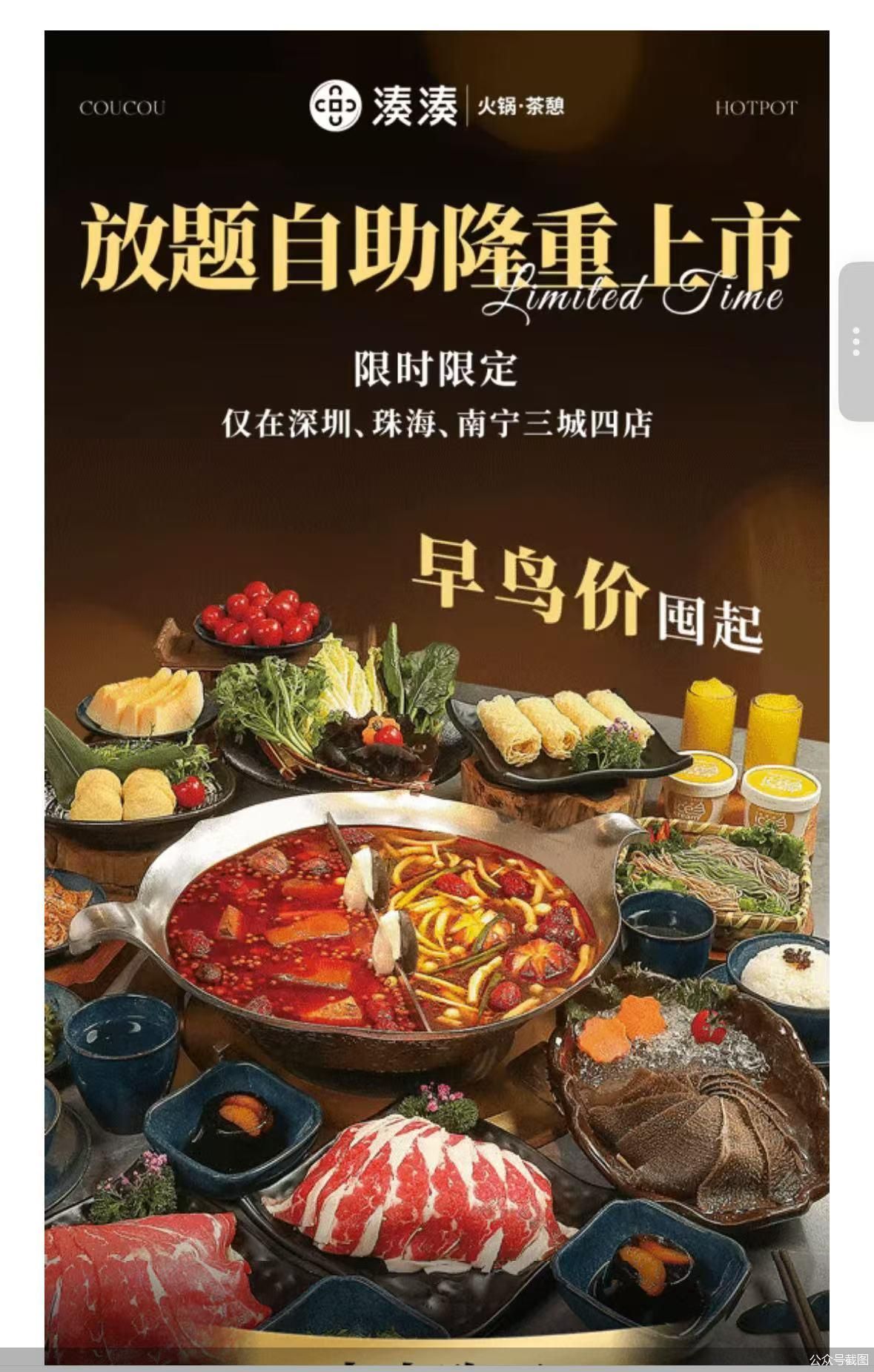
湊湊试水限时自助 呷哺集团忙于“自救”
Bei Jing Shang Bao· 2025-08-19 12:54
Core Insights - The company is exploring new growth opportunities by launching a limited-time self-service hot pot model in three cities, indicating a strategic shift to attract more customers [1][4][6] - The self-service model offers two pricing tiers, with the lower tier priced at 148 yuan and the higher tier at 228 yuan, including various food options [4][6] - Despite initial popularity, the company has faced significant financial challenges, including a decline in sales and increased losses over recent years [7][8][9] Financial Performance - The revenue share of the hot pot brand, 湊湊, grew from 2.5% in mid-2017 to 37% in mid-2021, with revenue reaching approximately 1.127 billion yuan [7] - However, sales dropped by 9.1% to 1.024 billion yuan in the first half of 2022, with losses increasing from 46.9 million yuan in 2021 to 278 million yuan in 2022 [8] - The company closed 73 湊湊 restaurants in 2024, resulting in a net decrease of 60 locations, leaving only 197 by year-end [8] Strategic Adjustments - The company is focusing on its core brand and plans to eliminate unprofitable business lines to enhance competitiveness [1][10] - The introduction of the self-service model is seen as an attempt to adapt to changing market conditions and consumer preferences [9][11] - The company aims to improve its operational efficiency and customer experience by leveraging digital tools and enhancing its membership system [11]
“连锁火锅第一股”呷哺呷哺业绩继续承压 或面临退市风险
Jing Ji Guan Cha Wang· 2025-08-05 09:57
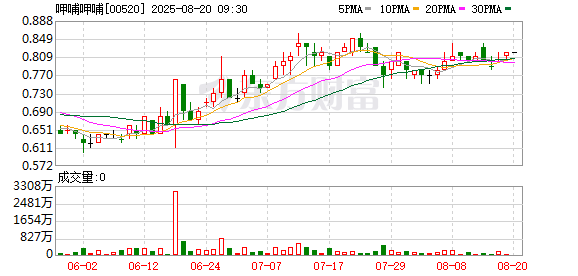
Core Viewpoint - The company, Xiaobai Xiaobai, is facing significant financial challenges, with projected net losses for the first half of the year between 80 million to 100 million HKD, leading to a cumulative loss exceeding 1.3 billion HKD over four years since its first loss in 2021 [1] Financial Performance - In 2024, Xiaobai Xiaobai reported a revenue of 4.755 billion HKD, a year-on-year decline of 19.65%, with a net loss of 401 million HKD, primarily due to store closures and impairment losses amounting to 262 million HKD [1] - The cumulative losses from 2021 to 2023 were 2.93 billion HKD, 3.53 billion HKD, and 1.99 billion HKD respectively, totaling 1.183 billion HKD over four years [1] - The restaurant's average customer spending decreased from 62.2 HKD in 2023 to 54.8 HKD in 2024, a drop of approximately 12% [2] Market Strategy and Competition - The company has implemented aggressive price reduction strategies, including comprehensive price cuts and promotional activities, but this has not significantly improved the restaurant turnover rate, which remained at 2.5 times per day in 2024, down from 2.6 times in 2023 [2] - The competitor, Coucou, has also reduced its average customer spending from 150 HKD in 2022 to 123.5 HKD in 2024, indicating a trend of declining prices across the market [2][3] - The company closed 138 stores while opening only 65 in 2024, resulting in a total of 219 store closures for the year, reflecting a clear trend of contraction in its store network [3] Future Plans - In 2025, the company plans to open at least 95 new restaurants, focusing on high-traffic areas such as entertainment venues and transportation hubs, aiming for a turnover rate of at least three times [4] - The company has launched a "Phoenix Return" partnership program to enhance employee engagement, with plans to steadily add 50 to 100 partner stores each year [4] Industry Context - The hot pot market in China reached a scale of 617.5 billion HKD in 2024, with expectations to grow to 650 billion HKD in 2025, indicating a highly competitive environment where Xiaobai Xiaobai has struggled to maintain a competitive edge in product features, service quality, and store environment [5]
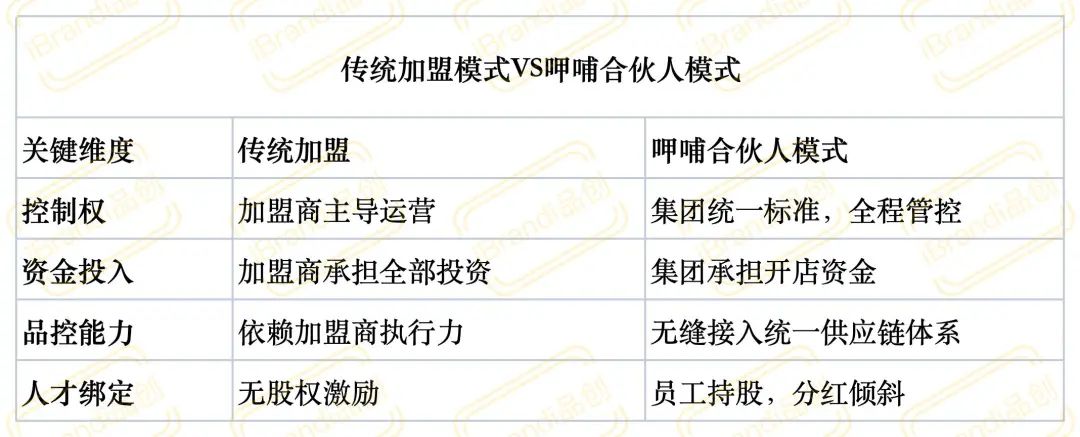
呷哺呷哺选择先在内部“开放加盟”
3 6 Ke· 2025-07-18 08:17
Core Viewpoint - The company is facing significant challenges, including a 97% stock price drop, a cumulative loss of 1.2 billion, and the closure of 219 stores in one year, prompting the launch of the "Feng Huan Chao" partner program to empower employees as store partners [1][11][12] Group 1: "Feng Huan Chao" Partner Program - The "Feng Huan Chao" program aims to incentivize frontline employees, with the first batch of 21 core employees becoming partners, focusing on operational managers and store managers [5][7] - The partnership model involves a tripartite shareholding structure among partners, the company, and executives, allowing partners to focus on store performance while the company provides funding and brand support [5][6] - This internal partnership approach is designed to bind talent and activate the organization, transforming employees from executors to decision-makers, thereby enhancing responsibility and loyalty [7][8] Group 2: Market Challenges and Strategic Shifts - The company is navigating a rapidly changing hot pot market, facing challenges from competitors and internal struggles, including a significant decline in the performance of its high-end brand, Coucou [3][10][14] - The company has accumulated losses of 1.183 billion from 2021 to 2024, with a peak loss of 401 million in 2024, largely attributed to the underperformance of Coucou [11] - The company is shifting focus away from the high-end market, which has seen competitors like Haidilao and Banu gaining traction, while it struggles to maintain its customer base [17][18] Group 3: Food Safety and Quality Control - The partner program mandates that all partner stores must integrate into a global supply chain and management system to ensure food safety and service standards, mitigating risks commonly associated with traditional franchise models [12] - Recent complaints about food safety issues highlight the need for stringent quality control measures, reinforcing the importance of the new management structure [12][20] Group 4: Market Position and Future Outlook - The hot pot market is projected to grow, with a significant increase in small hot pot establishments, but the company faces challenges in positioning itself within this competitive landscape [18][19] - The company must prioritize quality and value to regain market share, as competitors are increasingly encroaching on its target demographic with lower-priced offerings [20][21]