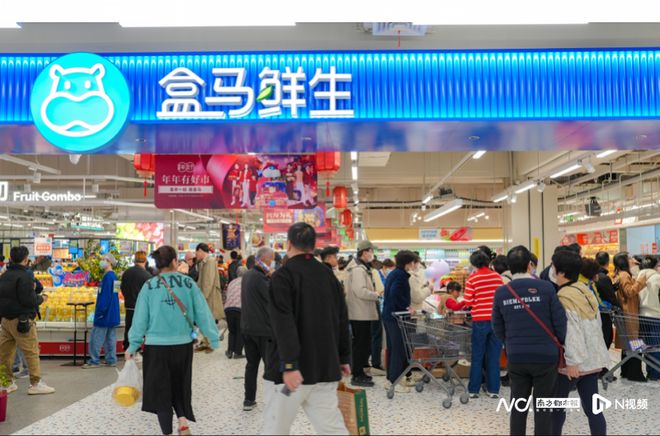
商品力建设

Search documents
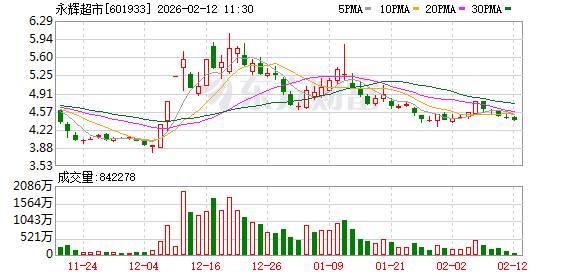
CEO新年全员信致歉 永辉超市如何走出“生死线”?
Guang Zhou Ri Bao· 2026-02-12 04:02
Core Insights - The CEO of Yonghui Supermarket reflects on the company's strategic missteps and the challenges faced during its transformation efforts, indicating a shift from aggressive expansion to sustainable growth strategies [4]. Group 1: Financial Performance - Yonghui Supermarket is expected to report a net loss of 2.14 billion yuan for 2025, primarily due to significant operational adjustments, including the closure of nearly 400 low-quality stores and the renovation of over 300 existing stores, resulting in asset write-offs and one-time costs exceeding 1.2 billion yuan [2]. - The company has recorded losses for five consecutive years, with cumulative losses exceeding 11.6 billion yuan from 2021 to 2025 [2]. Group 2: Strategic Adjustments - In May 2024, Yonghui initiated a transformation strategy inspired by the business model of "Fat Donglai," aiming to recover from its financial difficulties within 2 to 3 years [2]. - The company plans to invest approximately 8 million yuan per store for renovations and an additional 2 million yuan for closure costs, which poses a significant financial burden [2]. Group 3: Market Positioning and Customer Experience - Recent renovations have led to increased customer traffic in newly transformed stores, with a focus on high-quality private label products and fresh food offerings, enhancing the "supermarket + dining" experience [3]. - The shift towards quality retail may alienate long-time customers who are accustomed to Yonghui's previous pricing strategy, raising concerns about customer retention [3]. Group 4: Future Outlook - The CEO has designated 2026 as a year for deepening the company's operational capabilities, focusing on sustainable development rather than mere scale [5]. - The company faces challenges in overcoming the pain of transformation and quickly correcting its course to better serve its customer base [5].


美团50亿元收购叮咚,生鲜零售的出路到底在哪?
Sou Hu Cai Jing· 2026-02-11 13:50
Group 1 - The core viewpoint of the article highlights the unique development path of China's fresh food retail industry, which cannot simply replicate experiences from Japan and the West. The market for instant retail is expected to explode by 2025, reaching a scale of 1-2 trillion yuan, while traditional e-commerce and offline retail remain significantly larger at 15.2 trillion yuan and 44.3 trillion yuan respectively, indicating a rapid growth potential for instant retail [1] - The acquisition of Dingdong Maicai by Meituan is seen as a strategic adjustment reflecting profound changes in the fresh food retail industry, raising questions about quality versus scale, independent development versus reliance on larger platforms, and regional focus versus national expansion [1][3] - The acquisition is not merely about scale but focuses on quality positioning, as Meituan lacks a quality benchmark in the instant retail sector. Dingdong Maicai, known for its strict quality control and premium supply chain, fills this gap for Meituan, allowing it to leverage Dingdong's reputation to drive sales [4] Group 2 - The article outlines three potential paths for fresh food retail: instant retail, offline retail, and supply chain competition. Instant retail companies face a harsh reality with net profit margins around 1%, making acquisition or deep collaboration with larger platforms a rational choice to gain quality endorsement and supply chain capabilities [5] - Offline retail companies, while struggling with profitability (net profit margins of 1-3%), must focus on fine-tuned operations for sustained profitability or seek independent listings, as their value to larger platforms is limited [5] - Supply chain efficiency is identified as a critical competitive advantage, with logistics costs varying between 3% to 6%. The management of cold chain logistics and operational efficiency directly impacts product freshness and cost [6][7] Group 3 - The fresh food retail industry is shifting from blind expansion to rational contraction, with companies like Dingdong Maicai and Qian Dama focusing on core regional markets to establish competitive advantages. This strategic contraction is not a retreat but a focus on core strengths [8][10] - The construction of product strength through self-owned brands is emphasized as essential for meeting consumer demands for quality. Successful examples include Aldi and Hema, which have high self-brand product ratios [8] - Balancing service and efficiency is crucial for success in fresh food retail, as operational details in logistics, store operations, and product display can significantly affect competitiveness [9] Group 4 - China's fresh food retail model is distinct from Japan's vertical convenience stores and the West's pre-packaged goods, characterized by the rapid development of instant retail and innovative models like front warehouses [10] - The complexity of operations presents challenges but also opportunities for flexibility in meeting diverse consumer needs. The competition is shifting towards supply chain depth, product differentiation, and operational efficiency [11] - The ultimate battleground in fresh food retail lies in providing fresher, higher quality, and more convenient food options to consumers, determining the winners in this essential retail sector [11]



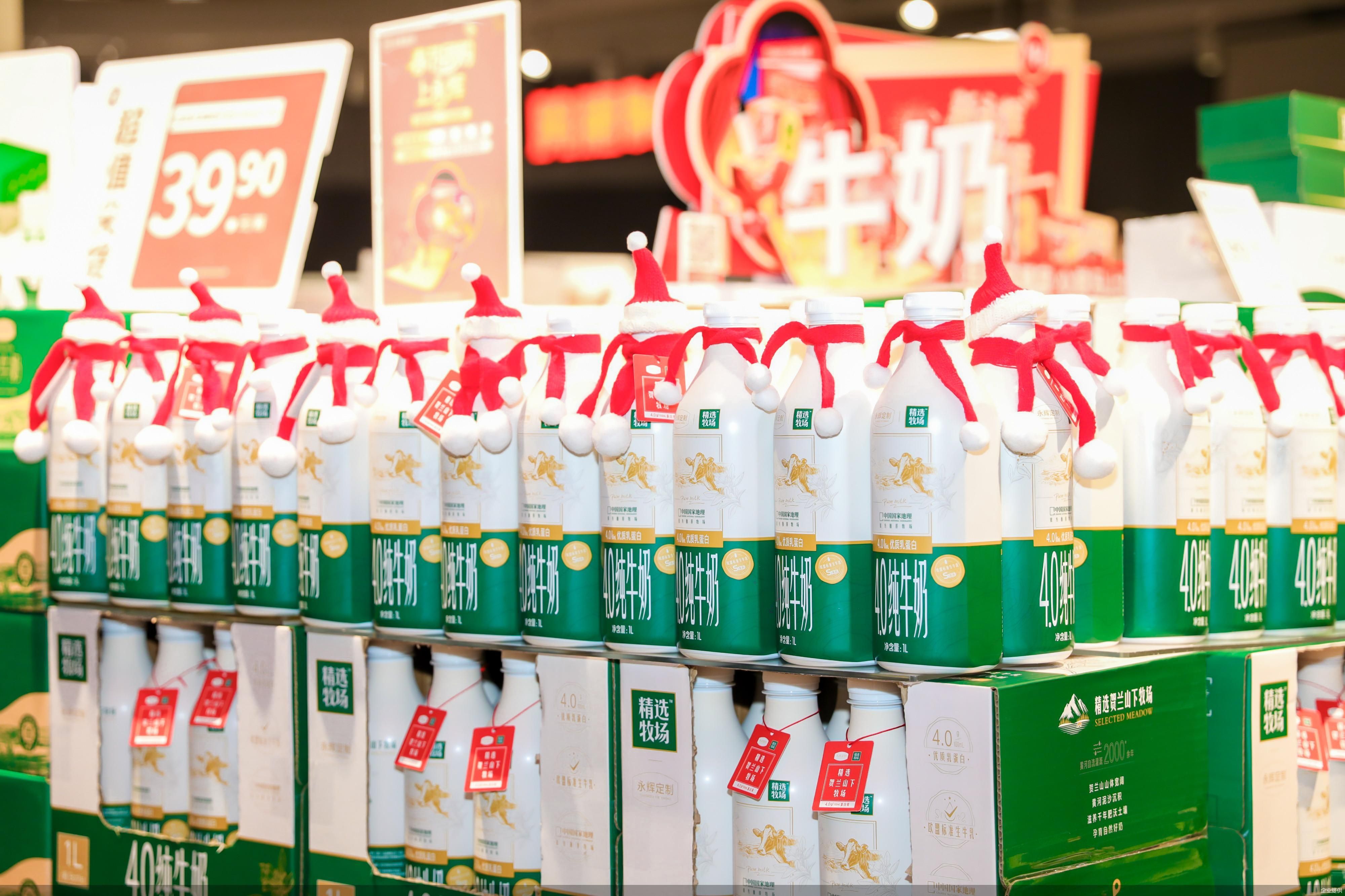
永辉定制4.0纯牛奶上市一周销售额破百万
Bei Jing Shang Bao· 2026-01-17 06:37
Core Insights - Yonghui officially launched the Yonghui Customized Premium Pasture 4.0 Pure Milk in collaboration with Mengniu, achieving over 1 million in sales within the first week across its nationwide stores [1] Group 1: Product Details - The Yonghui Customized Premium Pasture 4.0 Pure Milk is packaged in PET bottles, targeting family consumption and New Year stockpiling scenarios [4] - The product adheres to Yonghui's principle of "best quality at the same price, lowest price at the same quality," featuring high nutritional indicators of "4.0g/100mL quality milk protein" and "130mg/100mL native high calcium" [4] Group 2: Supply Chain and Innovation - Yonghui's efforts in product development involved deep engagement with the upstream supply chain, ensuring precise control over 17 dimensions from feeding and breeding to raw milk production [4] - The company utilized patented feeding technology to ensure that the protein and calcium content of the raw milk significantly exceeds ordinary levels [4] Group 3: Marketing and Consumer Engagement - Yonghui is building a new consumer touchpoint that integrates online and offline experiences [4] - The company collaborates with Mengniu and Douyin to establish a "brand + channel + platform" triadic linkage model, completing the transaction loop from online promotion to offline experience [4]

调改门店规模突破300家,永辉发布2026年货战略
Xin Jing Bao· 2026-01-10 06:05
Core Insights - Yonghui Supermarket has officially launched its 2026 New Year goods festival strategy, focusing on "30 high-quality explosive products" and enhancing "120 major New Year products" across "four major consumption waves" [1] Group 1: Sales Performance - During the New Year period, Yonghui's nationwide stores reported a 200% increase in sales of ready-to-eat products [1] - The 30 high-quality explosive products achieved a sales doubling, with Chilean cherries generating nearly 500 million yuan in sales [1] - Sales of Wuliangye 52-degree liquor increased by over 20 times, while products like Hongyan strawberries and cream box cakes saw multiple-fold sales growth [1] Group 2: Strategic Development - With over 300 stores undergoing adjustments, Yonghui Supermarket has entered a systematic innovation phase centered on "refined management" and "product strength development" [1] - The New Year goods festival represents the first national market strategy debut and deep practice of the "New Yonghui" model, aimed at testing its capabilities in product development, precise supply, and experience shaping [1]
永辉超市启动2026年货节重塑品质消费
Zheng Quan Ri Bao Zhi Sheng· 2026-01-10 04:08
Core Insights - Yonghui Supermarket officially launched its 2026 New Year goods festival with the theme "New Yonghui New Year Flavor," introducing a comprehensive supply system centered around "30 high-quality explosive products" [1] - The event marks the first Spring Festival shopping season for Yonghui Supermarket after surpassing 300 remodeled stores nationwide, indicating a new phase of self-operated management focused on "product strength + scene strength" [1] - The company aims to enhance consumer experience by integrating product upgrades, scene renewal, and service support, promising "affordable celebrations without compromising quality" [1] Sales Performance - During the New Year's Day period, Yonghui Supermarket's nationwide stores saw a more than 200% increase in the sales growth of ready-to-eat products, with the overall sales of the 30 high-quality explosive products doubling [1] Supply Strategy - To align with the different stages of Spring Festival consumption and segmented demands, Yonghui Supermarket has innovatively planned a "four-wave" supply strategy, dynamically adding approximately 120 high-quality products alongside the 30 core explosive products [1] Shopping Experience - Yonghui Supermarket is focused on creating an immersive shopping experience that is enjoyable and shareable, with remodeled stores featuring a "New Yonghui New Year Flavor" themed area that includes concentrated displays of New Year goods, cultural interactions, and red envelope lottery activities [2] - Industry insiders believe that with the remodeling of over 300 stores, Yonghui Supermarket has entered a systematic innovation phase centered on "refined management" and "product strength development," with this New Year festival being the first strategic showcase of the "New Yonghui" model on a national scale [2]
减糖、低GI成零售商流量密码,盒马商品力建设调至三大方向
Nan Fang Du Shi Bao· 2025-08-11 09:14
Core Insights - The article discusses the strategic shift of Hema in enhancing its product offerings from a focus solely on "fresh" to a broader emphasis on "fresh, healthy, and self-indulgent" products as outlined in their "Ten-Year Consumer Trend Insight" report [1] Group 1: Consumer Trends - There has been a significant change in consumer demands and preferences over the past decade, particularly in the post-pandemic era, with a surge in demand for healthy food options that feature clean ingredient lists [3] - The trend of self-indulgent consumption is rising, especially among younger consumers who are increasingly willing to pay for emotional satisfaction, making emotional consumption a necessity [3] - Consumers are becoming more rational and cautious, demanding a balance between quality and cost-effectiveness [3] Group 2: Product Development Strategy - Hema has adjusted its product development strategy in response to changing consumer preferences, moving from a focus on fresh products to a more concentrated effort on product strength [3] - The company has streamlined its operations to focus on two main formats: Hema Fresh and Hema NB, which has led to improved efficiency and profitability while allowing for more targeted investment in product development [3] Group 3: New Product Categories - Hema is actively expanding into low glycemic index (GI) products, which have shown a 40% year-on-year sales increase due to energy certification and labeling initiatives for items like light salads and sandwiches [4] - The introduction of proprietary low GI product lines has resulted in significantly higher repurchase rates compared to standard products, with a 150% year-on-year increase in the number of traditional health water products [4] - The flower category has also seen rapid growth driven by self-indulgent consumption, with prices dropping nearly 30% since the introduction of flowers in 2021 and a 40% increase in product variety [6] Group 4: Future Outlook - Hema's Chief Product Officer emphasized that product strength is a key driver for the company, and they will continue to adopt a "zero-supply co-creation" approach to provide high-quality, unique, and diverse products [6] - The company aims to enhance its product development and innovation capabilities to better meet the needs of health-conscious consumers, with plans for accelerated expansion to serve a larger customer base [6]