外需改善

Search documents
数据点评 | 出口飙升的“春节效应”(申万宏观·赵伟团队)
申万宏源证券上海北京西路营业部· 2026-03-11 02:11
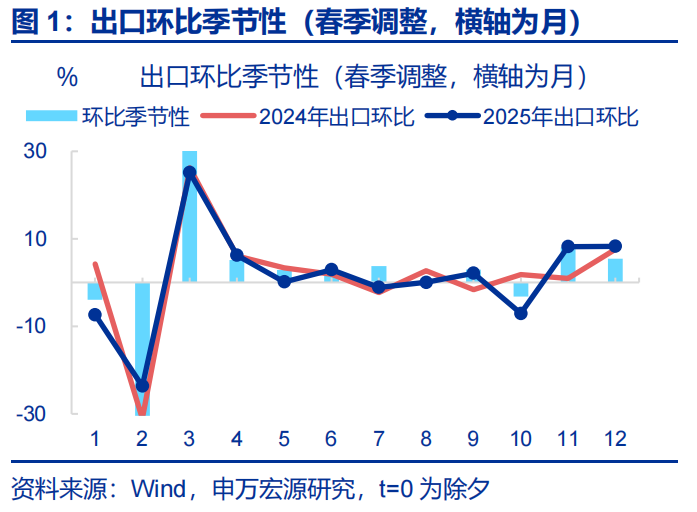
Core Viewpoint - The "Spring Festival misalignment" significantly boosted export growth by 8.4 percentage points, while external demand improvement contributed an additional 6.8 percentage points to export growth [6][85]. Export Data Analysis - In January-February, exports surged by 21.8% year-on-year, compared to an expected 7.3% and a previous value of 6.6% [5][13]. - The primary reason for the export spike was the "Spring Festival misalignment," with historical data showing significant fluctuations in early-year export growth due to this factor [7][14]. - The "Spring Festival adjustment" model indicates that the impact of the festival on exports lasts for about one and a half months, with last year's earlier festival leading to a lower base for comparison this year [7][85]. Sector-Specific Insights - Labor-intensive sectors such as textiles, clothing, and furniture saw significant export rebounds, benefiting directly from the "Spring Festival misalignment" and improved demand from the U.S. [7][23]. - Intermediate and capital goods, including integrated circuits and automotive parts, also experienced notable export growth, reflecting the acceleration of industrialization in emerging economies [7][23]. Country-Specific Export Dynamics - The recovery in U.S. demand and the acceleration of emerging market demand are key drivers of export growth [8][86]. - Exports to the U.S. rebounded by 13.4 percentage points to -16.7%, while exports to Africa and ASEAN also showed strong growth, indicating a direct relationship with the industrialization and internal demand release in emerging economies [8][32][33]. Import Trends - Imports increased by 19.8% year-on-year, with processing trade imports rising by 19.1% to 37.9% [39][75]. - The import growth was driven by a significant increase in machinery and electrical products, with integrated circuits showing a 23.2% year-on-year increase [39][75]. Future Outlook - The "Spring Festival misalignment" may lead to a decline in March export figures, but overall, exports are expected to maintain high growth throughout the year [9][87]. - The strong export data from January-February reflects ongoing improvements in external demand, with expectations of stable export growth driven by U.S. inventory replenishment and easing tariff conditions [9][87]. Regular Tracking - In January-February, both exports and imports showed strong performance, with consumer electronics and light industrial products experiencing notable rebounds [88]. - Capital goods, intermediate goods, and energy resources also saw increased export growth, indicating a broad-based recovery across sectors [61][88].


数据点评 | 出口飙升的“春节效应”(申万宏观·赵伟团队)
赵伟宏观探索· 2026-03-10 16:04
Core Viewpoint - The significant increase in exports in January-February is primarily driven by the "Spring Festival misalignment," contributing 8.4 percentage points, while external demand improvement accounts for an additional 6.8 percentage points [2][9][84] Export Analysis - The export growth in January-February reached 21.8% year-on-year, a substantial improvement of 15.2 percentage points compared to December 2025 [8][9] - The "Spring Festival misalignment" effect is expected to influence export readings, with a long impact period of up to one and a half months, leading to a low base effect from the previous year [2][9] - Labor-intensive industries, such as textiles and furniture, showed significant export rebounds, benefiting directly from the "Spring Festival misalignment" and improved demand from the U.S. [2][19][28] Country-Specific Insights - The recovery in U.S. demand and acceleration in emerging market demand are key drivers for export growth, with exports to the U.S. rebounding by 13.4 percentage points [3][28] - Exports to Africa and ASEAN also showed strong growth, reflecting the industrialization acceleration and domestic demand release in emerging economies [3][29] Import Analysis - Imports in January-February increased by 19.8% year-on-year, with processing trade imports rising significantly by 19.1 percentage points [3][35][71] - The import growth of mechanical and electrical products improved notably, with integrated circuits showing a year-on-year increase of 23.2% [3][71] Future Outlook - The "Spring Festival misalignment" may lead to a decrease in export readings for March, but the overall export growth for the year is expected to remain high due to stable external demand and improved inventory replenishment in the U.S. [4][84] - The strong export data for January-February reflects ongoing improvements in external demand, with expectations of continued high growth throughout the year [4][84] Regular Tracking - Both exports and imports showed strength in January-February, with consumer electronics and light industrial products experiencing notable rebounds [5][54] - Capital goods, intermediate goods, and energy resources also saw increased export growth, indicating a broad-based recovery [5][57]

——外贸数据点评(26.02):出口飙升的春节效应?
Shenwan Hongyuan Securities· 2026-03-10 11:37
Export Data - In January-February, exports (in USD) increased by 21.8% year-on-year, significantly higher than the expected 7.3% and the previous value of 6.6%[3] - The surge in exports is primarily attributed to the "Spring Festival misalignment," which boosted export growth by 8.4 percentage points, while external demand improvement contributed an additional 6.8 percentage points[4] - Labor-intensive industries, such as textiles and furniture, saw significant export rebounds, benefiting directly from the "Spring Festival misalignment" and improved demand from the U.S.[4] Import Data - Imports (in USD) rose by 19.8% year-on-year, surpassing the expected 6.9% and the previous value of 5.7%[3] - Processing trade imports increased by 19.1 percentage points to 37.9%, indicating a continuation of export improvement[5] - Key imports included electromechanical products, which saw a growth of 14.9 percentage points to 23.7%, and integrated circuits, which rose by 23.2 percentage points[5] Country-Specific Insights - Exports to the U.S. rebounded by 13.4 percentage points to -16.7%, reflecting improved demand despite ongoing challenges[5] - Exports to emerging markets, such as Africa and ASEAN, showed strong growth, with increases of 18.3 percentage points to 40.1% and 9.2 percentage points to 20.3%, respectively[5] - The overall export structure indicates that U.S. demand recovery and emerging market growth are key drivers of export performance[5] Future Outlook - The "Spring Festival misalignment" is expected to lower March export figures, but overall annual export growth is anticipated to remain high due to stable external demand and improved inventory replenishment in the U.S.[6] - The strong January-February export data reflects medium-term trends related to external demand improvement and increased market share for Chinese exports[6]
外贸数据点评:出口飙升的“春节效应”?
Shenwan Hongyuan Securities· 2026-03-10 10:45
Group 1: Export Data Overview - Exports in January-February increased by 21.8% year-on-year, significantly higher than the expected 7.3% and previous value of 6.6%[3] - The surge in exports is primarily attributed to the "Spring Festival effect," which contributed an estimated 8.4 percentage points to the growth, while external demand improvement added 6.8 percentage points[4] - The export rebound is particularly pronounced in labor-intensive sectors such as textiles and furniture, which are directly impacted by the Spring Festival timing[4] Group 2: Import Data Insights - Imports also saw a year-on-year increase of 19.8%, surpassing the expected 6.9% and previous value of 5.7%[3] - Processing trade imports rose significantly, up 19.1 percentage points to 37.9%, indicating a continuation of export improvements[5] - Key imports included electrical machinery, which increased by 14.9 percentage points to 23.7%, and integrated circuits, which rose by 23.2%[5] Group 3: Country-Specific Export Trends - Exports to the United States rebounded by 13.4 percentage points to -16.7%, reflecting improved demand despite previous declines[5] - Exports to Africa surged by 18.3 percentage points to 40.1%, while exports to ASEAN increased by 9.2 percentage points to 20.3%[5] - The overall export growth is supported by the industrialization acceleration in emerging economies and the release of domestic demand[5] Group 4: Future Outlook - The "Spring Festival effect" is expected to lower March export figures, but overall annual export growth is projected to remain high due to stable external demand and improved market conditions[6] - The strong export data for January-February reflects ongoing improvements in external demand, inventory replenishment in the U.S., and favorable tariff conditions[6]
数据点评 | 出口飙升的“春节效应”(申万宏观·赵伟团队)
申万宏源宏观· 2026-03-10 10:35
Core Viewpoint - The significant increase in exports in January-February is primarily driven by the "Spring Festival misalignment," contributing 8.4 percentage points, while external demand improvement adds another 6.8 percentage points [3][9][81]. Export Analysis - The export growth in January-February reached 21.8% year-on-year, significantly higher than the expected 7.3% and previous value of 6.6% [2][8]. - The "Spring Festival misalignment" has a prolonged impact on exports, lasting up to one and a half months, with last year's earlier festival leading to a low base for this year's figures [3][9]. - Labor-intensive sectors such as textiles, clothing, and furniture saw the most significant export rebounds, benefiting directly from the "Spring Festival misalignment" and improved demand from the U.S. [3][19][81]. Country Structure - The recovery in U.S. demand and acceleration in emerging market demand are the two key drivers supporting exports [4][28]. - Exports to the U.S. rebounded by 13.4 percentage points to -16.7%, while exports to Africa and ASEAN also showed strong growth, reflecting the industrialization and internal demand release in emerging economies [4][28][29]. Import Perspective - Imports in January-February increased by 19.8% year-on-year, with processing trade imports rising by 19.1% to 37.9% [4][35][71]. - The import growth of electromechanical products improved significantly, with a year-on-year increase of 14.9% to 23.7%, and integrated circuits saw a strong rebound of 23.2% [4][35][71]. Future Outlook - The "Spring Festival misalignment" may lead to a decrease in export figures for March, but the overall export growth for the year is expected to remain high [5][43][83]. - The strong export data for January-February reflects ongoing improvements in external demand, with expectations of stable growth driven by U.S. inventory replenishment and easing tariff conditions [5][43][83]. Regular Tracking - Both exports and imports showed strength in January-February, with consumer electronics and light industrial products experiencing notable rebounds [54][57]. - Exports of capital goods, intermediate goods, and energy resources also saw increases, indicating a broad-based recovery across various sectors [54][57].

数据点评 | 为何12月出口“再超预期”?(申万宏源·赵伟团队)
Xin Lang Cai Jing· 2026-01-14 16:32
Core Viewpoint - December exports showed strong performance, supported by pricing effects, new product launches, and improvements in external demand [2][7] Group 1: Export Performance - December exports (in USD) increased by 6.6% year-on-year, exceeding expectations of 2.2% and the previous value of 5.9% [1][4] - The increase in exports reflects both structural and aggregate factors, with a 0.7 percentage point rise from November [2][7] - The appreciation of the RMB since November contributed to a 0.4 percentage point increase in total exports due to pricing effects [2][7] Group 2: Sector Analysis - Consumer electronics exports rose significantly by 16.3 percentage points to 19.6%, driven by new smartphone launches and improved external demand [3][22] - Exports of production materials also improved, with aluminum, integrated circuits, and steel seeing increases of 23.9%, 13.6%, and 3.5% respectively [3][22] - Import of processing trade increased by 3.8 percentage points to 5.7%, indicating a continuation of export improvement [29][57] Group 3: Country-Level Insights - Exports to emerging economies showed strong performance, with a 1.4 percentage point increase to 13.5% year-on-year [14][22] - Exports to ASEAN and India rose by 2.9 and 14 percentage points to 11.1% and 22.1% respectively [14][22] - Exports to developed economies, particularly the US and Europe, experienced a decline, with a limited drop of 1.5% to -30% for the US [14][54] Group 4: Future Outlook - The competitive advantage of Chinese exports is expected to remain strong, with projections for 2026 indicating sustained resilience in exports [4][36] - The industrialization of emerging countries is anticipated to drive demand for production materials, supporting China's export growth [4][36] - Potential easing of US-China tariffs and ongoing inventory replenishment in the US may lead to a rebound in exports to the US [4][36]

数据点评 | 为何12月出口“再超预期”?(申万宏源·赵伟团队)
赵伟宏观探索· 2026-01-14 16:03
Core Viewpoint - The December export performance was supported by pricing effects, new product launches, and improvements in external demand, with exports increasing by 6.6% year-on-year in USD terms, surpassing expectations of 2.2% and the previous value of 5.9% [2][9][79] Group 1: Export Performance - December exports showed a 0.7 percentage point increase from November, reflecting both structural and aggregate factors, with a notable appreciation of the RMB since November contributing to a 0.4 percentage point increase in export value [2][10][79] - The export growth was driven by strong performance in consumer electronics and production materials, influenced by the launch of new mobile devices and improvements in external demand from emerging economies and U.S. inventory replenishment [2][3][10] - Exports to emerging economies remained robust, with a 1.4 percentage point increase to 13.5% year-on-year, while exports to developed economies showed a decline, particularly a 1.5% drop to the U.S. and a 3.3% drop to Europe [2][17][66] Group 2: Commodity Analysis - Consumer electronics exports rose significantly by 16.3 percentage points to 19.6%, with mobile phone exports boosted by new product launches from companies like Huawei [3][25][79] - Production materials such as aluminum, integrated circuits, and steel saw export growth rates of 23.9%, 13.6%, and 3.5% respectively, indicating a continued demand from emerging economies and a shift in import shares towards China [3][25][79] - Import data showed a 3.8 percentage point increase in December, with processing trade imports rising by 2.9 percentage points to 16.8%, reflecting ongoing improvements in exports [32][80] Group 3: Future Outlook - The export competitiveness of China is expected to remain strong into 2026, supported by the industrialization of emerging economies and potential easing of U.S.-China tariff conflicts, which may lead to a rebound in exports to the U.S. [4][40][41] - The ongoing improvements in external demand and the increase in China's global export share suggest that exports will maintain resilience in the coming years [4][40][41] Group 4: Regular Tracking - December saw a general strengthening in both exports and imports, with consumer electronics exports rebounding while light industrial product exports declined [5][51][68] - Capital goods and intermediate goods exports exhibited a divergence in growth rates, with energy resource exports showing a recovery [5][54][68]

外贸数据点评:为何12月出口“再超预期”?
Shenwan Hongyuan Securities· 2026-01-14 13:11
Export Data - December 2025 exports increased by 6.6% year-on-year, exceeding expectations of 2.2% and the previous value of 5.9%[1] - Imports rose by 5.7% year-on-year, against an expectation of -0.3% and a prior value of 1.9%[1] Key Factors Supporting Exports - The appreciation of the RMB since November contributed to a 0.4 percentage point increase in December's export value[2] - Strong demand for consumer electronics and production materials, driven by new product launches and improved external demand, particularly from emerging economies[2] - Global manufacturing PMI remained stable at 50.4%, indicating resilience in manufacturing activity[2] Country-Specific Trends - Exports to emerging economies increased by 1.4 percentage points to 13.5% year-on-year, with notable growth to ASEAN and India at 11.1% and 22.1% respectively[2] - Exports to developed economies showed a slight decline, with a 1.5 percentage point drop to the U.S. and a 3.3 percentage point drop to Europe[2] Commodity Insights - Consumer electronics exports surged by 16.3% to 19.6%, with mobile phone exports significantly boosted by new product releases[3] - Imports of major commodities like copper and iron ore saw substantial increases of 63.8% and 61.4% respectively[3] Future Outlook - Continued improvement in external demand and China's competitive export advantages are expected to sustain strong export resilience into 2026[4] - Potential recovery in U.S. exports due to easing tariff conflicts and ongoing inventory replenishment[4]
数据点评 | 为何12月出口“再超预期”?(申万宏源·赵伟团队)
申万宏源宏观· 2026-01-14 13:11
Core Viewpoint - The December export performance was supported by pricing effects, new product launches, and improvements in external demand, with exports increasing by 6.6% year-on-year in USD terms, surpassing expectations of 2.2% and the previous value of 5.9% [2][9][79] Group 1: Export Performance - December exports showed a strong performance, reflecting both structural and aggregate factors, with a 0.7 percentage point increase from November [2][10] - The appreciation of the RMB since November contributed to a pricing effect that boosted December's total exports by 0.4 percentage points [2][10] - Exports of consumer electronics and production materials improved significantly, driven by new smartphone launches and a trend of recovering external demand, particularly from emerging economies and U.S. inventory replenishment [2][3][10] Group 2: Country-Level Analysis - Exports to emerging economies remained strong, with a 1.4 percentage point increase to 13.5% year-on-year, while exports to developed economies showed a decline [2][17] - Notable increases in exports to ASEAN and India were recorded, with respective rises of 2.9 and 14 percentage points [2][17] - Exports to the U.S. decreased slightly by 1.5 percentage points, while exports to Europe fell by 3.3 percentage points [2][17] Group 3: Commodity-Level Insights - Consumer electronics exports rose by 16.3 percentage points to 19.6%, with significant contributions from smartphone and data processing equipment exports [3][25] - Production materials such as aluminum, integrated circuits, and steel saw export growth rates of 23.9%, 13.6%, and 3.5% respectively [3][25] - Import data indicated a recovery in processing trade imports, with a year-on-year increase of 3.8 percentage points to 5.7% [3][32] Group 4: Future Outlook - The ongoing improvement in external demand and China's competitive export advantages are expected to sustain strong export resilience into 2026 [4][40] - The industrialization acceleration in emerging countries is anticipated to increase demand for imported production materials, further supporting China's export growth [4][40] - Potential easing of U.S.-China tariff tensions and continued inventory replenishment in the U.S. may lead to a rebound in exports to the U.S. [4][41]

数据点评 | 出口韧性的“来源”?(申万宏观·赵伟团队)
赵伟宏观探索· 2025-12-08 16:03
Core Viewpoint - The significant rebound in exports in November is primarily supported by the dissipation of short-term supply disruptions rather than an improvement in external demand [3][10][82] Export Data Summary - November exports increased by 5.9% year-on-year, exceeding expectations of 3% and recovering from a decline of 1.1% in October [2][9][82] - The rebound in exports is attributed to factors such as an increase in working days and the reduction of "production rush" effects, which had previously impacted supply [3][10][82] - The increase in working days in November (up by 2 days year-on-year) contributed significantly to the export recovery [3][10][82] Country-Level Analysis - Regions that previously experienced significant supply shocks saw notable rebounds in exports in November, indicating that the easing of supply disruptions was a key driver [3][21][82] - Exports to emerging economies showed a clear recovery in November, with exports to Africa and Latin America increasing by 17.1 and 12.8 percentage points, respectively [3][21][82] - Despite the rebound, there was no significant improvement in demand from these emerging economies, as indicated by stable PMI readings in South Africa and Brazil [3][21][82] Commodity Export Trends - Commodities that had previously shown significant export volatility also experienced a notable recovery in November, with food, steel, and auto parts exports rebounding sharply [4][29][83] - The export growth rates for consumer electronics and light industrial products also improved significantly in November after substantial declines in October [4][29][83] Import Data Summary - Imports in November increased by 1.9% year-on-year, recovering from a previous expectation of 2.9% [2][9][82] - Processing trade imports saw a significant rise of 9.2 percentage points to 13.9%, indicating a recovery in trade performance due to the easing of supply disruptions [4][37][82] - Major commodities such as crude oil and electromechanical products also showed improved import growth rates in November [4][37][82] Future Outlook - The easing of supply disruptions, combined with ongoing improvements in external demand and China's competitive export advantages, is expected to support exports for the remainder of the year [5][45][46] - The potential for improved exports to the U.S. is bolstered by the easing of tariffs and the possibility of inventory replenishment in the U.S. market [5][45][46] - Continued industrialization in emerging markets is anticipated to drive demand for intermediate and capital goods, further supporting China's export performance [5][45][46] Regular Tracking - November saw a general recovery in both exports and imports, with notable increases in consumer electronics and light industrial products [6][71][82] - Capital goods exports showed mixed results, with intermediate goods like auto parts and integrated circuits experiencing growth [6][59][68] - Exports to non-U.S. developed economies and emerging markets showed positive trends, while exports to the U.S. declined [6][68][71]