
补库

Search documents
银河乐活优萃混合年报解读:利润暴增374%背后 份额缩水27%警惕清盘风险
Xin Lang Cai Jing· 2026-03-29 00:31
Financial Performance - The A-class share of the Galaxy Lehuo Youcui Mixed Fund achieved a profit of 1,003,851.99 yuan in 2025, a significant increase of 374% compared to a loss of -365,996.35 yuan in 2024. The C-class share reported a loss of -6,139.67 yuan, which is a larger loss than the previous year's -2,458.73 yuan [1][2][19] - The weighted average net profit margin for A-class shares is 10.29%, while C-class shares have a margin of -8.05%, indicating a significant recovery in profitability for A-class shares [1][2][19] Net Asset Value - As of the end of 2025, the total net assets of the fund amounted to 8,850,872.83 yuan, a decrease of 17.4% from 10,715,652.59 yuan at the end of 2024. The A-class net assets decreased by 19.6% to 8,612,005.55 yuan, while C-class net assets increased by 3,085% to 238,867.28 yuan, although the scale remains very small [3][4][21][22] - The fund has experienced a situation where the net asset value has been below 50 million yuan for sixty consecutive working days, raising concerns about potential liquidation risks [3][21][22] Performance Comparison - In 2025, the net value growth rate for A-class shares was 10.21%, while C-class shares were at 9.55%. The benchmark return during the same period was 16.78%, resulting in A-class shares underperforming the benchmark by 6.57 percentage points and C-class shares by 7.23 percentage points [5][23][24] - Over the past three years, A-class shares have seen a cumulative decline of 21.73%, while the benchmark has increased by 21.19%, leading to an excess return of -42.92%, indicating a significant long-term performance lag [5][7][23][24] Investment Strategy - The fund's management has focused on three main areas: AI, consumer upgrades, and the chemical sector, which contributed to the profit growth [8][25][26] - The strategy involves reducing short-term disturbances and investing in assets with a safety margin and positive fundamental trends, particularly in new consumption trends and internationalization [8][26] Trading and Fees - The fund's stock trading income from price differences was 405,571.44 yuan in 2025, a 127% increase from -1,501,232.24 yuan in 2024, marking a core driver of profit growth [9][27] - Management fees decreased by 16% to 118,096.85 yuan due to the shrinking fund size, with a fee rate maintained at 1.2% [10][28] Holdings and Investor Structure - The fund's stock investments totaled 8,314,603.50 yuan, representing 93.94% of net assets, with the top ten holdings accounting for 39.7% of the net value, led by Ningde Times [12][30][31] - The fund's investor structure is entirely retail, with a net redemption rate of 27% for A-class shares, indicating a significant retail investor concentration [15][32]




资源大时代2.0:当铜金屡创新高,谁是下一个战略级品种?
Hua Er Jie Jian Wen· 2026-02-24 03:00
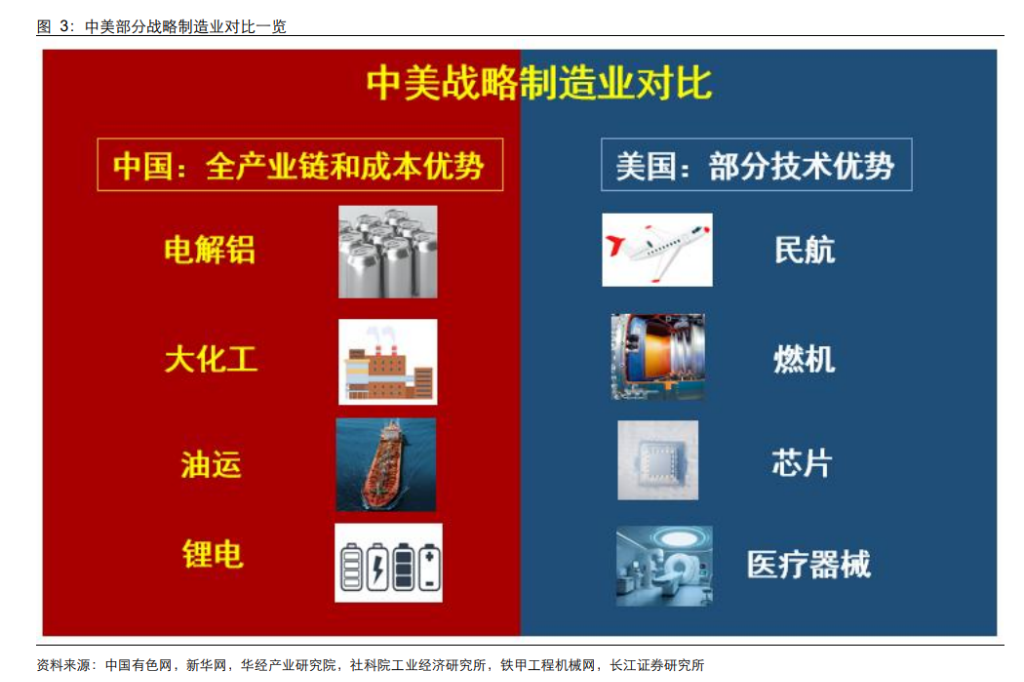
Core Viewpoint - The report from Changjiang Securities highlights the emergence of a "second category of scarce resources" in the current macroeconomic environment, driven by de-globalization and dual carbon controls, which limits expansion despite high profits in certain sectors [1]. Group 1: Strategic Industries - Four sectors identified as becoming "second category scarce resources": electrolytic aluminum, chemical and petrochemical, aviation, and oil transportation [1]. - These sectors share common characteristics: strategic importance, global demand, and currently low prices with high profit elasticity [2][4][5]. Group 2: Electrolytic Aluminum - Electrolytic aluminum is labeled as a "reborn resource," with its development fundamentally tied to electricity supply and grid stability [5]. - The report notes that while there are many overseas plans for electrolytic aluminum, actual implementation is challenging due to high electricity consumption ratios in regions like the UAE [8]. - The report suggests that if copper prices stabilize at 88,000 yuan/ton, aluminum prices could reach 25,000 yuan/ton, with aluminum companies becoming dividend machines due to high dividend yields [10]. Group 3: Chemical and Petrochemical - The chemical industry is transitioning from a low-price competition phase to a supply-side positioning strategy, with a focus on high-demand, low-supply products due to environmental regulations [12]. - The report indicates that prices for certain refrigerants have surged significantly, with R32, R134a, and R125 seeing increases of 265%, 107%, and 80% respectively from early 2024 to February 2026 [12]. - The petrochemical sector is expected to see supply constraints due to strict policies, with domestic refining capacity capped at 1 billion tons [17]. Group 4: Aviation - The aviation industry faces a unique supply-demand mismatch, with domestic demand increasing while supply is constrained by foreign manufacturers like Boeing and Airbus [20][21]. - The report predicts a decline in actual supply growth from 2026 to 2028, while demand is expected to surge, leading to a significant profit rebound starting in 2026 [24]. Group 5: Oil Transportation - The oil transportation market is being reshaped by geopolitical events, leading to a split between compliant and non-compliant markets [26]. - The report estimates that if demand from countries like Venezuela and Iran becomes compliant, it could create an additional 33.12 to 53.73 million tons of compliant transport demand, representing a 9.0% to 14.5% increase [26]. - The report also highlights that as leading shipping companies consolidate, their bargaining power may lead to higher freight rates during favorable market conditions [29].

黑色金属数据日报-20260211
Guo Mao Qi Huo· 2026-02-11 03:07
1. Report Industry Investment Ratings - Not provided in the given content 2. Core Views of the Report - For steel, the spot market is closed during the holiday, and the futures price fluctuates weakly. The market's expectation for the post - holiday period is not ideal. It is recommended to wait and see for unilateral trading and conduct rolling operations for hot - rolled coil positive spreads. For large spot exposures, selling hedging or options can be used to reduce risks [2] - For ferrosilicon and silicomanganese, the supply - demand situation is weak. Policy and cost factors are favorable. It is recommended to hold an empty or light position during the long holiday due to many uncertainties [3] - For coking coal and coke, the market continues to weaken. It is recommended to cash in spot positions before the holiday and wait for opportunities to short on the futures market after the price rises [5] - For iron ore, the restocking is basically over, and the price will fluctuate before the holiday. It is recommended that long - term investors short at the pressure level [6] 3. Summary by Related Catalogs Steel - The spot market is closed during the approaching holiday, and the futures price fluctuates weakly, indicating a not - so - optimistic market expectation for the post - holiday period. The black market is less affected by the cooling of the commodity market. Traders are not willing to take open positions for winter storage and are more suitable to participate through basis trading. Before the holiday, it is recommended to wait and see for unilateral trading and conduct rolling operations for hot - rolled coil positive spreads. For large spot exposures, selling hedging or options can be used to reduce risks [2] Ferrosilicon and Silicomanganese - The downstream terminal demand is seasonally weak, and the direct demand is weak and stable. The alloy factory's profit is under pressure, and the production and start - up rate have decreased compared with the same period last year. The medium - term supply surplus pressure remains. Policy and cost factors are favorable, such as the increase in manganese ore prices and electricity price disturbances. It is recommended to hold an empty or light position during the long holiday [3] Coking Coal and Coke - The spot market trading is cold during the approaching holiday. The futures market of the black sector fluctuates weakly. The market is in the off - season, and the industrial data is weak. The downstream restocking is near the end. There is news about Indonesian production cuts, but the probability of substantial cuts is low, and it provides an opportunity for spot - futures positive spreads. It is recommended to cash in spot positions before the holiday and wait for opportunities to short on the futures market after the price rises [5] Iron Ore - The steel mill's restocking is basically over, and the restocking strength is not as strong as expected. The price will fluctuate before the holiday. After the holiday, the Australian weather may affect the supply rhythm, and the price impact is more likely to be a rebound followed by a better short - selling point. It is recommended that long - term investors short at the pressure level [6]
供需弱平衡,节前震荡延续:中辉期货双焦周报-20260126
Zhong Hui Qi Huo· 2026-01-26 06:57
Report Summary 1. Report Industry Investment Rating No information provided. 2. Core Viewpoints - This week, the prices of black commodities first declined and then rebounded. Iron ore led the decline in the black - series at the beginning of the week, and coking coal and coke futures also weakened significantly. From Thursday, the chemical products sector rebounded across the board, and coking coal and coke prices followed the market sentiment and strengthened [4]. - In terms of supply and demand, some coal mines in the main production areas have stopped production, but most maintain normal production, with a slight increase in daily average output. Spot trading has weakened, and coal prices in the production areas have dropped slightly. Terminal buyers mainly purchase on - demand, and mine inventories have accumulated compared with the previous period [4]. - In terms of imports, the port clearance volume remains above 190,000 tons, maintaining the highest level in the same period. After the continuous decline of the futures market, traders' quotes have generally declined. Currently, the transaction price of some Mongolian No. 5 raw coal has dropped to 1,000 - 1,020 yuan/ton, and the cost of Mongolian coal and Shanxi mainstream warehouse receipts is 1,160 - 1,270 yuan/ton [4]. - After the continuous rise of raw coal prices, the losses of coking enterprises have deepened. The first price increase proposed by coking enterprises was rejected. Some coking enterprises have taken measures such as delaying shipments to downstream customers. The game between coking and steel enterprises is intense, and the first price cut may be implemented, but the upward space is expected to be limited. Currently, steel mills' profits are average, and the pig iron output is basically flat compared with the previous period. Constrained by high raw material prices and safety inspections, steel mills are still cautious about replenishing inventories [4]. - With only three weeks left until the Lunar New Year, downstream demand for raw materials still exists but is difficult to increase significantly. In the short term, attention should be paid to whether the pig iron output can exceed 2.3 million tons. From the perspective of capital sentiment, the main contract increased its positions by 3,000 lots this week, and the speculation degree has significantly declined compared with the previous period. Currently, the fundamental contradictions are limited, the futures price is basically at the same level as the Mongolian No. 5 warehouse receipts, and the price is in a relatively reasonable range. It is expected that the market will continue to fluctuate within a range following the market sentiment, and attention should be paid to the pressure at the previous high point [4]. 3. Summaries According to Related Catalogs 3.1 Coking Coal Market - **Warehouse Receipt Cost**: Different varieties of coking coal have different spot prices and warehouse receipt costs in various locations. For example, the spot price of Mongolian No. 5 in Tangshan on January 22, 2026, was 1,390 yuan/ton, and the warehouse receipt cost was 1,163 yuan/ton [8]. - **Basis**: The basis, weekly change, basis rate, average value in the past month, and seasonality of different contracts (January, May, September) are provided. For example, the basis of the January contract is - 41, with a weekly change of - 267 and a basis rate of - 3.33% [10]. - **Supply** - **Mine**: The daily average output of raw coal from 523 mines this week was 1.9944 million tons, a week - on - week increase of 16,500 tons; the daily average output of clean coal was 770,100 tons, a week - on - week increase of 1,600 tons [17]. - **Coal Washery**: The daily average output of sample coal washeries was 276,300 tons, a week - on - week increase of 28,000 tons; the capacity utilization rate was 37.41%, a week - on - week increase of 0.62% [20]. - **Import**: In 2025, China's cumulative coking coal imports decreased by 2.7% year - on - year. In December 2025, the import volume from Mongolia increased by 7.6% month - on - month and 59.1% year - on - year [21][24]. - **Auction Data**: In the week of January 16, 2026, the coking coal listing volume was 1.8641 million tons, the transaction rate was 94.42%, and the non - transaction rate was 5.58%. Compared with the week of January 9, 2026, the listing volume increased by 394,700 tons, the transaction rate increased by 8.57%, and the non - transaction rate decreased by 8.57% [27]. 3.2 Coke Market - **Coking Profit**: The coking profit in different regions (national, Shanxi, Hebei, Inner Mongolia, Shandong) has different values and weekly changes. For example, the national coking profit on January 22, 2026, was - 66 yuan/ton, a week - on - week decrease of 1 yuan/ton [36]. - **Basis**: Similar to coking coal, the basis, weekly change, basis rate, average value in the past month, and seasonality of different coke contracts (January, May, September) are provided [39]. - **Inventory Distribution**: As of January 23, 2026, the coke inventory in steel mills was 661,640 tons, a week - on - week increase of 11,310 tons; the available days of steel mill inventory were 12.35 days, a week - on - week increase of 0.38 days; the inventory of independent coking enterprises was 81,450 tons, a week - on - week decrease of 360 tons; the port inventory was 196,060 tons, a week - on - week increase of 7,990 tons [52].
黑色建材日报:市场情绪悲观,铁矿偏弱运行-20260120
Hua Tai Qi Huo· 2026-01-20 02:46
1. Report Industry Investment Rating - Not provided in the content 2. Core Views - The steel market sentiment is weak, and steel prices are expected to fluctuate. The iron ore market sentiment is pessimistic, and iron ore prices are expected to be weak. The coking coal and coke markets have limited supply - demand contradictions and are expected to fluctuate. The thermal coal market has increasing market waiting - and - seeing sentiment, and the coal prices in the production areas are running weakly [1][3][6][8] 3. Summary by Related Catalogs Steel Market Analysis - Yesterday, the main contract of rebar futures closed at 3140 yuan/ton, and the main contract of hot - rolled coil closed at 3299 yuan/ton. The spot steel transactions were generally weak, with the disk opening high and closing low, and the market speculation willingness was poor [1] Supply - Demand and Logic - The building material production is at a low level in the same period, and the daily average pig iron output has declined. Steel mills have successively announced winter storage policies, but the downstream winter storage willingness is insufficient. The building material fundamentals have limited contradictions, and the building material prices are expected to remain volatile. The high inventory of plates has always suppressed the price marginal elasticity, and the policy expectations have driven the long - term demand expectations. In the short term, the market sentiment is weak, and the prices depend on cost changes [1] Strategy - Unilateral: Fluctuation; Cross - period: None; Cross - variety: None; Spot - futures: None; Options: None [2] Iron Ore Market Analysis - Yesterday, iron ore prices were weakly running. The spot prices of imported iron ore at Tangshan Port declined weakly, with less market transactions. The 47 - port arrival volume was 28.977 million tons, a decrease of 1.173 million tons compared with the previous period; the 45 - port arrival volume was 26.597 million tons, a decrease of 2.606 million tons compared with the previous period [3] Supply - Demand and Logic - In terms of supply, the shipments from Australia and Brazil continued to decline, while the shipments from non - mainstream countries continued to increase. The overall global shipments decreased. The demand for iron ore decreased last week, and the daily average pig iron output declined. The supply - demand contradiction of iron ore is increasing. In the short term, steel mills face winter storage replenishment, and iron ore prices will remain volatile [3] Strategy - Unilateral: Short on rallies; Cross - period: None; Cross - variety: None; Spot - futures: None; Options: None [5] Coking Coal and Coke Market Analysis - Yesterday, the main contract of coking coal futures closed at 1174.5 yuan/ton, and the main contract of coke closed at 1721.0 yuan/ton, with the disk maintaining a range - bound operation. The customs clearance of Mongolian coal remained at a high level. The first round of coke price increase has not been implemented yet [6] Supply - Demand and Logic - Currently, the supply - demand contradiction of coke is limited, and there is a price game between steel and coking enterprises. Before the Spring Festival, the replenishment of steel mills is expected to further boost demand. In the short term, coke is expected to fluctuate. The supply of coking coal is increasing, but the fundamental contradiction is relatively controllable. Driven by the replenishment demand, the demand for coking coal is expected to continue to improve. The coking coal price has a bottom support [6] Strategy - Coking coal: Fluctuation; Coke: Fluctuation; Cross - period: None; Cross - variety: None; Spot - futures: None; Options: None [7] Thermal Coal Market Analysis - In the production areas, the coal prices in the main production areas declined weakly. The terminal demand such as metallurgy, chemical industry, and power plants was for on - demand procurement. At the ports, the coal market prices were weakly running. The import coal market transactions were deserted [8] Supply - Demand and Logic - The market waiting - and - seeing sentiment is increasing, the supply in the production areas is gradually recovering, and the coal prices are fluctuating. In the long - term, the supply - loose pattern remains unchanged [8] Strategy - None [9]
黑色:下游开启补库区间交易为主
Chang Jiang Qi Huo· 2026-01-19 02:47
Report Industry Investment Rating - Not provided in the given content Core Viewpoints - The black sector showed a weak and fluctuating trend last week, with finished products stronger than raw materials. The strength relationship among varieties in terms of index fluctuations was rebar > hot-rolled coil > iron ore > coke > coking coal. The black sector performed relatively flat in the entire futures market [4]. - Overseas political situation is turbulent, increasing global uncertainties. The domestic central bank has taken a "combination punch" to support high - quality economic development, including a 0.25 - percentage - point reduction in the rediscount and re - loan interest rates [4]. - Steel demand rebounded last week, and inventory decreased again, with minor supply - demand contradictions. On the raw material side, both coking coal, coke, and iron ore were accumulating inventory, but downstream has started restocking [4]. Summaries by Directory 01 Black Sector Trend Comparison - The black sector trended weakly and fluctuated last week, with finished products stronger than raw materials [4][6] 02 Futures Market Rise - Fall Comparison - Futures prices showed a mixed trend, with silver and Shanghai tin rising significantly, while the black sector was relatively flat [4][8] 03 Spot Prices - Spot prices were stable with a slight upward trend, and iron ore prices decreased slightly [14] 04 Profit and Valuation - The profitability rate of steel mills increased slightly, and the valuation of rebar futures was neutral [18] 05 Steel Supply and Demand - Steel demand rebounded week - on - week, and inventory decreased again [20] 06 Iron Ore Supply and Demand - Hot metal production declined unexpectedly, and both steel mill and port iron ore inventories increased. Steel mills started restocking before the holiday. Iron ore shipments have been declining continuously, but arrivals are still at a high level, and it is expected to remain in an inventory - accumulation pattern in the short term [5][30] 07 Coking Coal Supply and Demand - Raw coal production increased last week, and coking coal inventory continued to accumulate. However, coal washing plants and independent coking plants started restocking [5][33] 08 Coke Supply and Demand - Coke production decreased slightly week - on - week, and inventory shifted to the middle and lower reaches [5][35] 09 Variety Spreads - The mill's on - paper profit improved, and the rebar - to - iron - ore ratio increased [37] 10 Key Data/Policy/Information - From April 1, the VAT export tax rebate for products such as photovoltaic will be cancelled. From April 1 to December 31, the VAT export tax rebate rate for battery products will be reduced from 9% to 6%, and from January 1, 2027, the VAT export tax rebate for battery products will be cancelled [42]. - On January 12, US President Trump stated that any country conducting business with Iran will face a 25% tariff on all its business with the US [42]. - Trump said that the US government may shut down again on January 30 [42]. - Citigroup expects the Fed to cut interest rates by 25 basis points each in March, July, and September, while Morgan Stanley expects the Fed to cut interest rates by 25 basis points each in June and September [42]. - Since January 13, 2026, Shagang has raised the price of scrap steel by 50 yuan/ton [42]. - The US CPI in December 2025 increased by 2.7% year - on - year, and the core CPI increased by 2.6%, both remaining the same as the previous value [42]. - The Shanghai, Shenzhen, and Beijing stock exchanges have adjusted the margin ratio for margin trading, raising the minimum margin ratio for investors' margin - buying of securities from 80% to 100% [42]. - The World Steel Association reported that from 2014 to 2024, the indirect steel exports of 74 countries increased from 325 million tons to 410 million tons, a 26% increase. In 2024, the indirect steel trade volume was equivalent to 93% of the direct export volume [42]. - The central bank has taken a "combination punch" to support high - quality economic development, including a 0.25 - percentage - point reduction in the rediscount and re - loan interest rates [4][42]. - During the 15th Five - Year Plan period, the State Grid's fixed - asset investment will reach 4 trillion yuan, a 40% increase compared to the 14th Five - Year Plan period [42]
现实预期博弈,震荡运?为主
Zhong Xin Qi Huo· 2026-01-15 00:33
Report Industry Investment Rating - The report gives a medium - term outlook of "sideways" for the black building materials industry [6] Core View of the Report - The market is in a game between reality and expectation, with prices mainly moving sideways. The downstream procurement enthusiasm for coking coal and coke has increased, and the spot price of coke has started to rise. However, coal mines are resuming production in January, and Mongolian coal imports have rebounded to a high level, so there is still high supply pressure, and the futures prices are expected to move sideways. The resumption of hot metal production and pre - holiday restocking expectations support the iron ore price, but high inventory limits the upside space. In the off - season, demand is seasonally weak. As steel mills gradually resume production, the pressure of inventory accumulation in the steel sector is becoming more obvious, and fundamental contradictions are gradually accumulating, suppressing the valuation of the steel futures market. The oversupply of glass and soda ash continues to suppress the futures prices [2]. Summary by Relevant Catalogs 1. Iron Element - Iron ore: Port inventory is continuously accumulating, and there are expectations of disturbances on the supply side. The resumption of hot metal production and pre - holiday restocking support the ore price. The supply and demand on both sides in reality still need to be verified, and it is expected to move sideways in the short term. The supply and demand of scrap steel are both weak. Steel mills have relatively high inventory, and restocking has slowed down. However, the profit of electric furnaces is acceptable, and the daily consumption is at a high level, which supports the demand. The overall fundamental contradictions are not prominent, and the spot price is expected to move sideways [2]. 2. Carbon Element - Coke: The cost side of coke has shown signs of stabilization, and the expectation of steel mill复产 still exists. As the mid - and downstream winter restocking gradually begins, and the sharp rise in the futures market may drive the entry of spot - futures and speculative demand for procurement, the supply - demand structure of coke may gradually tighten. The spot price increase is expected to be implemented, and the futures price is expected to follow the coking coal [3]. - Coking coal: As the Chinese New Year approaches, the intensity of winter restocking gradually increases, and the impulse behavior of Mongolian coal imports has improved. The overall supply pressure will be relieved, the fundamentals of coking coal will continue to improve marginally, and there is still upward momentum in the futures and spot prices [3]. 3. Alloys - Manganese silicon: The pattern of loose supply and demand of manganese silicon continues, the pressure of upstream inventory reduction is relatively large, and it is difficult to transmit costs downward. When the futures price rises to a high level, it will face selling hedging pressure. In the medium term, the futures price is still expected to gradually fall back to the cost valuation level [3]. - Ferrosilicon: Currently, the supply and demand in the ferrosilicon market are both weak, and the fundamental contradictions are relatively limited. In the short term, the futures price is expected to follow the sector [3]. 4. Glass and Soda Ash - Glass: There are still expectations of disturbances in supply, but the inventory of mid - and downstream is moderately high. Fundamentally, the current supply and demand are still in excess. If there is no more cold repair by the end of the year, the high inventory will always suppress the price, and it is expected to move sideways weakly. Otherwise, the price will rise [3]. - Soda ash: The overall supply and demand of soda ash are still in excess. It is expected to move sideways in the short term. In the long run, the pattern of oversupply will further intensify, and the price center will continue to decline, promoting capacity removal [3]. 5. Specific Varieties Analysis - Steel: The spot market trading is average. With the end of some steel mill overhauls, iron and steel production continues to increase. In the off - season, demand is seasonally weak, and the overall steel inventory has stopped falling and started to rise. The fundamental contradictions are gradually accumulating. But with the resumption of steel mills and winter restocking, the cost side still has support, and the futures price will move in a wide sideways range [8]. - Iron ore: The spot price is moving sideways. Overseas mine shipments have decreased month - on - month, and the arrivals have increased. The fundamentals on both the supply and demand sides still need to be verified, and it is expected to move sideways in the short term [8]. - Scrap steel: The supply and demand of scrap steel are both weak. Steel mills have high inventory, and restocking has slowed down. However, the profit of electric furnaces is acceptable, and the daily consumption is at a high level, which supports the demand. The overall fundamental contradictions are not prominent, and the spot price is expected to move sideways [9]. - Coke: The cost side of coke has strong support, and the spot price has started to rise. The demand for coke is well - supported by the resumption of steel mills, and the inventory of steel mills is steadily increasing. The supply - demand structure is expected to tighten, and the futures price is expected to follow the coking coal [12]. - Coking coal: The supply pressure will be relieved, the fundamentals will continue to improve marginally, and there is still upward momentum in the futures and spot prices [12]. - Glass: The supply has expectations of disturbances, but the mid - and downstream inventory is moderately high. The current supply and demand are in excess. If there is no more cold repair by the end of the year, the high inventory will suppress the price, and it is expected to move sideways weakly [13]. - Soda ash: The overall supply and demand are in excess. It is expected to move sideways in the short term. In the long run, the pattern of oversupply will intensify, and the price center will decline [16]. - Manganese silicon: The supply - demand pattern is loose, the upstream inventory reduction pressure is large, and it is difficult to transmit costs downward. The futures price is expected to gradually fall back to the cost valuation level in the medium term [16]. - Ferrosilicon: The supply and demand are both weak, and the fundamental contradictions are limited. In the short term, the futures price is expected to follow the sector [17].
数据点评 | 为何12月出口“再超预期”?(申万宏源·赵伟团队)
Xin Lang Cai Jing· 2026-01-14 16:32
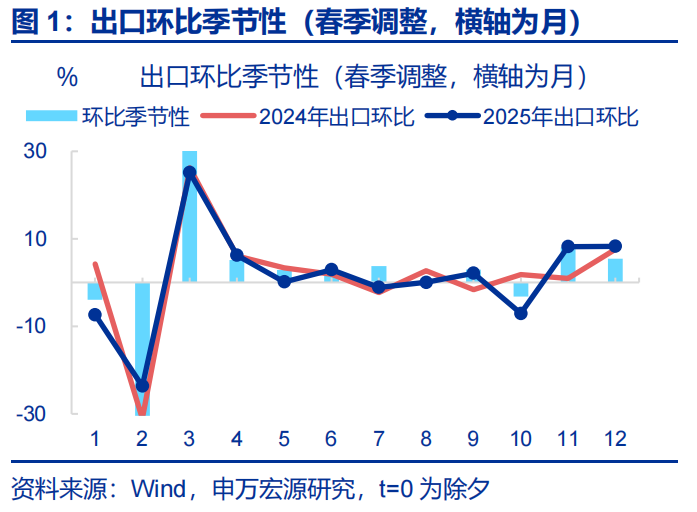
Core Viewpoint - December exports showed strong performance, supported by pricing effects, new product launches, and improvements in external demand [2][7] Group 1: Export Performance - December exports (in USD) increased by 6.6% year-on-year, exceeding expectations of 2.2% and the previous value of 5.9% [1][4] - The increase in exports reflects both structural and aggregate factors, with a 0.7 percentage point rise from November [2][7] - The appreciation of the RMB since November contributed to a 0.4 percentage point increase in total exports due to pricing effects [2][7] Group 2: Sector Analysis - Consumer electronics exports rose significantly by 16.3 percentage points to 19.6%, driven by new smartphone launches and improved external demand [3][22] - Exports of production materials also improved, with aluminum, integrated circuits, and steel seeing increases of 23.9%, 13.6%, and 3.5% respectively [3][22] - Import of processing trade increased by 3.8 percentage points to 5.7%, indicating a continuation of export improvement [29][57] Group 3: Country-Level Insights - Exports to emerging economies showed strong performance, with a 1.4 percentage point increase to 13.5% year-on-year [14][22] - Exports to ASEAN and India rose by 2.9 and 14 percentage points to 11.1% and 22.1% respectively [14][22] - Exports to developed economies, particularly the US and Europe, experienced a decline, with a limited drop of 1.5% to -30% for the US [14][54] Group 4: Future Outlook - The competitive advantage of Chinese exports is expected to remain strong, with projections for 2026 indicating sustained resilience in exports [4][36] - The industrialization of emerging countries is anticipated to drive demand for production materials, supporting China's export growth [4][36] - Potential easing of US-China tariffs and ongoing inventory replenishment in the US may lead to a rebound in exports to the US [4][36]

震荡运?为主,关注钢?复产与下游补库节奏
Zhong Xin Qi Huo· 2025-12-31 02:02
1. Report Industry Investment Rating - The mid - term outlook for the black building materials industry is "Oscillation" [7] 2. Core Viewpoints of the Report - The policy tone of large - scale equipment renewal and consumer goods trade - in in 2026 is positive. The steel market is in the off - season with inventory reduction, and the fundamentals have limited contradictions. The iron ore has high inventory and potential storage fee pressure, and the coke and coal markets are affected by factors such as production resumption expectations and supply - demand changes. The glass and soda ash markets are facing supply - demand imbalances [1][2] 3. Summary by Relevant Catalogs 3.1 Iron Element - Iron ore: The iron water output is basically stable, the port inventory is continuously accumulating, and the upstream - downstream game is strong. The short - term ore price is expected to oscillate. The spot price is weak, and the port trading volume has increased [2][9]. - Scrap steel: The supply and demand of scrap steel are both weak. The steel mills' inventory is high, and the restocking has slowed down. The spot price of scrap steel has limited upward momentum, and the spot market is expected to follow the price cut of leading steel enterprises in East China [2][11]. 3.2 Carbon Element - Coke: The cost of coke has shown signs of stabilization. After the four - round price cut is implemented, the spot price is expected to stabilize, and the futures price is expected to oscillate following coking coal. As the downstream winter storage replenishment starts, the supply - demand structure may gradually tighten [2][13]. - Coking coal: As the year - end approaches, the winter storage intensity increases, and the supply pressure will be alleviated. The fundamentals of coking coal will continue to improve marginally, and the futures and spot prices still have upward momentum [2][13]. 3.3 Alloys - Manganese silicon: With the expected new supply in Inner Mongolia, the supply - demand pattern of manganese silicon is expected to be further loosened. The cost still supports the price, and the futures price is expected to oscillate around the cost valuation in the medium term [3][18]. - Ferrosilicon: Low supply and low inventory support the price of ferrosilicon, but the price cut of coke restricts its upward space. The demand has not increased significantly, and the futures price is expected to oscillate around the cost valuation [3][19]. 3.4 Glass and Soda Ash - Glass: There are still expectations of supply disturbances, but the inventory of the mid - and downstream is moderately high, and the supply - demand is currently in excess. If there is no more cold - repair by the end of the year, the high inventory will suppress the price; otherwise, the price will rise [3][14]. - Soda ash: The overall supply - demand is in excess. In the short term, it is expected to oscillate, and in the long term, the supply - excess pattern will intensify, and the price center will continue to decline [3][17].
综合晨报-20251229
Guo Tou Qi Huo· 2025-12-29 02:32
Report Industry Investment Ratings No relevant information provided. Core Viewpoints of the Report - The overall market shows complex trends, with different commodities and financial products having their own characteristics. Some are influenced by supply - demand fundamentals, some by geopolitical factors, and others by macro - economic policies and seasonal factors. The market rhythm switches quickly, and most products are in a state of oscillation, with different potential investment opportunities and risks [2][3][14] - Different industries have different outlooks. For example, some industries like polycrystalline silicon and manganese silicon are expected to have a relatively positive trend, while others such as urea and PVC may face certain challenges in supply - demand balance and price trends [13][18][28] Summary by Related Catalogs Precious Metals and Base Metals - **Precious Metals**: International gold prices continued a moderate upward trend after the breakthrough, while silver, platinum, and palladium accelerated their rise, with a gain of over 10%. The Fed's easing prospects and geopolitical risks support the strength of precious metals. The spot shortage expectation makes silver, platinum, and palladium more favored by funds, and the gold - silver ratio has dropped significantly below the average. However, exchange restrictions are frequent, and market volatility is extremely high [2] - **Copper**: Copper prices continued to rise strongly last Friday. The Shanghai copper weighted reached a maximum of 102,700 yuan, and it is expected that the London copper will open at $12,700 - $12,800. The market has quickly reached the bullish targets of most overseas institutions for 2026. The target price of the copper market is raised, with the London copper at about $13,100 and the Shanghai copper at about 104,000 yuan [3] - **Aluminum**: The aluminum market's fundamentals are neutral, with poor apparent demand and spot feedback. Shanghai aluminum mainly followed the upward trend, with relatively mild fluctuations. Long - positions should be held with the 40 - day moving average as the support [4] - **Zinc**: In late December, domestic smelter overhauls increased, supporting the adjustment of Shanghai zinc above the annual line. In January, the pressure on the zinc ingot supply side is small, and with the late Spring Festival in 2026 and the expected good start, the consumption side is not pessimistic. Shanghai zinc is expected to oscillate in the range of 22,800 - 23,800 yuan/ton [7] Energy and Chemicals - **Fuel Oil & Low - Sulfur Fuel Oil**: High - sulfur fuel oil supply is mainly affected by geopolitical factors, with the shipping rhythm in the Middle East and Russia slowing down. The demand side may be boosted by improved refinery profits and the US blockade of Venezuelan oil exports. Singapore's inventory continues to accumulate, and the high - inventory pressure is still significant. Low - sulfur fuel oil supply is dominated by overseas refinery starts. The demand side of ship fuel consumption is continuously weak due to high - sulfur substitution [21] - **Asphalt**: Since December, the weekly shipment volume has remained below 400,000 tons, at a low level in the same period of the past four years. Last week, both social and factory inventories increased. The supply - demand of BU is marginally relaxed, but positive news has a significant boost. However, it will eventually return to the price - pressured pattern dominated by supply - demand relaxation [22] Agricultural Products - **Soybean & Bean Meal**: CBOT soybeans oscillated downward after reopening last Friday, and Dalian soybean meal rose first and then fell. In the future, attention should be paid to the specific export situation of US soybeans and whether the La Nina weather in South America can have a continuous impact [35] - **Cotton**: US cotton rebounded from a low level last week, and the weekly signing data improved, with increased Chinese purchases. Domestic Zhengzhou cotton rose continuously, and the market is bullish. Although this year's new cotton production has increased significantly, the commercial inventory is basically the same as the previous year, and the sales progress is relatively fast [42] Others - **Stock Index**: The previous trading day, the broader market oscillated with heavy volume, and the Shanghai Composite Index recorded an 8 - day consecutive gain. All major futures index contracts closed higher, with IC leading the gain. Industrial profits of large - scale enterprises from January to November showed a growth trend, and the RMB exchange rate broke "7" last week [47] - **Treasury Bonds**: On December 26, 2025, the 30 - year treasury bond futures had the largest increase of 0.36%. In December, the central bank's net MLF injection was 10 billion yuan, a consecutive tenth - month incremental renewal. Against the background of increased counter - cyclical adjustment policies, long - term interest rates have risen significantly recently [48]