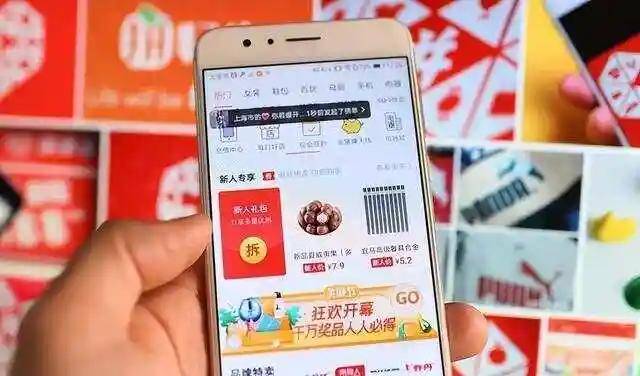
工厂直供

Search documents
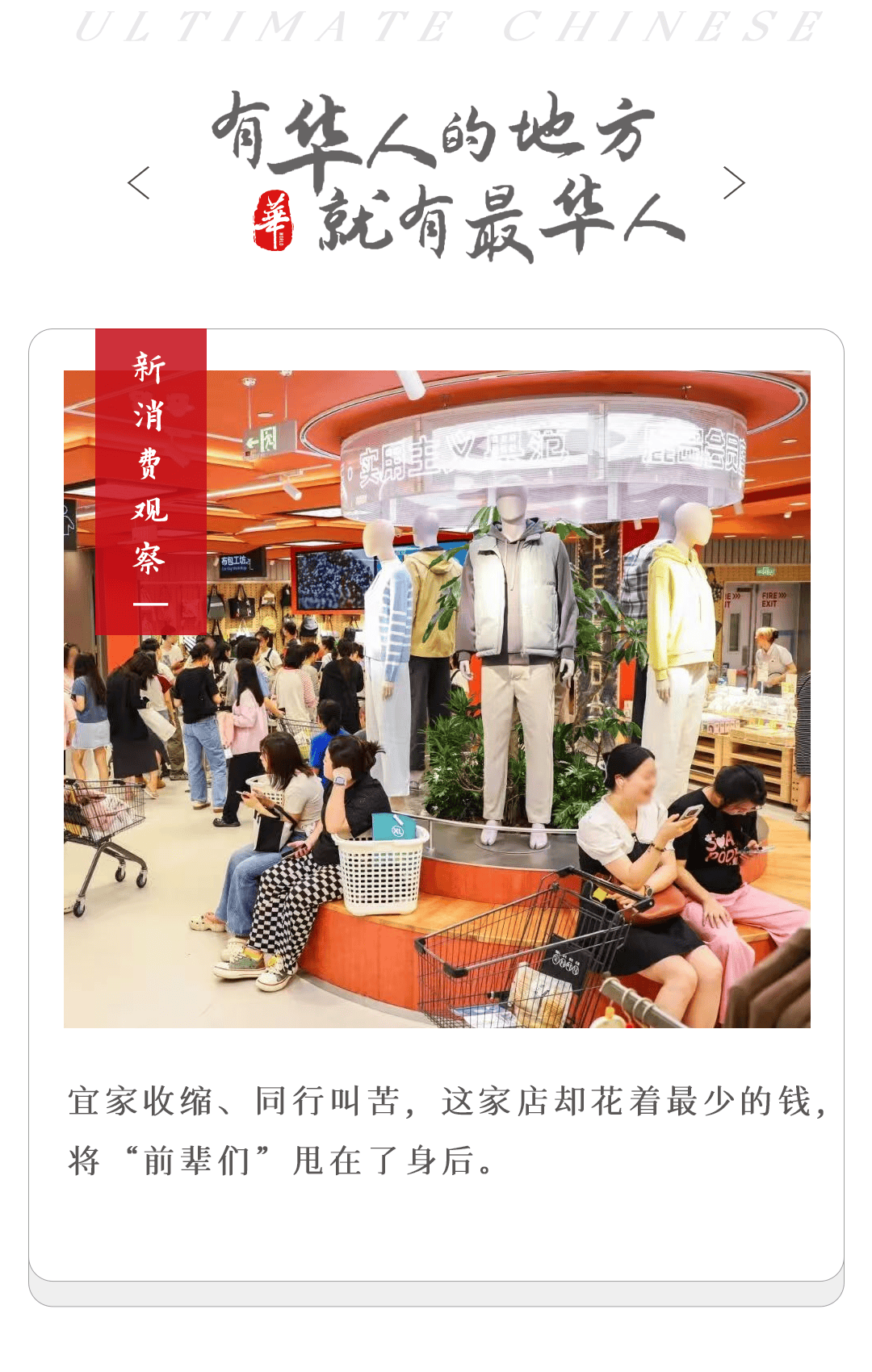
年轻人抛弃宜家,却对这个“线下拼多多”上瘾了
Sou Hu Cai Jing· 2026-02-24 18:51
Core Insights - The article discusses the rapid growth and success of the home goods brand, 鹿岛 (Lushida), which has gained popularity in China by offering affordable products, contrasting with the struggles of established brands like IKEA [3][5]. Company Overview - 鹿岛 is projected to reach nearly 8 million members and generate annual revenue of approximately 4 billion yuan by 2025 [5]. - The founder, 马炬, has a background in the clothing industry and identified a gap in the market for affordable, quality clothing and household goods [6][11]. Business Model - 鹿岛's strategy involves providing a one-stop shopping experience, combining clothing with household items, which appeals to time-constrained consumers [11]. - The brand's pricing strategy allows it to compete directly with established retailers like Uniqlo and IKEA, offering similar quality at significantly lower prices [13][19]. Product Offering - 鹿岛's product range includes basic clothing items priced as low as 9.9 yuan, with high sales volumes, such as 3.2 million units of a basic T-shirt sold annually [17]. - The brand has successfully attracted customers from competitors by offering better value, leading to a high customer retention rate of 70% among its members [19][20]. Supply Chain and Operations - 鹿岛 has developed a unique supply chain model by integrating over 100 small manufacturers, allowing for bulk production and lower prices [20][22]. - The brand maintains low operational costs by using simple store designs and minimizing unnecessary expenses, such as background music [31][32]. Marketing and Customer Engagement - 鹿岛 employs innovative marketing strategies, such as creating visually appealing flower arrangements at store entrances to attract customers [33][39]. - The brand also offers a tea area for men, enhancing the shopping experience for families and encouraging longer visits [39][41]. Expansion Strategy - 鹿岛 plans to open 150 new stores by 2025, with 50 of those being franchise locations, allowing for rapid expansion compared to competitors like MUJI and IKEA [43]. - The brand is diversifying its store formats to include larger flagship stores and specialized selections, aiming to enhance customer experience and product variety [43][45].

物美调改后日用品价格变化?品质升级+价格稳降,自有品牌性价比拉满
Jin Rong Jie· 2026-02-04 08:26
Core Insights - The core viewpoint of the articles is that Wumart has successfully implemented a dual strategy of "quality upgrade + price stabilization" for daily necessities since the adjustment began in March 2025, resulting in an average price decrease of 15%-20% for essential goods compared to pre-adjustment levels [1][2]. Group 1: Price and Quality Strategy - The adjustment is not a pretext for price increases but focuses on "quality and price excellence," with a strict markup rate capped at 18%-19% [2]. - Wumart's commitment to "quality upgrades without price hikes" is evident in its pricing strategy for daily necessities, which remains lower than market averages [3][8]. Group 2: Product Categories and Pricing - Essential daily necessities have seen significant price reductions, with examples such as 12 bottles of mineral water priced at 5.5 yuan, a 20% decrease from pre-adjustment prices [3][4]. - Brand-name daily necessities maintain stable prices while enhancing quality, with Wumart adhering to a "same quality, same price" principle [3][4]. Group 3: Private Label Products - Private label products now account for over 60% of Wumart's offerings, leveraging a factory-direct supply model to provide competitive pricing, typically 20%-30% lower than similar branded products [4][5]. - The company implements strict quality control measures for its private label products, ensuring freshness and quality [4][5]. Group 4: Operational Efficiency - Wumart's ability to lower prices while enhancing quality is attributed to systematic cost optimizations, including direct supply chain management and reduced transportation costs [5][6]. - The SKU optimization strategy focuses on maintaining a limited selection of high-quality products, enhancing procurement efficiency and reducing inventory costs [6]. Group 5: Consumer Response and Sales Performance - The pricing strategy has led to increased consumer traffic and sales, with daily sales at some stores rising from 200,000 yuan to 700,000 yuan, reflecting a growth of over 2.5 times [7][8]. - The high repurchase rate of daily necessities indicates strong consumer satisfaction and loyalty to Wumart's offerings [7]. Group 6: Future Outlook - Wumart aims to continue expanding its private label product range and improving quality control mechanisms, reinforcing its commitment to providing high-quality, affordable daily necessities [8].
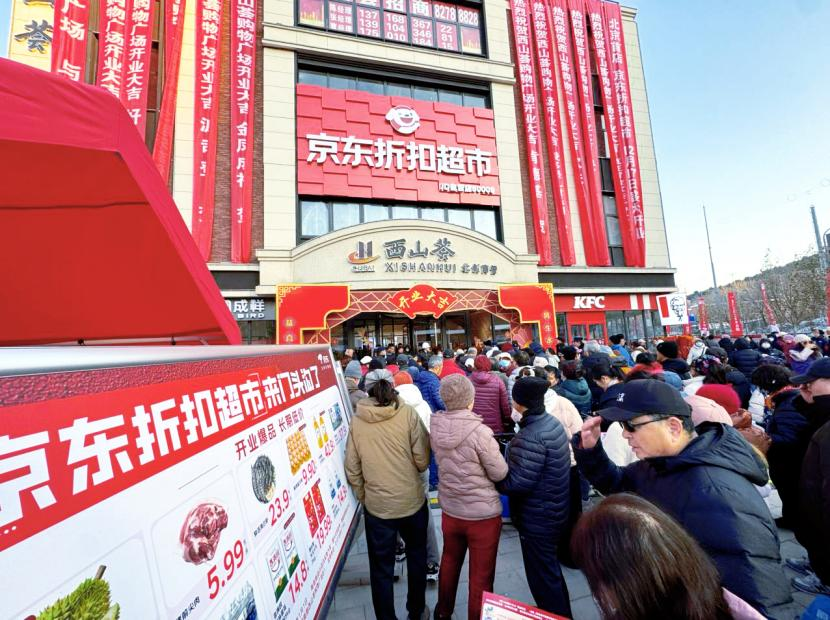
京东折扣超市北京门头沟首店今日开业:京西现“万人逛店”消费热潮
Zhong Jin Zai Xian· 2025-12-17 05:40
Core Viewpoint - JD's discount supermarket has opened its first store in Beijing, attracting significant customer interest and demonstrating strong market appeal and operational efficiency [1][13]. Group 1: Store Opening and Customer Response - The new store in Beijing's Mentougou district opened to long queues and high customer enthusiasm, indicating a successful launch [1]. - The store features a blend of local culture and affordable pricing, creating a unique shopping experience that resonates with consumers [3][15]. Group 2: Product Offerings and Pricing Strategy - The store offers a variety of products, including local delicacies and popular items at competitive prices, such as 8.9 yuan for pizza and 9.8 yuan for chicken burgers, appealing to a wide demographic [3][5]. - High-value items like 15L bottled water at 9.9 yuan and socks sold by weight at 26.9 yuan per jin have become popular among shoppers, emphasizing the store's focus on affordability [5]. Group 3: Seasonal Promotions and Consumer Engagement - The store has launched a winter solstice dumpling section with nearly 30 varieties and promotional activities, attracting many customers [7]. - A "100% winning" opening promotion has further engaged shoppers, enhancing the festive atmosphere and encouraging participation [11]. Group 4: Supply Chain and Fresh Produce - The fresh produce section benefits from direct sourcing, offering competitive prices on essential items like pork at 5.99 yuan per jin and fresh shrimp at 23.9 yuan per jin, meeting consumer demand for quality and affordability [9]. - The store's operational model leverages JD's strong supply chain to eliminate middlemen, ensuring low prices and freshness [9]. Group 5: Market Strategy and Future Outlook - This store marks a significant step for JD in expanding its presence in first-tier cities and revitalizing the local commercial landscape in Beijing [15]. - The company plans to maintain stock of popular items to ensure a consistent low-price shopping experience for residents [15].

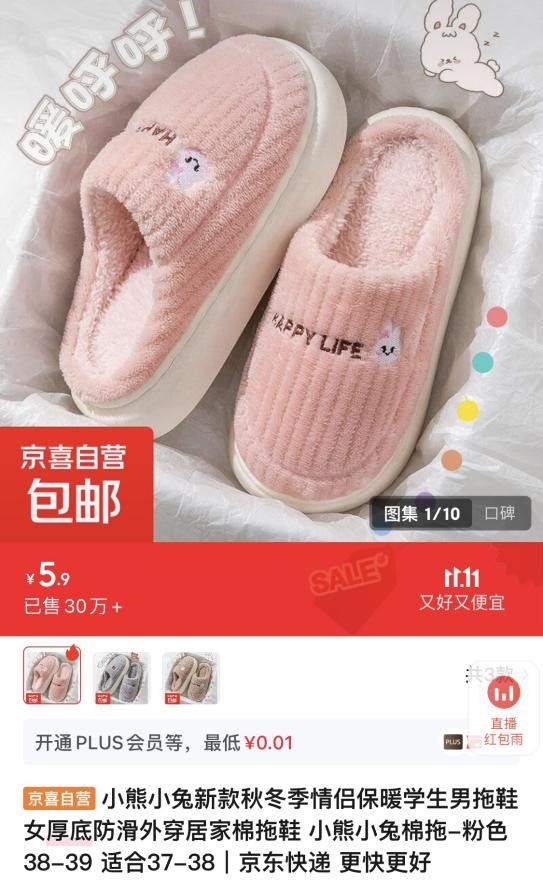
京东11.11点燃服饰消费热情 京喜自营拖鞋、内裤、冲锋衣等热销
Zhong Jin Zai Xian· 2025-11-19 03:23
Core Insights - JD's Jingxi self-operated clothing products performed exceptionally well during the 11.11 shopping festival, leveraging a "source direct procurement, factory direct supply" model to create multiple bestsellers [1][3][5] Group 1: Sales Performance - The "Little Bear and Little Rabbit" cotton slippers sold 500,000 pairs, setting a new sales record for cotton slippers on the platform [1] - A cotton sleepwear set with built-in chest pads achieved sales of 3,000 units in just one day, surpassing previous sales records [3] - Women's underwear made from Xinjiang cotton reached over 20,000 units sold within 24 hours of launch [5] Group 2: Product Quality and Supply Chain - Jingxi self-operated products benefit from strict quality control and reduced intermediaries, enhancing price competitiveness and enabling merchants to achieve volume-based efficiency [1][5] - The collaboration with the Puning underwear industry, leveraging 30 years of weaving experience, ensures high cost-performance and reliable quality through comprehensive supply chain management [5] Group 3: Market Strategy and Future Plans - Jingxi self-operated aims to deepen connections with 260 national industrial belts, achieving a tenfold increase in transaction volume and creating nearly 300,000 jobs [9] - The company plans to support 500,000 factories in industrial belts to achieve stable sales and create 5 million jobs over the next three years [9]
工厂直供听着挺划算,实际藏着不少隐形消费,消费者一定要警惕
Sou Hu Cai Jing· 2025-11-14 05:21
Core Viewpoint - The rise of "factory direct supply" marketing in 2024 is misleading consumers into believing they are saving money by eliminating middlemen, while hidden costs may still be passed on to them [1][20]. Group 1: Marketing Trends - In 2024, a marketing trend of "factory direct supply" is emerging across major e-commerce platforms and live streaming channels, promoting slogans like "source low prices" and "eliminate middlemen" [1]. - Consumers are drawn to the idea that removing intermediaries will lead to significant savings, but this perception is often incorrect [3]. Group 2: Misconceptions about Middlemen - The disappearance of middlemen is a facade; their functions and costs have not vanished but have been transferred to brands and consumers [3][5]. - Middlemen play crucial roles in product selection, storage, transportation, promotion, and after-sales service, which are now the responsibility of brands [5][7]. Group 3: Cost Implications - The costs previously borne by middlemen are now reflected in new forms, such as advertising and customer acquisition expenses, which ultimately increase product prices for consumers [9][11]. - In 2024, the customer acquisition cost for beauty brands has risen by 32.7% year-on-year, with monthly advertising budgets now accounting for 18%-30% of GMV, up from 15%-25% in 2023 [9]. Group 4: Live Streaming and Advertising Costs - Live streaming has become a significant area for hidden price increases, with commissions and fees for influencers often reaching 35% of sales, tripling in the last three years [11]. - Brands are increasingly spending on advertising to attract customers, with 2024 internet advertising revenue in China projected to reach 650.9 billion yuan, including 183.2 billion yuan for e-commerce ads [14][16]. Group 5: Consumer Awareness - Consumers are encouraged to be cautious of "low-priced" offers, as excessively low prices may indicate hidden quality issues [18][20]. - The narrative of "no middlemen" is often a marketing ploy, and consumers should remain vigilant to avoid falling into consumption traps [20][22].

京东11.11激活产业带生产力 京喜自营打造多款个护美妆爆品
Zhong Jin Zai Xian· 2025-11-10 09:15
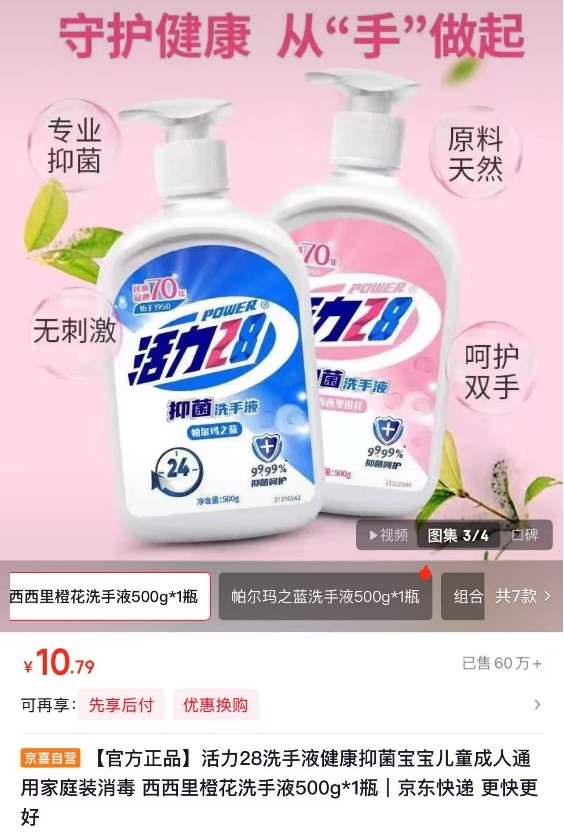
Core Insights - JD's subsidiary Jingxi has achieved significant sales milestones during the 11.11 shopping festival, showcasing the strong market appeal of its quality and affordable personal care products [1][3][5] Supply Chain and Market Strategy - Jingxi's success is attributed to its deep integration of supply chain resources and precise understanding of consumer trends, utilizing a "source direct procurement, factory direct supply" model to deliver products directly to consumers [1][10] - This model has shortened the product circulation chain, enhancing efficiency from production to consumption, and has revitalized local industries, particularly in regions like Yichang and Shantou [1][3] Product Performance - The "Vitality 28" hand sanitizer sold over 50,000 bottles daily during the initial sales period, indicating the market potential of domestic brands [1] - The Shantou-based toothbrush sold 200,000 units within 28 hours during a promotional event, marking it as a leading product in its category [3] - A mouthwash developed in collaboration with leading enterprises in Foshan sold nearly 20,000 bottles during the 11.11 period, further demonstrating Jingxi's capability to create popular products [5][6] Emerging Consumer Trends - Jingxi is actively expanding into new consumer scenarios, such as "home light medical beauty," by introducing effective skincare products at competitive prices, achieving sales of over 200 units per day during the 11.11 event [8] - The platform has successfully identified and marketed differentiated beauty products, such as the Chitosan mask, which has gained consumer recognition for its effectiveness [9] Future Growth and Strategic Initiatives - By 2025, JD plans to launch a strategic entry point called the "Special Price Channel," aimed at the lower-tier market, to offer consumers high-quality, low-cost products [10] - Jingxi has connected with over 260 quality industrial belts nationwide in the past two years, serving over 370 million consumers, and is projected to achieve a tenfold increase in transaction volume by 2025 compared to 2024 [10]
拼多多低价销售还包邮,真的不会亏钱吗?商家揭露背后真相
Sou Hu Cai Jing· 2025-10-21 05:53
Core Insights - The article explores how Pinduoduo maintains low prices while ensuring profitability, highlighting its unique business model and strategies that differentiate it from traditional e-commerce platforms [1][3][11]. Pricing Strategy - Pinduoduo's average product prices are 32.7% lower than other major e-commerce platforms, with some categories showing price differences exceeding 50% [1]. - 76.3% of consumers cite "low prices" as the primary reason for shopping on Pinduoduo [1]. Business Model - Pinduoduo's merchants often engage in direct sourcing from factories, eliminating intermediaries and reducing costs. Approximately 82% of Pinduoduo merchants use this "factory direct supply" model, which is nearly 30 percentage points higher than other platforms [3][4]. - The platform's "group buying" mechanism allows merchants to achieve economies of scale, significantly lowering costs as order volumes increase. Pinduoduo's average daily order volume per product is 2.6 times that of other platforms [4][6]. Cost Management - Merchants on Pinduoduo utilize simplified packaging and customer service, which reduces non-essential costs. Packaging costs on Pinduoduo account for only 2% of product costs, compared to 8.5% on high-end platforms [6]. - The platform's data-driven inventory management enhances efficiency, with an average inventory turnover of 18 days, nearly 40% lower than the industry average [6]. Subsidy and Support - Pinduoduo's subsidy strategies, including various promotional activities, enable merchants to offer lower prices without sacrificing profit margins. In 2024, Pinduoduo invested 27 billion yuan in merchant subsidies, a 22% increase from 2023 [7][9]. Additional Cost-Saving Measures - Merchants often choose cost-effective logistics solutions, resulting in an average logistics cost that is 27% lower than other platforms [9]. - The platform provides detailed market price analysis, helping merchants set competitive prices while maintaining profitability [9]. Consumer Insights - Pinduoduo's product quality is generally acceptable, with a quality compliance rate of 92.3%, slightly lower than some premium platforms but not significantly so [9][10]. - Consumers are advised to consider product reviews, sales volume, and store reputation to avoid low-quality purchases [10][11]. Conclusion - Pinduoduo's low-price model effectively meets consumer demand for value while allowing merchants to maintain profitability through innovative strategies and operational efficiencies. This model reflects a broader trend in the e-commerce industry towards higher efficiency and lower costs [11].