新兴产业需求

Search documents
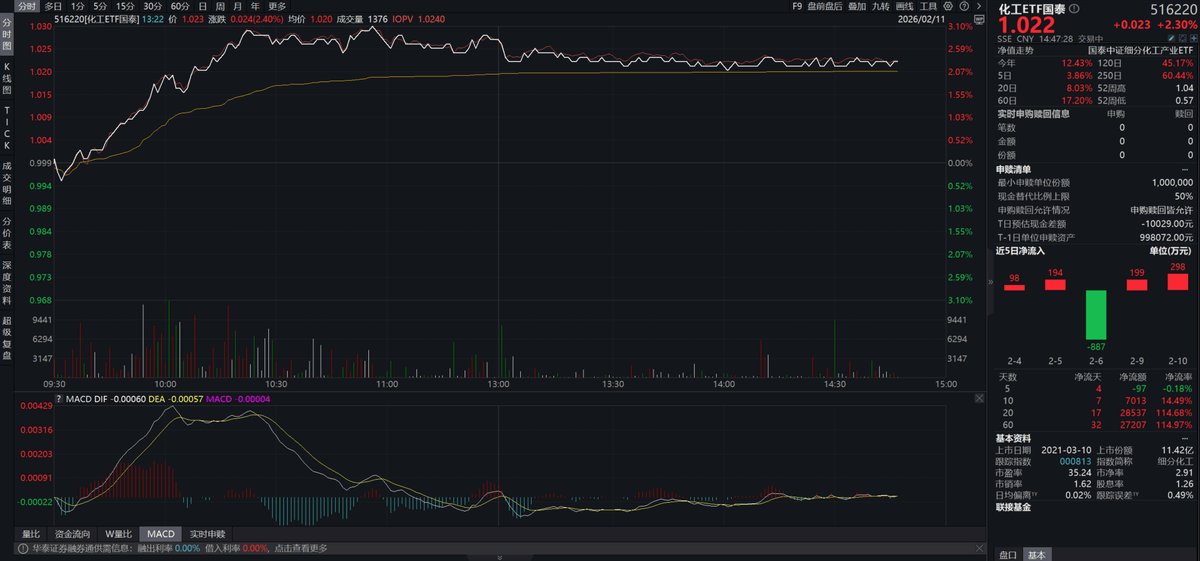
化工板块现积极信号,细分领域提价潮起,化工ETF国泰(516220)涨超2%
Sou Hu Cai Jing· 2026-02-11 08:02
Core Viewpoint - The chemical sector is experiencing a revival, with price increases in various subcategories such as dyes, PVA, and vitamins, indicating a potential recovery in the industry [2][3][10] Short-term Logic - The influx of capital into the chemical sector reflects market expectations of a turning point, supported by stable core costs like oil and coal prices, which provide a clear bottom support for chemical product prices [4][10] - The stabilization of raw material costs is crucial for the midstream chemical industry, as it narrows profit volatility and clarifies price support [4][6] Medium to Long-term Perspective - The chemical industry is undergoing significant changes in supply and demand dynamics, driven by domestic "anti-involution" policies and global capacity restructuring, leading to a shift from simple cyclical fluctuations to a combination of cyclical recovery and growth premium [5][6] - A profound "Supply-side Reform 2.0" is underway, with policies accelerating the elimination of outdated capacity and enhancing the competitive landscape among leading companies [6][10] Demand Dynamics - Traditional downstream sectors face pressure, but sectors like automotive and home appliances are expected to improve marginally due to policy support [7] - Emerging industries such as semiconductors and renewable energy are driving new demand, creating a "second curve" of growth for the chemical sector [7][10] Investment Mapping - The Guotai Chemical ETF (516220) offers a convenient way for investors to gain exposure to the chemical sector, capturing both cyclical recovery and structural upgrade benefits [8][9] - The ETF includes leading companies benefiting from "anti-involution" and global capacity restructuring, providing significant profit elasticity during industry recoveries [9] - The ETF's diversified approach mitigates risks associated with individual stocks and allows investors to capitalize on overall industry trends [9][10]

有色金属行业经济效益大幅提升
Jing Ji Ri Bao· 2026-02-09 21:58
Group 1 - The core viewpoint of the news is that the non-ferrous metal industry in China is expected to achieve significant economic growth by 2025, with major increases in the number of enterprises, total assets, revenue, and profits [1] - By 2025, there will be over 12,000 large-scale non-ferrous metal enterprises in China, a 39.2% increase from the end of 2020 [1] - The total assets of the non-ferrous metal industry are projected to exceed 6.6 trillion yuan, an 8.2% increase from 2024 [1] - The industry is expected to achieve a total profit of 528.45 billion yuan, a 25.6% increase from 2024, marking a historical high [1] Group 2 - Continuous policy dividends are stimulating market vitality, with a series of stable growth policies supporting the development of the real economy and infrastructure investment, directly boosting demand for major metals like copper and aluminum [2] - The Ministry of Industry and Information Technology and eight other departments have jointly issued the "Non-Ferrous Metal Industry Stable Growth Work Plan (2025-2026)," providing a clear path for future industry development [2] - High prices for non-ferrous metals such as copper, aluminum, lead, and zinc are expected to maintain a high level in 2025, providing a solid foundation for industry profitability [2] - Emerging industries are expanding growth opportunities for the non-ferrous metal sector, with rapid development in aerospace, new energy, and information technology driving demand for non-ferrous metal products [2] Group 3 - Despite the expected historical leap in economic benefits for the non-ferrous metal industry in 2025, the international environment is becoming increasingly complex, with significant uncertainties [3] - The industry needs to enhance resource security and strengthen high-end supply in 2026 through innovation and structural optimization [3] - The "Non-Ferrous Metal Industry Stable Growth Work Plan (2025-2026)" released in September 2025 is a crucial guide for industry development [3] - There is a need to strengthen resource assurance and build a diversified supply system, including promoting domestic resource development and advancing the recycling of non-ferrous metals [3] Group 4 - In 2025, there is a notable increase in the prices of non-ferrous metal commodities, with expectations for a "structural differentiation and increased volatility" in the market for 2026 [4] - Various domestic and international factors are expected to provide strong support for non-ferrous metal prices in 2026 [4] - The market must remain vigilant against risks such as shifts in overseas macro policies and fluctuations in supply and demand expectations, which could lead to increased volatility [4]
黄金突破4690美元白银冲破94美元双双创历史新高!央行购金叠加避险需求爆棚
Jin Rong Jie· 2026-01-19 06:08
Industry Overview - The precious metals mining sector is positioned to benefit directly from rising gold and silver prices, which will enhance product sales revenue and increase business profit margins for leading companies with strong resource reserves and production capacity [2][3] - The precious metals smelting and processing sector is expected to see increased operational rates and order volumes during price uptrends, with a strong certainty of performance growth due to the expansion of smelting margins and the impact of rising raw material prices [2] - The gold and jewelry retail sector is experiencing heightened consumer demand for precious metals as a store of value, allowing leading retail brands to effectively pass on raw material cost pressures through product price increases, benefiting from the trend of gold consumption upgrades [2] - The photovoltaic and new energy application sector is witnessing a surge in demand for silver as a key raw material, with businesses in this field poised for growth opportunities amid an expanding supply-demand gap for silver [2] Company Insights - Western Gold is a modern gold mining and processing enterprise in Western China, ranking among the top ten in national gold production, with a mature integrated production system that will see profit margins increase with rising gold prices [3] - Shengda Resources is a leading domestic silver mining company with nearly 10,000 tons of silver reserves, focusing on the mining and sales of precious and non-ferrous metals, where fluctuations in silver prices significantly impact its performance [3] - Lao Feng Xiang is a leading domestic gold jewelry retail brand with a rich history and market recognition, capable of flexibly adjusting product prices to address rising raw material costs, thus benefiting from increased consumer demand for gold [3] - Xingye Silver Tin operates Asia's largest silver mine with over 24,500 tons of silver reserves and has developed a synergistic business model in silver and tin mining, providing ample performance elasticity during periods of rising silver prices [3] - Yuguang Gold Lead is one of China's largest silver production bases, with significant annual silver production capacity and a unique recovery process that positions it to benefit from the ongoing optimization of the industry supply-demand landscape [3]


降息+政策双重加持,有色板块前景向好
Mei Ri Jing Ji Xin Wen· 2025-10-31 01:08
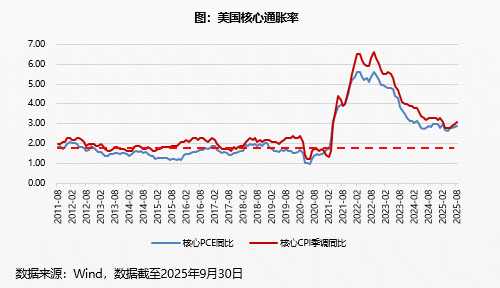
Core Viewpoint - The current interest rate cut cycle in the U.S. is expected to weaken the dollar, which will positively impact the prices of non-ferrous metals through various mechanisms, including direct pricing effects, cost of holding impacts, and asset substitution effects [1][2][3] Group 1: Impact of Interest Rate Cuts on Non-Ferrous Metals - The weakening of the dollar during the interest rate cut cycle reduces the cost for non-dollar currency holders to purchase non-ferrous metals, thus benefiting their prices [1] - Lower market interest rates during the cut cycle facilitate financing for both mining and downstream production companies, which can stimulate demand for non-ferrous metals [1][2] - The current interest rate cut cycle is accompanied by concerns over the weakening U.S. economy, enhancing the appeal of gold as a hedge against inflation and currency depreciation [2] Group 2: Supply and Demand Dynamics - The ongoing interest rate cuts and the existing supply-demand gap in the non-ferrous metals market, exacerbated by mining difficulties and reduced capital expenditures, are expected to support prices [2][4] - Traditional demand for non-ferrous metals is under pressure, but new industries are anticipated to create new demand opportunities, maintaining a tight balance in supply and demand [2][4] Group 3: Policy Implications - The "Non-Ferrous Metals Industry Stabilization and Growth Work Plan" focuses on optimizing supply and upgrading demand, aiming to enhance global competitiveness and resource utilization [3][4] - The plan emphasizes precise control across the entire industry chain and aims to shift the industry from quantity expansion to quality improvement, which is expected to enhance profitability [3][4] - Policies are set to guide the non-ferrous metals sector towards new emerging industries such as renewable energy and high-end manufacturing, potentially unlocking long-term growth [3][4] Group 4: Investment Opportunities - The current environment is seen as favorable for investing in non-ferrous metals, with potential for further interest rate cuts and a supportive monetary environment [2][4] - Investors are encouraged to consider index-based investment tools like mining ETFs for broad exposure or focus on specific assets like gold ETFs for targeted investment [4]
3连涨后首跌!要逢跌布局有色龙头ETF吗?楚江新材逆市涨停!三大逻辑驱动,或是中长期布局时机!
Xin Lang Ji Jin· 2025-10-28 05:55
Group 1 - The core viewpoint is that the recent pullback in the non-ferrous metals sector after three days of strong gains may present a mid-to-long-term investment opportunity, driven by three main investment logic points [1][2][3]. Group 2 - Strategic positioning is being elevated from "cyclical commodities" to "strategic assets," with China holding a leading position in the rare earth sector, accounting for 61% of global mining share in 2024 and over 90% of the refining process concentrated in China [1]. - The supply-demand dynamics are tightening, with limited supply and rigid demand supporting prices, particularly for copper, which is nearing historical highs due to factors like grid upgrades and AI, alongside a significant reduction in supply from the Grasberg mine in Indonesia [2]. - The monetary attributes of industrial metals are becoming more pronounced, with expectations of a potential interest rate cut by the Federal Reserve, which could enhance liquidity and support industrial metal prices [3]. Group 3 - On the market front, the non-ferrous metals ETF (159876) experienced a decline of 2.89% after three consecutive days of gains, indicating a potential buying opportunity for investors [4]. - Among the constituent stocks, Chujiang New Material saw a limit-up increase, while companies like Western Superconducting and Innovation New Materials also performed well, contrasting with declines in stocks like Tongling Nonferrous Metals and Huayou Cobalt [4]. Group 4 - The non-ferrous metals sector is characterized by varying degrees of prosperity and driving factors, suggesting that a diversified investment approach through ETFs tracking the non-ferrous metals index could mitigate risks and enhance returns [7].

全球半导体测试服务市场前10生产商排名及市场占有率
QYResearch· 2025-05-06 09:47
Core Viewpoint - The global semiconductor testing services market is projected to reach $21.02 billion by 2031, with a compound annual growth rate (CAGR) of 6.9% from 2025 to 2031 [1]. Market Overview - Semiconductor testing services involve specialized techniques to detect defects and verify product compliance throughout the semiconductor supply chain, including wafer testing, finished product testing, and laboratory analysis [1]. - The market is dominated by wafer testing, which accounts for approximately 45.8% of the total market share [5][9]. - The primary application for semiconductor testing services is in computing and networking, representing about 52.8% of the market [11]. Market Players - Major global semiconductor testing service providers include ASE Group, TSMC, and Samsung, with the top five companies holding around 41.0% of the market share in 2024 [4][20]. Market Drivers - The shift in the global semiconductor supply chain and domestic substitution is driving growth in the semiconductor industry, particularly in China, which is the largest single regional market [14]. - Emerging industries such as 5G, smart vehicles, and AI are increasing demand for semiconductor products, necessitating enhanced testing services to ensure reliability and performance [14]. - The advancement of semiconductor processes requires stringent quality control, leading to higher demand for testing services [15]. - The trend towards specialization in the semiconductor industry, including the Fabless+Foundry+OSAT model, is fostering the growth of independent testing services [15]. Market Challenges - The semiconductor testing industry faces technical challenges due to the increasing complexity of integrated circuit processes, requiring advanced testing technologies [16][18]. - There is a high dependency on imported high-end measurement and testing equipment, with domestic production rates remaining low [18]. - Financial pressures arise from the need for expensive high-end equipment and ongoing investments in technology and talent development [18][19]. - A shortage of skilled professionals in the semiconductor testing field poses a risk to the industry's growth and competitiveness [19]. - The market is becoming increasingly competitive, with many new entrants, making it essential for companies to enhance their technological capabilities and service quality [19].