新能源汽车购置税减半征收

Search documents
“新王”诞生!比亚迪,大跌!雷军,大动作
Zhong Guo Ji Jin Bao· 2026-02-01 13:57
Core Viewpoint - The competition landscape in the Chinese automotive market has shifted in January, with Xiaomi emerging as the new leader among new energy vehicle manufacturers, while BYD faces significant declines in domestic sales [2][4]. Group 1: BYD's Performance - BYD reported a total sales volume of 210,051 units in January, marking a year-on-year decline of 30.11% and a month-on-month decline of 50.04% [2][5]. - The domestic sales of BYD reached 109,600 units in January, down 53.22% year-on-year and down 61.85% month-on-month [6]. - The decline in BYD's domestic sales is attributed to the reduction in the new energy vehicle purchase tax, which has impacted sales strategies [7]. Group 2: Competitors' Performance - Xiaomi's vehicle deliveries exceeded 39,000 units in January, surpassing Leap Motor for the first time and becoming the monthly sales champion among new energy vehicle manufacturers [4][12]. - Other competitors like Seres, NIO, and Lantu reported significant year-on-year growth in January, with increases of 104.85%, 96.08%, and 31.29% respectively [4]. - Geely's new energy and fuel vehicle sales both saw growth in January, with 124,252 units and 145,900 units sold respectively, showcasing a dual strategy that BYD lacks [8]. Group 3: Financial Strategies - Several automotive companies, including Xiaomi, have introduced long-term low-interest financing options to stimulate sales amid declining subsidies [16][17]. - The introduction of these financing plans is seen as a strategic response to counteract the effects of subsidy reductions and to alleviate consumer purchasing pressure [18].


2026新春购车如何锁定最优解
Xin Lang Cai Jing· 2026-01-22 18:09
Core Insights - The automotive market in Chongqing is experiencing a consumption surge as the Lunar New Year approaches, driven by national and local policies that provide financial incentives for purchasing new energy vehicles (NEVs) [2][3] - The national policy has adjusted the purchase tax for NEVs from full exemption to a 5% reduction, with a maximum tax reduction of 15,000 yuan per vehicle, while the local government has allocated 765 million yuan in subsidies to stimulate the market [3][4] - Car manufacturers, such as Deep Blue, are responding to the tax changes by offering additional subsidies to offset the increased tax burden on consumers, creating a favorable purchasing environment [4][6] National and Local Policies - The national tax authority has implemented a new policy effective January 1, 2026, reducing the NEV purchase tax to 5%, with a maximum reduction of 15,000 yuan per vehicle [3] - The updated trade-in policy now offers a percentage-based subsidy, providing up to 20,000 yuan for scrapping old vehicles and 15,000 yuan for replacing them with new energy vehicles [3] - Chongqing's local government has initiated a special subsidy program totaling 765 million yuan, aimed at promoting vehicle replacement and scrapping [3][4] Manufacturer Incentives - Car manufacturers are launching targeted subsidy programs to alleviate the financial impact of the new tax policy on consumers, exemplified by Deep Blue's limited-time tax subsidy offers [4][6] - These initiatives are seen as a proactive response to government policies, enhancing consumer confidence and stimulating demand in the automotive market [4][6] Vehicle Models and Benefits - Deep Blue's various models are offering substantial combined benefits, catering to different consumer needs, with the L07 model providing up to 18,348 yuan in total subsidies, effectively reducing the purchase cost by approximately 31,000 yuan [6][7] - The S07 model, aimed at family use, offers a maximum of 19,548 yuan in subsidies, making it an attractive option for consumers looking to replace their vehicles [6][7] - The S05 model, targeting young first-time buyers, includes a financial plan with zero interest for three years, further enhancing its appeal [7] Consumer Guidance - The dual support from national and local policies creates a prime opportunity for consumers to purchase vehicles in the first quarter of 2026, with a reminder that local subsidy funds are limited and available on a first-come, first-served basis [7] - Consumers are encouraged to apply for subsidies through official channels to ensure they do not miss out on the financial benefits available during the Lunar New Year [7]
中航期货橡胶周度报告-20251114
Zhong Hang Qi Huo· 2025-11-14 10:43
Report Industry Investment Rating - Not provided Core Viewpoints of the Report - From November 12 - 18, 2025, rainfall in the main natural rubber producing areas in Southeast Asia decreased compared to the previous period. The impact on rubber tapping varied in different regions. The synthetic rubber market stopped falling and stabilized this week, while natural rubber oscillated strongly to repair some previous losses. The domestic economic growth slowed down in October, and policy support is still needed. Natural rubber has cost - side support, with a slight inventory build - up and no obvious inventory pressure. The production of butadiene rubber has been high this year, with obvious inventory pressure in factories, suppressing price elasticity. Downstream tire demand is weakening, and the overall tire production utilization rate is weakly stable. Overall, natural rubber will mainly oscillate, and synthetic rubber will have a weak price trend. Attention should be paid to the widening price difference between natural and synthetic rubber [6][30] Summary by Relevant Catalogs Report Summary - From November 12 - 18, 2025, rainfall in the main natural rubber producing areas in Southeast Asia changed, affecting rubber tapping differently in different regions. The synthetic rubber market stopped falling, and natural rubber oscillated strongly. In October, the domestic economic growth slowed down, and policy support is needed. Natural rubber has cost - side support, with a slight inventory build - up. The production of butadiene rubber is high, and downstream tire demand is weakening. The market lacks prominent contradictions, and natural rubber will oscillate, while synthetic rubber will have a weak price trend [5][6] - In October, the sales of new energy vehicles in China accounted for 51.6% of the total new vehicle sales, with production and sales increasing year - on - year. The retail sales of passenger cars decreased year - on - year, and the wholesale sales of new energy passenger cars increased year - on - year [7] Multi - empty Focus - Bullish factors: Natural rubber has no obvious inventory pressure and its raw material prices are supported. Bearish factors: The domestic economic data growth slowed down in October [10] Data Analysis - Economic data: In October, the total retail sales of consumer goods increased by 2.9% year - on - year. From January to October 2025, the national fixed - asset investment (excluding rural households) decreased by 1.7% year - on - year, and private fixed - asset investment decreased by 4.5% year - on - year. In October, the added value of large - scale industries increased by 4.9% year - on - year [15] - Natural rubber raw material prices: As of November 13, the prices of raw materials in Thailand and domestic regions were at certain levels. The raw material prices were firm due to the approaching off - season in Yunnan and rain in overseas areas [16] - Natural rubber inventory: As of the week of November 7, 2025, the overall natural rubber inventory continued to build up slightly. The inventory in bonded warehouses in Qingdao decreased, while that in general trade warehouses increased [20] - Butadiene rubber raw material and profit: The price of butadiene has stabilized recently, and the production profit of butadiene rubber has declined. As of the week of November 14, the theoretical production profit was 606.8571 yuan/ton, down 105.71 yuan/ton from last week [21] - Butadiene rubber inventory: As of the week of November 14, the production of high - cis butadiene rubber increased, the factory inventory increased slightly, and the trader inventory increased significantly [23] - Tire production utilization rate: As of the week of November 14, the production utilization rate of all - steel tire sample enterprises decreased slightly, and that of semi - steel tire sample enterprises increased slightly. The inventory days of both increased [24] - Rubber contract price difference: As of November 13, the "RU - NR" January contract price difference oscillated narrowly, and the "NR - BR" main contract price difference was strong [26] 后市研判 - Macroscopically, the domestic economic growth slowed down in October, and policy support is needed. Fundamentally, natural rubber has cost - side support, with a slight inventory build - up and no obvious inventory pressure. Butadiene rubber has high inventory pressure, and downstream tire demand is weakening. Overall, natural rubber will oscillate, and synthetic rubber will have a weak price trend. Attention should be paid to the widening price difference between natural and synthetic rubber [30]
新能源车减免购置税要求升级
Mei Ri Jing Ji Xin Wen· 2025-10-15 13:19
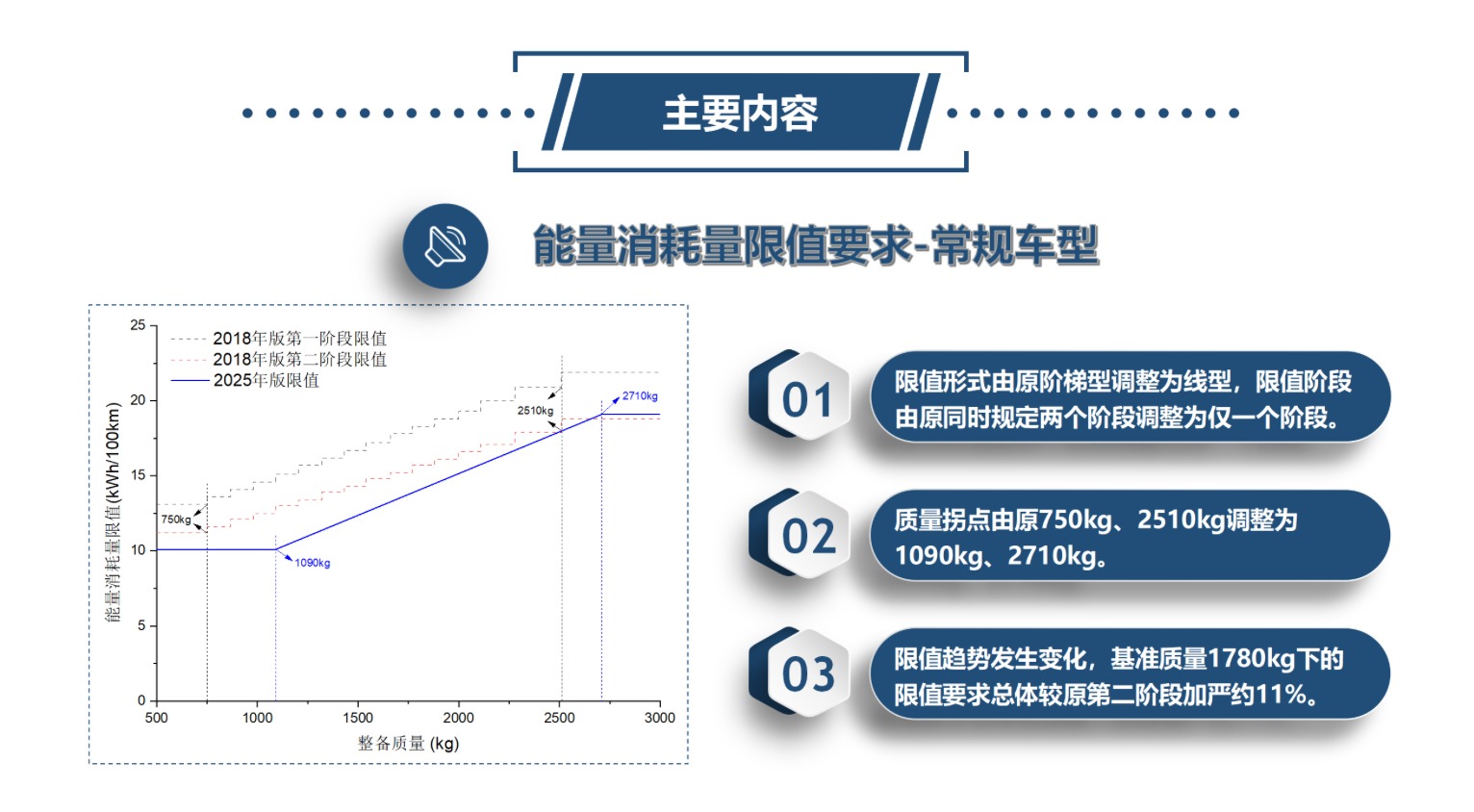
Core Viewpoint - The new technical requirements for electric vehicles, as outlined in the recent announcement, are expected to lead to a reduction in the purchase tax for new energy vehicles by half starting next year, regardless of whether the vehicles meet the new standards [1][7]. Group 1: New Technical Requirements - The announcement from the Ministry of Industry and Information Technology and other departments introduces updated standards for electric vehicles, including a new energy consumption limit for pure electric passenger vehicles and an increase in the pure electric range requirement for plug-in hybrid vehicles from 43 km to 100 km [1][4]. - The new standards aim to phase out outdated products and encourage the development of higher-performance vehicles, enhancing safety and competitiveness while meeting consumer demands for longer range and lower energy consumption [1][2][3]. Group 2: Market Response and Compliance - Sales personnel from various companies, including NIO and BYD, report that their new products generally comply with the new national standards for energy consumption, indicating that the industry is well-prepared for the changes [2][3]. - The majority of mainstream plug-in hybrid vehicles currently on sale exceed the new pure electric range requirement, although some models will not qualify for the tax exemption due to their lower range [4][5]. Group 3: Future Tax Implications - Starting in 2026, new energy vehicles will be subject to a reduced purchase tax rate of 5%, down from the current 10%, as part of the government's ongoing policy adjustments [7][8]. - The implementation of the new technical requirements is seen as a precursor to the eventual phase-out of the tax exemption policy for new energy vehicles, signaling a shift in the regulatory landscape [7][8].
一线调查:新能源减免购置税要求升级,新品基本符合技术标准,不达标车型或年底清库促销
3 6 Ke· 2025-10-15 09:29
Core Viewpoint - The new technical requirements for electric vehicles, as outlined in the recent announcement, are expected to lead to a reduction in the purchase tax for new energy vehicles by half starting next year, regardless of whether the vehicles meet the new standards [1][11]. Group 1: New Technical Requirements - The announcement from the Ministry of Industry and Information Technology and other departments introduces updated technical standards for electric vehicles, including stricter energy consumption limits for pure electric vehicles and an increase in the pure electric range requirement for plug-in hybrid vehicles from 43 km to 100 km [1][9]. - The new standards aim to phase out outdated products and encourage the development of higher-performance models that meet consumer demands for longer range and lower energy consumption, thereby promoting both industry and consumer upgrades [1][9]. Group 2: Market Response - Sales personnel from various companies, including BYD and NIO, have indicated that their current products meet the new national standards for energy consumption, suggesting minimal impact on their sales [2][6]. - The majority of new products launched by major manufacturers such as GAC, SAIC, and BAIC are compliant with the new technical standards, indicating a readiness within the industry to adapt to these changes [7][9]. Group 3: Purchase Tax Implications - Starting January 1, 2026, the purchase tax for new energy vehicles will be halved from the current rate of 10% to 5%, which is expected to increase the affordability of these vehicles for consumers [11][13]. - Vehicles that do not meet the new technical requirements will not be eligible for the tax reduction, potentially leading to a clearance sale for non-compliant models by the end of the year [9][14]. Group 4: Future Trends - The industry is likely to see a shift towards larger battery capacities in plug-in hybrid vehicles, as manufacturers adapt to the new requirements and consumer preferences for longer electric ranges [10][14]. - Experts suggest that the introduction of these new technical standards is a precursor to the eventual phasing out of the purchase tax exemption for new energy vehicles, indicating a significant shift in policy direction [14].


新能源减免购置税要求升级!新品基本符合技术标准,不达标车型或年底清库促销
Mei Ri Jing Ji Xin Wen· 2025-10-15 02:50
Core Viewpoint - The new technical requirements for electric vehicles, as outlined in the recent announcement by the Ministry of Industry and Information Technology, are expected to lead to a reduction in the purchase tax for new energy vehicles by half starting next year, regardless of whether vehicles meet the new standards [1][10]. Group 1: New Technical Requirements - The announcement introduces updated national standards for energy consumption for pure electric passenger vehicles and raises the pure electric range requirement for plug-in hybrid vehicles from 43 km to 100 km [1][7]. - The new standards aim to phase out outdated products and encourage the development of higher-performance models, enhancing safety and competitiveness while promoting green and low-carbon development [1][11]. Group 2: Market Response - Sales personnel from various companies, including BYD and NIO, report that their new products generally meet the new national standards for energy consumption [2][6]. - Data from AutoHome indicates that the NIO ET5 has a weight of 2185 kg and an energy consumption of 14.1 kWh/100 km, which complies with the new standards [2]. Group 3: Implications for Plug-in Hybrid Vehicles - Many mainstream plug-in hybrid vehicles currently exceed the new 100 km pure electric range requirement, such as the AITO M5 with a range of 230 km and BYD Tang DM-i with 175 km [7]. - However, some existing models do not meet the new standards, which may lead to promotional clearance sales by manufacturers as the deadline approaches [7][8]. Group 4: Future Tax Implications - Starting January 1, 2026, new energy vehicles will be subject to a reduced purchase tax rate of 5%, down from the current 10%, as part of the new policy [10]. - Vehicles that do not meet the technical requirements may face full tax rates, while those that comply will benefit from the reduced rate [10].
一线调查 | 新能源减免购置税要求升级!新品基本符合技术标准,不达标车型或年底清库促销
Mei Ri Jing Ji Xin Wen· 2025-10-15 02:38
Core Viewpoint - The new technical requirements for electric vehicles, as outlined in the recent announcement, are expected to lead to a reduction in the purchase tax for new energy vehicles by half starting next year, regardless of whether the vehicles meet the new standards [1][15][16]. Group 1: New Technical Requirements - The announcement from the Ministry of Industry and Information Technology and other departments introduces updated technical standards for electric vehicles, including stricter energy consumption limits for pure electric vehicles and an increase in the pure electric range requirement for plug-in hybrid vehicles from 43 km to 100 km [1][10]. - The new standards aim to phase out outdated products and encourage the development of higher-performance models that meet consumer demands for longer range and lower energy consumption, thus promoting both industry and consumer upgrades [1][9]. Group 2: Market Response - Sales personnel from various companies, including BYD and NIO, have indicated that their new products already comply with the new national standards, suggesting minimal impact on their market offerings [2][9]. - The majority of current plug-in hybrid vehicles on the market exceed the new pure electric range requirement, with models like the Aion M5 and BYD Tang achieving ranges of 230 km and 175 km, respectively [10]. Group 3: Tax Implications - The purchase tax for new energy vehicles is set to be halved to 5% starting from January 1, 2026, as per the announcement made in June 2023 [15][16]. - Vehicles that do not meet the new technical requirements may face full tax rates, while compliant vehicles will benefit from the reduced tax rate [16].