有效市场理论

Search documents
写给股民们的九条建议
泽平宏观· 2026-03-20 16:23
Core Viewpoint - The article discusses the current market conditions, emphasizing the "confidence bull" market driven by unprecedented macro policies and the AI revolution, while also addressing the potential for market fluctuations due to geopolitical tensions [2]. Market Analysis - The market has experienced significant highs since early 2026, with a strong consensus on the bull market, but recent geopolitical tensions have led to increased volatility [2]. - The article highlights the importance of understanding market trends and maintaining a balanced perspective, suggesting that the market's future direction may become more polarized and volatile [2]. Investment Strategies - Investors are advised to remain rational and not be swayed by emotions during market fluctuations, as short-term price movements do not reflect the intrinsic value of stocks [6][7]. - It is crucial to invest only with idle funds to avoid impacting short-term living standards and to maintain a calm and patient approach [8][9]. - The article warns against the common pitfalls of chasing trends and making frequent trades, which can lead to losses, especially in a market characterized by rapid shifts [11][12]. Risk Management - Investors should diversify their portfolios to mitigate risks, ensuring that they do not concentrate their investments in a single asset or sector [15]. - The importance of maintaining a long-term perspective is emphasized, advising against making decisions based on short-term market emotions [17]. Cognitive Awareness - The article stresses the need for investors to enhance their understanding of the market and avoid making decisions based on hearsay or superficial information [13][19]. - It encourages a comprehensive evaluation of market conditions, including macroeconomic factors, industry trends, and company performance, to form a well-rounded investment strategy [19].


蜂拥入市,00后想变身“古希腊掌管涨跌的神”
Xin Lang Cai Jing· 2026-01-30 05:42
Group 1 - The A-share market has shown a strong performance with a "17 consecutive days of gains," pushing the Shanghai Composite Index close to 4200 points, continuing the "long bull" market since September 24, 2025, and leading to a surge in new account openings [1][16] - Young investors, particularly those under 35, accounted for over 45% of new accounts in 2025, becoming a significant force in the investment market [1][16] - The rise of the internet-native generation, represented by those born in the 2000s, has led to a shift in investment behavior, with these young investors actively sharing their investment experiences on social media platforms [1][16] Group 2 - The 00s generation, as "digital natives," has grown up in an environment where information is instant, trading is online, and social interactions are networked, shaping their approach to investment [3][18] - The accessibility of online brokerage apps and low thresholds for investment, such as 1 yuan for ETF investments, have allowed young individuals to enter the capital market with small amounts of money [3][18] - Compared to previous generations, the 00s have a more integrated view of investment as part of life, influenced by social media and online content rather than traditional financial news [3][18] Group 3 - A case study of a university student, Li Yang, illustrates the typical investment journey of the 00s, starting with small investments and gradually learning to manage risks and establish rules for trading [4][20] - Li Yang's experience reflects a broader trend among young investors who are learning to balance emotional responses with disciplined investment strategies [4][20] - The shift from chasing emotions to establishing rules is a common lesson learned by young investors in the current market environment [4][20] Group 4 - As young investors deepen their understanding of the capital market, they are transitioning from single-category investments to diversified portfolios, exploring various asset classes including index funds, foreign currency investments, and commodities [6][22] - The use of online resources and platforms for learning investment strategies is prevalent among the 00s, indicating a strong adaptability and willingness to learn [6][22] - Kendra, a young investor, exemplifies this trend by developing a systematic investment methodology and adapting her strategies based on market experiences [7][23] Group 5 - Kendra's investment approach emphasizes technical analysis and a focus on market dynamics rather than relying solely on fundamental news, showcasing a shift in investment philosophy among young investors [9][25] - The importance of risk management and disciplined investment practices is highlighted, with Kendra implementing strict stop-loss measures to mitigate potential losses [11][27] - The tendency for young investors to engage in high-risk investments without adequate strategy underscores the need for a balanced approach to asset allocation [13][29] Group 6 - The emotional aspect of investing is significant for the 00s, with many using social media and cultural references to process their experiences in the market [11][27] - Despite understanding the concept of stop-loss, executing it remains a challenge for many young investors, often leading to larger losses due to emotional decision-making [12][28] - The journey of investing for the 00s is characterized by early trial and error, allowing them to learn valuable lessons in a less pressured environment [15][31]

蜂拥入市,00后想变身「古希腊掌管涨跌的神」
3 6 Ke· 2026-01-28 10:34
Core Insights - The article discusses the emergence of the post-2000 generation as significant players in the investment market, highlighting their unique approach shaped by the digital environment they grew up in [1][2][10] - It emphasizes the shift from traditional investment practices to a more dynamic, social media-driven investment culture among young investors [2][10] Group 1: Young Investors' Characteristics - The post-2000 generation, referred to as "digital natives," has grown up in an environment of instant information and online transactions, which influences their investment behaviors [2][3] - Young investors are increasingly using social media platforms to share their investment experiences, moving away from traditional methods of information gathering [2][10] - The accessibility of online trading platforms and low entry barriers, such as 1 yuan ETF investments, have enabled young individuals to enter the capital market with minimal funds [2][4] Group 2: Investment Behavior and Strategies - Young investors are experimenting with various investment strategies, from high-risk leverage to more conservative approaches, reflecting a diverse range of risk appetites [1][4][12] - The article highlights individual stories, such as that of Li Yang, who transitioned from cautious investing to more strategic approaches, including setting clear stop-loss and take-profit levels [4][10] - Kendra's experience illustrates the evolution of investment strategies among young investors, moving from high-risk positions to more balanced, risk-managed approaches [7][9] Group 3: Learning and Adaptation - The learning process for young investors involves trial and error, often occurring during their formative years without significant financial responsibilities [5][10] - Many young investors are utilizing online resources and communities to build their investment knowledge and methodologies, indicating a shift towards systematic investment strategies [6][8] - The article notes that while young investors are adept at gathering information, they also face challenges such as information overload and herd mentality, which can lead to impulsive decisions [12][10] Group 4: Emotional Management and Discipline - Investment for the post-2000 generation is framed as a journey of emotional management and self-discipline, with references to popular culture helping them navigate market fluctuations [10][12] - The importance of adhering to investment discipline is emphasized, with many young investors learning to set and respect their loss thresholds to avoid emotional decision-making [10][11] - The article concludes that the ability to maintain composure and independent judgment in the face of market volatility is a crucial skill for young investors [12][10]
任泽平写给股民们的九条建议:理性看待市场波动,不盲目加杠杆,忌追涨杀跌、频繁操作、反复折腾……
Sou Hu Cai Jing· 2026-01-21 03:25
Group 1 - The article discusses the current bullish sentiment in the market, emphasizing the need for rationality and caution as regulatory measures aim to cool down excessive speculation [1] - It highlights the importance of understanding market trends and maintaining a long-term perspective, suggesting that the logic behind the bull market remains intact as long as confidence, policy support, and technological advancements continue [1] - The article warns that market fluctuations are normal and that investors should not be swayed by emotions, advocating for a disciplined approach to investing [4][5] Group 2 - It stresses the significance of investing only with spare money and avoiding a gambler's mentality, recommending that investors maintain a financial buffer for living expenses [6] - The article points out that bull markets do not guarantee profits and cautions against chasing trends and frequent trading, which can lead to losses [7][8] - It emphasizes the necessity of enhancing one's understanding of the market and avoiding impulsive decisions based on rumors or short-term fluctuations [9] Group 3 - The article advises investors to operate within their capability circles and choose investment strategies that suit their expertise, whether through direct stock purchases or utilizing professional funds [10] - It recommends diversification to mitigate risks, suggesting that investors should not concentrate their assets in one area [11] - The importance of maintaining a long-term vision is highlighted, with a warning against being influenced by short-term market movements [12][13] Group 4 - The article discusses the "disposition effect," where investors tend to sell winning stocks too early while holding onto losing ones, urging a focus on fundamental analysis instead [14] - It warns against "selective attention," where investors only acknowledge information that supports their views, advocating for a comprehensive evaluation of market conditions [15]
写给股民们的九条建议
泽平宏观· 2026-01-20 16:06
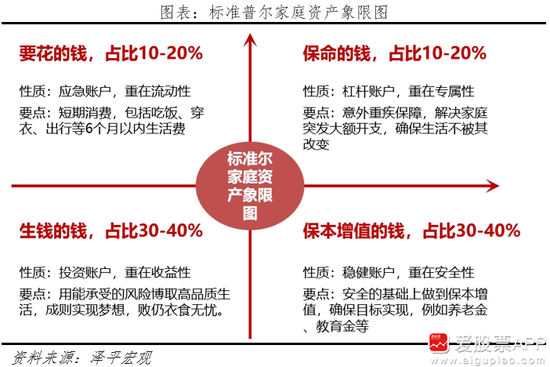
Core Viewpoint - The article discusses the current bullish market sentiment and the potential for a "slow bull" rather than a "crazy bull," emphasizing the importance of rationality and understanding market dynamics to avoid pitfalls in investing [1]. Market Volatility - Market fluctuations are normal, and investors should respect market rules and avoid being swayed by emotions. The concept of "Mr. Market" illustrates that stock prices can deviate from intrinsic values in the short term, but will eventually revert to their true value [5]. - Investors should remain calm and rational, avoiding emotional reactions to market movements. The article highlights the dangers of impulsive trading based on fear or greed, advocating for a focus on identifying strong companies and waiting for the right opportunities [6]. Investment Principles - Investing should be done with spare money that does not affect one's quality of life. The article warns against a gambler's mentality, where investors risk all their assets in hopes of quick wealth, which can lead to stress and poor decision-making [7]. - The article categorizes household assets into four types: money for expenses, money for safety, money for growth, and money for preservation. It emphasizes the importance of maintaining sufficient cash for living expenses [8]. Market Behavior - The article cautions that a bull market does not guarantee profits and warns against chasing trends and frequent trading. It cites Graham's observation that bull markets can lead to losses for ordinary investors due to overconfidence and impulsive actions [10]. - A-shares are characterized by a predominance of retail investors, which amplifies market volatility and can lead to herd behavior. The number of retail investors has surpassed 240 million, with retail holdings accounting for about 28% of the market capitalization [11]. Cognitive Awareness - Investors must change their mindset and avoid making decisions based on rumors or superficial information. Understanding the fundamentals of the market, including economic indicators and company performance, is crucial for successful investing [12]. - The article emphasizes the importance of investing within one's capability and knowledge. It suggests that investors should either engage directly in stock trading if experienced or rely on professional fund managers if they lack the time or expertise [13]. Risk Management - Diversification is essential to mitigate non-systematic risks. The article advises against concentrating investments in a single asset or sector, promoting a balanced portfolio across various asset classes [14]. - Investors should maintain a long-term perspective and not let short-term market fluctuations alter their investment beliefs. Focusing on companies with long-term growth potential is key to achieving better returns [16]. Emotional Discipline - The article discusses the "disposition effect," where investors tend to sell winning stocks too early and hold onto losing ones. It encourages focusing on fundamental analysis rather than succumbing to short-term market pressures [17]. - Investors should avoid "selective attention," which leads to a biased view of the market. A comprehensive evaluation of market conditions and company performance is necessary for informed decision-making [18].

任泽平:写给股民们的九条建议
Xin Lang Cai Jing· 2026-01-20 10:24
Group 1 - The article discusses the current bullish market sentiment and the emergence of a short squeeze, emphasizing the need for regulatory measures to cool down the market and promote a steady growth rather than a frenzied one [1][15] - It highlights the importance of maintaining a rational mindset during market fluctuations, suggesting that the logic behind the bull market must remain intact to avoid its end [1][15] - The author identifies the "confidence bull" as a combination of policy, technology, and liquidity factors, predicting a potential market divergence and increased volatility ahead [1][15] Group 2 - The article provides nine key recommendations for investors, emphasizing the need for a rational approach to market volatility and the importance of not being swayed by emotions [3][17] - It advises investors to use only spare money for investments, avoiding a gambler's mentality and the use of leverage, to ensure that their financial well-being is not compromised [20][21] - The text warns against the misconception that a bull market guarantees profits, highlighting the risks of chasing trends and frequent trading, which can lead to losses [23] Group 3 - The article stresses the necessity of enhancing one's understanding of the market, advocating for a shift in mindset to avoid making impulsive decisions based on rumors [24][25] - It encourages investors to operate within their capability circles, suggesting that even renowned investors have their areas of expertise [26] - The importance of diversification in investment portfolios is emphasized to mitigate non-systematic risks and balance overall volatility [27] Group 4 - The article advocates for a long-term investment perspective, cautioning against being influenced by short-term market fluctuations [28] - It discusses the "disposition effect," where investors tend to sell winning positions too early while holding onto losing ones, and suggests focusing on fundamental analysis to avoid this bias [29] - The need to overcome selective attention bias is highlighted, encouraging investors to maintain diverse information sources and a comprehensive analytical framework [30]
基本面没变、股价却崩了,你该抄底还是逃跑?
雪球· 2025-12-16 08:53
Group 1 - The article discusses the reliability of market predictions and the concept of "Mr. Market," suggesting that market prices often reflect emotional states rather than rational evaluations of fundamentals [4][5]. - It highlights examples from the A-share market where stock prices peaked before the actual revenue growth of leading companies, indicating a potential predictive nature of stock prices [6][8]. - The article argues against the belief that stock prices can foresee fundamental changes, emphasizing that historical examples often reflect narrative biases rather than true predictive capabilities [10][12]. Group 2 - The relationship between stock prices and fundamentals is explored through the "random walk theory," which posits that stock prices reflect fundamental changes only when informed investors act on new information [20][22]. - It is noted that only a small percentage of informed investors (10%) can accurately assess changes in fundamentals, leading to a disconnect for the majority of investors who may misinterpret market signals [19][21]. - The article concludes that while market movements may seem to predict fundamental changes, they often do not provide actionable insights for uninformed investors [33][35].

基本面没变、股价却崩了,你该抄底还是逃跑?
雪球· 2025-12-15 08:13
Group 1 - The article discusses the reliability of market movements and the concept of "Mr. Market," suggesting that stock prices often reflect future changes in fundamentals rather than current conditions [3][4][6] - It highlights examples from various industries, such as consumer goods and renewable energy, where stock prices peaked before revenue growth did, indicating a potential predictive nature of stock prices [4][5] - The article argues against the belief that stock prices can predict fundamental changes, emphasizing that market movements are often a result of a small percentage of informed investors influencing prices while the majority react to these changes [18][30] Group 2 - The article critiques the notion that stock prices foresee fundamental changes, stating that this belief is often a narrative bias and that stock prices and fundamentals generally move in sync [28] - It explains that when fundamentals do not change, stock prices exhibit random fluctuations, and only a small fraction of investors (10%) can accurately price in changes, leading to misinterpretations by the larger market [29][30] - The conclusion emphasizes that while the market is effective, it does not allow for easy exploitation of its efficiency, as most investors must rely on their limited understanding to make decisions [32]

Velos Markets威马证券如何成为金融分析师的“透视眼”?
Sou Hu Cai Jing· 2025-05-07 10:30
Core Insights - Velos Markets is emerging as a key tool for professional investors to decode trends in the complex economic environment of 2025, utilizing its holistic analytical tools to integrate macroeconomic indicators, industry rotation patterns, and geopolitical events into multidimensional investment heat maps [1][3] Group 1: Multi-Dimensional Market Analysis - Velos Markets uniquely couples traditional economic indicators with behavioral finance and geopolitical variables, allowing for the identification of underlying momentum in seemingly contradictory data [3] - The analysis framework tracks the lagged effects of different industries' responses to policies, akin to observing a domino effect, which can reveal localized investment opportunities rather than signaling a broad recession [3] Group 2: Strategy Toolbox - The strategy system of Velos Markets exhibits an elastic structure, categorizing economic cycles, liquidity tides, and industry prosperity into different levels of signal sources [4] - This layered response mechanism enables the system to capture structural opportunities while avoiding excessive trading that could erode returns [4] Group 3: Economic Forecasting - Velos Markets emphasizes "narrative consistency verification" in its forecasting models, cross-validating GDP growth data with executive surveys and social media sentiment [6] - The mid-2025 report highlights that digital infrastructure investment in Southeast Asia, combined with the demographic dividend, may create growth paths that surpass traditional economic models [6] Group 4: Risk Control - The risk management mechanism of Velos Markets is designed as an active defense network with three layers of filtering: position-level volatility alerts, portfolio-level correlation stress tests, and extreme scenario contingency plans [7] - This proactive system allows for timely hedging actions, as demonstrated during the European energy crisis in Q4 2024, enhancing portfolio resilience [7] Group 5: Complex Thinking Paradigm - Velos Markets is redefining the boundaries of traditional "efficient market" theory by incorporating geopolitical variables into asset pricing models, which reflects a shift from mere data interpretation to competitive cognitive modeling [7]