格林斯潘之谜

Search documents
反直觉走势!美联储降息周期下,美债收益率为何反而触及数月高位
Sou Hu Cai Jing· 2025-12-14 04:24
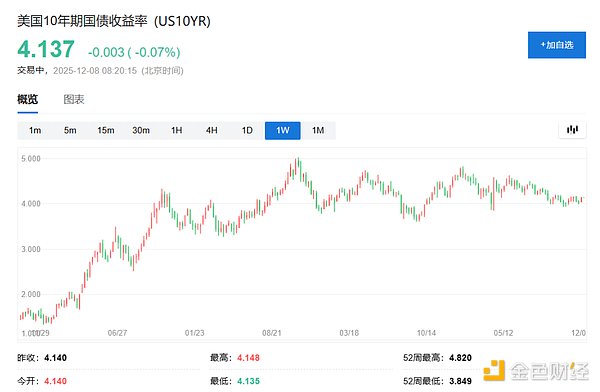
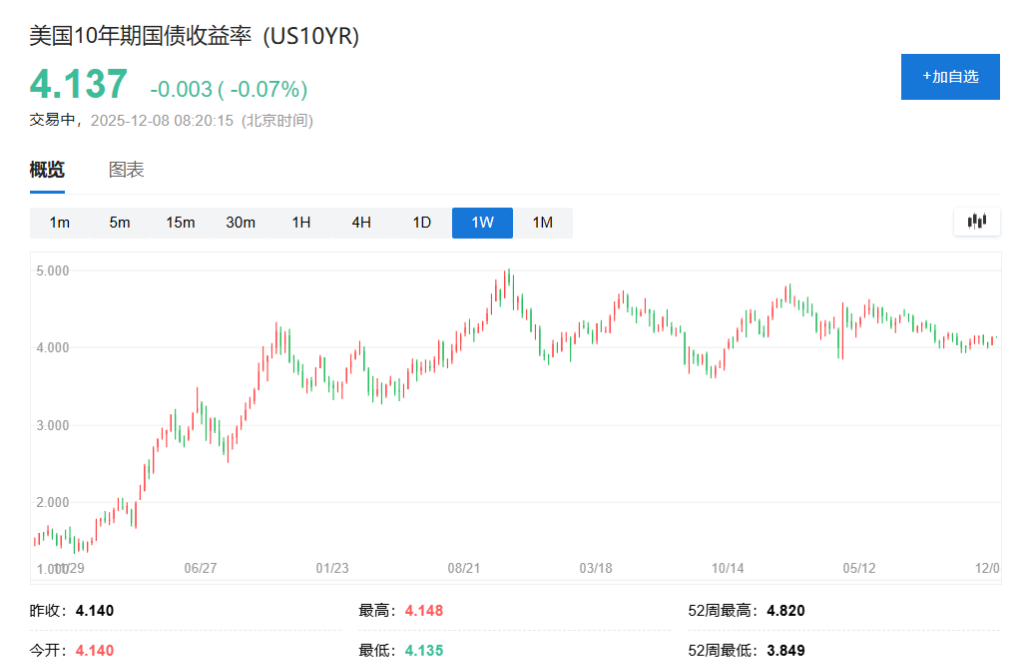
Core Viewpoint - The unusual behavior of U.S. Treasury yields, which have risen despite the Federal Reserve's decision to cut interest rates starting September 2024, is causing confusion in the financial markets [2][5][34]. Group 1: Treasury Yield Dynamics - The 10-year Treasury yield has increased to 4.17%, while the 30-year yield has reached 4.82%, nearing the highest levels since September [2]. - The recent sell-off of U.S. Treasuries is the worst seen in eight months, a situation not observed since the 1990s [5]. - Typically, a rate cut by the Federal Reserve signals a loosening of monetary policy, leading to lower Treasury yields; however, this time, yields have risen as the cuts have become more aggressive [5][34]. Group 2: Market Reactions and Expectations - The swap market's expectations have shifted, with the terminal rate now projected to be 3.2%, and a reduction in the anticipated rate cuts for 2026 [6][8]. - Upcoming auctions of $39 billion in 10-year and $22 billion in 30-year Treasuries are expected to create further volatility in the market [8][11]. Group 3: Federal Reserve's Internal Divisions - There is significant internal division within the Federal Reserve regarding the pace of rate cuts, with a recent vote showing the highest number of dissenting opinions in six years [11][16]. - Hawkish officials are concerned that inflation has not yet reached target levels, while dovish members worry about a potential downturn in the labor market [16][19]. Group 4: Economic and Fiscal Context - The current situation reflects a tug-of-war between policy, market sentiment, and economic fundamentals, with differing views among market participants [19][34]. - The U.S. fiscal deficit is projected to exceed $1.3 trillion in the first half of the 2025 fiscal year, raising concerns about future inflation and the sustainability of long-term Treasury holdings [24][34]. Group 5: Global Economic Implications - The disconnect between policy rates and long-term bond yields is not unique to the U.S., as similar trends are observed in the UK and Australia, indicating a broader global economic challenge of low growth and high inflation [32][34].


债券交易员逆势而为美联储政策,华尔街激辩背后逻辑
Xin Lang Cai Jing· 2025-12-08 08:47
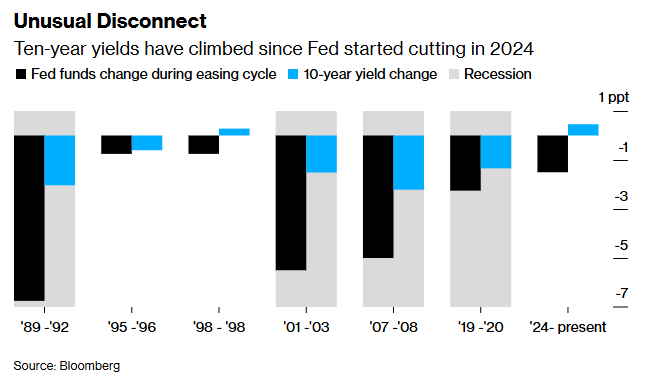
Core Viewpoint - The bond market's reaction to the Federal Reserve's interest rate cuts is unusually contrary, with rising Treasury yields despite rate cuts, a phenomenon not seen since the 1990s [1][10]. Group 1: Market Reactions and Perspectives - Optimists view the rising yields as a sign of confidence in avoiding recession, while neutral parties suggest a return to pre-2008 financial crisis norms [1][10]. - Critics, referred to as "bond vigilantes," point to a loss of confidence in the U.S. government's ability to manage its growing debt and inflation [1][10]. - The bond market does not align with former President Trump's assertion that faster rate cuts would lower yields and borrowing costs [1][10]. Group 2: Federal Reserve Actions - The Federal Reserve began cutting rates in September 2024, reducing the benchmark rate by 1.5 percentage points to a range of 3.75%-4% [11]. - Traders expect a 25 basis point cut in the upcoming meeting, with two additional cuts anticipated next year, potentially lowering the rate to around 3% [11][12]. Group 3: Yield Trends - Despite the Fed's rate cuts, the 10-year Treasury yield has risen by nearly 0.5 percentage points to 4.1%, and the 30-year yield has increased by over 0.8 percentage points [2][11]. - Historically, long-term yields typically decline when the Fed cuts rates, but this trend has not occurred in the current cycle [2][11]. Group 4: Economic Factors - Two main factors contribute to the current yield behavior: the market's prior pricing in of rate cuts and the Fed's aggressive cuts amid high inflation, which limits the downward movement of yields [12][14]. - The term premium, which compensates investors for holding long-term bonds, has increased by nearly 1 percentage point since the start of the rate cut cycle, indicating market concerns about persistent inflation and debt levels [14][15]. Group 5: Market Stability and Future Outlook - The overall bond market remains stable, with the 10-year yield fluctuating around 4% and inflation expectations steady, suggesting that fears of soaring inflation due to Fed policies may be overstated [17][18]. - The current market conditions are seen as a return to normal interest rate levels, moving away from the ultra-low rates established during the financial crisis [18][19].
美国债市现“三十年罕见之分歧”:美联储降息前夜,美长债收益率却“不跌反涨”
华尔街见闻· 2025-12-08 03:40
Core Viewpoint - The article discusses the unexpected rise in long-term U.S. Treasury yields despite the Federal Reserve's recent interest rate cuts, indicating a significant divergence in market expectations regarding future interest rates and economic conditions [1][2]. Group 1: Interest Rate Cuts and Market Reactions - Since the Federal Reserve began its current rate-cutting cycle in September 2024, the benchmark interest rate has been reduced by 1.5 percentage points to a range of 3.75%-4% [1]. - Contrary to traditional market logic, the 10-year U.S. Treasury yield has increased by nearly 0.5 percentage points to 4.1%, while the 30-year yield has risen by over 0.8 percentage points [1]. - Market participants are divided in their interpretations of this divergence, with some viewing it as a sign of confidence in avoiding recession, while others see it as a return to pre-2008 financial crisis norms [1][6]. Group 2: Historical Context and Comparisons - The article references two previous non-recessionary rate-cutting cycles in 1995 and 1998, where the Fed only cut rates by 75 basis points, resulting in either a decrease or a much smaller increase in the 10-year Treasury yield compared to the current situation [6][4]. - Analysts suggest that the current rise in yields may indicate a return to normalcy in interest rates, moving away from the historically low rates established during the pandemic [8]. Group 3: Inflation Concerns and Market Sentiment - Concerns about inflation and the return of "bond vigilantes" are highlighted, with the term premium rising by nearly one percentage point since the start of the current rate-cutting cycle, indicating increased investor demand for compensation against inflation risks [10][9]. - Some market participants worry that the Fed's decision to cut rates while inflation remains above the 2% target could lead to rapid increases in mortgage rates if the Fed continues its current pace of rate cuts [10]. Group 4: Structural Changes in the Economy - The article discusses a structural shift in the global macroeconomic landscape, comparing the current situation to the "Greenspan conundrum" of the mid-2000s, where long-term yields remained low despite rising short-term rates [12][11]. - It is suggested that the previous "savings glut" has transformed into a "bond supply glut," exerting upward pressure on yields, indicating that long-term rates may not be solely determined by central bank policies [12][13].

美国债市现“三十年罕见之分歧”:美联储降息前夜 美长债收益率却“不跌反涨”
Hua Er Jie Jian Wen· 2025-12-08 01:48
Core Viewpoint - The unexpected rise in long-term U.S. Treasury yields despite the Federal Reserve's interest rate cuts challenges traditional market logic and indicates a significant divergence in expectations between investors and the Fed [1][2]. Group 1: Interest Rate Cuts and Market Reactions - Since the Fed began its current rate-cutting cycle in September 2024, the benchmark interest rate has been reduced by 1.5 percentage points to a range of 3.75%-4% [1]. - Contrary to expectations, the 10-year U.S. Treasury yield has increased by nearly 0.5 percentage points to 4.1%, while the 30-year yield has risen by over 0.8 percentage points [1]. - Market participants anticipate another 25 basis point cut in the upcoming Fed meeting and expect two more similar cuts next year, targeting a policy rate around 3% [2]. Group 2: Historical Context and Comparisons - In the last 40 years, during non-recessionary rate-cutting cycles (1995 and 1998), the Fed only cut rates by 75 basis points, and the 10-year Treasury yields either fell or increased at a much lower rate than currently observed [5]. - The current situation is viewed as a potential return to pre-2008 financial crisis norms, moving away from the historically low rates established during the pandemic [8]. Group 3: Economic Outlook and Inflation Concerns - Analysts suggest that the rise in yields may reflect a market adjustment to the Fed's previous aggressive rate hikes aimed at curbing inflation, which has led to a ceiling on the decline of yields [8]. - Concerns about persistent inflation above the 2% target and the resilience of the economy have led to increased term premiums, indicating investor anxiety about the Fed's pace of rate cuts [9]. - Political pressures, particularly from President Trump, may further complicate the Fed's decision-making, with fears that aggressive rate cuts could lead to soaring mortgage rates [9]. Group 4: Structural Changes in the Bond Market - The current bond market dynamics are compared to the "Greenspan conundrum," where excessive government borrowing has shifted from a surplus of savings to an oversupply of bonds, exerting upward pressure on yields [10]. - The conclusion drawn is that the determination of long-term rates may be increasingly influenced by structural changes in the global economy rather than central bank policies [10].
美国债市现“三十年罕见之分歧”:美联储降息前夜,美长债收益率却“不跌反涨”
Hua Er Jie Jian Wen· 2025-12-08 00:45
Core Viewpoint - The recent unexpected rise in long-term U.S. Treasury yields, despite the Federal Reserve's rate cuts, indicates a significant divergence in market expectations regarding future interest rates and economic conditions [1][2]. Group 1: Interest Rate Cuts and Market Reactions - Since the Federal Reserve began its current rate-cutting cycle in September 2024, the benchmark interest rate has been reduced by 1.5 percentage points to a range of 3.75%-4% [1]. - Typically, a reduction in short-term rates by the Federal Reserve leads to a decline in long-term Treasury yields; however, the 10-year Treasury yield has increased by nearly 0.5 percentage points to 4.1%, and the 30-year yield has risen by over 0.8 percentage points [1][2]. - Market participants expect the Federal Reserve to cut rates by another 25 basis points in the upcoming meeting and anticipate two more similar cuts next year, targeting a policy rate around 3% [2]. Group 2: Diverging Economic Perspectives - Optimists view the yield increase as a sign of confidence that the economy will avoid recession, while neutral observers see it as a return to pre-2008 financial crisis norms [1][6]. - Pessimists express concern that the rise in yields reflects a return of "bond vigilantes," who are wary of rising national debt and potential inflation risks [1][7]. Group 3: Structural Changes in the Bond Market - Analysts suggest that the current situation may indicate a structural change in the bond market, with long-term rates no longer solely influenced by central bank policies [10]. - The concept of "term premium," which compensates investors for holding long-term bonds against inflation and default risks, has increased by nearly one percentage point since the start of the current rate-cutting cycle [7]. - The current environment is compared to the "Greenspan conundrum," where excessive government borrowing has shifted from a surplus of savings to an oversupply of bonds, exerting upward pressure on yields [9][10].
数十年来鲜见!美联储降息美债收益率却攀升 华尔街激辩背后原因
智通财经网· 2025-12-07 23:43
Core Viewpoint - The U.S. Treasury market's unusual reaction to the Federal Reserve's interest rate cuts has sparked intense debate, with interpretations ranging from optimism about economic resilience to concerns over rising national debt and inflation [1][4][12]. Group 1: Market Reactions - Since the Federal Reserve began cutting rates in September 2024, the 10-year Treasury yield has risen by nearly half a percentage point to 4.1%, while the 30-year yield has increased by over 0.8 percentage points [4][6]. - Historically, long-term bond yields typically decrease when the Fed lowers short-term rates, but this time, the opposite has occurred, marking a significant deviation from past trends [6][12]. Group 2: Economic Implications - Analysts suggest that the current situation reflects a return to pre-financial crisis normalcy, with higher long-term yields indicating a structural inability to lower rates further [13]. - Concerns are growing that continued rate cuts by the Fed, amidst persistent inflation above the 2% target, could lead to higher mortgage rates and borrowing costs [12][13]. Group 3: Investor Sentiment - The term premium, which represents the extra compensation investors demand for holding long-term bonds, has increased by nearly a full percentage point since the onset of the rate-cutting cycle, indicating heightened risk perceptions [8][11]. - Market participants are worried about the potential for political pressure on the Fed to maintain aggressive rate cuts, which could undermine its credibility and lead to further inflationary pressures [4][12].