流动性错配

Search documents
戴蒙敲响公司债流动性警钟:利差低位掩盖崩盘风险,美联储恐需再次出手救市
Zhi Tong Cai Jing· 2026-02-24 14:02
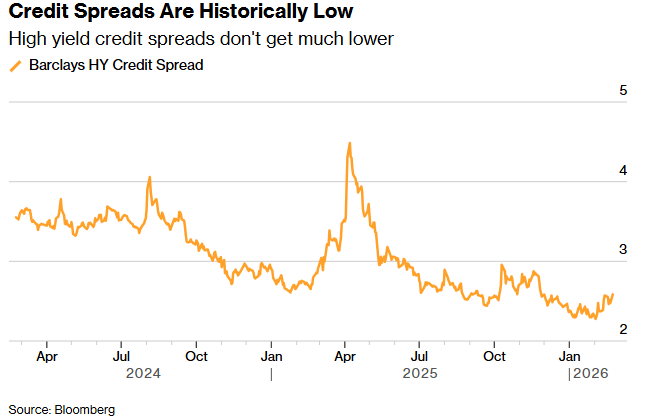
Group 1 - The core concern is that corporate bonds are facing a sharp decline risk as liquidity providers are increasingly replaced by liquidity takers, with similarities drawn to the pre-2008 financial crisis era [1][2] - JPMorgan CEO Jamie Dimon warns that the current situation, where everyone is making easy profits, is reminiscent of the years leading up to the financial crisis, urging caution [1][2] - Credit spreads are at historical lows, and there is little room for further increases, with banks and brokers significantly reducing their presence in the corporate bond market [2][5] Group 2 - The scale of corporate bonds held by brokers and dealers has drastically decreased from over $300 billion during the global financial crisis to between $70 billion and $80 billion today [2][5] - Exchange-traded funds (ETFs) have become the largest holders of corporate bonds, surpassing U.S. banks by approximately 25%, with a total holding of about $2.5 trillion [2][5] - The rise of ETFs has occurred alongside a decline in participation from banks, pension funds, and foreign investors, which has contributed to liquidity mismatches in the market [2][5] Group 3 - The private credit market, valued at $1.8 trillion, is showing signs of issues, particularly in the technology sector, where companies previously seen as attractive debtors are now facing increased competition and potential commoditization [6][7] - Private credit ETFs have seen rapid growth, increasing from nearly zero to a market value of $1.5 billion to $2 billion in just two years, despite the inherent liquidity mismatches [7] - The increase in U.S. banks' loans to non-bank financial institutions, including business development companies (BDCs), could lead to spillover effects in the listed credit market [7][9] Group 4 - The rising volatility of individual stocks and the potential for a sell-off in the credit market could lead to a rush for exits by funds and other holders seeking to avoid significant losses [9] - The lack of market makers to stabilize declines raises the risk of a sell-off turning into a crash, prompting speculation that the Federal Reserve may need to intervene again as it did in 2020 [9]


新年伊始,金属市场“暴涨先锋”:锡
财联社· 2026-01-19 07:14
Core Viewpoint - The tin market has experienced explosive growth at the beginning of the year, with prices reaching historical highs, driven by speculative investments despite warnings from industry associations about the unsustainable nature of this surge [1][2][10]. Group 1: Market Performance - Tin prices on the London Metal Exchange (LME) have surged by an astonishing 21% since the beginning of the year, significantly outperforming other metals like nickel and copper [1]. - The trading volume of tin contracts on the Shanghai Futures Exchange exceeded 1 million tons, more than double the global annual physical consumption [2]. Group 2: Supply and Demand Dynamics - Despite the perception of a supply shortage, recent developments indicate an improvement in the supply situation, with key mines in the Democratic Republic of Congo and Myanmar showing signs of increased production [6][8]. - Global refined tin supply is not lacking, as producers and traders have delivered substantial amounts of metal, with combined LME and Shanghai Futures Exchange inventories rising from 11,000 tons to over 19,000 tons [9]. Group 3: Speculative Behavior - The current tin price surge is characterized by speculative behavior, with significant liquidity mismatches in the market, leading to increased volatility [4][11]. - Investment funds have significantly increased their long positions in the tin market, with record levels of 5,753 contracts, equating to 28,765 tons, contributing to the price instability [11]. Group 4: Impact on the Industry - The irrational rise in tin prices has disrupted supply chains, causing challenges for upstream and downstream companies, particularly in sectors like soldering and chemicals, where rising costs have led to operational difficulties [13]. - The influx of funds into the tin market serves as a warning for other metals like copper, indicating potential risks associated with speculative bubbles in industrial metals [14].

溢价仍超45%!16道风险提示“逼停”国投白银LOF
2 1 Shi Ji Jing Ji Bao Dao· 2025-12-25 05:35
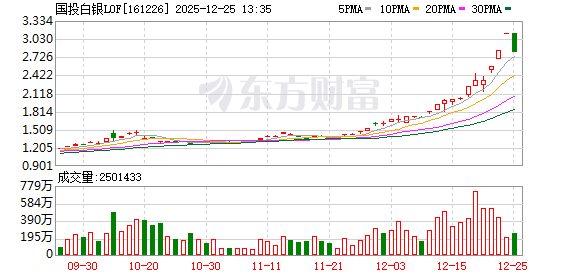
Group 1 - The core point of the news is the significant volatility in the trading price of the Guotou Silver LOF, which has led to a high premium over its net asset value, prompting the fund to issue multiple risk warnings and suspend large subscriptions [2][4][5] - As of December 24, 2025, the fund's net asset value was 1.8527 yuan, while the market closing price was 3.116 yuan, resulting in a premium of 68.3% [4] - The fund has experienced a cumulative increase of 127% from November 24 to December 24, 2025, with an annual increase of 255% [5] Group 2 - The price of silver has surged significantly, with a year-to-date increase of nearly 150%, particularly accelerating in the second half of the year [6][8] - Factors contributing to the rising silver prices include strong industrial demand, declining global inventories, and macroeconomic influences such as potential interest rate cuts by the Federal Reserve [7][8] - The silver market is expected to face a structural supply gap of approximately 95 million ounces in 2025, continuing a trend of supply shortages for the fifth consecutive year [8]
狂飙至3万亿美元:美国私募信贷正演变为“高风险版”公共债务市场 ,激进承销引发泡沫担忧
Hua Er Jie Jian Wen· 2025-12-09 10:33
Core Insights - The U.S. private credit industry has surged to a size of $3 trillion, evolving from a niche financing channel to a complex "high-risk" public debt market [1] - The private credit market is expected to grow to $5 trillion by 2029, with its scale now comparable to that of the public high-yield bond market [1] - The boundaries between direct lending and traditional syndicated loans are blurring, allowing large corporations to seamlessly switch between public and private markets for funding [1] Group 1: Market Growth and Trends - The private credit market has expanded from $2 trillion in 2020 to approximately $3 trillion by early 2025, with projections indicating a rise to $5 trillion by 2029 [1] - The average transaction size in the private market has increased from $75 million to several hundred million dollars, indicating a significant shift in market dynamics [4] - The convergence of private credit with public market debt types is evident, with nearly all debt types available in public markets now having private market counterparts [3] Group 2: Risks and Concerns - The rapid expansion of private credit is accompanied by significant risk signals, including aggressive underwriting practices and the potential for increased default risks [2][6] - The competition for limited large transactions is leading to relaxed underwriting standards, raising concerns about overall credit quality [6] - Structural vulnerabilities exist, such as liquidity mismatches and concentration risks, as investors may unintentionally double down on the same large borrowers [7] Group 3: Market Dynamics - The shift towards private credit is driven by banks withdrawing from certain loan types, increased borrower demand for customized capital, and investors seeking higher yields [4] - The private credit market has filled gaps left by the public debt market during periods of volatility, particularly during the Federal Reserve's aggressive rate hikes [4] - The integration of private credit into traditional financing structures is evident in sectors like commercial real estate, where financing solutions now blend various sources [3]
区域银行暴雷背后:美国金融体系隐藏着怎样的系统性风险?
Sou Hu Cai Jing· 2025-10-17 06:26
Core Insights - The recent losses at Zions Bank and Western Alliance highlight systemic risks in the commercial real estate (CRE) loan market, exacerbated by the Federal Reserve's interest rate hikes [1][3][4] Group 1: Events Focus - Zions Bank reported unexpected losses of approximately $50 million from two commercial and industrial loans in California, while Western Alliance is facing a lawsuit related to loan fraud [3] - These incidents reveal deeper issues in the commercial loan market, particularly following the bankruptcies of FirstBrands and Tricolor, which have intensified the risks associated with commercial loans [3] Group 2: Commercial Real Estate Loan Risks - The CRE loan market is facing a triple risk loop: the normalization of remote work is leading to declining office valuations, banks are extending loan terms to delay the recognition of bad debts, and low securitization levels are obscuring true risks [4] - Approximately 15% of regional banks' CRE loans are experiencing repayment difficulties, yet only 3% are officially classified as non-performing loans [4] Group 3: Impact of Interest Rate Hikes - The Federal Reserve's interest rate hikes are impacting banks differently, with regional banks experiencing a 40% faster increase in deposit costs compared to large banks, which have hedged 75% of their interest rate risks through derivatives [5] - The financial sector saw a 2.75% decline, with regional banks contributing over 70% of this drop, while major banks like JPMorgan only saw a minor 0.5% decrease [5] Group 4: Systemic Risk Indicators - There are three warning signals of systemic risk: increased liquidity mismatch with money market fund sizes surpassing bank reserves, regulatory arbitrage leading to high-risk asset transfers to regional banks, and a significant drop in market confidence as indicated by a 20% spike in the VIX index [6] - The KBW regional bank index fell by 4.8%, reflecting heightened panic in the market [6] Group 5: Reform Directions - The current events have exposed regulatory gaps from the 2008 crisis, including a lack of stress testing standards for NDFI loans, absence of liquidity support mechanisms for regional banks, and non-transparent disclosures regarding CRE loans [7] - Although risks are currently localized, historical patterns suggest that financial risks do not exist in isolation, prompting concerns about the overall resilience of the financial system [7]