
牛市陡峭化

Search documents
美国GDP强劲增长,市场却不买账
Di Yi Cai Jing· 2025-12-28 11:16
Group 1 - The core viewpoint of the article is that the U.S. economy is experiencing structural divergence, with a strong GDP growth rate of 4.3% in Q3 2025, but this growth is not translating into widespread economic benefits for the majority of the population [1][6][7] - The GDP growth is primarily driven by consumer spending, export rebound, and government spending, with personal consumption expenditures (PCE) growing at an annualized rate of 3.5%, significantly contributed by healthcare services [2][3] - Trade factors have positively impacted GDP, with exports rebounding at an annualized rate of 8.8% and a reduction in imports, leading to a trade deficit shrinkage contributing approximately 1.59 percentage points to GDP [2][3] Group 2 - Fixed investment remains weak, with private fixed investment dragging down growth, particularly in non-AI sectors and residential investment continuing to decline [3][6] - Consumer confidence has decreased, with the index falling to 89.1 in December, indicating a negative outlook on household financial conditions for the first time in four years, contrasting sharply with the strong GDP growth [3][4] - The labor market shows signs of divergence, with the unemployment rate rising to 4.6%, and job growth slowing, particularly affecting younger and lower-skilled workers [3][4] Group 3 - The "K-shaped economy" is evident, where high-income households benefit significantly, while middle and low-income groups face rising living costs and stagnant wage growth [4][6] - The bond market reflects skepticism about the sustainability of economic growth, with 10-year Treasury yields remaining stable despite strong GDP growth, indicating a pricing in of prolonged low growth or risks [4][5] - Precious metals markets have reacted negatively to the GDP data, with gold prices surging over 70% in 2025, indicating increased market uncertainty rather than confidence in a sustainable economic recovery [5][6] Group 4 - Analysts suggest that the GDP figures may be distorted by one-time factors such as trade fluctuations and government spending, which do not support a broad-based economic recovery [6][7] - The consensus among economic indicators leans towards caution rather than optimism, with predictions of potential growth slowing to below 2% if labor market cooling continues and tariff uncertainties persist [7]
美国薪资增速放缓国际银偏空
Jin Tou Wang· 2025-11-21 06:53
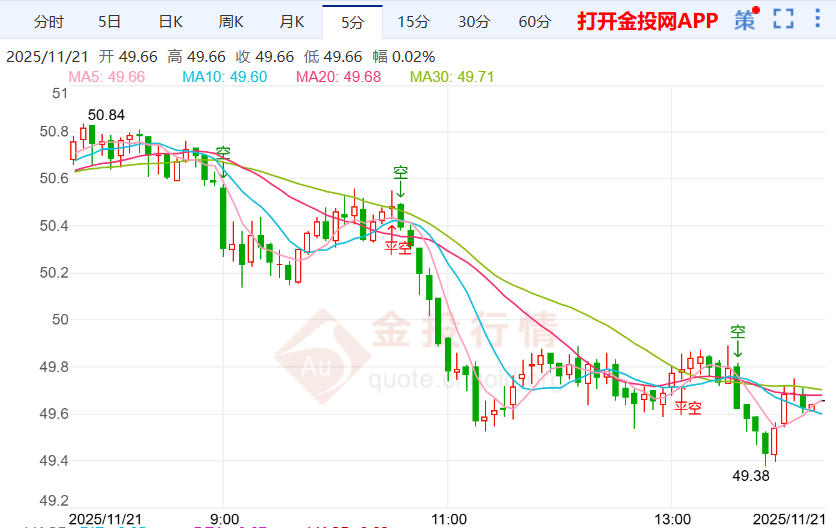
Group 1 - International silver is currently trading below $49.72, having opened at $50.68 and reaching a high of $50.84 and a low of $49.38, indicating a short-term sideways trend [1] - The recent non-farm payroll report from the U.S. Labor Department shows that average hourly earnings in the private sector rose by 0.2% month-over-month in September, a slowdown compared to the 0.3% increases in August and July, suggesting wage growth is below post-pandemic inflation levels [3] - The White House Press Secretary stated that the strong non-farm report demonstrates significant progress under President Trump's agenda, contrasting with wage declines attributed to the Democratic administration [3] Group 2 - International silver experienced volatility, rising to $52.5 earlier in the week before retreating to $49.5, indicating a potential trading range between $49.5 and $52.5, with opportunities for bullish positions if it falls to $49.5 [4] - The analysis suggests that the current trading pattern for silver indicates a period of consolidation, with resistance levels at $51 and $52.5, encouraging patience for potential rebounds [4]

美国9月非农远超预期!失业率、薪资增速竟藏危险信号?
Jin Shi Shu Ju· 2025-11-20 13:56
Group 1 - The U.S. added 119,000 jobs in September, exceeding expectations of 50,000, marking the largest increase since April [1] - The unemployment rate rose to 4.4%, higher than the expected 4.3%, with the previous value also at 4.3% [1] - Average hourly wage growth year-over-year was recorded at 3.8%, above the expected 3.7%, while the month-over-month growth was 0.2%, below the expected 0.3% [1] Group 2 - The healthcare sector added 43,000 jobs, with outpatient services contributing 23,000 and hospitals adding 16,000 jobs [3] - The restaurant and drinking places sector also saw significant hiring, adding 37,000 jobs [3] - Federal government employment decreased by 3,000, totaling a reduction of 97,000 jobs since January [3] Group 3 - The manufacturing sector experienced a decline of 6,000 jobs in September, continuing a concerning trend [3] - Analysts express concerns over the slowdown in wage growth, which may lead to a deceleration in overall labor income [3] - The expectation remains that the Federal Reserve will pause any rate cuts in December, despite increased bets on potential cuts [4]
大摩重磅展望:2026年是“风险重启之年”,美股盈利走强+AI投资周期共振,标普500或升至7800点!
Sou Hu Cai Jing· 2025-11-17 11:33
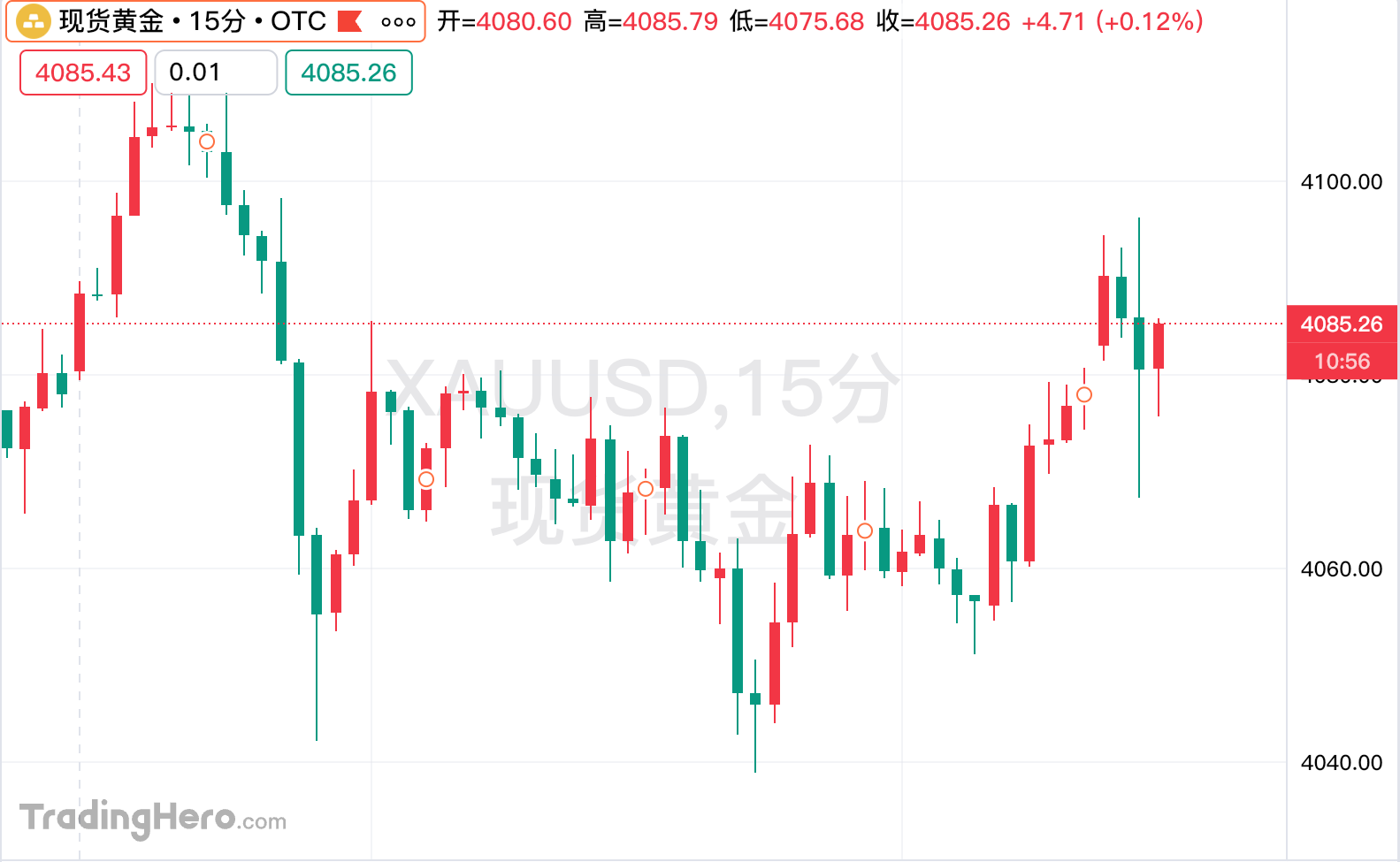
Core Viewpoint - Morgan Stanley's 2026 Global Strategy Outlook predicts a strong year for risk assets driven by a unique combination of fiscal, monetary, and regulatory policies, alongside robust corporate earnings growth, with the S&P 500 expected to lead global markets [1][4]. Policy Environment - The report highlights a rare "policy triumvirate" where fiscal policy, monetary policy, and regulatory easing will work in a pro-cyclical manner, creating a favorable environment for risk assets [4][5]. - Specific fiscal measures include the anticipated passage of the "One Big Beautiful Bill Act (OBBBA)" which is expected to reduce corporate taxes by $129 billion in 2026-27 [4]. - The Federal Reserve is projected to cut interest rates by 50 basis points in the first half of 2026 to stabilize the macroeconomic environment [4]. - Regulatory easing is expected to prioritize the energy and financial sectors [4]. AI Investment - AI-related capital expenditures are identified as a key growth driver, with a projected total of nearly $3 trillion in data center-related capital spending, of which less than 20% has been deployed so far [7]. - There is a significant financing gap of up to $1.5 trillion that will need to be filled through various credit channels [7][9]. Market Predictions - The S&P 500 index target for the end of 2026 is raised to 7,800, reflecting a 15% increase from current levels, supported by strong earnings growth and AI-driven efficiency improvements [1][10]. - The report forecasts S&P 500 earnings per share (EPS) to grow by 12% in 2025 and 17% in 2026, driven by improved corporate pricing power and a stable interest rate environment [9][10]. Credit Market Outlook - The credit market is expected to see significant differentiation, with high-yield bonds likely outperforming investment-grade bonds due to increased demand from AI-related financing [22]. - Investment-grade corporate bond issuance is projected to increase by 60%, primarily driven by AI and data center financing needs [22]. Commodity Preferences - In the commodities sector, Morgan Stanley favors metals over energy, with gold being the top choice, setting a target price of $4,500 per ounce, indicating a potential upside of about 9% [3][23]. - The report anticipates challenges in copper supply due to mining disruptions, predicting a shortfall of 600,000 tons by 2026 [26]. Global Market Insights - The outlook for the Japanese market is positive, with a target for the TOPIX index set at 3,600, benefiting from inflation recovery and corporate governance reforms [13]. - European markets face structural challenges, with growth primarily driven by valuation expansion rather than earnings improvement [18].

道富发出强烈看涨信号:4000美元的金价只是时间问题!
Jin Shi Shu Ju· 2025-10-02 06:04
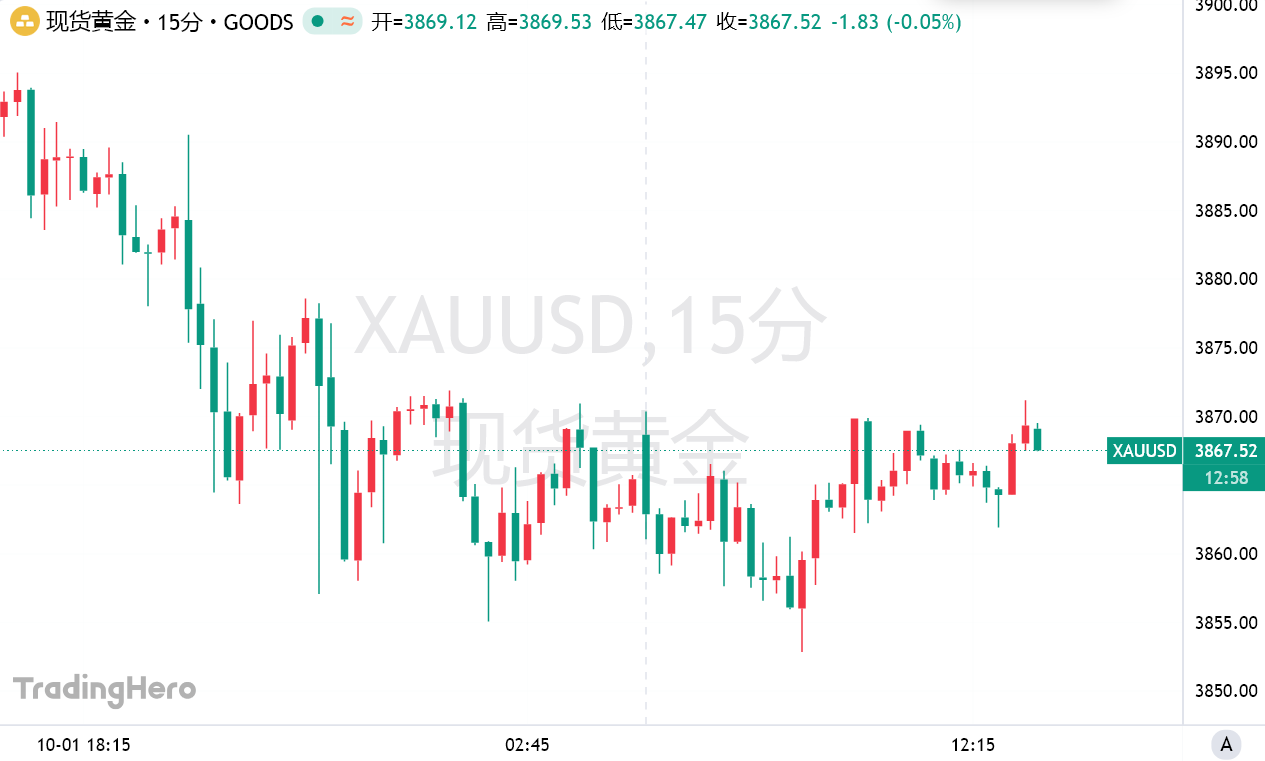
Core Viewpoint - The unprecedented rise in gold prices reached a new peak in September, marking the largest quarterly increase in over 40 years, with further potential for growth anticipated [1][3]. Group 1: Price Performance - Gold prices increased nearly 17% over the past three months, the best quarterly performance since Q2 1982 [3]. - Year-to-date, gold has risen 47%, the strongest increase since 1979 [3]. - As of Thursday, gold was trading around $3,870 per ounce, with expectations that it could reach $4,000 per ounce in the future [1][4]. Group 2: Investment Demand - September saw unprecedented investment demand for gold, with record inflows into gold ETFs, particularly the SPDR Gold Trust (GLD), which added 35.2 tons of gold in September [3]. - On September 19, a single-day inflow of 18.9 tons was recorded, the largest on record [3]. - Despite the high demand, gold ETF holdings remain significantly below the peak levels seen in 2020, indicating that gold is not yet an over-allocated asset [3]. Group 3: Market Dynamics - The current market conditions are driving investors to seek gold as a hedge against unusual market circumstances [3]. - The Federal Reserve's new easing cycle is creating a "bullish steepening" curve in the U.S. bond market, which is expected to weaken the dollar and provide new momentum for gold [4]. - The ongoing uncertainty in the U.S. and global economy continues to enhance gold's appeal as a safe-haven asset [4]. Group 4: Future Outlook - The analyst believes that while gold reaching $4,000 is a matter of "when" rather than "if," immediate upward movement is not expected [4]. - A new support level for gold is anticipated at $3,500, with continued buying interest expected on dips [4]. - The potential impact of a U.S. government shutdown on gold and the economy remains uncertain, but prolonged shutdowns could have negative growth consequences, which would be beneficial for gold [4].
见好就收?花旗退出押注美联储独立性受损交易
Jin Shi Shu Ju· 2025-09-24 05:48
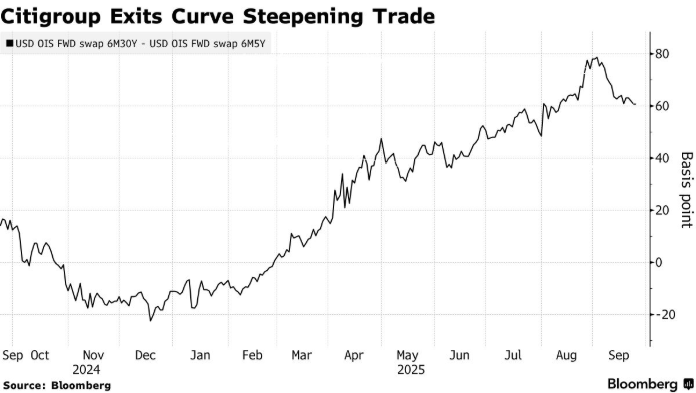
Group 1 - Citigroup's strategists have exited a bet that long-term U.S. Treasuries would underperform short-term Treasuries amid increasing attacks on the Federal Reserve, indicating a reduction in concerns over the central bank's independence [1][3] - The initial recommendation was based on expectations that President Trump's tax and spending policies would inflate government debt, putting pressure on longer-term debt [1][3] - The strategists noted that supply concerns for long-term Treasuries have eased since the trade was initiated in May, and the recent FOMC meeting has marginally reduced worries about the Fed's independence [3] Group 2 - The recent FOMC meeting resulted in a 25 basis point rate cut, with a near-unanimous consensus that surprised some market participants [3] - The only dissenting vote came from a Trump-appointed governor who favored a larger cut, while other previously dovish members aligned with the majority this time [3] - The strategists observed that past easing cycles during soft landing scenarios have been relatively shallow, limiting the potential for a steepening of the yield curve [3]

市场是对的 美债曲线正为降息周期定价
Sou Hu Cai Jing· 2025-09-07 16:35
Core Viewpoint - The article discusses the recent decline in short-term U.S. Treasury yields, particularly the 2-year yield, and the implications of this trend for future interest rates and economic conditions [1][2][4][7]. Group 1: Yield Curve Dynamics - As of August 28, the 2-year Treasury yield fell to 3.59%, the lowest since September 2024, indicating a significant downward adjustment in the yield curve, particularly in the short-term segment [1]. - The yield curve has shifted from an inverted state to a normal upward slope, with the 2-year to 10-year spread moving from negative to positive, reflecting market expectations of Federal Reserve rate cuts [4][6]. - The phenomenon of "bull steepening" is observed, where short-term yields decline faster than long-term yields, suggesting a market shift in risk-return preferences following the Fed's signaling of rate cuts [4][5]. Group 2: Economic Fundamentals - Labor market indicators show a slowdown in job growth, with the Beveridge curve indicating structural weaknesses, which aligns with the Fed's acknowledgment of labor market risks being greater than inflation risks [5][7]. - The current economic environment, characterized by high federal debt exceeding $37 trillion, is not leading to a crisis in the Treasury market but rather increasing demand for safe assets [3][7]. - Historical data suggests that high debt levels are often associated with low interest rate cycles, as investors seek liquidity and safety during economic downturns [3][6]. Group 3: Market Sentiment and Demand - Recent Treasury auctions have shown strong demand, with the 2-year and 5-year auctions reflecting robust interest despite a slight decline in bid coverage ratios, indicating a preference for safety among investors [3][6]. - The stability of foreign holdings of U.S. Treasuries suggests that global capital inflows remain strong, maintaining the dollar's status as a reserve asset despite the heavy debt burden [7]. - The article emphasizes the need for economists and market participants to focus on actual market signals rather than outdated models, as the current yield curve dynamics are a response to real economic conditions rather than purely Fed-driven [6][7].