
石油供应风险

Search documents
美以伊战争推动西方石油公司股价上涨
Xin Lang Cai Jing· 2026-03-06 16:53
Group 1 - Occidental Petroleum Corp's stock price increased due to escalating concerns from the ongoing conflict between Israel and Iran, compounded by reports of an Iranian attack on a tanker near Kuwait [1] - The tanker incident involved a significant explosion on the port side, leading to water ingress and oil leakage, although no fire occurred and the crew was safe [2] - Iran's closure of the Strait of Hormuz and its warning to target any vessels attempting to pass through have heightened regional tensions and pushed global oil prices higher [2] Group 2 - Approximately 20% of the world's oil supply is transported through the Strait of Hormuz, and Iran's control over this strait gives it substantial influence over global oil transportation [3] - The prolonged closure of the Strait of Hormuz has severely disrupted oil supply, prompting the U.S. Treasury to grant India a temporary waiver to continue purchasing Russian oil, highlighting the seriousness of the situation [3] - India's heavy reliance on oil imports, primarily from the Middle East, makes it particularly vulnerable to disruptions caused by the closure of the Strait [3]

委内瑞拉局势动荡 沙特连续三月下调对亚油价
Ge Long Hui A P P· 2026-01-06 09:33
Core Viewpoint - Oil prices have declined due to global supply abundance and uncertainties surrounding Venezuela's situation, indicating both short-term risks and long-term growth potential for the country's oil sector [1] Group 1: Venezuela's Oil Supply - Recent developments have introduced further downside risks to Venezuela's oil supply in the short term [1] - Long-term growth potential exists for Venezuela's energy sector, contingent on significant investments [1] Group 2: Investment Environment - The need for substantial investment in Venezuela's energy industry is highlighted, but foreign companies may be reluctant to invest unless the investment environment becomes more attractive or some form of assurance is provided [1] Group 3: Saudi Arabia's Pricing Strategy - Saudi Arabia, the world's largest oil exporter, has reduced the price of its flagship product, Arab Light crude oil, for the third consecutive month for Asian markets [1]
花旗:委内瑞拉石油供应或中断,支撑布油60美元
Sou Hu Cai Jing· 2026-01-06 07:23
Group 1 - Citigroup believes that Venezuelan oil supply is likely to remain disrupted until an agreement is reached between the U.S. government and the current or future leadership of Venezuela, which is a positive factor for the oil market [1] - The bank anticipates that an agreement may eventually be reached, but the process could take several months or longer, with the situation potentially escalating before it stabilizes [1] - Overall, Citigroup estimates that the risk to oil supply remains high, which is sufficient to support Brent crude oil prices at around $60 per barrel in the coming weeks [1]
委内瑞拉局势升级,原料端风险发酵
Hua Tai Qi Huo· 2026-01-04 11:37
Report Industry Investment Rating No relevant content provided. Core Views of the Report - As the situation in Venezuela escalates, the risk on the raw material side of asphalt is increasing. If the supply of Venezuelan oil continues to tighten, leading to a rise in the cost center of asphalt refineries, there is room for further rebound in asphalt spot and futures prices [1][12]. - Domestically, with the marginal easing of supply pressure and the stabilization of the spot market, the bottom signal of the asphalt futures market is gradually consolidating. However, the real - world fundamentals are still relatively weak, and the potential upward driver of the market comes from the raw material side [1][26]. - The winter storage demand is gradually being released, and the bottom signal of the spot market is emerging. The supply pressure has eased marginally, and the spot market in the north has stabilized first. The market pressure in the south has also eased recently, and prices are showing signs of a rebound [25]. Summary by Relevant Catalogs Venezuela Situation Continues to Escalate, and the Risk on the Asphalt Raw Material Side Increases - The US sanctions on Venezuela this year have had a repeated impact on the supply and pricing of Venezuelan oil, which has been transmitted to the domestic market. In the first half of the year, the sanctions mainly focused on the economic level, and the changes in oil license permissions had the most significant impact on oil supply and logistics [7][8]. - In the fourth quarter, the US countermeasures against Venezuela expanded from the economic to the military level. The situation in South America further escalated, and the shipping volume of Venezuelan crude oil to Asia decreased significantly. The floating and in - transit inventories of Merey crude oil also increased significantly [8][11]. - If the US blockade of Venezuela continues and Venezuela cannot find effective ways to circumvent it, the supply of Venezuelan crude oil to Asia will tighten, and domestic refineries may increase the procurement of crude oil and fuel oil from other regions, but the raw material cost will rise significantly [12]. Winter Storage Demand is Gradually Released, and the Bottom Signal of the Spot Market Appears - Previously, due to the decline in oil prices and the discount of diluted asphalt, refinery profits improved, and major refineries released low - price resources. Terminal demand was weak, and the spot market was under pressure. Recently, with the release of winter storage demand, the supply pressure has eased marginally, and the spot market in the north has stabilized first [25]. - The market in South China was weaker. Recently, major refineries released more supplies, and the spot price fell continuously. With the increase in raw - material - side sentiment in the futures market, the basis in South China decreased, and the spot - futures arbitrage window opened, stimulating spot - side buying [25]. - After the concentrated release of selling pressure in December, the supply from refineries in South China decreased, and the market pressure eased. Prices have shown signs of a rebound recently [25]. Investment Strategies - Unilateral: Be cautiously bullish. Pay attention to the opportunity to go long on the main BU contract at low prices, and avoid chasing the rise [2]. - Inter - period: Pay attention to the opportunity for positive spreads at low prices (BU2603 - BU2606) [2]. - No strategies are provided for cross - variety, spot - futures, and options [2].
Oil rises as market weighs Venezuela supply risks
Reuters· 2025-12-26 02:09
Core Insights - Oil prices increased following the U.S. decision to impose greater economic pressure on Venezuelan oil shipments [1] - The U.S. conducted airstrikes against Islamic State militants in northwest Nigeria at the request of the Nigerian government, which may have implications for regional stability and oil supply [1] Oil Industry Impact - The U.S. actions are likely to affect Venezuelan oil exports, which could lead to tighter global oil supply and potentially higher prices [1] - Increased military activity in regions with oil production, such as Nigeria, may disrupt operations and influence market perceptions of risk associated with oil supply [1]


澳洲联邦银行:俄乌若停火,布油或较快跌至每桶60美元
Ge Long Hui A P P· 2025-11-27 10:23
Core Viewpoint - Market expectations suggest a potential ceasefire between Ukraine and Russia, which may pave the way for the West to lift sanctions on Russian oil suppliers [1] Group 1: Impact on Oil Prices - Any ceasefire agreement is expected to reduce supply risks associated with U.S. sanctions on Russian oil producers, specifically Rosneft and Lukoil [1] - Following a ceasefire, Brent crude oil prices are anticipated to decline relatively quickly to $60 per barrel [1] Group 2: Effects on Refining Activities - A ceasefire would normalize operations at Russian refineries, as drone attacks from Ukraine would cease [1]

原油日报:中美会谈结果符合预期,油价波动有限-20251031
Hua Tai Qi Huo· 2025-10-31 02:50
Report Industry Investment Rating - No information provided regarding the report industry investment rating Core View of the Report - The outcome of the Sino-US talks met market expectations, had no significant impact on oil prices, and did not reach a comprehensive trade agreement. It only reached agreements on issues such as fentanyl, tariff extensions, and soybean purchases, without addressing core issues like Russian oil procurement and US crude oil procurement, thus having limited impact on oil prices [2] Summary by Relevant Catalogs Market News and Important Data - The price of light crude oil futures for December delivery on the New York Mercantile Exchange rose 9 cents to $60.57 per barrel, a 0.15% increase; the price of Brent crude oil futures for December delivery rose 8 cents to $65.00 per barrel, a 0.12% increase. The main SC crude oil contract closed down 0.24% at 461 yuan per barrel [1] - Saudi Arabia's fiscal deficit in the third quarter widened to 88.5 billion riyals ($23.6 billion), a 160% increase from the previous quarter. Oil revenue decreased by 0.1% to 150.8 billion riyals due to OPEC's phased removal of production cuts. Total revenue decreased by about 13% year-on-year to 269.9 billion riyals, with 119.1 billion riyals from non-oil industries. Public spending increased by 6% year-on-year to 358.4 billion riyals [1] - Russia's second-largest oil producer, Lukoil, agreed to sell most of its international assets to Swiss commodity trader Gunvor after being sanctioned by the US. The transaction will cover most of Lukoil's overseas operations with about 15,000 employees [1] - Ukrainian security officials said that Ukraine attacked two oil storage facilities in Russian-occupied Crimea [1] - ANZ Bank expects OPEC+ to approve an additional supply increase of 137,000 barrels per day in December due to increased risks to Russian supply. The bank raised its 0 - 3 month crude oil price target to $70 per barrel [1] - India's HMEL company has suspended further purchases of Russian crude oil [1] Investment Logic - The previous day's meeting between the two heads of state basically met market expectations, had no unexpected surprises, did not reach a comprehensive trade agreement, and had limited impact on oil prices [2] Strategy - Oil prices will fluctuate within a short - term range and a medium - term short position should be considered [3]
今晚,油价下调
证券时报· 2025-07-15 11:33
Core Viewpoint - The article discusses the recent adjustment in domestic fuel prices in China, highlighting a decrease in gasoline and diesel prices, and the implications for consumers and logistics companies [1][2]. Group 1: Price Adjustments - The National Development and Reform Commission announced a reduction of 130 yuan per ton for gasoline and 125 yuan per ton for diesel, effective from July 15, 2025 [1]. - This marks the sixth price adjustment in 2025, resulting in a total decrease of 225 yuan for gasoline and 215 yuan for diesel compared to the end of the previous year [2]. Group 2: Impact on Consumers and Logistics - For private car owners, filling a 50-liter tank will cost approximately 5 yuan less after the price adjustment [2]. - For large logistics vehicles, the fuel cost will decrease by about 4.4 yuan for every 100 kilometers driven [2]. Group 3: Supply and Demand Dynamics - Despite the expected increase in production from OPEC+, potential supply risks remain due to geopolitical tensions and new sanctions against Russia, which could support oil prices [2]. - The demand outlook is mixed, with ongoing summer travel in the U.S. potentially boosting fuel demand, but overall sentiment remains pessimistic regarding demand recovery [2][3]. Group 4: OPEC Production Decisions - OPEC and non-OPEC countries have decided to increase production by 548,000 barrels per day starting in August, with flexibility to adjust based on market conditions [3]. - The annual report from OPEC projects global oil demand to reach an average of 103.7 million barrels per day in 2024, increasing to 123 million barrels per day by 2050, indicating a growth trend [3][4]. Group 5: Contrasting Forecasts - OPEC Secretary-General highlighted that the growth in oil demand is driven by economic expansion, population growth, and urbanization, with no signs of peak oil demand in the short term [4]. - This outlook contrasts with the International Energy Agency's prediction of a decline in global oil demand post-2030, primarily due to the rise of electric vehicles and renewable energy [4].
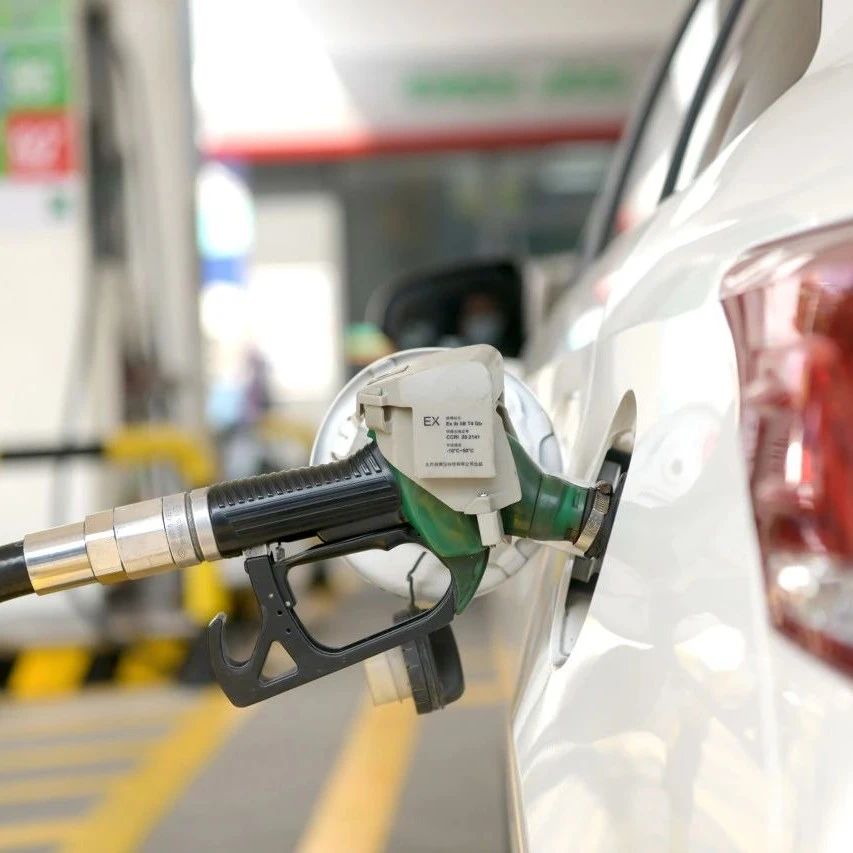
以色列对伊朗空袭导致国际油价飙升13%,布油自俄乌冲突以来最大日内涨幅!荷兰国际:霍尔木兹海峡航运严重中断足以令油价升至120美元
Ge Long Hui· 2025-06-13 04:39
Group 1 - Iran's National Oil Company stated that the recent Israeli airstrikes did not damage any of its refining or oil storage facilities, and operations and fuel supply remain stable [1] - Following the airstrikes, oil prices surged by 13% in a single day, marking the largest daily increase since the Russia-Ukraine conflict began in 2022 [3] - Analysts from ING indicated that if Iran's midstream and upstream assets are targeted, up to 1.7 million barrels per day of export supply could be at risk, potentially shifting the oil market from surplus to deficit in the second half of the year [3] Group 2 - Commodity strategist Warren Patterson suggested that Brent crude prices could rise to $80 per barrel if tensions escalate, although prices may stabilize around $75 [3] - In a worst-case scenario, such as the closure of the Strait of Hormuz, approximately 14 million barrels of oil supply could be at risk, which could push prices to $120 per barrel [3] - Charu Chanana, chief investment strategist at Saxo Bank, noted that if Middle Eastern tensions escalate, oil prices could spike to $80, but increased OPEC+ production might limit this rise and lead to concerns about oversupply in the fall [3]
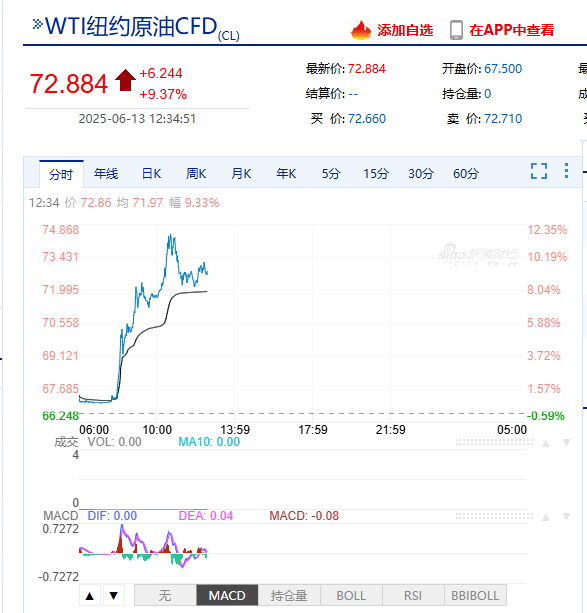
盛宝银行:若供应风险成为现实,油价可能会飙升至80美元
news flash· 2025-06-13 04:06
Core Viewpoint - If supply risks materialize due to escalating tensions in the Middle East, oil prices could surge to $80 per barrel, although increased OPEC+ production may limit this rise and reignite concerns of oversupply in the fall [1] Group 1: Supply Risks - The worst-case scenario, such as the closure of the Strait of Hormuz or a disruption of Iran's oil exports of 2.1 million barrels per day, could severely impact global oil supply and inflation expectations [1]