
经济增长动能转换

Search documents
值得收藏!刘世锦在2025新浪金麒麟论坛演讲的PPT
Xin Lang Cai Jing· 2026-01-15 03:22
Core Viewpoint - The conference emphasizes the need to reshape the growth paradigm in China, transitioning from investment and export-driven growth to innovation and consumption-driven growth during the 14th Five-Year Plan period [5][54]. Consumption Structure - China is not yet a consumption powerhouse, with consumption accounting for about 20 percentage points less of GDP compared to the global average [9][55]. - Addressing this structural gap is essential for China to become a consumption-driven economy, which includes increasing both domestic and international consumption [11][58]. - The focus on consumption is shifting from investment as the primary driver of economic growth to consumption as the key factor [11][58]. Industrial Structure - The manufacturing sector's share of GDP may decline, but this does not indicate a lack of transformation; rather, it highlights the need for high-tech, knowledge-intensive service industries to support manufacturing upgrades [12][59]. - The complexity of industrial structure transformation is increasing, necessitating a fair competitive environment for businesses [15][61]. Foreign Trade - Despite a challenging international environment, China's exports have remained strong, reflecting improvements in technology and industrial competitiveness [16][63]. - A significant trade deficit indicates reduced domestic consumption, which is unsustainable in the long term; thus, a balanced import-export strategy is needed [16][65]. Financial Structure - The evolution of the financial system is accelerating, with a shift from traditional banking to capital markets, which will play a more significant role in supporting economic growth [22][70]. - The capital market should foster large, innovative enterprises and increase the participation of institutional investors to support social security systems [26][72]. Urban-Rural Structure - Urbanization is slowing as the population approaches 70%, leading to more internal migration within urban areas rather than from rural to urban [27][75]. - Addressing disparities in public services between urban and rural populations is crucial for achieving balanced development [31][79]. Income Distribution - To avoid the middle-income trap, China should aim to reduce the Gini coefficient to around 0.4, promoting a stable middle-income group that constitutes over half of the population [33][84]. - Policies should focus on increasing labor income's share of GDP and improving social security for low- and middle-income groups [37][86]. Macroeconomic Policy - While macroeconomic policies are currently focused on short-term stabilization, they cannot provide the foundational growth momentum needed for the economy [40][87]. - Structural reforms are essential to address deep-rooted issues, and reliance on macroeconomic policies should be carefully managed to avoid dependency [42][89].


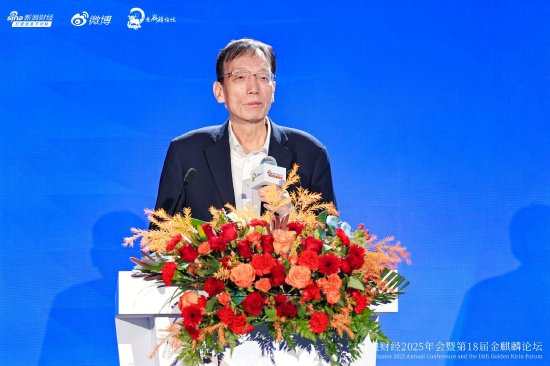
全文|刘世锦谈经济增长:以投资出口为主转向以创新和消费为主
Xin Lang Cai Jing· 2026-01-15 03:17
Core Viewpoint - The conference emphasizes the need to reshape the growth paradigm in China, transitioning from an investment and export-driven economy to one focused on innovation and consumption during the 14th Five-Year Plan period [5][54]. Consumption Structure - China is not yet a consumption powerhouse, with consumption accounting for approximately 20 percentage points less of GDP compared to the global average [9][55]. - To become a consumption-driven economy, China must address this structural gap and enhance both domestic and international consumption [11][58]. - The focus on consumption is shifting from investment-driven growth to consumption-driven growth, particularly in sectors like education, healthcare, and cultural services, which also contribute to human capital investment [11][58]. Industrial Structure - The manufacturing sector's share of GDP may decline, but this does not indicate a lack of transformation; rather, it highlights a shift towards high-tech, knowledge-intensive service industries [12][59]. - The transition will require a focus on developing related productive service industries to support manufacturing upgrades [12][59]. - The complexity of industrial structure transformation necessitates a fair competitive environment, as traditional government policies may become less effective [15][61]. Foreign Trade - Despite a challenging international environment, China's exports have remained strong, reflecting improvements in technological and industrial competitiveness [16][63]. - A significant trade deficit indicates reduced domestic consumption, which is unsustainable in the long term; thus, a balanced import-export strategy is essential [16][65]. - The shift towards using the Renminbi for international trade settlements is crucial for enhancing its global liquidity and status [21][68]. Financial Structure - The evolution of the financial system is accelerating, with a growing importance of capital markets as the economy transitions [22][70]. - The capital market should support the development of innovative enterprises and increase the participation of institutional investors to bolster social security systems [26][72]. Urban-Rural Structure - Urbanization is slowing as the population approaches 70%, leading to more internal migration within urban areas rather than rural to urban shifts [27][75]. - Addressing disparities in public services between urban and rural populations is critical for achieving balanced development [31][78]. - Reforms in land management and local governance are necessary to facilitate the free flow of resources and optimize urban-rural integration [32][79]. Income Distribution - Learning from successful economies, China aims to reduce its Gini coefficient to around 0.4 to avoid the middle-income trap and double the middle-income population from 400 million to 800-900 million [33][84]. - Policies should focus on increasing labor compensation's share of GDP and improving social security for low- and middle-income groups [37][84]. - A shift from indirect to direct taxation is proposed to enhance government revenue from high-income earners while ensuring property rights protection [39][86]. Macroeconomic Policy - While macroeconomic policies are currently focused on short-term stabilization, they cannot provide the foundational growth momentum needed for the economy [40][87]. - Structural reforms are essential to address deep-rooted issues, and reliance on macroeconomic policies should be carefully managed to avoid dependency [42][89]. - The transition to a new growth framework requires overcoming path dependencies and encouraging innovation and reform at various levels [44][94].
华福证券任志强:政策基调稳中有进
Zheng Quan Ri Bao Wang· 2025-12-10 11:53
Core Viewpoint - The reports by Ren Zhiqiang emphasize the importance of a robust policy framework to support high-quality development during the "14th Five-Year Plan" and set a solid foundation for the upcoming "15th Five-Year Plan" [1][2]. Group 1: Economic and Policy Insights - The past five years have effectively addressed multiple challenges, leading to simultaneous advancements in hard and soft strengths, which provide a solid material foundation for the "15th Five-Year Plan" [1]. - The upcoming macroeconomic policies will focus on enhancing the effectiveness of policy combinations, particularly in fiscal, monetary, industrial, and technological areas, to support the real economy [1]. - The emphasis on "proactive and effective macro policies" indicates a shift towards more coordinated and targeted policy measures to improve macro governance efficiency [1]. Group 2: Policy Framework - The "Eight Persistences" framework aims to cover both supply and demand sides, focusing on domestic demand and innovation to drive economic growth [2]. - The policy framework highlights the importance of coordinating existing and new policies, indicating a transition from isolated measures to a more integrated approach, which is expected to significantly enhance policy transmission efficiency [2].
2025年8月PMI点评:边际回升但压力仍存
Hua Yuan Zheng Quan· 2025-09-01 08:05
Report Industry Investment Rating - The report does not explicitly provide an investment rating for the industry. Core Viewpoints - In August, the three major PMI indices showed marginal improvements, but the manufacturing PMI remained below the boom-bust line. The overall expansion of enterprise production and business activities accelerated slightly, and the endogenous economic momentum continued to improve. However, the manufacturing PMI still needed continuous repair, and there was a risk of increased economic downward pressure in the second half of the year. Short-term bond markets might be suppressed by sentiment, but the bond market was expected to rise in September [2]. Summary by Related Content Manufacturing PMI - In August, the manufacturing PMI rose 0.1 pct month-on-month to 49.4%, staying below the boom-bust line for five consecutive months. The production and demand-related indices improved, and the price indices continued to rise, though the marginal increase weakened. The PMI of consumer goods industries decreased by 0.3 pct to 49.2%. The new export orders index and the import index were 47.2% and 48.0% respectively, up 0.1 pct and 0.2 pct month-on-month, indicating a possible improvement in foreign trade [2]. - The business climate of different types of enterprises continued to diverge. The PMIs of large and small enterprises increased by 0.5 pct and 0.2 pct respectively, reaching 50.8% and 46.6%. The small enterprises had been in the contraction range for 16 consecutive months. The PMI of medium-sized enterprises dropped 0.6 pct to 48.9% [2]. Non - manufacturing PMI - In August, the non-manufacturing business activity index was 50.3%, up 0.2 pct month-on-month. The non-manufacturing business climate had been at or above the critical point since January 2023, remaining relatively stable. The construction business activity index was 49.1%, down 1.5 pct month-on-month, possibly due to natural factors such as high temperatures and heavy rains. The service business activity index was 50.5%, up 0.5 pct month-on-month, reaching the highest value this year. The business activity expectation index remained at a relatively high level of 57.0%, up 0.4 pct month-on-month, indicating that enterprises were optimistic about the market outlook in September [2]. Economic Outlook and Bond Market - The economic negative cycle of "plummeting housing prices, plummeting stock markets - shrinking wealth - consumption downgrade" in the past two years might come to an end. However, there was still pressure on profit improvement, and the manufacturing PMI below the boom-bust line in August reflected growth pressure. Consumption and exports might face certain pressures in the second half of the year [2]. - The short-term bond market might be suppressed by sentiment, but the bond market was expected to rise in September. The economic downward pressure in the second half of the year might increase, and the central bank's continuous easing and banks' self - operated allocation needs provided support. After September, the net issuance of government bonds was expected to be no more than 25% of the annual plan, and the interest rate bonds might have a repair window. The report continued to be bullish on the 10Y treasury bond yield in the second half of the year, which was expected to be between 1.6% - 1.8%, and the 10Y treasury bond was considered to have high cost - effectiveness at around 1.8%. It was expected that the 10Y treasury bond yield would return to around 1.65% in the next six months, and the 5Y secondary capital bonds of state - owned and joint - stock banks would fall below 1.9% [2].
华源晨会-20250717
Hua Yuan Zheng Quan· 2025-07-17 12:47
Economic Overview - In the first half of 2025, China's economy demonstrated strong resilience with a GDP growth of 5.3% year-on-year, supported by consumption contributing 52.3% to economic growth [2][7][8] - The second quarter GDP growth was 5.2% year-on-year and 1.1% quarter-on-quarter, indicating a steady progress in economic performance [2][7] - The GDP deflator index has been negative for nine consecutive quarters, with a value of -1.0% in Q2 2025, while CPI turned positive for the first time in four months at +0.1% in June [2][7][8] Pharmaceutical Sector China Biologic Products (01177.HK) - The company announced a $500 million acquisition of 95.09% of Shanghai Lixin Pharmaceutical, which will enhance its core competitiveness in the oncology field through Lixin's differentiated dual-antibody and ADC technology platforms [10][11][13] - The acquisition is expected to significantly boost the company's capabilities in developing innovative drugs, with several promising candidates in clinical trials [12][13] Sinovac Biotech (688136.SH) - The company has established multiple leading technology platforms for innovative drug development, focusing on oncology and degenerative diseases, which are expected to enhance its valuation [15][16] - The innovative pipeline includes promising candidates that are anticipated to provide new valuation flexibility for the company [17][18] Precision Manufacturing Sector Easy Precision (836221.BJ) - The company reported a revenue of 80 million yuan and a net profit of 15.04 million yuan in Q1 2025, with a focus on precision metal components for the automotive industry [20][21] - Easy Precision is expanding its product line through strategic partnerships and is set to launch a third-generation welding ring production line in 2025, enhancing its market competitiveness [21][22] - The company plans to acquire a 51% stake in Tongyihe to enhance its precision stamping capabilities and drive the localization of harmonic reducer components [23][25]
宏观经济宏观月报:5月增长动能从出口与投资转向消费-20250616
Guoxin Securities· 2025-06-16 13:12
Economic Growth - In May, the industrial added value above designated size grew by 5.8% year-on-year, a decrease of 0.3 percentage points from the previous month[1] - The total retail sales of consumer goods reached 41,326 billion yuan in May, with a year-on-year growth of 6.4%, accelerating by 1.3 percentage points from the previous month[1] - Fixed asset investment (excluding rural households) in May was 191,947 billion yuan, growing by 3.7% year-on-year, down by 0.3 percentage points from the previous month[1] Consumption and Investment Trends - The monthly GDP growth rate for May was approximately 5.0%, a slight decrease of 0.1 percentage points from April, aligning with the annual economic growth target[2] - Domestic consumption growth significantly increased in May, offsetting the decline in investment and export growth, indicating a shift in economic momentum towards consumption[2] - The government’s focus on boosting consumption is expected to enhance its role in economic growth in the second half of 2025[3] Employment and Unemployment - The urban surveyed unemployment rate in May was 5.0%, down by 0.1 percentage points from the previous month, indicating an improvement in employment conditions[1][17] - The unemployment rate in major cities also showed a similar trend, reflecting seasonal adjustments and improvements in the job market[17] Export and Import Performance - The total import and export value in May was 38,098 billion yuan, with exports at 22,767 billion yuan, growing by 6.3%, while imports decreased by 2.1%[1] - The decline in both exports and imports suggests a cooling off from previous "export rush" activities[47] Inflation and Price Trends - The Consumer Price Index (CPI) in May remained stable year-on-year at -0.1%, while the core CPI increased by 0.6%, indicating a mild upward trend in core prices[51] - The Producer Price Index (PPI) saw a year-on-year decline of 3.3%, with the drop in production material prices being a significant factor[63]