经济数字化转型

Search documents
新疆电网2025年售电量达2183亿千瓦时 创历史新高
Zhong Guo Xin Wen Wang· 2026-01-12 11:50
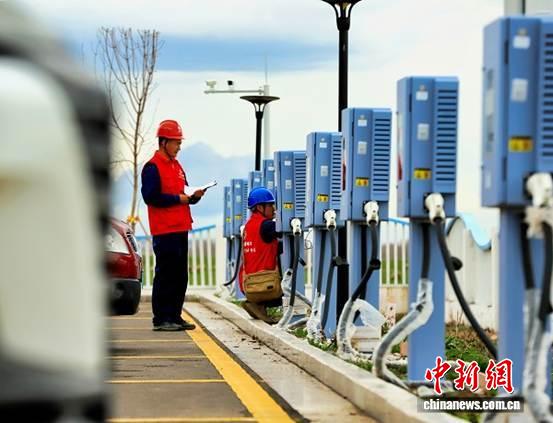
Core Viewpoint - The Xinjiang power grid is projected to achieve a record electricity sales volume of 218.34 billion kilowatt-hours by 2025, marking a 3.6% year-on-year increase, reflecting the region's economic growth and improved living standards [1]. Group 1: Electricity Sales Growth - The electricity sales volume for the third industry in Xinjiang is expected to reach 54.034 billion kilowatt-hours by 2025, accounting for 24.75% of total sales, with a year-on-year growth of 12.15%, becoming the main driver of overall sales growth [1]. - The information transmission, software, and IT services sector will see a sales volume of 3.976 billion kilowatt-hours, with a significant year-on-year increase of 28.24%, highlighting the region's digital transformation [1]. - Residential electricity consumption is also projected to grow steadily, with sales expected to reach 24.035 billion kilowatt-hours, reflecting a year-on-year increase of 7.47%, indicating improvements in living standards [1]. Group 2: Charging Service Industry Growth - The charging and swapping service industry is experiencing explosive growth, with sales expected to reach 2.113 billion kilowatt-hours by 2025, a staggering year-on-year increase of 153.71%, driven by the rapid adoption of electric vehicles in Xinjiang [2]. - The growth in this sector is supported by the continuous improvement of charging infrastructure, with 97 counties and 1,186 towns in Xinjiang achieving full coverage of public charging facilities [2]. - The Xinjiang power company has implemented over 60 supportive policies to enhance charging facility layout, integrating rural revitalization and tourism development, which has alleviated "range anxiety" for electric vehicle owners [2]. Group 3: Business Environment Optimization - The sustained increase in electricity sales is attributed to the continuous optimization of the business environment by the Xinjiang power company, which includes improving service mechanisms, reducing connection times, and lowering electricity costs for enterprises [2]. - These practical measures have effectively stimulated market vitality and electricity demand, serving as key factors driving the growth in electricity sales [2].

热点思考 | “新”新基建,地方如何适度超前?(申万宏观·赵伟团队)
赵伟宏观探索· 2026-01-08 16:03
Core Viewpoint - The "15th Five-Year Plan" suggests "moderate advanced new infrastructure construction," emphasizing the need for local governments to implement this requirement through tailored approaches based on regional characteristics [1][59]. Group 1: Understanding "Moderate Advanced New Infrastructure" - The "15th Five-Year Plan" emphasizes "moderate advanced construction," focusing on the development of information communication networks, integrated computing networks, and major technological infrastructure, while also promoting the digital transformation of traditional infrastructure [2][60]. - The scope of new infrastructure has significantly expanded compared to the "14th Five-Year Plan," now covering communication networks, data, and computing fields, driven by the digital transformation of the economy [2][9]. - From 2019 to November 2025, investments in electricity, heat, internet software, and logistics have increased by 10.4%, 5.0%, and 4.1% respectively, indicating the core investment attributes of new infrastructure [12][61]. Group 2: Commonalities and Differences in Local Infrastructure Layout - Local governments focus on integrating infrastructure and enhancing information infrastructure, with 28 regions proposing the digital transformation of traditional infrastructure [3][15]. - In the North China region, the focus is on building national data hubs and integrating energy transformation, with Beijing leading in data management and resource centers [3][29]. - The East and South China regions leverage their advantages in low-altitude economies and water transport systems, emphasizing low-altitude infrastructure and smart upgrades to water transport [3][35]. Group 3: Policy Support for New Infrastructure in 2026 - Fiscal policies have increased support for new infrastructure through policy financial tools, with the China Development Bank providing 98.02 billion yuan for digital economy and AI projects [5][43]. - Monetary policies have introduced tools like technology innovation loans to support new infrastructure, with green loans and loans for infrastructure upgrades showing growth rates of 17.5%, 25.1%, and 22.3% respectively [6][49]. - Regulatory measures will optimize spatial layouts, control hidden debts, and prevent redundant construction, aiming to enhance the overall effectiveness of new infrastructure development [6][52].

热点思考 | “新”新基建,地方如何适度超前?(申万宏观·赵伟团队)
申万宏源宏观· 2026-01-07 16:05
Core Viewpoint - The article discusses the "15th Five-Year Plan" proposal emphasizing "moderate advanced new infrastructure construction," highlighting the need for local governments to implement this requirement and adapt their strategies based on regional characteristics [1][2]. Group 1: Understanding "Moderate Advanced New Infrastructure" - The "15th Five-Year Plan" proposes "moderate advanced construction," focusing on the development of information communication networks, integrated computing networks, and major technological infrastructure, while also promoting the digital transformation of traditional infrastructure [2][7]. - The scope of new infrastructure has significantly expanded compared to the "14th Five-Year Plan," now covering communication networks, data, and computing fields, driven by the digital transformation of the economy [2][9]. - From 2019 to November 2025, investments in electricity, heat, internet software, and logistics have increased by 10.4%, 5.0%, and 4.1% respectively, indicating the core investment attributes of new infrastructure [12][61]. Group 2: Commonalities and Differences in Local Infrastructure Layout - Local governments focus on integrating infrastructure and enhancing information infrastructure, with 28 regions proposing the digital transformation of traditional infrastructure [3][15]. - The North China region emphasizes the construction of national data hubs and energy transition, with Beijing leading in data management and resource centers [3][29]. - The East and South China regions leverage their low-altitude economic potential and developed water transport systems, focusing on low-altitude infrastructure and smart upgrades to water transport [3][35]. Group 3: Policy Support for New Infrastructure in 2026 - Fiscal policies have increased support for new infrastructure through policy financial tools, with the China Development Bank allocating 98.02 billion yuan to digital economy and AI projects [5][43]. - Monetary policies have introduced tools like technology innovation loans to support new infrastructure, with green loans and infrastructure upgrade loans growing at rates of 17.5%, 25.1%, and 22.3% respectively by the third quarter of 2025 [49][52]. - Regulatory measures will optimize spatial layouts, control hidden debts, and prevent redundant construction, aiming to enhance the overall effectiveness of new infrastructure development [52][64].

热点思考 | 地方如何适度超前“新基建”?(申万宏观·赵伟团队)
申万宏源宏观· 2026-01-07 15:15
Core Viewpoint - The article discusses the "15th Five-Year Plan" proposal emphasizing "moderate advanced new infrastructure construction," highlighting the need for local governments to implement this requirement and adapt their strategies based on regional characteristics [1][59]. Group 1: Understanding "Moderate Advanced New Infrastructure" - The "15th Five-Year Plan" proposes "moderate advanced construction," focusing on the development of information communication networks, integrated computing networks, and major technological infrastructure, while also promoting the digital transformation of traditional infrastructure [2][60]. - The scope of new infrastructure has significantly expanded compared to the "14th Five-Year Plan," now covering communication networks, data, and computing fields, driven by the digital transformation of the economy [2][9]. - From 2019 to November 2025, investments in electricity, heat, internet software, and logistics have increased by 10.4%, 5.0%, and 4.1% respectively, indicating the core investment attributes of new infrastructure [12][61]. Group 2: Commonalities and Differences in Local Infrastructure Layout - Local governments focus on integrating infrastructure and enhancing information infrastructure, with 28 regions proposing the digital transformation of traditional infrastructure [3][62]. - The North China region emphasizes the construction of national data hubs and energy transition, with Beijing leading in data management and resource centers [4][29]. - The East and South China regions leverage their advantages in low-altitude economy and water transport, focusing on low-altitude infrastructure and smart upgrades of water transport systems [4][35]. Group 3: Policy Support for New Infrastructure in 2026 - Fiscal policies have increased support for new infrastructure through policy financial tools, with the China Development Bank allocating 98.02 billion yuan to digital economy and AI projects [5][43]. - Monetary policies have introduced tools like technology innovation loans to support new infrastructure, with green loans and infrastructure upgrade loans growing at rates of 17.5%, 25.1%, and 22.3% respectively by the third quarter of 2025 [6][49]. - Regulatory measures will optimize spatial layouts, control hidden debts, and prevent redundant construction, aiming to enhance the overall effectiveness of new infrastructure development [6][52].

\十五五\规划研究系列之五:\新\新基建,地方如何适度超前?
Shenwan Hongyuan Securities· 2026-01-07 10:30
Group 1: New Infrastructure Development - The "14th Five-Year Plan" emphasizes "moderate advance" in new infrastructure, focusing on information communication networks and integrated computing networks[2] - New infrastructure has expanded significantly, covering communication networks, data, and computing fields, driven by economic digital transformation[11] - From 2019 to November 2025, investment in electricity, internet software, and logistics has increased by 10.4%, 5.0%, and 4.1% respectively, highlighting the core investment attributes of new infrastructure[13] Group 2: Regional Strategies - Local governments focus on integrating infrastructure and enhancing traditional infrastructure's digital transformation, with 28 regions proposing smart upgrades[3] - The North China region emphasizes the construction of national data hubs and energy transition, with Beijing leading in data management and resource centers[22] - Eastern and Southern regions prioritize low-altitude infrastructure and smart upgrades in water transport, with Guangdong promoting comprehensive low-altitude flight infrastructure[24] Group 3: Policy Support for New Infrastructure - Fiscal policies have increased support for new infrastructure through policy financial tools, with 980.2 billion yuan allocated for digital economy and AI projects in 2025[5] - Monetary policy tools like technology innovation loans have been expanded to support new infrastructure, with green loans growing at rates of 17.5% and 25.1% for infrastructure upgrades[40] - Regulatory measures will optimize spatial layouts and control hidden debts to prevent redundant construction and "involution" competition[42]
“十五五”规划研究系列之五:“新”新基建,地方如何适度超前?
Shenwan Hongyuan Securities· 2026-01-07 08:44
Group 1: New Infrastructure Development - The "14th Five-Year Plan" emphasizes "moderate advance" in new infrastructure, focusing on information communication networks and integrated computing networks[3] - New infrastructure has expanded significantly, covering communication networks, data, and computing fields, driven by economic digital transformation[3][16] - From 2019 to November 2025, investment in electricity, internet software, and logistics has increased by 10.4%, 5.0%, and 4.1% respectively, indicating the core investment attributes of new infrastructure[4][19] Group 2: Regional Development Strategies - Local governments focus on integrating infrastructure and enhancing traditional infrastructure's digital transformation, with 28 regions proposing smart upgrades[5][21] - In North China, the focus is on national data hub construction and energy transition, with Beijing leading in data management and resource centers[29] - Eastern and Southern regions prioritize low-altitude infrastructure and smart water transport upgrades, leveraging their geographical advantages[32][33] Group 3: Policy Support for New Infrastructure - Fiscal policies have increased support for new infrastructure, with policy-based financial tools allocating 98.02 billion yuan to digital economy and AI projects in 2025[7][40] - Monetary policy tools like technology innovation loans have been expanded to support new infrastructure, with green loans growing at 17.5% and infrastructure loans at 25.1% as of Q3 2025[49] - Regulatory measures will optimize spatial layouts and control hidden debts, preventing redundant construction and "involution" competition[51]
科特迪瓦投入巨资推进经济数字化转型
Shang Wu Bu Wang Zhan· 2025-12-19 15:43
Core Viewpoint - Côte d'Ivoire is investing significantly in its digital transformation, with a budget of approximately 10,156 billion West African francs (around 1.676 billion USD) aimed at overhauling its technological infrastructure and enhancing digital skills [1] Group 1: Investment and Budget - The total budget for the "2026-2030 Information System Master Plan" (SDSI) is about 10,156 billion West African francs, equivalent to approximately 1.676 billion USD [1] - The core investments will focus on upgrading data centers, strengthening cybersecurity, building a sovereign cloud platform, and improving digital skills within departments [1] Group 2: Objectives and Goals - The SDSI is a crucial component of the "2026-2030 National Development Plan" (PND), aimed at improving living standards and promoting inclusive sustainable economic growth [1] - The plan seeks to address critical deficiencies such as platform isolation, difficulties in data sharing, outdated infrastructure, and weak security measures [1]
【环球财经】土耳其公布三年经济规划 聚焦平衡增长与稳物价
Xin Hua Cai Jing· 2025-10-17 14:29
Core Points - Turkey's government has announced an economic plan for 2026-2028, focusing on balanced growth, price stability, resilience, and sustainable prosperity [1][3] - The GDP growth targets for the next three years are set at 3.8% for 2026, 4.3% for 2027, and 5% for 2028, with inflation expected to decrease from 16% in 2026 to 8% in 2028 [1][2] - The current account deficit as a percentage of GDP is projected to decline from 1.3% in 2026 to 1% in 2028, indicating a policy direction towards strengthening external balance [1] Economic Indicators - The economic growth rate for 2025 is estimated at 3.3%, with an inflation rate of 28.5% and a current account deficit of approximately 1.4% of GDP [1] - Tourism revenue is expected to rise from $64 billion in 2023 to $75 billion by 2028, while exports are projected to increase from $273.8 billion to $308.5 billion [1] Structural Reforms - The plan outlines key structural reforms, including digital transformation, development of high-value-added industries, green economy initiatives, and improved agricultural productivity [2] - Six financial and price stability reform measures will be implemented to create a more robust financial system, aligning price formation mechanisms with inflation levels [2] Inflation Control - The Turkish Vice President emphasized that combating inflation remains a primary goal, with significant progress noted since the implementation of tight monetary and fiscal policies [2] - The annual inflation rate has decreased by 42.5% since June 2024, with the latest data showing a decline to 32.95% in August, marking the 15th consecutive month of decline [2]
南苏丹央行呼吁使用电子货币
Shang Wu Bu Wang Zhan· 2025-10-14 15:49
Core Viewpoint - The Bank of South Sudan (BoSS) is urging citizens and private entities to adopt and utilize electronic currency to improve the inflation situation in the financial market and promote national economic growth [1] Group 1: Economic Impact - The reliance on cash transactions has been limiting the efficiency of the South Sudanese economy, financial transparency, and inclusivity [1] - Transitioning to a digital payment system is expected to enhance the digital transformation of the South Sudanese economy [1] Group 2: Institutional Initiatives - The call for digital currency adoption was made by BoSS President Otto during the launch ceremony of the interbank payment and settlement system [1] - The initiative aims to improve the operational efficiency of businesses and the government's ability to provide services [1]
深交所2025年全球投资者大会发布湾区数字经济指数和湾区消费指数
Xin Lang Cai Jing· 2025-05-19 08:34
Group 1 - The core focus of the Shenzhen Stock Exchange's 2025 Global Investor Conference is to promote cross-border investment opportunities in the Greater Bay Area, emphasizing the digital economy and consumption sectors [1][2] - The collaboration between Shenzhen Securities Information Co. and Hang Seng Index Co. resulted in the launch of the National Index Hang Seng Greater Bay Area Digital Economy Index and the National Index Hang Seng Greater Bay Area Consumption Index, aimed at providing distinctive cross-border investment targets [1][2] - The digital economy index includes 50 companies with high market capitalization and liquidity from sectors such as electronic components, telecommunications equipment, and internet services, featuring major players like Tencent Holdings and ZTE Corporation [2][3] Group 2 - The consumption index also comprises 50 companies from sectors like home appliances and personal care, including industry leaders such as Gree Electric Appliances and TCL Technology [2] - The initiative is seen as a positive innovation practice to enhance the interconnectivity between Shenzhen and Hong Kong's capital markets, facilitating high-level bilateral openness [2][3] - The CEO of Hang Seng Index expressed enthusiasm for the collaboration, highlighting the potential for increased liquidity and dual development between Hong Kong and mainland capital markets [3]