结构性优化

Search documents
2025年11月经济数据点评:分化延续,政策需加力
Haitong Securities International· 2025-12-24 14:34
Economic Overview - The national economy in November 2025 showed characteristics of "stable production, differentiated consumption, and pressured investment" with industrial production recovering to normal levels after holiday disruptions[2] - Emerging industries continue to be the main support for production and investment, although industrial growth has slightly slowed down, indicating significant industry differentiation[6] Production Insights - The industrial added value in November increased by 4.8% year-on-year, a slight decrease of 0.1 percentage points from the previous month, while month-on-month growth improved by 0.44 percentage points[8] - The production-sales rate for industrial enterprises was 96.5%, showing a month-on-month increase of 0.1 percentage points, with the export delivery value decline narrowing from 2.1% to 0.1%[8] Consumption Trends - Retail sales growth in November was 1.3% year-on-year, marking a continuous decline for six months, with large-scale retail sales dropping by 2.0%[20] - The promotional season had limited impact on consumer spending, with online retail growth decreasing from 8.1% to 5.4%[22] Investment Analysis - Fixed asset investment from January to November decreased by 2.6% year-on-year, with November showing a month-on-month decline of 12.0%[26] - Manufacturing, broad infrastructure, and real estate investments saw declines of -4.5%, -11.9%, and -30.3% respectively, indicating a challenging investment environment[26] Risk Factors - There is an increasing uncertainty in external trade and a potential unexpected decline in domestic demand, which could further pressure economic growth[37]
2025 年 11 月经济数据点评:分化延续,政策需加力
GUOTAI HAITONG SECURITIES· 2025-12-16 05:43
Economic Overview - The national economy in November 2025 showed characteristics of "stable production, differentiated consumption, and pressured investment" with industrial production recovering to normal levels after holiday disruptions[8] - The industrial added value in November grew by 4.8% year-on-year, a slight decrease of 0.1 percentage points from the previous month, indicating a marginal slowdown in growth[10] - Fixed asset investment from January to November decreased by 2.6% year-on-year, with November's monthly growth rate at -12.0%, although this was a slight improvement from the previous month[30] Production Insights - New industries continue to show resilience, with automotive manufacturing and transportation equipment leading in production growth, while traditional sectors face challenges[11] - The production index for services grew by 4.2% year-on-year in November, a decrease of 0.4 percentage points from October, reflecting seasonal adjustments post-holiday[14] Consumption Trends - Retail sales in November grew by only 1.3% year-on-year, marking the sixth consecutive month of decline, with large-scale retail sales dropping by 2.0%[20] - The promotional season's impact was limited, with online retail growth slowing from 8.1% to 5.4%, indicating weaker consumer demand[23] Investment Dynamics - Manufacturing investment showed signs of marginal improvement, particularly in high-tech sectors, despite an overall negative growth trend[31] - Real estate investment remains under pressure, with sales area and sales value down by 17.3% and 25.1% year-on-year, respectively, reflecting ongoing market adjustments[34] Risk Factors - External uncertainties are increasing, and domestic demand may decline more than expected, posing risks to economic stability[36]
北京年第三季度:甲级办公市场结构性优化显著零售物业和仓诺物流租金加速调整
CBRE· 2025-10-31 14:42
Office Market - The Grade A office market in Beijing shows significant structural optimization, with a net absorption rate of 80%[1] - The vacancy rate has increased, with a reported decline of 5.1% in rental prices year-to-date[3] - Demand from TMT (Technology, Media, and Telecommunications) sectors remains strong, contributing to a 10% increase in consulting services[3] Retail Property Market - Retail properties are experiencing a rental adjustment, with a year-to-date decline of 2.6% in rental prices[3] - The average rental price in secondary commercial areas has decreased by 0.2% quarter-on-quarter, indicating pressure on older projects[10] - New retail projects are expected to add approximately 100,000 square meters of space in the coming year[10] Logistics and Warehousing Market - The logistics market has seen a 2.5% increase in rental prices quarter-on-quarter, with a year-to-date increase of 8.7%[14] - Demand for logistics space is shifting towards more cost-effective options, with a noted 5.3% decline in traditional logistics rental rates[14] Investment Market - Small-scale and "bottom-fishing" investments dominate the property investment market, with a transaction volume of 4.4 billion yuan in Q1 2025[24] - New buyers are emerging in the Beijing investment market, with a focus on high-quality assets and a 5.03% increase in investment confidence[25]
重磅文件印发,对化工品有何影响?来看解读→
Qi Huo Ri Bao· 2025-09-27 00:20
Core Viewpoint - The "Work Plan for Stable Growth in the Petrochemical Industry (2025-2026)" aims for an average annual growth of over 5% in the industry's added value, addressing challenges such as intensified competition, insufficient supply of high-end fine chemicals, and slowing domestic demand [1][2]. Group 1: Policy Focus and Structural Changes - The plan signals a shift towards precise regulation, emphasizing quality and efficiency over mere scale expansion, with a focus on developing high-end products like electronic chemicals and high-performance materials [1][2]. - It aims to stabilize the industry by controlling the disorderly expansion of capacities in refining and ethylene, establishing a capacity warning mechanism to prevent excess supply and price wars [2][3]. - The plan encourages investment in technology upgrades and safety improvements, particularly in emerging fields like new energy [1][2]. Group 2: Market Dynamics and Future Outlook - The plan is expected to create new growth points by supporting sectors closely related to strategic emerging industries, thus shifting growth drivers from traditional markets to those with higher certainty and added value [2][3]. - The impact on the futures market for chemical products will be differentiated, with trading logic evolving from simple supply-demand dynamics to a deeper integration of policy and industry [3][4]. - Long-term, the plan is anticipated to improve industry profitability by controlling total capacity and optimizing capacity structure, moving towards high-quality development [3][6]. Group 3: Price and Supply Implications - The plan's restrictions on capacity expansion for products like ethylene and paraxylene are expected to reduce supply pressure in the long run, potentially raising future contract valuations [4][5]. - The elimination of outdated capacities and increased compliance costs for remaining firms may lead to a temporary contraction in effective supply, reshaping market pricing dynamics [5][6]. - The plan's clear supply guarantee policies are likely to stabilize price fluctuations for fertilizers, balancing seasonal supply-demand imbalances [5][6].
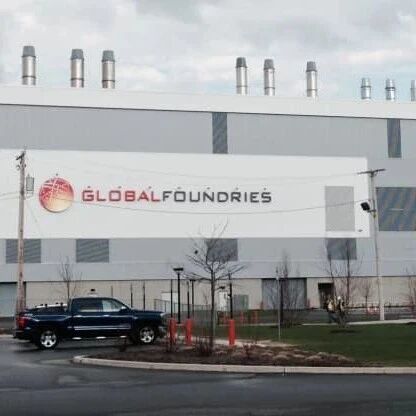
格芯裁员!
国芯网· 2025-08-28 12:12
Core Viewpoint - GlobalFoundries is undergoing a workforce adjustment at its Fab 8 facility in Saratoga County, New York, aimed at enhancing operational productivity and preparing for long-term growth, despite ongoing expansion efforts costing $16 billion [1][3]. Group 1: Workforce Adjustment - The specific number of affected employees and their roles remain unclear, but the adjustment is likely a structural optimization rather than a large-scale layoff, as indicated by the company's spokesperson [3]. - Over the past year, Fab 8 has added 150 semiconductor process engineers while reducing 80 traditional assembly positions, reflecting a shift towards automation and higher skill requirements [3]. Group 2: Cost and Efficiency Improvements - The workforce changes have led to a reduction in labor costs per wafer, decreasing from $120 in 2024 to $100 in 2025, while improving production efficiency with wafer yield increasing from 82% to 88% [3]. Group 3: Production Capacity and Orders - Fab 8 serves as GlobalFoundries' advanced process capacity base, primarily producing AI GPUs and automotive sensor chips with significant order growth; for instance, AI GPU wafer production for NVIDIA is expected to increase by 40% in the first half of 2025 compared to the same period in 2024, and automotive sensor chip production for Tesla is projected to grow by 35% [4].