美元强势

Search documents
长江有色:5日铜价暴跌 整体现货交投缺乏亮点
Xin Lang Cai Jing· 2026-02-05 07:52
Group 1 - The core viewpoint of the articles indicates a significant decline in copper prices, driven by a strong US dollar and weakening demand due to seasonal factors and economic data [1][2][3] - The main copper futures contract on the Shanghai Futures Exchange opened at 104,000 yuan/ton and closed at 100,980 yuan/ton, down 3.76% from the previous day [1] - The domestic spot copper prices also fell sharply, with the price for 1 copper reported at 101,260 yuan/ton, a decrease of 3,760 yuan [1] Group 2 - Macro factors include a hawkish stance from the Federal Reserve, which is expected to support the US dollar and increase the cost of copper for non-US currency holders, thereby suppressing speculative demand [2] - Economic data showed that the US ADP added only 22,000 jobs in January, significantly below the expected 48,000, indicating a slowdown in the labor market [2] - Despite the bearish short-term outlook, there are long-term supportive factors for copper prices, such as ongoing supply tightness from mine closures and increased demand from global energy transitions and AI [2] Group 3 - The current trading environment for copper is characterized by low activity, with sellers reluctant to lower prices and buyers showing little interest in high-priced copper [3] - The expectation of a strong dollar and the upcoming Chinese New Year are contributing to a lack of trading momentum, with copper inventories continuing to accumulate [3] - Short-term price fluctuations are anticipated to remain within a high range, with a focus on the support level around 99,000 yuan [3]


金银连日回调受美元强势压制 全周涨幅仍可期
Jin Tou Wang· 2026-01-16 06:29
Group 1 - The core viewpoint of the articles indicates that strong U.S. economic data has led to a rise in the U.S. dollar index, resulting in a decline in gold and silver prices for the second consecutive trading day [1][2] - Gold prices fell by 0.53% to $4591.32 per ounce, while silver prices saw a significant drop of 3% to $89.48 per ounce during the trading session [1] - The latest data shows that initial jobless claims in the U.S. unexpectedly decreased to 198,000, significantly lower than the market expectation of 215,000, which boosted confidence in the resilience of the U.S. economy [1] Group 2 - The strong performance of the U.S. dollar, which reached a six-week high of 99.49, has put pressure on gold prices, as gold is priced in dollars [1] - A reduction in geopolitical tensions, particularly comments from President Trump regarding Iran's handling of protests, has diminished the safe-haven demand for gold [1] - Despite recent declines, gold is expected to achieve a cumulative increase of nearly 2% for the week, while silver is projected to have a cumulative increase of approximately 13% for the same period [1]
杨华曌:美联储降息预期与美元强势交织 黄金价格为何冲高后回落
Xin Lang Cai Jing· 2026-01-14 09:48
Core Viewpoint - Gold prices reached a historical high of $4634.33 per ounce on January 14 but quickly retreated to around $4586, raising investor concerns about the potential end of the gold bull market [1][5] Economic Indicators - The U.S. December Consumer Price Index (CPI) showed a month-on-month increase of 0.3% and a year-on-year increase of 2.7%, both below analyst expectations [1][5] - Core CPI rose 0.2% month-on-month and 2.6% year-on-year, also underperforming against forecasts [1][5] - The market anticipates two rate cuts from the Federal Reserve this year, with a 27.4% probability of at least a 25 basis point cut in March [1][5] Market Reactions - Despite the favorable inflation data for gold bulls, the market's reaction was mixed, indicating concerns about economic cooling and the Fed's cautious approach [2][6] - U.S. Treasury yields saw a mild decline, with the 10-year yield at 4.175% and the 30-year yield at 4.823%, but this did not translate into strong support for gold [7] - The breakeven yields for five-year and ten-year inflation-protected securities rose to 2.368% and 2.3%, suggesting that the market expects future inflation to be manageable, reducing gold's appeal as an inflation hedge [7] Currency Impact - The U.S. dollar index rebounded by 0.3% to 99.18, bolstered by strong employment data from the previous week [3][7] - Following the inflation data release, the dollar initially dipped but quickly regained strength, enhancing its attractiveness against other currencies [3][7] - A strong dollar increases the holding cost of gold priced in dollars, pressuring international buyers and contributing to the price drop from record highs [3][7]
金晟富:1.14黄金高位震荡关注调整机会!日内黄金分析参考
Sou Hu Cai Jing· 2026-01-14 02:29
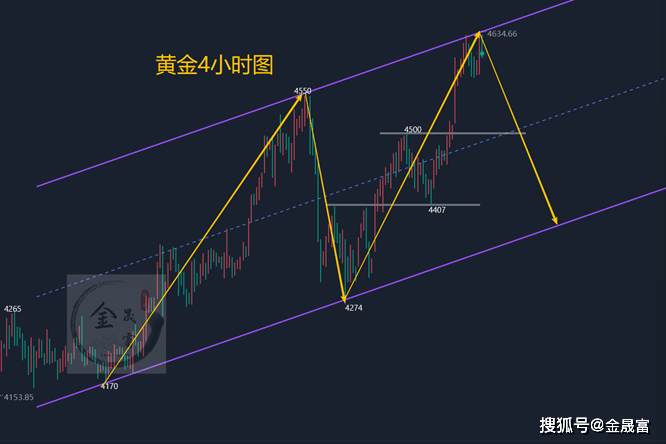
Core Viewpoint - The recent fluctuations in gold prices are influenced by the strong rebound of the US dollar, which has raised concerns about the potential peak of the gold market, despite a supportive low inflation environment for gold prices [2][3]. Group 1: Gold Market Analysis - On January 14, gold prices experienced a slight increase, trading around $4617 per ounce, after reaching a historical high of $4634.33 per ounce on January 13, before closing at approximately $4586 [1]. - The US dollar index rose by 0.3% to 99.18, following strong employment data, which has increased the dollar's attractiveness and subsequently raised the holding costs of gold for international buyers [2]. - The release of the US Consumer Price Index (CPI) for December showed mild inflation, which was expected to support gold prices but instead led to a complex market reaction, causing gold to retreat from its highs [2]. Group 2: Technical Analysis - The technical analysis indicates that gold is currently in a consolidation phase, with resistance at $4625 and potential for further upward movement if this level is breached [3]. - Short-term indicators suggest a bearish sentiment, with the possibility of a price drop to around $4520 if the support level at $4570 is broken [5]. - The market is advised to focus on upcoming economic data releases, including the Producer Price Index (PPI) and retail sales, which could further influence gold and dollar movements [2]. Group 3: Trading Strategies - Suggested trading strategies include selling on rebounds near $4620-$4625 with a target of $4580-$4550, and buying on dips around $4520-$4525 with a target of $4550-$4570 [6]. - Emphasis is placed on strict risk management, including setting stop-loss orders to mitigate potential losses in volatile market conditions [6].
镍、不锈钢产业链周报-20260112
Dong Ya Qi Huo· 2026-01-12 02:07
Report Overview - Report Title: Nickel Stainless Steel Industry Chain Weekly Report - Report Date: January 12, 2026 1. Report Industry Investment Rating - Not provided in the given content 2. Core Viewpoints Bullish Factors - Indonesia's production cut plan: Indonesia plans to reduce nickel ore production by 34%, leading to expectations of supply tightening and stimulating a rebound and limit - up in futures prices [3] - Recovery in stainless steel demand: The strong performance of stainless steel mill prices, along with the recovery of terminal demand, supports the upward space for nickel prices despite high inventory costs [3] Bearish Factors - Strong US dollar: The continuous strengthening of the US dollar index reduces the pricing competitiveness of commodities and suppresses the price performance of non - ferrous metals [3] - High inventory: Global nickel inventories continue to accumulate, especially the high level of visible inventories, weakening market concerns about supply - demand tightness [3] Trading Advisory Viewpoint - Although Indonesia's policy stimulus boosts expectations, the improvement in fundamentals is limited. It is recommended to stay on the sidelines and pay attention to the actual implementation of policies [3] 3. Summary by Relevant Catalogs Market Data - **Nickel Futures**: The latest value of the main contract of Shanghai nickel is 139,090 yuan/ton, with a weekly decrease of 710 yuan and a weekly decline of 0.51%. Other contracts like Shanghai nickel continuous one, two, and three have different price changes and percentage increases. LME nickel 3M is at 17,700 dollars/ton, with a weekly increase of 410 dollars and a 3.60% increase [4] - **Stainless Steel Futures**: The main contract of stainless steel is at 13,860 yuan/ton, with a weekly increase of 465 yuan and a 3% increase. Other contracts also show price increases. The trading volume and open interest have significant increases [5] - **Spot Prices**: The prices of金川 nickel, imported nickel, 1 electrolytic nickel, nickel beans, and electrowon nickel have all decreased by 7,150 yuan/ton, with percentage declines ranging from 4.67% to 4.96% [5] - **Inventory Data**: Domestic social nickel inventory is 61,046 tons, an increase of 2,126 tons; LME nickel inventory is 284,790 tons, an increase of 8,490 tons; stainless steel social inventory is 854,600 tons, a decrease of 18,000 tons; nickel pig iron inventory is 29,346 tons, a decrease of 879 tons [7] Supply - Side Information - **Primary Nickel Supply**: Information on China's refined nickel monthly production, primary nickel monthly total supply including imports shows seasonal trends [13] - **Upstream Nickel Ore**: The average price of Philippine laterite nickel ore 1.5% (FOB), China's port nickel ore inventory, and the prices of different types of nickel pig iron (such as 8 - 12% and Ni≥14% Indonesian high - nickel pig iron) are presented with historical data [16][18] - **Nickel Iron Production**: China and Indonesia's nickel iron monthly production shows seasonal patterns [19][20] Downstream Information - **Nickel Sulfate**: The average price of battery - grade nickel sulfate, its premium over primary nickel, production profit margins, monthly production, and the monthly production capacity of ternary precursors are all presented with historical data [22][24][25] - **Stainless Steel**: The profit margin of China's 304 stainless steel cold - rolled coils, monthly production, and inventory show seasonal trends [28][30][31]
降息50基点还暴涨 3.6%!美元疯涨背后,普通人该抄底还是逃离?
Sou Hu Cai Jing· 2025-11-26 05:17
Core Viewpoint - The recent strength of the US dollar, despite two interest rate cuts by the Federal Reserve, is primarily supported by the resilience of the US economy, inflation, and employment data [1][3][30]. Economic Indicators - The Federal Reserve cut interest rates by a total of 50 basis points from September to November, yet the dollar index rose from 96.64 to 100.15, driven by unexpected inflation resilience, which remained at 3.0% in September, exceeding the 2% target [5][15]. - Non-farm payrolls in September surged to 119,000, significantly higher than the 73,000 and 22,000 in July and August, respectively, indicating a rebound in sectors like healthcare and education [6]. - The unemployment rate increased from 4.0% to 4.4%, reflecting a complex labor market [7]. Federal Reserve Dynamics - Internal disagreements within the Federal Reserve regarding future rate cuts have created uncertainty in the market, with a 71% probability of a 25 basis point cut in December and a 29% chance of maintaining the current rate [11][30]. - The 10-year US Treasury yield remains at 4.06%, with real yields exceeding 1.8%, maintaining attractiveness for investors [11]. Market Liquidity - The US government shutdown has restricted liquidity, while the Federal Reserve continues to reduce its balance sheet, leading to a tightening of liquidity conditions that further supports the dollar [15][30]. Economic Growth - The US GDP growth rate for Q3 is projected to reach 4.2%, with private investment growth revised upward from 1.3% to 4.9%, indicating a strong economic foundation for the dollar [15][30]. Global Economic Context - The strength of the dollar is also influenced by the poor performance of other major currencies, such as the euro, yen, and pound, which are struggling with their own economic challenges [17][19][21][23]. - The eurozone's GDP growth is forecasted at 1.4%, but persistent inflation pressures hinder its recovery, while Japan faces a "high inflation, weak growth" cycle [19][21]. - The UK is experiencing high inflation at 3.6% and rising unemployment, making further appreciation of the pound against the dollar unlikely [23]. Trade Balance - The US trade deficit is narrowing, with a reported deficit of $328.1 billion from April to August 2025, a decrease of 11.7% year-over-year, primarily due to a decline in goods imports [26][28]. - The average monthly imports have decreased by 18.3% compared to the first three months of the year, while the US economy continues to grow, which is a crucial factor supporting the dollar [28]. Conclusion - The current high volatility of the dollar is a result of the resilience of the US economy, global economic divergence, and policy disagreements, suggesting that the market should remain patient regarding expectations of a weaker dollar [30][33].

多位地区联储主席对过度降息表露谨慎立场 美元指数连续第三日上涨
Sou Hu Cai Jing· 2025-11-01 00:20
Group 1 - The Federal Reserve officials expressed dissatisfaction with the recent interest rate cut decision, indicating a growing internal division regarding future rate paths [1][2] - Several officials stated that the current U.S. labor market remains resilient and inflation levels are still high, suggesting that a 25 basis point cut was unnecessary [1][2] - Dallas Fed President Logan emphasized that she would struggle to support another rate cut in December unless there is a significant drop in inflation or a cooling labor market [1] Group 2 - Kansas City Fed President Schmidt criticized the notion of rate cuts, arguing that the U.S. economy still has momentum and that labor market pressures stem more from technological changes and demographic shifts rather than demand cooling [2] - The ongoing U.S. government shutdown has led to a halt in official economic data releases, increasing uncertainty among Fed policymakers and complicating future policy discussions [2] - The dollar index has risen for three consecutive days, reflecting a 1.6% increase this month, driven by Powell's comments dampening rate cut expectations and pressures in other major economies [2][3] Group 3 - The lack of official economic data has led to increased demand for the dollar as a safe haven, with some institutions reversing their bearish stance on the dollar due to perceived economic resilience [3] - Several investment banks predict that the dollar's strength may continue until the end of the year or even into early 2026, with rising bullish sentiment in the options market [3] - Asian currencies have generally weakened this month, with the Korean won and Japanese yen experiencing significant declines [3]
大跳水:金价跌破3900美元!这到底是牛市终结,还是倒车接人?
Sou Hu Cai Jing· 2025-10-29 02:15
Core Viewpoint - The recent sharp decline in gold prices is attributed to a combination of reduced risk appetite, a strong dollar, and technical selling triggered by algorithmic trading [3][4][6]. Group 1: Reasons for Gold Price Drop - Decreased risk appetite due to improved geopolitical signals from the US-China interactions and potential ceasefire talks in Ukraine, leading to reduced demand for gold as a safe-haven asset [3]. - A strong rebound in the dollar index, driven by expectations of adjustments in Japan's yield curve control, which increased the cost of holding gold priced in dollars [4]. - Technical selling pressure as gold prices surged from $2,624 to $4,381 in 2025, prompting algorithmic trading to trigger sell-offs once the price fell below the critical support level of $1,900 [4]. Group 2: Impact on Different Stakeholders - For consumers looking to buy gold jewelry, the price drop presents an opportunity, with prices at around 1,198 RMB per gram, down from 1,245 RMB, allowing for potential savings [6]. - Investors holding gold ETFs or paper gold should remain calm and not panic sell, as the market may stabilize [6]. - For those considering buying physical gold bars, a phased approach is recommended, with suggested entry points at $1,880 and $1,850 per ounce to mitigate risks [6]. Group 3: Market Outlook - Short-term outlook suggests continued pressure on gold prices due to geopolitical factors and a strong dollar, with potential dips to $1,850 [8]. - Long-term prospects remain positive, with central banks continuing to accumulate gold, and expectations of interest rate cuts in the future could enhance gold's attractiveness as an investment [9]. Group 4: Institutional Price Targets - Goldman Sachs projects gold prices could reach $4,900 by the end of 2026, while JPMorgan suggests extreme scenarios could push prices to $5,055 [10]. - Citigroup indicates that as long as global central bank purchases exceed 1,000 tons annually, gold prices will steadily rise above $2,200 [10]. Group 5: Investment Strategies - For consumers needing gold jewelry, it is advisable to observe the market for two weeks and consider buying if prices fall below 1,180 RMB per gram [11]. - Investors in gold bars should adopt a dollar-cost averaging strategy, buying in increments as prices decline [11]. - For paper gold or ETFs, setting a stop-loss at $1,880 is recommended, but panic selling is discouraged [11].
荷兰国际银行外汇分析师:美元的强势缺乏基本面支撑,若数据不配合,美元上行动能或难以为继
Xin Hua Cai Jing· 2025-09-03 13:43
Core Viewpoint - The strength of the US dollar lacks fundamental support, and if data does not align, the upward momentum of the dollar may be difficult to sustain [1] Group 1 - Francesco Pesole, a foreign exchange analyst at ING, expresses concerns about the sustainability of the US dollar's strength [1]

|安迪|&2025.8.18黄金原油分析:黄金向上反弹,短期等待压力测试!
Sou Hu Cai Jing· 2025-08-18 08:40
Group 1: Gold Market Analysis - Gold prices have rebounded over $30 from the support level of $3323, driven by expectations of a Federal Reserve rate cut in September and a decline in U.S. Treasury yields [2] - Technically, gold found support at the 61.8% Fibonacci retracement level of $3323 and quickly rebounded, breaking above the 4-hour 200-period moving average at $3346 [2] - If gold can maintain above the 50% retracement level of $3355, it may target the $3374 region and challenge the psychological level of $3400, potentially approaching the monthly high of $3408 [2] - The short-term technical outlook remains moderately bullish, but confirmation of a breakout is needed as the market is in a critical phase of bullish and bearish dynamics [2] Group 2: Oil Market Analysis - Oil prices have slightly declined due to the U.S. not imposing further restrictions on Russian energy exports, alleviating market concerns about supply disruptions [4] - Initial support for oil prices is around $61, while significant resistance remains at the $65 level [4] - If oil prices continue to trade below the 20-day moving average, the short-term trend may remain weak and volatile [4] - The downward pressure on oil prices is primarily due to a temporary easing of geopolitical uncertainties rather than significant changes in supply and demand [6] - Trump's statements provide a short-term buffer for the market, but any reconsideration of secondary sanctions could lead to a rapid rebound in oil prices [6] - Investor speculation regarding Federal Reserve rate cuts will continue to be a significant variable affecting the energy market [6]