金融多极化

Search documents
我国拒接美8500亿债务,华尔街震动的背后是一场持续18年的金融博弈
Sou Hu Cai Jing· 2026-01-02 11:52
Core Viewpoint - The article discusses a significant shift in the financial relationship between the United States and China, highlighting China's declining holdings of U.S. Treasury bonds and the implications of this trend for global finance and the U.S. economy [2][3][4]. Group 1: U.S. Treasury Bonds and China's Position - In December 2025, the U.S. Treasury proposed that China purchase $850 billion in new U.S. debt, while China has reduced its holdings from a peak of $1.3 trillion to $688.7 billion over the past 12 months [2]. - China's foreign trade as a percentage of GDP has decreased from 57% in 2008 to 35% in 2025, allowing China to be more assertive in its financial decisions [3]. - The U.S. federal debt surpassed $38 trillion in 2025, with annual interest payments exceeding $1 trillion, raising concerns about the sustainability of U.S. debt [3]. Group 2: Global Trends in Debt Holdings - In October 2025, Canada sold $56.7 billion in U.S. debt in a single month, while India and Japan also reduced their holdings, indicating a broader trend of global divestment from U.S. Treasury bonds [4]. - The dollar's share in global foreign exchange reserves has fallen to 56.32%, reflecting a structural decline in the dollar's credibility [4]. Group 3: China's Financial Strategies - China has increased its gold reserves to 74.09 million ounces, with gold now making up 8% of its official reserves, indicating a strategic shift towards gold as a financial asset [5]. - The use of the CIPS system for direct payments in RMB for international trade has surged, with RMB settlements in goods trade reaching 28% in the first half of 2025 [5]. - A "triangular swap" strategy is emerging, where Chinese entities exchange U.S. debt for infrastructure services in RMB, promoting the internationalization of the Chinese currency [6]. Group 4: Impact on Global Finance - The RMB has surpassed the euro to become the second-largest trade financing currency globally, with over 80 central banks including it in their foreign reserves [7]. - The total value of offshore RMB assets reached 10.42 trillion yuan in 2025, marking a new high and indicating increased global capital flows towards China [7]. - The article suggests that while the U.S. continues to rely on outdated financial strategies, China is establishing a new financial paradigm that diminishes the necessity of the dollar [8].

CIPS+金砖支付系统,开启人民币清算新时代
Sou Hu Cai Jing· 2025-12-10 12:21
Core Insights - The strategic collaboration between CIPS+ and BRICS PAY marks the first systematic integration of China's cross-border RMB clearing capabilities with the emerging BRICS currency settlement network, opening a new era for a "second international payment system" [1][8] - In the context of a profound reshaping of the international financial landscape, the existing dollar-dominated cross-border payment system faces multiple challenges, prompting countries, especially in the Global South, to seek a more independent and secure global payment network [1][6] - CIPS has become the most important RMB clearing infrastructure globally, while BRICS PAY aims to establish a de-dollarized framework for direct currency settlement, providing a viable alternative for global trade [1][5] CIPS+ Overview - CIPS+ serves as an innovative platform within the CIPS sandbox program, connecting cross-border payment systems with emerging international networks, and is crucial for expanding RMB cross-border clearing applications [3][9] - The underlying CIPS, led by the People's Bank of China, offers secure, efficient, and widely accessible RMB payment services, making it a key hub for enhancing RMB internationalization and national financial security [3][8] BRICS PAY System - The BRICS PAY system, driven by BRICS nations, aims to create a cross-border payment and currency settlement framework independent of the dollar and SWIFT networks [5][6] - Its core objective is to help member countries reduce reliance on a single currency and external clearing systems, thereby enhancing financial autonomy and system security [6][8] Synergy Between CIPS and BRICS PAY - The collaboration between CIPS and BRICS PAY is a natural synergy, with CIPS providing a global clearing foundation for RMB and BRICS PAY offering a broad network for local currency applications [8][9] - This partnership is expected to create a more extensive, cost-effective, and secure second global payment system, significantly impacting the structure and rules of future international trade [9][10] Future Implications - The integration of CIPS+ and BRICS PAY is set to accelerate the emergence of a new cross-border payment channel independent of the dollar system, contributing to a more independent, secure, and resilient payment option for Global South countries [9][11] - This collaboration is anticipated to enhance capital flow stability, optimize trade structures, and deepen international cooperation, injecting new growth momentum into the global economy [10][11]

特朗普还没启程访华,中国突然公布黄金库存,美国霸权地位要不保
Sou Hu Cai Jing· 2025-12-08 06:43
Core Viewpoint - China is increasing its gold reserves while reducing its holdings of US Treasury bonds, signaling a shift in its financial strategy amidst global economic uncertainties and the declining credibility of the US dollar [3][10][25]. Group 1: China's Gold Reserves - On December 7, the People's Bank of China announced its latest gold reserve data, revealing a total of approximately 21,013 tons, marking 13 consecutive months of increases [6][10]. - The continuous accumulation of gold is seen as a strategic move to diversify foreign reserves and enhance financial security, especially as the US faces a debt crisis [10][12]. - China's gold purchases are occurring despite rising international gold prices, indicating a commitment to strengthening its financial position [10][12]. Group 2: US Debt and Financial Stability - The US national debt surpassed $38 trillion in October, with interest payments nearing 20% of the federal budget, raising concerns about the safety of US Treasury bonds [6][8]. - The Federal Reserve's interest rate cuts have failed to restore market confidence, further damaging the dollar's credibility [8][14]. - There is widespread speculation that Trump's upcoming visit to China may involve requests for China to support US debt, but China's actions suggest a reluctance to comply [8][25]. Group 3: Global Financial Trends - The International Monetary Fund (IMF) reported that the dollar's share in global foreign exchange reserves fell to 56.32%, the lowest in 30 years, indicating a decline in its dominance [14][20]. - Emerging economies, including India and Saudi Arabia, are increasingly diversifying their reserves away from the dollar, with significant increases in gold repatriation and local currency settlements [14][16]. - The trend towards de-dollarization is evident as countries seek to establish a multi-polar financial system, reducing reliance on the US dollar [20][23]. Group 4: China's Financial Strategy - China is actively promoting the internationalization of the renminbi, with significant increases in the use of the currency for trade settlements, particularly in commodities like iron ore and oil [18][20]. - The growth of China's gold reserves is part of a broader strategy to enhance its influence in global finance and provide a financial safety net for neighboring countries [20][27]. - The recent surge in demand for Chinese sovereign bonds, with a subscription rate of 30 times for a $4 billion issuance, reflects growing confidence in China's financial stability compared to the US [23][25].

普京抛售黄金藏玄机?疑剑挑美元“旧秩序”,背后有三大信号
Sou Hu Cai Jing· 2025-11-30 11:59
Core Viewpoint - Russia has shifted from accumulating gold to selling a significant portion of its reserves, indicating deeper strategic motives behind this decision [2][5]. Group 1: Reasons for Selling Gold - The immediate reason for Russia's gold sales appears to be a need for liquidity due to financial pressures from Western sanctions following the Ukraine conflict [2]. - However, this explanation may oversimplify the situation, as Russia continues to generate substantial income from energy and food exports, and has developed its own financial systems [3]. Group 2: Strategic Implications - The sale of gold may signal Russia's loss of trust in the Western-dominated financial system, potentially influencing other nations' perceptions of these systems [5]. - By selling gold, Russia aims to disrupt international gold prices and challenge the existing financial market order led by the West [5]. - The proceeds from gold sales are likely intended to accelerate the establishment of a trade and settlement system independent of the US dollar, particularly with emerging market countries [5]. Group 3: Broader Economic Context - There is speculation that Russia anticipates an impending global financial crisis and prefers to proactively manage its assets rather than passively hold gold during a downturn [6]. - The current global environment, characterized by high inflation and geopolitical tensions, provides a unique opportunity for nations seeking to alter the status quo [6]. Group 4: Future Outlook - If the challenge to dollar hegemony leads to a more multipolar financial system, international trade may evolve into a more complex and diverse landscape [7]. - The ongoing shifts in financial order will likely result in significant market volatility and economic pain globally [7].
金价破4200美元!全球央行和ETF合力扫货,美债资产受冷落
2 1 Shi Ji Jing Ji Bao Dao· 2025-10-15 11:13
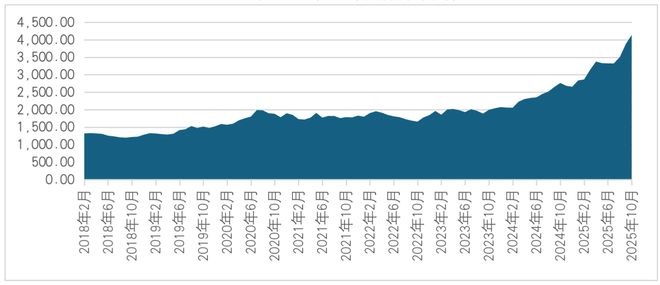
Core Viewpoint - The significant rise in gold prices this year, surpassing $4,000 per ounce, is driven by increased investment demand amid geopolitical risks and inflation concerns, leading to a renewed interest in gold as a safe-haven asset [1][2]. Group 1: Gold Price Trends - Gold prices have surged dramatically, with a 60.13% increase in 2023, while silver has risen by 72.57%, outperforming major indices like the S&P 500 and Nasdaq [1]. - As of October 15, 2023, gold reached a peak of $4,210 per ounce, marking a substantial increase from earlier in the year [1]. Group 2: Central Bank and ETF Investments - Central banks and gold ETFs are major contributors to the rising gold prices, with significant increases in gold reserves reported among emerging market economies [5][6]. - From 2018 to 2025, countries like China, Poland, Turkey, India, and Russia have collectively increased their gold holdings by 1,714.99 tons, indicating a strategic shift towards gold for reserve diversification [4][5]. Group 3: Global Monetary Dynamics - The decline in the dollar's dominance in the global monetary system is evident, with its share in global reserves dropping from 62.79% in 2018 to 56.32% in 2025 [8][10]. - The trend towards de-dollarization is accelerating, with a growing multipolar currency system emerging, including the rise of the yuan in global forex trading [11][12]. Group 4: Future Outlook - The sustainability of the current gold price rally will depend on the purchasing behavior of central banks and ETFs, as well as their assessments of U.S. economic conditions and geopolitical risks [10]. - The long-term rise in gold prices reflects a broader transformation in the international financial system, driven by a collective shift among central banks and investors towards gold as a stable asset [11][12].
美元体系的内在困境:金融权力能否撼动
Sou Hu Cai Jing· 2025-07-11 01:19
Core Viewpoint - The "Mar-a-Lago Agreement" aims to restructure global economic governance through high tariffs, dollar depreciation, debt swaps, multilateral currency negotiations, and security fees, indicating potential challenges for the dollar system [1] Group 1: Dollar System Challenges - The internal dilemma of the dollar's reserve status stems from its provision of global liquidity since the Bretton Woods system, leading to persistent trade and current account deficits [6] - The demand for dollars and U.S. Treasury bonds is driven by strategic, risk-averse, and national security considerations rather than trade balance [6] - The implementation of the "Mar-a-Lago Agreement" could trigger a sell-off of dollar assets, although the current domestic holding of U.S. Treasuries exceeds foreign holdings, which may mitigate drastic market reactions [6] Group 2: Trade Policies and Currency Dynamics - High tariff policies may narrow the U.S. trade deficit in the short term but cannot fundamentally alter trade structures or address the hollowing out of manufacturing [11] - A single trade policy is insufficient to disrupt the currency landscape; a macro-level approach involving coordinated policies across trade, fiscal, monetary, and industrial sectors is necessary [15] - Even if trade balances change, the distribution of international monetary power may not shift correspondingly due to institutional inertia [15] Group 3: Global Monetary Governance - The global monetary governance structure will not rapidly restructure due to short-term maneuvers; it requires a systematic replacement path involving technology, governance capabilities, and legal foundations [16] - The "Mar-a-Lago Agreement" could negatively impact China’s economy and industries, particularly in electronics, metallurgy, and transportation equipment sectors [16] - Under unilateral pressure and currency depreciation, China's manufacturing sectors, especially in high-tech fields like semiconductors, may face significant losses [20] Group 4: Future of Currency Systems - The U.S. is attempting to create a new global currency anchor system involving "dollars + gold + digital dollars," necessitating China to propose systematic institutional options for participation [21] - The current trade disputes are evolving into currency wars, highlighting the need for the renminbi to establish its own safe asset attributes and financial institutional discourse power to challenge the dollar's dominance [21]