金融工程

Search documents
金融工程周报:转债策略收益表现偏强-20260330
Guo Tou Qi Huo· 2026-03-30 13:08
Report Investment Rating - The operation rating of CITIC Five-Style - Stable is ★☆☆ [4] Core Viewpoints - In the week ending March 27, 2026, the weekly returns of Tonglian All A (Shanghai, Shenzhen, Beijing), ChinaBond Composite Bond, and Nanhua Commodity Index were -0.76%, 0.06%, and -0.25% respectively. The convertible bond strategy in the public fund market performed well with a weekly return rate of 0.60%, while the equity long strategy index continued to decline, and most neutral strategy products rose. The pure - bond strategy index closed up, and the medium - to - long - term return was stronger than that of short - term pure bonds. Among commodities, the energy and chemical ETF rose 3.35%, the precious metal ETF net value continued to decline, and the non - ferrous metal ETF's return rebounded slightly [3] - Among the CITIC Five - Style indices, the stable and cyclical styles closed up, while the other styles closed down. The style rotation chart shows that the relative strength of the cyclical style has increased significantly recently, and the relative strength momentum of the consumption style has declined marginally. In the public fund pool, the growth and financial style fund indices outperformed the benchmark, with weekly excess return rates of 0.89% and 0.64% respectively. The market's bias towards the growth and financial styles has increased. This week, the market congestion index rebounded, and the current financial style congestion is in the medium - to - high percentile range of the past year [3] - Among the Barra factors, the short - term momentum factor performed strongly in the past week, the return of the profitability factor adjusted, the winning rate of the liquidity factor continued to decline, and the valuation and scale factors rebounded marginally. This week, the cross - section rotation speed of factors increased month - on - month and is currently in the medium percentile range of the past year [3] - According to the latest scoring results of the style timing model, the financial style rebounded marginally this week, and the current signal continues to be the stable style. The return rate of the style timing strategy last week was 0.56%, and the excess return rate compared with the benchmark balanced allocation was 1.13% [3] Summary by Directory Fund Market Review - **Market Index Returns**: The weekly returns of Tonglian All A (Shanghai, Shenzhen, Beijing), ChinaBond Composite Bond, and Nanhua Commodity Index were -0.76%, 0.06%, and -0.25% respectively [3] - **Public Fund Strategy Performance**: The convertible bond strategy had a weekly return of 0.60%. The equity long strategy index continued to decline, most neutral strategy products rose. The pure - bond strategy index closed up, with medium - to - long - term returns stronger than short - term pure bonds. The energy and chemical ETF rose 3.35%, the precious metal ETF net value continued to decline, and the non - ferrous metal ETF's return rebounded slightly [3] CITIC Five - Style Analysis - **Style Index Performance**: The stable and cyclical styles closed up, while the other styles closed down. The relative strength of the cyclical style increased significantly, and the relative strength momentum of the consumption style declined marginally [3] - **Fund Pool Performance**: The growth and financial style fund indices outperformed the benchmark, with weekly excess return rates of 0.89% and 0.64% respectively. The market's preference for growth and financial styles increased [3] - **Style Congestion**: The market congestion index rebounded, and the current financial style congestion is in the medium - to - high percentile range of the past year [3] Barra Factor Analysis - **Factor Performance**: The short - term momentum factor performed strongly, the return of the profitability factor adjusted, the winning rate of the liquidity factor continued to decline, and the valuation and scale factors rebounded marginally [3] - **Factor Rotation Speed**: The cross - section rotation speed of factors increased month - on - month and is currently in the medium percentile range of the past year [3] Style Timing Model - The financial style rebounded marginally this week, and the current signal continues to be the stable style. The return rate of the style timing strategy last week was 0.56%, and the excess return rate compared with the benchmark balanced allocation was 1.13% [3]
金融工程周报:期债持仓量因子回升-20260330
Guo Tou Qi Huo· 2026-03-30 11:50
1. Report Industry Investment Ratings - Stock index: ☆☆☆ [1] - Treasury bonds: ☆☆☆ [1] 2. Core Views of the Report - As of the week ending March 27, IH2604 declined 1.37%, IF2604 fell 0.46%, IC2603 rose 1.38%, and IM2603 increased 0.92%. The small - cap style in the market has somewhat recovered, with signs of market cooling and low risk appetite [1]. - In terms of style, the risk of short - term liquidity shocks has risen, causing concerns about economic stagflation and recession, so funds tend to wait and seek safety [1]. - From the perspective of high - frequency macro - fundamental factor scores, for stock index futures, the inflation indicator scored 7 points, liquidity 9 points, valuation 11 points, and market sentiment 8 points. For bond futures, the inflation indicator scored 5 points, liquidity 9 points, and market sentiment 6 points [1]. - The annualized basis rates of IF, IC, IM, and IH current - quarter contracts are - 1.05%, - 4.62%, - 7.08%, and - 10.08% respectively. The hedging costs of each variety have increased compared to last week [1]. - The net value of the financial derivatives quantitative CTA strategy remained unchanged last week. In the long - term, the better - than - expected industrial enterprise profits have a certain boosting effect on the long - term of IC and IF, but the contribution ratio of long - term factors has recently decreased. In the short - term, geopolitical factors have expanded the impact on market liquidity, the medium - and high - frequency real estate market has slightly rebounded, the short - term factors of stock index futures have narrowed in differentiation, showing a continuous decline overall. The risk appetite has marginally recovered to the neutral range compared to last week. The current overall comprehensive signal is neutral and volatile. For bond futures, the capital market remains loose, but institutional allocations are relatively cautious about the long - end. The stock - bond seesaw effect is not significant. The bond market has significantly priced in the inflation expectations caused by geopolitics. The strength of the T position factor is relatively low, while TF has relatively strong support, and the comprehensive signal is also neutral and volatile [1]. 3. Summary by Relevant Catalogs 3.1 Macro - fundamental Medium - and High - frequency Factor Scores - Among economic kinetic energy indicators, the weekly increases of blast furnace开工率,开工率 of PTA in China, Shandong refinery开工率,开工率 of automobile tires, and开工率 of downstream looms for polyester filament in the Yangtze River Delta are 0.18%, 0.18%, 6.33%, 66.79%, and 347.36% respectively. The stock index futures score is 6 points, and the bond futures score is 7 points [2]. 3.2 Inflation Indicators - The weekly changes of various inflation - related indicators vary, such as the - 1.38% decline in the vegetable basket product wholesale price 200 index, and the 1.67% increase in the market price of 1 electrolytic copper. The stock index futures score is 7 points, and the bond futures score is 5 points [3]. 3.3 Liquidity - The weekly changes of liquidity - related indicators such as DR007, DR001, etc. are different. The stock index futures score for liquidity is 9 points [4]. 3.4 Index Valuation - The weekly changes of valuation indicators such as PE, PS, etc. are shown, with the stock index futures score being 10 points [5]. 3.5 Market Sentiment - **Stock Index Market Sentiment**: The stock index market sentiment indicators such as margin trading balance have different weekly changes, and the bond futures score is 8 points [6]. - **Bond Market Sentiment**: The bond market sentiment indicators such as the 10 - year CDB bond yield have different weekly changes, and the bond futures score is 6 points [7]. 3.6 Strategy Introduction - **Multi - strategy for Stock and Bond Futures**: The product pool includes stock index futures and bond futures. The short - term model focuses on market style, external factors, and capital market high - frequency data. The long - term model focuses on market expectations and macro - economic low - frequency data. The position factor is synthesized based on institutional long and short positions [16]. - **Treasury Bond Futures Cross - variety Arbitrage Strategy**: This strategy is based on the signal resonance of the fundamental three - factor model and the trend regression model. The fundamental three - factor model decomposes the interest rate term structure into level, slope, and curvature. The signals are divided into three types: '1' (large spread may decrease), '0' (uncertain spread change trend or maintain oscillation), '- 1' (large spread may increase). The trend regression model is used to filter signals. In actual operation, the 10 - 5Y spread is adjusted with a duration - neutral ratio of 1:1.8 [20]. 3.7 Signal and Performance Data - **Multi - strategy Signal**: The short - term, long - term, and comprehensive signals of IF, IH, IC, IM, T, and TF are provided, along with relevant trading rules [17]. - **Last Week's Performance**: The data from March 23 to 27, 2026, shows that the positions of all contracts were 0 [19]. - **Treasury Bond Futures Cross - variety Arbitrage Signal**: The N - S model and trend regression model signals of TF and T main contracts from March 23 to 27, 2026, are presented [23].
腾讯需要一场“叙事重启”
投中网· 2026-03-24 08:14
Core Viewpoint - Tencent's recent financial report showed an 8% year-on-year revenue growth and over 30% increase in net profit, with strong performance in gaming, advertising, and fintech sectors, alongside substantial cash reserves. However, the stock price fell significantly due to a disconnect between the company's narrative and shareholder expectations [6][7][10]. Group 1: Financial Performance - Tencent reported a revenue increase of 8% year-on-year and a net profit increase of over 30% for the fourth quarter and the entire year of 2024 [6]. - The company has a robust cash flow, with net cash reserves amounting to several hundred billion RMB [6]. Group 2: Shareholder Reaction - Despite the strong financial results, Tencent's stock price dropped nearly 6% intraday and closed down over 4%, resulting in a market value loss of more than 150 billion HKD [7]. - The decline in stock price is attributed to a narrative inconsistency, leading to a cognitive dissonance among shareholders [8][10]. Group 3: Old Narrative - Tencent's previous narrative emphasized a "moat + financial engineering" strategy, highlighting stable cash flows from gaming and social media, the potential of AI, and a commitment to shareholder returns through dividends and buybacks [12][13][15]. - The company had positioned itself as a "core asset" in the Hong Kong stock market, with a price-to-earnings ratio stabilizing between 15-18 times [16]. Group 4: New Signals - The recent financial report included announcements of significant changes: a reduction in the buyback scale for 2025 and a substantial increase in capital expenditures focused on AI infrastructure and development [18][19]. - This shift represents a 180-degree turn in the company's narrative, prioritizing AI investments over shareholder returns [20][21]. Group 5: Shareholder Expectations - Existing shareholders had anticipated stable returns based on Tencent's strong cash flow, expecting annual returns of 150-200 billion HKD through dividends and buybacks [24]. - The sudden pivot to prioritize AI investments has caused frustration among these shareholders, who fear a departure from the previously established financial strategy [25][32]. Group 6: Competitive Landscape - Tencent faces significant competition in the AI space, with rivals like ByteDance and Alibaba already establishing strong positions [28]. - The market perceives Tencent's late commitment to AI as a disadvantage, raising concerns about its ability to compete effectively against established players [30][31]. Group 7: Narrative Consistency - The article emphasizes that the core issue for Tencent is not merely the reduction in buybacks or the amount allocated to AI, but rather the lack of a coherent and credible new narrative from management [38]. - Historical examples illustrate that companies often suffer when their narratives become disconnected from reality, leading to significant market corrections [35][36]. Group 8: Future Outlook - For Tencent to regain investor confidence, it must establish a clear and consistent narrative regarding its AI strategy, including specific commitments to shareholder returns and competitive positioning [43][44]. - The company has the potential to leverage its strong cash flow and user base, but it must articulate a convincing plan to navigate the competitive AI landscape [41][42].



SoFi Rises Monday as Short-Seller Report Keeps SoFi Technologies in the Spotlight
247Wallst· 2026-03-23 14:57
Core Viewpoint - SoFi Technologies is experiencing stock volatility due to a short-seller report alleging significant accounting issues, while insider buying by the CEO suggests confidence in the company's undervalued status amid a challenging market environment [2][5][7]. Group 1: Stock Performance and Insider Activity - SoFi Technologies (SOFI) shares rose 2% to surpass $17, following CEO Anthony Noto's purchase of 28,900 shares at $17 and 56,000 shares at $18, indicating insider confidence despite a 35% year-to-date decline [2][4]. - The stock has been under pressure due to a short-seller report from Muddy Waters Research, which claimed $312 million in unrecorded debt and accounting irregularities [2][5][7]. Group 2: Business Fundamentals - SoFi Technologies reported its first billion-dollar quarter in Q4 2025, with revenue of $1.025 billion and EPS of $0.13, exceeding estimates [11]. - The company’s member count reached 13.7 million, a 35% year-over-year increase, with 1.03 million new members added in Q4 2025, indicating strong growth potential [12]. Group 3: Short-Seller Allegations and Company Response - Muddy Waters accused SoFi of using questionable accounting practices, including off-balance-sheet structures, and claimed a higher personal loan charge-off rate than reported [7][8]. - SoFi Technologies responded by labeling the report as "inaccurate and misleading" and announced plans to explore legal action against Muddy Waters [8]. Group 4: Market Outlook and Analyst Sentiment - The next significant data point will be the Q1 2026 earnings report on April 28, where SoFi has guided for approximately $1.04 billion in adjusted net revenue and $0.12 adjusted EPS [17]. - Wall Street's average analyst target for SoFi stock is around $26, with a consensus rating of "Hold" from 22 analysts [15].


金融工程周报:期债持仓量因子维持低位-20260316
Guo Tou Qi Huo· 2026-03-16 11:11
1. Report Industry Investment Ratings - Stock index: ☆☆☆ - Treasury bonds: ☆☆☆ [1] 2. Core Views of the Report - Market cools with a decline in risk preference, and the large - cap style is dominant. The risk of short - term liquidity shock rises. The current overall comprehensive signal is neutral and volatile [1]. - For stock index futures, long - term factors have a certain boosting effect on IC and IM, but their contribution has decreased recently. Short - term factors show a slight decline. For Treasury bond futures, the capital situation remains loose at the beginning of the year, but institutional allocation is slow, and the stock - bond seesaw effect is significant [1]. 3. Summary by Relevant Catalogs 3.1 Macroeconomic Fundamental Medium - High - Frequency Factor Scores - Economic kinetic energy indicators such as blast furnace operating rates and PTA operating rates have different changes. The stock index futures score is 6, and the Treasury bond futures score is 7 [2]. 3.2 Inflation Indicators - Various inflation - related indicators have different weekly changes. The stock index futures score is 7, and the Treasury bond futures score is 5 [3]. 3.3 Liquidity - Liquidity - related indicators such as DR007 and DR001 have different changes. The stock index futures score is 9 [4]. 3.4 Index Valuation - Index valuation indicators like PE, PS, and others have different changes. The stock index futures score is 10 [5]. 3.5 Market Sentiment: Stock Index - Stock - index - related market sentiment indicators such as margin trading balances and trading volumes have different changes. The Treasury bond futures score is 9 [6]. 3.6 Market Sentiment: Bond - Bond - related market sentiment indicators such as government bond yields and volatility indices have different changes. The Treasury bond futures score is 6 [7]. 3.7 Strategy Introduction - The product pool includes stock index futures and Treasury bond futures. The strategy uses multi - strategy models for contract allocation, with short - term models focusing on high - frequency data and long - term models focusing on low - frequency macroeconomic indicators [15]. 3.8 Prediction Signals - As of last Friday, different models (short - term, long - term, and based on position) of various contract main forces (IF, IH, IC, IM, T, TF) have corresponding signals, and the comprehensive signals are calculated by weighted synthesis [16]. 3.9 Last Week's Situation - From March 9 - 13, 2026, the trading situations of various contract main forces (IF, IH, IC, IM, T, TF) are recorded [18]. 3.10 Treasury Bond Futures Cross - Variety Arbitrage Strategy - The strategy is based on the signal resonance of the fundamental three - factor model and the trend regression model. It uses the Nelson - Siegel model to decompose the yield curve and combines PCA and logistic regression. The actual operation uses a 1:1.8 ratio for 10 - 5Y spread adjustment [19]. 3.11 Market Quotes and Trading Signals - For TF and T main contracts from March 9 - 13, 2026, the N - S model signals and trend regression model signals are recorded [22]
红利风格择时周报
GUOTAI HAITONG SECURITIES· 2026-03-15 13:25
Investment Rating - The report maintains a negative investment rating for the dividend style timing model, with a composite factor value of -0.39 for the week of March 9 to March 13, 2026, which is consistent with the previous week's value of -0.38, indicating no bullish signal has been issued [1][6]. Core Insights - The recent performance of dividends has been relatively good, with the momentum factor contributing positively. However, other variables have shown little change and contributed negatively. The decline in U.S. Treasury yields and the recovery in industry prosperity have negatively impacted dividends, resulting in a sustained negative score due to the interplay of multiple factors [4][7]. Summary by Sections Model Latest Results - The composite factor value for the dividend style timing model for the week of March 9 to March 13, 2026, is -0.39, remaining negative and unchanged from the previous week [6][11]. Factor Contributions - Recent contributions from various factors include: - Momentum factor showing positive contribution - U.S. Treasury yield (10-year) at -0.81, contributing negatively - Industry average prosperity at 0.91, contributing positively - Dividend relative net value at 1.59, contributing positively - Other factors such as M2 growth and financing net purchases showing mixed contributions [12][7].
金融工程:AI识图关注电力、电网、公用事业
GF SECURITIES· 2026-03-08 23:30
- The report explores the use of convolutional neural networks (CNNs) to model price-volume data and predict future prices, mapping learned features to industry theme indices such as the National Green Power Index, CSI Green Power Index, and CSI Electric Power Equipment Theme Index[80][82] - The CNN-based approach involves constructing standardized charts of price-volume data for individual stocks over specific time windows, which are then used as input for the CNN model to identify patterns and trends[80] - The latest thematic allocation based on the CNN model includes sectors like electricity, power grids, and public utilities, with specific indices such as the CSI All-Electric Power Utility Index and CSI All-Public Utility Index being highlighted[80][82]
红利风格择时周报(0224-0227)
GUOTAI HAITONG SECURITIES· 2026-03-02 02:30
Investment Rating - The report indicates a slight negative signal with a comprehensive factor value of -0.10 for the dividend style timing model during the period from February 24 to February 27, 2026, after two consecutive weeks of positive values [6][7]. Core Insights - The recent decline in U.S. Treasury yields has increased its suppressive effect on dividends, while market sentiment has improved, leading to a reduction in the excess performance of dividends. This combination resulted in a slight decrease in the model score to a negative value [6][7]. - The model's factor values are fluctuating around the zero axis, suggesting a potential key point for style switching that warrants ongoing observation [6][7]. - The overall strong momentum of dividends and relatively low market sentiment contributed positively to the dividend style, while the decline in U.S. Treasury yields and the recovery in industry prosperity had a negative impact [7]. Summary by Relevant Sections Model Latest Results - The comprehensive factor value for the dividend style timing model was -0.10 for the week of February 24 to February 27, 2026, down from 0.09 the previous week [6][7]. - The model indicates that fluctuations around the zero axis are normal and may indicate a critical point for style switching [6]. Factor Insights - The largest marginal change was attributed to the recent decline in U.S. Treasury yields, which has intensified its negative impact on dividends [7]. - The individual factor values as of February 27, 2026, include: - Non-manufacturing PMI for China: -0.13 - M2 YoY for China: 0.21 - 10-Year U.S. Treasury Yield: -0.49 - Relative net value of dividends: 0.54 - Dividend yield of CSI Dividend Index minus 10-Year Treasury Yield: 0.03 - Net financing purchases: -1.59 - Average industry prosperity: 1.12 [11].
金融工程:大类资产及权益风格月报(2026年2月):权益资金流边际改善,小盘成长风格有望占优-20260301
GF SECURITIES· 2026-03-01 06:26
Quantitative Models and Construction Methods 1. Model Name: Macro Indicator Trend Model - **Model Construction Idea**: This model establishes the relationship between macroeconomic indicators and the performance of major asset classes. It evaluates whether the trend of macro indicators (upward or downward) significantly impacts the monthly returns of asset classes[17][18] - **Model Construction Process**: 1. Use the monthly moving average of macro indicators to determine their trends (upward or downward) 2. Apply a T-test to assess whether the distribution of monthly returns for an asset class differs significantly under upward and downward trends of a macro indicator 3. The T-test formula is: $$t={\frac{{\overline{{R_{1}}}}-{\overline{{R_{2}}}}}{\sqrt{\frac{(n_{1}-1){S_{1}}^{2}+(n_{2}-1){S_{2}}^{2}}{n_{1}+n_{2}-2}}({\frac{1}{n_{1}}}+{\frac{1}{n_{2}}})}}\sim t_{n_{1}+n_{2}-2}$$ - $\overline{R_{1}}$ and $\overline{R_{2}}$ represent the average monthly returns of an asset class under upward and downward trends, respectively - $S_{1}$ and $S_{2}$ are the standard deviations of monthly returns under upward and downward trends, respectively - $n_{1}$ and $n_{2}$ are the number of months under upward and downward trends, respectively[17] 4. Select macro indicators that significantly influence asset performance and assign monthly quantitative scores to each asset class based on these indicators[18] 2. Model Name: Technical Indicator Model - **Model Construction Idea**: This model evaluates asset trends, valuation, and fund flows to determine the technical outlook for major asset classes[22][23] - **Model Construction Process**: 1. **Trend**: - Use closing prices or LLT indicators to construct trend indicators for each asset class - Assign +1 if the trend indicator is positive (upward trend) and -1 if negative (downward trend)[22] 2. **Valuation**: - Calculate the equity risk premium (ERP) as the inverse of the PE(TTM) of the CSI 800 Index minus the 10-year government bond yield - Define the 5-year historical percentile of ERP as: $$(\text{Current ERP} - \text{5-year ERP Minimum}) / (\text{5-year ERP Maximum} - \text{5-year ERP Minimum})$$ - Assign scores based on ERP percentiles: - >90%: +2 - 70%-90%: +1 - 30%-70%: 0 - 10%-30%: -1 - <10%: -2[23][25] 3. **Fund Flows**: - Calculate the monthly net inflow of funds for individual stocks and aggregate them to obtain the index-level net inflow - Assess the marginal change in monthly net inflows to measure overall fund flow conditions - Assign +1 for positive fund flows (inflows) and -1 for negative fund flows (outflows)[26] 3. Model Name: Fixed Proportion + Macro Indicators + Technical Indicators Combination Model - **Model Construction Idea**: This model combines fixed proportion weights with macro and technical indicators to adjust asset allocation dynamically[35][36] - **Model Construction Process**: 1. Set fixed proportion weights for five asset classes: equity, bonds, commodities, industrial products, and cash 2. Adjust weights based on the latest monthly signals from macro and technical indicators 3. Increase or decrease the allocation to non-cash assets accordingly, while adjusting the cash allocation proportionally[36] 4. Model Name: Classic Allocation Model + Macro Indicators + Technical Indicators Combination Model - **Model Construction Idea**: This model incorporates macro and technical indicators into classic allocation strategies, such as risk parity or volatility control, to optimize asset allocation[46] - **Model Construction Process**: 1. Use risk parity or volatility control (e.g., annualized volatility ≤6%) as the baseline allocation strategy 2. Adjust weights dynamically based on the latest monthly signals from macro and technical indicators 3. Reallocate weights among non-cash assets and adjust cash allocation proportionally[46] --- Model Backtesting Results 1. Macro Indicator Trend Model - No specific backtesting results provided for this model 2. Technical Indicator Model - No specific backtesting results provided for this model 3. Fixed Proportion + Macro Indicators + Technical Indicators Combination Model - **Annualized Return**: 10.18% - **Maximum Drawdown**: 9.27% - **Annualized Volatility**: 6.17%[40] 4. Classic Allocation Model + Macro Indicators + Technical Indicators Combination Model - **Volatility Control (6%) + Macro + Technical Indicators**: - **Annualized Return**: 10.44% - **Maximum Drawdown**: 7.37% - **Annualized Volatility**: 5.57% - **Risk Parity + Macro + Technical Indicators**: - **Annualized Return**: 8.28% - **Maximum Drawdown**: 4.58% - **Annualized Volatility**: 3.40%[50] --- Quantitative Factors and Construction Methods 1. Factor Name: Equity Style Rotation Factors (Large/Small Cap, Growth/Value) - **Factor Construction Idea**: These factors assess the relative performance of equity styles (e.g., large vs. small cap, growth vs. value) based on macro and technical indicators[52][54] - **Factor Construction Process**: 1. **Macro Indicators**: - Evaluate the impact of macro indicators (e.g., M2 growth, US 10-year bond yield) on equity styles - Assign scores based on the direction and significance of these indicators[54] 2. **Technical Indicators**: - Use relative performance metrics (e.g., 1-month or 6-month return differences) to assess trends - Evaluate fund flows (e.g., net inflow differences) to measure capital allocation between styles - Assign scores based on the direction of trends and fund flows[55] --- Factor Backtesting Results 1. Equity Style Rotation Factors - **Large/Small Cap Rotation**: - **Annualized Return**: 14.42% - **Maximum Drawdown**: 49.10% - **Annualized Volatility**: 22.30%[59] - **Growth/Value Rotation**: - **Annualized Return**: 14.47% - **Maximum Drawdown**: 45.18% - **Annualized Volatility**: 21.56%[66]

软银押注OpenAI,CEO孙正义如何从中获益
Xin Lang Cai Jing· 2026-02-13 09:13
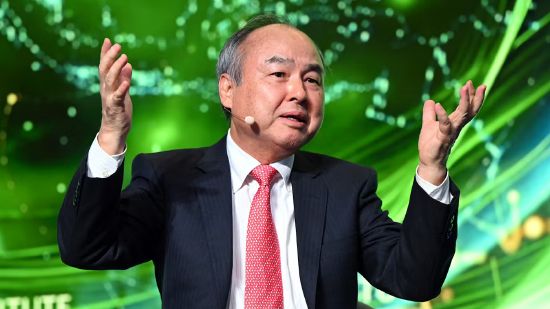
Group 1 - OpenAI's internal turmoil has stabilized, allowing SoftBank's Masayoshi Son to reduce personal financial risk related to a $1 billion personal guarantee for investments in OpenAI [3][4] - SoftBank has invested $34.6 billion in OpenAI, acquiring an 11% stake, with the investment recorded in the Vision Fund 2, which previously faced significant losses [4][5] - The Vision Fund 2's value has improved by $19.8 billion due to OpenAI's equity appreciation, reducing its overall loss to approximately 3% [4][5] Group 2 - SoftBank's stock price has doubled over the past year, reflecting market confidence in OpenAI, although the substantial profits from the Vision Fund 2 primarily benefit Masayoshi Son [5][6] - Despite the potential for OpenAI's turmoil to resurface, Son has minimized downside risk as SoftBank has converted its loans to the Vision Fund 2 into preferred shares [6] - The company is heavily reliant on debt to fund its AI investment commitments, indicating a strategic focus on financial engineering [6] Group 3 - Pinterest's stock fell 18% after reporting a slowdown in revenue growth to 14%, attributed to reduced advertising spending from large retailers due to new furniture tariffs [7] - Pinterest's CEO expressed dissatisfaction with the fourth-quarter performance and emphasized the need to restore growth rates to 15%-20% [7] - Other companies like Airbnb and Instacart reported positive earnings growth, with Airbnb's revenue growth accelerating to 12% and Instacart's revenue reaching $992 million, up 12% year-over-year [7]