
顺周期交易

Search documents
金融工程研究报告:油价高位:顺周期逻辑与冲击量化测算
ZHESHANG SECURITIES· 2026-03-25 14:46
- The report utilizes the input-output table data to quantify the cost structure and cost transmission capabilities of various industries, focusing on the intermediate product quadrant, which represents the demand of each economic sector for products from other sectors. The cost distribution weight for a sector is calculated by dividing the column data of the input-output table by the total input minus operating surplus for that sector[12][13][16] - A regression model is employed to measure the cost transmission capability of industries. The estimated cost and product price (PPI) series are regressed, with the regression slope serving as a proxy for cost transmission capability. To account for inventory buffering effects, the optimal lag period is determined by calculating the time-lagged correlation coefficient between cost and price series, and regression is performed at the optimal lag[16][17][18] - The cost transmission capability coefficients reveal that upstream industries such as oil, coal, and iron ore exhibit strong cost transmission capabilities due to low cost elasticity and high product price elasticity. Midstream industries like steel and chemicals also demonstrate strong cost transmission capabilities, often exceeding 1, indicating that price increases in upstream resources do not harm their profitability. In contrast, downstream industries generally have weaker cost transmission capabilities, often below 1, making them more vulnerable to raw material price increases[18][19] - The report quantifies the profit margin changes across industries under the impact of a 50% increase in oil prices. Industries with rigid downstream pricing and direct exposure to energy costs, such as gas production and supply, suffer the most. Other significantly affected industries include non-metallic mineral mining, rubber and plastic products, and printing. However, industries like chemical manufacturing and chemical fiber manufacturing benefit from strong cost transmission capabilities, which mitigate the impact of rising oil prices on their profit margins[19][20] - The average inventory turnover months of industries are calculated using industrial enterprise revenue and inventory data. The analysis finds a positive correlation between inventory turnover months and the lag in product price changes relative to cost increases. Industries with higher inventory turnover months have greater "buffering capacity," allowing them to delay price increases and absorb cost pressures for longer periods[23][24][26]
股市面面观丨节后A股市场稳步回暖,钢铁、有色领涨有何动力?
Xin Hua Cai Jing· 2026-02-26 05:52
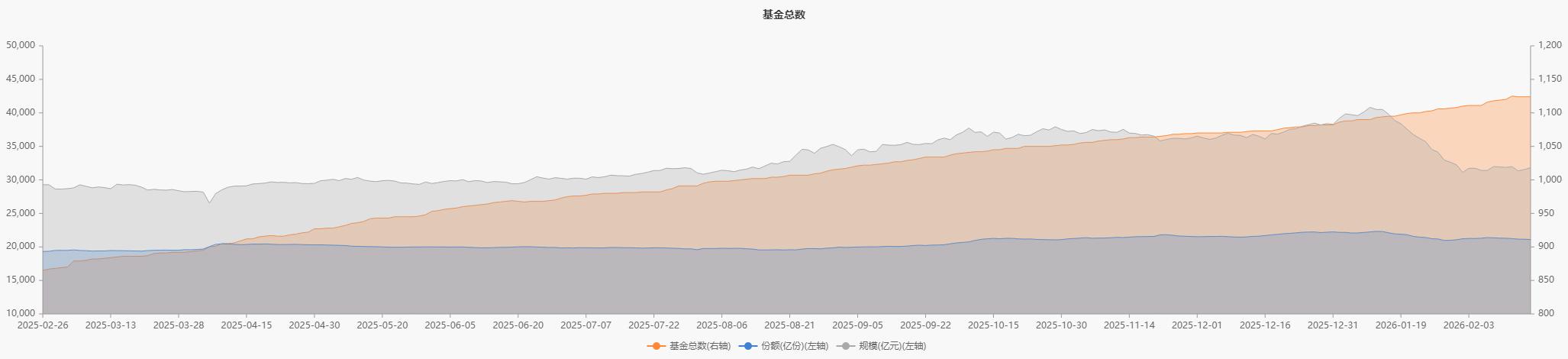
Market Overview - The A-share market has shown a significant recovery since the holiday, with the Shanghai Composite Index rising by 1.6%, the Shenzhen Component Index by 2.66%, and the ChiNext Index by 2.41% as of February 25 [1] - The average stock price in the A-share market increased by 1.62%, reaching 30.07 yuan per share, surpassing the 30 yuan mark [1] - Trading volume has also rebounded, with the first trading day post-holiday seeing a turnover of 2.2 trillion yuan, which further increased to 2.46 trillion yuan on the following day, exceeding the average daily turnover of approximately 2.09 trillion yuan before the holiday [1] Leverage and Fund Inflow - Leveraged funds have actively entered the market post-holiday, with net financing purchases reaching 338.9 billion yuan on the first trading day, marking the second-highest level of the year [2] - On February 25, net financing purchases amounted to 236.4 billion yuan, bringing the total for the two trading days to 575.3 billion yuan, surpassing the net selling scale before the holiday [2] - Prior to the holiday, the A-share market experienced a decline in financing balance from 2.722 trillion yuan to 2.572 trillion yuan, a drop of 150 billion yuan due to risk aversion among investors [2] ETF Market Stability - The A-share stock ETF market saw a rapid decline in late January, dropping from over 4 trillion yuan to around 3.1 trillion yuan, but has stabilized since February [2] - As of February 25, the asset scale of stock ETFs was reported at 3.18 trillion yuan, maintaining a steady state [2] Sector Performance - Among the 31 first-level industries, the steel, non-ferrous metals, building materials, oil and petrochemicals, and basic chemicals sectors showed the highest growth rates post-holiday, with the steel sector leading at a 7.19% increase [4][5] - Other notable sectors included non-ferrous metals at 6.90%, building materials at 6.56%, oil and petrochemicals at 5.73%, and basic chemicals at 5.68% [5] Economic Outlook and Policy Impact - Market participants have noted an increased expectation for macroeconomic recovery, particularly with the anticipation of stable growth policies being reflected in the A-share market [6] - Analysts predict that a series of investment-promoting policies will be implemented, leading to accelerated infrastructure investment in the first half of 2026 [6] - The market is expected to shift from "policy expectations" to "earnings realization" as companies begin to disclose their annual reports for 2025 and subsequent quarterly reports for 2026, which will serve as key market indicators [7]

马年A股喜迎开门红,两市超百股涨停
Qi Lu Wan Bao· 2026-02-25 15:39
Market Overview - The A-share market opened positively on the first trading day of the Lunar New Year, with all three major indices rising, indicating a strong start for the year [2] - The overall market showed a significant upward trend, with over 4,000 stocks rising and more than 100 stocks hitting the daily limit up, reflecting strong bullish sentiment [2] Sector Performance - The oil and gas, as well as precious metals sectors, were the standout performers, driven by geopolitical tensions and rising international commodity prices [3] - Oil stocks maintained strong performance, with companies like Keli Co. rising over 20%, and several others hitting the daily limit up [3] - Precious metals also saw significant gains, with companies like Xiaocheng Technology rising over 15% and gold prices surpassing $5,200 per ounce [3] Consumer Trends - The gold retail market is showing signs of price increases, with some products expected to rise by over 33% around March 10, indicating strong market demand [4] - Other sectors such as MICC, phosphorus chemicals, and glass fiber also performed well, with multiple stocks hitting the daily limit up [4] Weakness in Film Industry - In contrast to the resource sectors, the film industry faced significant declines, with major companies like Light Media dropping nearly 20% [5] - Despite high box office numbers during the Spring Festival, the market's reaction was muted, leading to profit-taking and a shift in investor focus towards resource sectors [5] Market Outlook - The market is expected to maintain a bullish trend as it approaches the Two Sessions, with a focus on infrastructure projects and stable growth [6] - Analysts predict a second phase of market growth may begin around mid-2026, with technology sectors like robotics and AI applications being highlighted for potential investment [7]
果然财经|马年A股喜迎开门红,两市超百股涨停
Sou Hu Cai Jing· 2026-02-24 09:54
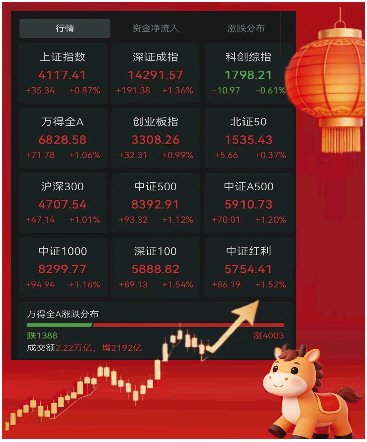
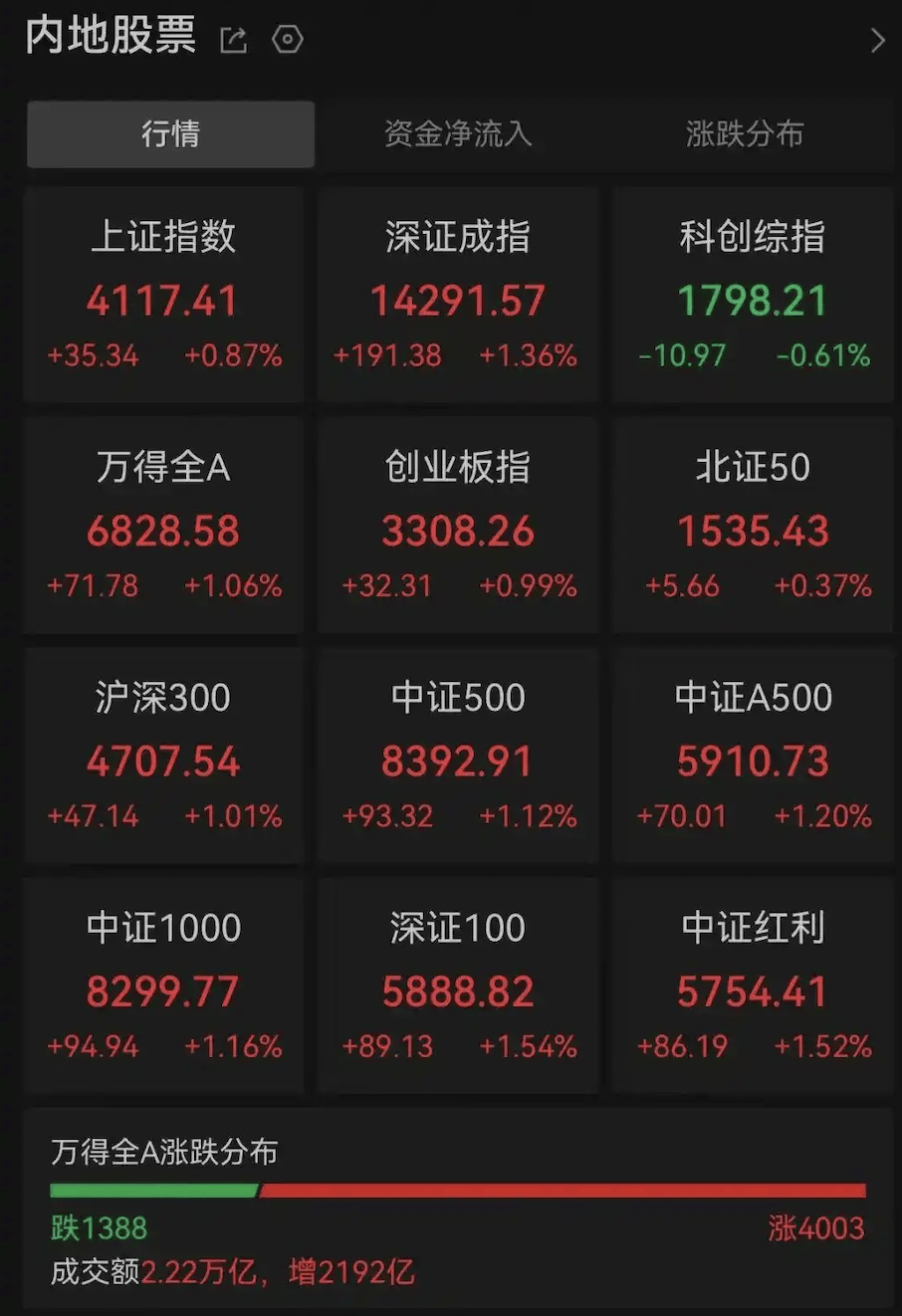
Market Overview - The A-share market opened positively on the first trading day of the Lunar New Year, with all three major indices rising, indicating a strong start for the year [1] - The overall market showed a significant upward trend, with over 4,000 stocks rising and more than 100 stocks hitting the daily limit up, reflecting strong bullish sentiment [1] Index Performance - The Shanghai Composite Index closed at 4,117.41 points, up 0.87% - The Shenzhen Component Index closed at 14,291.57 points, up 1.36% - The ChiNext Index closed at 3,308.26 points, up 0.99% [3] Trading Volume - The total trading volume for the Shanghai and Shenzhen markets reached 2.22 trillion yuan, an increase of 219.2 billion yuan compared to the previous trading day, indicating a clear influx of new capital [3] Sector Performance - The oil and gas sector, along with precious metals, led the market gains, driven by geopolitical tensions and rising international commodity prices [4] - Notable stocks in the oil sector included Keli Co., which rose over 20%, and several others hitting the daily limit up [4] - The precious metals sector also performed well, with gold prices rebounding, and stocks like Xiaocheng Technology rising over 15% [4] Consumer Market Signals - The gold retail market is showing signs of price increases, with some products expected to rise by over 33% [5] - Other sectors such as MICC, phosphorus chemicals, and glass fiber also saw significant gains, with multiple stocks hitting the daily limit up [5] Weakness in Film and Entertainment - In contrast to the resource sectors, the film and entertainment sector faced significant declines, with major companies like Light Media and Wanda Film experiencing sharp drops [6] - Analysts noted that while the Spring Festival box office was strong, it did not exceed expectations, leading to profit-taking in the sector [6] Market Trends and Future Outlook - The market is showing a clear preference for sectors with pricing power and defensive attributes, such as oil, non-ferrous metals, and chemicals [7] - The upcoming policy window and the potential for increased infrastructure investment are expected to support market stability and growth [7] - Analysts predict a continued upward trend in the market leading up to the two sessions, with a focus on sectors like robotics, AI applications, and energy [8]
节后首日,A股全线飘红,超4000股上涨,百股涨停!参投《飞驰人生3》票房大卖股价却跌停,博纳回应 | A股收盘
Mei Ri Jing Ji Xin Wen· 2026-02-24 08:13
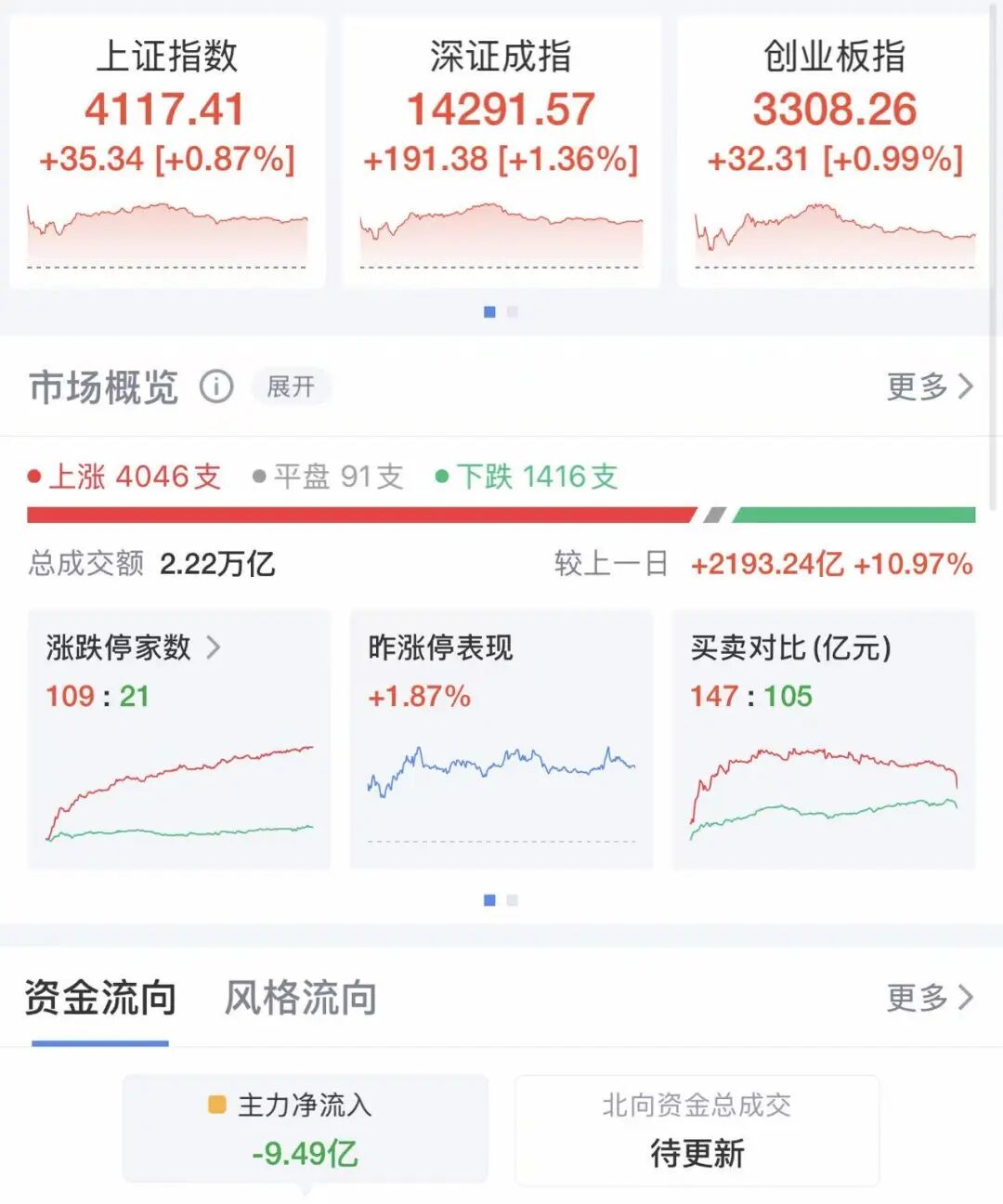
Market Overview - On the first trading day of the Year of the Rabbit, A-shares saw a broad increase, with the Shanghai Composite Index rising by 0.87%, the Shenzhen Component Index by 1.36%, and the ChiNext Index by 0.99% [1] - The total trading volume in the Shanghai and Shenzhen markets reached 2.2 trillion yuan, an increase of 219.4 billion yuan compared to the previous trading day [1] Sector Performance - Oil and gas stocks collectively surged, with several stocks such as Tongyuan Petroleum, Zhun Oil, Shandong Molong, and CNOOC Services hitting the daily limit [3] - The chemical sector experienced a breakout, with Meibang Co. achieving four consecutive trading limit increases, and stocks like Hongbaoli, Hongqiang Co., Chengxing Co., and Jinpu Titanium hitting the limit as well [3] - Gold stocks saw significant gains, with Sichuan Gold hitting the limit, and West Gold, Chifeng Gold, and Zhongjin Gold also experiencing substantial increases [5] - The cultivated diamond concept stocks surged, with Sifangda and Huanghe Xuanfeng both hitting the limit [5] Company Highlights - Huagong Technology resumed operations on the first day of the Lunar New Year, with multiple business segments in full production, ensuring the delivery of high-speed optical modules [9] - The company reported that its orders for connection business are scheduled until the fourth quarter of 2026, with production lines operating 24/7 [9] Declining Sectors - The film and cinema sector faced significant declines, with stocks like Light Media and China Film hitting the daily limit down [10] - Despite the success of the film "Fast and Furious 3" grossing nearly 3 billion yuan during the Spring Festival, Bona Film's stock price fell to the limit, indicating a disconnect between market expectations and actual performance [11][12] Market Outlook - According to招商证券, the market is expected to maintain a volatile upward trend leading up to the Two Sessions, with cyclical price increases and the expansion of AI-related sectors being the main themes [13] - The upcoming Two Sessions are anticipated to boost investment expectations, particularly with major infrastructure projects expected to be launched [13] - The return of financing balances post-holiday and an increase in risk appetite before the Two Sessions are likely to contribute to a continued influx of capital into the A-share market [13]


A股开盘速递 | 沪指跌0.02% 贵金属等板块涨幅居前
智通财经网· 2025-09-08 01:40
Group 1 - The A-share market shows mixed performance with the Shanghai Composite Index down 0.02% and the ChiNext Index up 0.21%, with sectors like precious metals, solid-state batteries, and photovoltaic equipment leading the gains [1] - CITIC Securities suggests to downplay market volatility and adjust portfolio structures, focusing on structural opportunities in consumer electronics, resources, innovative pharmaceuticals, chemicals, and gaming [1] - CITIC Jiantou indicates that the current market is in a consolidation phase after a slow bull market, with a shift in focus towards sectors that have lagged but still have strong growth logic [2] Group 2 - Guojin Securities predicts a high probability of the market entering a sideways consolidation phase, emphasizing the need for new catalysts to initiate a trend upward [3] - The report highlights opportunities in electric equipment and non-ferrous metals as potential new directions for the market [3] - The recent rise in gold prices is noted, with gold stocks being more elastic compared to gold prices due to their current valuation being low relative to historical levels [3]