
衰退预期

Search documents
资产配置日报:贵金属抢跑“衰退预期”-20260331
HUAXI Securities· 2026-03-31 14:54
Group 1 - The core view of the report indicates that precious metals are gaining traction amid recession expectations, with gold and silver prices rising by 1.4% and 3.4% respectively, while industrial metals show mixed performance [1][3] - The energy and chemical sectors are experiencing a downturn, with crude oil and fuel prices dropping by 2.9% and 3.8%, respectively, and chemical products like PVC and methanol seeing declines of 4.5% to 5.4% [1] - A significant capital outflow of 14.3 billion yuan from commodity indices has been noted, with the precious metals sector attracting over 2.7 billion yuan, indicating a shift in investor sentiment towards safe-haven assets [1] Group 2 - The report highlights the ongoing volatility in the oil market, driven by geopolitical tensions and mixed signals regarding military actions in the Gulf region, which contribute to fluctuating prices [2] - The market is transitioning from a narrative of high oil prices driving inflation to one where high oil prices may suppress demand and lead to economic slowdown, with upcoming employment data expected to validate this shift [3] - The report notes that the volatility of gold remains high, with a historical volatility rate of 42.7, suggesting that investors should exercise patience in positioning within the precious metals market [3]
供需再平衡,橡胶宽幅震荡
Bao Cheng Qi Huo· 2026-03-30 12:31
1. Report Industry Investment Rating The provided content does not mention the report industry investment rating. 2. Core Viewpoints of the Report - Since the first quarter of 2026, the domestic rubber futures sector has shown a structural market of rising first and then falling, with high - level oscillations. The core driver has shifted from macro - sentiment and cost support to fundamental inventory pressure and supply - demand games. Natural rubber and synthetic rubber have shown different trends. The market has been weighing between inflation trading and recession expectations, as well as supply seasonality and demand recovery rhythm [4]. - In the second quarter, the global macro - economy will move forward steadily with policy shifts, demand repair, and risk mitigation. The gap between Europe and the United States will narrow, and emerging markets will maintain relatively high growth. The repeated geopolitical conflicts in the Middle East have caused oil price fluctuations and rising inflation expectations. For the market, the rhythm of monetary policy, inflation path, and geopolitical evolution are still core variables. The global economy is seeking re - balance in a weak recovery, with resilience greater than downward risks [5][24][135]. - In the second quarter, the supply - demand of domestic rubber futures will present a weak - balance pattern of loose supply, warming demand, and slow inventory reduction. Rubber futures prices may maintain a wide - range oscillating trend. It is recommended to adopt an interval - band trading strategy, focusing on four tracking indicators: tapping progress, inventory data, tire start - up rate, and export growth rate. At low prices, seize the opportunities of peak - season demand repair and inventory reduction; at high prices, be vigilant about supply expansion and inventory pressure. At the same time, do a good job in risk management to cope with the amplified fluctuations caused by macro and geopolitical conflicts [5][138]. 3. Summary According to the Directory 3.1 2026 Q1 Domestic Rubber Futures Trend Review - In Q1 2026, the domestic rubber futures sector showed a structural market of rising first, then falling, and high - level oscillations. The core driver shifted from macro - sentiment and cost support to fundamental inventory pressure and supply - demand games. Natural rubber and synthetic rubber had different trends. The Shanghai rubber main contract showed a three - stage operation in Q1. In January, the expectation of stable growth increased, the energy - chemical sector strengthened together, and the Southeast Asian rubber - producing areas were in the off - season, so the market traded based on the logic of "off - season support + post - festival recovery". In February, after the Spring Festival, geopolitical conflicts pushed up the prices of crude oil and synthetic rubber, and the Thai rubber in the external market also strengthened, with an optimistic market sentiment. In March, the Shanghai rubber market quickly turned to adjustment, with continuous daily declines. The high inventory in Qingdao Bonded Area and general trade, the approaching tapping season in Yunnan, and the increase in imported goods led to the release of negative factors. Coupled with Goldman Sachs' warning of recession expectations, the risk preference for industrial products was suppressed, and the rubber price center moved down [10]. 3.2 Europe and the United States Economy Continues to Differentiate, and the Fed's Interest - Rate Cut Expectation Declines - Since 2026, the macro - economies of Europe and the United States have continued the pattern of the US being strong and Europe being weak. Inflation has steadily declined, and the rhythm of monetary policy shifts has been significantly different. The US economy has shown strong resilience, with stable support from consumption and investment. The eurozone has continued its weak recovery, with insufficient domestic demand and structural bottlenecks restricting the repair strength. Overall, developed economies are gradually turning to moderate expansion at the end of the high - interest - rate period, providing phased stability for the global economy, but geopolitical, trade, and financial fluctuations still pose major disturbances [18]. - The US economy is currently running smoothly, with the characteristics of "stable growth, controllable inflation, and employment resilience". In Q1 2026, the real GDP growth rate remained in the range of 1.8% - 2.0%. The IMF and the United Nations predict that the annual growth rate will be about 2.0%, significantly higher than the average level of developed economies. In February 2026, the US non - farm payroll data was unexpectedly cold, with a significant contraction, the unemployment rate rebounded to about 4.4%, and the wage growth rate slowed moderately. Investment has become an important highlight, with continuous release of AI - related capital expenditure, and the return of the manufacturing industry and the implementation of infrastructure investment policies driving the recovery of enterprise equipment investment. The fiscal expenditure has maintained expansion. In terms of inflation, the CPI in February decreased to 2.4% year - on - year, but the core PCE rebounded to 3.1% in early March, indicating that the oil price increase caused by the Middle East war has begun to affect the domestic inflation in the US [18][21]. - The eurozone economy has not changed its weak - recovery situation, with greater growth pressure than the US. The expected GDP growth rate in 2026 is about 1.2%, slightly higher than that in 2025 but still at a low level. The manufacturing industries of core economies such as Germany and France have continued to be sluggish, with weak industrial output and export orders. Energy costs and geopolitical uncertainties have suppressed enterprise investment confidence. In terms of domestic demand, household consumption is restricted by high interest rates and low real income growth, credit expansion is slow, and the real estate market continues to be under pressure. In terms of inflation, the HICP in February rebounded to 1.9% year - on - year, and core inflation is still sticky. The ECB's interest - rate cut rhythm lags behind that of the Fed, and the policy remains prudent, mainly in a wait - and - see mode in the short term [22]. - In the second quarter, the global macro - economy will enter a stage of narrowing differentiation and moderate recovery, with a slightly higher growth rate than in the first quarter. The IMF predicts that the global growth rate will be about 3.1% - 3.3%, showing a pattern of stable developed economies and resilient emerging markets. The US economy is likely to continue to be stable, with a higher probability of interest - rate cuts in the second quarter, marginal improvement in the liquidity environment, and stable growth of about 1.9%. The eurozone may see a slight recovery in the second quarter, with enhanced support from the service industry, marginal repair of industrial production, and overall controllable inflation [23]. 3.3 China's Economy Developed Steadily and Well from January to February 2026 - At the beginning of 2026, China's macro - economy showed a strong start and a good beginning under the support of multiple factors such as the continuous implementation of stable - growth policies, the concentrated release of Spring Festival consumption, and the unexpected warming of external demand. The production supply has steadily recovered, market demand has continued to improve, new driving forces have grown rapidly, employment and prices have been generally stable, and positive factors have continued to accumulate [39]. - On the production side, the recovery has accelerated, and the leading role of new - quality productivity has been prominent. Industrial production has significantly accelerated, with the added value of large - scale industrial enterprises increasing by 6.3% year - on - year from January to February, 1.1 percentage points faster than in December of the previous year. The service industry has recovered steadily, with the service production index increasing by 5.2% year - on - year [39]. - On the demand side, the "troika" has worked together, with domestic demand warming and external demand being strong. The consumer market has steadily recovered, with the total retail sales of consumer goods reaching 8607.9 billion yuan from January to February, a year - on - year increase of 2.8%. Fixed - asset investment has changed from a decline to an increase, with a year - on - year increase of 1.8%. Foreign trade has achieved high - speed growth, with the total volume of goods imports and exports reaching 7732.1 billion yuan, a year - on - year increase of 18.3% [39]. - Prices have moderately rebounded, and the employment situation has been generally stable. The CPI has gradually warmed up, with an average year - on - year increase of 0.8% from January to February. The PPI has narrowed its decline, with a year - on - year decrease of 0.9%. The employment market has remained stable, with the average urban survey unemployment rate from January to February being 5.3%, the same as in the previous year [40]. - Looking forward to the second quarter of 2026, China's economy will continue to operate in a stable and progressive manner, with the growth rate expected to rise steadily, and the foundation for the annual growth target of 4.5% - 5.0% being more solid [41]. 3.4 Output and Consumption of Rubber - Producing Countries in Southeast Asia Both Increased Slightly Year - on - Year - Since 2010, the significant increase in the global natural rubber futures price has stimulated the enthusiasm of rubber farmers in Southeast Asian rubber - producing countries to plant rubber trees. However, since 2012, with the peak - to - trough decline of the global natural rubber futures price, the enthusiasm of rubber farmers has declined. After a 10 - year period of low natural rubber futures prices from 2013 to 2023, the planting willingness of rubber farmers in Southeast Asian countries has been at a low level. Although the tapping area has generally increased, the yield per unit area has continued to decline [60]. - According to the latest report released by the ANRPC in February, in January 2026, the total rubber production of ANRPC member countries reached 1.1159 million tons, a slight month - on - month decrease of 51,100 tons and a year - on - year increase of 57,500 tons, an increase of 5.43%. The total natural rubber consumption of ANRPC member countries reached 931,500 tons, a slight month - on - month decrease of 24,600 tons and a year - on - year increase of 17,100 tons, an increase of 1.87% [61]. - In the second quarter of 2026, the global natural rubber supply will enter a seasonal recovery stage, showing a pattern of increasing monthly but with limited increments, which will put phased pressure on rubber prices but will not change the tight - balance background. ANRPC predicts that the global natural rubber production in 2026 will increase by 2.4% year - on - year to 15.2 million tons, and the year will continue to be in short supply [64]. 3.5 The Premium Spreads between Shanghai Rubber, Standard Rubber, and Synthetic Rubber May Narrow - In March 2026, the international oil price soared due to geopolitical conflicts in the Middle East and supply contraction, which was directly transmitted to the cost side of synthetic rubber, leading to a significant reconstruction of the spreads of rubber - related futures. The premium spread between Shanghai rubber and synthetic rubber narrowed significantly, and the spread between standard rubber and synthetic rubber changed from a premium to a discount [89]. - Synthetic rubber is strongly linked to the oil price. When the oil price rises, the production cost of synthetic rubber increases, and its price elasticity is greater. Natural rubber is indirectly supported by cost, but due to its agricultural nature in Southeast Asian producing areas, the cost transmission is lagging and the elasticity is weak. In March, the oil price increase did not effectively drive the rise of natural rubber, so the spread naturally narrowed [90]. - In the second quarter, the two types of spreads will be in a game between "increased supply and loosened cost" and "demand repair and substitution support", showing an oscillating trend as a whole. The core contradiction of the rubber - related spreads in the second quarter is the game between "seasonal increase in natural rubber supply" and "rigid cost support of synthetic rubber". The oil price trend is the key variable, and weather disturbances and inventory reduction progress are amplifiers [92]. 3.6 Overseas Auto Market Sales Showed a Differentiated Trend in February 2026 - In the first quarter of 2026, the overseas auto market showed a pattern of a slight decline in the US, differentiation in the eurozone, and a continuous weak decline in Japan, mainly affected by high interest rates, weak consumer confidence, the withdrawal of electric - vehicle policies, and geopolitical disturbances. In the second quarter, the global auto market may see marginal repair, but structural differentiation and intensified competition will still dominate [94]. - In the US, it is expected that the sales volume of light - duty vehicles in Q1 2026 will reach about 3.58 million, a year - on - year slight decrease of 0.8%. The main drag factors include the expiration of electric - vehicle subsidies, the decline in consumer affordability, and the pressure on US car companies [94]. - In the eurozone, it is expected that the new - car sales volume in Q1 2026 will reach about 2.15 million, a year - on - year decrease of 1.2%. Core countries show significant differentiation. The sales volume of fuel - powered vehicles is accelerating to clear, while the sales volume of electric vehicles is growing at a high rate but cannot offset the overall decline [95]. - In Japan, the new - car sales volume in Q1 2026 may reach 763,000, a year - on - year decrease of 2.9%. The domestic market has been continuously weak. The main reasons include low economic prosperity, cautious consumer spending, and the differentiation of domestic brands [96]. 3.7 Domestic Auto Sales Declined Both Month - on - Month and Year - on - Year in February 2026 - In February 2026, affected by factors such as the Spring Festival holiday, policy adjustments, and pre - released demand, China's auto production and sales decreased both month - on - month and year - on - year. In February, the production and sales of automobiles were 1.672 million and 1.805 million respectively, a month - on - month decrease of 31.7% and 23.1% respectively, and a year - on - year decrease of 20.5% and 15.2% respectively [99]. - In terms of passenger cars, in February, the production and sales were 1.4 million and 1.536 million respectively, a month - on - month decrease of 32.1% and 22.7% respectively, and a year - on - year decrease of 21.6% and 15.4% respectively. In terms of commercial vehicles, in February, the production and sales were 273,000 and 269,000 respectively, a month - on - month decrease of 29.7% and 24.9% respectively, and a year - on - year decrease of 14.1% and 14% respectively [99]. - In terms of new - energy vehicles, in February, the production and sales were 694,000 and 765,000 respectively, a year - on - year decrease of 21.8% and 14.2% respectively. In terms of exports, in February, the auto export volume was 672,000, a month - on - month decrease of 1.4% and a year - on - year increase of 52.4% [99][101]. - The China Automobile Dealers Association's inventory warning index in February was 56.2%, above the boom - bust line. Dealers are cautious about the March auto market, and the terminal passenger flow and sales volume are expected to rebound month - on - month. The China Association of Automobile Manufacturers predicts that the total auto sales volume in 2026 will reach 34.75 million, a year - on - year increase of 1% [102][103]. 3.8 Domestic Heavy - Truck Sales Declined Slightly Year - on - Year in February 2026 - Affected by factors such as the Spring Festival holiday, the logistics activity slowed down in February 2026. The China Logistics Prosperity Index in February was 47.5%, a decrease of 3.7 percentage points from the previous month. The heavy - truck sales volume in February decreased both month - on - month and year - on - year. In February, the heavy - truck market sold about 75,000 vehicles, a month - on - month decrease of nearly 30% and a year - on - year decrease of about 8%. From January to February, the cumulative heavy - truck sales volume exceeded 180,000, a year - on - year increase of about 17% [107]. - The Spring Festival in 2026 was later than that in 2025, so the heavy - truck sales peak season will be postponed. In addition, the suspension of production during the Spring Festival by vehicle manufacturers and parts enterprises also affected the heavy - truck sales volume in February. In February, the heavy - truck export continued to grow steadily, with a year - on - year increase of more than 20% [108]. - It is expected that the wholesale sales volume of the heavy - truck industry in March will increase slightly year - on - year. In the second quarter, the late Spring Festival and the implementation of the policy of replacing old national - IV and national - III operating trucks with new ones will bring opportunities to the heavy - truck market [111]. 3.9 The Tire Industry Had Strong Exports and a Slight Increase in Port Inventory - From January to February 2026, the domestic tire industry showed a clear differentiation pattern of weak domestic demand and high - growth external demand. The cumulative output of rubber tire casings in the first two months was 177.526 million, a year - on - year slight decrease of 0.7%. The export of rubber tires was booming. From January to February, the cumulative export of rubber tires was 1.55 million tons, a year - on - year increase of 12.5% [117]. - In terms of rubber imports, from January to
风云突变!巴基斯坦,突传重磅!市场将如何演绎?
券商中国· 2026-03-30 04:30
Core Viewpoint - The article discusses the potential for peace talks between the U.S. and Iran facilitated by Pakistan, highlighting the mixed signals from both parties regarding their readiness to engage in negotiations [1][2][3]. Group 1: Diplomatic Developments - Pakistan's Deputy Prime Minister and Foreign Minister Dar announced that both the U.S. and Iran have expressed confidence in Pakistan's ability to facilitate talks, with a possibility of meetings occurring in the near future [2][3]. - A meeting of foreign ministers from Pakistan, Turkey, Egypt, and Saudi Arabia resulted in a commitment to support the establishment of a committee to develop a concrete plan for resolving the conflict [2][3]. Group 2: Market Reactions - The Asia-Pacific markets experienced significant declines, with Japan and South Korea seeing substantial drops, while A-shares showed relative resilience despite many stocks declining [4]. - Oil prices remain high, and while precious metals like gold and silver faced declines, the drop was not as severe. The U.S. 10-year Treasury yield did not rise significantly, indicating a potential market shift towards recession concerns [4]. - Research from Mitsubishi UFJ Bank suggests that the ongoing Middle East conflict may lead to prolonged tensions, which could sustain high inflation and interest rates in the U.S., impacting risk-sensitive assets negatively [4]. Group 3: Investment Insights - Huatai Securities noted that the geopolitical situation is tightening global liquidity expectations, leading to cautious trading sentiment. Investors are seeking certainty in sectors like lithium batteries amidst energy price shocks [5]. - The report emphasizes the importance of "cost pass-through" capabilities within industry chains, as the market faces multiple challenges from geopolitical variables and pre-holiday effects [5].


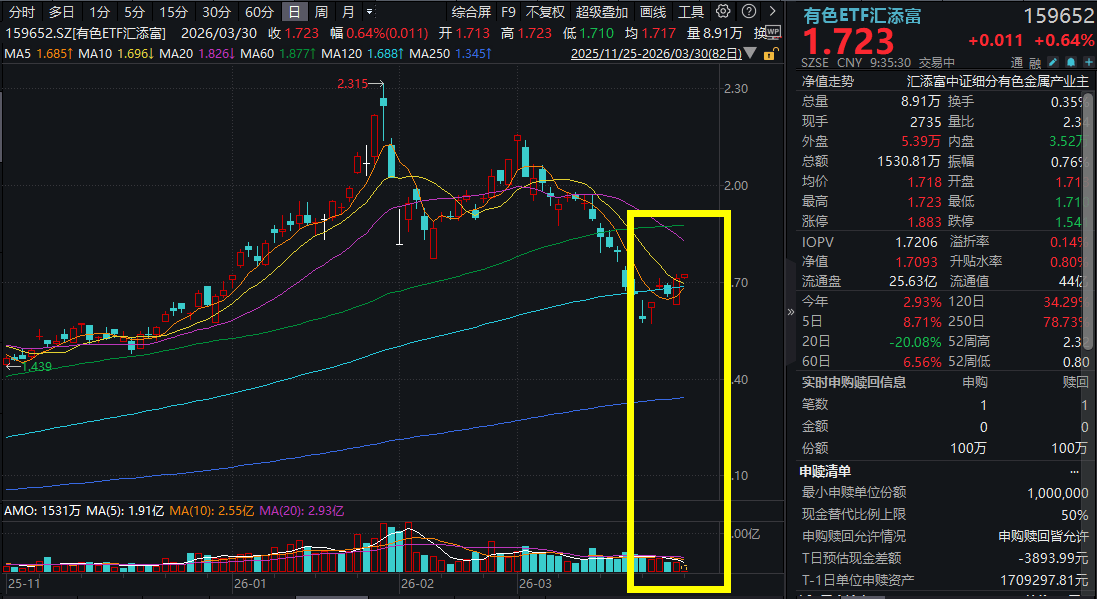
中东两大铝厂遇袭,铝价狂涨超4%!天山铝业涨停,一季度业绩预增107%!有色ETF汇添富(159652)冲击两连阳!中信证券:铝价或超预期上涨
Sou Hu Cai Jing· 2026-03-30 02:25
Core Viewpoint - The A-share market experienced fluctuations on March 30, with the non-ferrous metals sector rising against the trend, particularly the aluminum stocks, driven by supply chain disruptions and strong earnings reports from leading companies [1][3][6]. Group 1: Market Performance - The non-ferrous ETF Huatai (159652) rose by 0.64% as of 9:36 AM, aiming for a second consecutive day of gains [1]. - Major component stocks of the non-ferrous ETF saw significant increases, with Tianshan Aluminum hitting the daily limit, Yun Aluminum rising over 6%, and China Aluminum increasing by over 4% [3]. Group 2: Supply Chain Disruptions - Recent attacks on two major aluminum plants in Bahrain and the UAE by Iranian forces have raised concerns about supply disruptions, as these regions account for approximately 10% of global aluminum supply [6]. - Tianshan Aluminum reported a revenue of 29.502 billion yuan for 2025, a year-on-year increase of 5.03%, and a net profit of 4.818 billion yuan, up 8.13% [6][7]. Group 3: Dividend and Earnings Outlook - Tianshan Aluminum announced a cash dividend plan of 2.5 yuan per 10 shares, totaling 1.147 billion yuan, with a commitment to maintain a dividend payout ratio of no less than 50% of net profit for 2026 [7]. - The aluminum sector is expected to face significant supply risks due to the recent attacks, which could lead to prolonged production disruptions and potential price increases [8]. Group 4: Investment Opportunities - The non-ferrous ETF Huatai (159652) is positioned to benefit from a comprehensive layout across various metal sectors, including gold, copper, aluminum, lithium, and rare earths, capitalizing on the ongoing super cycle in non-ferrous metals [10][12]. - The ETF has a leading "gold-copper content" of 45% among its peers, with a high concentration of leading companies in strategic and supply-deficient core varieties [12][14].


《有色》日报-20260327
Guang Fa Qi Huo· 2026-03-27 01:26
1. Report Industry Investment Ratings No investment ratings were provided in the reports. 2. Core Views Aluminum - The current oversupply situation in the aluminum market has not been substantially reversed. Short - term strategy is to maintain a bearish view on rallies. For long - term, the global supply growth elasticity is limited, and the long - term bullish logic remains valid. The short - term aluminum price will fluctuate widely with macro - sentiment and geopolitical news, with the Shanghai Aluminum main contract expected to trade between 23,000 - 25,000 yuan/ton [1]. Aluminum Alloy - The short - term raw material cost at a high level strongly supports the ADC12 price, but the demand follows slowly and the negative feedback effect of high prices is emerging. The market is expected to continue the high - level shock pattern, with the main contract reference range of 22,000 - 23,500 yuan/ton [2]. Copper - In the short - term, the copper price is in an adjustment phase. The supply - demand fundamentals have improved and the inventory pressure has weakened. The medium - to - long - term logic of copper supply - demand contradiction has not changed significantly. The short - term adjustment may provide an opportunity for long - term long positions, but the price is still suppressed before the market risk appetite recovers significantly. The main focus is on the pressure around 97,000 - 98,000 yuan/ton [3]. Zinc - In the context of supply improvement, high inventory, and limited macro - bullish factors, the zinc price is under short - term pressure. It is recommended to pay attention to the zinc ore TC, marginal changes in demand, and macro - indicators, with the main focus on the support around 22,000 - 22,500 yuan/ton [5]. Nickel - The news of Indonesia's export tax has a short - term positive impact on sentiment. The macro - expectation is volatile. The contradiction in the raw material end supports the price, but the insufficient digestion of actual inventory is a constraint. The disk is expected to run in a strong range, with the main contract reference range of 134,000 - 142,000 yuan/ton [7]. Stainless Steel - Recently, the cost logic of stainless steel is strong. The news fermentation and the tight raw material end in reality provide support. The steel mill production has increased significantly, and the demand is gradually recovering but the terminal acceptance is still weak. It is expected to maintain a strong shock in the short - term, with the main contract reference range of 14,200 - 14,800 yuan/ton [10]. Lithium Carbonate - The war expectation is volatile, and the macro - sentiment has weakened again. The fundamentals are resilient but the marginal driving force is weakening. The mine - end disturbance still has room for fermentation, and the bottom support is still strong. It is expected to maintain range - bound fluctuations in the short - term, with the main contract reference range of 150,000 - 160,000 yuan/ton [12]. Tin - The US - Iran conflict is at a stalemate, and the market risk - aversion sentiment has resurfaced, causing the tin price to fall. The medium - to - long - term bullish logic still exists. If there are signs of the conflict ending, long positions can be established on dips [14]. Industrial Silicon - Industrial silicon is facing the pressure of oversupply with expected production growth. The cost end strongly supports the bottom. It is expected to oscillate around 8,000 - 9,000 yuan/ton. It is necessary to pay attention to production control, environmental protection, and cost - end fluctuations [15]. Polysilicon - The polysilicon market is oversupplied, and the price is expected to continue to fall. The market sentiment tends to trade for market - clearing, and the price is expected to fall towards the lowest cash cost. It is recommended to wait and see for now [17]. 3. Summaries by Directory Aluminum Price and Spread - SMM A00 aluminum price decreased by 1.05% to 23,510 yuan/ton, and the alumina prices in different regions had small increases or remained unchanged [1]. Fundamental Data - In February, the production of alumina, domestic and overseas electrolytic aluminum decreased, while the electrolytic aluminum import volume increased and the export volume decreased. The开工 rates of some aluminum - related industries increased, and the social inventory of electrolytic aluminum and aluminum rods, as well as the inventory of electrolytic aluminum plants and alumina plants, showed different changes [1]. Aluminum Alloy Price and Spread - SMM aluminum alloy ADC12 prices in different regions decreased, and the price difference between Jiangxi Baotai Network ADC12 and A00 aluminum increased significantly [2]. Fundamental Data - In February, the production of recycled and primary aluminum alloy ingots, as well as waste aluminum, decreased. The import and export volumes of unforged aluminum alloy ingots also decreased. The开工 rates of recycled and primary aluminum alloy industries decreased, and the inventory of recycled aluminum alloy showed a downward trend [2]. Copper Price and Spread - SMM 1 electrolytic copper price decreased by 0.28% to 95,325 yuan/ton, and the refined - scrap price difference decreased by 80.31% [3]. Fundamental Data - In February, the production and import volume of electrolytic copper decreased. The import copper concentrate index decreased, and the domestic mainstream port copper concentrate inventory decreased slightly. The开工 rates of electrolytic copper and scrap copper rod - making industries increased, and the global visible inventory started to decline this week [3]. Zinc Price and Spread - SMM 0 zinc ingot price decreased by 0.35% to 22,840 yuan/ton, and the import loss increased [5]. Fundamental Data - In February, the production of refined zinc decreased, the import volume decreased significantly, and the export volume increased. The开工 rates of galvanizing, die - casting zinc alloy, and zinc oxide industries increased, and the domestic zinc ingot seven - region social inventory decreased [5]. Nickel Price and Spread - SMM 1 electrolytic nickel price increased by 1.12% to 139,350 yuan/ton, and the prices of some nickel - related products and cost data showed different changes [7]. Fundamental Data - China's refined nickel production decreased, and the import volume increased significantly. The SHFE inventory decreased slightly, the social inventory increased, and the LME inventory decreased slightly [7]. Stainless Steel Price and Spread - The prices of 304/2B stainless steel coils in Wuxi and Foshan remained unchanged, and the futures - spot price difference increased [10]. Fundamental Data - China's 300 - series stainless steel crude steel production increased, while Indonesia's decreased. The import and export volumes of stainless steel increased significantly, and the 300 - series social inventory and SHFE warehouse receipts increased slightly [10]. Lithium Carbonate Price and Spread - SMM battery - grade lithium carbonate average price increased by 2.62% to 156,500 yuan/ton, and the prices of other lithium - related products also had different changes [12]. Fundamental Data - In February, the production and demand of lithium carbonate decreased, the import volume decreased slightly, and the export volume increased. The total inventory, downstream inventory, and smelter inventory of lithium carbonate decreased [12]. Tin Price and Spread - SMM 1 tin price decreased by 1.34% to 352,800 yuan/ton, and the import loss increased [14]. Fundamental Data - In February, the import of tin ore decreased, the production of refined tin decreased, the import volume increased, and the export volume decreased. The开工 rates of tin - related industries decreased, and the inventory of tin decreased [14]. Industrial Silicon Price and Spread - The prices of industrial silicon in different regions remained unchanged, and the futures price decreased slightly [15]. Fundamental Data - The national and regional production of industrial silicon decreased, the开工 rates decreased, the production of organic silicon DMC and polysilicon decreased, and the export volume decreased. The social inventory increased slightly [15]. Polysilicon Price and Spread - The average price of N - type re - feed material decreased by 1.85% to 39,750 yuan/ton, and the futures price decreased by 3.29% to 35,540 yuan/ton [17]. Fundamental Data - The production of polysilicon and silicon wafers decreased, the import and export volumes of polysilicon and silicon wafers had different changes, and the inventory of polysilicon and silicon wafers decreased [17].
宏观金融类:文字早评-20260327
Wu Kuang Qi Huo· 2026-03-27 01:23
Report Industry Investment Rating No relevant content provided. Core Views of the Report - The geopolitical conflict between the US and Iran has a significant impact on the global financial and commodity markets, leading to increased market volatility and changes in inflation expectations. The market has shifted from early inflation and supply - side disturbance logic to pricing and trading for stagflation and recession [4][8][41]. - The economic recovery in China shows signs of improvement at the beginning of the year, but the sustainability needs to be observed, and domestic demand still requires the stabilization of residents' income and policy support. The bond market may be under pressure due to inflation concerns [8]. - Different commodities have different trends and influencing factors. For example, some metals are affected by supply - demand fundamentals and geopolitical factors, while energy and chemical products are also influenced by geopolitical conflicts and supply - demand relationships, and agricultural products are affected by factors such as planting area, production, and international events [12][62][85]. Summary by Directory Macro - financial Stock Index - **Market Information**: The US is reported to be planning a final strike against Iran. The OECD predicts that the US inflation rate will reach 4.2% this year. Chip stocks have seen increased selling. SMIC's revenue in 2025 was $9.327 billion, a year - on - year increase of 16.2%, and the capacity utilization rate increased to 93.5% [2]. - **Strategy View**: The conflict between the US and Iran affects global risk appetite. The hawkish statements of Powell and European Central Bank officials have led to a retreat in the Fed's interest - rate cut expectations. It is recommended to pay attention to the change in the war situation and control risks [4]. Treasury Bonds - **Market Information**: On Thursday, the main contracts of TL, T, TF, and TS had different changes. The yield of Japanese two - year Treasury bonds reached a new high since 1996. The oil production in southern Iraq has decreased. The central bank conducted a net injection of 21.1 billion yuan through 7 - day reverse repurchase operations [5]. - **Strategy View**: The economic data in January - February improved, but the sustainability of the economic recovery needs to be observed. The Iran geopolitical conflict and inflation concerns may put pressure on the bond market. The bond market is expected to be in a short - term weak and volatile state [8]. Precious Metals - **Market Information**: Shanghai gold and silver prices fell, while COMEX gold and silver prices rose. The inflation risk has increased due to the Middle East geopolitical conflict. Trump postponed the strike on Iran's energy facilities for 10 days [9]. - **Strategy View**: The geopolitical conflict is the core focus of the market. If the conflict eases, gold may regain its upward momentum, but in the short term, precious metals will remain in a high - level volatile state. It is recommended to wait and see [10]. Non - ferrous Metals Copper - **Market Information**: The US military action against Iran has affected market sentiment, and copper prices have adjusted. LME inventory decreased, and domestic social and bonded area inventories also decreased [12]. - **Strategy View**: The Middle East situation is expected to be volatile. The supply of copper raw materials is tight, and domestic refined copper consumption has improved. Copper prices may be in a short - term volatile state [13]. Aluminum - **Market Information**: The Middle East situation has affected the supply side, and aluminum prices have risen. The inventory of aluminum ingots increased, while the inventory of aluminum rods decreased [14]. - **Strategy View**: The Middle East situation has eased, but the market sentiment is still volatile. The overseas supply of aluminum is expected to be tight, and domestic demand improvement may drive inventory reduction. Aluminum prices may be in a short - term volatile state [15]. Zinc - **Market Information**: The price of zinc rose slightly. The inventory of zinc ingots decreased, and downstream enterprises replenished stocks at low prices [16][17]. - **Strategy View**: The visible inventory of zinc concentrate has increased, and the profit of the zinc industry has declined. The zinc price is in a downward trend, and attention should be paid to downstream replenishment, Fed's monetary policy, and geopolitical conflicts [18]. Lead - **Market Information**: The price of lead fell slightly. The inventory of lead ingots decreased, and the refined - scrap price difference was at par [19]. - **Strategy View**: The visible inventory of lead concentrate has decreased, and the production of primary and secondary smelting enterprises has improved. The lead price is at the lower edge of the long - term shock range, with both support and downward pressure. The volatility may increase [19]. Nickel - **Market Information**: The price of nickel fell slightly. The spot premium of nickel decreased, and the price of nickel ore and nickel iron remained stable [20]. - **Strategy View**: In the short term, nickel prices may follow the downward trend due to inflation expectations and the Fed's hawkish stance. In the medium term, the supply - demand situation of nickel is expected to improve, and the bottom support is strong. It is recommended to conduct high - selling and low - buying operations within a range [21][22]. Tin - **Market Information**: The price of tin fell. The production of tin smelters has recovered, but the demand has only marginally improved. The inventory has decreased [23]. - **Strategy View**: The supply of tin is still constrained by raw materials, and the demand is in a weak recovery state. Affected by geopolitical factors and the decline in the Fed's interest - rate cut expectations, tin prices are expected to be weak [24]. Lithium Carbonate - **Market Information**: The price of lithium carbonate showed a slight increase. The production increased, and the inventory also increased [25]. - **Strategy View**: The production of lithium carbonate continues to grow, and the inventory increase is at a new high since August last year. The supply may be affected by the Zimbabwean mineral export ban. The demand for lithium batteries is expected to be strong. Attention should be paid to the changes in the futures position, industrial events, and spot premium [26]. Alumina - **Market Information**: The price of alumina fell. The spot price in Shandong increased, and the overseas price also increased. The futures inventory increased [27][28]. - **Strategy View**: The Guinean government may tighten bauxite exports, and the short - term supply of alumina has tightened. However, the long - term oversupply situation remains. It is recommended to wait and see, and pay attention to domestic supply policies, Guinean ore policies, and the US - Iran conflict [29]. Stainless Steel - **Market Information**: The price of stainless steel fell slightly. The spot price remained stable, and the raw material price also remained stable. The inventory increased [30]. - **Strategy View**: Driven by raw material cost and policy, the price of stainless steel is supported. However, the supply is still loose, and the demand is weak. The price is expected to be in a high - level volatile state in the short term [30]. Cast Aluminum Alloy - **Market Information**: The price of cast aluminum alloy fell. The trading volume increased, and the inventory decreased [31]. - **Strategy View**: The cost of cast aluminum alloy has increased, and the demand is expected to improve. The short - term price is still supported [33]. Black Building Materials Steel - **Market Information**: The prices of rebar and hot - rolled coil decreased slightly. The registered warehouse receipts increased, and the positions decreased. The spot prices in some regions decreased [35]. - **Strategy View**: The steel market is in a "weak balance" state. The demand has improved marginally, and the inventory has decreased, but there is no trend - driving force. Attention should be paid to the release of peak - season demand and the impact of raw material price fluctuations on costs [35]. Iron Ore - **Market Information**: The price of iron ore rose. The spot price and basis increased, and the position decreased [36]. - **Strategy View**: The overseas ore shipment is increasing, and the demand for iron ore is also rising. The port inventory is decreasing, and the bottom support of iron ore prices is strengthened. The price is expected to be in a high - level volatile state in the short term [37][38]. Coking Coal and Coke - **Market Information**: The prices of coking coal and coke fell. The spot prices of coking coal and coke had different premiums and discounts to the futures prices [39]. - **Strategy View**: The market has shifted to stagflation and recession trading, and the prices of coking coal and coke are under pressure. In the short term, the supply - demand structure is relatively loose, and it is recommended to conduct short - term operations or wait and see. In the long term, the price of coking coal is still optimistic [41]. Glass and Soda Ash - **Market Information**: The price of glass fell, and the inventory decreased. The price of soda ash fell, and the inventory also decreased [42][44]. - **Strategy View**: The price of glass is restricted by high inventory and weak demand and is expected to be in a wide - range volatile state. The supply - demand situation of soda ash is loose, and the price is expected to be in a low - level wide - range volatile state [43][45]. Manganese Silicon and Ferrosilicon - **Market Information**: The prices of manganese silicon and ferrosilicon fell. The spot prices of manganese silicon and ferrosilicon had premiums to the futures prices [46]. - **Strategy View**: The market is affected by stagflation and recession expectations. The supply - demand situation of manganese silicon is not ideal, while that of ferrosilicon is relatively good. Attention should be paid to the impact of the black market and the cost and supply factors of the two products [47][49]. Industrial Silicon and Polysilicon - **Market Information**: The price of industrial silicon fell slightly. The production increased, and the demand improved slightly. The price of polysilicon fell, and the inventory increased [50][52]. - **Strategy View**: The price of industrial silicon is expected to be in a volatile state, supported by cost. The fundamental situation of polysilicon is weak, and the price is expected to find the bottom in a volatile state [51][54]. Energy and Chemicals Rubber - **Market Information**: The price of butadiene is strong, and the production of butadiene rubber has been cut. The opinions of the long and short sides of natural rubber are divided. The operating rate of tire enterprises has changed, and the inventory has different trends [57][58][59]. - **Strategy View**: The market fluctuates greatly. It is recommended to conduct short - term trading on the disk, set stop - losses, and take quick profits. It is recommended to gradually take profits on the out - of - the - money call options of butadiene rubber and start to configure put options [61]. Crude Oil - **Market Information**: The price of INE crude oil rose, while the prices of high - sulfur and low - sulfur fuel oils fell [62]. - **Strategy View**: It is recommended to start a strategic short - position allocation for crude oil. It is also recommended to widen the price difference between different oil types and short the cracking spread of high - sulfur fuel oil and the INE - Brent cross - regional spread [63]. Methanol - **Market Information**: The price of methanol increased, and the MTO profit decreased [64]. - **Strategy View**: It is recommended to take profits at high prices and widen the MTO profit at low prices [65]. Urea - **Market Information**: The spot and futures prices of urea changed slightly, and the basis was - 15 yuan/ton [66]. - **Strategy View**: It is recommended to short - allocate urea. When the substitution valuation of urea reaches the extreme, there may be short - term demand support [67]. Pure Benzene and Styrene - **Market Information**: The spot and futures prices of pure benzene remained unchanged, and the basis decreased. The spot and futures prices of styrene fell, and the basis weakened. The supply and demand situation has changed [68][69]. - **Strategy View**: It is recommended to wait and see due to the large geopolitical impact on the disk [70]. PVC - **Market Information**: The price of PVC fell. The cost remained stable, the production decreased, and the demand increased. The inventory decreased [71]. - **Strategy View**: The short - term price of PVC is expected to rise, but attention should be paid to risks [72]. Ethylene Glycol - **Market Information**: The price of ethylene glycol rose. The production decreased, the demand increased, and the inventory increased [73]. - **Strategy View**: The inventory of ethylene glycol is expected to decrease, but attention should be paid to risks due to short - term excessive price increases [75]. PTA - **Market Information**: The price of PTA rose. The production increased, the demand decreased, and the inventory decreased [76]. - **Strategy View**: The PTA is difficult to enter the de - stocking cycle, and the processing fee is difficult to rise. Attention should be paid to risks due to short - term excessive price increases [77]. p - Xylene - **Market Information**: The price of p - xylene rose. The production decreased, the demand increased, and the inventory decreased [78]. - **Strategy View**: The p - xylene is expected to enter the de - stocking cycle, and the valuation is expected to rise, but attention should be paid to risks due to short - term excessive price increases [79]. Polyethylene (PE) - **Market Information**: The price of PE rose. The production decreased, the demand increased, and the inventory increased [80]. - **Strategy View**: It is recommended to short the LL2605 - LL2609 contract spread when the number of ships passing through the Strait of Hormuz increases [81]. Polypropylene (PP) - **Market Information**: The price of PP rose. The production decreased, the demand increased, and the inventory decreased [82]. - **Strategy View**: The short - term price of PP is affected by geopolitical conflicts, and the long - term contradiction has shifted from the cost side to production mismatch [83]. Agricultural Products Live Pigs - **Market Information**: The price of live pigs generally fell, and the trading was not active [85]. - **Strategy View**: The supply of live pigs is concentrated, and the demand is weak. The short - term price is expected to be weak, and it is recommended to wait and see [86]. Eggs - **Market Information**: The price of eggs was mostly stable, and the supply was normal [87]. - **Strategy View**: The short - term price of eggs is expected to be strong, but the upside space is limited. The long - term price may fall, and it is recommended to short on rebounds [88]. Soybean and Rapeseed Meal - **Market Information**: The predicted planting areas of US corn and soybeans have increased. The US soybean exports have decreased. The soybean inventory and crushing rate have changed [89]. - **Strategy View**: The possible cease - fire between the US and Iran and the relaxation of Brazilian soybean import inspection standards are negative for meal prices. It is recommended to wait and see in the short term [90]. Oils - **Market Information**: Indonesia has restricted the export of coal, palm oil, and its derivatives. The production and export of Malaysian palm oil have changed. The inventory of domestic oils has decreased [91]. - **Strategy View**: The possible cease - fire between the US and Iran is negative for oil prices. It is recommended to wait and see in the short term [92]. Sugar - **Market Information**: China's sugar imports have increased, and the production and sales in some countries have changed [93]. - **Strategy View**: The possible cease - fire between the US and Iran is negative for sugar prices. It is recommended to wait and see [94]. Cotton - **Market Information**: China's cotton and cotton yarn imports have increased. The US cotton exports have decreased. The spinning mill operating rate has increased, and the inventory has increased [95][96]. - **Strategy View**: The new import quota is negative for Zhengzhou cotton prices in the short term and positive for US cotton prices. In the medium term, the rising operating rate is positive for Zhengzhou cotton prices. It is recommended to buy on dips [97].

金融工程研究报告:油价高位:顺周期逻辑与冲击量化测算
ZHESHANG SECURITIES· 2026-03-25 14:46
- The report utilizes the input-output table data to quantify the cost structure and cost transmission capabilities of various industries, focusing on the intermediate product quadrant, which represents the demand of each economic sector for products from other sectors. The cost distribution weight for a sector is calculated by dividing the column data of the input-output table by the total input minus operating surplus for that sector[12][13][16] - A regression model is employed to measure the cost transmission capability of industries. The estimated cost and product price (PPI) series are regressed, with the regression slope serving as a proxy for cost transmission capability. To account for inventory buffering effects, the optimal lag period is determined by calculating the time-lagged correlation coefficient between cost and price series, and regression is performed at the optimal lag[16][17][18] - The cost transmission capability coefficients reveal that upstream industries such as oil, coal, and iron ore exhibit strong cost transmission capabilities due to low cost elasticity and high product price elasticity. Midstream industries like steel and chemicals also demonstrate strong cost transmission capabilities, often exceeding 1, indicating that price increases in upstream resources do not harm their profitability. In contrast, downstream industries generally have weaker cost transmission capabilities, often below 1, making them more vulnerable to raw material price increases[18][19] - The report quantifies the profit margin changes across industries under the impact of a 50% increase in oil prices. Industries with rigid downstream pricing and direct exposure to energy costs, such as gas production and supply, suffer the most. Other significantly affected industries include non-metallic mineral mining, rubber and plastic products, and printing. However, industries like chemical manufacturing and chemical fiber manufacturing benefit from strong cost transmission capabilities, which mitigate the impact of rising oil prices on their profit margins[19][20] - The average inventory turnover months of industries are calculated using industrial enterprise revenue and inventory data. The analysis finds a positive correlation between inventory turnover months and the lag in product price changes relative to cost increases. Industries with higher inventory turnover months have greater "buffering capacity," allowing them to delay price increases and absorb cost pressures for longer periods[23][24][26]
宏观经济专题:基于原油价格的情景测算:通胀上行幅度与持续性或超预期
KAIYUAN SECURITIES· 2026-03-24 06:42
Group 1: PPI Trends - Recent PPI has risen significantly, from -3.6% in July 2025 to -0.9% in February 2026, with a month-on-month increase of 0.4% in January and February 2026, the highest since 2024[1] - The main contributor to the recent PPI increase is the non-ferrous metal smelting and rolling industry, contributing 0.36 and 0.32 percentage points to the month-on-month PPI in January and February 2026, respectively[1][12] - High-frequency data suggests that March PPI may reach approximately +0.6%, likely driven by the petrochemical chain due to rising oil prices[2][19] Group 2: Oil Price Impact - The cost transmission effect of oil is approximately five times greater than that of non-ferrous metals, indicating that oil price increases will have a more significant impact on downstream prices[4][38] - If oil prices rise to $160 per barrel, the PPI is expected to increase by around 5.0% year-on-year in 2026, with CPI at approximately 2.0%[5][46] - In a scenario where oil prices stabilize at $120 per barrel, the PPI is projected to be 3.4% year-on-year, with CPI at 1.6%[6][47] Group 3: Future Projections - The average month-on-month PPI from July 2025 to February 2026 is approximately 0.13%, indicating that maintaining a month-on-month PPI above -0.08% for the next 10 months could lead to a positive year-on-year PPI in 2026[3][32] - If geopolitical conflicts persist, the upward pressure on PPI may increase, further enhancing the duration and magnitude of inflationary trends[4][38] - In a scenario where oil prices decrease to $80 per barrel, the PPI is expected to be around 1.8% year-on-year, with CPI at 1.4%[6][48]
有色金属行业周报:流动性及衰退预期过度扰动,关注贵金属、铝中长期布局机会
China Post Securities· 2026-03-23 10:24
Investment Rating - The industry investment rating is "Outperform the Market" and is maintained [2] Core Views - The report emphasizes that the long-term logic for precious metals is strengthening despite short-term volatility, driven by ongoing geopolitical conflicts and inflationary pressures [5] - Copper prices are under pressure due to recession expectations, although there is a rise in downstream purchasing interest as prices decline [6] - Aluminum has long-term upside potential despite recent price declines, with supply disruptions expected from geopolitical tensions [7] - Tungsten prices are stabilizing at high levels, with supply shortages dominating the market [8] - Lithium prices are adjusting, but there is a rebound in purchasing interest from downstream sectors [9] Summary by Sections Industry Overview - The closing index for the industry is at 8452.57, with a 52-week high of 11180.33 and a low of 4295.55 [2] Price Movements - LME copper decreased by 8.39%, aluminum by 5.90%, zinc by 6.80%, lead by 1.87%, and tin by 10.40% this week [21] - COMEX gold fell by 10.36% and silver by 16.28% [21] Inventory Changes - Global visible copper inventory decreased by 5454 tons, while aluminum inventory increased by 2679 tons [32][34]
有色金属行业报告(2026.3.16-2026.3.21):流动性及衰退预期过度扰动,关注贵金属、铝中长期布局机会
China Post Securities· 2026-03-23 07:26
Investment Rating - The industry investment rating is "Outperform the Market" and is maintained [2] Core Views - The report emphasizes that the long-term logic for precious metals is strengthening despite short-term volatility, driven by ongoing geopolitical conflicts and inflationary pressures [5] - Copper prices are under pressure due to recession expectations, although there is a rise in downstream purchasing interest as prices decline [6] - Aluminum has long-term upward potential despite recent price declines, with supply disruptions expected from geopolitical tensions [7] - Tungsten prices are stabilizing at high levels, with supply shortages dominating the market [8] - Lithium prices are adjusting, but there is a rebound in purchasing interest from downstream sectors [9] Summary by Sections Industry Overview - The closing index for the industry is at 8452.57, with a 52-week high of 11180.33 and a low of 4295.55 [2] Price Movements - LME copper decreased by 8.39%, aluminum by 5.90%, zinc by 6.80%, lead by 1.87%, and tin by 10.40% this week [21] - COMEX gold fell by 10.36% and silver by 16.28% [21] Inventory Changes - Global visible copper inventory decreased by 5454 tons, while aluminum inventory increased by 2679 tons [32][34]