AI入口之争

Search documents
春节红包超80亿,留存率或不足5%!究竟能换来多少「真用户」?
Xin Lang Ke Ji· 2026-02-14 01:49
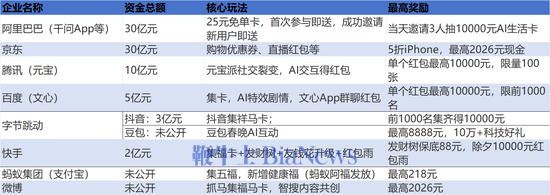
Core Viewpoint - The upcoming Spring Festival will see a fierce competition among major internet companies in the "red envelope war," with total investments exceeding 8 billion yuan, and potential cumulative spending reaching 10 billion yuan when including undisclosed amounts from various platforms [1][4]. Group 1: Investment and Participation - Major players in the red envelope competition include Alibaba, Tencent, Baidu, JD.com, ByteDance, and Kuaishou, with total disclosed amounts exceeding 8 billion yuan [4]. - Alibaba is leading with a 3 billion yuan investment through its Qianwen app, focusing on integrating user consumption behaviors with its ecosystem [6]. - Tencent has allocated 1 billion yuan for its Yuanbao app, aiming to enhance user interaction and experience [6]. - Baidu has committed 500 million yuan for its Wenxin assistant, targeting user engagement within its app [6]. - JD.com and Kuaishou have also announced significant investments, with JD.com planning to distribute 3 billion yuan in red envelopes [3][6]. Group 2: User Engagement and Retention - Experts warn that relying solely on red envelopes may lead to low user retention rates, with 7-day retention below 20% and 30-day retention potentially dropping below 5% [8][9]. - The effectiveness of red envelopes in retaining users is questioned, as they primarily address initial user acquisition rather than long-term engagement [9][10]. - Companies are encouraged to focus on product design and technological capabilities to meet user needs, rather than solely on promotional tactics like red envelopes [10]. Group 3: Competitive Landscape and Strategy - The competition is intensified by the emergence of generative AI technologies, with companies vying for user attention through innovative applications [5]. - ByteDance's Doubao is expected to benefit significantly from its collaboration with the Spring Festival Gala, leveraging its large user base for engagement [7]. - The strategies employed by different companies reflect their long-term visions, with Alibaba focusing on integrating user experiences and Tencent emphasizing social interaction [6][7].


忽略“春节AI大战”吧,AI的入口之争胜负早已明了
3 6 Ke· 2026-02-10 01:34
Core Viewpoint - The article discusses the competition in the AI market, particularly focusing on the contrasting strategies of Alibaba and Google, highlighting Alibaba's unique approach with its Qianwen App and its implications for the AI landscape [1][4]. Group 1: AI Market Competition - The AI market is increasingly viewed as a contest of marketing expenditures, particularly illustrated by the recent "red envelope war" during the Spring Festival, where companies compete for user engagement through financial incentives [1]. - Alibaba's Qianwen App launched a significant promotional campaign, achieving over 10 million orders within 9 hours, indicating a successful marketing strategy that diverges from traditional competition [1][13]. - The article posits that the success of Alibaba's Qianwen App is a result of long-term strategic investments made years prior, rather than just a short-term marketing victory [1][9]. Group 2: Strategic Comparisons - Google has adopted a full-stack self-research strategy, investing heavily in various aspects of AI, including hardware and software, while Microsoft has taken a dual approach, relying on partnerships and third-party resources [2][3]. - As of Q4 2025, Microsoft's market value has decreased by over 30%, contrasting with Google's market value, which has approached $4 trillion, highlighting the effectiveness of Google's strategy [2]. - Alibaba is positioned as the closest competitor to Google in the full-stack AI space, with significant investments planned for AI infrastructure and capabilities [4][5]. Group 3: Future Projections - Alibaba plans to invest 380 billion yuan in AI capital expenditures over the next three years, with an additional 100 billion yuan recently announced, indicating a strong commitment to AI development [5]. - The company aims to redefine the AI landscape by creating a new operating system based on large models, which will facilitate the development of numerous applications through natural language [4]. - The competitive landscape is expected to shift from performance and customer acquisition to a broader ecosystem competition, encompassing computing power, cloud services, and user engagement [9][14].


马云督战,千问剑指“AI入口”高地
Hua Er Jie Jian Wen· 2026-02-06 10:59
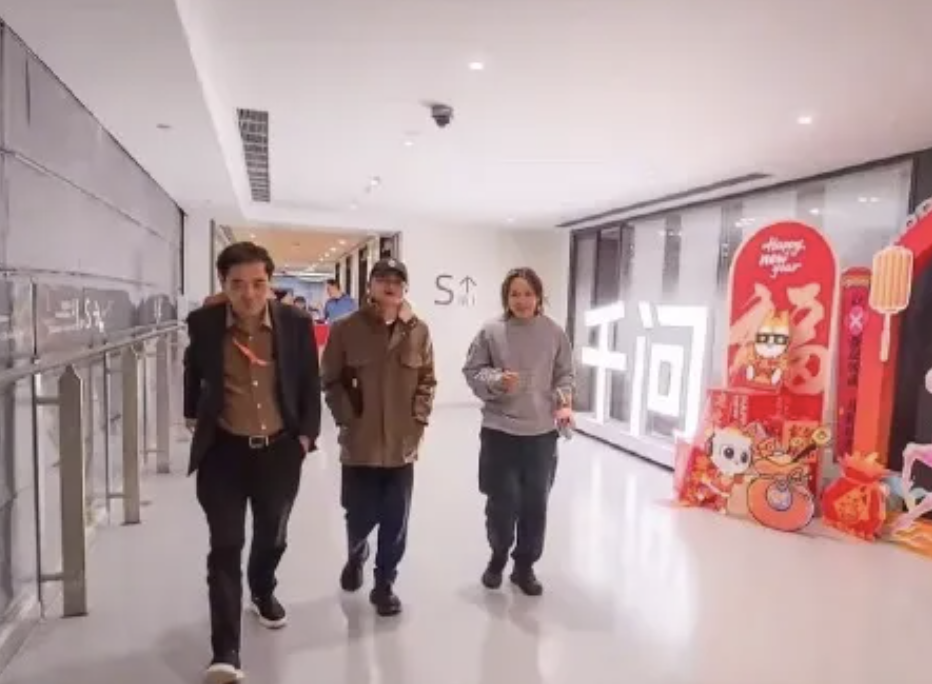
Core Viewpoint - Alibaba's recent aggressive marketing strategy, including a 30 billion yuan "Spring Festival Treat Plan," aims to establish its AI app, Qianwen, as a dominant player in the market, especially during the high-traffic period of the Spring Festival [1][7][10]. Group 1: Marketing Strategy and Competition - Alibaba's Qianwen app launched a significant promotional campaign, including a 30 billion yuan budget for user engagement during the Spring Festival, marking the largest investment in such activities in the company's history [1][7]. - The competition among major tech giants like Alibaba, Tencent, and Baidu has intensified, with each company investing heavily to capture user attention during the Spring Festival, reminiscent of past marketing battles [9][10]. - Tencent and Baidu have also initiated their own promotional activities, with Tencent offering 10 billion yuan and Baidu 5 billion yuan, but Alibaba's investment is notably higher [7][9]. Group 2: User Engagement and Market Dynamics - The presence of Jack Ma at Alibaba's headquarters and his focus on user engagement highlights the importance of capturing consumer interest in the AI sector, as failing to do so could render technological advancements ineffective [5][6]. - The traditional methods of user acquisition through financial incentives are being questioned in the context of AI, as the sustainability of such strategies remains uncertain [2][12]. - The market's reaction to these promotional efforts has been mixed, with stock prices for Alibaba and Tencent declining despite the announcements, indicating investor skepticism about the long-term viability of these strategies [13][15]. Group 3: Future Challenges and Considerations - The challenge for Alibaba lies not only in attracting users through subsidies but also in retaining them post-campaign, as user loyalty in AI applications is less predictable compared to traditional services [14][16]. - The financial implications of acquiring users through heavy subsidies could lead to increased operational costs, raising concerns about profitability in the long run [13][14]. - The shift towards AI-driven platforms necessitates a reevaluation of user engagement strategies, as the competitive landscape evolves beyond traditional app-based interactions [12][16].

微信“大义灭亲”,腾讯掉了2000亿
3 6 Ke· 2026-02-05 08:50
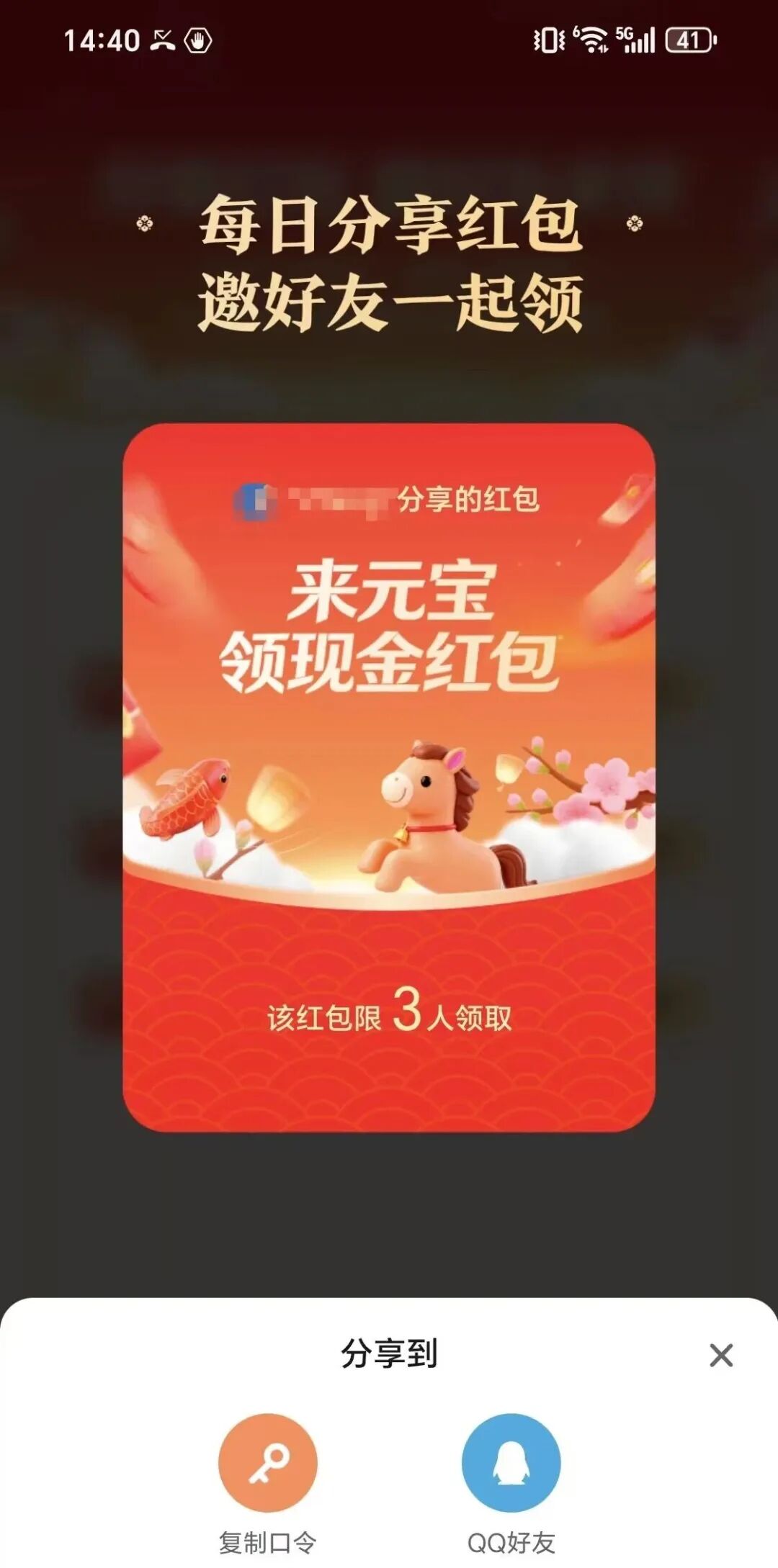
Core Viewpoint - Tencent's cash red envelope distribution of 1 billion yuan faced significant backlash as WeChat restricted the sharing of its links, leading to a market value loss of approximately 200 billion HKD for Tencent [1][2][4]. Group 1: Event Overview - On February 1, Tencent's Yuanbao app launched a Spring Festival campaign offering 1 billion yuan in cash red envelopes, encouraging users to share links for more chances to win [3][4]. - The campaign led to excessive sharing in WeChat groups, causing user complaints about spam and disruption of social experiences [4][12]. - WeChat's announcement on February 4 restricted Yuanbao's promotional links, resulting in a significant drop in Tencent's stock price, closing at 558 HKD per share, down 3.96% [2][8]. Group 2: Internal Dynamics - Tencent's internal discussions revealed a conflict between user experience and promotional strategies, leading to the decision to restrict Yuanbao's activities [4][5]. - Yuanbao's response included a shift to a "password red envelope" system, requiring users to share a text password instead of direct links, complicating the process [5][8]. - The incident raised questions about Tencent's strategic priorities when balancing platform rules and business promotion [9][12]. Group 3: Market Implications - The restriction on Yuanbao's red envelope links is seen as a setback in Tencent's efforts to compete in the AI space, particularly as other companies ramp up their own promotional activities [8][12]. - Competitors like Baidu and Alibaba are also launching significant cash red envelope campaigns, intensifying the competition in the AI assistant market [12][13]. - The effectiveness of Yuanbao's promotional strategies in retaining users post-campaign remains uncertain, highlighting the challenges of user engagement in a crowded market [12][13].
重金砸向春节档,阿里腾讯AI贴身肉搏
Bei Jing Shang Bao· 2026-02-02 13:09
Core Insights - The competition between Alibaba's AI assistant "Qianwen" and Tencent's "Yuanbao" has intensified during the Spring Festival, with both companies investing heavily to attract users and establish a dominant presence in the AI space [2][9] Group 1: Alibaba's Strategy - Alibaba has launched a 3 billion yuan "Spring Festival Treat Plan" for its AI assistant Qianwen, allowing users to enjoy free dining and entertainment during the holiday [2][4] - Qianwen aims to integrate into real-life consumption by connecting with various Alibaba services such as Taobao, Alipay, and Fliggy, enabling seamless AI shopping experiences [3][4] - The initiative represents Alibaba's largest investment in a Spring Festival campaign to date, emphasizing a focus on user engagement and transaction closure [4] Group 2: Tencent's Approach - Tencent's Yuanbao has initiated a 1 billion yuan cash red envelope campaign, aiming to replicate the success of the WeChat red envelope phenomenon from 11 years ago [6][10] - The campaign encourages social sharing and user engagement through various tasks, although it has faced challenges with user familiarity and complexity compared to previous red envelope offerings [7][10] - Yuanbao achieved significant app ranking success, reaching the top of multiple app charts shortly after the campaign launch, indicating strong initial user interest [8][10] Group 3: Competitive Landscape - The competition is not limited to Alibaba and Tencent; ByteDance and Baidu are also actively participating, with Baidu launching a 500 million yuan red envelope campaign using its AI assistant Wenxin [10] - Each company is adopting different strategies: Alibaba focuses on transaction integration, Tencent emphasizes social engagement, and Baidu aims for AI internalization [10] - The true test for these AI platforms will be maintaining high daily active users and engagement post-holiday, distinguishing between "tool-type AI" and "platform-level AI" [10]
元宝派、文心、UC…为什么BAT都急着给AI拉群?
3 6 Ke· 2026-01-27 23:57
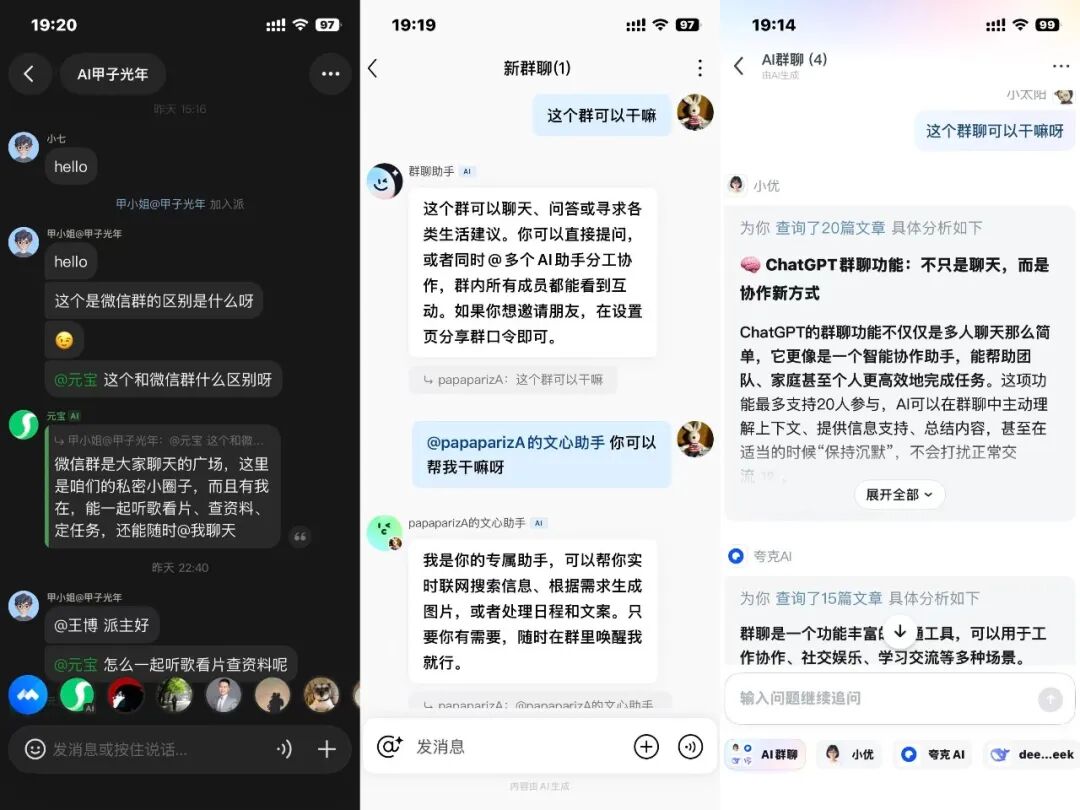
Core Insights - The major Chinese internet companies "BAT" have simultaneously responded to the emerging trend of "AI group chat," indicating a significant paradigm shift in the industry [1] - The introduction of AI group chat features by these companies suggests a strategic positioning for the "AI super entrance" in the evolving digital landscape [3] Group 1: AI Group Chat Development - The concept of "AI group chat" has gained traction following the testing of group chat features by ChatGPT in December 2024, leading to accelerated development by major tech firms [2] - AI group chat is transitioning from a basic social feature to a core component of the AI era, driven by advancements in large model capabilities and the need for multi-agent collaboration [2][3] Group 2: Product Features and User Experience - Early explorations of AI group chat were conducted by smaller companies, with products focusing on emotional connection and immersive experiences rather than efficient collaboration [4][5] - Current AI group chat products emphasize task-oriented collaboration, integrating various functionalities such as social interaction, work tasks, and personal assistance [6][7] Group 3: Market Implications - The competition for the "super entrance" in the AI era is intensifying, with AI group chat potentially becoming a central hub for user interactions, decision-making, and collaboration [15][19] - The integration of AI capabilities into a unified workspace can enhance user engagement and create new business opportunities, as seen in Tencent's "Yuanbao" and Baidu's multi-AI role chat [12][17] Group 4: Future Outlook - The success of AI group chat could redefine platform boundaries, creating a new type of application that encompasses various tools and social interactions [18] - The ongoing development of AI group chat features by major players suggests that the true competition for user engagement and market dominance will intensify by 2026 [20]
国金证券:大厂算力投入将进入白热化阶段 智算中心国产替代有望加速
智通财经网· 2026-01-20 07:35
Core Insights - The competition for AI entry points is fundamentally a battle for traffic, directly impacting the advertising and e-commerce fundamentals of large internet companies, with significant investments expected in AI model and application capabilities by 2026 [1][2] Group 1: AI Competition and Investment - Major internet companies are increasing their investment in AI as the competition for entry points intensifies [1] - The emergence of new reasoning models has unlocked approximately 10 times the computational potential compared to traditional models, shifting the demand from solely "training-driven" to a "dual-driven" model of both training and reasoning [1][2] Group 2: Domestic Chip Development - The scale of China's intelligent computing power is projected to maintain a compound annual growth rate of 57% from 2020 to 2028, with domestic GPU capabilities improving significantly [3] - Domestic chip manufacturers are narrowing the performance gap with international giants, supported by high capacity utilization rates from local foundries like SMIC [3] Group 3: Supply and Demand Dynamics - The demand for AI reasoning is expected to surge as AI applications in smartphones and other terminals reach critical mass, with policy initiatives driving hardware upgrades towards more efficient and energy-saving solutions [4] - Domestic CSP vendors are accelerating the adaptation of local GPUs, while increased restrictions on overseas cloud computing power are likely to expedite the domestic replacement process [4]

千问接入阿里生态推AI购物,开放400项办事功能
Bei Jing Shang Bao· 2026-01-15 15:35
Core Viewpoint - The competition for AI entry points has intensified, with Qianwen App integrating various Alibaba ecosystem services to enhance AI shopping functionalities and streamline user transactions [1][2]. Group 1: AI Integration and Functionality - Qianwen App has announced the integration of over 400 AI service functions across Alibaba's platforms, including Taobao and Alipay, allowing users to perform tasks like ordering food and booking flights [1]. - The AI assistant aims to facilitate complex tasks across different applications, moving beyond simple Q&A to become a central hub for user decision-making [1][3]. Group 2: Competitive Landscape - The entry point battle is characterized by major players like Alibaba and ByteDance, with the latter exploring hardware partnerships while Alibaba leverages its ecosystem advantages for AI integration [1][2]. - The competition is not just about technology but also about enhancing product experience and understanding user needs, which will determine who can effectively connect with users [3]. Group 3: Future Challenges and Collaboration - The rise of AI super entry points presents challenges that require collaboration among platform providers, hardware manufacturers, and regulatory bodies to establish new rules and order in the AI era [4]. - Balancing commercial innovation with consumer protection and ensuring compliance with personal information handling will be crucial for the success of AI technologies in meeting real consumer demands [4].

【西街观察】千问点外卖,AI入口之争打响
Bei Jing Shang Bao· 2026-01-15 14:44
Core Viewpoint - The integration of Qianwen App with Alibaba's ecosystem marks a significant advancement in AI shopping capabilities, enabling users to perform various tasks such as food delivery, shopping, and flight booking through a single AI interface [1]. Group 1: Company Developments - Qianwen App has announced full integration with Alibaba's services including Taobao, Alipay, and Fliggy, launching over 400 AI functionalities for user testing [1]. - The AI assistant aims to streamline Alibaba's business operations, moving beyond simple Q&A to executing complex tasks across applications [1]. - The competition in the AI entry point market is intensifying, with smaller companies struggling to compete against major players like Alibaba and ByteDance [1]. Group 2: Industry Dynamics - The battle for AI entry points is seen as a precursor to a larger ecosystem war, with companies needing to refine their product experiences and deepen ecosystem collaboration to meet user needs [3]. - The future of AI super entry points will require collaboration among platform providers, hardware manufacturers, and regulatory bodies to establish new rules and ensure user data protection [4]. - The competition is not just about technology but also about understanding and addressing core user scenarios effectively [3].
阿里系双AI出手,定义AI入口新战场
华尔街见闻· 2025-11-19 03:00
Core Insights - The market is shifting focus from "what can be discussed" to "what can be accomplished," indicating a clear trend towards AI as a productivity tool rather than just a conversational agent [1][5] - Major industry events in November, including the launch of Alibaba's "Qianwen" app and Ant Group's "Lingguang" AI assistant, signify a pivotal moment in the AI application landscape [2][4] - The competition is evolving from measuring daily active users to understanding who can meet core user needs effectively [5][8] Group 1: AI Application Landscape - The new battleground for AI applications is emerging as the "productivity entry point," with Ant Group's "Lingguang" exemplifying this shift by focusing on task resolution rather than general interaction [6][18] - Users are transitioning from seeking simple Q&A interactions to wanting one-click solutions that accomplish tasks [7][19] - The AI landscape by 2025 is expected to be more defined, with leading players adopting distinct strategic paths [8][61] Group 2: Competitive Layers - The AI entry point has diversified into three layers: 1. The first layer focuses on traffic "moats," represented by Tencent and ByteDance, which aim to enhance consumer engagement through AI [10][11] 2. The second layer serves as a B2B "arsenal," with companies like Baidu and Alibaba providing AI solutions to enhance business operations [12][13][14] 3. The third layer is the C-end "personal assistant," which addresses proactive user tasks rather than passive entertainment [15][16][17] Group 3: Ant Group's "Lingguang" - "Lingguang" is positioned as the first all-code-generating multi-modal AI assistant, capable of creating interactive tools in response to user requests [21][24] - The shift from providing information to generating tools represents a fundamental change in AI's role, moving towards "scene productivity" [25][36] - The value of the "productivity entry point" lies in creating closed loops for high-intent scenarios, enhancing user engagement and satisfaction [26][27] Group 4: User Engagement and Tool Creation - The "Lingguang" assistant allows users to generate interactive applications, transforming them from passive consumers to active tool creators [41][44] - This model addresses long-tail demands that traditional app development cannot meet due to high costs and long timelines [42][43] - The focus on problem-solving is crucial for user retention, as it emphasizes the practical utility of AI [45] Group 5: Strategic Framework - Ant Group's AI strategy is characterized by a systematic approach, with "Lingguang" and "AQ" (AI health manager) serving as key components of its broader vision [52][60] - The underlying technology, including the Ant Bailing Large Model, ensures strategic autonomy in capability, safety, and cost [54][55] - The expansion into physical applications through "Lingbo Technology" reflects the ambition to extend AI's service capabilities beyond the digital realm [58][59] Conclusion - The AI entry battle is becoming increasingly nuanced, with Ant Group's "Lingguang" introducing a significant variable by transforming AI from a knowledge provider to a capability enhancer [63][64] - The ultimate success in the AI landscape will depend on the ability to solve real user problems rather than merely attracting attention [65]