AI应用生态

Search documents
AI超级入口“三国杀”格局显现:百度文心、豆包、千问各有千秋
3 6 Ke· 2026-01-23 03:04
Core Insights - The core viewpoint of the articles is that the competition in the domestic AI application market has solidified into a "three-way battle" among Baidu's Wenxin, ByteDance's Doubao, and Alibaba's Qianwen, each serving as a "super entrance" for consumer AI applications [1][2][3] Group 1: Market Positioning - Baidu's Wenxin has surpassed 200 million monthly active users (MAU), while ByteDance's Doubao reached 172 million MAU and Alibaba's Qianwen exceeded 100 million MAU, indicating a strong competitive landscape [1] - The shift in focus from technical metrics of AI models to their comprehensive application capabilities is expected to dominate discussions from 2025 onwards, with a growing emphasis on practical usability [1][2] Group 2: Competitive Advantages - Doubao benefits from the vast traffic and content ecosystem of ByteDance's platforms like Douyin and Toutiao, allowing it to quickly accumulate a large user base [2] - Qianwen leverages Alibaba Cloud's technological foundation and is closely integrated with Alibaba's e-commerce services, aiming for a seamless transition from conversation to transaction [2][3] - Wenxin's strength lies in its rich application ecosystem, integrating with Baidu's core services such as search, cloud storage, and maps, enhancing its search capabilities in the AI era [3][5] Group 3: Ecosystem Development - Wenxin emphasizes an open ecosystem by allowing third-party applications to connect through its Model Context Protocol (MCP), enabling it to offer a wide range of services from various sectors [3][6] - The integration of services through AI assistants is seen as a way to enhance user experience, providing detailed information and options that traditional apps may not offer [5][6] Group 4: Future Outlook - The competition among the three AI super entrances will depend on advancements in foundational models, tighter integration with existing super apps, and the development of a robust third-party application ecosystem [7] - The long-term vision for AI applications is to act as an "operating system" that seamlessly coordinates information and services, although current capabilities are still in early stages [6][7]



a16z:2026 年的 AI 应用生态,关键问题是这几个
Founder Park· 2026-01-08 06:50
Core Insights - The article discusses the evolution of AI applications and the potential for large models to dominate various application scenarios by 2026, emphasizing the need for a deeper understanding of AI's application layer [3] - It highlights the distinction between execution tools and thinking tools, predicting that the future will see a shift towards tools that facilitate exploration and creativity rather than just execution [9][10] Group 1: AI Application Landscape - Acharya notes that while the cost of coding has decreased, this benefit has not yet permeated the entire industry, suggesting that the understanding of future company structures and software types is still limited [7] - The future of AI applications will be a combination of top models' scheduling capabilities, specialized user interfaces, and abundant functionalities, leading to a clear differentiation between applications and underlying models [22] - The emergence of "Narrow Startups" will dominate the market, focusing on deep and specialized products rather than broad consumer applications [22] Group 2: Tool Evolution - The next generation of programming and productivity tools will shift from execution to exploration, with tools like Cursor and Google's Antigravity leading this change [12][14] - Acharya emphasizes that every team within a company will need to adopt a "software-first" approach, transforming all departments into software teams [18] - The introduction of AI programming agents will significantly expand the ambitions of companies, allowing for a re-evaluation of product development and prioritization processes [18] Group 3: Market Dynamics - The article argues that applications will not be consumed by models, as evidenced by a thriving entrepreneurial ecosystem in programming, with new revenue exceeding $1 billion in 2025 [28] - Companies with unique datasets, network effects, and complex ecosystems will have significant advantages in the market [30][32] - The article suggests that the future of AI applications will be characterized by extreme specialization, allowing applications to exist independently from models [27] Group 4: Consumer Engagement - The article discusses how ordinary consumers are beginning to engage with AI capabilities, moving beyond traditional command-line interfaces to more accessible tools [34] - Acharya believes that enabling consumers to create with AI will change perceptions and increase engagement with AI technologies [34] - The article concludes with recommendations for CEOs on leveraging AI to enhance operational efficiency and product innovation [36][38]

一年砸了上万亿,字节、阿里、OpenAI......如今格局如何?
虎嗅APP· 2025-12-26 00:44
Core Insights - In 2025, AI applications have transitioned from a nascent stage to a critical phase of global competition and ecological restructuring, becoming a core force in reshaping economic forms, social life, and geopolitical landscapes [5][6] - The report highlights a bifurcated development in the domestic AI application landscape, with explosive growth in AI image generation, office tools, and education, while sectors like AI writing, translation, virtual characters, and marketing tools have seen significant declines [6][18] - The user demographics reveal that men view AI as a "weapon" for results, while women see it as a "muse" for inspiration, indicating a deeper emotional connection with the technology [6][50] AI Application Ecosystem Evolution and Trends - The global AI application market has evolved from "regional differentiation" to "comprehensive explosion," with significant growth in both overseas and Chinese markets [15][16] - In 2025, overseas monthly active users (MAU) surged to over 1.5 billion, marking a 79.30% annual growth rate, while China's MAU quadrupled from 135 million in 2024 to 544 million in 2025, reflecting a 130.19% growth rate [15][16] - The report identifies a "dual-engine" driving pattern in the global AI market, with overseas markets showing sustained rapid growth and China's market demonstrating deep application potential [16] Competitive Landscape - The report outlines a clear competitive landscape in China, where the AI chatbot sector has become the new "operating system" of mobile internet, with Doubao capturing nearly 60% of the market share [28][39] - The report indicates that single-function tools are facing extinction, as evidenced by negative growth in AI virtual characters and design tools, which are being overshadowed by comprehensive models [30][32] - The competition is characterized by a binary structure, with general-purpose giants like ChatGPT dominating the market while specialized platforms like Canva focus on deep industry assets [36][40] User Demographics and Insights - The user structure in the Chinese AI market has shifted towards a dual differentiation, with men focusing on efficiency and decision-making, while women emphasize emotional and cognitive support [42][46] - Young users (18-34 years) view AI as a remedy for loneliness, while middle-aged users (35-54 years) utilize AI tools to combat workplace pressures and enhance productivity [47][48] - The report suggests that the future of AI lies in addressing the differentiated consumer demands, with a focus on emotional value and aesthetic experience for women, and efficiency and decision support for men [50]

狂飙的阿里和腾讯,AI应用生态之争
2 1 Shi Ji Jing Ji Bao Dao· 2025-11-21 07:29
Core Insights - Alibaba's "secret project" is the rebranded Qwen-based AI assistant, now named Qianwen, which aims to compete with ChatGPT and establish itself as a leading AI application in the consumer market [1][2] - Tencent is integrating AI into its core business, with plans to launch an AI agent within WeChat, leveraging its vast user base for competitive advantage [3] - Both companies are focusing on building their own AI ecosystems, with Alibaba's Qianwen and Tencent's Yuanbao connecting various services to enhance user engagement and retention [4] Alibaba's Strategy - The transition of Qianwen from a B2B focus to a consumer-oriented AI application is a significant shift, with plans to cover multiple life scenarios such as office work, navigation, health, and shopping [2] - Alibaba's fastest-growing consumer AI product is Quark, which will integrate with Qianwen to enhance its capabilities [2] - CEO Wu Yongming emphasizes that large models will become the next generation of operating systems, aiming to keep users within Alibaba's ecosystem [2] Tencent's Approach - Tencent's AI strategy is built on the "Hunyuan" large model, which integrates AI across its services, with a focus on WeChat as a primary entry point for users [3] - The company aims to create an AI agent that allows users to perform multiple tasks within WeChat, capitalizing on its existing user base [3] - Tencent's internal ecosystem includes WeChat, QQ, and Tencent Meeting, facilitating a wide range of social, office, and consumer interactions [4] Industry Landscape - The current market lacks a dominant AI application with over 100 million daily active users, indicating significant growth potential [3] - The competition is not only about user acquisition but also about controlling the end-to-end ecosystem, which is reshaping traditional entry points in the market [3][4] - The year 2025 is anticipated to be pivotal for AI applications, as companies leverage their technological advancements to meet user demands and create a secure ecosystem [4]

腾讯三季度营收1928.69亿元
Bei Jing Shang Bao· 2025-11-13 10:01
Core Insights - Tencent's Q3 2025 financial report shows a revenue of 192.87 billion yuan, representing a year-on-year growth of 15% [1] - The operating profit, based on non-IFRS standards, reached 72.57 billion yuan, marking an 18% increase year-on-year [1] Revenue Breakdown - Value-added services revenue grew by 16% year-on-year to 95.86 billion yuan, with the gaming segment experiencing a growth rate of 22.8% [1] - Marketing services revenue increased by 21% year-on-year to 36.24 billion yuan [1] - Financial technology and enterprise services revenue rose by 10% year-on-year to 58.17 billion yuan [1] AI and International Growth - Tencent's AI application ecosystem has fully integrated its products, including WeChat, QQ, and Tencent Meeting, covering key scenarios in social, office, and consumer sectors [1] - The international business showed strong growth, with international gaming revenue increasing by 43% to 20.8 billion yuan [1] R&D and Capital Expenditure - Tencent's R&D expenditure for the quarter was 22.82 billion yuan, while capital expenditure amounted to 12.98 billion yuan [1]
腾讯Q3财报:营收1928.7亿元,同比增长15%
Xin Lang Ke Ji· 2025-11-13 08:46
Core Insights - Tencent Holdings reported Q3 revenue of 192.87 billion yuan, a year-on-year increase of 15% [1] - Non-IFRS operating profit reached 72.57 billion yuan, reflecting an 18% year-on-year growth, indicating stable overall performance [1] Revenue Breakdown - Value-added services revenue grew by 16% to 95.86 billion yuan [1] - Gaming revenue increased by 22.8%, showcasing strong performance in this segment [1] - Marketing services revenue rose by 21% to 36.24 billion yuan, driven by AI and the WeChat business ecosystem [1] - Financial technology and enterprise services revenue grew by 10% to 58.17 billion yuan, benefiting from increased commercial payment activities and enterprise service demand [1] AI and International Growth - Tencent's AI application ecosystem has fully integrated with multiple internal products, including WeChat, QQ, and Tencent Meeting, covering key scenarios in social, office, and consumer sectors [1] - The international business showed robust growth, with international gaming revenue surging by 43% to 20.8 billion yuan [1]
业界乌镇话网络信息技术产业生态:开放、互联、可靠
Zhong Guo Xin Wen Wang· 2025-11-08 13:42
Core Viewpoint - The 2025 World Internet Conference in Wuzhen emphasizes the importance of an open ecosystem for accelerating technological innovation and collaboration in the digital transformation era [1][3]. Group 1: Open Standards and Ecosystem - Open standards and architectures are essential for innovation, as highlighted by Philipp Tomsich from the RISC-V International Foundation, who noted the expansion of global open standards and ecosystems over the past decade [3]. - The open-source model is seen as a crucial factor for faster cross-border collaboration and enhancing competition within the chip technology sector [3]. Group 2: AI and Industry Transformation - AI technology is significantly altering industry structures and development models, but the fragmented deployment of AI applications poses challenges for realizing its full value [3]. - There is a need to build an efficient, collaborative, and secure AI application ecosystem to address these challenges [3]. Group 3: Unified AI Architecture - Cisco's global vice president, Prashanth Kalika, discussed the need for a unified AI architecture that integrates data collection, training, inference, and automation to resolve the traditional split between cloud and edge deployments [4]. - The goal is to achieve adaptive optimization through bidirectional data flow [4]. Group 4: Evaluation Systems for Intelligent Endpoints - The development of intelligent endpoints requires an effective evaluation system to ensure traceability and identify potential risks, as stated by Wei Liang from the China Academy of Information and Communications Technology [4]. - Establishing a precise assessment method is crucial for the reliable operation of intelligent endpoints [4].
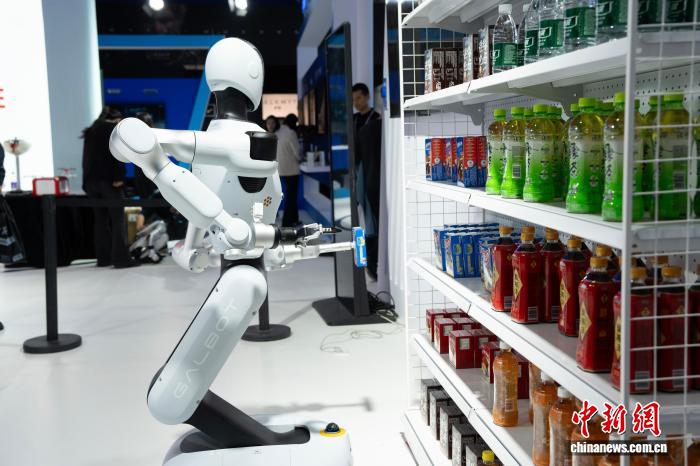
字节阿里腾讯的AI入口之争,目前的答卷都在这了
虎嗅APP· 2025-10-29 09:48
Core Insights - The article emphasizes that the AI application market in China has reached a pivotal moment, transitioning from hype around models to a focus on user value and active user scale [3][4] - It highlights two successful paths in AI applications: ecosystem integration by giants and deep specialization in vertical tools [4][5] Market Overview - In September 2025, the overseas AI application monthly active users (MAU) reached 1.448 billion, with a quarterly growth rate of 19.16%, indicating a shift to a mature phase focused on value extraction [8][9] - In China, the AI application MAU reached 467 million with a quarterly growth rate of 7.17%, driven by new application innovators taking over from early technology adopters [10] Competitive Landscape - The AI chatbot sector leads with 290 million MAU, showing an annual growth rate of 116.83%, while AI education and video creation also exhibit strong growth potential [14] - The market shows significant differentiation, with strong growth in AI education and efficiency tools, while some applications like AI virtual characters face declines [16][19] AI Search Engine Dynamics - The mobile app segment has become the core growth engine for AI search, with overseas MAU increasing from 48.44 million to 73.90 million, a cumulative growth rate of 52.60% [42] - The Chinese web market for AI search has seen a drastic decline, with MAU dropping from 20.11 million to 7.87 million, a cumulative decrease of 60.33% [44][45] AI Virtual Characters - The global AI virtual character market is experiencing a split, with traditional app models declining while web models show explosive growth in China [76][79] - The overseas market faces stagnation due to product homogeneity and declining user engagement, while the Chinese market is innovating with web-based solutions [77][78] AI Education Sector - The global AI education market is witnessing explosive growth, particularly in China, where the app segment has a total growth rate of 65.60% [89] - The overseas market is rebounding, especially in the web segment, which saw a 67.51% increase, indicating a return to value-driven trends [90] GPTs and Vertical Applications - The growth of education-related GPTs is robust, with a total increase of 171.34%, indicating a symbiotic relationship with vertical applications [92] - GPTs serve as a primary entry point for AI education, driving new user acquisition while vertical applications cater to specialized needs [92]



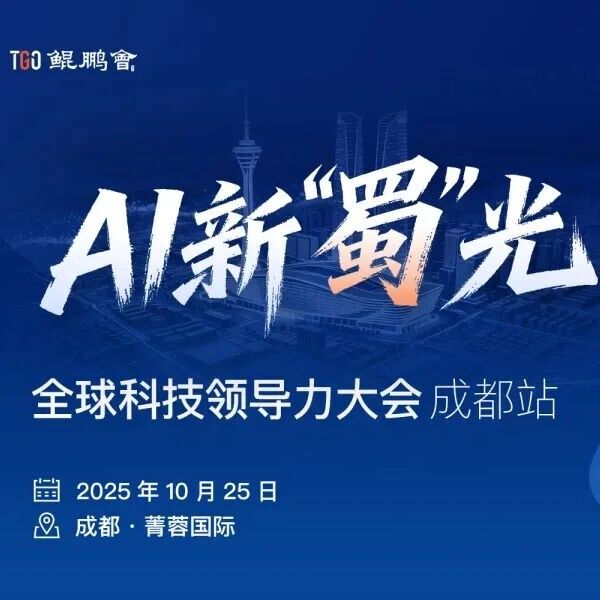
倒计时 3 天!AI 新“蜀”光如何点亮西部科创高地?GTLC 成都站揭秘>>
AI前线· 2025-10-23 04:12
Core Insights - The GTLC Global Technology Leadership Conference is a premier event organized by TGO Kunpeng Club, focusing on technology leadership and innovation since its inception in 2016 [2] - The upcoming conference in Chengdu on October 25, 2025, will center around the theme "AI New 'Shu' Light," emphasizing the AI application ecosystem and featuring over 20 top observers and practitioners from various fields [3][4] Event Details - The conference will take place at Chengdu · Jingronghui, with multiple high-quality keynote speeches, closed-door lunch meetings, and themed discussions to facilitate deep exchanges among technology leaders [4][16] - The agenda includes a variety of sessions, such as discussions on the future of intelligent driving, AI applications in different sectors, and the transformation of traditional enterprises through AI [7][10][11] Participation Information - The ticket price for the conference is ¥2999 per person, while TGO Kunpeng Club members can attend for free and invite three eligible friends [20][21] - Non-members interested in attending can apply for free tickets, subject to approval [22] Additional Activities - The conference will feature a Programmer's Day celebration on October 24, including a welcome dinner and a friendly football match, along with various engaging activities post-conference [17][18]
模力工场 015 周 AI 应用榜:学而思九章大模型登榜,科研人狂喜!AIspire一键帮你读文献
AI前线· 2025-10-16 04:37
Core Insights - The article highlights the ongoing "Moli Workshop Autumn Competition," showcasing various AI applications and their rankings, emphasizing the importance of resource sharing and collaboration among developers and users [2][4]. Application Rankings - The article presents a ranking of AI applications, with "AIspire" leading the list as a research assistant that enhances the efficiency of academic writing and literature management [6][7]. - Other notable applications include "Office Little Raccoon," which facilitates data analysis in Excel, and "Fengxi AI Companion," aimed at democratizing AI access for users without programming skills [15][16]. Trends in AI Applications - The current trend in AI applications is characterized by "intelligent execution," where AI evolves from being a mere assistant to actively executing tasks, thereby integrating into daily workflows [17]. Developer Insights - The developer of "AIspire," Liu Qiang, emphasizes the application's goal to provide personalized assistance throughout the research lifecycle, aiming to create a global leading intelligent research collaboration platform [9][10][12]. - Liu also discusses the challenges faced during the product's internationalization, including language support and cultural differences, which were addressed through AI-generated translation tools [11][12]. Future Vision - The vision for "AIspire" includes redefining scientific exploration and knowledge discovery by merging artificial intelligence with human intuition, ultimately enabling researchers to create new knowledge efficiently [13]. Participation and Engagement - The article encourages developers to participate in the Moli Workshop by submitting their AI applications, highlighting the importance of community feedback in the ranking process [18][19].