
C2B2C模式

Search documents
小红书不愿再为闲鱼作嫁衣
3 6 Ke· 2025-10-23 09:09
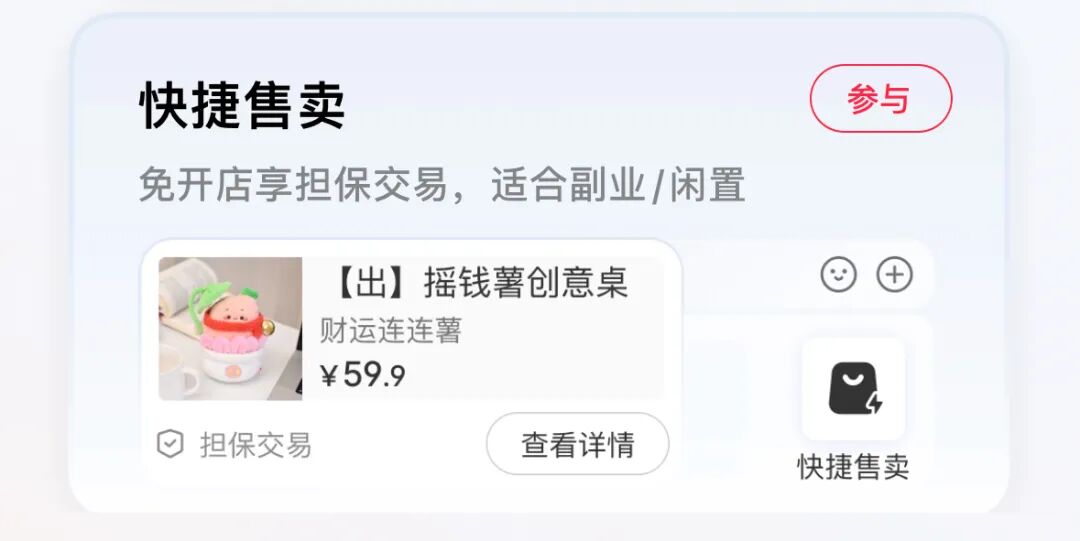
Core Insights - The second-hand trading platform Zhuanzhuan has strategically retreated from the C2C market, closing its personal trading business and "free market" product listing, shifting to a C2B2C model that offers quality inspection and guarantees for second-hand goods [1][3] - Xiaohongshu has begun internal testing of a "Quick Sale" feature, allowing users to link idle goods for sale in their posts and chat, indicating a direct competition with Zhuanzhuan and a shift in the second-hand trading landscape [1][3][4] Market Overview - According to iiMedia Consulting, the domestic second-hand e-commerce transaction scale is expected to reach 614.49 billion yuan in 2024, with a year-on-year growth of 12.0%, and a user base of 286 million, growing by 9.8% [3] - By 2030, the transaction scale is projected to reach 911.43 billion yuan, with a user base of 389 million [3] Competitive Landscape - Xiaohongshu's entry into the second-hand trading market is seen as a natural progression, with significant user engagement in second-hand categories, but most transactions have historically occurred on platforms like Xianyu [4][9] - Xianyu remains dominant in the C2C segment, benefiting from Alibaba's ecosystem and a robust personal credit system, while Xiaohongshu must address how to build consumer trust in its new trading feature [3][11] Business Model Shift - Zhuanzhuan's exit from the C2C business highlights the challenges of sustaining profitability in this segment, as it struggled to compete with Xianyu, which has a much larger user base and transaction volume [12][14] - The transition to a C2B2C model signifies a shift towards a more structured and trust-based trading environment, which requires higher operational costs for quality assurance and customer service [17][15] User Experience and Trust - Xiaohongshu's "Quick Sale" feature aims to enhance community engagement and streamline the trading process, but it faces challenges in ensuring a secure and trustworthy trading environment [11][17] - The platform's current requirements for sellers, such as account age and professional certification, may not be sufficient to establish the necessary trust for effective second-hand transactions [17][12]

转身的转转,与暗流涌动的二手江湖
3 6 Ke· 2025-10-13 11:20
Core Insights - The article discusses the strategic retreat of the second-hand trading platform, Zhuanzhuan, from the C2C market, marking a significant shift in its business model towards C2B2C [1][2][5] Group 1: Zhuanzhuan's Strategic Shift - Zhuanzhuan has decided to shut down its C2C business, which has become a financial burden, contributing less than 3% to the platform's total transaction volume [2][3] - The CEO of Zhuanzhuan, Huang Wei, acknowledged that the closure of the C2C business was a difficult but necessary decision, indicating a long-term strategy to focus on more profitable areas [2][5] - The C2C model has inherent risks, including transaction disputes and issues with product authenticity, which have negatively impacted Zhuanzhuan's brand reputation and user trust [3][5] Group 2: Competitive Landscape - The second-hand market is becoming increasingly competitive, with new players like Douyin and Kuaishou entering the luxury second-hand goods sector, indicating a robust market potential [1][7] - Xianyu remains the dominant player in the C2C space, boasting a user base of 215 million, while Zhuanzhuan's user base has declined to 35.88 million, highlighting the challenges Zhuanzhuan faces in gaining market share [3][7] - Aihuishou, another competitor, has established a strong supply chain in the 3C digital sector and is expanding its operations, posing a significant challenge to Zhuanzhuan [7][9] Group 3: Future Challenges for Zhuanzhuan - Zhuanzhuan's shift to a heavy asset model requires substantial investment in quality inspection and logistics, which may lead to increased customer acquisition costs and reliance on advertising [6][9] - The competition with Aihuishou is intensifying, particularly in the 3C sector, where Zhuanzhuan's transaction volume is slightly lower, indicating a need for improved supply chain efficiency [9][10] - The entry of new players with a focus on content-driven transactions is changing the dynamics of the second-hand market, making it essential for Zhuanzhuan to adapt its strategy to remain competitive [10][11]

知名二手电商平台关停10年业务,用户炸锅
猿大侠· 2025-09-27 04:11
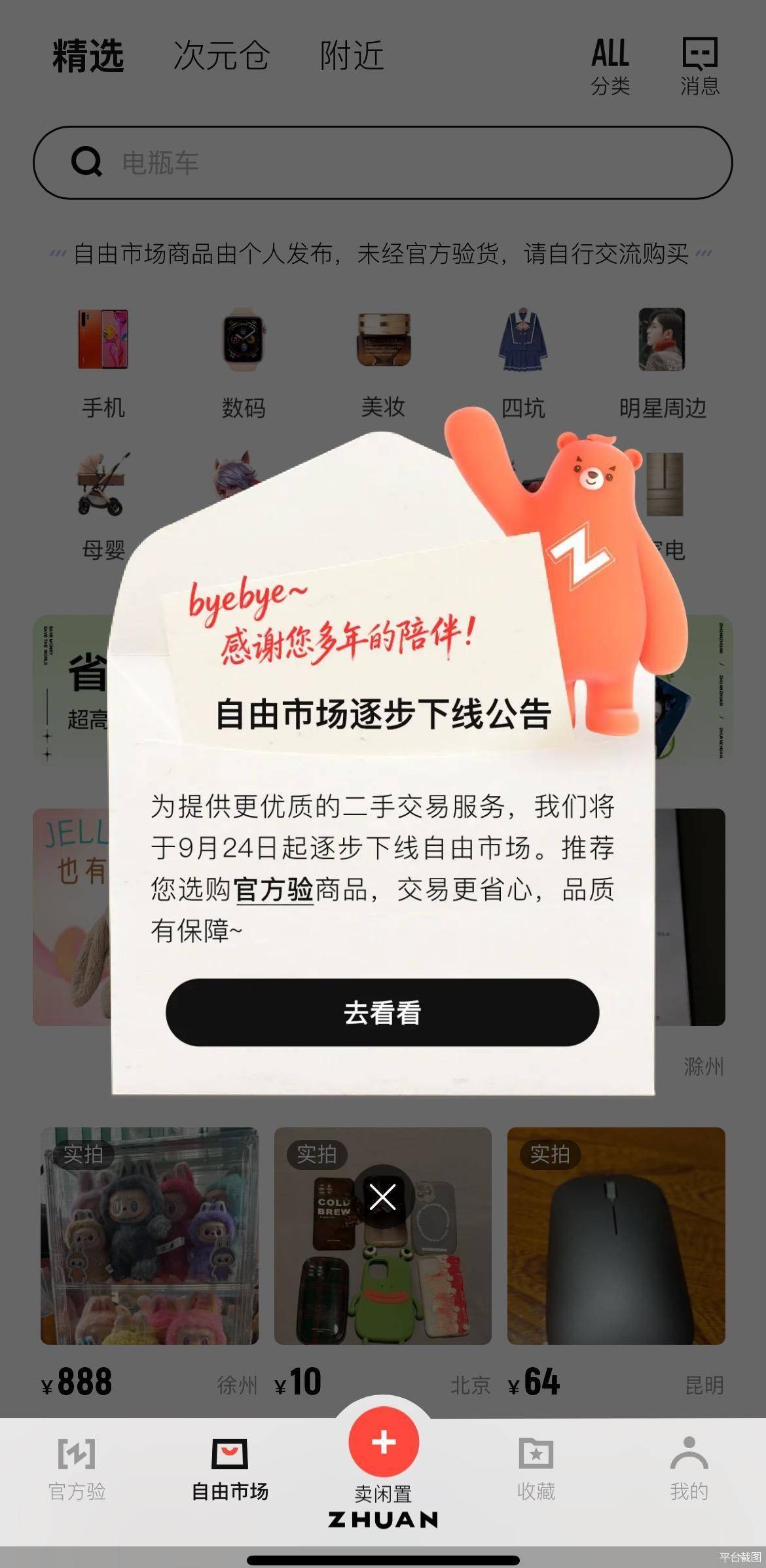
Core Viewpoint - Zhuanzhuan, a well-known second-hand trading platform in China, is shifting its business model from C2C to C2B2C, closing its "free market" operations that have been running for ten years, in response to competitive pressures and trust issues in the C2C model [1][2][11]. Summary by Sections Business Model Transition - Zhuanzhuan will gradually shut down its core C2C "free market" business, starting with the closure of personal product posting on September 24, followed by the removal of browsing and purchasing options by September 29, and the final closure of customer service by October 31 [4][5]. - The platform will now focus on C2B2C, where sellers can sell items through recycling, consignment, and listing, with the platform providing official quality inspection services [5][6]. User Impact - The closure of the free market will significantly impact specific user groups, particularly those trading niche items like collectible cards and dolls, who may find it difficult to adapt to the new model [9][11]. - Users have expressed concerns over the higher prices of officially inspected items and the platform's shift towards self-operated sales, making it harder for ordinary sellers to complete transactions [7][11]. Trust and Quality Issues - The C2C model has faced trust challenges, including online fraud and gray market transactions, which the platform struggled to manage effectively [11][12]. - Quality issues in second-hand goods, such as undisclosed defects and counterfeit products, have led to a poor shopping experience for consumers [12][14]. Operational Challenges - The new C2B2C model requires Zhuanzhuan to invest more resources in quality inspection and after-sales service, as the platform will now be directly responsible for these aspects [15][16]. - While the official inspection model aims to enhance trust in transactions, it may also increase operational costs, which could be passed on to consumers, necessitating a balance between cost control and user experience [16].

转转宣布:战略聚焦!创始人透露
Nan Fang Du Shi Bao· 2025-09-25 13:32
Core Viewpoint - The company, Zhuanzhuan Group, announced the gradual shutdown of its "Free Market" business, focusing instead on the "Official Verification" model to provide a more secure second-hand trading experience for users [1][2]. Group 1: Business Strategy - The decision to close the "Free Market" was described as a difficult but necessary choice, aimed at eliminating the space for online fraud and gray market transactions [1]. - The "Free Market" business accounted for less than 3% of the overall GMV (Gross Merchandise Volume) of Zhuanzhuan, indicating that its closure would not significantly impact the company's overall operations [2]. - The company aims to enhance user experience by focusing on the C2B2C model, which has shown rapid growth and profitability in recent years [2][7]. Group 2: Market Positioning - Zhuanzhuan's shift from C2C to C2B2C reflects a broader trend in the second-hand market, where platforms are increasingly differentiating based on user needs, with Zhuanzhuan emphasizing service quality and reliability [4][5]. - The company has established a complete closed-loop service for second-hand transactions, addressing issues such as information asymmetry and trust, which enhances user experience and transaction efficiency [7]. Group 3: Quality Assurance and Standards - Zhuanzhuan has developed its own standards for second-hand product verification, including a comprehensive 367-step inspection process for mobile phones, ensuring quality and reliability [6]. - The company has set up quality inspection centers across the country and employs over 2,500 quality inspectors to maintain high standards in its offerings [6]. - The focus on standardization in the second-hand market is seen as essential for meeting the evolving demands of consumers who prioritize product quality and service experience [7].
二手市场分道 双寡头格局成型
Sou Hu Cai Jing· 2025-09-23 15:00
Core Insights - The core decision of Zhuanzhuan Group to shut down its C2C "free market" business and transition to a C2B2C "official verification" model reflects a significant strategic shift aimed at enhancing consumer trust and service quality in the second-hand e-commerce sector [2][7][12] Business Model Transition - Zhuanzhuan is moving from a traditional C2C model, which relies on user-to-user transactions and is prone to issues like fraud and disputes, to a C2B2C model that emphasizes platform involvement in the transaction process [9][10][12] - The C2B2C model allows Zhuanzhuan to take on responsibilities such as quality inspection, recycling, pricing, and after-sales service, thereby creating a more reliable transaction environment [12][13] Market Context - The second-hand market in China is projected to exceed 3 trillion yuan, driven by changing consumer preferences towards quality and assurance rather than just low prices [7][17] - The market faces challenges such as trust deficits, lack of standards, and fulfillment difficulties, which the C2B2C model aims to address effectively [17][18][20] Trust and Standards - The C2B2C model transforms the trust mechanism from "person-to-person" to "person-to-platform," leveraging the platform's brand reputation and service capabilities to enhance consumer confidence [18] - Zhuanzhuan has established its own quality inspection standards, addressing the non-standard nature of second-hand goods and providing clear evaluations to consumers [20][22] Service Infrastructure - Zhuanzhuan has invested in a comprehensive service infrastructure, including smart quality inspection centers and a nationwide network of recovery engineers, to improve transaction efficiency and reliability [22][24] - The company has also introduced consumer-friendly policies such as a seven-day return policy and one-year warranty, setting new industry standards [24] Financial Performance - Zhuanzhuan achieved its first annual profit in 2022 and has maintained profitability, demonstrating the viability of its C2B2C model and its ability to create sustainable business value [25][27] Industry Impact - The strategic divergence between Zhuanzhuan and its competitor Xianyu highlights different approaches to the second-hand market, with both companies contributing to the evolution of China's circular economy [27]

转转关停自由市场,闲鱼稳坐“一哥”宝座?
Qi Lu Wan Bao Wang· 2025-09-23 10:11
Core Viewpoint - The company, Zhuanzhuan Group, announced the gradual shutdown of its "Free Market" business, marking a strategic retreat from direct competition with Xianyu in the second-hand e-commerce sector [1][2]. Group 1: Business Transition - Zhuanzhuan's CEO, Huang Wei, described the shutdown as a "strategic retreat," indicating a shift towards a C2B2C model that has been in motion since 2019 [2]. - The C2C business, which was the foundation of Zhuanzhuan, now accounts for less than 3% of the company's total share, highlighting the need for transformation [3]. Group 2: Financial Performance and User Engagement - Zhuanzhuan has invested heavily in advertising, particularly on platforms like Bilibili and Douyin, but the effectiveness of this investment appears limited, with monthly active users only increasing from 24.73 million to 35.88 million, a year-on-year decrease of 5.3% [3]. - The company has generated over 25 billion yuan in revenue since its establishment, with registered users exceeding 400 million by the end of 2024 [3]. Group 3: Quality Assurance and Trust Issues - The shutdown allows Zhuanzhuan to focus on its "Official Verification" business, which has seen significant investment, including 1.5 billion yuan for quality inspection centers and over 2 billion yuan planned for 2024 [4]. - Despite these efforts, trust issues persist, with over 110,000 complaints on the Black Cat Complaint platform, primarily related to discrepancies in product descriptions and quality verification [5]. Group 4: Competitive Landscape - Xianyu, as the leading player in the second-hand market, has surpassed 200 million monthly active users, growing nearly 20% year-on-year, and has established a unique ecosystem combining transactions and community engagement [6][8]. - The market is expected to polarize, with Xianyu dominating the C2C segment while Zhuanzhuan and competitors like Wanwu Xingsheng compete in the B2C quality market [9].

转转变“重”
Bei Jing Shang Bao· 2025-09-22 16:18
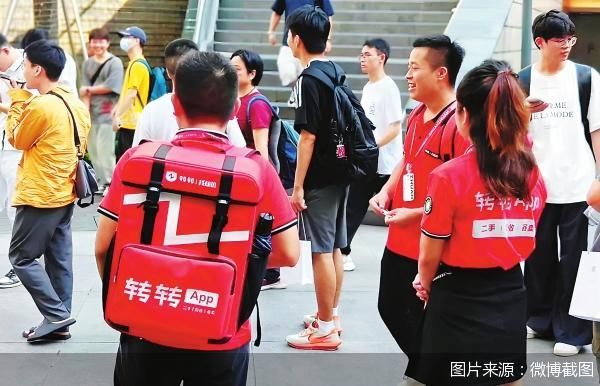
Core Viewpoint - 转转 Group is transitioning from a C2C model to a C2B2C model, focusing on quality inspection and service capabilities, marking a significant shift in its business strategy [1][3][4] Business Model Changes - The "Free Market" C2C model, which accounted for less than 3% of the overall GMV, will be gradually shut down, with the transition ensuring a smooth user experience [3][4] - The company aims to enhance its C2B2C business, which has shown rapid growth and profitability over the years [3][4] Strategic Focus - CEO Huang Wei emphasized the need for the company to reassess its business focus, stating that the shift to a "new consumption enterprise" is essential for future competitiveness [3][4] - The C2B2C model will prioritize official quality inspections, addressing consumer trust issues in second-hand transactions [4][5] Quality Assurance Initiatives - Since 2019, the company has been developing its C2B2C model, introducing services like "official inspection" to standardize quality control in second-hand goods [4][5] - The introduction of a quality inspection team and standardized processes aims to mitigate trust issues and improve transaction efficiency [5][6] Competitive Landscape - Other platforms like Xianyu are also expanding their B-end merchant offerings and enhancing quality inspection processes, indicating a broader industry trend towards service and efficiency [6][7] - Both Xianyu and 转转 are navigating the challenges of balancing C2C and C2B2C models while addressing consumer trust and transaction efficiency [7][8] Operational Expansion - 转转 has established quality inspection centers in major cities and has a significant number of on-site recovery engineers, indicating a heavy investment in physical assets [9][10] - The company has opened large retail stores to better understand consumer needs and enhance trust through in-person interactions [9][10] Financial Health - 转转 has achieved a positive cash flow since July 2022, indicating a healthy financial status and the ability to invest in service optimization [10]
占比不足3%、关停C2C业务 转转“变重”
Sou Hu Cai Jing· 2025-09-22 11:14
Core Viewpoint - The company is transitioning from a C2C model to a C2B2C model, focusing on quality inspection and service, marking a significant shift in its business strategy [1][4][10]. Business Model Transition - On September 22, the company announced the gradual shutdown of its C2C "Free Market" business, which currently accounts for less than 3% of its overall GMV [4][9]. - The C2B2C model, which has been growing rapidly and achieving scalable profitability for several years, will become the core focus moving forward [4][5][11]. - The CEO emphasized the need for the company to reassess its capabilities and the user experience in the C2C space, leading to the decision to discontinue the "Free Market" service [4][7]. Quality Inspection and Service Focus - The company aims to establish itself as a reliable intermediary in the second-hand market, with a strong emphasis on quality inspection through its "Official Inspection" service [5][6]. - A dedicated quality inspection team and standardized processes have been implemented to address issues of trust and information asymmetry in second-hand transactions [6][7]. Competitive Landscape - The shift in focus is partly a response to competitors like Xianyu, which have begun integrating more B-end merchants and enhancing their quality inspection processes [8][9]. - The company recognizes the importance of building trust in second-hand transactions, particularly given the non-standard nature of second-hand goods [7][9]. Heavy Asset Investment - The company is increasingly investing in heavy assets, including quality inspection centers and physical stores, to enhance its service offerings [10][11]. - As of now, the company has established three quality inspection centers and employs over 2,500 quality inspectors, with a nationwide presence for its collection services [10][11]. Financial Health and Strategy - The company has entered a phase of positive financial development since July 2022, achieving profitability and maintaining a positive cash flow [11]. - The CEO stated that the company will continue to invest strategically in key areas while ensuring financial health and sustainability [11].
转转创始人黄炜:我决定离开与闲鱼的战场
3 6 Ke· 2025-09-22 02:47
Core Insights - The future of Zhuanzhuan remains within the second-hand industry, shifting focus from an e-commerce platform to a broader C2B2C model [3][21][22] - Zhuanzhuan's CEO Huang Wei emphasizes a strategic retreat from C2C business, which is dominated by competitors like Xianyu [3][4][9] - The company has undergone significant transformation since its inception in 2015, adapting to market pressures and evolving consumer needs [12][14][18] Company Strategy - Zhuanzhuan will gradually close its C2C business line, marking a strategic shift to a 100% C2B2C model, allowing sellers to utilize various methods for transactions [3][4] - The company aims to enhance trust in the second-hand market through official verification services and a focus on user experience [6][18][19] - Zhuanzhuan has invested over 200 million yuan to expand its quality inspection department, establishing three major quality inspection centers across China [19][20] Market Context - The second-hand market in China has surpassed 3 trillion yuan, with intense competition from platforms like Xianyu and Aihuishou [5][14] - Zhuanzhuan's market share in C2C has dwindled to less than 3%, prompting the need for a strategic pivot [6][12] - The global second-hand luxury goods market is projected to grow from $37.2 billion in 2024 to $77.8 billion by 2033, indicating significant potential for Zhuanzhuan's new focus [24] Operational Developments - Zhuanzhuan opened its first large-scale second-hand multi-category circular warehouse store, "Super Zhuanzhuan," in Beijing, aiming to create more consumer engagement [7][23] - The company has acquired Hongbulin, a leading second-hand luxury goods company, to strengthen its supply chain and authentication capabilities [24][26] - Zhuanzhuan's approach includes a blend of online and offline strategies, with plans to explore further opportunities in retail environments [26]

转转集团:全力聚焦官方验业务模式,将逐步关停自由市场
Xin Lang Ke Ji· 2025-09-22 02:42
Core Insights - The company, Zhuanzhuan Group, announced the gradual shutdown of its "Free Market" business to focus on its core C2B2C model, emphasizing the "Official Verification" service for second-hand transactions [1][5][2] - The "Official Verification" service has seen significant growth since its inception in 2019, becoming the mainstream choice for users on the platform, while the "Free Market" segment now accounts for less than 3% of the overall GMV [1][2] - The decision to close the "Free Market" is aimed at enhancing user experience and addressing the increasing consumer demand for quality and reliable second-hand products [1][5] Business Strategy - Zhuanzhuan Group aims to provide a more secure and standardized second-hand trading experience by focusing on the "Official Verification" model, which seeks to transform non-standard products into standardized offerings [1][5] - The company has established a closed-loop service for hundreds of product categories, including recycling, quality inspection, sales, shipping, and after-sales support, with a commitment to 7-day no-reason returns and 365-day warranty services [2] - The company achieved its first profitable year in 2022 and has maintained profitability for several consecutive years, indicating a successful business model transition [2] Transition Plan - The "Free Market" service will begin to be phased out on September 29, with a complete shutdown scheduled for October 31, 2023 [7] - Customer service and after-sales support for orders placed during the transition period will be extended by one month to ensure user concerns are addressed adequately [7] - The company expresses regret for the impact on "Free Market" users and commits to improving the "Official Verification" service to enhance user trust and satisfaction [5][6]
