ETF流入

Search documents
Former Ripple CTO David Schwartz Jokes His Retirement Caused XRP’s 20% Pump—Here’s What Really Happened
Yahoo Finance· 2026-01-14 15:55
Core Insights - XRP experienced a significant price surge of 20% in early January, reaching $2.40, attributed to record ETF inflows and improved market conditions following regulatory clarity from the SEC [1][7][8] Group 1: David Schwartz's Transition - David Schwartz officially stepped down from his role as CTO of Ripple on January 1, 2026, after 13 years, to focus on family and personal projects [3] - Schwartz's retirement coincided with XRP's notable price increase, leading to humorous speculation about the "Schwartz Effect" in the crypto community [4][6] - Despite stepping back from day-to-day operations, Schwartz remains involved with Ripple as a board member and in an advisory role at Evernorth [5] Group 2: Market Dynamics - On January 6, XRP ETFs recorded net inflows of $46 million, with cumulative flows surpassing $1.3 billion within 50 days, indicating strong institutional interest [7] - The surge in XRP's price was primarily driven by institutional flows and regulatory clarity rather than executive changes [8]
张尧浠:新年先预温蓄力 金价偏筑底调整前景仍看涨
Xin Lang Cai Jing· 2026-01-02 13:19
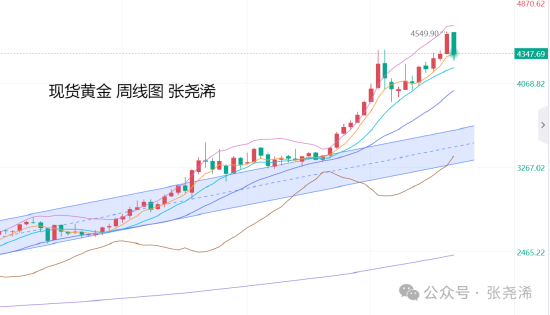
Group 1 - The core viewpoint of the articles indicates that gold and silver have shown significant price increases in 2025, with gold rising approximately 64% and silver rising 147%, marking their best annual performance since 1979 [3][11] - The geopolitical tensions and expectations of interest rate cuts by the Federal Reserve are expected to continue driving demand for precious metals into 2026 [3][11] - The technical analysis suggests that while gold prices have shown strong upward movement, there is a risk of a significant pullback, potentially testing support levels around $4000 to $3900 [5][13] Group 2 - The recent trading session on December 31, 2025, saw gold prices open at $4338.29, reaching a high of $4372.93 and a low of $4274.54, ultimately closing at $4314.72, reflecting a daily decline of $23.57 or 0.54% [1][8] - The market is currently experiencing increased volatility, with a potential for a bullish reversal pattern forming, although caution is advised due to the overall weak weekly trend [9][14] - The outlook for gold in January 2026 suggests that if prices can maintain above $4300, there may be opportunities for further bullish movements, potentially reaching $5500 to $6000 [14]

张尧浠:新年先预温蓄力,金价偏筑底调整前景仍看涨
Sou Hu Cai Jing· 2026-01-02 00:35
Core Viewpoint - The gold market experienced fluctuations and a decline due to profit-taking pressures at year-end, with the CME raising margin requirements for precious metals futures for the second time in a week, alongside lower-than-expected initial jobless claims in the U.S. [1][4] Price Movements - On December 31, 2025, gold opened at $4,338.29, reached a high of $4,372.93, a low of $4,274.54, and closed at $4,314.72, resulting in a daily decline of $23.57 or 0.54% [2]. Market Outlook - Despite recent declines, there is a potential for a rebound in gold prices, with expectations of a bullish trend if prices stabilize above $4,400. However, caution is advised as the weekly chart shows weakness, indicating possible further declines before a recovery [4][10]. - The overall performance of precious metals in 2025 was strong, with gold rising approximately 64%, silver up 147%, platinum increasing by 128%, and palladium by 77%, marking the best annual performance since 1979 [4]. Future Projections - Factors supporting the gold market in 2024 and 2025 include potential interest rate cuts by the Federal Reserve, geopolitical tensions, central bank purchases, and ETF inflows. These factors are expected to continue into 2026, with predictions of three unexpected rate cuts in the first half of 2026, potentially driving gold prices up by about 30% [6]. - Technical analysis suggests that if gold prices maintain strength in January, a bullish trend could lead to targets of $5,500 to $6,000. Conversely, a close below $4,300 could indicate a significant correction [8]. Technical Analysis - On a monthly level, gold prices showed a strong rise in December but faced a notable pullback, indicating a risk of larger corrections to the $4,000-$3,900 range or lower. The weekly chart suggests a potential decline towards the 10-week moving average at $4,230 or lower [8]. - Daily analysis indicates that while gold opened strong, it remains under pressure from the $4,400 resistance level, with risks of a pullback before any significant upward movement [10]. Support and Resistance Levels - For gold, key support levels are at $4,310 and $4,295, while resistance levels are at $4,380 and $4,400. For silver, support is at $71.30 and $70.20, with resistance at $74.30 and $75.60 [11].
张尧浠:黄金、白银、原油年终行情总结概要及展望
Sou Hu Cai Jing· 2026-01-01 02:51
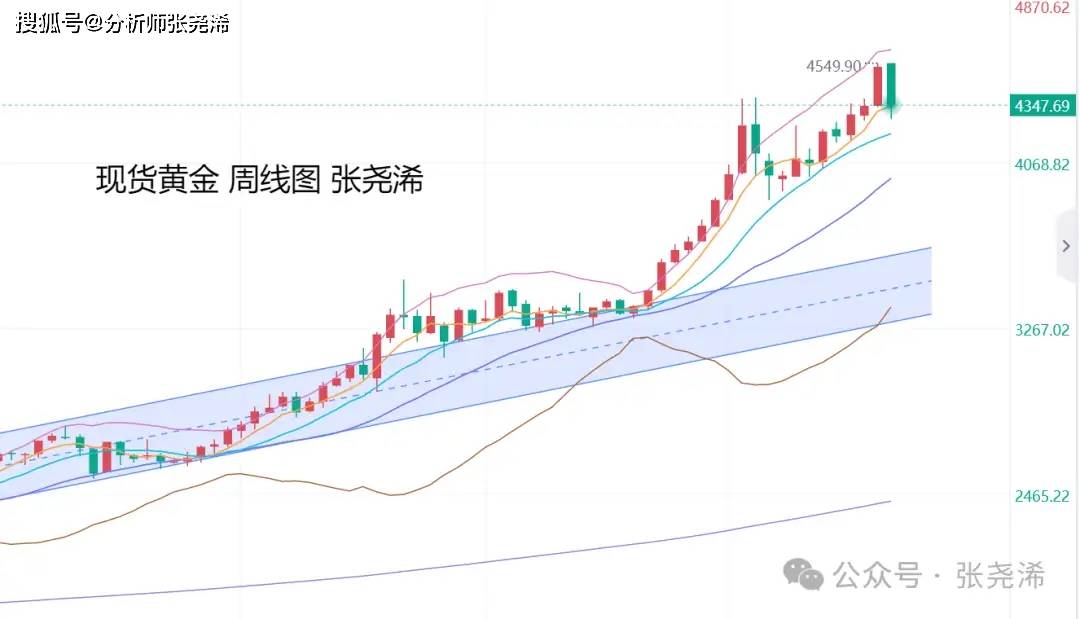
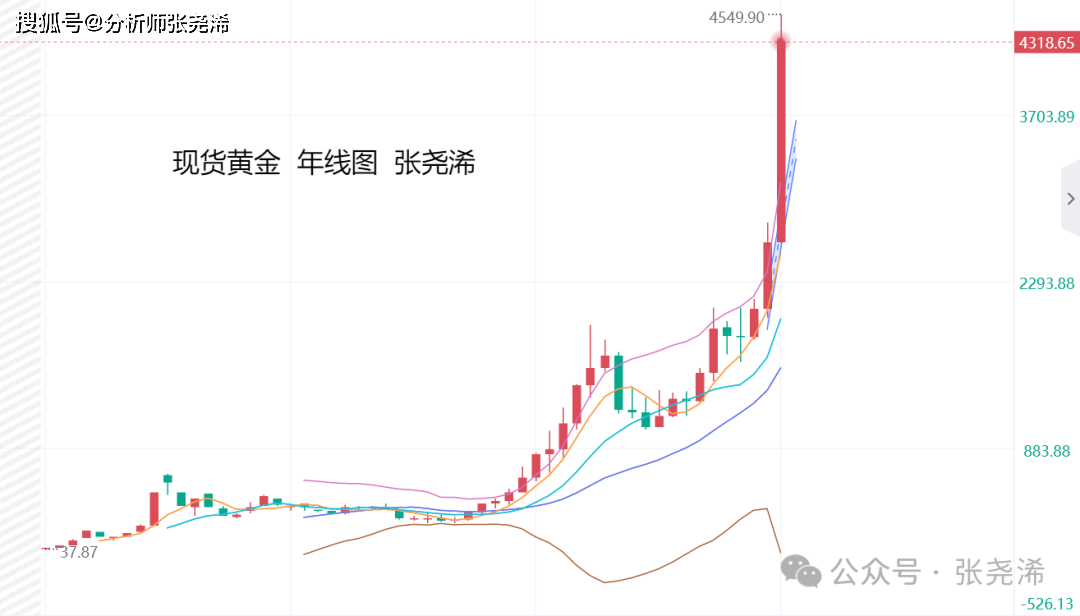
Key Insights - The core viewpoint of the articles highlights the significant fluctuations and trends in the prices of gold, silver, and WTI crude oil throughout 2025, driven by various economic and geopolitical factors [1][3][8]. Gold Market - In 2025, gold opened at $2625.92 per ounce, with a low of $2614.66 in January and a high of $4549.60 in December, resulting in an annual volatility of $1934.94 and a maximum increase of 73.26%. The year ended with a closing price of $4314.72, reflecting a final increase of 64.31% [1]. - The market was influenced by multiple factors, including three interest rate cuts by the Federal Reserve, tariff policy concerns, geopolitical hotspots, central bank purchases, and ETF inflows [5]. - The outlook for 2026 remains bullish, supported by continued expectations of Federal Reserve rate cuts, ongoing geopolitical tensions, inflation hedging demand, strong central bank gold purchases, and significant inflows into gold ETFs, with potential for prices to exceed $5000 [7]. Silver Market - Silver opened at $28.71 per ounce in 2025, with a low of $28.325 in April and a high of $83.874 in December, leading to an annual volatility of $55.522 and a maximum increase of 192%. The year concluded with a closing price of $71.52, resulting in a final increase of 149% [3]. - Silver's price surge was driven by its inclusion in the U.S. critical minerals list, supply shortages, and increased industrial and investment demand, which outpaced gold's performance [5]. WTI Crude Oil Market - WTI crude oil opened at $71.527 per barrel in 2025, with a low of $54.76 in April and a high of $79.355 in January, ultimately closing with a year-over-year decline of 19.75% [8]. - The oil market was primarily influenced by production expectations, with initial support from OPEC+ members' voluntary production cuts. However, rising production from non-OPEC+ countries, particularly the U.S., led to structural weakness in oil prices [10]. - Geopolitical tensions, particularly between Israel and Iran, temporarily boosted oil prices by over 20% due to concerns about the stability of the Strait of Hormuz, but prices subsequently declined as the situation stabilized [10][11]. - The outlook for 2026 suggests a continued bearish trend due to OPEC+ production increases and a generally loose global supply environment, maintaining downward pressure on oil prices [11].
中东再添乱,黄金却怂了!
Sou Hu Cai Jing· 2025-12-31 09:39
Group 1: Gold Market - Gold prices rebounded from a significant drop, reaching around $4,400 before closing at $4,338.89, marking a 66% increase for the year, potentially the best performance since 1979 [1][14] - Silver also recovered from its largest single-day drop in over five years, closing up 5.73% at $76.27 after touching $78 during the day [1] Group 2: Federal Reserve and Market Sentiment - The Federal Reserve's December meeting minutes revealed a consensus on interest rate cuts, but significant divisions among officials remain [2][4] - Market expectations for rate cuts have not significantly increased, with a 14.9% probability for a 25 basis point cut in January and 45.2% by March [4] - Despite the optimistic outlook for the stock market, analysts caution about potential risks, including prolonged interest rates and geopolitical tensions [5][7] Group 3: Geopolitical Developments - Saudi Arabia conducted airstrikes in Yemen, escalating the conflict and leading to a state of emergency declared by Yemen's leadership [9] - A joint statement from ten countries expressed deep concern over the humanitarian crisis in Gaza, highlighting severe conditions and urging Israel to facilitate aid [11]
张尧浠:回落调整空间有限 金银仍是逢低看涨为主
Xin Lang Cai Jing· 2025-12-31 07:26
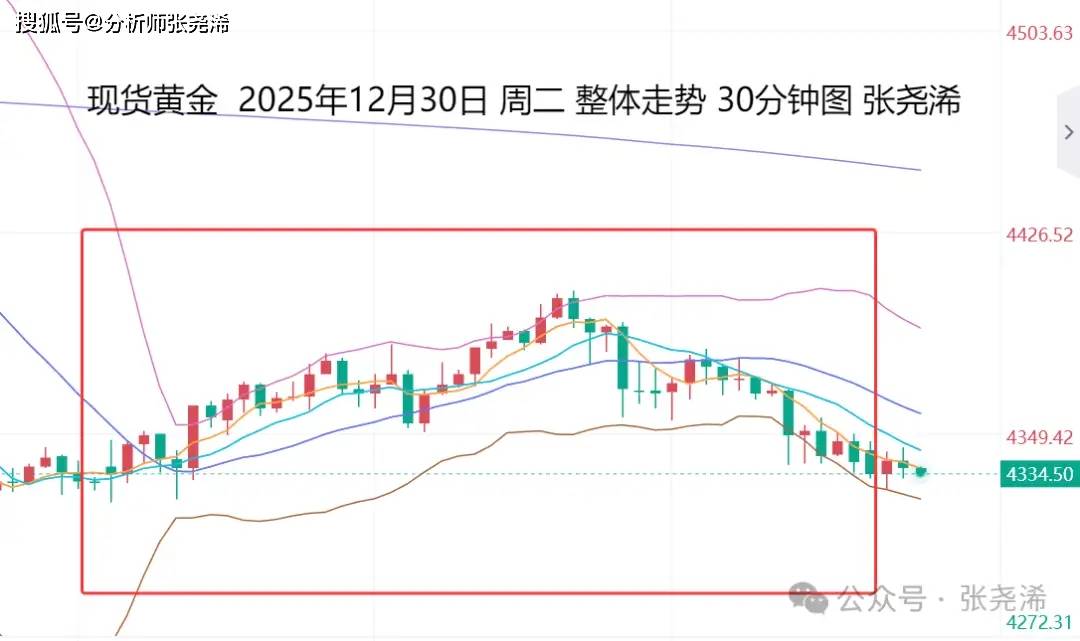
Core Viewpoint - International gold prices experienced fluctuations, initially rising before retreating, indicating a potential bullish signal despite the recent pullback [1][9]. Price Movement Summary - Gold opened at $4,334.30 per ounce, reached a low of $4,323.49, and peaked at $4,404.18 before closing at $4,338.51, with a daily range of $80.69 and a slight increase of $4.21, or 0.097% [1][9]. Influencing Factors - The market was supported by buying interest, escalating geopolitical tensions, and a recovery from previous sell-offs in precious metals. However, resistance from moving averages and negative data releases from the U.S. pressured gold prices downward [3][13]. Market Outlook - On December 31, gold is expected to continue receiving support from buying interest, with the Federal Reserve's meeting minutes indicating a majority favoring further rate cuts, which could bolster gold prices. However, a strengthening U.S. dollar may limit upward movement [10][12]. Technical Analysis - Monthly analysis shows that while gold prices have risen, a significant pullback at the month's end suggests potential for a larger correction, possibly revisiting the $4,000-$3,900 range. If January shows strong upward movement, it could signal a bullish trend towards $5,500-$6,000 [6][14]. - Weekly analysis indicates that gold prices may face further declines, potentially reaching support levels around $4,230 and $4,000. However, maintaining above $4,300 could sustain bullish momentum [16]. Trading Strategy - Suggested trading levels include support at $4,320 or $4,275 and resistance at $4,390 or $4,430 for gold. For silver, support is noted at $73.10 or $72.20, with resistance at $77.50 or $78.90 [17].
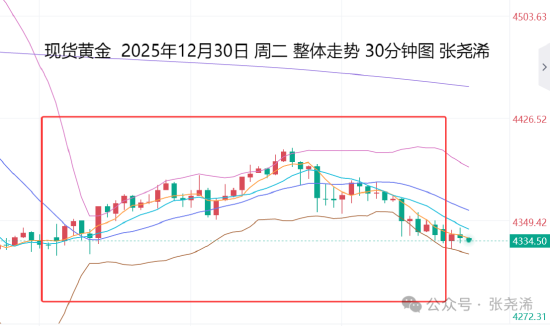
金荣中国:黄金目前逢低看涨
Sou Hu Cai Jing· 2025-12-31 03:47
Group 1 - The core viewpoint indicates that gold prices are supported by buying interest, influenced by the Federal Reserve's meeting minutes showing significant division among officials, with a majority supporting further rate cuts, which also supports gold prices [1][3] - The market anticipates that initial jobless claims data for the week ending December 27 will be favorable for gold prices, suggesting a likely range-bound or upward movement for the day, with a bullish outlook prevailing [3] - Factors contributing to a positive outlook for 2024 and 2025 include potential Fed rate cuts, geopolitical tensions, central bank purchases, and ETF inflows, indicating a continuation of the bull market for gold into 2026 [3] Group 2 - Technically, while gold prices have shown strong upward movement this month, there is a notable pullback at the month's end, suggesting a risk of a larger correction, potentially revisiting the $4000-$3900 range or lower [3] - If gold prices maintain strength and close positively in January, it could open the path for further bullish trends, targeting $5500-$6000 [3] - On the daily chart, despite encountering resistance, gold has formed a bullish reversal pattern, with key support levels remaining intact, indicating a continued bullish outlook unless these supports are broken [3]

张尧浠:回落调整空间有限、金银仍是逢低看涨为主
Sou Hu Cai Jing· 2025-12-31 00:55
Core Viewpoint - The international gold price experienced fluctuations, initially rising and then retreating, indicating a potential bullish signal despite the recent pullback [1][3]. Market Performance - On the previous trading day, gold opened at $4,334.30 per ounce, reached a low of $4,323.49, and then climbed to a high of $4,404.18 before closing at $4,338.51, resulting in a daily range of $80.69 and a slight increase of $4.21, or 0.097% [1]. - The market was supported by buying interest amid escalating geopolitical tensions and a recovery from previous sell-offs, although resistance from moving averages and negative data releases from the U.S. pressured gold prices [3]. Future Outlook - For December 31, gold is expected to continue receiving support from buying interest, with the potential for a strong opening. The Federal Reserve's meeting minutes indicated significant division among officials, with most supporting further rate cuts, which may bolster gold prices [3]. - Key economic indicators, such as initial jobless claims, are anticipated to be favorable for gold, suggesting a likelihood of a volatile or upward trend in prices [5]. - Factors supporting gold prices in 2024 and 2025 include potential Fed rate cuts, geopolitical risks, central bank purchases, and ETF inflows, indicating a bullish outlook for gold into 2026 [5]. Technical Analysis - Monthly analysis shows that while gold prices have risen, there is a risk of a significant pullback, potentially revisiting the $4,000-$3,900 range. However, a strong performance in January could signal a continuation of the bullish trend towards $5,500-$6,000 [7]. - Weekly analysis indicates that gold has faced resistance and may continue to decline towards the 10-week moving average at $4,230, with further support around $4,000. Stability above $4,300 could maintain bullish momentum [9]. - Daily charts suggest that despite recent resistance, a bullish pattern remains intact as long as key support levels are not breached. Key support levels are identified at $4,320 and $4,275, with resistance at $4,390 and $4,430 [11].
2026年度策略:贵金属牛市的下半场
China Post Securities· 2025-12-17 09:03
Industry Overview - The report maintains a strong market rating for the non-ferrous metals sector, with a closing index of 7715.84, a 52-week high of 7846.97, and a low of 4280.14 [1]. Investment Highlights - In 2025, precious metals, particularly gold, were highlighted as the best-performing assets, with gold prices stabilizing above $4000 per ounce and silver outperforming gold due to liquidity factors [4][5]. - The precious metals market in 2025 was characterized by two phases: the first phase involved diversification in asset allocation driven by tariff expectations from the Trump administration, leading to a significant rise in gold prices, while the second phase saw a rally due to anticipated interest rate cuts by the Federal Reserve [5][15]. - The outlook for 2026 suggests that gold prices may continue to rise, supported by weakening dollar credibility, increasing inflation expectations, and continued inflows into gold ETFs [6][37]. Silver Market Analysis - Silver outperformed gold in 2025, particularly after April, due to a recovery in risk appetite and ongoing supply-demand imbalances, with prices reaching historical highs above $60 per ounce by December [39][50]. - The silver market is expected to continue its upward trend in 2026, driven by declining inventories and some countries designating silver as a reserve asset, enhancing its investment appeal [50][51]. Supply and Demand Dynamics - The report indicates a persistent supply-demand imbalance in the silver market, with significant inventory pressures observed in Shanghai and London, and CME market dynamics reflecting speculative trading [43][44]. - The total supply of silver is projected to remain constrained, with mine production and recycling rates showing modest growth, while demand from industrial applications continues to rise [42]. ETF Inflows and Market Trends - In 2025, there was a notable increase in gold ETF holdings, particularly from Western investors, which played a crucial role in driving gold prices above $4000 per ounce [30][33]. - The inflow of ETFs from North America and Europe significantly contributed to the gold market's performance, marking a shift in investment patterns compared to previous years [31][33].
高盛上调黄金目标价到3300美元(附十问十答)
华尔街见闻· 2025-03-27 10:32
Core Viewpoint - Goldman Sachs has raised its gold price target for the end of 2025 from $3100 to $3300 per ounce, with a revised forecast range of $3250 to $3520 per ounce, driven by unexpected ETF inflows and central bank gold purchases [2][6]. Group 1: Gold Price Dynamics - Gold prices recently surpassed $3000 per ounce, influenced by potential U.S. tariffs on the EU and media attention on the "Mar-a-Lago Agreement," leading to a rebound in speculative positions [3][4]. - The recent strong ETF inflows indicate increased investor demand for safe-haven assets, which is expected to support higher gold prices [3][7]. - In extreme risk scenarios, gold prices could exceed $4200 per ounce, with mid-term price risks skewed to the upside [3][23]. Group 2: Central Bank Demand - Goldman Sachs has increased its monthly central bank gold purchase assumption from 50 tons to 70 tons, significantly above the pre-2022 average of 17 tons [7][8]. - Emerging market central banks have increased gold purchases by approximately five times since the freezing of Russian central bank assets, a trend expected to continue over the next three years [10][16]. - The average gold reserve ratio for emerging market central banks is significantly lower than that of developed markets, indicating room for growth [11]. Group 3: China’s Role - If the People's Bank of China raises its gold reserve ratio to 20%, it would require approximately three years at a purchase rate of 40 tons per month [12]. - The recent allowance for Chinese insurance companies to invest 1% of their assets in gold is expected to support gold prices, although significant inflows may not occur until a price correction [20][21]. Group 4: Market Risks and Opportunities - The potential for U.S. tariffs on gold is considered low, as it would not significantly advance U.S. industrial policy goals and could complicate financial markets [22]. - The possibility of a Russia-Ukraine peace agreement may lead to temporary speculative selling but is unlikely to have a lasting impact on global gold demand [14][24]. - Upward risks to the gold price forecast include increased central bank purchases and a potential shift in ETF demand if the Federal Reserve enters a rate-cutting cycle [23].