
License-out

Search documents
中国医疗-2026展望:全球雄心与国内逆风并存; SNIBE 评级上调至买入-2026 Year Ahead_ Global ambitions amid domestic headwind; upgrade SNIBE to Buy
2026-01-13 11:56
Summary of Key Points from the Conference Call Industry Overview - **Industry**: Healthcare in China - **Focus**: Innovative drug industry and its global ambitions amid domestic challenges [1][11] Core Insights and Arguments - **Globalization Impact**: China's innovative drug industry is gaining global attention, driven by numerous license-out deals and strong clinical data. The industry is expected to leverage cost efficiency, a comprehensive supply chain, and favorable policies to continue its growth [1][11] - **Domestic Market Pressure**: The Basic Medical Insurance (BMI) system is under financial strain, with a 2.0% income growth in the first 10 months of 2025 and a significant surplus decline from RMB52.0 billion in 2024 to RMB27.3 billion in 2025. This indicates a challenging environment for domestic pharmaceutical sales [2] - **Regulatory Changes**: Chinese regulators have implemented transformative policies to control healthcare costs while promoting innovation. These include measures that compress margins for generic drugs but support R&D for innovative drugs [1][30] Investment Opportunities - **Favorable Segments**: The report favors biotech, pharmaceuticals, and Contract Research and Development Manufacturing Organizations (CRDMO) for investment, anticipating positive catalysts such as more out-licensing deals and accelerated progress of licensed assets [3] - **Company Recommendations**: - **Innovent**: Preferred for its co-development model with Takeda - **BeOne**: Noted for its leadership in BTK with Brukinsa - **Hansoh**: Expected solid growth from innovative drugs like almonertinib - **Huadong**: Defensive play with potential from GLP-1 franchise - **SNIBE**: Upgraded to Buy with a price objective of RMB74.0, reflecting strong growth potential [3][6] Clinical Trials and Cost Advantages - **Cost Efficiency**: Clinical trials in China are significantly cheaper than in developed markets, with over 40,000 clinical sites available, which enhances recruitment speed and reduces costs [14][16] - **Regulatory Framework**: Improvements in regulatory processes and a growing number of new drug IND applications (1,263 in 2024) indicate a robust environment for drug development [16][17] Supply Chain and Talent Pool - **Integrated Supply Chain**: China has established a comprehensive supply chain for drug R&D, ranking highly in various stages of drug development, including API manufacturing and clinical trials [21][24] - **Talent Availability**: The country produces over 5 million STEM graduates annually, providing a vast talent pool for the pharmaceutical industry [26] Policy Environment - **Transformative Policies**: Key policies include joining the International Council for Harmonisation (ICH), implementing Value-Based Procurement (VBP) for generics, and introducing measures to support innovative drug development [30][31] Patent Cliff Risks for MNCs - **Patent Expirations**: Major multinational corporations face significant patent expirations over the next few years, with key drugs contributing over 25% of their revenue at risk [32][35] Additional Insights - **Market Dynamics**: The shift towards innovative drugs is reshaping the competitive landscape, with companies needing to adapt to cost-containment measures affecting generic drug margins [30] - **Investment Risks**: The domestic market's pressure and the sustainability of the BMI system pose risks to pharmaceutical companies operating primarily in China [2][3]
Biotech博弈:从“跟跑”到“并跑”的差异化崛起
Sou Hu Cai Jing· 2025-12-08 07:21
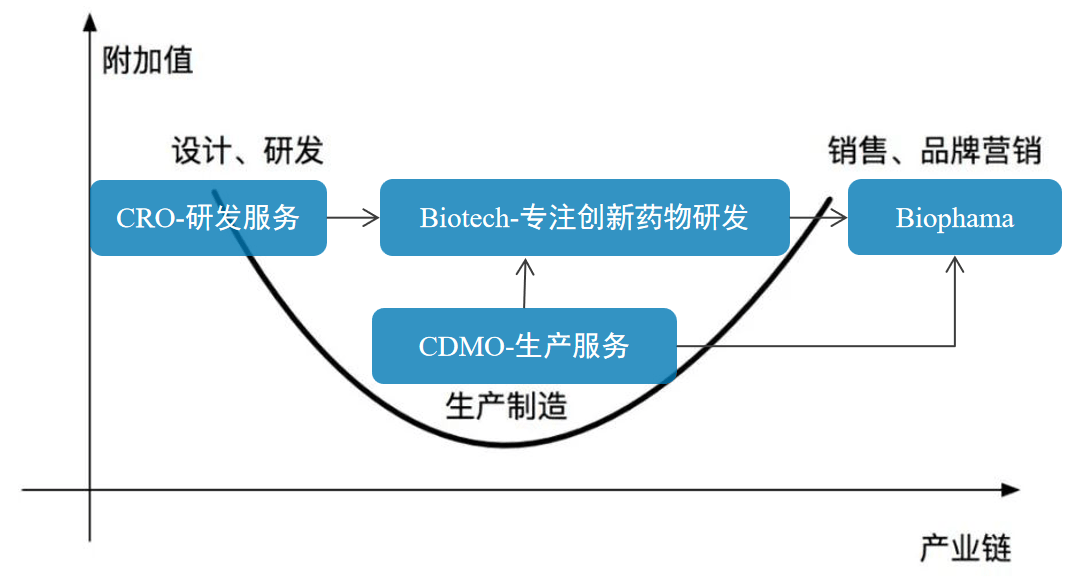
Core Insights - The global biotech landscape is undergoing a significant transformation, with China's innovative drugs projected to exceed $120 billion in licensing deals by October 2025, reflecting a growth of over 190% year-on-year. This indicates that Chinese biotech companies have evolved from mere imitators to a formidable force in the global innovation landscape [1]. Group 1: Global Biotech Industry Structure - The global innovative drug industry follows a "smile curve" structure, with CRO/CDMO (Contract Research Organization/Contract Development and Manufacturing Organization) at the upstream, biotech companies as the innovative entities in the midstream, and large pharmaceutical companies (Big Pharma) managing commercialization at the downstream [2]. - Biotech companies are positioned in the high-value area of the smile curve, bearing the highest R&D risks while enjoying the greatest potential for innovation returns. They typically focus on early-stage drug development and often realize value through acquisitions or licensing agreements with larger pharmaceutical firms [4]. Group 2: Comparison of US and Chinese Biotech - The US biotech sector is currently facing severe survival challenges, with the Nasdaq Biotech Index under pressure and over 20 US biotech companies shutting down in 2025 due to funding issues. This is exacerbated by a cautious M&A strategy among multinational corporations (MNCs) amid tightening cash flows [7]. - In contrast, China's biotech sector is experiencing a surge in business development (BD) transactions, driven by its advantages in R&D efficiency, cost, and clinical resources. MNCs are increasingly attracted to Chinese biotech firms for their differentiated characteristics and high cost-effectiveness [9]. - Chinese biotech companies are focusing on differentiated innovation strategies, particularly in areas like antibody-drug conjugates (ADC) and bispecific antibodies, leading to a pipeline that surpasses that of the US, ranking first globally [10]. Group 3: Investment Opportunities - The growth trend of China's biotech industry is expected to be long-term and predictable, with upcoming international academic conferences likely to showcase more Chinese original drugs, offering substantial returns for investors [11]. - For ordinary investors, navigating the complexities of investing in innovative drug stocks can be challenging. Instead of chasing individual "blockbusters," it may be more prudent to consider ETFs that cover industry leaders, such as the Hang Seng Innovation Drug ETF, which tracks the Hang Seng Hong Kong Stock Connect Innovation Drug Index [11][12].

多家创新药企业绩大涨
21世纪经济报道· 2025-08-31 00:34
Core Viewpoint - The performance of innovative pharmaceutical companies in China for the first half of 2025 is impressive, with significant revenue and profit growth driven by innovative drug sales, indicating a potential recovery in the pharmaceutical industry [1][3][10]. Summary by Sections Company Performance - Heng Rui Pharmaceutical achieved a revenue of 15.761 billion yuan, a year-on-year increase of 15.88%, and a net profit of 4.450 billion yuan, up 29.67%. Innovative drug sales accounted for 60.66% of total revenue [3][12]. - Bai Jie Shen Zhou reported total revenue of 17.518 billion yuan, a 46.0% increase, with a net profit of 450 million yuan, marking a turnaround from losses. The sales of its key products, including the BTK inhibitor and PD-1 inhibitor, significantly contributed to this growth [3][7]. - Xin Da Biotech achieved revenue of 5.953 billion yuan, a 50.6% increase, and a net profit of 1.213 billion yuan, compared to a loss in the previous year, driven by strong sales of its PD-1 inhibitor and new weight-loss drug [8]. - Xian Sheng Pharmaceutical reported a revenue increase of 15.1% to 3.585 billion yuan, with innovative drug revenue reaching 2.776 billion yuan, accounting for 77.4% of total revenue [9]. Market Trends - The rising proportion of innovative drug revenue among multiple pharmaceutical companies suggests a shift towards innovation-driven strategies, with increasing market demand for innovative products supported by healthcare policies [10][20]. - Business Development (BD) activities are becoming crucial for growth, with significant deals indicating a robust international presence for Chinese innovative drug companies [12][13]. Challenges and Outlook - Despite the positive trends, companies face challenges such as intense market competition, high project uncertainty, and increasing accounts receivable [18]. - Some companies, like Bai Li Tian Heng and Bei Da Pharmaceutical, reported declines in net profit due to high R&D costs and overdue payments to partners, highlighting the risks associated with innovation investments [18][19]. - Overall, the industry is transitioning from a low point to a recovery phase, with expectations for sustained growth in the innovative drug sector driven by efficiency and cost advantages [20].



君实生物: 开启免疫治疗2.0时代
Bei Jing Shang Bao· 2025-08-05 10:36
Core Insights - The article highlights the significant impact of domestic PD-1 inhibitors on reducing cancer treatment costs, leading to a release of previously constrained consumer demand [1] - It emphasizes the evolution of Chinese innovative pharmaceutical companies from imitation to original innovation, particularly in the field of cancer treatment [1][2] Company Development - Junshi Biosciences, as a representative of the thriving domestic innovative pharmaceutical sector, has made notable strides since its establishment in 2012, culminating in the launch of its PD-1 monoclonal antibody, Tuoyi, in 2018 [2][3] - Tuoyi has received approval for 12 indications, with 10 included in the national medical insurance catalog, significantly alleviating patient financial burdens [7] Market Dynamics - The competitive landscape has evolved with the emergence of "PD-1 Four Dragons," including Junshi Biosciences, Innovent Biologics, Hengrui Medicine, and BeiGene, marking PD-1 as a hot innovation track [3][4] - The industry is actively pursuing the development of next-generation immunotherapy drugs to address unmet clinical needs, with Junshi Biosciences allocating a significant portion of its recent financing for this purpose [4][5] Pricing and Accessibility - Junshi's Tuoyi was initially priced at less than one-third of similar imported products, making it one of the lowest-priced PD-1 drugs globally [6] - The company is focused on balancing accessibility and commercialization, as the Chinese innovative drug payment environment undergoes systemic reforms [7][8] International Expansion - Junshi Biosciences is exploring various international market entry strategies, including licensing, joint ventures, and independent commercialization, with a global network covering over 80 countries [10][11] - The company is actively pursuing partnerships to enhance its drug pipeline and expedite the approval process for its products in international markets [10][11] Future Outlook - The innovative drug industry is transitioning from a focus on "life-saving necessities" to "long-term health management services," driven by an aging population and increased health awareness [13] - Junshi Biosciences aims to contribute to the establishment of a globally competitive biopharmaceutical innovation system, emphasizing the importance of clinical efficacy, affordability, and user convenience in redefining the consumption value of innovative drugs [12][13][16]

创新消费力| 君实生物: 开启免疫治疗2.0时代
Bei Jing Shang Bao· 2025-08-05 10:16
Core Viewpoint - The article highlights the significant advancements and competitive landscape of China's innovative drug industry, particularly focusing on the development and commercialization of PD-1 inhibitors, with Junshi Biosciences as a key player in this transformation [3][4][5]. Group 1: Industry Development - The Chinese innovative drug sector is experiencing a pivotal decade, with local companies transitioning from imitation to original innovation, particularly in the field of cancer treatment [3]. - The approval of the first domestic PD-1 monoclonal antibody, Tuoyi (Tremelimumab), marked a significant milestone, leading to the emergence of a competitive landscape known as the "PD-1 Four Dragons" [7][8]. - As of now, Tuoyi has received approval for 12 indications, with 10 included in the national medical insurance catalog, significantly reducing treatment costs for patients [7][11]. Group 2: R&D and Innovation - Junshi Biosciences is focusing on the development of next-generation immunotherapy drugs to address unmet clinical needs, including PD-1/VEGF dual antibodies and other innovative targets [9][10]. - The company has raised over 1 billion HKD through equity financing, with a significant portion allocated to R&D for innovative drugs [9]. - The competitive landscape is becoming increasingly crowded, necessitating a focus on original innovation and differentiated product development strategies [10]. Group 3: Market Accessibility and Policy - Junshi's pricing strategy for Tuoyi was significantly lower than imported counterparts, making it one of the most affordable PD-1 drugs globally, which has been crucial for patient access [11]. - The Chinese government is reforming the medical insurance system to balance commercial viability with the need to reflect the value of innovation, aiming for a sustainable ecosystem for innovative drugs [11][12]. - Recent policy changes, including a dual-track payment system for innovative drugs, are expected to enhance market flexibility and accessibility [12]. Group 4: Global Expansion - The global market is becoming a new battleground for innovative drugs, with Junshi exploring various international strategies, including licensing and joint ventures [14][15]. - The company has established a global commercialization network covering over 80 countries and regions, actively pursuing international clinical trials for its pipeline products [16]. - The trend of licensing out has become a primary funding source for unprofitable innovative drug companies, with significant growth in transaction volumes reported [17]. Group 5: Future Outlook - The innovative drug industry is transitioning from a focus on urgent medical needs to long-term health management services, driven by an aging population and increased health awareness [19]. - Junshi aims to redefine the consumer value of innovative drugs by enhancing clinical efficacy, affordability, and patient adherence [19]. - The industry is expected to see increased interest from multinational pharmaceutical companies, providing opportunities for domestic firms to secure funding and expand internationally [21].
高盛:中国医疗-生物科技引领年内估值重估;关注国内复苏拐点
Goldman Sachs· 2025-06-15 16:03
Investment Rating - The report indicates a positive outlook for the China healthcare sector, with a recovery underway and improving investor sentiment, particularly in the biotech segment, which has seen a year-to-date performance increase of 37% [1]. Core Insights - The report highlights a significant recovery in the China healthcare sector, driven by improving investor sentiment and bottoming valuations, with offshore healthcare stocks up 21% year-to-date [1]. - Biotech companies are expected to benefit from licensing-out themes and resilience to geopolitical uncertainties, with key events like ASCO in June serving as potential catalysts for individual stock performance [1]. - There is a growing interest in domestic demand, particularly in capital expenditures and hospital traffic, with robust equipment tendering observed [1]. - The report anticipates a consumption recovery in areas such as refractive surgeries and orthodontics, although the sustainability of this recovery is contingent on the broader macroeconomic outlook [6]. - The report emphasizes the importance of global collaboration and licensing opportunities for pharmaceutical companies, with a focus on upcoming data releases at ASCO to enhance business development visibility [16]. Summary by Relevant Sections Biotech - The biotech sector is focusing on global licensing deals and achieving break-even points, with significant catalysts expected from the upcoming ASCO conference [13][14]. - Companies like Zai Lab and Innovent are highlighted for their innovative drug pipelines and potential for global collaboration [14][15]. Pharma - The pharmaceutical industry experienced soft growth in Q1 2025, but companies with strong product cycles, such as Hengrui, are showing better earnings trends [16]. - Collaboration opportunities are expected to increase, particularly with data releases at ASCO [16]. CDMO - CDMO companies reported better-than-expected results in Q1 2025, with strong order growth and maintained guidance for FY25 [17]. - Companies like WuXi Apptec and Asymchem are noted for their resilience in earnings delivery [17]. Medical Consumables - The report indicates challenges in inpatient surgeries due to reimbursement controls, but opportunities exist in the obesity and GLP-1 segments [19]. - Surgical volumes are expected to remain challenging, with ongoing pricing pressures [19]. Capital Equipment - Strong tendering activity was noted, but pricing pressures from value-based purchasing (VBP) are leading to longer revenue realization timelines [21]. - Companies like United Imaging and Mindray are expected to see positive growth in the coming quarters [21]. Retail Pharmacy - The retail pharmacy sector is undergoing a market clearing process, with a net decrease in drugstores for the first time, indicating a consolidation trend [26]. - Yifeng is highlighted as a resilient player in this space, benefiting from operational efficiency [26].
年内涨幅超3倍仍低于发行价,港股18A创新药企后市走势如何?
2 1 Shi Ji Jing Ji Bao Dao· 2025-06-05 11:05
Core Viewpoint - The innovative drug sector in the Hong Kong stock market is experiencing a significant rebound, with many stocks doubling in price this year, indicating a renewed investor interest and optimism in the sector [1][2]. Group 1: Market Performance - Over 20 innovative drug-related stocks in the Hong Kong market have seen year-to-date gains exceeding or nearing 100%, with 6 stocks more than doubling in value [1]. - Notable performers include Kelun-Biotech, Innovent Biologics, and Kintor Pharmaceutical, with respective price increases of 447.6%, 417.1%, and 406.5% compared to their issue prices [1]. - As of June 5, 2024, several companies listed under the 18A rule have shown significant stock price increases, with 52 out of 70 companies experiencing gains this year [3][4]. Group 2: Industry Dynamics - The introduction of the 18A listing rule in 2018 allowed unprofitable biotech companies to go public, which has led to a mixed performance in the sector due to previous market downturns [2][3]. - The innovative drug industry is transitioning from a focus on generic drugs to becoming a leader in global drug development, with domestic companies achieving significant advancements in drug efficacy [7]. Group 3: Financial Performance - By 2024, several 18A companies have reported substantial revenue growth, with top companies like BeiGene and Innovent Biologics seeing revenues rise from 75.89 billion yuan to 272.14 billion yuan and from 42.70 billion yuan to 94.22 billion yuan, respectively [4]. - In 2024, nine 18A companies achieved profitability, a significant improvement from 2020 when none were profitable [5]. Group 4: Strategic Developments - The innovative drug sector is witnessing a surge in business development (BD) deals, with 41 license-out transactions totaling $36.93 billion in the first quarter of 2025, indicating a robust international market presence [7][8]. - Companies like Hengrui Medicine have secured significant partnerships, enhancing their market position and valuation [8]. Group 5: Future Outlook - The innovative drug sector is expected to continue its upward trajectory, with many analysts predicting a valuation re-evaluation as leading companies approach profitability [6][9]. - Investment strategies should focus on the strategic direction and success probabilities of innovative drug companies, with ETFs being a viable option for new investors [10].
创新药ETF国泰大涨3.83%点评
Mei Ri Jing Ji Xin Wen· 2025-05-29 14:04
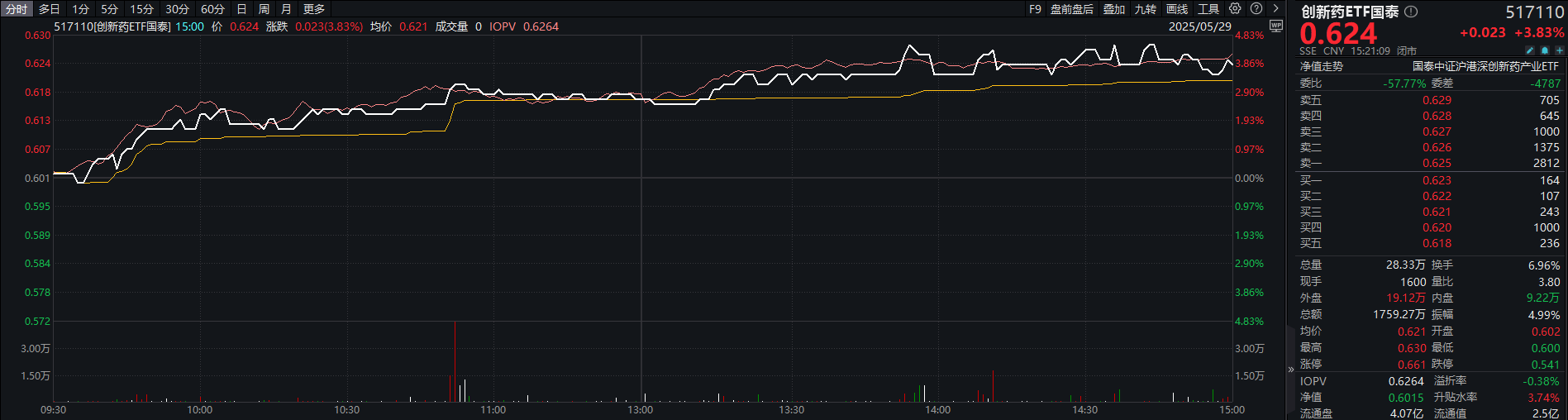
Market Performance - The three major A-share indices collectively rose, with the Shanghai Composite Index up by 0.7%, the Shenzhen Component Index up by 1.24%, and the ChiNext Index up by 1.37% [1] - The total market turnover reached 1.21 trillion yuan, an increase of 179.5 billion yuan compared to the previous trading day [1] - The Innovation Drug ETF Guotai (517110) increased by 3.83% [1] Upward Trend Analysis - A recent ruling by the U.S. International Trade Court may lead to the potential cancellation of certain tariffs imposed by the Trump administration, which could lower overall tariff levels to around 12% [3] - The technology growth sector, previously under pressure due to trade tensions, experienced a rebound in response to these tariff expectations [3] - China's innovation drug sector is transitioning from being a "recipient" of global drug technology to becoming a "supplier," with a significant increase in the number and value of license-out transactions [3] ASCO Conference Insights - The 2025 ASCO annual meeting in Chicago will showcase an increasing number of Chinese clinical studies, with 71 presentations from Chinese scholars, including 11 major studies [4] - Several domestic innovative drugs have shown promising preliminary clinical data, exceeding market expectations, particularly in treating common cancers [4] - The market anticipates further detailed clinical data disclosures during the conference, which may enhance confidence in Chinese biotech firms [4] Future Market Outlook - The normalization of centralized procurement in China is expanding, with a high success rate for negotiations on innovative drugs exceeding 90% [5] - Chinese biotech is making significant advancements in areas such as ADC, bispecific antibodies, and cell therapy, marking a shift from imitation to original innovation [5] - The internationalization of Chinese innovative drugs is accelerating, with a total of $45.5 billion in license-out transactions since early 2025, indicating strong recognition from overseas pharmaceutical companies [6] Industry Fundamentals - In 2024, 22 innovative drug companies in A-shares are projected to achieve a total revenue of 46.22 billion yuan, a year-on-year increase of 23.7%, with a significant reduction in net profit losses [8] - The first quarter of 2025 saw a historic high in net profit, reaching 380 million yuan, as major products are launched [8] - The innovative drug sector is expected to evolve towards "technology platformization, product differentiation, and commercial globalization," indicating a shift from valuation suppression to value release [8]
一周内股价最大涨幅近30%,先声药业(02096)BD潜力和创新价值获市场持续挖掘
智通财经网· 2025-05-23 01:05
Core Viewpoint - The recent surge in the Hong Kong innovative drug sector, particularly for Xiansheng Pharmaceutical, is driven by favorable factors such as the cyclical resurgence of COVID-19 and record-breaking domestic innovative drug business development (BD) deals [1] Group 1: Stock Performance - Xiansheng Pharmaceutical's stock price has experienced a continuous rise since May 16, achieving a maximum increase of 28.33% by May 21, with a cumulative increase of nearly 50% year-to-date [1] - The stock has shown significant trading activity, with over 25 million shares traded on three consecutive days from May 19 to 21, indicating strong market interest [4] Group 2: Business Development Potential - The recent $60.5 billion BD deal between Innovent Biologics and Pfizer has spotlighted the potential of Chinese innovative drugs, with Xiansheng Pharmaceutical being a key player in this growth [2] - Xiansheng Pharmaceutical has developed multiple ADC (antibody-drug conjugate) candidates targeting various biomarkers, with products like SCR-A006 showing Best-in-Class potential [2] Group 3: International Expansion - Xiansheng Pharmaceutical has established a track record in international markets, with its first overseas deal for SIM0278 setting a record for domestic autoimmune drug BD at the time [3] - The company has secured a licensing agreement exceeding $1 billion for SIM0500 with AbbVie, currently undergoing clinical trials in the U.S. and China [3] Group 4: Innovation and R&D - The company has invested over 8.5 billion yuan in R&D over six years, developing over 60 innovative drug candidates across various therapeutic areas [5] - Three new drug molecules are in the NDA approval process, while four are in Phase III clinical trials, indicating a robust pipeline [5] - The anticipated launch of significant new drugs will further enhance the company's position in the global biopharmaceutical market [5]