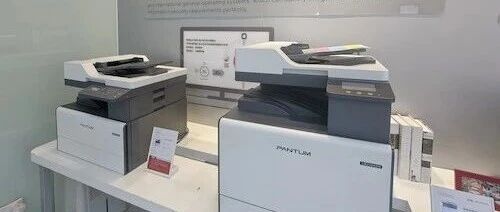
打印机

Search documents
证券公司支持科技型企业合理开展跨境并购研究
GUOTAI HAITONG SECURITIES· 2026-02-24 15:05
国别研究 [table_Header]2026.02.24 证券公司支持科技型企业合理开展跨境并购 研究 产业研究中心 | 摘要: | | --- | [Table_Report] 往期回顾 企业出海合规要点与案例指南——越南篇 2026.01.05 土耳其深度洞察:埃尔多安经济学的破局与转型 ——土耳其国别研究专题系列报告 2025.12.20 东南亚制造:泰国如何走出困境 2025.12.18 印尼内外需稳健——东南亚国别观察 2025 第 7 期 2025.11.30 企业出海合规要点与案例指南——印尼篇 2025.11.21 | | | | | 021-38031655 | | --- | --- | | | chenximiao@gtht.com | | 登记编号 | S0880520120004 | | | 徐淋(分析师) | | | 021-38677826 | | | xulin4@gtht.com | | 登记编号 | S0880523090005 | 请务必阅读正文之后的免责条款部分 1 of 12 [Table_Summary] 在全球科技竞争加剧、地缘政治紧张及多边监管趋严的背景下,中 ...
以全链路自主研发赴极寒环境“终极考场”
Xin Lang Cai Jing· 2026-02-22 00:25
这样的突破背后,是持续多年的高强度投入。据了解,奔图累计拿下6200余项专利,研发投入占营收比 例常年保持在12%左右,过去十几年总研发投入超过20亿元。如今,奔图已实现从核心零部件到整机、 从软件到硬件的全栈自主可控。搭载可信计算3.0技术,确保了科考数据在打印环节的绝对安全。 羊城晚报记者 李旭 近日,执行中国第42次南极考察任务的"雪龙号"科考船历经数十天远洋航行,成功抵达南极。随船一同 抵达的还有一台"广东智造"的奔图A3激光复印机。从珠海千锤百炼到南极科考风雪淬炼,奔图以自主 创新破解文印难题,用实力诠释了"广货行天下"的新内涵。 自主研发填补产业空白 南极内陆零下三四十摄氏度的极寒,是装备可靠性的"终极考场"。奔图电子负责人王玉国介绍,为了应 对极地环境,一支超过100人的专项团队耗时3年,攻关了陶瓷低温加热、多辊协同给纸、高强度送稿器 铰链等一系列核心技术。有了这些技术的支撑,奔图创下了"连续打印40万页、卡纸率低于0.02‰"的世 界纪录。 打印机行业涉及精密机械、精细化工、光学成像等十多个学科领域,全球至今有效的专利超过20万份, 绝大多数掌握在美国和日本企业手中。2007年,奔图踏上全链路 ...
2025年中国复印和胶版印制设备产量为220.4万台 累计增长5.7%
Chan Ye Xin Xi Wang· 2026-02-19 01:26
2020-2025年中国复印和胶版印制设备产量统计图 相关报告:智研咨询发布的《2026-2032年中国打印机行业市场现状分析及未来前景分析报告》 根据国家统计局数据显示:2025年12月中国复印和胶版印制设备产量为17.9万台,同比下降5.3%;2025 年1-12月中国复印和胶版印制设备累计产量为220.4万台,累计增长5.7%。 数据来源:国家统计局,智研咨询整理 知前沿,问智研。智研咨询是中国一流产业咨询机构,十数年持续深耕产业研究领域,提供深度产业研 究报告、商业计划书、可行性研究报告及定制服务等一站式产业咨询服务。专业的角度、品质化的服 务、敏锐的市场洞察力,专注于提供完善的产业解决方案,为您的投资决策赋能。 ...


造不出就直接买下来!中国企业斥资260亿吞掉美国巨头,太解气了
Sou Hu Cai Jing· 2026-02-08 05:16
Core Insights - The article discusses the evolution of the Chinese printing industry, particularly focusing on the strategic acquisition of Lexmark by the Chinese company Nasda, which was valued at $3.9 billion (approximately 26 billion RMB) ten years ago, highlighting the shift in market dynamics and competitive strategies [3][14][24] Group 1: Historical Context - Ten years ago, the acquisition of Lexmark by Nasda was met with skepticism from analysts, who viewed it as an audacious gamble by a Chinese company [3][4] - The article outlines the "razor and blades" business model employed by major printing companies, where printers are sold at low prices while consumables like ink cartridges are sold at high margins, creating a dependency on original products [6][8] Group 2: Competitive Strategies - Nasda's initial approach involved basic modifications to ink cartridges, but the company soon realized that overcoming patent barriers required more sophisticated strategies, including reverse engineering and chip design [10][12] - The fierce competition led to significant price reductions for compatible ink cartridges, dropping prices to one-fifth or even one-tenth of original products, demonstrating the effectiveness of Nasda's strategies [12] Group 3: Acquisition Rationale - The acquisition of Lexmark was not merely about gaining market share but acquiring essential patents that would allow Nasda to innovate and compete effectively in the high-end printing market [14][17] - This strategic move transformed Nasda from a market disruptor to a rule-maker, enabling the development of its own brand, Pantum, and establishing a complete supply chain from chips to software and hardware [17][22] Group 4: National Security Implications - The article emphasizes that the stakes have risen beyond commercial interests to national security, as printers can pose significant information security risks if controlled by foreign entities [19][21] - The need for secure and controllable printing solutions has made domestic brands like Pantum essential for safeguarding sensitive information [21] Group 5: Industry Evolution - The printing industry in Zhuhai has evolved from merely selling ink cartridges and printers to offering comprehensive services, including print management and cloud security solutions, indicating a qualitative shift in business models [22][26] - The historical journey of the Chinese printing industry reflects a blend of resilience and strategic investment, culminating in a robust position in the global market [24][26]


纳思达(002180) - 002180纳思达投资者关系管理信息20260202
2026-02-02 01:28
Group 1: Company Performance Overview - In 2025, BenTu is expected to achieve revenue of approximately 3.8 billion CNY, a year-on-year decrease of about 19%, with a net profit of approximately 345 million CNY, down about 44% [3] - In 2025, JiHai Micro is projected to have revenue of around 1.09 billion CNY, a year-on-year decline of about 22%, with a net loss of approximately 60 million CNY, a decrease of about 118% [3] - The general consumables business is expected to generate revenue of approximately 5.3 billion CNY in 2025, a year-on-year decrease of about 5%, with a net loss of 40 million CNY, down about 159% [3] Group 2: Market Expansion and Strategy - The company is adopting a differentiated and localized strategy for key overseas markets, establishing local subsidiaries and teams to tailor solutions based on market characteristics [3] - BenTu has shipped over 20 million units, indicating a significant market presence, with plans to enhance consumable connection rates as a core strategy for revenue growth [5] Group 3: Product Development and Innovation - JiHai Micro has launched the world's first G32R501 real-time control DSP and G32R430 MCU products for industrial robotics, achieving advanced technical specifications [4] - In the automotive electronics sector, JiHai Micro's ultrasonic sensor chips fill a gap in domestic automotive intelligent technology, with successful mass production in several mainstream automotive platforms [5] Group 4: Future Outlook - The company is focusing on optimizing the revenue structure between hardware and consumables, viewing the expansion of original consumables as a key growth path for sustainable revenue increase [5] - The company is actively participating in the digital energy market with innovative solutions, supporting clients' global expansion strategies [4]
纳思达:旗下奔图品牌具备激光打印机全产业链自主能力
Zheng Quan Ri Bao· 2026-01-13 12:13
Core Viewpoint - Nasda emphasizes its capability in the laser printer industry, highlighting its full supply chain autonomy and commitment to enhancing core technology and market share [2] Group 1: Company Capabilities - The company has full supply chain autonomy for its Pantum brand laser printers, which allows for cost-effective large-scale production [2] - It actively collaborates with upstream and downstream ecosystem partners to maintain the core competitiveness of its printer products [2] Group 2: Market Strategy - The company aims to continue expanding its market share by providing safe and high-quality printing solutions to users [2]
罗永浩硬控4小时,发了一场“广告”春晚
创业邦· 2025-12-31 03:54
Core Viewpoint - The article discusses the return of Luo Yonghao and his recent technology spring gala, where he launched ten new products, emphasizing innovation and the importance of quality content over mere sales [5][11][20]. Group 1: Event Overview - Luo Yonghao's technology spring gala was marked by a 47-minute delay and technical issues, including presentation errors and video playback problems, which led to audience frustration [5][14]. - The event featured ten new products, including the DJI Neo2 drone, an exoskeleton from Jishen, and the Tuo Zhu printer, with Luo highlighting the Tuo Zhu printer as a groundbreaking consumer-grade printer [9][13][20]. - The total ticket sales for the event reached 1.668 million yuan, and Luo announced that all attendees would receive refunds, along with a donation of the same amount to charity [15][26]. Group 2: Product Highlights - The DJI Neo2 drone was the first product showcased, followed by the exoskeleton, which Luo demonstrated by climbing stairs without fatigue [11][13]. - The Tuo Zhu printer was praised by Luo for its innovative approach to consumer printing, while the Libernovo ergonomic chair was also highlighted as a significant product [13][14]. - Luo expressed skepticism about the Li Ke dishwasher, suggesting that a next-generation model would be more innovative and encouraged investors to pay attention to the project [13][14]. Group 3: Future Aspirations - Luo Yonghao aims to transition from being a direct participant in product launches to becoming an incubator for new technology, focusing on the next big innovation in the tech industry [7][20]. - The article notes that Luo's company, Xihongxian, has shifted its focus towards software and AI, with plans to release a new AI application that provides deep analysis of books [22][23]. - Luo emphasized his commitment to technology and entrepreneurship, stating he would continue to innovate and contribute to the industry for many more years [25][26].

2025年1-10月中国复印和胶版印制设备产量为186.3万台 累计增长8.9%
Chan Ye Xin Xi Wang· 2025-12-26 03:19
Group 1 - The core viewpoint of the article indicates a decline in the production of photocopying and offset printing equipment in October 2025, with a year-on-year decrease of 1.2% [1] - Cumulative production of photocopying and offset printing equipment from January to October 2025 reached 1.863 million units, reflecting a cumulative growth of 8.9% [1] Group 2 - The data source for the production statistics is the National Bureau of Statistics, and the information has been organized by Zhiyan Consulting, a leading industry consulting firm in China [2] - Zhiyan Consulting specializes in providing in-depth industry research reports, business plans, feasibility studies, and customized services, focusing on delivering comprehensive industry solutions to empower investment decisions [2]

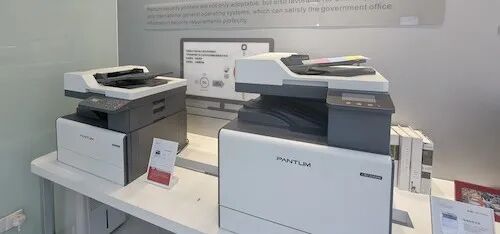
国产打印机用近二十年突破垄断
Di Yi Cai Jing· 2025-12-15 10:09
Core Insights - Canon's decision to close its printer factory in Zhongshan, China by the end of 2025 marks a significant shift in the global laser printer market, dominated for decades by Japanese and American brands like Canon and HP [2] - The market landscape is changing, with domestic brands increasing their market share from approximately 10% in 2010 to over 40% today, while foreign brands have seen their share drop below 60% [2][10] - Canon's market share has decreased from 7.7% in 2018 to 3.9% in the first three quarters of 2025, while domestic brand BenQ has captured significant market shares of 23.5%, 25.8%, and 21.3% in the same period [2] Domestic Brand Growth - BenQ's entry into the printer market was driven by long-term commercial prospects and national strategic needs, particularly concerning supply chain and information security risks [3] - The company initially focused on consumables but soon recognized the limitations and shifted towards printer manufacturing, launching its first A4 monochrome laser printer in 2010 [4] - Despite facing aggressive pricing strategies from competitors, BenQ managed to grow its output from 53,000 units in May 2011 to over one million units by 2019, achieving an average annual growth rate of about 50% [4] Technological Advancements - BenQ has made significant strides in developing core components such as the laser scanning unit (LSU) and main control SoC chips, achieving independent research and development of these critical modules by 2018 [6][7] - The company has accumulated over 6,000 patents, establishing a technological moat that supports its competitive position in the market [7] - Lenovo has also transitioned from imitation to independent innovation, increasing its self-developed printer revenue share from less than 10% to 50% [7] Market Dynamics - The printer industry's business model relies on a "razor-and-blades" strategy, where original consumables generate ongoing revenue, with hardware sales often only breaking even [8] - Despite a decline in overall printer sales from 10 million units in 2000 to about 7 million units recently, domestic brands have continued to expand their market presence [9] - The shift in the global industrial landscape is evident as foreign brands relocate some production capacity, allowing domestic brands to take the lead in the supply chain [10] Competitive Landscape - Domestic brands are gaining market share due to lower prices (20%-30% cheaper than foreign brands) and features tailored to local needs, such as remote printing and Bluetooth/NFC connectivity [12] - The penetration rate of home printers in China is only about 10%, indicating significant growth potential as demand for home and small business printing continues to rise [14] - The competitive environment is intensifying, with profit margins shrinking and companies investing heavily in research and development to innovate and meet market demands [14] Future Outlook - Domestic brands are expected to focus on high-end products, AI ecosystems, and international expansion, particularly in Southeast Asia [13] - The industry is entering a phase of stock or even declining competition, with foreign giants like HP and Canon facing challenges [15] - The rise of Chinese printer brands is attributed to continuous innovation in core technologies, establishing independent intellectual property, and enhancing supply chain security [15]

国产打印机用近二十年突破垄断
第一财经· 2025-12-15 09:45
Core Viewpoint - The closure of Canon's printer factory in Zhongshan, China, symbolizes a significant shift in the global laser printer market, where domestic brands are rapidly gaining market share at the expense of foreign brands like Canon and HP [3][12]. Market Dynamics - Canon's market share in China has decreased from 7.7% in 2018 to 3.9% in the first three quarters of 2025, while domestic brand BenQ's market share has increased to 23.5% [3][12]. - The share of domestic brands in the Chinese laser printer market has risen from approximately 10% in 2010 to over 40% currently, while foreign brands' share has fallen below 60% [3][12]. Competitive Landscape - BenQ's entry into the printer market was driven by long-term commercial prospects and national strategic needs, particularly concerning supply chain and information security risks [4][12]. - The company faced significant challenges from foreign competitors who quickly reduced prices in response to BenQ's market entry, leading to initial losses [5][12]. Technological Advancements - BenQ has developed over 6,000 patents, establishing a technological moat, and has successfully localized critical components such as the laser scanning unit and main control SoC chip [7][8]. - Lenovo has also transitioned from imitation to independent innovation, increasing the revenue share of self-developed printers from less than 10% to 50% [8][9]. Cost and Pricing Strategy - The "razor-and-blades" business model in the printer industry relies on original consumables for sustained revenue, with domestic brands offering lower-priced alternatives to foreign brands [9][10]. - The cost of consumables has significantly decreased, with Lenovo's toner cartridges priced around 100 yuan compared to over 300 yuan for foreign brands, reducing the cost per A4 page from 0.2-0.3 yuan to 0.07-0.08 yuan [9][10]. Market Growth and Trends - Despite a decline in overall printer sales from 10 million units in 2000 to 7 million units recently, domestic brands have continued to expand their market presence [10][12]. - The penetration rate of home printers in China is only about 10%, indicating significant growth potential as demand for educational and office printing increases [15][16]. Future Outlook - Domestic brands are expected to move towards high-end markets, build AI ecosystems, and accelerate international expansion, particularly in Southeast Asia [14][16]. - The competitive landscape is becoming increasingly challenging, with profit margins under pressure and the industry entering a low-profit era [15][16].