散热材料

Search documents
高效散热材料,商业化进程持续推进
China Post Securities· 2025-12-26 11:36
Industry Investment Rating - The industry investment rating is maintained at "Outperform the Market" [1] Core Insights - The report highlights the increasing severity of thermal management issues in high-power electronic devices, particularly as they become more integrated and miniaturized. Effective heat dissipation is crucial for maintaining performance and safety, with over 55% of electronic device failures attributed to excessive temperatures [3][13] - Diamond materials are identified as superior thermal management solutions due to their high thermal conductivity, excellent thermal diffusivity, and good electrical insulation properties, making them suitable for high-frequency AI chips [4][16] - The potential market for diamond cooling solutions in the AI chip sector is projected to be significant, with estimates suggesting a market size ranging from 7.5 billion to 150 billion RMB by 2030, depending on penetration rates and value share [6][38] Summary by Sections Industry Overview - The closing index for the mechanical equipment sector is reported at 2116.63, with a 52-week high of 2116.63 and a low of 1420.7 [1] Thermal Management Challenges - High-performance AI chips can exceed 700W in power consumption, necessitating advanced thermal management solutions to prevent overheating and ensure reliability [13] - The reliability of electronic components is highly sensitive to temperature, with a 5% decrease in reliability for every 1°C increase above 70-80°C [13] Diamond as a Thermal Management Material - Natural single crystal diamond exhibits thermal conductivity of 2000-2200 W/(m*K), significantly outperforming copper and aluminum [4][16] - Diamond's high thermal diffusivity allows for rapid response to localized temperature changes, crucial for densely packed AI chips [16] Applications and Technologies - Diamond is primarily used as a heat sink in various configurations, including substrate-type and cap-type heat sinks, with ongoing advancements in integration techniques [5][19] - Commercial applications of diamond heat sinks have been validated in high-power semiconductor lasers, demonstrating their effectiveness in reducing thermal resistance [23][24] Market Potential - The AI chip market is projected to reach approximately 3 trillion RMB by 2030, with diamond cooling solutions potentially capturing a significant share depending on market penetration rates [6][38] - The report outlines various companies involved in diamond material applications, including Guoji Precision, World, Sifangda, Power Diamond, and Huifeng Diamond, each with unique technological capabilities and market strategies [39]
破解“散热天花板”:金刚石铜复合材料的百亿征程(附分析报告)
材料汇· 2025-12-14 15:00
Core Viewpoint - The article emphasizes the critical role of heat dissipation technology in high-power and high-density electronic devices, highlighting the emergence of diamond-copper composite materials as a key solution to overcome traditional thermal management limitations [1][3]. Group 1: Heat Dissipation Technology's Core Position - Heat dissipation systems have evolved from being performance optimization items to core constraints on product performance, driven by exponential increases in heat flow density [4][11]. - Traditional thermal management solutions, such as heat pipes, face significant limitations as heat flow density exceeds 300W/cm², necessitating breakthroughs in high-performance composite materials [4][11]. Group 2: Performance Parameters and Economic Implications - The performance of heat pipes is often overstated, with real-world applications revealing a significant gap between theoretical and practical performance, presenting opportunities for new materials [7]. - The economic implications of heat dissipation are stark, with data indicating that a 10°C increase in temperature can lead to a 50% decrease in reliability, and that 40% of energy consumption in AI centers is dedicated to heat dissipation [13]. Group 3: Diamond-Copper Composite Materials - Diamond-copper composite materials are characterized by their exceptional thermal conductivity and adaptability, achieved through microstructural design that combines the high thermal conductivity of diamond with the workability of copper [18][22]. - The thermal conductivity of diamond can reach 2200 W/m·K, significantly surpassing that of copper, and the composite can achieve thermal conductivities exceeding 1000 W/m·K [22]. Group 4: Market Size and Growth Trends - The global market for diamond-copper composites is projected to grow from approximately $1.4 billion in 2024 to over $3.85 billion by 2031, with a compound annual growth rate (CAGR) of 12.4% [37]. - The Chinese market is expected to expand from 12.8 billion yuan in 2024 to 50 billion yuan by 2031, driven by domestic substitution and the expansion of application scenarios [37][38]. Group 5: Competitive Landscape - The competitive landscape is characterized by international giants dominating high-end markets while domestic companies accelerate local substitution, with Japan's Sumitomo Electric holding a significant market share [45]. - Chinese manufacturers are making strides in the diamond-copper sector, achieving thermal conductivities of 600-800 W/(m·K) and reducing costs by 30%-40% compared to imports [45]. Group 6: Future Development Trends - Future advancements in the diamond-copper sector will likely stem from technological breakthroughs and the expansion of application scenarios, with a focus on high-performance and extreme environment stability [53]. - The industry is expected to mature through the standardization of processes and the localization of equipment, which are essential for large-scale commercialization [53].


破解“散热天花板”:金刚石铜复合材料的百亿征程(附分析报告)
材料汇· 2025-11-04 14:54
Core Insights - The article emphasizes the critical role of heat dissipation technology in high-power and high-density electronic devices, highlighting the shift from traditional materials to diamond-copper composite materials as a solution to thermal management challenges [1][3][4]. Group 1: Heat Dissipation Technology - Heat dissipation systems have evolved from being performance optimization components to core constraints on product performance, driven by the exponential increase in heat flow density [4][11]. - Traditional heat pipe technologies face significant limitations, with performance degradation exceeding 40% in complex applications, necessitating the development of high-performance composite materials [11][12]. Group 2: Market Dynamics and Challenges - The article outlines the challenges faced in various sectors, including AI chips, electric vehicles, and 5G base stations, where heat flow densities exceed 300 W/cm², leading to significant performance losses and increased operational costs [10][12][13]. - The economic implications of heat management are underscored, with data indicating that a 10°C increase in temperature can reduce reliability by 50%, emphasizing the need for effective thermal solutions [7][13]. Group 3: Diamond-Copper Composite Materials - Diamond-copper composite materials are identified as a breakthrough solution, combining the high thermal conductivity of diamond with the workability and electrical conductivity of copper, achieving thermal conductivities exceeding 1000 W/m·K [18][22]. - The material's advantages include precise thermal expansion matching, which mitigates interface cracking issues, and excellent environmental adaptability, making it suitable for extreme conditions [22][23]. Group 4: Industry Landscape and Growth Potential - The diamond-copper industry is characterized by a complete supply chain in China, with over 90% domestic production, and a significant profit margin in the midstream manufacturing segment [35]. - The global market for diamond-copper composites is projected to grow from $160-190 million in 2024 to $350-380 million by 2030, driven by high heat flow density applications in AI, electric vehicles, and 6G communications [36][37]. Group 5: Competitive Landscape - The competitive landscape shows a dichotomy where international giants dominate high-end markets while domestic companies accelerate local replacements, focusing on cost control and technological advancements [45]. - Key players include Japan's Sumitomo Electric, which holds a significant market share, and various Chinese firms that are entering supply chains of major companies like Huawei and BYD [45]. Group 6: Future Trends - Future developments are expected to focus on technological breakthroughs and the expansion of application scenarios, with an emphasis on integrating multiple manufacturing processes and enhancing performance in both consumer and aerospace markets [53][54].
中石科技:前三季度净利润同比增长90.59% 高效散热模组、核心散热零部件及高性能导热材料营收快速增长
Mei Ri Jing Ji Xin Wen· 2025-10-29 11:48
Core Viewpoint - Zhongshi Technology (300684.SZ) reported significant revenue and profit growth in Q3 2025, driven by new product launches and increased market share in North America [1] Financial Performance - Q3 revenue reached 550 million yuan, a year-on-year increase of 21.79% [1] - Net profit attributable to shareholders was 130 million yuan, up 87.74% year-on-year [1] - For the first three quarters, total revenue was 1.298 billion yuan, reflecting an 18.45% year-on-year growth [1] - Net profit for the first three quarters was 252 million yuan, showing a 90.59% increase year-on-year [1] Growth Drivers - Performance growth is attributed to the launch of new products by major North American clients and the ramp-up of new projects [1] - Increased shipment volumes of thermal materials and components contributed to the rise in revenue [1] - The company is actively expanding into emerging fields such as AI terminal devices and AI infrastructure, leading to rapid revenue growth in high-efficiency thermal modules and core thermal components [1] - Product structure optimization and cost reduction efforts have significantly enhanced profitability [1]

iPhone 17 Pro“弃钛从铝”:散热革命背后的VC均热管崛起(附投资逻辑)
材料汇· 2025-10-17 15:15
Group 1 - The core argument of the article is that Apple's decision to switch from titanium alloy to aluminum alloy for the iPhone 17 Pro highlights a significant shift in the consumer electronics industry, where thermal performance is becoming a critical design consideration for high-end devices [2][5][10]. - The change from titanium to aluminum is driven by the need for better heat dissipation, as titanium's thermal conductivity is only 1/30th that of aluminum, which has become a bottleneck for device performance with the increasing power of chips like the A19 Pro [5][6]. - The iPhone 17 Pro demonstrates improved thermal management, with a temperature reduction of 7.4°C during 4K video recording compared to the iPhone 16 Pro, and a significant reduction in frame rate fluctuations during high-performance gaming [6][7]. Group 2 - The thermal management market is experiencing explosive growth due to rising power consumption in consumer electronics driven by technologies like 5G and AI, with the global TIM market expected to reach approximately $7.5 billion by 2036 [12][14]. - VC (Vapor Chamber) heat spreaders are rapidly penetrating the high-end consumer electronics market, with their penetration rate in high-end smartphones projected to increase from 35% in 2023 to 62% by 2025 [14][40]. - The demand for thermal management solutions is also surging in sectors like electric vehicles and data centers, with the global market for thermal management in data centers expected to reach 70.8 billion yuan by 2025 [15][16]. Group 3 - The article outlines the evolution of thermal materials from passive to active and intelligent cooling solutions, highlighting the importance of thermal management across various high-tech industries [22][20]. - Traditional thermal materials like aluminum and copper are still prevalent, but emerging materials such as graphite and VC heat spreaders are gaining traction due to their superior thermal conductivity [23][26]. - The VC heat spreader market is projected to grow significantly, with an expected market size of $1.089 billion in 2024, driven by demand from smartphones, laptops, and electric vehicles [40][48].



华工科技子公司拟1590万元参投瑞源海润基金
Zhi Tong Cai Jing· 2025-10-15 11:05
Core Viewpoint - The company, Huagong Technology (000988), has announced an investment in a new venture capital fund focused on advanced materials and energy industries, indicating a strategic move to enhance its portfolio in high-growth sectors [1] Group 1: Investment Details - Huagong Technology's wholly-owned subsidiary, Wuhan Huagong Investment Management Co., Ltd., has signed a partnership agreement to invest 15.9 million yuan in the Wuhan Ruiyuan Hairun Venture Capital Fund [1] - The company will hold a 39.75% share of the fund's assets, reflecting a significant commitment to this investment [1] Group 2: Fund Focus Areas - The Ruiyuan Hairun Fund will target investments in next-generation superhard materials, thermal management materials, advanced manufacturing, and the energy industry [1]

近100家散热材料企业榜单:谁在为你的iPhone和AI服务器“降温”?
材料汇· 2025-09-20 15:52
Core Viewpoint - The article emphasizes the growing importance of thermal management solutions in the electronics industry, driven by advancements in high-end smartphones, AI computing demands, and the increasing power density of electric vehicle control systems. The thermal materials industry is rapidly evolving, showcasing a vibrant ecosystem of domestic companies and innovative technologies [2]. Group 1: Listed Companies - Feirongda (300602) is a leading expert in electromagnetic shielding and thermal management solutions, providing a complete product chain including thermal conductive materials, graphite films, and liquid cooling plates. The company serves major clients like Huawei and BYD in the communication and new energy sectors [3][5]. - Siquan New Materials (301489) focuses on thermal management materials, offering a comprehensive range of products such as graphite heat dissipation films and modules. The company has notable clients including Xiaomi and Google [18][20]. - Suzhou Tianmai (301626) is recognized for its comprehensive thermal management solutions, with products like thermal interface materials and heat pipes, serving major clients in the telecommunications and new energy vehicle sectors [22][23]. - Zhongshi Technology (300684) specializes in high-performance synthetic graphite thermal solutions, becoming a core supplier for top global consumer electronics brands like Apple. The company reported a revenue of 1.566 billion in 2024, with a 24.51% year-on-year increase [26][28]. - Lingyi Zhi Zao (002600) provides intelligent manufacturing services, with thermal management business revenue reaching 4.107 billion in 2024, reflecting a 9.20% increase from the previous year [30][34]. - AAC Technologies (02018) reported a significant growth of 40.1% in its thermal business, achieving a revenue of 326 million in 2024, and holds over 50% market share in the domestic flagship smartphone thermal market [35]. - Shuo Beid (300322) offers thermal products and reported a revenue of 1.86 billion in 2024, with a 12.37% increase from the previous year [36]. Group 2: Financial Performance - Feirongda's 2024 revenue reached 5.03 billion, with a net profit of 173 million, reflecting a 15.76% year-on-year growth [17]. - Siquan New Materials achieved a revenue of 656 million in 2024, marking a 51.10% increase compared to the previous year [21]. - Suzhou Tianmai reported a revenue of 943 million in 2024, with a slight increase of 1.62% year-on-year [25]. - Zhongshi Technology's revenue for 2024 was 1.566 billion, showing a 24.51% increase from 2023 [29]. - Lingyi Zhi Zao's total revenue for 2024 was 442 billion, with a 29.56% increase from the previous year [34]. - AAC Technologies' thermal business revenue reached 326 million in 2024, reflecting a 40.1% growth [35]. - Shuo Beid's revenue for 2024 was 1.857 billion, with a 12.37% increase from the previous year [36].


iPhone 17 Pro“弃钛从铝”:散热革命背后的VC均热管崛起(附投资逻辑)
材料汇· 2025-09-18 13:20
Core Viewpoint - The decision by Apple to switch from titanium alloy to aluminum alloy for the iPhone 17 Pro highlights a significant shift in the consumer electronics industry, emphasizing the importance of heat dissipation performance in high-end device design [3][4]. Group 1: Analysis of iPhone 17 Pro's Material Change - The core contradiction of "abandoning titanium for aluminum" lies in the trade-off between heat dissipation performance and high-end feel [5]. - Titanium alloy, while known for its strength-to-weight ratio and premium feel, has a thermal conductivity that is only 1/30th that of aluminum alloy, which has become a bottleneck for device performance as chip power increases [7]. - The new iPhone 17 Pro, utilizing 6061 aerospace aluminum and a 0.3mm ultra-thin laser-welded VC heat spreader, maintains a body temperature of 41.3°C after 30 minutes of 4K video recording, a reduction of 7.4°C compared to the previous titanium model [8][9]. - In high-performance gaming scenarios, frame rate fluctuations decreased from 15 frames to just 2 frames, significantly enhancing user experience [9]. - The aluminum and VC heat spreader combination improves heat conduction efficiency by 20 times compared to the titanium model, indicating that heat dissipation performance is now a critical metric for flagship devices [9]. Group 2: Heat Dissipation Performance Comparison - A comparative analysis of heat dissipation performance between iPhone 17 Pro and iPhone 16 Pro shows significant improvements across various metrics: - 4K recording temperature: 41.3°C (iPhone 17 Pro) vs. 48.7°C (iPhone 16 Pro), a difference of -15.2% [10]. - Frame rate fluctuation during gaming: 2 frames (iPhone 17 Pro) vs. 15 frames (iPhone 16 Pro), a difference of -86.7% [10]. - Continuous performance under full load: 40 minutes without throttling (iPhone 17 Pro) vs. 22 minutes with a 30% throttle (iPhone 16 Pro), an improvement of +81.8% [10]. - Maximum charging temperature: 38.5°C (iPhone 17 Pro) vs. 44.2°C (iPhone 16 Pro), a difference of -12.9% [10]. Group 3: Overview of the Heat Dissipation Materials Market - The global thermal interface materials (TIM) market is expected to grow at a compound annual growth rate (CAGR) of over 10%, potentially reaching approximately $7.5 billion by 2036 [15]. - The VC heat spreader is rapidly penetrating the high-end consumer electronics market, with its penetration rate in high-end smartphones projected to increase from 35% in 2023 to 62% by 2025 [17]. - The cost of thermal modules in smartphones has risen from 3.5% of the bill of materials (BOM) in 2020 to an expected 5.8% by 2025, indicating that heat dissipation systems are becoming a significant component of smartphone production costs [17]. Group 4: Evolution of Heat Dissipation Materials - The development of heat dissipation materials can be categorized into three main stages: passive heat dissipation, active heat dissipation, and smart heat dissipation [25]. - Traditional heat dissipation materials include metals like aluminum and copper, which are widely used due to their excellent thermal conductivity [26]. - Emerging materials such as graphite and phase change materials (PCM) are gaining traction due to their high thermal conductivity and efficiency in heat management applications [29][30]. - Advanced technologies like microchannel cooling and immersion cooling are being explored for high-power applications, showcasing the ongoing evolution in heat management solutions [31][32].

科创新源(300731) - 2025年9月17日、9月18日投资者关系活动记录表
2025-09-18 10:40
Group 1: Company Overview and Business Development - Shenzhen Kexin New Materials Co., Ltd. focuses on data center cooling solutions through its subsidiary, Shenzhen Chuangyuan Zhihuo Technology Co., Ltd. [2] - The company employs a dual-driven model of collaborative manufacturing and independent production to enhance its market presence [2][3] - In the first half of 2025, the subsidiary has initiated OEM operations for liquid cooling plates and is advancing product certification with clients [3] Group 2: Market Trends and Product Demand - The demand for thermal interface materials is increasing due to the growth of high-performance computing and emerging technologies like 5G/6G and IoT [4] - Kexin New Materials is strategically positioned to meet the rising demand for high-performance thermal management solutions [4] Group 3: Acquisition Plans - The company is planning to acquire Dongguan Zhaoke, which includes subsidiaries in Kunshan, Vietnam, and Singapore, to expand its footprint in the thermal product sector [5] - The acquisition process is complex and involves cross-border mergers, with both parties maintaining strong cooperation intentions [5] Group 4: Growth in New Energy Sector - The Chinese electric vehicle market is experiencing rapid growth, driven by an increase in new models and improved charging infrastructure [6] - The company's subsidiary, Suzhou Ruitai Technology Co., Ltd., produces key cooling components for electric vehicle batteries, contributing to its market leadership [7] Group 5: Traditional Business Performance - The polymer materials segment remains stable, focusing on waterproof, fireproof, and moisture-proof materials for various industries [7] - The company aims to solidify its position in the polymer materials market to ensure steady cash flow and profit contributions [7]

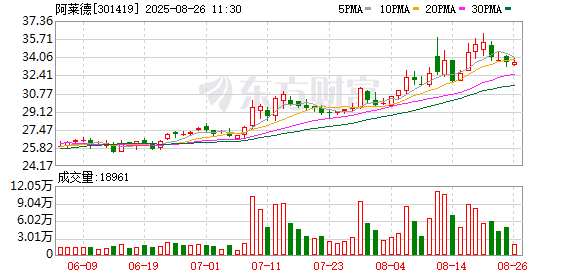
阿莱德:数据中心与液冷领域与公司导热散热业务的技术方向与产品特性高度契合,是公司近年来积极拓展的方向
Mei Ri Jing Ji Xin Wen· 2025-08-26 04:04
Core Viewpoint - The company is actively expanding its thermal management business in the data center and liquid cooling sectors, aligning its technology and product characteristics with market demands [2]. Group 1 - The company has been developing its thermal management business in the data center and liquid cooling areas for the past two years [2]. - The technology direction and product features of the company's thermal management business are highly compatible with the data center and liquid cooling fields [2]. - The company is leveraging its technological advantages to engage with market demands and is in deep discussions with potential clients [2]. Group 2 - The company plans to share information with investors through announcements or regular reports based on business progress and cooperation agreements [2]. - Investors are encouraged to pay attention to the company's disclosures in legal media for updates [2].