
汽车芯片

Search documents
李想: 全新L9双马赫100芯片有效算力是Thor-U的5-6倍
理想TOP2· 2026-02-09 11:07
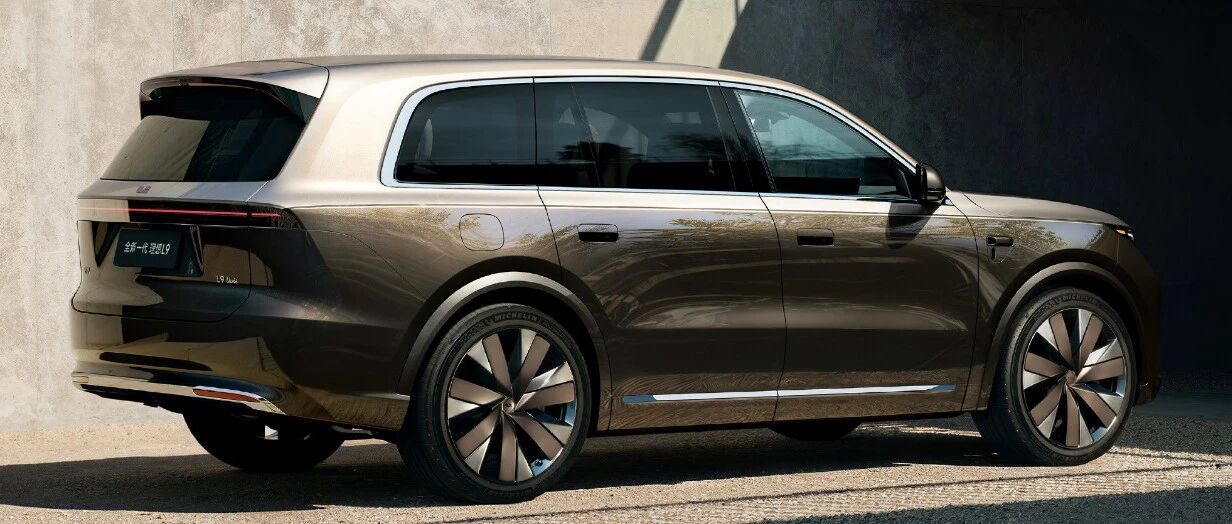
Core Viewpoint - The article discusses the advancements in chip technology, specifically the Maher 100 dual-chip system used in the new L9 model, highlighting its superior effective computing power compared to Nvidia's Thor U chip. Group 1: Chip Performance - The Maher 100 chip has a total computing power of 2560 TOPS, with each chip providing an effective computing power of 1280 TOPS, which is three times that of Nvidia's Thor U chip [1] - The effective computing power is defined as the actual performance achieved when running VLA large models, emphasizing the high utilization and low power consumption of the data flow architecture [1] - The new L9 model's dual Maher 100 chips provide an effective computing power that is 5-6 times greater than that of Thor U [1] Group 2: Industry Trends - The company anticipates that by 2025, the industry will enter an era of integrated self-developed algorithms and computing power, with the Maher 100 being the first step in this direction [1] - The article references a July 2025 report indicating that Nvidia's originally advertised 700 TOPS for the Thor chip is realistically closer to 500 TOPS after adjustments [1][2] Group 3: Precision and Performance - Higher TOPS leads to increased model throughput, which reduces inference latency and speeds up response times [2] - Fast response times require the use of low-precision inference models, which demand significant engineering capabilities [2] - The current VLA model from the company uses a mixed precision of INT8 and FP8 for inference, allowing the Thor U chip to achieve 700 TOPS [2][3] Group 4: Chip Specifications - The Thor platform supports various precision formats, with the following TOPS values: 700 TOPS for Thor U and 1000 TOPS for Thor X at FP8 precision, and 1400 TOPS for Thor U at FP4 precision [4][6] - The company plans to optimize towards FP4 precision in the future to achieve 1400 TOPS with the VLA model [6]


汽车芯片巨头,集体唱衰
3 6 Ke· 2026-02-06 04:17
Core Insights - The automotive chip industry is experiencing a prolonged and complex adjustment period, with major companies expressing caution about market stability and demand recovery [1][2][3][4] - A new crisis is emerging as memory chip manufacturers shift capacity to higher-margin products, leading to a rapid depletion of previously abundant memory chip supplies for the automotive sector [1][6] Financial Performance - NXP's automotive chip revenue for Q4 2025 was $1.88 billion, a mere 4.8% year-over-year increase, falling short of analyst expectations [2] - STMicroelectronics reported a significant operating loss of $133 million in Q2 2025, indicating a lack of clear recovery timeline despite a forecasted revenue exceeding analyst expectations [2][21] - Texas Instruments highlighted a 6%-9% year-over-year growth in its automotive segment for Q4 2025, but downplayed its contribution to overall performance [3] - Infineon's automotive business revenue for Q1 2026 was €1.821 billion, showing a 5% quarter-over-quarter decline, with cautious outlook on demand recovery [3][4] Supply Chain Challenges - The DRAM price surged by 172% year-over-year in Q3 2025, driven by strong demand from AI infrastructure, leading to a significant supply shortage for the automotive sector [6][7] - Analysts predict that DRAM prices could increase by 70%-100% in 2026, severely impacting the cost structure for automotive manufacturers [7][32] - By 2028, the supply of older generation DRAM is expected to rapidly decline, posing a risk to automotive manufacturers relying on these components [8][32] Strategic Responses - Texas Instruments is adopting a conservative strategy, focusing on maintaining inventory levels and capitalizing on its robust production capabilities [16][17] - NXP is restructuring by laying off 5% of its workforce and making strategic acquisitions to enhance its position in the software-defined vehicle market [18][19] - STMicroelectronics is concentrating resources on automotive microcontrollers (MCUs) to stabilize its market position amid ongoing adjustments [21][22] - Infineon is heavily investing in AI-related technologies, aiming for significant revenue growth in this sector while also adjusting its automotive strategies [23][24] Market Outlook - The automotive chip market is facing a dual challenge of cyclical downturns and structural constraints, with recovery timelines uncertain [11][30] - The transition to electric vehicles and the increasing complexity of automotive electronics are expected to drive long-term growth, despite current market challenges [27][28] - Companies are exploring new growth avenues, such as data center markets and industrial IoT, to mitigate risks associated with the automotive sector [29][30]


汽车芯片巨头,集体唱衰
半导体行业观察· 2026-02-06 01:33
Core Viewpoint - The automotive chip industry is experiencing a prolonged and complex adjustment period, with major companies expressing caution about market recovery and facing new challenges from a shortage of storage chips [2][4][13]. Financial Performance Insights - NXP's automotive chip revenue for Q4 2025 was $1.88 billion, a mere 4.8% year-over-year increase, falling short of analyst expectations [4]. - STMicroelectronics reported a significant operating loss of $133 million in Q2 2025, contrasting with Wall Street's expectation of a $56.2 million profit, indicating deep concerns about the automotive market [4]. - Texas Instruments highlighted a modest growth of 6%-9% in its automotive segment for Q4, with a slight decline in revenue, suggesting a lack of momentum in this area [5]. - Infineon's automotive business revenue for Q1 2026 was €1.821 billion, showing a 5% quarter-over-quarter decline, despite a 4% year-over-year increase [5]. Supply Chain Challenges - A shift in storage chip production towards higher-margin HBM products has led to a rapid depletion of previously abundant storage chip supplies for the automotive sector [2][8]. - DRAM prices surged by 172% year-over-year in Q3 2025, driven by strong demand from AI infrastructure, marking one of the most significant price fluctuations in semiconductor history [8]. - The automotive industry faces a dual challenge from both a shortage of storage chips and the rising costs associated with DRAM, which could increase by 70%-100% in 2026 [9][10]. Market Dynamics - The transition from traditional fuel vehicles to electric vehicles is slowing, with regional disparities in market performance, particularly in Europe and the U.S. [13][14]. - The U.S. market is affected by uncertainties surrounding federal tax incentives for electric vehicles, which dampen consumer purchasing intentions [14][15]. - In China, the local semiconductor supply chain is strengthening, with domestic chips now comprising 15% of the semiconductor content in local electric vehicles [15]. Strategic Responses - Texas Instruments is adopting a conservative strategy, focusing on maintaining inventory levels and capitalizing on its strong cash flow to weather the downturn [18][19]. - NXP is restructuring by laying off 5% of its workforce and acquiring companies to enhance its capabilities in software-defined vehicles [20][21]. - STMicroelectronics is concentrating resources on automotive MCUs, aiming to solidify its position in a stable but lower-margin market [22][23]. - Infineon is heavily investing in AI-related technologies, aiming for significant revenue growth in this sector while also adjusting its automotive strategies [24][25]. Long-term Outlook - Despite current challenges, the long-term growth potential in the automotive chip market remains intact, driven by increasing chip content in vehicles and the rise of software-defined vehicles [28][29]. - The automotive industry is expected to see a significant increase in the adoption of advanced electronic architectures, which will require more sophisticated chips [28]. - The overall recovery of the automotive chip market hinges on multiple factors, including inventory digestion, electric vehicle penetration, and the alleviation of storage chip supply constraints [36].
培育34家领军企业 32万家企业设立“首席质量官” 质量强国建设取得积极成效
Zhong Guo Jing Ji Wang· 2026-02-05 10:09
Core Viewpoint - The National Market Supervision Administration is advancing the construction of a quality strong country through the "Three Strengths and One Foundation" strategy, achieving significant results in various sectors [1][2][3] Group 1: Empowering Enterprises - The administration has developed guidelines for cultivating leading enterprises in quality, resulting in the first batch of 34 leading companies in key sectors such as information communication, engineering machinery, and new energy vehicles [1] - Over 320,000 enterprises have established "Chief Quality Officers," and more than 2 million companies have received quality training [1] - Quality financing policies have enabled 40,000 enterprises to secure over 300 billion yuan in loans, providing strong support for quality upgrades [1] Group 2: Strengthening Industry Chains - The administration has implemented ten landmark projects for quality chain enhancement, investing 22 million yuan to tackle 289 key tasks [2] - In the automotive chip sector, 25 key chips have completed certification, with a cumulative installation exceeding 20 million units, helping vehicle manufacturers reduce selection cycles by three months and verification costs by approximately 40% [2] - A total of 1,856 quality chain projects have been initiated, involving 5,375 leading enterprises and 280,000 chain member companies, effectively resolving 25,000 quality bottlenecks [2] Group 3: Regional Development - The administration is focusing on quality to support sustainable urban development, with over 1,500 cities participating in training and construction efforts [2] - A reference indicator system and digital service platforms have been established to analyze and track quality development in counties, enabling targeted improvements [2] - Seventeen innovative pilot projects for quality strong counties have been implemented, promoting unique quality practices across 169 cities [2] Group 4: Enhancing Quality Infrastructure - More than 2,300 one-stop quality infrastructure service platforms have been established, with pilot projects in 14 locations [3] - The administration is expanding international cooperation, including establishing a regular communication mechanism with the United Nations Industrial Development Organization and signing memorandums with Cuba and Laos [3] - Future efforts will focus on aligning with the "14th Five-Year Plan" quality development requirements, continuously enhancing quality governance effectiveness [3]
市场监管总局:“十四五”时期国家标准总数达4.8万项
Zhong Guo Xin Wen Wang· 2026-01-29 11:48
Core Viewpoint - The National Market Regulation Administration announced that during the "14th Five-Year Plan" period, the total number of national standards in China reached 48,000, with 13,000 new or revised standards established [1][2] Group 1: Quality Standards and Infrastructure - The quality standard system in China has been continuously improved, with 13,000 national standards established during the "14th Five-Year Plan" period [1] - The total number of national standards has reached 48,000 [1] - China has established 219 national measurement benchmarks and recognized 2,010 calibration and measurement capabilities internationally [1] Group 2: Quality Safety and Regulation - Quality safety supervision has been strengthened, with 14 categories of 27 types of industrial products under production license management [2] - High-risk products such as mobile power supplies and electric bicycle helmets are now included in mandatory certification management, with CCC certification covering 106 types of products [1][2] - A pilot reform for the "CCC certification mark" has been initiated for 11 high-risk products, including power banks [1] Group 3: Defective Product Recall System - The defective product recall system has been improved, resulting in 1,074 recalls of automobiles affecting 38.0352 million vehicles and 4,190 recalls of consumer goods affecting 40.4019 million items over the past five years [2] Group 4: Focus on Emerging Industries - The market regulation department has focused on strategic emerging industries such as artificial intelligence, quantum information, and new energy vehicles, launching ten key quality projects [2] - As of now, 12 international standards and 103 national standards have been developed, along with various technical specifications in measurement, inspection, testing, and certification [2] - In the automotive chip sector, 25 key chip certifications have been completed, with over 20 million chips installed, helping vehicle manufacturers reduce selection and verification costs significantly [2]
智能驾驶专题:2026中国科技出行产业10大战略技术趋势展望
Sou Hu Cai Jing· 2026-01-19 17:08
Core Insights - The report outlines ten strategic technology trends in China's technology mobility industry for 2026, focusing on cost reduction, user experience enhancement, and ecological innovation [1][4][5]. Group 1: Cost Reduction and Efficiency Enhancement - The Chiplet technology is expected to drive the iteration of vehicle chip architecture, addressing the conflict between computing power and energy efficiency [1][7]. - The automotive industry is moving towards comprehensive domestic production of automotive-grade chips, with a significant shift in the communication and power semiconductor sectors anticipated by 2026 [1][13][16]. Group 2: User Experience Enhancement - The AI Box is emerging as a flexible solution for on-vehicle AI computing, enabling local operation of large models (7B and above) without altering existing vehicle hardware [1][11][12]. - The transition to a 3.0 era of smart cockpits is expected, driven by the innovative reasoning capabilities of large models, enhancing user interaction and experience [1][25][27]. Group 3: Ecological Innovation Development - The introduction of vehicle-mounted optical communication technology is projected to alleviate bandwidth crises, with pilot projects expected to commence in 2026 [1][17][21]. - The 48V low-voltage architecture is anticipated to gradually be adopted in vehicles, supporting the application of high-power intelligent components [1][19][22]. - The line control steering technology is set to scale up, with the integration of chassis control across X/Y/Z axes accelerating [1][23][24]. Group 4: Safety and Rational Development - The L3 level of autonomous driving is expected to see phased implementation, with a focus on safety and rational development in the industry [1][28][32]. - The industry is shifting from an overemphasis on technology competition to a balanced approach prioritizing safety and user experience [1][28][32]. Group 5: Interaction and Experience Innovation - In the context of homogenization of central screens, smaller screens are expected to create differentiated multi-touchpoint interaction experiences [1][30][33]. - The evolution of smart cockpits is moving towards a system that perceives, thinks, and collaborates, enhancing the interaction between humans, vehicles, and the environment [1][30][33]. Group 6: Physical AI and Ecosystem Collaboration - Physical AI technology is anticipated to facilitate multi-ecosystem collaboration, aiding manufacturers and supply chains in diversifying their business layouts [1][34][36]. - The core capabilities of Physical AI are expected to be rapidly reused across various applications, including humanoid robots and low-altitude flying vehicles, enhancing the value potential of the supply chain [1][36][38].
四维图新(002405.SZ)发预盈,预计2025年度归母净利润0.9亿元至1.17亿元
智通财经网· 2026-01-14 11:19
Core Viewpoint - The company Siwei Tuxin (002405.SZ) is expected to turn a profit in 2025, with a projected net profit of between 90 million to 117 million yuan, alongside significant revenue growth driven by the booming automotive assisted driving market [1] Group 1: Financial Performance - The company forecasts a revenue of 4.06 billion to 4.34 billion yuan for 2025, representing a year-on-year growth of 15.42% to 23.50% [1] - The anticipated revenue growth is attributed to the explosion of the automotive assisted driving market and the increasing demand for data compliance and safety regulation measures [1] Group 2: Data Compliance Business - The company provides a full-chain data compliance management service, which includes data collection, desensitization, and application, establishing a secure and controllable data circulation foundation [1] - The data compliance business has a high market share, with significant revenue growth expected from the Zhiyun segment in 2025 [1] Group 3: Automotive Electronics Chip Business - The company's subsidiary, Hefei Jiefa Technology, has over 10 years of experience in automotive electronic chip design and has products certified by AEC-Q100, suitable for electrical standards in over 100 countries [2] - In 2025, the company plans to launch its first multi-core high-frequency MCU chip, AC7870, based on the ARM Cortex-R52 core, which supports ASIL-D level functional safety [2] - The MCU product line is expected to see substantial revenue growth due to increased shipments in 2025 [2]

汽车芯片巨头,全力反击
3 6 Ke· 2026-01-09 03:48
Core Insights - The automotive chip discussion is shifting towards centralized and domain-controlled architectures as software-defined vehicles (SDVs) enter the engineering phase [1] - Traditional MCU manufacturers are adapting by introducing advanced processes and higher system integration to compete in the core architecture of software-defined vehicles [1][7] - The competition is intensifying as established chipmakers like NXP, Renesas, and TI aim to reclaim control over vehicle core functions against high-performance computing firms like Qualcomm and NVIDIA [8][19] Industry Transition - The traditional automotive electronic architecture was highly distributed, with vehicles using numerous ECUs for specific functions, which worked well in a mechanical-dominated industry [2] - The automotive MCU market was valued at $6 billion in 2020, accounting for 40% of the global MCU market, dominated by traditional automotive electronics manufacturers [3] - The rise of intelligent vehicles has disrupted this balance, with companies like Qualcomm and NVIDIA entering the market with superior computing power and software ecosystems [3][4] Competitive Landscape - Qualcomm has established a stronghold in the cockpit chip market, with a 67% share in the Chinese passenger vehicle cockpit chip market as of 2024 [4] - NVIDIA has dominated the autonomous driving sector, with its Orin chip achieving 254 TOPS of computing power and the upcoming Thor chip expected to reach 2000 TFLOPS [5] - Traditional MCU manufacturers face challenges as they adapt to the new architecture, with their products still important but no longer sufficient [6] Strategic Responses - As SDVs become the industry consensus, traditional MCU giants are launching new products to regain control over vehicle core functions [7][19] - NXP's S32N7 processor focuses on vehicle core functions, while Renesas' R-Car Gen 5 X5H is the first multi-domain automotive SoC built on a 3nm process [9][13] - TI's TDA5 series emphasizes energy efficiency with a maximum of 1200 TOPS computing power while maintaining a competitive power consumption ratio [16][18] Future Outlook - The collective efforts of MCU giants signify a redefinition of the automotive value chain, transitioning from background roles to central players in vehicle core functions [19] - The competition will evolve to encompass full-stack capabilities, from cloud to edge, and from perception to execution, with MCU manufacturers leveraging their expertise in real-time performance and reliability [21]

CES 2026启幕前夜,一场AI巨变正在酝酿
3 6 Ke· 2026-01-04 11:39
Group 1: AI Chip Developments - The CES 2026 event is expected to showcase significant advancements in AI chips, with major semiconductor companies unveiling new products [2] - NVIDIA is set to launch the GeForce RTX 50 Super series, featuring substantial upgrades in memory and power consumption, including a 50% increase in memory capacity for the RTX 5080 Super [3][4] - AMD plans to introduce the Ryzen 9000 series processors, with the Ryzen 9 9950X3D featuring a dual 3D V-Cache design, enhancing performance in gaming and cache-sensitive applications [6][8] Group 2: AI and Smart Hardware - AI and smart hardware are highlighted as key trends at CES 2026, with AI PCs, AI glasses, and AI robots leading the charge [10] - Intel will debut the third-generation Core Ultra "Panther Lake" processors, while AMD will showcase the Ryzen AI 400 series, indicating a strong focus on AI integration in consumer devices [11] - Major PC manufacturers like Lenovo and ASUS are expected to release new products featuring these advanced processors, enhancing gaming and productivity experiences [11] Group 3: Automotive Chip Innovations - LG Electronics will introduce an AI cockpit platform based on Qualcomm's Snapdragon Cockpit Elite chip, aimed at enhancing in-vehicle experiences while addressing privacy concerns [15] - Renesas Electronics is expanding its software-defined vehicle solutions with the R-Car X5H, the first automotive-grade SoC built on a 3nm process, supporting advanced driving systems [15][16] - Mobileye will present advancements in its autonomous driving product lineup, focusing on the next-generation chip architecture [16]


黑芝麻智能构建全栈安全体系
Zhong Guo Qi Che Bao Wang· 2026-01-04 03:37
Core Insights - The company, Hezhima Intelligent, has successfully obtained ISO 26262: 2018 TCL3 automotive functional safety certification for its self-developed Shanhai® AI toolchain, indicating compliance with the highest international automotive functional safety standards [2] - The Shanhai® AI toolchain is designed for the development of advanced driver assistance systems (ADAS), supporting end-to-end capabilities from data processing to model deployment, and is compatible with major training frameworks [3] - Hezhima Intelligent has established a comprehensive functional safety system, becoming one of the few companies in the industry with full-stack safety compliance capabilities, setting a benchmark for the safe application of ADAS technology [3] Company Developments - The Shanhai® AI toolchain supports Tensorflow, Pytorch, and other mainstream training frameworks, enabling efficient model development and deployment for L2 and above ADAS [3] - The company has previously received multiple authoritative certifications, including ISO 26262 functional safety process certification and ASPICE CL2 certification, reinforcing its commitment to safety in automotive technology [3] - Hezhima Intelligent aims to continue innovating in core technologies and optimizing the Shanhai® AI toolchain to meet industry standards and market demands, ensuring the safety of intelligent mobility solutions [4]

