
甲醇制造

Search documents
站在能源转型的风口 绿醇大有可为
Qi Huo Ri Bao· 2026-02-09 02:42
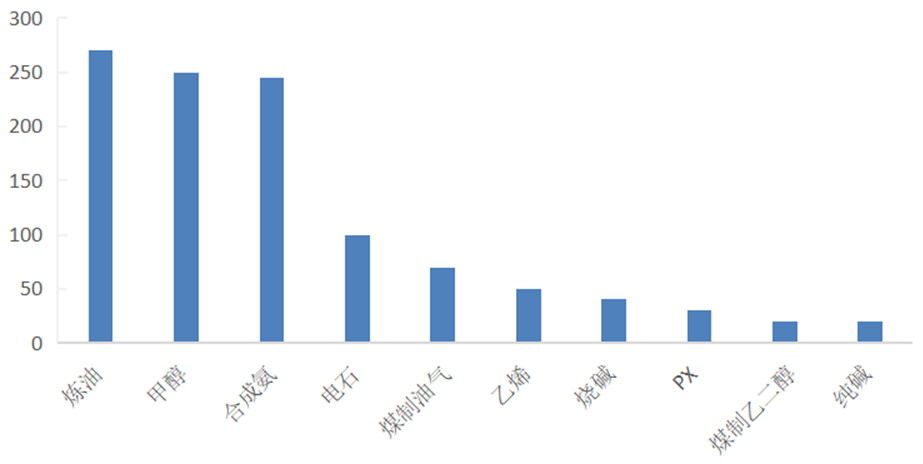
Core Viewpoint - The green methanol industry in China is expected to experience explosive growth, driven by technological advancements, cost reductions, and expanding application scenarios, with a projected demand of approximately 12 million tons by 2030, accounting for nearly 50% of the global market [1][14]. Industry Overview - Green methanol, produced from renewable energy sources such as green hydrogen, carbon dioxide, and biomass, has a near-zero carbon emission during its production process [1][8]. - As of the end of 2025, China's methanol production capacity is projected to reach 11,756 million tons per year, with green methanol capacity accounting for less than 5% [3]. - The coal chemical industry in China, which primarily produces methanol from coal, faces significant decarbonization pressures due to high carbon emissions [3][17]. Policy and Regulatory Environment - Since the introduction of the "dual carbon" strategy in 2021, various policies have been implemented to promote energy conservation and carbon reduction in key industries, including methanol [4][5]. - The government has set targets for energy efficiency and carbon reduction, aiming for over 30% of the refining and ethylene industry's capacity to meet benchmark levels by 2025 [4]. Technological Developments - The key to advancing green methanol technology lies in reducing production costs, which are currently 2-3 times higher than traditional methanol [16]. - Various production methods for green methanol include electrolysis, biomass gasification, and biomass-coupled green hydrogen processes, each with its advantages and challenges [8][9]. Market Dynamics - The global green methanol market is rapidly developing, with 255 renewable methanol projects identified, and China holds over 50% of the global project reserves [11]. - The shipping industry is increasingly adopting methanol as a mainstream alternative fuel, with significant demand projected for methanol-fueled vessels [11][13]. Future Outlook - China's green methanol projects are expected to enter a concentrated construction phase from 2026 to 2028, with large-scale production anticipated post-2028 [14]. - The demand for green methanol in China is expected to be driven primarily by shipping fuel applications, with projections indicating a growth to approximately 120 million tons by 2050 [14][15].

绿色甲醇-不同技术路线的经济性如何
2026-01-22 02:43
Summary of Green Methanol Production Technologies and Economic Analysis Industry Overview - The report focuses on the green methanol production industry, analyzing various production technologies and their economic viability. The global market demand for green methanol is projected to reach 20 million tons by 2030, with current domestic projects having a capacity of approximately 4.9 million tons [12][12]. Key Production Technologies 1. **Carbon Capture Coupled with Green Hydrogen Methanol Production** - Requires 0.19 tons of hydrogen and 1.34 tons of CO2 per ton of methanol - Cost per ton of methanol is approximately 4,251 RMB, with hydrogen accounting for 74% of the cost - Investment payback period is around 10 years, which can be reduced to 7.7 years if electricity prices drop to 0.15 RMB/kWh [1][2][4]. 2. **Biomass Gasification Methanol Production** - Converts biomass into carbon monoxide and hydrogen at high temperatures - At a biomass price of 600 RMB/ton, the cost is about 3,100 RMB per ton, with biomass accounting for 54% of the cost - Investment payback period is approximately 3.9 years, increasing to 4,700 RMB per ton if biomass prices rise to 1,200 RMB/ton [1][6]. 3. **Biomass Coupled with Green Hydrogen Methanol Production** - Two schemes: - Scheme 1: Requires 1.88 tons of biomass and 62 kg of hydrogen, costing 3,200 RMB per ton - Scheme 2: Requires 1.24 tons of biomass and 108 kg of hydrogen, costing 3,356 RMB per ton - Scheme 1 has a net profit of 570 million RMB and a payback period of 4.2 years; Scheme 2 has a net profit of 430 million RMB and a payback period of 4.7 years [7][8]. 4. **Biogas Reforming Methanol Production** - Requires 780 standard cubic meters of biogas and 42 kg of hydrogen per ton of methanol - At biogas prices of 2 RMB/standard cubic meter and hydrogen at 16 RMB/kg, the cost is approximately 3,500 RMB per ton - If biogas prices rise to 4 RMB/standard cubic meter, costs increase to 5,000 RMB per ton; if green electricity prices drop to 0.1 RMB/kWh, costs can decrease to 3,000 RMB per ton [3][9][10]. Economic Analysis - The biomass gasification route is identified as the most economically viable, with a capacity of 235,000 tons of methanol for an investment of 2 billion RMB, while the carbon capture coupled with green hydrogen route has the highest unit investment cost, producing only 150,000 tons [11]. - The economic viability of each technology is sensitive to raw material prices, with biomass and biogas routes requiring stable supply conditions, while carbon capture and green electricity routes may benefit from future reductions in green energy costs [11]. Investment Recommendations - The green methanol industry has significant growth potential in chemical, transportation, and metallurgy sectors. Companies such as Jiaze New Energy, Zhongjie Anruike, Fujie Technology, Goldwind Technology, COSCO Shipping International, and CNOOC Chemical are recommended for investment due to their first-mover advantages and ongoing developments in resource endowment and cost reduction capabilities [12].
绿色甲醇系列二:不同技术路线的经济性如何?
Chan Ye Xin Xi Wang· 2026-01-05 02:05
Core Insights - The production of green methanol can be categorized based on the source of raw materials and the process used to synthesize syngas, including carbon capture coupled with green hydrogen, biomass gasification, biomass coupled with green hydrogen, and biomass reforming [1][5]. Group 1: Carbon Capture Coupled with Green Hydrogen - The expected cost of green methanol production using this method is approximately 4251 RMB/ton, with major costs coming from hydrogen (74.0%) and CO2 (12.9%) [1]. - The investment payback period is estimated at 10.2 years, which can be reduced to 7.7 years if the green electricity price drops to 0.15 RMB/kWh [2]. Group 2: Biomass Gasification - The production cost for methanol via biomass gasification is around 2669 RMB/ton, primarily driven by biomass raw material costs (47.0%) and depreciation (20.1%) [2]. - The investment payback period is estimated at 3.4 years, which could extend to 5.5 years if biomass prices rise to 1200 RMB/ton [2]. Group 3: Biomass Coupled with Green Hydrogen - Two scenarios are analyzed: - Scenario 1 (CO2 direct emission) has a cost of approximately 2920 RMB/ton, with major costs from green hydrogen (34.9%) and biomass (29.3%) [3]. - Scenario 2 (CO2 utilization) has a cost of about 3176 RMB/ton, with green hydrogen costs at 55.4% [3]. - The investment payback period for Scenario 1 is 3.9 years, potentially reducing to 3.4 years with a green electricity price of 0.10 RMB/kWh [3]. Group 4: Biogas Reforming - The estimated cost for methanol production through biogas reforming is around 3488 RMB/ton, with significant costs from biogas (44.7%) and hydrogen (19.7%) [4]. - The investment payback period is projected at 6.2 years, which could increase to 9.0 years if biogas prices rise to 3.0 RMB/m³ [4]. Group 5: Summary of Economic Viability - The biomass gasification route is currently the most economical, with advantages in production cost and payback period compared to other methods [5]. - The economic viability of biomass gasification and biogas reforming is sensitive to biomass prices, while carbon capture coupled with green hydrogen and biomass coupled with green hydrogen are sensitive to green electricity prices [5]. Group 6: Investment Recommendations - The green hydrogen and methanol industry chain is viewed positively for investment, with a focus on the sustainability of resource endowments and cost reduction [6].
港口现实库存压力仍高,等待伊朗装船进一步回落
Hua Tai Qi Huo· 2026-01-04 11:51
Report Industry Investment Rating No relevant content provided. Core Viewpoints of the Report - The current inventory pressure at ports remains high, and it is necessary to wait for a further decline in Iranian shipments. The impact of plant maintenance on actual shipment volume decline needs further confirmation. The port inventory increased rapidly in late December and returned to a historical high. - The supply pressure of coal - based methanol inland is still significant, while the southwest gas - based methanol is in winter maintenance. The traditional downstream demand is in the off - season, and the factory inventory is in the rebuilding cycle. - Suggested strategies include cautiously going long on a single - side basis for hedging, widening the spread of MA2605 - MA2609 when it is low, and narrowing the spread of LL2605 - 3*MA2605 when it is high [1][3][7]. Summary According to the Table of Contents I. Basis Strategy - **Basis Status**: The basis of Taicang against the MA2605 contract is still weak, oscillating between - 40 and - 15 yuan/ton. The basis of Inner Mongolia's northern line against MA2605 has dropped from + 500 yuan/ton to below + 200 yuan/ton [11]. - **Basis Analysis and Forecast**: Due to large port inventory and waiting for a decline in January shipments, the port basis is expected to oscillate between - 30 and 0 yuan/ton. Inland, due to high coal - based methanol production and the off - season of traditional downstream industries, the factory inventory is rebuilding, and the inland basis is expected to further weaken to the range of + 100 to + 200 yuan/ton [11]. - **Basis Strategy**: Wait for a further decline in Iranian shipments and a drop in Chinese arrivals. For the spread, go long on MA2605 - MA2609 when it is low. Pay attention to the decline in the off - season of traditional downstream industries for Inner Mongolia's basis [11]. II. Methanol Futures and Spot Prices, Basis, and Inter - Period Spreads No specific new content other than basis analysis is provided in the given text. III. Methanol Overseas and Inland Supply - **Overseas Supply**: Overseas methanol monthly output is 4,001,517 tons, a year - on - year increase of 5.59%. The overseas methanol operating rate is 59.96% (unchanged). China's monthly methanol import volume is 1,417,590 tons, a year - on - year increase of 30.64%. Iranian winter maintenance has started, but the decline rate of actual shipments is slow [1]. - **Inland Supply**: China's monthly methanol output is 9,071,285 tons, a year - on - year increase of 9.88%. The operating rate is 90.97% (+ 0.45%). Coal - based methanol production in December further increased, and the southwest gas - based methanol is in winter maintenance, initially planned until mid - to late January [1]. - **Production Plan**: There are multiple methanol production projects in China with different production times, matching downstream facilities, and production capacities [27]. IV. Methanol Downstream Demand - **Port MTO Demand**: The operating rate of external methanol - purchasing MTO enterprises is 85.66% (- 0.34%). Methanol - to - olefin production is 1,711,511 tons, a year - on - year increase of 12.95%. Ningbo Fude's MTO unit started maintenance on December 8 for 45 days. Pay attention to the possibility of Xingxing MTO maintenance in January and the commissioning progress of Guangxi Huayi MTO in the second quarter of 2026 [2]. - **Inland Traditional Downstream Demand**: Formaldehyde production is 1455000 tons, a year - on - year decrease of 1.97%; glacial acetic acid production is 1,095,550 tons, a year - on - year increase of 9.47%; MTBE production is 1,804,000 tons, a year - on - year increase of 34.56%; dimethyl ether production is 42,030 tons, a year - on - year decrease of 9.26%. The operating rates of different products vary, with formaldehyde in the off - season and acetic acid's operating rate rising from the bottom [2]. - **Inland MTO Demand**: The weekly procurement volume of northwest MTO enterprises is 56,500 tons (+ 10,500). Luxi MTO maintains a low - load operation, while the new Lunan Lianhong Phase II MTO unit was put into operation on December 10, driving new inland MTO demand [3]. V. Methanol Port Inventory and Inland Inventory - **Port Inventory**: Methanol port inventory is 1,477,408 tons (+ 64,899), including 843,845 tons in Jiangsu (+ 28,554), 203,300 tons in Zhejiang (+ 11,300), 214,000 tons in Guangdong (- 19,000), and 216,263 tons in Fujian (+ 44,045). The inventory of MTO sample enterprises is 760,000 tons (+ 70,000). The port inventory pressure is still large due to the delayed unloading and reduced demand for port - to - inland shipments [3]. - **Inland Inventory**: China's inland methanol factory inventory is 422,590 tons (+ 18,620), with 253,500 tons in the northwest factory warehouse (+ 22,000). The factory inventory is in the rebuilding cycle due to the off - season of traditional downstream industries and high coal - based supply pressure [3].
全球甲醇市场进入全新发展阶段
Qi Huo Ri Bao Wang· 2025-12-25 03:57
Group 1 - The core factor behind the recent decline in methanol prices is the deepening structural oversupply, marking a shift from traditional demand-driven growth to a new market logic dominated by resource competition and inventory dynamics [2][4] - The global methanol supply landscape has transformed into a "tripod" structure, with China, the Middle East (led by Iran), and the United States as the three main players, each influencing trade flows and pricing benchmarks [3][4] - China's domestic market is characterized by rising supply driven by high operational rates of coal-based methanol production, supported by low coal prices, which has led to a historical high in production rates and consequently suppressed prices [5][8] Group 2 - By 2026, the domestic methanol supply structure will exhibit significant differentiation, with new capacity primarily coming from green methanol and traditional production, but actual market impact may be limited due to integration with downstream facilities [8][9] - The overseas methanol market is shifting towards a phase dominated by inventory dynamics and geopolitical risks, with a notable slowdown in supply growth and a focus on the operational efficiency of existing facilities [11][13] - The global methanol market is characterized by a "dual structure," where production in overseas markets relies heavily on natural gas, while China's coal-based production creates a unique cost structure, making China's supply elasticity and cost logic largely independent of international markets [14][15]

银河期货甲醇月报-20251128
Yin He Qi Huo· 2025-11-28 07:27
1. Report Industry Investment Rating No information provided in the given content. 2. Core Viewpoints of the Report - In December, on the supply side, with the peak - winter coal - using season approaching, coal prices are expected to remain firm. Northwest CTO continues external procurement, methanol auction prices are strong, coal - to - methanol profits will be maintained, and domestic methanol operating rates will reach new highs. In terms of imports, Iranian plants are stable, and the import volume in December is expected to increase to 1.6 million tons, with slow destocking of port inventories. On the demand side, there is no incremental demand in December. New MTO plants are to be put into operation at the end of the year, but limited by compressed profits, some port MTO plants will resume. Traditional demand capacity continues to expand, but there are few bright spots under the mediocre macro - background [4][96]. - High inventory pressure persists, but as Iran starts gas rationing and some plants shut down, methanol is oscillating to build a bottom [5][96]. 3. Summaries According to Relevant Catalogs 3.1 First Part: Preface Summary - **Comprehensive Analysis**: In December, the supply is relatively abundant with high domestic operating rates and expected import increase. Demand has no significant growth [4][96]. - **Strategy Recommendation**: Unilateral trading should focus on oscillating to build a bottom. For arbitrage, long - term attention should be paid to the 5 - 9 positive spread in inter - period arbitrage and the repair opportunity of PP - 3MA in cross - variety arbitrage. The lower limit is 2050 yuan/ton [5][9][96]. 3.2 Second Part: Fundamental Situation 3.2.1 Market Review - In November 2025, domestic mainstream methanol spot prices declined. Macroeconomic factors such as US economic data, tariff contradictions, and domestic policies affected the market. With the return to fundamentals and high port inventories, methanol futures declined more [10][11]. - On the supply side, domestic coal demand decreased in November, but inland methanol prices were firm. Coal - to - methanol profits shrank slightly but remained high. Domestic supply was loose, especially in the northwest. In the port area, MTO plant operating rates were stable. International plant operating rates were high and stable, and Iranian shipping speed increased in November, with an expected import volume of 1.65 million tons in December [14][19][21]. - The average prices in different regions declined month - on - month. International methanol operating rates were stable in November, with some plant changes. US supply was high, and overall demand was weak, leading to a weak methanol price [23][25][27]. 3.2.2 Supply Analysis - From 2024 to 2027, the new methanol plant commissioning enters a contraction cycle. In 2024, China's methanol capacity increased by about 3% year - on - year, with a total output of 75 million tons. The actual new capacity in 2024 was 3 million tons. In 2025, the capacity is expected to increase by about 3% year - on - year, with a total output of 85 million tons, and the actual new capacity (for sale) is 1.9 million tons [30][38]. - In November 2024, new domestic methanol plant commissioning was limited, with various production processes involved. In December 2025, the new commissioning pressure remains small [33][38]. - In November, coal prices fluctuated slightly, methanol prices declined, and coal - to - methanol profits narrowed but remained high. It is expected to remain high in December [40]. - Coal - to - methanol profits are high, and the operating rates are at a high level. As of the end of November, the overall domestic methanol plant operating load was 76.25%, and the northwest operating load was 85.76%. The coal - single - methanol operating rate was 97.15%. From January to October 2025, domestic methanol production increased significantly [43][47]. - In December, coal prices are expected to be stable and firm. With the return of overhauled plants, the overall operating rate will increase slightly, and enterprise inventories are expected to be stable [49][52]. 3.2.3 December Import Forecast - From January to November 2025, China is expected to import about 12.83 million tons of methanol. As of November, Iranian shipping exceeded 1.16 million tons, and non - Iranian transshipment exceeded 600,000 tons. The import volume in December is expected to exceed 1.6 million tons [56][58]. - In 2024, international new capacity slowed down, with new projects mainly in the US and Malaysia. In 2025, international new capacity is still large, especially in Iran, where 4.95 million tons of new capacity are planned [62][64]. - Currently, some Iranian plants are shut down, and the daily output has decreased. The import volume in December is expected to be 1.6 million tons. High - level imports and stable MTO demand lead to continuous inventory accumulation at ports. As of the end of November, the total port inventory was 1.47 million tons [67][69][72]. 3.2.4 Limited Demand Increment in December and Little Macro - level Change - The macro - economic recovery is slow. In November, trade and geopolitical conflicts affected the domestic macro - environment, and the Fed's interest - rate cut timing is worthy of attention. In October, China's economic output remained stable, but the manufacturing PMI declined [76][77]. - In November, there was no new MTO plant commissioning. In the second half of 2025, 1.45 million tons of new MTO plants are expected to be commissioned, but some are postponed. Some MTO plants face elimination pressure due to profit and industrial - structure issues [83][87]. - In December, traditional downstream demand is unlikely to increase. The fundamentals of traditional downstream sectors are differentiated, with formaldehyde, MTBE, and DMF having stable increments, and acetic acid, BDO, and DMC having more new increments. Some industries' operating rates are affected by weak demand [93]. 3.3 Third Part: Future Outlook and Strategy Recommendation - **Comprehensive Analysis**: Similar to the preface, in December, supply is abundant, and demand has no significant growth [96]. - **Strategy Recommendation**: Unilateral trading should focus on oscillating to build a bottom. For arbitrage, long - term attention should be paid to the 5 - 9 positive spread in inter - period arbitrage and the repair opportunity of PP - 3MA in cross - variety arbitrage. The lower limit is 2050 yuan/ton [96].
华泰证券:技术路线双轨并行,绿电制甲醇长期主导潜力明确
Xin Lang Cai Jing· 2025-11-24 23:56
Core Viewpoint - The report from Huatai Securities indicates that domestic green methanol production capacity is characterized by "small-scale validation, accelerated implementation, and ample reserves" with 190,000 tons/year already in production and 3.11 million tons/year under construction as of September 2025, and a long-term planned capacity expected to reach 18.23 million tons/year [1] Group 1: Production Capacity - As of September 2025, 190,000 tons/year of green methanol production capacity has been put into operation [1] - There are currently 3.11 million tons/year of green methanol production capacity under construction [1] - Long-term planned capacity for green methanol production is projected to reach 18.23 million tons/year [1] Group 2: Technological Development - Two main technological routes for green methanol production are being pursued simultaneously, with green electricity-based methanol production expected to maintain a dominant position due to its cost reduction potential [1] Group 3: Market Demand and Policy Support - Although the voting on the IMO net-zero framework has been postponed, the decarbonization goals for the shipping industry remain unchanged, leading to a gradual formation of downstream demand [1] - Short-term catalysts include the implementation of ongoing projects and policy support, while long-term growth opportunities are driven by technological cost reduction and supply-demand coordination [1] Group 4: Investment Opportunities - Investment opportunities span across upstream, midstream, and downstream segments, focusing on leading companies in each segment [1] - The strategy involves capturing short-term benefits from "capacity implementation + policy dividends" and long-term positioning for "technological cost reduction + supply-demand synergy" to effectively respond to policy fluctuations and seize industry growth opportunities [1]

Methanex(MEOH) - 2025 Q3 - Earnings Call Transcript
2025-10-30 16:00
Financial Data and Key Metrics Changes - The average realized price for methanol in Q3 2025 was $345 per ton, with produced methanol sales of approximately 1.9 million tons, generating adjusted EBITDA of $191 million and adjusted net income of $0.06 per share [5][11] - Adjusted EBITDA increased compared to Q2 2025 primarily due to higher sales of produced product, despite a lower average realized price [5] Business Line Data and Key Metrics Changes - The fully owned Beaumont plant and the 50% owned NAT Gasoline plant produced a combined 482,000 tons of methanol and 92,000 tons of ammonia during Q3 2025 [5] - Methanex production in Q3 was higher compared to Q2, with full contributions from new assets and higher production from Geismar, Medicine Hat, and New Zealand [8] Market Data and Key Metrics Changes - Global methanol demand was relatively flat in Q3 compared to Q2, with methanol to olefins demand in China operating at high rates, reaching approximately 90% by the end of the quarter [6][7] - The fourth quarter European quarterly price for methanol was €535 per ton, a €5 increase from Q3, while North America, Asia Pacific, and China prices for November were posted at $802, $360, and $340 per ton respectively [7] Company Strategy and Development Direction - The company is focused on safely and reliably operating its business and executing its integration plan following the acquisition of new assets [10] - Capital allocation priorities include directing all free cash flow to deleveraging in the near term, with no significant growth capital anticipated over the next few years [11][32] Management's Comments on Operating Environment and Future Outlook - Management expects a meaningful increase in adjusted EBITDA in Q4 2025 compared to Q3, driven by higher sales levels closer to run-rate equity production [11] - The company is optimistic about the methanol market, indicating that supply continues to be constrained and that they are not concerned about placing additional tons in the market [28] Other Important Information - The company has an expected equity production guidance for 2025 of approximately 8 million tons, consisting of 7.8 million equity tons of methanol and 0.2 million tons of ammonia [10] - The integration plan for newly acquired assets is structured over 18 months, focusing on realizing expected benefits from the acquisition [5][33] Q&A Session Summary Question: Relationship with NGC and gas allocation in Trinidad - The company has a contract with NGC for port fees and is in discussions regarding gas availability, with tight gas markets expected to persist [14][15] Question: Recontracting of OCI book - The company increased sales by about 350,000 tons from Q2 to Q3 and is in discussions for recontracting for next year [16][17] Question: Impact of accounting treatment on Q3 EBITDA - The main earnings difference is attributed to a delta of 500,000 to 600,000 tons versus Q3, which is expected to improve in Q4 [20][21] Question: Methanol sales distribution - A large percentage of contracted business is expected to be in North America and Europe, with a diversified customer base [26][27] Question: Global industry utilization rates and demand - Industry operating rates are high, with effective utilization much higher than reported due to idled capacity and geopolitical issues [40][41] Question: Gas purchasing strategy for new assets - The company is currently hedged at around 70% for North American exposure and is opportunistically entering the market for future gas purchases [46][47]

进口扰动,甲醇震荡为主
Yin He Qi Huo· 2025-10-20 11:18
Report Industry Investment Rating - Not provided in the given content Core Viewpoints - The coal mine operating rate has increased, with the Erdos coal mine operating rate at 71% and the Yulin area at 44% as of October 18. Coal production has recovered, and the daily coal output in Erdos and Yulin is around 4 million tons. The pithead price has been rising due to strong demand. The raw coal price is firm, and the auction price of mainstream methanol enterprises in the northwest is also firm. The profit of coal - to - methanol is around 660 yuan/ton, and the domestic methanol supply remains loose. The US dollar price of imports is stable, the import parity spread has widened. Iranian gas has not been restricted, and most Iranian plants are operating normally except Kimiya. The non - Iranian operating rate has increased, and the overseas operating rate is at a high level. The European and American markets have declined slightly, the China - Europe price difference has continued to narrow, and the Southeast Asian re - export window has closed. Iran loaded 600,000 tons in September. Affected by sanctions, the price difference between Iranian and non - Iranian sources has widened rapidly, and non - Iranian supplies have increased. Some Iranian plants are reported to have suspended loading, and US dollar traders are taking profits at high prices. The traditional downstream has entered the off - season, and the operating rate has declined, while the MTO device operating rate has rebounded. In terms of inventory, the port inventory accumulation cycle has ended, and the basis is strong; the inventory of inland enterprises has fluctuated slightly. Overall, with the increase in the international device operating rate, the resumption of some Iranian devices, and the increase in daily output to around 35,000 tons, imports are gradually recovering. The port spot liquidity is sufficient, but the overall transaction is light, and the spot basis is stable. The MTO demand is stable, and the port inventory continues to accumulate. Recently, in the peak season of coal demand, the coal price has rebounded, and the domestic supply is loose. The MTO operating rate in the inland is stable, and the CTO external procurement loss is close to the previous low. The Middle East situation is unclear, and the crude oil is oscillating weakly. However, the expectation of the Fed's interest rate cut is strengthening, and domestic commodities are oscillating widely, which has a greater impact on methanol futures. With the import interference slightly subsiding, methanol will mainly oscillate weakly under the background of high inventory. The trading strategy is to short at high levels but not chase short positions for single - side trading; wait and see for arbitrage; and sell call options for over - the - counter trading [4] Summary by Related Catalogs Chapter 1: Comprehensive Analysis and Trading Strategies - The report conducts a comprehensive analysis of the methanol market from aspects of raw coal, supply, import, demand, and inventory. It concludes that methanol will mainly oscillate weakly and provides trading strategies including unilateral shorting at high levels without chasing short positions, waiting and seeing for arbitrage, and selling call options for over - the - counter trading [4] Chapter 2: Weekly Data Tracking 2. Core Data Weekly Changes - **Supply - Domestic**: As of October 16, the overall domestic methanol device operating load was 76.55%, a decrease of 1.45 percentage points from last week but an increase of 1.74 percentage points from the same period last year. The operating load in the northwest region was 85.57%, a decrease of 1.20 percentage points from last week and a decrease of 0.5 percentage points from the same period last year. The average operating load of non - integrated methanol in the country was 68.75%, a decrease of 1.98 percentage points from last week [5] - **Supply - International**: From October 11 - 17, 2025, the international (ex - China) methanol output was 1,075,859 tons, and the device capacity utilization rate was 73.75%. Iranian Kimiya shut down again, the Brunei device restarted in late September, a South American device restarted in the first ten - day period, and a Norwegian device was under maintenance [5] - **Supply - Import**: As of October 15, 2025, the sample arrival volume of Chinese methanol was 283,800 tons, including 260,500 tons of foreign vessels (202,700 tons of visible and 57,800 tons of non - visible, with 105,700 tons of visible in Jiangsu) and 23,300 tons of domestic vessels (3,500 tons of non - visible in Jiangsu and 19,800 tons in Guangdong) [5] - **Demand - MTO**: As of October 16, 2025, the weekly average capacity utilization rate of MTO devices in the Jiangsu and Zhejiang regions was 88.08%, the same as last week. The national olefin device operating rate was 94.21%, remaining stable and at a high level [5] - **Demand - Traditional**: The dimethyl ether capacity utilization rate was 5.92%, a month - on - month increase of 18.88%. The acetic acid capacity utilization rate was 72.52%, slightly decreasing. The formaldehyde operating rate was 40.88% [5] - **Demand - Direct Sales**: The weekly signing volume of methanol sample production enterprises in the northwest region was 63,000 tons, an increase of 44,300 tons from the previous statistical date, a month - on - month increase of 236.90% [5] - **Inventory - Enterprise**: The production enterprise inventory was 359,900 tons, an increase of 20,500 tons from the previous period. The sample enterprise order backlog was 228,900 tons, an increase of 113,700 tons from the previous period, a month - on - month increase of 98.64% [5] - **Inventory - Port**: As of October 15, 2025, the total methanol port inventory was 1.4914 million tons, a decrease of 51,800 tons from the previous period. The inventory in East China decreased by 83,500 tons, and the inventory in South China increased by 31,700 tons [5] - **Valuation**: The profit of coal - to - methanol in Inner Mongolia and northern Shaanxi was around 660 yuan/ton. The port - northern line price difference was 170 yuan/ton, and the port - northern Shandong price difference was 0 yuan/ton. The MTO loss narrowed, and the basis weakened [5] 3. Spot Price - The spot price of Taicang was 2260 yuan/ton (- 2), and the northern line price was 2040 yuan/ton (- 60) [8]
绿色甲醇行业深度汇报:新能源非电利用与航运业脱碳如何共振?
2025-10-15 14:57
Summary of Key Points from the Conference Call on Green Methanol Industry Industry Overview - The report focuses on the **green methanol industry** and its intersection with the **shipping industry**'s decarbonization efforts, highlighting the potential for growth driven by regulatory changes and technological advancements [1][4]. Core Insights and Arguments - The shipping industry is pushing for low-carbon solutions, with the **International Maritime Organization (IMO)** potentially implementing a phosphorus emission ban by 2028, which could accelerate the global transition to low-carbon fuels and stimulate demand for green methanol [1][7]. - Green methanol is priced above **1,000 USD/ton** internationally, primarily driven by the shipping sector's need for decarbonization, while gray methanol prices range from **2,200 to 2,500 CNY/ton**, influenced by downstream chemical raw material costs [1][6]. - There are three main production routes for green methanol: 1. Biomass gasification synthesis (cost: **3,000-4,000 CNY/ton**) 2. Biomass coupled with green hydrogen production (cost: **3,000-4,000 CNY/ton**) 3. Electrolysis (cost: **over 5,000 CNY/ton**) [1][8]. - Global green methanol production capacity is expected to reach **500,000 tons** by the end of 2024 and not exceed **1 million tons** by the end of 2025, with domestic capacity also around **500,000 tons** [1][16]. Demand Drivers - The primary demand for green methanol currently comes from the **global shipping industry**, which is undergoing a low-carbon transition. Long-term demand is also anticipated from the chemical industry [2][3]. - The urgency in the shipping sector to adopt green methanol stems from the dominance of shipowners in **Northwest Europe and East Asia**, who control **85%** of global shipping capacity [3]. Regulatory and Market Dynamics - The EU is advancing green regulations in shipping, with new decarbonization laws expected to be implemented in **2024 and 2025**, aiming for an **80% reduction** in carbon emissions by **2050** [9]. - The IMO's measures will require ships to use increasingly green fuels, with penalties for non-compliance, potentially leading to significant financial implications for the shipping industry [10][12]. Investment Opportunities - Investment strategies include transitioning to green methanol production to achieve rapid performance growth and benefiting from increased government support for green methanol, which will drive demand for midstream equipment and EPC companies [17]. - Companies to watch include **Jiaze New Energy, Goldwind Technology, and Jidian Co.**, which have significant market potential due to their existing operations and planned capacity expansions [19]. Production Capacity and Future Outlook - Notable projects include **Goldwind Technology's** capacity increase to **1.45 million tons** and **Jidian Co.**'s collaboration with major green fuel demand partners [22][21]. - The domestic equipment sector is expected to see capital expenditures of **30-50 billion CNY** annually, with a focus on gasification equipment and process packages [27][28]. Challenges and Considerations - The shipping industry faces challenges in fuel system maturity, with green methanol being favored over hydrogen and ammonia due to lower technical barriers and compatibility with existing fuel systems [14][15]. - The competition among green methanol suppliers will hinge on their ability to maintain low production costs, with profitability projected at **1,500-2,000 CNY/ton** [18]. Conclusion - The green methanol industry is poised for growth driven by regulatory changes, technological advancements, and increasing demand from the shipping and chemical sectors. Investors should focus on companies with strong market positions and capacity expansion plans to capitalize on this emerging market.
