储能

Search documents
异动盘点0324 | 金浔资源涨超14%,光通信概念股再度拉升;黄金股集体回暖,新能源汽车概念股纷纷上涨
贝塔投资智库· 2026-03-24 04:04
Group 1 - Western Cement (02233) reported a revenue of RMB 9.621 billion for the fiscal year 2025, a year-on-year increase of 15.3%, with a net profit attributable to shareholders of RMB 880 million, up 40.5% [1] - Jin Xun Resources (03636) saw its stock rise over 14% after announcing an expected comprehensive profit of approximately RMB 300 million to RMB 330 million for the fiscal year ending December 31, 2025, significantly up from RMB 202 million for the previous year [1] - LeShuShi (02698) reported a revenue of approximately USD 567 million for 2025, a 24.9% increase year-on-year, with a net profit of about USD 121 million, up 27.4% [1] Group 2 - Optical communication stocks surged, with Changfei Fiber Optic (06869) rising 7.27% and other related companies also seeing gains, as the optical communication sector's performance exceeded expectations for 2025 [2] - China Resources Beer (00291) rebounded over 4% after reporting a revenue of RMB 37.985 billion for 2025, a decrease of 1.68%, and a net profit of RMB 3.371 billion, down 28.87% [2] - Zhongguang Nuclear Mining (01164) experienced a decline of over 2% after announcing an expected decrease in pre-tax profit by approximately HKD 200 million for 2025 [2] Group 3 - Wynn Macau (01128) reported a total revenue of HKD 24.418 billion for the fiscal year ending December 31, 2025, a year-on-year increase of 3.39%, but a net profit attributable to shareholders of HKD 1.63 billion, down 49.05% [2] - Li Fu China (02136) saw its stock drop nearly 9% after reporting a revenue of RMB 1.211 billion for 2025, a decrease of 3.35%, and a net loss of RMB 31.131 million, widening by 54.84% [3] - Maidi Weikang (02159) reported a revenue of RMB 468 million for the fiscal year ending December 31, 2025, a year-on-year increase of 45.55%, with a net profit of RMB 9.988 million, recovering from a loss of RMB 45.245 million in the previous year [4] Group 4 - Estée Lauder (EL.US) is in talks with Spanish beauty group Puig regarding a potential merger, which led to a nearly 8% drop in its stock price [5] - Energy storage stocks collectively rose, with CleanSpark (CLSK.US) up 6.17%, as the ongoing geopolitical tensions are expected to accelerate global energy transition [5] - Gold stocks rebounded, with AngloGold (AU.US) rising 7.01%, as spot gold prices recovered after a significant drop [6]






能源价格上涨带动欧洲储能需求-2月逆变器出口数据高增
2026-03-24 01:27
Summary of Conference Call Records Industry Overview - The records focus on the European energy storage market, particularly the solar and storage sectors, driven by rising energy prices and geopolitical factors [1][3]. Key Points and Arguments 1. **Rising Energy Prices**: TTF natural gas futures have reached their highest level since 2022, significantly increasing residential electricity costs in Europe, which shortens the payback period for "solar + storage" investments [1][3]. 2. **Export Growth**: In January and February 2026, inverter exports showed strong performance, with January seeing a year-on-year growth of approximately 40% and February accelerating to around 70%. The total export amount for these two months approached 12 billion RMB, indicating a robust growth trend in the overseas storage market, particularly in Europe [2]. 3. **Market Drivers**: Three main factors are driving the growth of the European photovoltaic and storage market: - Geopolitical conflicts leading to increased natural gas prices, enhancing the economic viability of "solar + storage" self-consumption models [3]. - Rising electricity demand in emerging markets such as Australia, Africa, and the Middle East, creating a need for large-scale and residential energy storage solutions [3]. - Supportive policies from countries like the UK, Germany, Australia, Hungary, and Poland, which are simplifying approval processes and enhancing support for the sector [3]. 4. **Investment Potential in the Storage Value Chain**: The inverter and storage system integration segments are seen as having good investment potential. Key players include: - **Prysmian Group**: Leading in the Middle East and Eastern Europe residential storage markets [4]. - **Sungrow Power Supply**: A global leader in inverters and storage systems, with a market cap of approximately 360 billion RMB, which is believed to undervalue its potential [4]. - **Aero Energy, GoodWe, and Jinlang Technology**: These companies are well-positioned to benefit from the European market recovery due to their significant exposure [4]. - **Penghui Energy**: A core supplier of storage cells with a substantial share in the European residential storage market [4]. - **Huabao New Energy**: Offers modular designs that provide channel and price advantages in Europe [4]. 5. **Emerging Technologies**: The lithium battery sector should focus on advancements in solid-state battery technology and materials such as separators and copper foils. In the wind energy sector, undervalued operators like Goldwind Technology are seen as having investment value [5]. Additional Important Insights - The "computing power synergy" strategy is expected to significantly impact the renewable energy sector, particularly in wind and solar storage, by requiring data centers to use at least 80% green electricity, thus increasing the demand for green energy [4][5]. - The strategy will also drive a transition towards "green electricity direct connection" models for green energy operators, opening new business opportunities [5]. - The grid sector is also expected to benefit from the "computing power synergy" strategy, establishing a foundational demand for wind, solar, and storage networks in the future [5].
能源安全主线下持续看好储能高景气度
2026-03-24 01:27
Summary of Key Points from Conference Call Records Industry Overview - The global household energy storage market is expected to see a demand growth rate of 45% in 2026, with a projected growth rate of 58% when excluding the low penetration markets of the US and Japan [1][5] - The UK market is anticipated to grow from 600 MWh in 2025 to 2.5 GWh in 2026, driven by the "Warm Home" subsidy plan aiming for 3 million new photovoltaic and storage systems by 2030 [2][5] - Australia is expected to exceed 3 GWh in demand due to continued subsidy policies, with significant contributions from companies like Airo Energy [2][5] - Eastern European countries such as Hungary, Poland, and Austria are expected to contribute approximately 1 GWh of incremental demand due to new subsidy policies [2] Company-Specific Insights Airo Energy - Airo Energy's shipments in Q1 2026 have been revised upwards, with expected revenues of 10-15 billion from large storage products [1][9] - The company anticipates a revenue increase from 40 billion in 2025 to 75-80 billion in 2026, with a conservative profit estimate of 9.4 billion [9] Deye Co., Ltd. - Deye is expected to achieve a profit of over 6 billion in 2026, with significant contributions from its diversified market presence [1][10] - The company is projected to benefit from a strong performance in the UK and Australian markets, with expected profits of at least 4 billion from the UK alone [10][11] Ginlong Technologies - Ginlong aims to double its household storage target to 500,000 units in 2026, with a new battery pack business expected to contribute significantly to profits [1][12] - The company forecasts a total profit of over 18 billion in 2026, with substantial growth in both household and commercial storage sectors [12][13] Goodwe - Goodwe's performance in Q1 2026 has been strong, particularly in the Australian market, with expectations of reaching a revenue target of 12 billion for the year [1][13] - The company has seen a significant increase in battery sales, with monthly sales reaching 4-5 billion [13] Sungrow Power Supply and Chint Power - Sungrow is positioned well in the North American market, with a projected profit of 19.1 billion in 2026 [1][14] - Chint Power has a 30% market share in North America and is expected to see significant growth due to its focus on data center storage solutions [14] Market Dynamics and Trends - The penetration rate of household storage in Europe is currently around 50% for new installations and 25% for existing markets, indicating substantial growth potential [6] - The overall market for household storage is expected to see an annual growth rate of 200% by 2026, driven by increasing demand and favorable policies [7] - The current inventory replenishment state is more pronounced than in 2022, with many companies experiencing a decline in inverter shipments despite growing demand [5] Valuation Insights - Based on the projected profits for 2026, companies like Deye and Airo Energy could see a valuation increase of 30-40% based on a price-to-earnings ratio of 25-30 [8][15] - Deye is considered a benchmark for the industry, with a potential market cap increase to 1.7-1.8 trillion based on its performance [15] Conclusion - The household energy storage market is poised for significant growth, with various companies positioned to capitalize on favorable market conditions and policy support. The overall sentiment is optimistic, with expectations of increased profits and market valuations across the sector.




大争之世下-康波萧条期提供了怎样的机遇
2026-03-24 01:27
Summary of Conference Call Notes Industry or Company Involved - The discussion revolves around the macroeconomic environment, particularly focusing on the Kondratiev wave cycle and its implications for various asset classes, including commodities, currencies, and the manufacturing sector in China. Core Points and Arguments 1. **Current Market Conditions**: The market is experiencing a liquidity crisis characterized by a "four-kill" scenario involving stocks, bonds, currencies, and commodities, with a strong dollar resulting from passive holding rather than a return of credit [1][2][3]. 2. **Gold and Commodity Trends**: Recent declines in gold prices are attributed to liquidity trading rather than stagflation trading. Historical patterns suggest that after liquidity crises, the Federal Reserve may be forced to adopt easing policies, potentially leading to a new supercycle for gold and commodities [1][4]. 3. **Policy Priorities During Economic Downturns**: During the Kondratiev wave's depression phase, the priority for policymakers should be financial system stability, followed by employment and inflation. This is supported by historical precedents where rapid policy shifts were necessary to stabilize markets [5][6]. 4. **Renminbi and Export Growth**: The Renminbi is expected to appreciate alongside high export growth due to the widening price gap between Chinese and American goods. This trend is anticipated to continue into 2026, driven by strong demand for Chinese exports [7][8]. 5. **Chinese Manufacturing as an Investment Opportunity**: Chinese manufacturing is positioned as a prime asset for investment, characterized by strong global demand, limited capacity expansion, and robust risk management capabilities. Sectors such as coal chemical, new energy, and automotive are highlighted for their potential to "overtake" competitors [9][10]. 6. **Investment Strategy**: The short-term investment strategy should focus on the oil and petrochemical sectors, while the medium-term strategy should prepare for a broader commodity bull market and invest in core manufacturing areas like photovoltaics, wind energy, and engineering machinery [10]. Other Important but Possibly Overlooked Content - The discussion emphasizes the need for a shift in market expectations regarding interest rates, suggesting that the current extreme tightening expectations may lead to a reversal towards easing, which would catalyze a new commodity bull market [4][6]. - The potential for a liquidity crisis to prompt a shift in Federal Reserve policy is highlighted, with the possibility of quantitative easing (QE) being introduced as early as 2026 [1][4]. - The historical context provided, comparing current conditions to past economic crises, serves to underline the cyclical nature of market dynamics and the potential for significant shifts in asset valuations [3][9].
电新板块观点更新
2026-03-24 01:27
Summary of Key Points from Conference Call Records Industry Overview - The conference call discusses the electric power equipment sector, particularly in the context of geopolitical tensions and inflation concerns, highlighting the importance of power supply shortages and technological advancements in HVDC and SST [1][3][4]. Core Insights and Arguments - **Geopolitical Tensions and Inflation**: The escalation of geopolitical conflicts has heightened concerns about inflation, impacting the valuation logic of high-profile stocks, which are expected to revert to fundamental valuations around 30x PE by 2028 [1][3]. - **North American Power Shortages**: The power shortage in North America is a significant theme, with the market's focus shifting back to fundamentals, particularly the performance of power equipment exports and technological advancements [3][9]. - **Tesla's Procurement Plans**: Tesla's plan to procure $2.9 billion worth of solar equipment from China is expected to benefit equipment manufacturers significantly, although there are potential risks related to export controls [6][7]. - **European Solar Market Dynamics**: The European solar market is experiencing a price rebound due to rising energy prices, but demand visibility post-April remains low due to overcapacity and insufficient cost support [1][4][5]. - **Lithium Battery Sector**: The lithium battery sector is focusing on price increases, with supply-demand dynamics tightening, particularly in the copper foil and separator segments, which are expected to see price increases in the second half of the year [7][8][9]. - **Energy Storage Sector**: The energy storage sector is poised for valuation recovery, with potential growth driven by North American power shortages and European energy independence [9]. Additional Important Insights - **Investment Opportunities**: Companies like Si Yuan Electric and Sifang Co. are recommended for their potential in the power equipment sector, while leading firms in energy storage like Sungrow Power and CATL are highlighted for their low valuations and growth potential [3][9]. - **European Offshore Wind Market**: The European offshore wind market is experiencing significant growth, driven by energy security needs and rising fossil fuel prices, creating opportunities for Chinese companies in the supply chain [2][10]. - **Domestic Wind Power Market**: In the domestic market, companies like Goldwind and Yunda are expected to see profitability improvements, with their stock prices projected to rise as performance metrics are realized [11]. This summary encapsulates the key points discussed in the conference call, providing insights into the electric power equipment sector, solar energy dynamics, lithium battery trends, and investment opportunities in both domestic and international markets.
【公告臻选】锂电池+创新药+合成生物!公司三大主业共振,一季报预增超22倍
第一财经· 2026-03-23 14:20
Group 1 - The core viewpoint of the article emphasizes the importance of efficiently filtering and interpreting key announcements to uncover investment opportunities in the market [1] Group 2 - The company has three main business areas that are resonating, leading to a projected increase of over 22 times in the first quarter report [1] - The company has won two consecutive bids for inverter projects from Huaneng Group within a month, focusing on smart grids, ultra-high voltage, energy storage, and photovoltaic inverters [1] - The company has released its fifth-generation high-voltage lithium iron phosphate cathode material, which is relevant to lithium batteries, solid-state batteries, energy storage, liquid cooling, and hydrogen energy [1]

许映童:“我的梦想是打造一家为行业创造价值的企业”
中国能源报· 2026-03-23 12:10
Core Viewpoint - The integration of AI with renewable energy storage is set to redefine manufacturing standards and enhance operational efficiency in the energy sector, as demonstrated by the launch of the world's largest distributed energy storage factory by Sige Energy [2][4][7]. Group 1: AI and Smart Manufacturing - The new smart factory in Nantong, with an investment of 500 million yuan and an annual capacity exceeding 300,000 inverters and energy storage packs, represents a significant leap in intelligent manufacturing, moving from "single-point automation" to "full-line smart collaboration" [2][4]. - The factory utilizes an intelligent manufacturing management system that breaks down information barriers across assembly, testing, and logistics, allowing for real-time data sharing and automated processes, which enhances production efficiency by over 20% [4][5]. - AI technology is embedded throughout the manufacturing process, achieving high precision in production with a 99.9% yield rate in energy storage pack manufacturing and reducing labor needs by 80% [5][9]. Group 2: Product Innovation and Market Impact - Sige Energy's innovative products, such as the world's first integrated five-in-one solar storage charging machine, significantly improve efficiency, allowing for a 50% reduction in electricity costs for users in markets like Sweden and Poland [8][9]. - The company has developed a modular energy storage solution that meets diverse capacity needs from 50 kWh to 10 MWh, achieving a 70% market share in South Africa by addressing frequent power outages [8][9]. - The integration of AI in energy management systems allows for precise scheduling and optimization of energy resources, enhancing the overall efficiency and safety of large-scale energy projects [8][9]. Group 3: Global Strategy and Vision - Since its establishment, Sige Energy has rapidly expanded its global presence, focusing on high-quality development and innovation, with a clear strategy for entering domestic markets by 2026 [11][12]. - The company emphasizes a commitment to quality control throughout the production process, ensuring that every product undergoes rigorous testing to meet market demands [11]. - Sige Energy aims to be a respected international enterprise, focusing on innovation and collaborative development within the industry, while continuously evolving its AI capabilities to maintain product relevance over time [11][12].
储能增超160%!科陆电子、阿特斯等最新战报
行家说储能· 2026-03-23 11:25
Core Viewpoint - The article highlights the significant growth and future plans of various energy storage companies, showcasing their revenue projections, shipment volumes, and strategic focuses in the energy storage market. Group 1: Key Data from Companies - Kelu Electronics expects a storage revenue of 3.797 billion RMB in 2025, a growth of 160.74%, with a new signed project capacity of approximately 11.6 GWh and a shipment volume of about 6.9 GWh [3][4] - Canadian Solar anticipates a global storage shipment of 7.8 GWh in 2025, with a backlog of orders amounting to approximately 25.7 billion RMB [3][9] - Guoxia Technology projects a storage revenue of 1.814 billion RMB in 2025, an increase of 88.2%, with a total production capacity of 4800.6 MWh [3][10] - Saijing Technology forecasts a revenue of 577 million RMB from storage-related businesses in 2025, reflecting a growth of 111% [3][17] - Hekang New Energy expects a household storage revenue of 117 million RMB in 2025, with a slight increase of 1.57% [3][13] Group 2: Market Trends and Strategic Focus - Kelu Electronics has made significant breakthroughs in overseas markets, with domestic revenue of 3.541 billion RMB and overseas revenue of 2.770 billion RMB in 2025, showing an 86.54% growth in overseas markets [6] - Guoxia Technology is focusing on the integration of green electricity, energy storage, and computing power, aiming to create a comprehensive value chain [12] - Saijing Technology emphasizes the development direction of "green electricity + energy storage" and "computing power synergy," planning to enhance R&D in high-end power semiconductors [18] - Hekang New Energy is expanding its market presence in Europe, Australia, and other emerging markets, leveraging local subsidies and demand [16]



近20%,587Ah储能电芯开启规模化供货
行家说储能· 2026-03-23 11:25
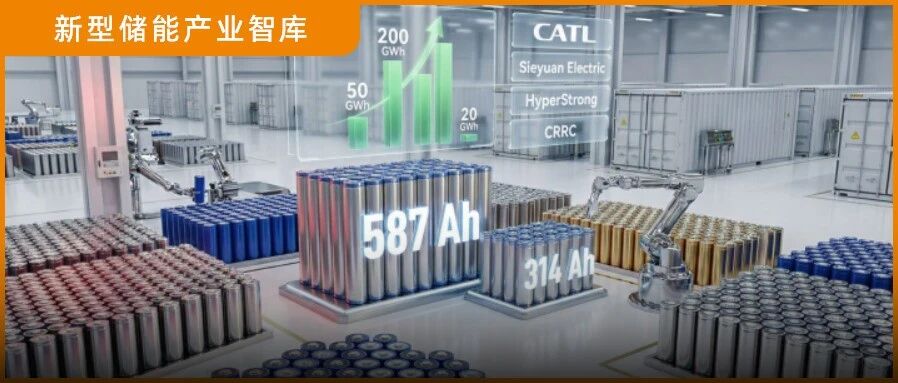
Core Viewpoint - The article discusses the emergence of the 587Ah large-capacity battery cell and its commercialization in the energy storage sector, highlighting the competitive landscape among various companies and the significant investments being made in this technology [2]. Group 1: Production Progress - Ganfeng Lithium announced the first offline production of its 588Ah-6.26MWh energy storage system in March, featuring a 47% reduction in component count per GWh and a high energy efficiency of 96.5% [4][6]. - Zhengli New Energy signed a contract for a 50GWh long-duration energy storage project in March, with a total investment of 10 billion yuan, focusing on the 588Ah large-capacity battery cell [7][10]. - CATL reported a rapid introduction of the 587Ah battery cell, which is expected to enhance the lifecycle value of energy storage projects by nearly 50% compared to the mainstream 314Ah products [11]. Group 2: Market Developments - Penghui Energy plans to invest 1.2 billion yuan in a production project for 587Ah and 120Ah batteries, with expectations to achieve output by 2026 [12]. - Pengcheng Infinite won a procurement project for 587Ah battery cells from Shandong Electric Era, indicating a growing demand for this capacity [13][14]. - Ronghe Yuanshu's energy storage system with the 587Ah cell received dual national standard certifications, marking a significant achievement in product validation [15]. Group 3: Industry Trends - The 587Ah battery cell is seen as a pivotal point in the energy storage market, with a shift towards large-capacity cells expected to occur by 2026, as companies that have not yet adopted this technology face risks [19]. - By 2026, it is projected that 15%-20% of global energy storage cell shipments will be above 500Ah, with the 587Ah cell expected to account for over 30% in domestic grid-side projects [19][20]. - Major agreements have been signed, including a 3-year cooperation agreement between Yiwei Lithium Energy and Shanghai Shinyi Luoxi Energy for 20GWh, with 50% of the supply being 587Ah/628Ah cells [20].

【公募基金】震荡盘整,防御优先——公募基金指数跟踪周报(2026.03.16-2026.03.20)
华宝财富魔方· 2026-03-23 09:20
Equity Market Review and Outlook - The core variable affecting the market remains the Middle East, with both short-term trading logic and long-term "stagflation risk" expectations dependent on whether the geopolitical conflict can be resolved quickly [1][5] - Until uncertainties in the geopolitical situation decrease or commodity price volatility declines, the market will continue to be impacted by event narratives and liquidity shocks, leading to a focus on long-term expectations [5][6] - A-shares are expected to maintain a volatile trend, with structural opportunities being more prominent than overall opportunities; recommended sectors include energy-related stocks (oil, green energy, coal, coal chemical), low valuation and low volatility stocks (state-owned banks, utilities), and sectors that can maintain high prosperity independent of geopolitical and oil price influences (energy storage, domestic AIDC) [1][5][6] Fixed Income Market Review and Outlook - The bond market showed significant differentiation between short and long ends, with the 1-year government bond yield decreasing by 2.00 basis points to 1.26%, while the 10-year and 30-year yields increased by 1.56 basis points to 1.83% and 2.16 basis points to 2.39%, respectively [2][7] - The current bond market is in a volatile state, with extreme risk aversion driving down short-end yields, while long-end yields are rising due to escalating geopolitical conflicts and heightened inflation expectations [7][8] - The market sentiment is cautious, with a focus on short-end credit products showing strong allocation value; however, long-end yields have limited downward momentum, and liquidity may face certain shocks as the quarter-end approaches [2][7] Market Performance - The A-share market experienced a volatile decline, with average daily trading volume at 22,091 billion, a decrease from the previous week; the ongoing disruption in the Strait of Hormuz has led to a significant drop in global risk assets [4][5] - Funds are shifting from macro-sensitive cyclical sectors to technology manufacturing sectors with independent growth logic, driven by multiple industry benefits such as the overseas GTC conference and price increases in cloud computing and storage products [4][5] - Resource cyclical sectors like non-ferrous metals and chemicals are under pressure, primarily due to external macroeconomic impacts, including rising oil prices and concerns over the Federal Reserve's hawkish stance [4][5]