奢侈品

Search documents
全球大公司要闻 | SpaceX收购xAI估值万亿,AMD营收超预期
Wind万得· 2026-02-04 01:10
// 热点头条 // 1. SpaceX:官网发布马斯克署名公告,宣布已收购xAI,合并后公司将整合人工智能、火箭、天基互联 网及移动设备直连通信。备忘录显示,新公司估值达1.25万亿美元(SpaceX估值1万亿美元+xAI估值 2500亿美元),交易为全股票形式,仍筹备2026年潜在IPO,但具体时间和估值尚不确定。 2. AMD:2025年四季度营收102.7亿美元,超预期的96.5亿美元;调整后每股收益1.53美元,高于预期 的1.32美元;运营利润28.5亿美元,利润率28%,预计2026年一季度营收95亿-101亿美元,调整后毛利 润率约55%。 3. 英伟达: 有报道称,OpenAI对英伟达最新的一些人工智能芯片并不满意,并且自去年以来一直在推 理芯片市场寻找替代方案。不过,报道出炉后不久,OpenAI CEO Altman隔空反驳,赞扬英伟达的AI芯 片。英伟达CEO黄仁勋对此表示,公司对OpenAI 的投资计划仍在 "按部就班推进"。 // 大中华地区公司要闻 // 1. 东鹏饮料:正式登陆香港联合交易所主板,证券简称为"东鹏饮料",成为国内首家实现A+H双上市的 功能饮料企业,此次上市将助力 ...


OpenAI拟筹集融资;马斯克或合并旗下公司;山姆前总裁加盟麦德龙
Sou Hu Cai Jing· 2026-02-03 14:03
Financing Dynamics - OpenAI is in discussions with several tech giants and Middle Eastern sovereign wealth funds to raise up to $100 billion, potentially valuing the company at $750 billion or more if negotiations proceed smoothly [3] - The potential investors include Microsoft, Nvidia, Amazon, SoftBank Group, and various sovereign wealth funds from the Middle East [3] - If successful, this funding round will enhance OpenAI's "cash + computing power" moat, accelerating its evolution towards general artificial intelligence and platform ecosystems [3] Brand Dynamics - Xianle Health has officially submitted its application for a mainboard listing on the Hong Kong Stock Exchange, aiming to deepen its global strategy and diversify its capital operations [7] - The company has a strong R&D and production capability across various dosage forms, with projected compound annual growth rates of 41% and 30% for soft capsules and gummies from 2022 to 2024, respectively [7] - This dual-platform construction is seen as a significant value leap, enhancing capital strength and competitiveness in the nutrition and health industry [7] Corporate Developments - Allbirds announced plans to close all full-price stores in the U.S. by the end of February, refocusing on e-commerce to create a simpler and more profitable business structure [10] - The company will retain two outlet stores in the U.S. and continue operations in London, marking a strategic shift towards online sales and international distribution [10] - This move is part of Allbirds' strategy to improve operational efficiency and business flexibility [10] Investment and Upgrades - Danone plans to invest €2.2 million (approximately ¥18.34 million) to upgrade its natural mineral water bottling plant in La Salvetat, France, to optimize production performance and enhance energy and water-saving measures [13] - An additional investment of €1.3 million (approximately ¥10.84 million) is planned for 2026, which includes improving insulation and replacing existing cooling towers, expected to reduce water consumption by 20% and electricity consumption by 5% [13] - This investment aims to enhance the appeal of "green mineral water" and boost production capacity during peak seasons [13] Mergers and Acquisitions - Elon Musk is reportedly considering merging SpaceX, Tesla, and xAI, with discussions still in the early stages [14] - Two main merger scenarios are being discussed: one between SpaceX and Tesla, and another between SpaceX and xAI, with the latter potentially occurring before SpaceX's planned IPO [14] - These mergers could enhance resource and funding synergies among Musk's companies [14] Personnel Changes - LVMH has proposed the appointment of Ariane Gorin as a group director at its upcoming annual shareholders' meeting, succeeding Marie-Laure Sauty de Chalon [19] - Gorin brings over 20 years of experience in technology, marketing, and strategic consulting, which could further empower LVMH's development [19] - Pieter Mulier will step down as creative director of Alaïa after five years, with rumors suggesting he may join Versace [22] - Givaudan announced personnel adjustments in its executive committee, promoting Christina Yeo and Fanny Iglesias to key positions to ensure strategic continuity [25]



SINCEREWATCH HK(00444)拟100万元收购南通荣煜能源科技51%股权
智通财经网· 2026-02-03 13:34
目标公司的主要业务为天然气批发及零售业务,包括液化天然气及压缩天然气分销。目标公司与多间主 要燃气公司合作,担任该等燃气公司的供应商。于2025年,目标公司的销售额为约人民币2400万元,并 逐步于中国各地建立稳定销售渠道。目前目标公司采用"企业对企业"营运模式,长期目标为进一步发展 成为专注于清洁能源的综合性企业。在中国政府政策支持下,天然气于低碳能源替代高碳能源过程中扮 演关键角色。董事会认为,收购事项将为集团开拓清洁能源业务提供契机,实现收入来源多元化。 集团主要于中国香港、中国澳门、中国台湾及中国大陆从事华贵品牌手表、时计及配件的分销业务以及 物业投资。业内持续受到非必需消费支出疲弱及宏观经济不确定性的挑战,导致消费需求持续疲软。预 期奢侈品市场于短期内仍将继续受压。在此背景下,管理层对现有业务采取审慎态度,并持续探索潜在 机会,以实现集团业务及收入来源的多样化,并减轻任何潜在风险与不确定性的影响。 智通财经APP讯,SINCEREWATCH HK(00444)发布公告,于2026年2月3日,买方(公司全资附属公司北 京麦立威尔科技有限公司)、卖方冯梅英女士及担保人订立股权转让协议,买方拟向卖方收购目 ...
政治乱局未挡涨势!法国本土股意外跑赢大盘 出口股却陷关税与欧元双重困局
智通财经网· 2026-02-03 11:28
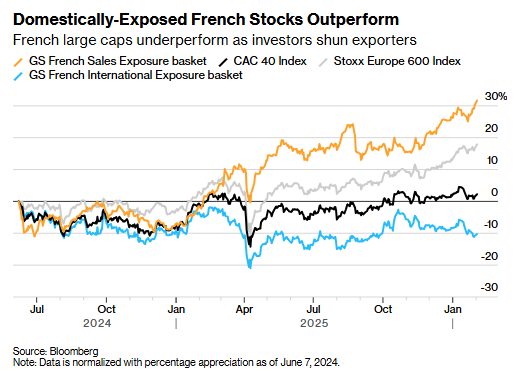
智通财经APP获悉,尽管法国政治动荡一度被市场视为对本土企业的最大威胁,但出人意料的是,国内 导向型股票反而成为大赢家。与此同时,出口型企业则因美国关税威胁和欧元走强等因素而步履维艰。 CAC40指数的一大短板在于,其成分股的本土营收占比仅为16%,这一特征不仅令投资者却步,也使得 该指数与欧元区其他市场的估值差距再度拉大,达到了疫情后初期之外的历史高位水平。 自2024年6月法国总统马克龙宣布提前举行大选以来,高盛编制的一篮子与法国经济相关的行业指数涨 幅已超30%,不仅大幅跑赢法国蓝筹股CAC40指数2.8%的涨幅,表现也优于欧洲斯托克600指数。 马克龙的大选决定引发了持续的政治不确定性,法国在不到两年时间里换了四位总理,彼时几乎无人看 好本土股表现。市场曾普遍认为,银行、公用事业和电信板块可能会落后于大盘,而全球经济的复苏韧 性则会利好LVMH(LVMUY.US)、赛诺菲(SNY.US)等出口型企业。然而,同期高盛编制的海外业务相关 板块指数却下跌了10%。 巴克莱银行策略师Emmanuel Cau表示:"原本预期欧洲出口股将在2026年反弹的投资者,或许需要重新 审慎规划投资策略。市场此前预计资金会 ...
“女色经济”,正在崩塌
3 6 Ke· 2026-02-03 07:42
Core Viewpoint - The decline of the beauty economy is a significant shift in societal values, indicating that reliance on physical appearance for income is becoming unsustainable, leading to a need for women to focus on skills and professional development instead of beauty-based monetization [3][18][19] Group 1: Decline of the Beauty Economy - The beauty economy is experiencing a near-collapse, with both online and offline sectors facing severe downturns, as evidenced by a 77% drop in nightclub traffic and a 60% decline in bar attendance in 2025 [4][5] - The medical aesthetics industry is also suffering, with nearly 40% of small clinics closing due to tightened credit for beauty loans, leading to a significant increase in overdue loans among women [5][6] - The willingness of men to spend on beauty-related services and products is rapidly decreasing, as shown by a 41% drop in online flower sales during the 2025 520 festival and a 40% decline in high-end dining orders [6][7] Group 2: Factors Contributing to the Collapse - The tightening of regulations against low-quality online content and the economic downturn are primary factors contributing to the decline of the beauty economy, as consumers cut back on non-essential spending [7][8] - Market saturation and aesthetic fatigue have accelerated the collapse, with an oversupply of similar beauty influencers leading to diminished consumer interest [8][9] - The awakening of women's self-awareness and independence is driving a shift away from valuing beauty as a primary asset, with many women now focusing on skill development and professional growth [9][11] Group 3: New Opportunities for Women - The collapse of the beauty economy presents an opportunity for women to redefine their career paths by combining beauty with professional skills, as evidenced by successful transitions of former beauty influencers into academic or specialized roles [11][12] - Women are increasingly entering traditionally male-dominated fields such as technology and construction, with a notable rise in the employment rate of skilled female workers compared to those relying solely on beauty [12][13] - Embracing entrepreneurship in niche markets, such as skincare or second-hand luxury goods, is becoming a viable option for women, with the second-hand luxury market projected to grow significantly [12][13] Group 4: Lessons for Men - The decline of the beauty economy serves as a warning for men to reassess their consumption habits and recognize the value of women beyond physical appearance [15][16] - Men are encouraged to focus on personal growth and responsible spending, moving away from emotional consumption patterns that have previously supported the beauty economy [16][17] - The importance of developing diverse skills and taking on responsibilities is emphasized, as reliance on a single advantage is no longer sufficient in a competitive environment [17][18]
科尔尼:2025年中国奢侈品市场:迈向审慎复苏之路报告
Sou Hu Cai Jing· 2026-02-02 03:48
Core Insights - The Chinese luxury goods market is on a cautious recovery path, with consumers exhibiting a prudent and optimistic attitude towards spending, leading to significant changes in consumer demographics, category performance, brand preferences, and purchasing channels [1][6][7] Consumer Sentiment and Spending - 80% of respondents are optimistic about the macro economy, 79% about employment, and 82% about policy support, yet per capita luxury spending is expected to decline by 4%, from 146,800 RMB to 141,500 RMB [1][7] - High-ticket categories like large leather goods and watches are under pressure, with declines of 7% and 6% respectively, while fashion and small accessories, as well as jewelry, show slight decreases [1][7][15] Consumer Demographics - Middle-aged, high-income consumers in first-tier cities are the main drivers of recovery, showing stronger willingness and ability to spend, while younger and low-income groups are more cautious [1][7][18] - There is a notable difference in spending expectations across age and income groups, with high-income consumers showing a greater willingness to increase spending [1][7] Brand Preferences - Domestic luxury brands are gaining popularity, with their share of total consumption rising from 39% to 44%, primarily driven by jewelry [2][7][22] - In the fragrance and beauty categories, consumers still prefer international brands, with local brands like Chow Tai Fook and Lao Pu Gold becoming popular choices [2][7] Purchasing Channels - Official channels are favored, with offline official channels accounting for 56% and online official channels for 44%. Travel retail channels are also on the rise, with mainland airport duty-free channels at 44% and Hainan offshore duty-free channels at 39% [2][7] - 36% of respondents plan to purchase luxury goods overseas, but most will limit overseas spending to 30% of their total luxury expenditure, with millennials showing the highest intent to buy abroad [2][7] Impact of Tariff Policies - 77% of respondents indicate that US-China tariffs will influence their purchasing behavior, with 50% likely to shift towards domestic brands and 59%-61% avoiding American products or preferring non-US produced American brands [2][7][25] - Some consumers are reducing luxury spending primarily due to increased savings (48%) and a shift towards experiential consumption (38%) [2][7] Future Strategies for Brands - Luxury brands need to enhance brand appeal and trust, improve quality and durability, optimize store services and after-sales, innovate designs based on Chinese consumer preferences, and create exclusive products and experiences to convert consumers' cautious attitudes into actual spending [2][7]

另类普拉达:清醒的奢侈与实用主义哲学
3 6 Ke· 2026-02-02 02:59
Core Insights - The Prada family has maintained a consistent underlying logic across three generations: a vigilance towards short-term trends and a steadfast belief in long-term value [1][26]. Group 1: Historical Context and Brand Evolution - Mario Prada founded a leather goods workshop in Milan in 1913, focusing on practical luxury rather than the prevailing trend of ostentatious design [2][3]. - The brand's initial strategy involved a clear positioning as a "practical luxury" brand, which was a significant departure from the industry norm of ornate designs [3][4]. - The brand faced challenges during the industrial revolution and two world wars, limiting its expansion due to a focus on small-batch, handcrafted production [6]. Group 2: Leadership and Strategic Shifts - Miuccia Prada took over the family business in 1978, shifting the focus from traditional craftsmanship to a more avant-garde and minimalist aesthetic [7][8]. - Miuccia's introduction of the nylon Prada Vela backpack marked a pivotal moment, breaking the luxury mold by offering high-quality products at accessible prices [9][11]. - The establishment of a dual leadership model with Patrizio Bertelli allowed for a balance between creative vision and commercial operations, facilitating the brand's growth [12][14]. Group 3: Market Positioning and Brand Diversification - The launch of the Miu Miu brand in 1992 targeted a younger demographic, effectively capturing a segment of the mid-range luxury market [12][14]. - Strategic acquisitions from 1996 to 1999 expanded Prada's portfolio, enhancing its market presence and product diversity [14]. - The success of the film "The Devil Wears Prada" in 2006 significantly boosted the brand's global image, aligning it with themes of professionalism and independence [15][16]. Group 4: Recent Developments and Challenges - As of 2025, Prada's main brand showed signs of growth fatigue, with revenue growth primarily driven by the Miu Miu brand [16][18]. - The management transition in June 2025 raised concerns about strategic continuity during a critical transformation phase [17][18]. - The acquisition of Versace for €1.25 billion in late 2025 aimed to create a brand matrix that could compete with industry giants like LVMH and Kering [21][23]. Group 5: Future Outlook and Strategic Considerations - The integration of Versace presents both opportunities and risks, particularly regarding brand identity and operational alignment [23][24]. - The success of this acquisition will depend on maintaining a balance between the distinct identities of Prada and Versace while ensuring cohesive brand strategy [24][25]. - The outcome of these strategic moves will be crucial for Prada's positioning in the global luxury market over the next three to five years [25].

全球大公司要闻 | 英伟达千亿美元投资OpenAI非承诺,元宝红包突袭
Sou Hu Cai Jing· 2026-02-02 00:54
Group 1 - Nvidia's CEO Jensen Huang stated that OpenAI invited Nvidia for an investment of up to $100 billion, but this investment is "not a commitment," and Nvidia will invest in OpenAI gradually [1] - Tencent launched a 10 billion yuan red envelope campaign and announced the public testing of Yuanbao, which quickly rose to the top of the free app rankings in the Apple Store [1] - From January 1, 2026, the value-added tax rate for telecommunications services will increase from 6% to 9%, impacting the revenue and profits of China Mobile, China Unicom, and China Telecom [1] Group 2 - BYD's new energy vehicle sales in January were 210,000 units, a year-on-year decrease of 30.11%, attributed to intensified market competition and consumer hesitation before the Spring Festival [3] - Xiaomi delivered over 39,000 vehicles in January, continuing to capture market share with cost-effective models; NIO delivered 27,182 new cars, a year-on-year increase of 96.1% [3] - Leap Motor delivered 32,059 vehicles in January, a year-on-year increase of 27%, while Li Auto's deliveries fell by over 7% [3] Group 3 - Oracle is facing severe funding difficulties due to challenges in financing for AI data center expansion, considering large-scale layoffs of 20,000 to 30,000 employees to release $8 billion to $10 billion in cash flow [5] - Blue Origin will pause space tourism flights for at least two years to focus resources on accelerating the development of its lunar lander and other lunar technologies [6] - GameStop's CEO Ryan Cohen announced plans to acquire a large publicly traded consumer retail company to support a target of $35 billion in annual revenue by the end of fiscal year 2026 [6] Group 4 - Samsung Electronics expects an operating profit of 20 trillion won in Q4 2026, a year-on-year increase of 208%, with memory business operating profit projected at 35 trillion won in Q1 [7] - Toyota's sales in China have rebounded after four years, with January sales in India reaching 33,880 units, a year-on-year increase of 15.4% [7] - SK Hynix reported a 102.7% year-on-year increase in semiconductor exports from South Korea in January, reaching $20.5 billion [7] Group 5 - BMW Group announced a personnel adjustment in Greater China, with a new president taking over on April 1, 2026, responsible for strategic planning and operations [8] - ASML launched a new lithography machine XT:260 for advanced packaging, achieving production efficiency four times that of previous equipment [8] - LVMH invested 1 billion euros to increase its stake in Italian luxury brand Loro Piana to 94%, raising the brand's valuation to 11 billion euros [8]

可选消费W05周度趋势解析:受美联储鹰派影响全球资产价格大跌,可选消费板块回撤较多
海通国际· 2026-02-02 00:25
Investment Rating - The report assigns an "Outperform" rating to multiple companies in the discretionary consumption sector, including Nike, Li Ning, Midea Group, JD Group, Haier Smart Home, Gree Electric, Anta Sports, and many others [1]. Core Insights - The discretionary consumption sector has experienced a significant pullback due to the hawkish stance of the Federal Reserve, leading to a decline in global asset prices [4][13]. - The report highlights that the domestic sportswear sector has shown resilience, with a weekly increase of 0.6%, while other sectors such as luxury goods and cosmetics have faced declines [5][15]. - The report notes that various sub-sectors within discretionary consumption have performed differently, with gold and jewelry being the top performers in the recent weeks [4][13]. Summary by Relevant Sections Weekly Performance Review - The report details the weekly performance of various sectors, indicating that domestic sportswear outperformed others with a 0.6% increase, while luxury goods saw a decline of 5.8% [4][13]. - Monthly performance shows gold and jewelry leading with a 14.8% increase, while luxury goods and overseas sportswear faced significant declines [4][13]. Sector Analysis - The domestic sportswear sector's growth is attributed to increased demand for warm clothing due to colder weather and strategic partnerships, such as Anta Sports' acquisition of a stake in PUMA [6][15]. - The credit card sector experienced mixed results, with Mastercard performing well while Visa and American Express faced declines due to varying financial performance [15]. - The retail sector saw a decline of 1.4%, with some companies like China Resources Vanguard performing well due to favorable policies [15]. Valuation Analysis - The report indicates that the expected PE ratios for various sectors in 2025 are below their historical averages, suggesting potential investment opportunities [11][18]. - For instance, the expected PE for the domestic sportswear sector is 13.4 times, which is 70% of its past five-year average [11][18].
2026年第3周:服装行业周度市场观察
艾瑞咨询· 2026-02-02 00:05
Group 1: Luxury Goods Market Trends - The luxury goods industry is shifting towards high-quality growth, with major players like LVMH and Richemont adjusting strategies to focus on core businesses and supply chain control [2] - LVMH is divesting non-core brands and enhancing supply chain and experiential layouts, while Richemont is strengthening its jewelry business and divesting loss-making e-commerce [2] - Kering is selling its beauty business to concentrate on eyewear and jewelry manufacturing, indicating a trend of precise investment and asset optimization in the industry [2] Group 2: Retail Industry Transformation - The retail supermarket sector is facing a transformation challenge, with some companies attempting to emulate successful models like "胖东来" but experiencing limited success [3] - The retail industry has evolved through four stages, culminating in a "fashion" phase post-2023, where consumer rational needs and emotional values must be met [3] - Creating fashionable retail spaces requires attention to store design, product selection, and customer experience to enhance customer dwell time and increase sales [3] Group 3: Footwear Trends - The footwear trend for 2025 is characterized by diversification and personalization, with consumers prioritizing comfort and self-expression over limited edition collaborations [4] - 3D printing technology is becoming a focal point in the industry, with brands like Nike and Adidas innovating their product lines [4] - Domestic footwear brands are improving in design and quality, challenging previous biases, while the popularity of thin-soled shoes faces criticism for lack of innovation [4] Group 4: Luxury Brands and High-End Retail - High-end retail spaces in first-tier cities are experiencing a wave of luxury brand withdrawals, driven by low foot traffic and the rise of online channels [5] - Major luxury brands are shifting focus to online sales and core business areas, leading to a transformation in high-end retail strategies [5] - Shopping centers are adapting by introducing new concepts and experiences to attract customers, moving from traditional retail to experiential consumption [5] Group 5: Emerging Brands and Market Dynamics - Bubble Mart reported a revenue of 13.876 billion yuan in the first half of 2025, a 204.4% increase year-on-year, driven by cross-brand collaborations [7] - The "排骨羽绒服" has transformed from an unpopular item to a trending fashion piece, achieving significant sales growth through social media and influencer marketing [8] - The Swedish outdoor brand Haglöfs is entering the Chinese market with plans to open 25 stores by the end of 2025, targeting high-net-worth individuals [9] Group 6: Strategic Adjustments in Established Brands - The brand Wolf Claw is undergoing a strategic shift towards the mid-to-high-end market after being acquired by Anta, closing its online flagship store [10][11] - Anta's strategy includes leveraging Wolf Claw to fill gaps in the high-end outdoor market, reflecting a broader trend of brand repositioning in response to market dynamics [10][11] - Li Ning is expanding its coffee business while also entering the high-end outdoor market, indicating a multi-faceted growth strategy [18]