
包

Search documents
传媒周观察:模型密集迭代,入口之争火热;春节档电影头部单片亮眼,游戏K型景气度分化
GOLDEN SUN SECURITIES· 2026-02-26 10:24
Investment Rating - The report maintains an "Overweight" rating for the media industry, indicating a positive outlook for investment opportunities in this sector [5]. Core Insights - The media industry has shown significant performance, with the media index rising by 3.5% last week, outperforming the Shanghai Composite Index by 3.1% [11]. - The report highlights a K-shaped recovery in the gaming sector, with high-end and cost-effective games performing well, while mid-tier games lag behind [8]. - The competition for AI super applications intensified during the Spring Festival, with major players like ByteDance, Alibaba, and Tencent vying for market share [30]. Summary by Sections Weekly Market Review - The media index increased by 3.5%, achieving a trading volume of 715.2 billion yuan, marking the second-highest trading week in 26 years [11]. - Sub-sectors such as film and television, digital media, and publishing led the gains, with notable individual stock performances, including a 61% increase for Zhangyue Technology [14][11]. AI Spring Festival Special - The report discusses the concentrated iteration of AI models during the Spring Festival, with a focus on multi-modal generation and agent capabilities [26]. - Major internet companies are competing for the "AI super entrance," with significant updates from companies like ByteDance and Alibaba [30][35]. - The report notes that the demand for tokens is increasing, leading to accelerated commercialization of AI models [28]. Film Spring Festival Box Office - The overall box office for the Spring Festival reached 5.752 billion yuan, marking a decline compared to previous years, with a notable drop in audience numbers [8]. - The report identifies a strong performance from top films, with "Flying Life 3" leading the box office and "Biao Ren" breaking records for martial arts films [8]. Gaming Spring Festival Special - The gaming sector exhibited a K-shaped recovery, with high-value and luxury games outperforming others [8]. - Tencent maintained a strong position in the market, with several high DAU products dominating the sales charts [8]. - The report suggests that sports events may catalyze the performance of football games, indicating potential growth areas [8]. Internet Sector Insights - The report emphasizes the competitive landscape in AI narratives, with a focus on full-stack AI service providers [25]. - It also notes a potential easing of competition in instant retail, following regulatory discussions with major internet platforms [25].


中产消费观变了,奢侈品牌向普通客户发邀约
第一财经· 2025-12-10 08:34
Core Insights - The luxury brands are facing significant sales pressure, with major groups like LVMH and Kering reporting double-digit declines in performance during the first half of the year, indicating a shift from the previous era of effortless sales to a more challenging market environment [3][16]. Group 1: Changes in Consumer Behavior - Middle-class consumers, like Jennie, are experiencing a decrease in purchasing frequency, with average annual purchases dropping to two times, influenced by their income expectations and confidence [5][9]. - The allure of overseas shopping has returned, with consumers opting for purchases in countries with lower exchange rates and taxes, impacting domestic luxury sales [5][9]. - Despite reduced spending, luxury brands are increasing their event invitations to attract customers, indicating a shift in marketing strategies [7][9]. Group 2: Brand and Retail Strategies - Luxury brands are closing underperforming stores while focusing on opening larger flagship stores in prime urban areas to enhance customer experience [3][19]. - The number of new luxury store openings in China has decreased by 38% year-on-year, particularly in non-first-tier cities, as brands consolidate their presence in more lucrative markets [19][22]. - Brands are increasingly demanding more support from property owners, such as promotional subsidies and enhanced customer experiences, to drive sales [11][12]. Group 3: Market Adjustments and Future Outlook - The luxury market is expected to stabilize, with projections indicating that the global personal luxury goods market will remain flat compared to the previous year, reflecting a maturation phase post-pandemic [5][28]. - Despite the challenges, there are signs of recovery in the luxury sector, with some brands reporting growth in the third quarter, particularly in the Greater China region [27][28]. - Developers are shifting their focus from high-end brands to more practical cash flow considerations, indicating a change in the retail landscape [23][26].


退货乱象倒逼商家奇招,巨型吊牌能否整治“穿完就退”
Yang Guang Wang· 2025-11-07 06:58
Core Viewpoint - The introduction of "giant tags" by e-commerce merchants aims to combat the high return rates associated with online shopping, particularly in women's clothing, by making it less convenient for consumers to return items after wearing them [1][2]. Group 1: E-commerce Challenges - The return rate for online clothing sales is alarmingly high, with some platforms reporting rates as high as 90%, particularly in women's apparel [2]. - Many consumers exploit the "seven-day no-reason return" policy, leading to a significant number of returns that are not due to product quality but rather to misuse of the return policy [2][4]. Group 2: Merchant Strategies - Merchants are adopting "giant tags," which are larger and made from stiffer materials, to deter consumers from wearing items before returning them [1][2]. - The placement of these tags is strategically considered to maximize visibility and minimize the likelihood of removal or concealment by consumers [3]. Group 3: Consumer Reactions - Consumer feedback on "giant tags" is mixed; while some support the initiative to reduce returns, others criticize the negative impact on the shopping experience, particularly for legitimate customers [3][4]. Group 4: Expert Insights - Experts suggest that while "giant tags" may provide a temporary solution to high return rates, they do not address the underlying issues of trust between consumers and merchants [4][5]. - A more comprehensive approach is needed, including improved consumer credit systems and better service environments to reduce the incentive for malicious returns [5].
天创时尚跌2.10%,成交额1598.38万元,主力资金净流出107.56万元
Xin Lang Cai Jing· 2025-11-05 02:31
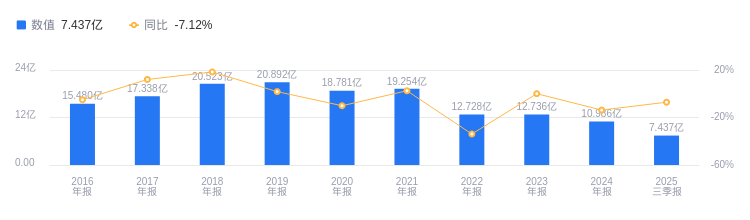
Company Overview - Tianchuang Fashion Co., Ltd. is located in Nansha District, Guangzhou, Guangdong Province, and was established on April 9, 2004. The company was listed on February 18, 2016. Its main business involves the research, production, distribution, and retail of fashion consumer goods, as well as mobile internet marketing [1]. - The company's revenue composition is primarily from shoes, bags, and other products (98.29%), with a small portion from other sources (1.71%) [1]. Financial Performance - As of September 30, Tianchuang Fashion reported a revenue of 744 million yuan for the first nine months of 2025, representing a year-on-year decrease of 7.12%. The net profit attributable to the parent company was -5.23 million yuan, showing an increase of 83.01% year-on-year [2]. - The company has cumulatively distributed 528 million yuan in dividends since its A-share listing, with no dividends distributed in the past three years [3]. Stock Performance - On November 5, Tianchuang Fashion's stock price decreased by 2.10%, trading at 7.92 yuan per share, with a total market capitalization of 3.324 billion yuan. The stock has increased by 112.90% year-to-date [1]. - Over the past five trading days, the stock has risen by 4.35%, 7.76% over the past 20 days, and 22.22% over the past 60 days [1]. - The stock has seen a net outflow of 1.0756 million yuan in principal funds, with large orders accounting for 4.61% of total buying and 11.34% of total selling [1]. Shareholder Information - As of September 30, the number of shareholders for Tianchuang Fashion was 12,900, an increase of 12.99% from the previous period. The average number of circulating shares per person was 32,619, a decrease of 11.49% [2].

天创时尚的前世今生:2025年三季度营收7.44亿行业排第8,低于行业平均,净利润亏损排第6
Xin Lang Cai Jing· 2025-10-30 13:00
Core Viewpoint - Tianchuang Fashion is a leading company in the domestic fashion footwear industry, focusing on product research and design innovation, with a full industry chain advantage [1] Group 1: Business Performance - In Q3 2025, Tianchuang Fashion reported revenue of 744 million yuan, ranking 8th in the industry, with the top company, Kairun Co., achieving 3.719 billion yuan [2] - The main business revenue from shoes, bags, and others was 518 million yuan, accounting for 98.29% of total revenue, while other revenue was 902,950 yuan, making up 1.71% [2] - The net profit for the same period was -5.1068 million yuan, ranking 6th in the industry, with the industry average net profit being 21.641 million yuan [2] Group 2: Financial Ratios - As of Q3 2025, Tianchuang Fashion's debt-to-asset ratio was 28.60%, down from 33.74% year-on-year and below the industry average of 46.89% [3] - The gross profit margin for Q3 2025 was 66.48%, an increase from 63.16% year-on-year and higher than the industry average of 32.77% [3] Group 3: Executive Compensation - The chairman, Li Lin, received a salary of 756,600 yuan in 2024, an increase of 51,600 yuan from 2023 [4] Group 4: Shareholder Information - As of September 30, 2025, the number of A-share shareholders increased by 12.99% to 12,900, while the average number of circulating A-shares held per shareholder decreased by 11.49% to 32,600 [5]
中国人不爱 “退税买包” 了
Sou Hu Cai Jing· 2025-10-30 05:19
Core Insights - The composition of shoppers in European luxury goods stores is changing, with a significant decline in Chinese tourists, whose share of the European duty-free market has dropped from 32% five years ago to 13% now, while American and Middle Eastern tourists have increased their shares to 22% and 13% respectively [3][5] - Overall duty-free luxury sales in Europe have grown by 7% year-on-year, despite the decline in Chinese tourist spending [3] Group 1: Shifts in Consumer Behavior - From 2019 to 2024, Chinese tourists' duty-free spending in Europe is projected to decline at a compound annual rate of 8%, while American and Gulf tourists' spending is expected to grow by 12% and 14% respectively [5] - The luxury brands in Europe are adapting to cater to new customer demographics, with English and Arabic becoming the dominant languages in stores [5] - Chinese tourists are increasingly shopping in Japan, with 40% of their duty-free purchases now occurring there, up from 14% in 2019 [5][9] Group 2: Changes in Retail Landscape - The convenience and cultural proximity of East Asian destinations have made them more appealing compared to Europe, which has become less accessible due to limited flight availability and complicated visa processes [9] - The luxury retail experience in China has significantly improved, with high-end shopping environments in cities like Beijing, Shanghai, Nanjing, and Shenzhen now rivaling those in Europe [9][19] - Price differentials between China and Europe have narrowed from 30% to under 10%, making local purchases more attractive for Chinese consumers [19] Group 3: Evolving Consumer Mindset - The perception of luxury shopping has shifted from a social symbol to a more personal experience, with consumers now viewing travel as a means of relaxation rather than a shopping spree [20] - The era of "shopping tourism" is ending, giving way to a focus on "experiential living," which emphasizes sustainable and rational consumption [20][22] - The decline in duty-free spending by Chinese tourists reflects a transformation in consumer logic rather than a decrease in purchasing power, indicating a more thoughtful and localized approach to consumption [22][23]

跨境电商运营:2024年服饰鞋靴及配饰品类研究报告
Sou Hu Cai Jing· 2025-10-28 03:08
Core Insights - The report focuses on the global cross-border e-commerce market for apparel, footwear, and accessories, highlighting current market conditions, DTC brand case studies, operational strategies, and consumer insights for 2024 [1]. Group 1: Market Overview - The global apparel and footwear market reached a size of $1,818.74 billion in 2023, with stable search volume trends in recent years [1]. - The accessories market size in 2023 was $663.4 billion, showing continuous growth since 2020 [1]. - High attention regions for both markets include Eastern North America and Europe, with significant consumer interest in products like dresses, shoes, and shorts, as well as brands like Nike and Adidas [1]. Group 2: DTC Brand Opportunities - DTC brands are emerging as new opportunities in the industry, with notable examples including ARITZIA (women's apparel, $1.5 billion sales in 2022) and OOFOS (recovery footwear, $210 million sales in 2022) [1]. - Key success factors for DTC brands include effective user communication, leveraging social media traffic, reinforcing brand values, and focusing on niche markets [1]. Group 3: Consumer Insights and Strategies - The report emphasizes the importance of data-driven consumer insights, integrating user profiles, behaviors, and feedback to achieve strategic data utilization, brand localization, and operational refinement [1]. - Recommendations include deepening market penetration, enhancing brand equity, and monitoring performance optimization [1]. Group 4: Operational Strategies - The report provides case studies, such as a hair removal device project, to illustrate the application of consumer insights [1]. - It also offers solutions for building independent apparel websites, highlighting features like first-order conversion, bundled promotions, and repurchase activation [1].


瞭望 | 规范引导万物可租新业态
Sou Hu Cai Jing· 2025-10-21 03:41
Core Insights - The rental economy in China is experiencing significant growth, with a projected transaction scale exceeding 4.2 trillion yuan in 2024, representing a 32% year-on-year increase and serving over 750 million users [1] - The shift from ownership to sharing reflects a new consumer philosophy that emphasizes cost-effectiveness, trial experiences, and green consumption [1] - However, the rapid growth of the rental economy is accompanied by challenges such as information asymmetry and weak consumer rights awareness, leading to issues like counterfeit goods, contract traps, and privacy concerns [1] Industry Challenges - The lack of comprehensive laws, regulations, and industry standards for the rental economy is a significant issue, necessitating improved regulatory mechanisms for transaction processes [1] - There is a need for relevant authorities to expedite the establishment of clear responsibilities and rights among platforms, lessors, and consumers, particularly in high-dispute areas like damage assessment and information leakage [2] - Platforms should enhance their responsibilities by improving credit evaluation systems, standardizing offline item delivery, and ensuring user fund security [2] Recommendations for Improvement - Lessors are encouraged to invest more in product quality inspection and maintenance, moving away from short-term speculative thinking [2] - Consumers should enhance their risk awareness and ability to identify legitimate platforms, promoting a culture of honest rental consumption [2] - Addressing these challenges and optimizing service offerings will contribute to a more stable and vibrant rental economy, ultimately stimulating consumer activity [2]
格米线下专柜加速落地,打响中国高端杯壶品牌
Jin Tou Wang· 2025-10-09 04:32
Core Insights - The article highlights the evolution of the cup and pot industry from mere functional items to expressions of lifestyle and aesthetic taste, with Gemi positioning itself as a high-end Chinese brand since its establishment in 2018 [1] Group 1: Market Strategy - Gemi initially entered the market through a "shop-in-shop" model, collaborating with high-end supermarkets like Cool Play, Pang Donglai, Sam's Club, and Ole, achieving coverage in over 35,000 shop-in-shop locations within a few years [2] - The brand's strategy balances user demand with commercial goals, allowing consumers to perceive fashionable cups and pots as diverse expressions of lifestyle and social culture [2] Group 2: Consumer Experience - With market recognition established, Gemi is shifting focus from broad outreach to in-depth consumer experiences by setting up independent counters in key cities starting in 2025 [3] - These independent counters offer a complete brand narrative, emphasizing the choice of materials like titanium and the characteristics of artist collaboration products, providing an immersive experience of Gemi's lifestyle aesthetics [3] Group 3: Brand Narrative and Future Plans - Gemi aims to redefine the value of "Made in China" by transforming beauty into tangible cultural art, with each product serving as a portable piece of art [4] - The brand has strengthened its narrative by enlisting global ambassadors, such as Song Qian and Pan Zhanle, to embody the core attributes of high-end, fashionable, and healthy living, thereby expanding its retail presence and brand influence both domestically and internationally [4]
明晰司法裁判标准 治理网购“退货难”
Ren Min Wang· 2025-09-21 07:42
Core Viewpoint - The article highlights the widespread issue of difficulties in returning products purchased online, particularly focusing on the legal implications of merchants' return policies and consumer rights in the context of e-commerce [1] Group 1: Consumer Rights and E-commerce - Consumers have reported challenges with merchants refusing to honor the seven-day no-reason return policy, citing reasons such as "product unsealed" or "product activated" [1] - Some merchants explicitly state on product pages that the seven-day no-reason return policy does not apply, raising questions about the legality of such clauses [1] Group 2: Case Study - A specific case is presented involving a consumer, Ms. Hu from Wuhan, who purchased a bag for 7060 yuan and faced difficulties in returning it due to discrepancies between the received product and the displayed product [1] - The merchant denied the return request, claiming the issue was not a quality problem but rather a special leather effect, leading Ms. Hu to pursue legal action against the merchant and the platform in the Beijing Internet Court [1]