
智能终端

Search documents
长风破隘,再越关山丨TCL创始人、董事长李东生2026年新年献词
Sou Hu Cai Jing· 2025-12-31 16:10
Group 1 - The core viewpoint emphasizes that TCL is navigating a challenging external environment while focusing on strategic leadership, innovation, advanced manufacturing, and global operations [2] - TCL has achieved significant growth in its smart terminal segment, with both revenue and profit increasing, while enhancing its global brand influence [2] - TCL Huaxing has exceeded its operational goals and is constructing a G8.6 generation printed OLED factory, marking a critical leap for China's display industry [2] - TCL's subsidiary, Midea Technology, remains the global leader in TV OEM and has successfully expanded into new display sectors [2] - Despite challenges in the photovoltaic industry, TCL Zhonghuan is committed to organizational transformation and core capability enhancement to navigate through difficulties [2] Group 2 - Looking ahead to 2026, the global economy remains uncertain, with geopolitical shifts and AI technology reshaping industry landscapes, presenting both opportunities and challenges for China's economy [3] - The company aims to maintain strategic focus and strengthen core capabilities to drive high-quality development, while enhancing technological innovation through AI to achieve product and quality leadership [4] - TCL is celebrating its 45th anniversary, reflecting on its evolution from a small tape factory in Huizhou to a global advanced manufacturing group, and is poised to seize opportunities in China's high-quality economic development [4]



看2026|朱力:深耕机器人等三领域,推动技术与行业深度融合
Bei Ke Cai Jing· 2025-12-31 01:20
Core Viewpoint - The article discusses the economic outlook for 2026 and the strategic initiatives companies, particularly Shenzhen Guangjian Technology Co., Ltd., are taking in response to the central economic work conference's emphasis on expanding domestic demand and optimizing supply [1][2]. Group 1: Company Initiatives - The company is responding to the central economic work conference by implementing practical measures to promote high-quality development, including optimizing supply chain management to reduce reliance on international supply chains and lower production costs [5]. - Guangjian Technology has achieved full localization of its core components, ensuring efficient delivery and stable supply of products [5]. - The company plans to increase investment in product innovation and application scenario expansion, focusing on three core areas: robotics, biometric identification, and smart terminals [5][6]. Group 2: Strategic Development Goals - For 2026, the company aims to deepen market penetration in its core business areas, driving steady revenue growth and consolidating its leadership position in the domestic market [6]. - The company is also focusing on strengthening its overseas market presence, particularly in North America, Europe, the Middle East, and Southeast Asia, leveraging technology exports and localization strategies to enhance its international brand influence [6]. - In terms of product innovation, the company will continue to increase R&D investment, aiming to launch 3D visual perception products tailored to various industry needs, facilitating the intelligent application of innovative technologies across different sectors [7].

华为轮值董事长孟晚舟新年致辞:追风赶月莫停留,平芜尽处是春山
雷峰网· 2025-12-31 00:37
Core Viewpoint - The company emphasizes resilience in overcoming challenges and professionalism in creating value, highlighting significant achievements and future strategic opportunities in the context of technological advancements and industry transformation [2][5][8]. Group 1: Achievements in 2025 - The company has made substantial progress in various fields, including providing 5G-A network services to 60 million users and enhancing the HarmonyOS ecosystem, with over 36 million devices running Harmony 5.0 and above [3]. - Collaborations with automotive partners have led to the installation of smart systems in over 1.4 million vehicles, contributing to nearly 7 billion kilometers of assisted driving mileage [3]. - The company has developed a robust partner network, with over 6,800 partners and 3.8 million developers for the Kunpeng platform, and over 3,000 partners and 4 million developers for the Ascend platform [3]. Group 2: Future Strategic Opportunities - The company identifies the ongoing wave of intelligent transformation as a long-term strategic opportunity, focusing on vertical industry applications and the integration of AI with core business processes [5][6]. - Plans include building an open-source ecosystem for Kunpeng and Ascend, enabling partners to develop products that meet diverse industry needs and enhancing AI computing capabilities [7]. - The company aims to enhance consumer experiences through the Harmony ecosystem and improve AI integration in communication networks, transitioning from connectivity to intelligent connectivity [7]. Group 3: Challenges and Commitment - The path to success is acknowledged to be fraught with challenges, but the company is committed to facing these difficulties head-on, emphasizing the importance of strategic focus and organizational strength [8]. - The company believes that past successes do not guarantee future outcomes, and it is dedicated to continuous improvement and innovation in the face of uncertainty [8].

广东擦亮“百万英才汇南粤”金字招牌
Jing Ji Ri Bao· 2025-12-30 22:13
Core Insights - Guangdong's "Million Talents Gather in South Guangdong" initiative aims to attract 1 million college graduates to the region by offering competitive salaries and job opportunities, thereby strengthening its modern industrial talent base [1][4][5] Group 1: Recruitment Events - The autumn recruitment event in Shenzhen attracted over 150,000 students from 1,700 universities, offering more than 65,000 quality job positions [1] - Throughout the year, Guangdong organized over 5,000 recruitment events, successfully attracting over 1.1 million college graduates to choose employment in the province [1][2] - The spring recruitment activities expanded from 8 cities to cover 19 provinces and over 100 key universities, establishing a continuous recruitment pattern throughout the autumn semester [2] Group 2: Talent Attraction Strategies - Guangdong's cities showcased attractive job positions and policies, with Shenzhen's recruitment event featuring collaboration from 21 cities, highlighting diverse job offerings and innovative service experiences [3][5] - The initiative has successfully attracted nearly 10,000 talents to Shantou, with over 10% being master's and doctoral graduates, indicating a strong appeal for high-level talent [3] Group 3: Industry Alignment - The recruitment activities are closely aligned with the development needs of 20 strategic industrial clusters in Guangdong, focusing on emerging and future industries to gather and reserve key talents [5] - The participation of various enterprises, including state-owned and leading private companies, ensures a wide range of job opportunities across different sectors, including artificial intelligence and new energy [5] Group 4: Employment Services - The recruitment events featured immersive employment service areas, enhancing job matching efficiency through innovative services such as AI recruitment support and resume optimization [6][7] - The "Future Avenue" at the autumn recruitment event integrated job matching, industry displays, and cultural experiences, showcasing the technological allure of the Greater Bay Area [7]
顺差破1万亿美元,工业利润却在下滑:中国经济正在发生什么?
Sou Hu Cai Jing· 2025-12-30 10:01
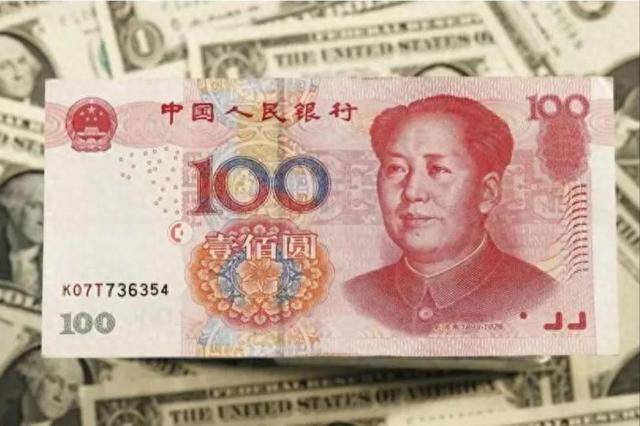
Group 1 - The core viewpoint is that while the Chinese yuan has stabilized against the US dollar and trade surplus has exceeded $1 trillion, there are underlying issues such as declining industrial profits and pressure on traditional export sectors, indicating a structural transition in the economy [1][15][31] - The importance of the US as an export destination is decreasing, with ASEAN, the EU, Africa, and Latin America emerging as new growth sources for Chinese exports [7][8] - The current trade surplus is not a distortion but reflects a shift from low-cost goods to high-tech products and critical intermediate goods in the global supply chain [18][20] Group 2 - The decline in industrial profits, particularly in traditional export industries like textiles and footwear, contrasts sharply with the record trade surplus, highlighting the challenges faced by companies during this transition [17][21] - The structural changes in the economy are leading to a focus on profitability and upgrading rather than merely expanding through low prices, which is a significant shift from previous business models [24][27] - The profitability in high-tech sectors such as electronics and semiconductors is increasing, indicating a concentration of resources towards areas with long-term competitive advantages [26][29] Group 3 - The simultaneous occurrence of the yuan breaking 7, the trade surplus surpassing $1 trillion, and profit pressures reflects different facets of the same transformation, emphasizing China's critical position in global competition while acknowledging the exit of old growth models [31][33] - The focus should be on whether new growth drivers can develop quickly enough to fill the gap left by the decline of old drivers, as this transition is expected to be accompanied by discomfort and challenges [33]
华为轮值董事长孟晚舟发表2026年新年致辞
Sou Hu Cai Jing· 2025-12-30 03:38
Core Insights - The company views the wave of intelligent transformation as a long-term strategic opportunity, focusing on deepening industry applications of AI in various sectors such as healthcare, steel production, and oil and gas exploration [2][5] Group 1: Achievements in 2025 - The company assisted operators in building 5G-A networks, providing high-speed connectivity to 60 million users [4] - The HarmonyOS ecosystem has accelerated from "usable" to "user-friendly," with over 36 million devices running HarmonyOS 5.0 and above [4] - Collaborated with automotive partners to equip over 1.4 million vehicles with smart driving capabilities, covering nearly 7 billion kilometers of assisted driving [4] - The Kunpeng ecosystem has developed over 6,800 partners and 3.8 million developers, while the openEuler operating system has been installed on over 16 million units [4] - The company produced over 20 trillion kilowatt-hours of green electricity, saving 150 billion kilowatt-hours and reducing emissions by 1.06 billion tons, equivalent to planting 1.45 billion trees [4] Group 2: Future Strategic Focus for 2026 - The company aims to strengthen vertical industry operations and leverage its "mixed" advantages to enable intelligent transformation across various sectors [7] - Plans to build an open-source Kunpeng and Ascend ecosystem to empower partners in developing products that meet diverse industry needs [7] - The "water strategy" will enhance pipeline flow, integrating AI into communication networks to transition from connectivity to "intelligent connectivity" [7] - The company will prioritize consumer experience to enrich the HarmonyOS ecosystem and enhance AI experiences for end-users [7] - The focus will also include enhancing AI data centers for greater efficiency and implementing liquid cooling for fast charging solutions [7]

华为,最新发布!
证券时报· 2025-12-30 03:15
Core Viewpoint - The company emphasizes its achievements in 2025 and outlines its strategic opportunities in the wave of intelligent transformation, highlighting the importance of adaptability and continuous improvement in the face of uncertainty [1][6][9]. Group 1: Achievements in 2025 - The company assisted operators in building 5G-A networks, providing high-speed network connectivity to 60 million users [5]. - The Harmony ecosystem has accelerated from "usable" to "user-friendly," with over 36 million devices running Harmony 5.0 and above [5]. - Collaborating with automotive partners, the company equipped over 1.4 million passenger cars with smart driving capabilities, achieving nearly 7 billion kilometers of assisted driving mileage [5]. - The Kunpeng ecosystem has developed over 6,800 partners and 3.8 million developers, with the openEuler operating system installed on over 16 million units [5]. - The Ascend ecosystem has over 3,000 partners and 4 million developers, with the Atlas 900 super node serving various industries, including internet, finance, telecommunications, and power [5]. - The company has produced over 20 trillion kilowatt-hours of green electricity, saving 150 billion kilowatt-hours and reducing emissions by 1.06 billion tons, equivalent to planting 1.45 billion trees [5]. Group 2: Future Strategic Directions - The company identifies the wave of intelligent transformation as a long-term strategic opportunity, focusing on deepening industry verticals and enabling intelligent transformation across various sectors [6][7]. - Plans include building an open-source Kunpeng and Ascend ecosystem to empower partners in developing products that meet diverse industry needs [8]. - The company aims to enhance consumer experiences through the Harmony ecosystem and improve AI integration in communication networks [8]. - Future initiatives will focus on reconstructing AI data centers and enhancing charging experiences with liquid cooling and ultra-fast charging technologies [8]. Group 3: Call to Action - The company acknowledges the challenges ahead but emphasizes the necessity of facing them head-on, believing that success belongs to those who dare to take risks and engage in self-criticism [9]. - A commitment to strategic focus and organizational strength is highlighted as essential for achieving success in 2026 [9].
华为新年致辞出炉!孟晚舟:战略聚焦,以质取胜!
Zheng Quan Shi Bao Wang· 2025-12-30 03:07
Core Viewpoint - Huawei emphasizes strategic focus and organizational strength to navigate challenges and seize long-term opportunities in the wave of intelligent transformation [1][9]. Group 1: Achievements in 2025 - Huawei assisted operators in building 5G-A networks, providing high-speed connectivity to 60 million users [4]. - The HarmonyOS ecosystem has accelerated, with over 36 million devices running HarmonyOS 5.0 and above [4]. - Collaborated with automotive partners to equip over 1.4 million vehicles with smart driving capabilities, covering nearly 7 billion kilometers of assisted driving [4]. - The Kunpeng ecosystem has grown to over 6,800 partners and 3.8 million developers, with the openEuler operating system installed on over 16 million units [4]. - The Ascend ecosystem has developed over 3,000 partners and 4 million developers, with the Atlas 900 super node serving various industries [4]. - In green energy, Huawei produced over 20 trillion kilowatt-hours of green electricity, saving 150 billion kilowatt-hours and reducing emissions by 1.06 billion tons, equivalent to planting 1.45 billion trees [4]. Group 2: Future Strategic Directions - The company aims to strengthen vertical industry operations and leverage its diverse advantages to facilitate intelligent transformation across various sectors [8]. - Huawei plans to build an open-source ecosystem for Kunpeng and Ascend, enabling partners to develop products that meet diverse industry needs [8]. - The "water strategy" will enhance pipeline flow, integrating AI into communication networks to transition from connectivity to "intelligent connectivity" [8]. - The focus will remain on consumer experience to enrich the HarmonyOS ecosystem and enhance AI experiences for end-users [8]. - The company will work on reconstructing AI data centers to maximize output efficiency and improve charging experiences with liquid-cooled fast charging technology [8].

广东21地市齐聚深圳揽才
Zhong Guo Jing Ji Wang· 2025-12-29 14:17
Group 1 - The "Million Talents Gathering in Nanyue" autumn recruitment fair was launched in Shenzhen, featuring over 7,000 job positions from Dongguan [1] - Dongguan's recruitment team showcased 332 key enterprises and institutions, including top scientific platforms and leading companies in various fields such as artificial intelligence and integrated circuits [1] - The China Spallation Neutron Source offered over 40 high-paying positions for PhD graduates, with annual salaries ranging from 400,000 to 500,000 yuan, focusing on cutting-edge areas like neutron physics and AI applications [1] Group 2 - Shantou, as a provincial sub-center city, organized 50 quality units with 1,595 job positions, emphasizing its commitment to attracting talent [2] - The Shantou recruitment team included 36 enterprises, covering advanced manufacturing, high-tech, healthcare, education, and cross-border e-commerce sectors [2] - The recruitment fair featured a city exhibition showcasing the characteristics, industrial clusters, technological achievements, and cultural ecology of 21 cities in Guangdong, providing an immersive experience for job seekers [2] Group 3 - The Shantou exhibition area highlighted the city's "three new, two special, and one big" industries, featuring a 4.3-meter tall model of the Long March 5B rocket made from 210,000 building blocks [3] - The exhibition presented six thematic sections, illustrating Shantou's transition from traditional manufacturing to smart innovation [3] - Since the implementation of the "Million Talents Gathering in Nanyue" action plan, Shantou has hosted 153 recruitment fairs, resulting in 39,800 job applications [3]
福日电子:12月29日召开董事会会议
Mei Ri Jing Ji Xin Wen· 2025-12-29 08:55
Group 1 - The core point of the article is that Furi Electronics announced a temporary board meeting to discuss providing a guarantee for a financing lease of 50 million RMB for its wholly-owned subsidiary, Guangdong Yinuo Communications Co., Ltd. [1] - The meeting was held on December 29, 2025, via telecommunication voting [1]. - Furi Electronics reported that for the first half of 2025, its revenue composition was 90.58% from smart terminals, 12.07% from LED optoelectronics and green energy industries, and -2.65% from inter-segment eliminations [1]. Group 2 - As of the report, Furi Electronics has a market capitalization of 7.8 billion RMB [1].
