
海洋旅游

Search documents
浙江探路“蓝色低碳”:重塑海洋经济新循环
2 1 Shi Ji Jing Ji Bao Dao· 2025-08-15 09:15
Group 1: Marine Economy Development - The central government aims to promote high-quality development of the marine economy, with plans to establish national marine economic development demonstration zones and support marine strong provinces [2] - Zhejiang plans to implement a marine economy doubling plan by 2025, targeting a marine production value growth rate exceeding the provincial GDP growth rate by 1 percentage point [2] - The marine industry in Zhejiang is gradually transitioning to a greener model, with significant advancements in port logistics and marine tourism [2][3] Group 2: Clean Energy Initiatives - The LHD Ocean Current Power Station in Zhoushan is the world's first and longest-running tidal energy project, achieving a cost reduction in electricity generation from 106 yuan/kWh to 1.1 yuan/kWh, with future projections below 0.3 yuan/kWh [5] - Zhejiang is advancing the development of marine clean energy, with ongoing projects focused on tidal energy and other renewable sources [4][6] Group 3: Marine Resource Management - Zhejiang has a vast marine area of 260,000 square kilometers and a coastline of 6,715 kilometers, making it a significant player in marine fisheries, but it faces challenges such as overfishing [7] - The Dachen Island has shifted from traditional fishing to deep-sea aquaculture and tourism, aiming to reduce environmental impact while enhancing economic output [7] Group 4: Blue Carbon Economy - The province is exploring blue carbon trading and carbon credit loans, with successful transactions already taking place [8][9] - The seaweed industry, particularly in Xiangshan, is being leveraged for its carbon absorption capabilities, contributing to the blue carbon economy [8] Group 5: Waste Management and Recycling - The "Blue Cycle" project in Taizhou has gained international recognition for its innovative approach to marine plastic waste management, utilizing blockchain technology for tracking and recycling [10] - Companies in Taizhou are actively participating in the recycling of marine plastics, contributing to environmental sustainability [10] Group 6: Coastal Tourism Development - The 168 Golden Coast in Cangnan is a prime example of integrated coastal tourism, attracting significant visitor numbers and boosting local economies [12][13] - Cangnan is focusing on enhancing its tourism offerings by collaborating with top designers and encouraging local entrepreneurs to participate in tourism development [12]
迈向深蓝再提速,茂名千年渔文化激发海洋经济新动能
Nan Fang Nong Cun Bao· 2025-08-14 07:31
Core Viewpoint - The article highlights the revitalization of the marine economy in Maoming, driven by the annual fishing season and the development of the Bohai Port, which is set to enhance the region's economic growth and cultural heritage [3][4][6]. Group 1: Marine Economic Development - The annual fishing season, starting on August 16, marks a significant cultural event that stimulates the fishing economy [3][4]. - Bohai Port is recognized as a historical fishing port, contributing to the region's marine resources and economic activities [8]. - The Maoming Coastal New Area has been selected as a national-level coastal fishing port economic zone, focusing on modern fishing production and processing [13][15]. Group 2: Infrastructure and Investment - The Bohai Port economic zone project has a total investment of approximately 1.239 billion yuan, with construction set to begin on August 16, 2024 [20][22]. - The project aims to establish a comprehensive fishing port economic area, including modern fishing, deep-sea fishing, and recreational fishing [15][17]. - By 2030, the fishing port economic zone is expected to achieve an annual output value of around 20 billion yuan and create approximately 50,000 jobs [27][28]. Group 3: Deep-Sea Aquaculture - The region is advancing deep-sea aquaculture, with significant investments in breeding and logistics infrastructure [34][41]. - A total of 20,000 golden pomfret fry have been introduced into the deep-water net cages, with plans for further releases [32][41]. - The establishment of a modern marine ranching industry chain is a key focus, integrating breeding, processing, and logistics [39][40]. Group 4: Cultural and Tourism Integration - The opening fishing season is positioned as a major agricultural and cultural tourism event, enhancing local tourism and related industries [52][54]. - The upcoming 2025 South China Sea (Maoming Bohai) Fishing Festival will feature various cultural activities, promoting local heritage and tourism [64][66]. - The development of coastal tourism projects aims to create a comprehensive tourism experience, highlighting local culture and marine resources [57][60].


山东荣成:海洋牧场也能玩
Ren Min Wang· 2025-08-13 02:10
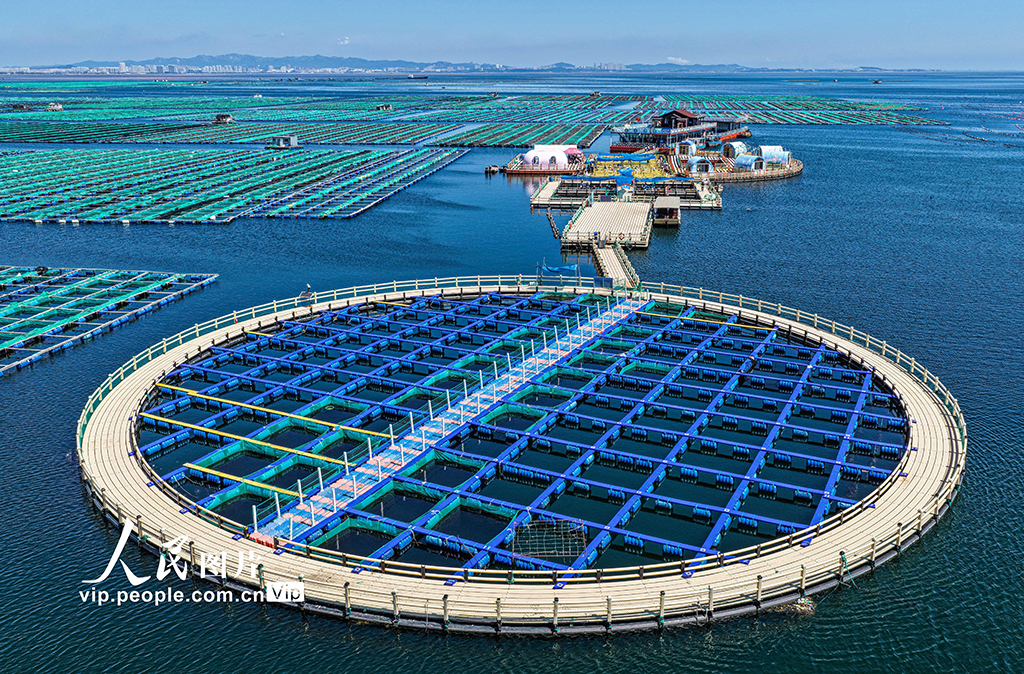
山东荣成:海洋牧场也能玩【3】 山东荣成:海洋牧场也能玩【4】 山东荣成:海洋牧场也能玩 山东荣成:海洋牧场也能玩【2】 山东荣成:海洋牧场也能玩【5】 ...
海韵干年 渔启新篇 2025茂名博贺开渔嘉年华即将启幕
Nan Fang Nong Cun Bao· 2025-08-12 14:00
南海潮涌,千帆 待发。8月15-17 日,广东最大渔 港--茂名博贺港 海韵干年 渔启 新篇 2025茂名 博贺开渔嘉年华 即将启幕_南方 +_南方plus 载着当地渔民世 代相传的海洋敬 畏与生存智慧, 是博贺渔港千年 渔业文明的鲜活 见证。祭海大典 是博贺疍家赶海 习俗的重要组 成,该习俗于 2023年5月入选 第七批市级非物 质文化遗产代表 性项目名录。 追溯过往,祭海 仪式由出巡、祭 海、回巡三个环 节组成,各种形 式的方阵如锣鼓 队,狮子队,渔民 代表队等伴着欢 快的锣鼓声前 进,出巡从妈祖 庙出发到渔港码 头全程约1.3公 里,每经过一个 停留点,队伍就 会驻足表演舞 狮、舞龙等,祭 海大典是博贺镇 渔民开渔前夕举 行的重要仪式, 由德高望重之人 主持祭海仪式, 仪式庄重而肃 将举办开渔嘉年 华活动。这场 以"海韵千年·渔 启新篇"为主题 的盛会,首次 以"三天两晚沉 浸式体验"模式, 串联祭海仪式、 头鲜拍卖、万人 渔市等十大活 动,打造从文化 传承到产业升级 的海洋经济新样 本。 千年渔脉 活化 传承与现代共舞 千百年来,这片 海域总在开渔前 夕被一场古老的 仪式——"祭海 大典"唤醒,它承 ...
海口:“文体旅商展”联动释放消费新活力
Xin Hua Wang· 2025-08-12 05:58
Core Insights - Haikou is leveraging cultural and sports events to boost tourism and consumer spending, aiming to become a vibrant consumption city [1][2][3] - The city has hosted numerous high-profile performances and events in 2023, significantly increasing visitor numbers and tourism revenue [2] - Haikou is promoting a multi-industry collaboration through "cultural, sports, tourism, commerce, and exhibitions" to unlock consumer potential [3] Group 1: Cultural and Sports Events - The performance of the ballet "Red Detachment of Women" attracted many visitors, highlighting the trend of traveling for cultural experiences [1] - Haikou plans to host various high-quality cultural events and sports competitions in the coming years to continuously stimulate market activity [1][3] - Major concerts and music festivals have been organized, including performances by renowned artists, contributing to the growth of the "performance + tourism" consumption model [2] Group 2: Economic Impact and Consumer Engagement - The Jay Chou concert in 2023 drew over 150,000 visitors, generating tourism revenue of 976 million yuan in just four days [2] - Local businesses are offering exclusive discounts to event attendees, enhancing the integration of cultural activities with consumer spending [2] - Haikou's exhibition industry is expanding, with plans for 450 large-scale exhibitions in 2024, aiming for comprehensive revenue exceeding 10 billion yuan [3] Group 3: Tourism and Shopping Innovations - Haikou is promoting marine tourism and water sports, capitalizing on its favorable coastal conditions [3] - The introduction of new duty-free shopping options allows tourists to take purchases immediately, enhancing the shopping experience [3]
政策红利持续释放 多地加码布局——十万亿海洋经济驶向高质量发展“蓝海”
Xin Hua Wang· 2025-08-12 05:44
Core Insights - The marine economy in China has surpassed 10 trillion yuan in annual output, indicating a new round of policy benefits aimed at promoting high-quality development in this sector [1][2] Policy Support and Development Goals - The Central Financial Committee emphasized the need for innovation-driven development, efficient collaboration, and industry upgrades in the marine economy [1] - The government aims to enhance top-level design and increase policy support to encourage social capital participation in marine economic development [1][2] - The 2024 marine economy statistics show a strong growth trend, with a total economic output of 10.5438 trillion yuan, a 5.9% increase from the previous year, accounting for 7.8% of the national GDP [2] Regional Initiatives - Coastal regions are accelerating their marine economic layouts, with Shanghai planning to enhance its marine production value and innovation capabilities by 2030 [3] - The "3+5+X" marine industry system proposed by Shanghai includes three leading industries and five emerging industries, aiming for a world-class modern marine industry [3] - Other provinces like Jiangsu, Zhejiang, Guangdong, and Shandong are also actively developing their marine economies, with specific plans and investment targets [4][5] Future Outlook - The marine economy is entering a critical phase of high-quality development, with a focus on fostering new productive forces and building a modern marine industry system [5] - The industry is expected to play a significant role in China's modernization and economic growth, supported by favorable policies and technological advancements [5]
总量稳步增长、结构持续优化 海洋经济动能澎湃
Jing Ji Ri Bao· 2025-08-06 01:59
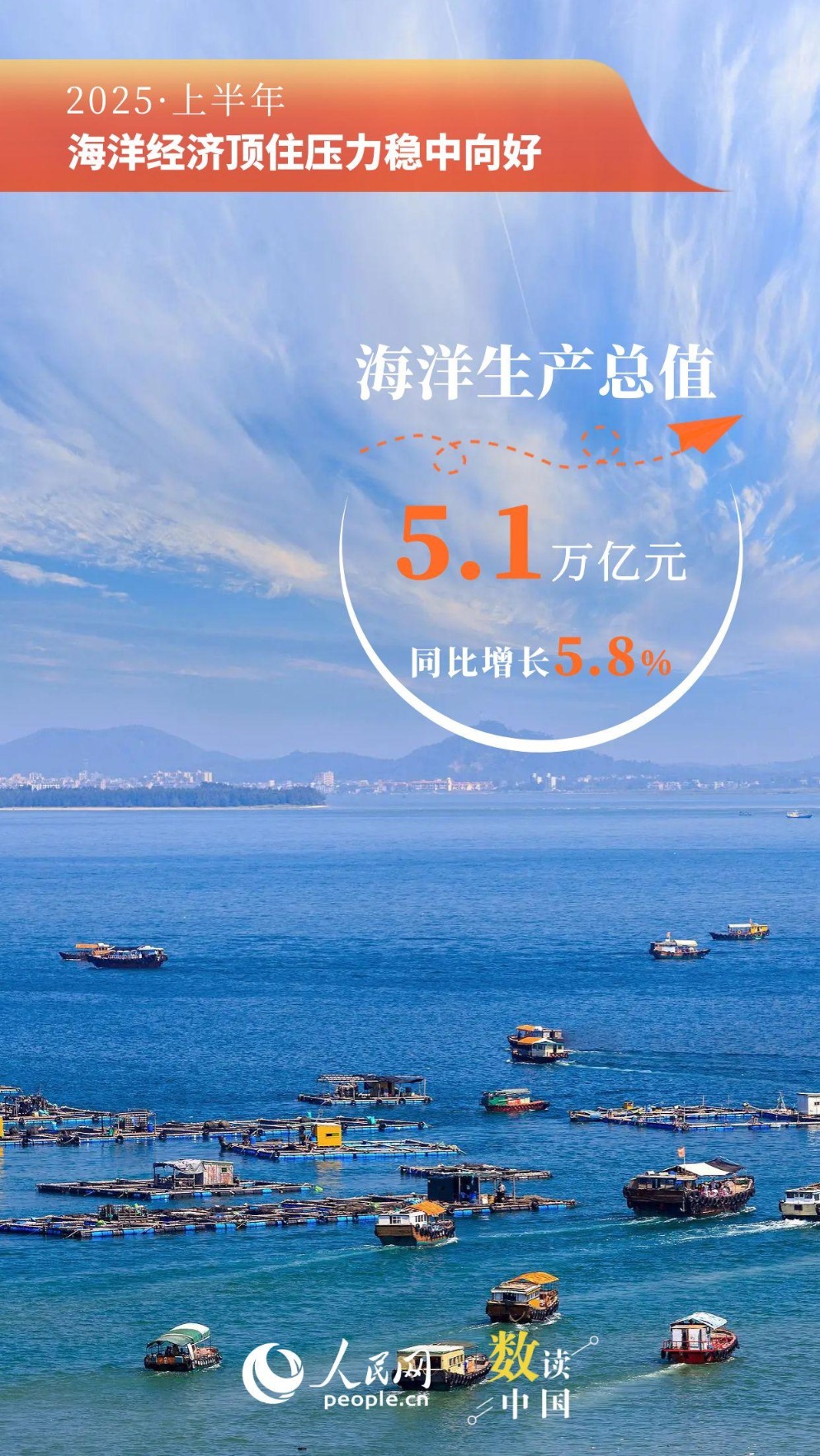
Core Viewpoint - The development of China's marine economy is showing a steady upward trend in the first half of the year, with a marine GDP of 5.1 trillion yuan, reflecting a year-on-year growth of 5.8% [1] Group 1: Industry Structure Optimization - China's marine shipbuilding industry maintains a leading position in the international market, with new orders, completed orders, and hand-held orders accounting for 64%, 47.2%, and 57.6% of the global total, respectively [2] - The marine tourism market is experiencing growth, with an added value of 771.8 billion yuan, representing an 8% year-on-year increase [2] - The number of cruise passengers and cruise ship calls increased by 40.1% and 33.7%, respectively, compared to the previous year [2] Group 2: Emerging Marine Industries - The marine engineering equipment market continues to lead globally, with new orders, delivered orders, and hand-held orders accounting for 64.6%, 43.3%, and 62.6% of the international market share, respectively [3] - Significant advancements in marine technology include the delivery of large-scale aquaculture vessels and innovations in desalination technology [3] Group 3: Resource Security Enhancement - The discovery of the Huizhou 19-6 oil field in the South China Sea indicates significant exploration potential, with geological reserves exceeding 100 million tons of oil equivalent [4] - Marine oil and gas production increased by 2.3% and 16.9%, respectively, in the first half of the year [4] - The newly approved marine area increased by 167,000 hectares, a year-on-year growth of 25.2%, with investments exceeding 500 billion yuan [4] Group 4: Food and Water Resource Security - The domestic marine aquaculture production increased by 4.8%, with seawater aquaculture production rising by 5.6% [5] - The completion of a 100,000 tons per day seawater desalination project enhances the country's desalination capacity [5] Group 5: Technological Innovation - The establishment of the National Marine Comprehensive Test Field (Deep Sea) in Hainan aims to support deep-sea technology and industry development [7] - Significant progress in deep-sea detection and resource development technologies has been made, including the launch of the "Deep Sea No. 1" gas field project [7] Group 6: Marine Foreign Trade - The total import and export volume of marine trade increased by 1.1% year-on-year, with high-end, intelligent, and green marine products showing strong export growth [8] - The construction of smart green ports is accelerating, with 23 automated container terminals and 29 automated bulk cargo terminals established [8] Group 7: Economic Outlook - A majority of marine economy-related enterprises reported growth in revenue, profit, and R&D expenditure, with 87.6% of companies optimistic about the economic environment for the second half of the year [9] - The Central Financial Committee's meeting emphasized the need for continuous technological innovation and optimization of industrial layout to promote high-quality development of the marine economy [9]
城市24小时 | 发力下半年 湖北再提这条“黄金水道”
Mei Ri Jing Ji Xin Wen· 2025-08-05 15:54
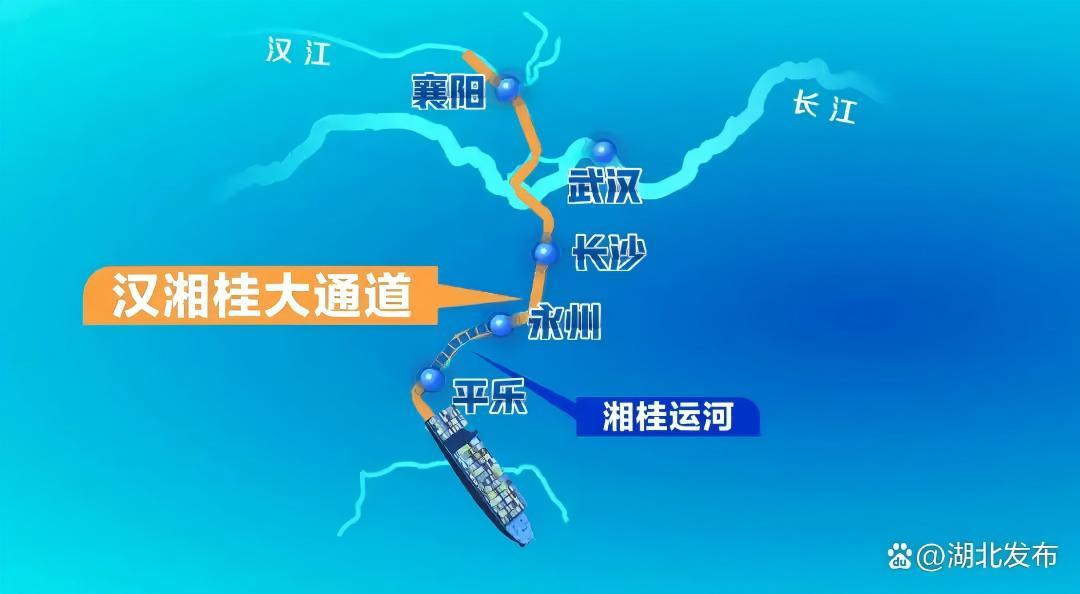
Core Insights - Hubei Province has completed a transportation investment of 104.16 billion yuan in the first half of the year, achieving 51.9% of its annual target, with a year-on-year growth of 1.8% [1] - The province aims for a total transportation investment of 200 billion yuan, striving for 220 billion yuan by the end of the year, focusing on major transportation projects [1][2] - The Han-Xiang-Gui inland waterway corridor, approximately 3,200 kilometers long, is a key project that will enhance connectivity between major river systems in China [2][3] Investment and Development Goals - Hubei's transportation investment in the first half of the year ranks third nationally and first in Central China [1] - The province plans to enhance its logistics efficiency through multi-modal transport and digital transformation, aiming to reduce costs and improve quality [1][2] - The Han-Xiang-Gui corridor will facilitate low-cost water transport to coastal ports, benefiting the central and western regions [2] Project Progress and Future Plans - The feasibility study for the Hanjiang Qianpan Mountain to Xinglong section of the waterway has been approved, marking progress in the Han-Xiang-Gui corridor project [3] - Hubei plans to start construction on key projects this year, targeting a fixed asset investment of 10 billion yuan and increasing port throughput capacity by 20 million tons [3]
突破5万亿!9组数据看上半年海洋经济“成绩单”
Ren Min Wang· 2025-08-05 03:12
Core Viewpoint - The development of the marine economy and the construction of a strong marine nation are crucial for the sustainable development of China's economy and society, as well as for advancing Chinese-style modernization. The Ministry of Natural Resources recently announced that the marine economy has shown a stable and positive development trend in the first half of 2025, despite facing complex external challenges [1]. Group 1: Marine Resource Supply Capacity - The supply capacity of marine resource factors has steadily increased, with a new approved area for marine and island use growing by 4% year-on-year [3]. - Marine crude oil and natural gas production increased by 2.3% and 16% year-on-year, respectively [6]. - The newly connected capacity for offshore wind power saw a significant increase of 199.49% year-on-year [7]. Group 2: Traditional Marine Industries - Traditional marine industries have played a stabilizing role, with the new orders for marine vessels and completed orders showing a global share of 17% [12]. - The added value of the marine tourism industry grew by 8.0% year-on-year [16]. - Marine freight volume and cargo turnover increased by 5.2% and 6.9% year-on-year, respectively, highlighting the resilience of the marine transportation industry [19]. Group 3: Emerging Marine Industries - The development of emerging marine industries is showing a positive trend, with engineering equipment deliveries and order values increasing by 39.3% and 9.7% year-on-year, respectively [22]. - The Qingdao area has launched a "sea star flag-type" megawatt generator set for marine drug research, which has been continuously connected to the grid for over three years [25].
机构:海洋经济驱动内需增长 深海科技赋能产业升级
Zheng Quan Shi Bao Wang· 2025-08-04 03:23
Group 1 - The Hainan Provincial Government has issued a three-year action plan (2025-2027) to accelerate the construction of a modern industrial system with distinctive advantages, focusing on the high-quality development of the deep-sea industry [1] - The plan emphasizes the cultivation of emerging marine industries, enhancing marine technology innovation capabilities, and establishing a "smart ocean" innovation hub [1] - The report highlights the importance of deep-sea technology as a core emerging industry, with coastal provinces actively supporting the development of marine equipment, energy, and aquaculture sectors [1] Group 2 - The marine economy is being catalyzed by continuous policy support since 2025, with the government prioritizing the development of marine economy and establishing national marine economy demonstration zones [2] - The potential of the marine economy is significant, with marine communication serving as a foundational infrastructure for future integrated networks, including 6G [2] - The report indicates that offshore wind and solar power generation is a necessary trend, and there is substantial growth potential in deep-sea aquaculture and marine tourism sectors [1][2]