
生态治理

Search documents
内蒙古锡林郭勒 沙漠腹地绽放生态繁花
Jin Rong Shi Bao· 2025-07-22 02:41
Core Insights - The article highlights the proactive measures taken by the People's Bank of China in Xilin Gol League to promote green finance and support desertification control efforts in the region [1][2][4] Group 1: Financial Support for Desertification Control - The People's Bank of China in Xilin Gol League has established a "financial desertification control" service team to provide comprehensive support to local enterprises, including product introduction and specialized credit support [2] - A total of 12 million yuan in loans has been provided to local companies like Inner Mongolia Guohua Landscape Greening Co., Ltd., enabling the cultivation of over 10 million saplings for desertification control [2] - As of the first quarter of 2025, the total loan balance for ecological protection and restoration in the league reached 2.043 billion yuan, with 585 million yuan specifically for ecological restoration projects [2] Group 2: Green Transformation in Agriculture - The introduction of a new feeding model in Sunite Left Banner has improved the ecological environment and increased the income of local herders, supported by credit from Postal Savings Bank [3] - The People's Bank of China has developed a "green finance + desertification control + credit linkage + industrial revitalization" model to assist herders in transitioning to more sustainable practices [3] - By the end of May, 24 banners and 127 villages had received credit support, benefiting over 2,760 herding households [3] Group 3: Support for Under-forest Economy - The promotion of under-forest planting of medicinal herbs like red peony has been identified as a method to prevent soil erosion and combat desertification [4] - The People's Bank of China has facilitated a 4 million yuan low-interest loan to support the expansion of red peony cultivation to over 5,000 acres [4] - As of the first quarter of 2025, the loan balance for ecological agriculture and forestry in the league reached 480 million yuan, with an additional 9.3417 million yuan in new loans during the year [4] Group 4: Product Innovation in Financial Services - The introduction of specialized financial products such as "Windbreak and Desertification Control Loan" has been instrumental in supporting local projects [6] - The People's Bank of China has guided local financial institutions to innovate and launch various financial products to support ecological governance [6] - The use of the "Agricultural Bank Smart Chain" app has enabled precise financial support for ecological restoration projects, including a 6.1 million yuan loan for forest land restoration [6]

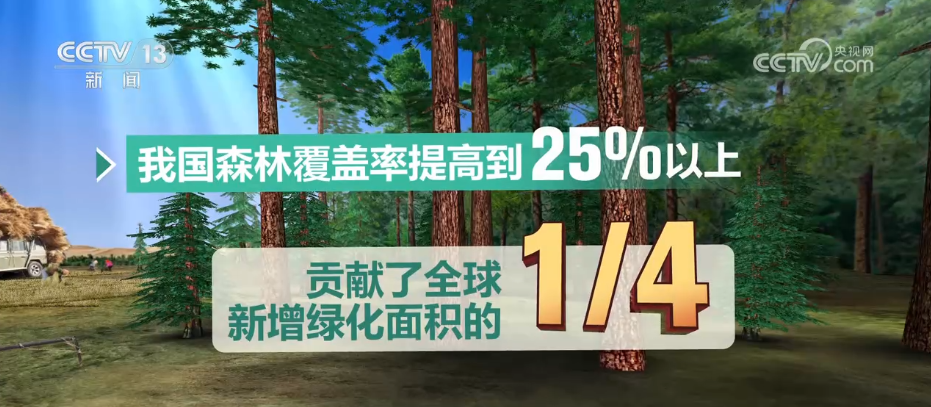
3.65亿亩、25%以上 数据见证我国防沙治沙工作卓越成就
Yang Shi Wang· 2025-07-12 03:21
Group 1 - The core theme of this year's International Day for the Prevention of Dust Storms is "Preventing Dust Disasters, Jointly Protecting the Blue Sky," aimed at raising global awareness of the health and environmental challenges posed by dust storms [1] - China has made significant progress in combating desertification, having restored 365 million acres of desertified land over the past decade [5] - The "Three-North" project has preserved 48 million acres of afforestation, rehabilitated 128 million acres of degraded grasslands, and controlled 67 million acres of soil erosion, effectively protecting 45 million acres of farmland [3] Group 2 - The World Meteorological Organization reports that dust storms are increasingly causing health and economic losses, with global dust concentrations expected to remain high in severely affected areas [6] - Approximately 2 billion tons of dust enter the atmosphere annually, with over 80% originating from deserts in North Africa and the Middle East [6] - Climate change is exacerbating land degradation and desertification, leading to the emergence of new dust sources [6] Group 3 - International experts commend China's effective land management strategies in combating dust storms, highlighting the establishment of green belts at the edges of deserts as a successful example [7] - China's afforestation efforts have significantly improved the living environment and helped mitigate the risks associated with dust storms [7]

密云以科技创新筑牢首都水源安全防线
Zhong Guo Huan Jing Bao· 2025-07-08 05:47
Core Viewpoint - The article emphasizes the importance of water source protection and ecological conservation in Beijing's Miyun District, highlighting successful initiatives that balance environmental protection with rural development [1][3]. Group 1: Water Source Protection Initiatives - Miyun District has implemented a series of plans to ensure the safety of the Miyun Reservoir's water quality, maintaining it at a stable national Class II standard [1]. - The establishment of the Beijing No. 024 Science and Technology Institute in 2019 has led to significant advancements in water source protection and pollution prevention, particularly in the Black Mountain Temple Village [1][2]. Group 2: Technological Innovations - Experts have developed key technologies, including the use of reed plants for wetland restoration and a sewage purification process utilizing chestnut shell biochar, resulting in a demonstration project capable of treating 15 tons of wastewater daily [2]. - The implementation of efficient pollution control models, such as "Mulberry + Wild Buffalo Grass" and "Scutellaria + Wild Buffalo Grass," has improved soil and water conservation capabilities [2]. Group 3: Environmental and Economic Outcomes - The initiatives have led to the resource utilization of agricultural waste and compliance with wastewater treatment standards, significantly improving the village's appearance and environmental quality [3]. - Training and outreach programs have enhanced local residents' skills and engagement in ecological protection, fostering the development of green organic agriculture and eco-tourism [3]. - Black Mountain Temple Village has received accolades such as "UN Sustainable Development Demonstration Village" and "Beijing Beautiful Leisure Village," showcasing its role as a model for pollution prevention [3].
从“水患之河”到“幸福之河”:木兰溪的绿色蝶变
Jin Rong Shi Bao· 2025-07-08 02:06
Core Viewpoint - The comprehensive governance of the Mulian River has transformed it from a flood-prone area into a model of ecological civilization, supported by financial institutions and government initiatives [1][2][3]. Group 1: Ecological Environment Governance - The People's Bank of China in Putian has implemented a mechanism combining policy guidance and financial support to promote green finance, resulting in a total credit of 176.83 billion yuan for 24 projects in the Mulian River basin [2]. - The financial support includes 78 billion yuan for flood control projects and a planned 600 billion yuan for comprehensive governance during the 14th Five-Year Plan [2]. - The rural sewage treatment project in Xianyou County has received approximately 120 million yuan in loans, significantly improving water quality and living conditions [3]. Group 2: Cultural Tourism Development - The improvement of the ecological environment has led to new opportunities for cultural tourism, with significant financial backing for projects like the Sihua Country Park and other ecological construction projects totaling over 3.2 billion yuan [4]. - The financing for the cultural tourism sector reached 9.582 billion yuan by the end of April, showing a year-on-year increase of 4.20% [4]. Group 3: Industrial Quality Upgrade - The tea industry in Jinxikou Village has seen substantial growth, with over 6,500 tons of tea produced annually, supported by financial products like the "Huinong e-loan," which has a balance of 4.342 billion yuan [5][6]. - The financial institutions are actively promoting green industry development and supporting traditional industries in transitioning to low-carbon models, with a total financing balance of 112.01 billion yuan for key industries, reflecting an 8.71% year-on-year growth [6].
8000亿元“两重”建设项目清单全部下达 “两重”建设再提速
Zhong Guo Qing Nian Bao· 2025-07-08 01:13
Core Viewpoint - The "Two Major" construction initiative in China is accelerating, focusing on both "hard investment" and "soft construction" to support economic growth and high-quality development [1][2][7] Group 1: "Two Major" Construction Overview - The "Two Major" construction includes significant projects like the sand fixation project in Ningxia, which spans approximately 153 kilometers and is part of the "Three North" project [1] - In 2024, the National Development and Reform Commission (NDRC) plans to allocate 700 billion yuan in special long-term bonds for 1,465 "Two Major" construction projects [1] - This year, over 800 billion yuan has been allocated for "Two Major" construction projects, with the third batch for 2025 recently announced [2] Group 2: Hard Investment and Economic Growth - The "hard investment" aspect of the "Two Major" construction includes 800 billion yuan covering 1,459 projects in areas such as ecological restoration and major infrastructure [3] - The construction of the Chongtai Yangtze River Tunnel, a key project in the Shanghai-Chongqing Railway, is progressing rapidly, with a current excavation speed of 20 to 28 meters per day [4] - Infrastructure investment has shown a year-on-year growth of 5.6% from January to May, contributing significantly to overall investment growth [6] Group 3: Soft Construction Initiatives - The "soft construction" initiatives focus on reform and innovation in key areas, such as optimizing financing models for railways and enhancing urban underground infrastructure management [3][7] - Various regions are implementing innovative models for services, such as the development of inclusive childcare services in Shenzhen, which combines public and private resources [8] - The integration of "soft construction" with "hard investment" is seen as essential for maximizing comprehensive benefits and ensuring sustainable project outcomes [9]
建项目、治沙海、富百姓 鄂尔多斯以工代赈书写乡村振兴 “多赢”答卷
Zhong Guo Jin Rong Xin Xi Wang· 2025-06-27 14:03
Core Insights - The article emphasizes the implementation of the "work-for-relief" program in Ordos City as a key strategy for consolidating poverty alleviation achievements and connecting rural revitalization efforts [1][6] - The program integrates "engineering construction, employment increase, and capacity enhancement" into a comprehensive system, promoting a full-chain mechanism involving city-level policy coordination, county-level innovation, and deep community participation [1][6] Summary by Sections Work-for-Relief Implementation - Ordos City has launched 68 various work-for-relief projects since 2025, benefiting 2,178 farmers and herders, with labor remuneration totaling 34.58 million yuan [6] - The program has established a regular mechanism for matching labor demand with employment needs, creating a positive cycle of "project construction—labor employment—income growth" [6] Innovative Models - In Uxin Banner, a "party leadership and work-for-relief" model has been developed, establishing a three-level responsibility system and implementing a "five synchronizations" mechanism to ensure project efficiency and community benefits [2][4] - The integration of local agricultural resources through a "construction enterprise + cooperative + farmer" model has led to increased income for multiple cooperatives and local employment opportunities [4] Ecological and Economic Synergy - In Dalad Banner, a collaborative mechanism involving "party branch (cooperative) + enterprise + farmer" has been explored for ecological restoration projects, ensuring stable income for villagers while enhancing their employment skills [5] - The approach combines ecological governance with employment generation, creating a virtuous cycle of "ecological governance—employment increase—capacity enhancement—sustained participation" [5] Future Directions - The Ordos City Agricultural and Animal Husbandry Bureau plans to continue promoting the "party leadership and work-for-relief" practice, focusing on engineering construction as a means to enhance community income [6] - Ongoing job matching efforts are being conducted for 5,745 farmers and herders in 79 villages, aiming to increase the proportion of work-for-relief projects and their impact on income generation [6]

内蒙古鄂尔多斯:库布其模式实现“绿进沙退”
Zhong Guo Zi Ran Zi Yuan Bao· 2025-06-27 06:15
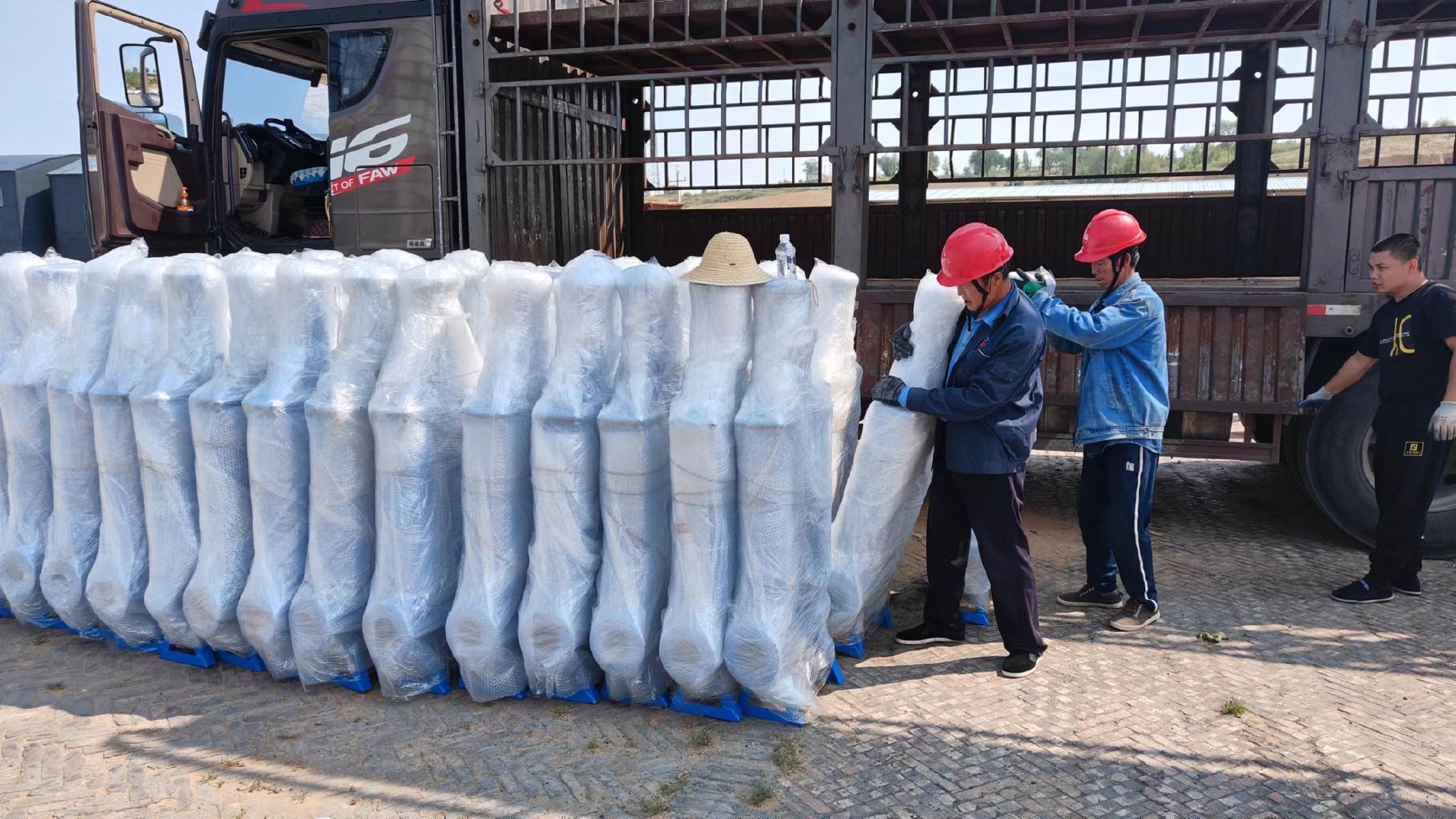
Core Viewpoint - The Kubuqi model developed in Ordos City, Inner Mongolia, provides a "Chinese solution" for global desertification control through a combination of government policy, enterprise investment, market participation, continuous technological innovation, and open sharing of results [1][2]. Group 1: Desertification Control Achievements - The Kubuqi Desert, covering an area of 2.116 million acres, has seen significant ecological improvement, with over 9 million acres treated, transforming from a state where 61% of the area was shifting sand dunes and vegetation coverage was below 3% to a more sustainable environment [1]. - Since the launch of the "Three North" project, 40% of the desert area has been converted into oasis through various measures including the construction of a 420 km shelterbelt and a 240 km sand path barrier [2]. Group 2: Strategic Implementation - The implementation of the "Three North" project includes a systematic approach to desertification control, with specific strategies for different areas of the Kubuqi Desert, such as creating a locking forest belt in the north and a sand protection area in the west [2]. - The integration of renewable energy projects, particularly solar power, has been a key component, with approximately 3 million acres of desert being utilized for photovoltaic projects, contributing to both ecological restoration and economic development [2]. Group 3: Knowledge Transfer and Global Impact - The desertification control techniques developed in Kubuqi have been successfully replicated in regions such as Xinjiang, Tibet, Qinghai, and Gansu, and are being promoted in countries along the Belt and Road Initiative, including Saudi Arabia and Mongolia [3].
科技筑牢“绿色长城” 内蒙古能源集团联合蒙草生态让库布齐沙漠焕新颜
Quan Jing Wang· 2025-06-23 03:23
Core Viewpoint - A green revolution is taking place in the Kubuqi Desert, led by Inner Mongolia Energy Group and Mongcao Ecological, focusing on ecological restoration and sustainable development through innovative technologies [1][2] Group 1: Project Overview - The project involves the ecological comprehensive management of 70,000 acres of sandy land and the establishment of a 3,000-acre ecological governance demonstration area in Hangjinqi [1] - The initiative integrates the "Three North" project construction with renewable energy development, leveraging local wind and solar resources [1] Group 2: Technological Innovations - The project utilizes a variety of customized ecological innovation products, such as seed packages and planting cups, which have improved vegetation coverage by an average of 35%, increased plant diversity by 40%, and enhanced seed survival rates by 15% [2] - The application of intelligent sand control equipment, like seed rope sowing robots, has significantly increased the efficiency and effectiveness of large-scale ecological restoration [2] Group 3: Ecological Impact - The project transitions from single vegetation restoration to a holistic ecosystem reconstruction, fostering a symbiotic network of plants, animals, and microorganisms [2] - Inner Mongolia Energy Group emphasizes the combination of technology and ecology, aiming to transform the desert into a vibrant oasis, symbolizing a commitment to ecological preservation for future generations [2]

云南省生态环境系统系列访谈丨德宏州生态环境局:“绿色明珠”的创新实践
Xin Hua Wang· 2025-06-10 01:24
Core Viewpoint - Dehong Prefecture is actively promoting ecological civilization through the "Six Beauties" initiative, focusing on enhancing ecological, economic, environmental, cultural, and living standards while strengthening the ecological barrier along the border [1][2][3]. Group 1: Ecological Initiatives - The establishment of nine nature reserves and the first national volunteer service team for natural ecological protection has been initiated to combat harmful biological invasions [1]. - Over 1,000 species of wild animals have been identified, with 11 bird species unique to Dehong, and it is home to five species of hornbills, making it a biodiversity hotspot [1]. - The air quality in Dehong is projected to reach a 99.2% good rate by 2024, with all monitored water quality indicators meeting standards for four consecutive years [1]. Group 2: Economic Development - The region is focusing on green agriculture, tourism, food production, manufacturing, and energy, fostering a resource-based economy with a green foundation [1]. - The implementation of a "green development" strategy is aimed at integrating ecological protection with economic growth, enhancing the value of ecological products [4]. Group 3: Environmental Protection - A total of 76 ecological civilization reform measures have been completed, ensuring institutional and policy support for environmental protection [2]. - The state is actively promoting clean production audits and pollution control facilities to reduce resource consumption and achieve compliance with environmental standards [2]. Group 4: Cross-Border Cooperation - Dehong is leveraging its geographical advantages to enhance cooperation with Myanmar in biodiversity and environmental protection under the Belt and Road Initiative [2]. - The establishment of a cross-border environmental protection cooperation center aims to facilitate regular meetings and emergency response mechanisms for environmental issues [2]. Group 5: Future Plans - The focus will be on solidifying the "green water and green mountains are gold and silver mountains" philosophy, enhancing ecological risk management, and preventing environmental incidents [5]. - Continued efforts will be made to expand cross-border ecological cooperation and promote international responsibilities in environmental protection [5].
河南启动黄河生态保护治理区域科技创新行动
Zhong Guo Chan Ye Jing Ji Xin Xi Wang· 2025-06-10 00:16
Core Viewpoint - The release of the "Three-Year Action Plan for Accelerating Ecological Protection and High-Quality Development in the Yellow River Basin" marks the initiation of a collaborative technological innovation action in Henan Province, focusing on ecological protection and sustainable development [1][2] Group 1: Action Plan Overview - The action plan is designed to implement the ecological protection and high-quality development strategy in the Yellow River Basin, emphasizing "two highs and four focuses" [1] - Key strategic tasks include ensuring the long-term safety of the Yellow River, establishing ecological barriers, and promoting a comprehensive green transformation of development methods [1] - The plan aims to address major technological bottlenecks through significant innovation projects, fostering deep integration of industrial and technological innovation [1] Group 2: Development Goals - The development goals focus on critical areas such as food security, ecological protection, equipment manufacturing, green energy, and the transformation towards high-end, intelligent, and green industries [1][2] - The plan aims to concentrate resources on key technological issues to achieve original, iterative, and disruptive research outcomes [1] Group 3: Implementation Measures - To ensure the successful implementation of the action plan, Henan Province will enhance regional collaborative innovation, integrating resources from nine provinces along the Yellow River into the national market [2] - The plan emphasizes the importance of major innovation projects, targeting significant technological challenges in key industries [2] - It aims to strengthen the role of enterprises in innovation, cultivate leading technology companies, and enhance the overall innovation ecosystem [2] - The establishment of a technology transfer collaboration network among the nine provinces is intended to accelerate the commercialization of major innovations [2] - The plan also includes improving financial services for technology-driven enterprises to support their core technology development needs [2]