电商平台

Search documents
辽宁500余种优质年货线上集中展销
Liao Ning Ri Bao· 2026-01-16 01:06
家住沈阳市铁西区的黄凤军和朋友们在沈阳盛京大天地购物时,意外发现商场多了几排新档口。这 些档口展销水果、粮油、熟食等各类年货,而且几乎每个档口都有主播在直播带货。"味道不错,形式 也挺新颖。"黄凤军尝了一小碗试吃的凉皮后说。 省商务厅相关负责人介绍,本次年货节将持续至1月30日。辽宁各地500余种品质年货在抖音电商平 台线上集中展销15天,并在盛京大天地开展为期10天的线下体验展销。抖音电商将邀请50余位达人主播 参与,通过短视频预热、直播带货、话题互动等形式,展示辽宁特色产品的品质与文化内涵。 抖音电商相关负责人称,此次活动中,抖音电商优化端内资源布局,全面提升活动传播力与转化效 能。开屏广告定向覆盖沈阳,以动态、互动形式推送,用户可一键直达活动页面,并将开设活动专区, 联动"网购好辽品"话题,整合辽宁优质直播间、特色短视频和商家店铺,多入口引导流量。 在辽宁,线下与线上消费正在互促共进。1月15日,正值"九九消费季"活动期间,由省商务厅与抖 音电商联合主办的"源起好地方 网购好辽品"辽宁品质电商抖音商城年货节在沈阳盛京大天地拉开帷 幕。活动结合春节消费旺季,以"源起好地方 网购好辽品"为主题,线上线下联动 ...
1688启动“AI加速·产业带生意抢跑计划” 面向新入驻商家推出“三保”服务
Zheng Quan Ri Bao Wang· 2026-01-14 10:11
Core Insights - Alibaba's 1688 platform has launched the "AI Acceleration and Business Sprint Plan" to support new merchants with guaranteed visitor, inquiry, and order numbers, aiming to leverage AI capabilities for business growth in early 2026 [1][2] Group 1: AI Integration and Merchant Support - The "Three Guarantees" service includes a promise of 50,000 visitors, 500 inquiries, and 300 orders, with a marketing bonus of 6,688 yuan if targets are not met by December 31, 2026 [1] - 1688 aims to integrate AI resources to help merchants capture consumer demand in the first quarter of 2026, with over 290,000 merchants using AI products daily as of December 30, 2025 [1][2] Group 2: Industry Transformation and Trends - The Chinese industrial sector is undergoing a transformation driven by AI, with a K-shaped recovery and a shift from reliance on information asymmetry to competition based on product, price, and service [2] - The application of AI is expected to evolve through three phases: "AI外挂" (AI as an efficiency tool), "AI共生" (deep integration with core business), and "AI原生" (AI-driven decision-making) [3][4] Group 3: Regional Development and AI Adoption - The Pearl River Delta and Yangtze River Delta are leading in AI integration, with product launch cycles reduced to under 20 days, while central regions focus on efficiency and precision [3] - The report predicts that by 2025, the industrial sector will increasingly adopt AI, with a complete transition to an AI-native model expected by 2028 [3][4]

2025年Q4电商平台商家投诉数据报告
网经社电子商务研究中心· 2026-01-12 07:59
Investment Rating - The report does not explicitly provide an investment rating for the e-commerce industry Core Insights - The fourth quarter is the most critical operational peak for e-commerce merchants, supported by various platforms like JD, Taobao, Pinduoduo, and Douyin through promotional activities and resources [5] - Intense competition for advertising during key events like "Double 11" and "New Year Goods Festival" may increase customer acquisition costs and marketing expenditures [5] - Merchants face pressure on profit margins due to fierce price competition and evolving platform policies, requiring continuous adaptation to maintain traffic support [5] - A significant complaint from merchants involves issues like arbitrary refunds and excessive consumer protection measures, leading to widespread dissatisfaction [5][6] Overall Data Complaint Platform Distribution - The distribution of complaints across platforms in Q4 is as follows: Douyin E-commerce (38.75%), Pinduoduo (33.55%), Taobao (10.92%), JD (2.08%), and others [7] Complaint Issue Type Distribution - The main types of complaints include: arbitrary refunds (37.09%), excessive consumer protection (19.97%), withholding deposits (9.99%), arbitrary fines (9.73%), arbitrary store closures (2.72%), and mandatory shipping insurance (0.52%) [10] Complaint Regional Distribution - The top 10 regions for merchant complaints are Guangdong (23.86%), Zhejiang (14.53%), Shandong (11.80%), Hebei (6.10%), Jiangsu (5.71%), Henan (5.45%), Fujian (3.76%), Shaanxi (3.50%), Anhui (3.37%), and Hunan (2.72%) [12] Complaint Business Category Distribution - The top 10 business categories for complaints are: apparel (15.95%), 3C digital products (10.64%), fresh food (9.08%), outdoor products (6.49%), home goods (6.36%), personal care (3.89%), home appliances (3.50%), maternal and infant products (2.98%), jewelry (2.46%), and pet supplies (2.33%) [14] Complaint Amount Distribution - The majority of complaint amounts are concentrated in the range of 0-50,000 (95.07%), with smaller percentages in higher ranges [16] Complaint Merchant Responsible Gender Distribution - The gender distribution of complaint merchants shows 70.78% are male and 29.22% are female [17] Platform Data Douyin E-commerce - In Q4, Douyin E-commerce had 298 merchant complaints, with the highest issue being arbitrary refunds (46.64%) [18] Taobao - For Taobao, the main complaint issues are arbitrary refunds (30.95%), excessive consumer protection (28.57%), arbitrary fines (13.10%), withholding deposits (8.33%), and arbitrary store closures (2.38%) [25] Typical Cases - The report includes ten typical complaint cases involving various platforms, highlighting issues such as arbitrary fines, unreasonable penalties, excessive consumer protection, and arbitrary store closures [31]

天猫2025年度新品牌发展报告:超15万个优质商家开店创牌
Xin Lang Cai Jing· 2026-01-12 04:33
Core Insights - Tmall has released the "2025 New Brand Development Report," indicating that over 150,000 quality new merchants have launched brands on the platform in the past year, marking a historical high [1] Group 1: Brand Performance - The number of brands that achieved over 100 million in sales in their opening year has increased by over 40% year-on-year [1] - Within three years of opening, 276 new brands have reached annual sales of over 100 million, while 5,026 brands have surpassed annual sales of 10 million, with all metrics hitting historical highs [1]
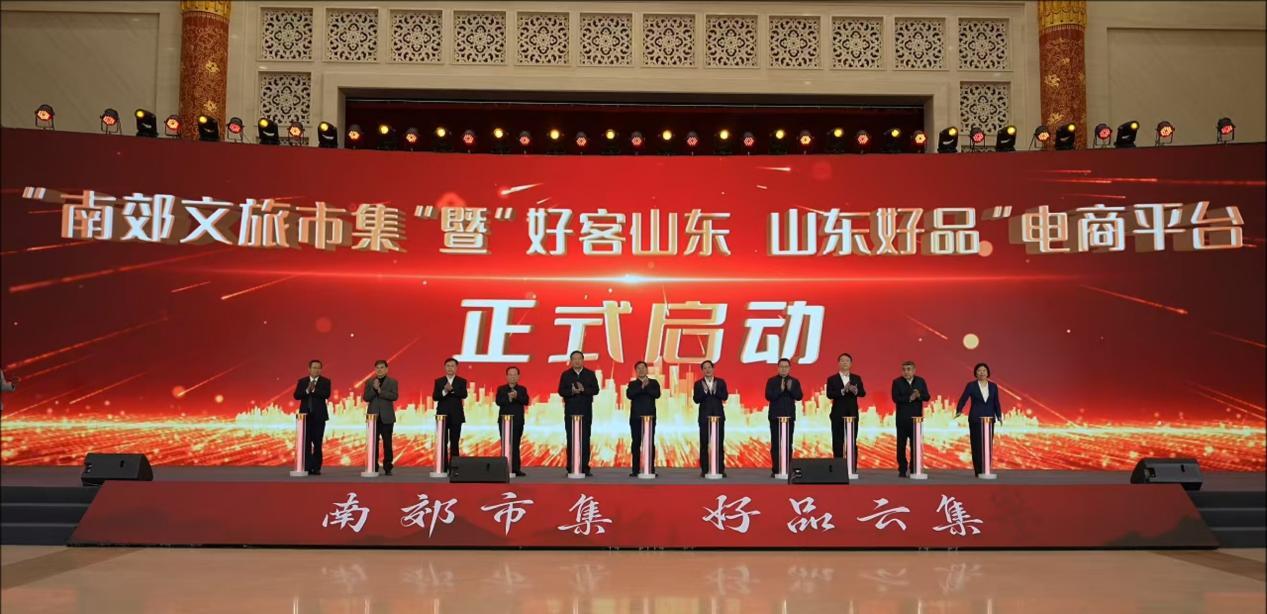
打造文旅消费新标杆,“南郊文旅市集”暨“好客山东·山东好品”电商平台在济启动
Feng Huang Wang Cai Jing· 2026-01-11 23:51
Core Viewpoint - The "Nanjiao Cultural and Tourism Market" and the "Welcome to Shandong. Shandong Good Products" e-commerce platform were launched to boost consumption and respond to government strategies for expanding domestic demand [1][9]. Group 1: Event Overview - The launch event took place on January 10 in Jinan, organized by Shandong Nanjiao Group and guided by the Shandong Provincial Department of Culture and Tourism [1]. - The event featured representatives from various sectors, including government departments, media, and partner organizations, who participated in the official launch ceremony [1]. Group 2: Market Features - The market showcased 16 local specialties from Shandong cities and featured three hotels under Nanjiao Group [3]. - Over 100 merchants participated in the outdoor "Nanjiao Market," offering local delicacies such as "Huangjia Roast Meat" from Jinan and "Wanggezhuang Steamed Bun" from Qingdao [3]. Group 3: Product Highlights - Domestic salmon was highlighted as increasingly popular among consumers due to its freshness and affordability, with local salmon reaching major cities within 24 to 48 hours [5]. - Nanjiao Hotel introduced innovative dishes, including a modified version of traditional snacks and new beverages, aiming to promote "Shandong flavors" [7]. Group 4: E-commerce Platform - The "Welcome to Shandong. Shandong Good Products" e-commerce platform features over 110,000 products from more than 1,300 brands across 37 production areas, including a dedicated section for Shandong's 16 cities [7]. - The platform integrates with various online and offline shopping scenarios, including partnerships with Walmart and Sam's Club, and supports real-time settlement for corporate welfare cards [7]. Group 5: Future Plans - Nanjiao Group plans to leverage the launch of both platforms to enhance market offerings and optimize e-commerce services, contributing to the high-quality development of the cultural and tourism industry in Shandong [9].

助商家降本超320亿元 抖音电商生态建设再升级
Zheng Quan Shi Bao· 2026-01-11 17:03
Core Insights - The article highlights the intensified focus on merchant ecosystem development by leading e-commerce platforms, particularly Douyin E-commerce, in response to increasing competition in the e-commerce industry [1] Group 1: Merchant Support Policies - Douyin E-commerce has launched an upgraded plan for its "Nine Merchant Support Policies" aimed at enhancing long-term certainty for merchants by addressing cost, traffic, conversion, fulfillment, technology, and governance [1][2] - The policies have successfully reduced costs for merchants by over 32 billion yuan in the past year, with significant contributions from commission exemptions and reduced logistics costs [2] - The platform has expanded its commission exemption policy to cover all categories and reduced technical service fees for merchants using its "Qianchuan Chengfang" product to 0.6% [2] Group 2: AI Empowerment - Douyin E-commerce is leveraging AI technology to enhance operational efficiency for merchants, including free AI customer service and dynamic AIGC creative capabilities that can generate 1 to 2 million marketing materials daily [3] - The platform's AI capabilities also include preemptive identification of malicious refunds and complaints, optimizing the appeal process for merchants [3] Group 3: Business Environment and Differentiated Support - The platform is committed to improving the business environment by strengthening intellectual property protection and market order governance, including stricter measures against false advertising and counterfeit products [4] - Douyin E-commerce is implementing differentiated strategies to support quality merchants and reduce entry costs for new merchants, while also enhancing support for local industries [4] - The platform has optimized payment terms, allowing for a minimum payment period of three days post-order confirmation to alleviate cash flow pressures for merchants [4]
中国车企出海业务100%使用阿里云;中国「科技军团」闪耀CES2026,通义智能硬件展同期举办|36氪出海·要闻回顾
36氪· 2026-01-11 13:35
Core Insights - Chinese automotive companies are fully utilizing Alibaba Cloud for their global business operations, marking a shift from vehicle sales to "smart infrastructure export" [5] - The 2026 CES showcased over 1,100 Chinese companies, representing about 25% of total exhibitors, highlighting China's strength in AI, robotics, and consumer electronics [6] - XTransfer is accelerating its entry into the North and South American markets by establishing partnerships with major U.S. banks for compliance and localization [6] - Cainiao has become the first logistics company to offer G2G services across three continents, launching cross-border logistics from the U.S. to Mexico [7] - Xiaomi International has joined AliExpress's "Super Brand Export Plan," achieving significant sales during the Black Friday event [7] - JD Logistics successfully completed its first overseas drone test flight in Saudi Arabia, enhancing its international logistics capabilities [8] - Meituan Keeta has expanded its food delivery services to Bahrain, marking its fifth country in the Middle East [9] - TikTok Shop is experiencing rapid growth, with projected active consumers reaching 400 million by 2025 and GMV nearing $100 billion [10] - Guanzhou Automobile International has formed a strategic partnership with Grab to promote electric vehicles in Southeast Asia [10] - Nine Science Information has completed a B2 round of financing to enhance its overseas business layout [10] - Yao Le Technology has secured nearly 100 million yuan in Pre-A financing to expand its market presence [11] - The global humanoid robot market is expected to see a shipment of 13,000 units by 2025, with Chinese manufacturers leading the market [12] - Recent reports indicate a high demand for transformers in overseas markets, particularly in the Middle East, Europe, and South America [13] - Saudi Arabia plans to open its financial market to all foreign investors starting February 1, aiming to attract more overseas capital [13]

赢了世界却败在中国,全球首富携带6万亿资产,逃离中国市场
Sou Hu Cai Jing· 2026-01-10 14:55
Core Insights - Amazon's journey from a small online bookstore in 1994 to a global e-commerce leader is marked by strategic expansions and innovations, including the introduction of third-party seller platforms and Prime membership services [2][3] - Despite its success in Western markets, Amazon struggled in China due to a lack of local adaptation and competition from established players like Alibaba and JD.com [4][5] Group 1: Amazon's Growth and Innovations - Amazon started as a bookstore in 1994 and quickly expanded to music and video, going public in 1997 and raising $54 million, significantly increasing its valuation [2] - The launch of the third-party seller platform in 2000 and Prime membership in 2005 were pivotal in enhancing user experience and building a robust ecosystem [2] - By 2020, Amazon's revenue reached $386 billion with a net profit of $21 billion, and total assets nearing 6 trillion RMB, showcasing its massive scale [3] Group 2: Challenges in the Chinese Market - Amazon's entry into China involved acquiring the largest online bookstore, but its market share plummeted from 15.4% to 0.6% by 2018 due to fierce competition and misalignment with local consumer preferences [4][5] - The company's attempts to localize, such as launching Kindle and restructuring its platform, failed to resonate with Chinese consumers who preferred curated shopping experiences [4][5] - Amazon's management style, which did not empower local teams, contributed to its inability to adapt quickly to the fast-changing Chinese e-commerce landscape [5] Group 3: Strategic Shifts Post-Exit - After exiting the Chinese retail market in 2019, Amazon focused on its AWS cloud services and global selling platforms, which continued to support Chinese sellers [5][7] - The company has redirected resources to India, investing billions in local infrastructure and adapting its services to better fit the market [5][6] - Amazon's experience in China serves as a lesson in the importance of local adaptation, with the company now emphasizing cultural integration in its Southeast Asia strategy [6][7]


中国卖家占据亚马逊半壁江山,深圳成亚马逊全球布局重点
Sou Hu Cai Jing· 2026-01-10 09:53
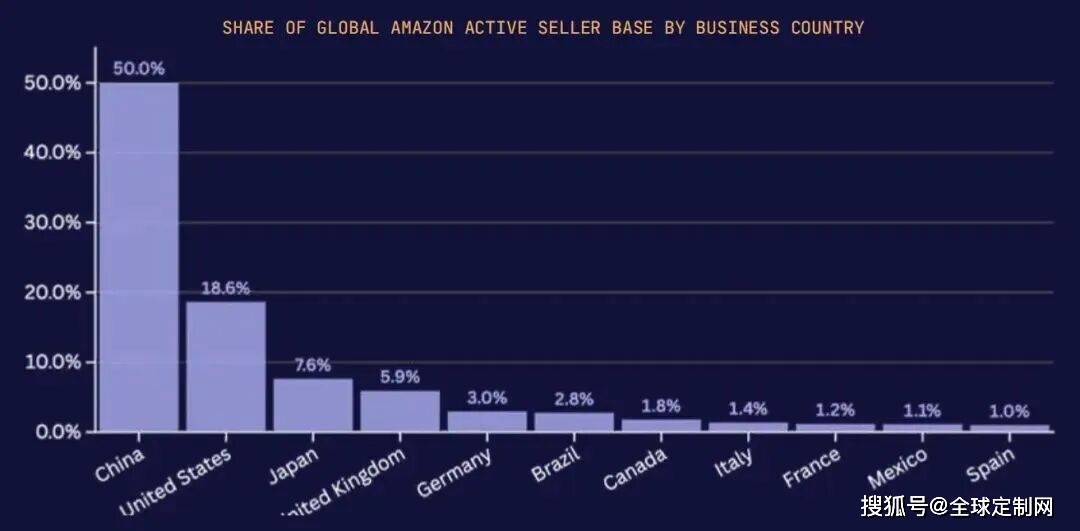
Core Insights - The report by Marketplace Pulse highlights the significant growth of Chinese sellers on Amazon, projecting that by 2025, they will account for over 50% of active sellers globally [2]. Group 1: Chinese Sellers' Dominance - Chinese sellers are expected to surpass 50% of Amazon's global active sellers by 2025, marking a historic milestone [2] - Despite increased tariffs imposed by the U.S., Chinese sellers maintain a strong position on Amazon due to advantages in supply chain integration and cost control [4] - Chinese sellers possess both manufacturing and sales capabilities, allowing them to manage production and pricing directly, unlike U.S. sellers who face additional costs from tariffs and wholesale markups [4] Group 2: Amazon's U.S. Marketplace - The U.S. marketplace remains the preferred choice for new sellers, with a first-order success rate of 60%, outperforming other countries such as Japan (50%), Germany (42%), and the UK (33%) [5] - The average traffic per active seller on the U.S. platform has increased by over 30% compared to four years ago, providing more opportunities for global sellers, including those from China [6] Group 3: Amazon's Investment in Shenzhen - Amazon continues to invest in Shenzhen, China's leading cross-border e-commerce city, with the establishment of the world's first smart hub warehouse (GWD) set to open by the end of 2025 [7] - The smart hub will offer a one-stop service for storage, customs clearance, and global distribution, potentially reducing storage costs for sellers by 20%-40% [10] - Amazon's initiatives in Shenzhen extend beyond attracting sellers to include hardware research and development, with the establishment of innovation centers aimed at enhancing product and brand capabilities for sellers [10]
都是电商平台,为何拼多多比淘宝卖得便宜一些?内行人说出其中猫腻
Sou Hu Cai Jing· 2026-01-10 08:42
Core Viewpoint - The article discusses the price differences between Pinduoduo and Taobao, highlighting that Pinduoduo's lower prices stem from its distinct business model, which focuses on attracting consumers through low prices rather than charging sellers high fees [1][3][11]. Business Model Comparison - Pinduoduo operates on a model that minimizes seller costs, allowing for lower prices, while Taobao relies on seller fees, which increase product prices [3][11]. - Pinduoduo's revenue comes from advertising and data, rather than seller commissions, enabling it to encourage lower prices from merchants [3][4]. - The operational costs for sellers on Pinduoduo are significantly lower due to fewer required expenses compared to Taobao, where sellers often need to hire professional teams [8][9]. Supply Chain Efficiency - Pinduoduo emphasizes direct cooperation with factories, reducing intermediaries and thus lowering costs, while Taobao often involves multiple layers of distributors, increasing prices [4][11]. - The logistics approach on Pinduoduo is less demanding, allowing for cheaper shipping options, which further reduces overall costs for consumers [8][9]. Consumer Behavior and Expectations - Pinduoduo attracts sellers who prioritize high sales volume over brand building, leading to a willingness to accept lower profit margins [4][12]. - The perception of product quality on Pinduoduo is often comparable to that on Taobao, as many products may originate from the same factories, but pricing strategies differ [5][12]. Market Dynamics - The competition between Pinduoduo and Taobao reflects a shift in the e-commerce landscape, where efficiency and supply chain optimization are becoming more critical than merely increasing traffic [14]. - Taobao is adjusting its strategies to become more price-competitive in response to Pinduoduo's market presence, indicating a broader industry trend towards balancing price and quality [11][14].