
农产品加工

Search documents
农产品加工板块11月21日跌1.97%,保龄宝领跌,主力资金净流入4413.6万元
Zheng Xing Xing Ye Ri Bao· 2025-11-21 09:33
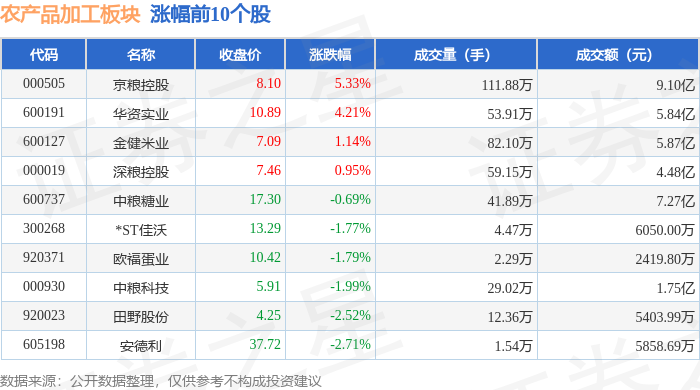
从资金流向上来看,当日农产品加工板块主力资金净流入4413.6万元,游资资金净流入1.01亿元,散户资 金净流出1.45亿元。农产品加工板块个股资金流向见下表: 证券之星消息,11月21日农产品加工板块较上一交易日下跌1.97%,保龄宝领跌。当日上证指数报收于 3834.89,下跌2.45%。深证成指报收于12538.07,下跌3.41%。农产品加工板块个股涨跌见下表: | 代码 | 名称 | 收盘价 | 涨跌幅 | 成交量(手) | 成交额(元) | | --- | --- | --- | --- | --- | --- | | 000505 | 京粮控股 | 8.10 | 5.33% | 111.88万 | 9.10亿 | | 600191 | 三分彩彩 | 68'01 | 4.21% | 53.91万 | · 5.84亿 | | 600127 | 金健米业 | 7.09 | 1.14% | 82.10万 | 5.87亿 | | 000019 | 深粮控股 | 7.46 | 0.95% | 59.15万 | 4.48亿 | | 600737 | 中粮糖业 | 17.30 | -0.69% | 41.89万 ...


山东邹平:特色产业筑基 文农旅融合发展绘新卷
Zhong Guo Xin Wen Wang· 2025-11-21 06:19
Core Insights - The article highlights the integration of agriculture, culture, and tourism in Zhou Ping, Shandong, showcasing a high-quality rural revitalization path through distinctive industries and cultural tourism [1][5]. Summary by Sections Agricultural Development - The Bafang Farm in Changshan Town has introduced 200 varieties of chrysanthemums, creating a "Chrysanthemum Festival" that has attracted approximately 80,000 visitors this year [2]. - The farm's chrysanthemum planting yields 1,000 pounds per acre, with an economic benefit of around 10,000 RMB per acre [2]. Cultural and Tourism Integration - Qiao Family Village has developed a model combining intangible cultural heritage workshops and unique homestays, generating an annual cultural income of 150,000 RMB [2][3]. - The village has invested 10 million RMB to transform idle old houses into heritage workshops and educational bases, with 80 units currently in use [3]. Industry and Economic Impact - The Ai Cao Industry Park has developed over 20 products from mugwort, increasing the added value by more than ten times [4]. - The park collaborates with local schools to create an educational base, receiving over 3,000 students for hands-on experiences related to mugwort culture [4]. Overall Development Strategy - Zhou Ping is leveraging its rural resources to cultivate distinctive industries through various models such as "Agriculture + Culture and Tourism," "Intangible Heritage + Industry," and "Ecology + Processing" [5].

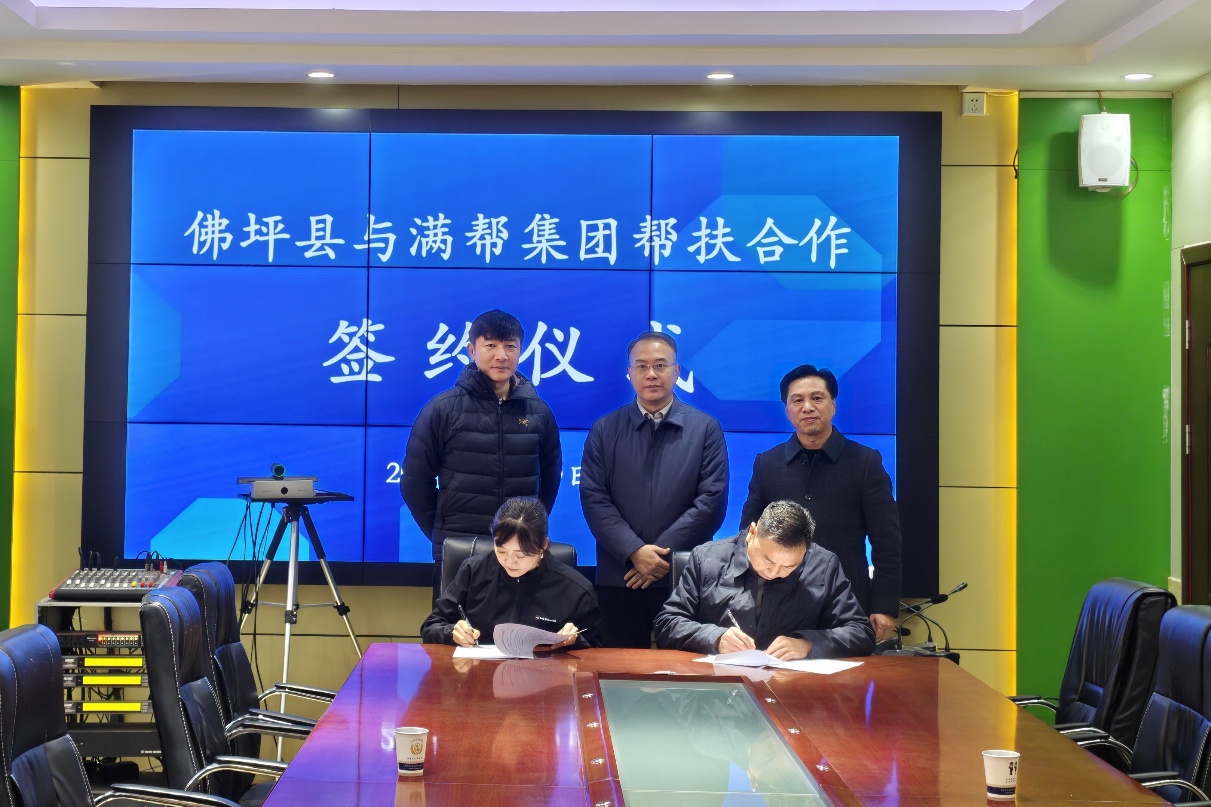
满帮与陕西佛坪达成帮扶计划,让秦岭“山货”坐上数字物流快车
Zhong Guo Jing Ji Wang· 2025-11-21 03:18
Core Insights - Foping County, located in the Qinling Mountains, is recognized for its rich ecological environment and is known as "China's Panda County" due to its high forest coverage and being a core habitat for giant pandas [1] - The local government has partnered with Manbang Group to enhance the logistics industry, which is crucial for the efficient development of agriculture and the export of local products [1][3] Group 1: Agricultural Development - Foping County is a major production area for the medicinal herb Cornus officinalis, contributing one-sixth of the national output, and has developed a standardized processing and branding system for this product [3] - The local agricultural sector has diversified by developing various products such as Cornus officinalis liquor, honey, mushrooms, and black pork, which are gaining market popularity [3] - The county has established a significant ecological fishery industry, with the first outbound aquatic animal breeding farm in Shaanxi Province and multiple national-level healthy aquaculture demonstration sites [3] Group 2: Logistics and Infrastructure - The partnership with Manbang Group aims to leverage online resources and technology to support local logistics, enhance efficiency, and reduce operational costs for farmers and drivers [3][4] - The increasing demand for daily necessities and food due to rising tourism necessitates improved logistics to facilitate the import of goods into Foping County [3] Group 3: Technological Integration - Manbang Group operates as a "Internet + Logistics" technology enterprise, focusing on creating a digital, standardized, and intelligent logistics ecosystem [4] - The company utilizes advanced technologies such as big data, cloud computing, and artificial intelligence to enhance the logistics industry's efficiency and transparency, aiming for cost reduction and green development [4]

油脂日报:棕榈油出口下降,盘面承压震荡-20251121
Hua Tai Qi Huo· 2025-11-21 02:47
Group 1: Report Industry Investment Rating - The investment strategy for the industry is neutral [4] Group 2: Core View of the Report - The prices of the three major oils oscillated and declined yesterday. Recent high - frequency palm oil export data shows that the exports of major palm oil producing countries have slowed down. The market expects the contradiction in the supply - demand pattern to intensify further, and palm oil is under pressure [3] Group 3: Market Analysis Futures Market - Yesterday, the closing price of the palm oil 2601 contract was 8,646.00 yuan/ton, a decrease of 206 yuan or 2.33% compared to the previous period; the closing price of the soybean oil 2601 contract was 8,224.00 yuan/ton, a decrease of 132.00 yuan or 1.58%; the closing price of the rapeseed oil 2601 contract was 9,779.00 yuan/ton, a decrease of 34.00 yuan or 0.35% [1] Spot Market - In the Guangdong region, the spot price of palm oil was 8,670.00 yuan/ton, a decrease of 110.00 yuan or 1.25%, and the spot basis was P01 + 24.00, an increase of 96.00 yuan; in the Tianjin region, the spot price of first - grade soybean oil was 8,440.00 yuan/ton, a decrease of 100.00 yuan/ton or 1.17%, and the spot basis was Y01 + 216.00, an increase of 32.00 yuan; in the Jiangsu region, the spot price of fourth - grade rapeseed oil was 10,130.00 yuan/ton, a decrease of 30.00 yuan or 0.30%, and the spot basis was OI01 + 351.00, an increase of 4.00 yuan [1] Group 4: Recent Market Consultation Summary Palm Oil Exports - According to AmSpec, Malaysia's palm oil exports from November 1 - 20 were 828,680 tons, a 14.1% decrease from the same period last month. According to ITS, Malaysia's palm oil exports from November 1 - 20 were 831,005 tons, a 20.5% decrease from the same period last month [2] Soybean Prices - The C&F price of US Gulf soybeans (December shipment) was 505 US dollars/ton, a decrease of 5 US dollars/ton compared to the previous trading day; the C&F price of US West soybeans (December shipment) was 500 US dollars/ton, a decrease of 5 US dollars/ton; the C&F price of Brazilian soybeans (December shipment) was 490 US dollars/ton, a decrease of 9 US dollars/ton [2] Imported Soybean Premium Quotes - The premium for Mexican Gulf soybeans (December shipment) was 240 cents/bushel, unchanged from the previous trading day; the premium for US West Coast soybeans (December shipment) was 226 cents/bushel, an increase of 1 cent/bushel; the premium for Brazilian port soybeans (December shipment) was 200 cents/bushel, a decrease of 10 cents/bushel [2] Argentine Soybean Oil Prices - The C&F price of Argentine soybean oil (December shipment) was 1,181 US dollars/ton, an increase of 17 US dollars/ton compared to the previous trading day; the C&F price of Argentine soybean oil (February shipment) was 1,176 US dollars/ton, an increase of 11 US dollars/ton [2] Imported Rapeseed Oil C&F Quotes - The C&F quote for Canadian rapeseed oil (December shipment) was 1,100 US dollars/ton, unchanged from the previous trading day; the C&F quote for Canadian rapeseed oil (February shipment) was 1,080 US dollars/ton, unchanged from the previous trading day [2] Canadian Rapeseed C&F Prices - The C&F price of Canadian rapeseed (January shipment) was 531 US dollars/ton, a decrease of 6 US dollars/ton compared to the previous trading day; the C&F price of Canadian rapeseed (March shipment) was 540 US dollars/ton, a decrease of 6 US dollars/ton [2]
四川县域经济“十四五”画像 从“金字塔型”迈向橄榄型
Si Chuan Ri Bao· 2025-11-21 00:19
Core Viewpoint - The economic development of counties in Sichuan is transitioning from an unbalanced structure to a more balanced "olive-shaped" model, with significant growth in the middle-tier counties and a reduction in the number of lower-tier counties [4][6]. Economic Growth - The average GDP of counties (cities, districts) in Sichuan is projected to reach 35.37 billion yuan in 2024, an increase of 8.81 billion yuan from 2020 [3]. - The number of counties with an economic total exceeding 60 billion yuan will rise to 27 by 2024, up from 14 in 2020 [5]. - The number of counties with GDP below 20 billion yuan is expected to decrease from 106 in 2020 to 78 in 2024 [6]. Structural Changes - The economic structure is evolving from a "pyramid" shape to an "olive" shape, indicating a healthier distribution of economic strength among counties [4][6]. - The number of counties with GDP between 20 billion and 60 billion yuan has increased by 15, now totaling 78, which constitutes 42.6% of all counties in Sichuan [6]. Development Strategies - The provincial government is implementing a strategy of "grasping the strong, strengthening the middle, and uplifting the weak" to foster county-level economic development [7][9]. - Specific policies are being tailored for each county to support industrial development and infrastructure, with a focus on creating "single champions" in niche markets [7][8]. Future Outlook - The next five years will focus on maintaining growth across all 183 counties, ensuring that no county is left behind [10][12]. - The development strategy will continue to emphasize innovation and collaboration among counties with complementary industries [10][11].

以花生期货为媒 益新实业打造共赢链
Qi Huo Ri Bao Wang· 2025-11-20 18:09
Core Viewpoint - The article highlights the importance of utilizing financial derivatives, particularly peanut futures, to manage price risks and enhance operational stability in the peanut industry in Henan Province, China [1][2]. Group 1: Industry Characteristics - The peanut market is characterized by a differentiated supply-demand structure, increased price volatility, and a diverse range of participants, posing significant challenges for enterprises, especially small processing companies [2]. - The fluctuation in agricultural product prices and market uncertainties have made effective price risk management a persistent challenge for companies in the peanut industry [1]. Group 2: Company Initiatives - Henan Yixin Industrial Co., Ltd. has embraced financial tools under the guidance of Tongzhou Group, establishing a professional futures research and risk control team, which has led to a mature trading system and strategy execution capabilities [2][3]. - The company has shifted from a passive market price acceptance to an active pricing strategy based on market analysis, allowing for better inventory management and procurement optimization [5]. Group 3: Risk Management Strategies - Yixin Industrial has successfully implemented a "cooperative hedging" approach, allowing them to reduce procurement costs by buying peanut futures at a lower price compared to the spot market [3]. - The company collaborates with downstream enterprises to hedge against price declines, demonstrating the effectiveness of customized hedging solutions in managing risks [3][4]. Group 4: Industry Impact - The promotion of peanut futures is expected to enhance the entire industry chain's ability to respond to price fluctuations, stabilize development, and improve operational efficiency [6][7]. - The integration of financial tools with traditional agriculture is seen as a key factor for companies to enhance competitiveness and achieve high-quality development [7].
银河期货花生日报-20251120
Yin He Qi Huo· 2025-11-20 10:49
Group 1: Report Overview - Report Title: Peanut Daily Report, dated November 20, 2025 [1] - Researcher: Liu Dayong, with futures trading certificate number F03107370 and investment consulting certificate number Z0018389 [1] Group 2: Investment Rating - No investment rating for the industry is provided in the report. Group 3: Core Viewpoints - The short - term peanut spot price is relatively stable due to stable domestic peanut prices, stable import peanut prices, large price differences between oil - type and commodity peanuts, a high price difference between Henan and Northeast peanuts, increased supply, and weak downstream demand [4][8] - Peanut oil spot prices are stable, peanut meal prices have been stable recently, and oil mills' theoretical crushing profits are good [4][6][8] - The peanut futures will continue to fluctuate at the bottom, and there is still room for the price of the new - season peanut 01 contract to decline because the expected output of the new - season peanuts is higher than last year, and the planting cost has decreased [8] Group 4: Summary of Each Section Part 1: Data Futures Market - PK604 closed at 7816, down 26 (-0.33%), with a trading volume of 28,344 (-12.99%) and an open interest of 18,927 (-3.62%) - PK510 closed at 8152, up 2 (+0.02%), with a trading volume of 30 (-57.75%) and an open interest of 633 (-1.86%) - PK601 closed at 7788, down 6 (-0.08%), with a trading volume of 80,370 (-22.75%) and an open interest of 136,355 (-10.13%) [2] Spot Market - Spot prices in Henan Nanyang, Shandong Jining, and Shandong Linyi were 7200, 7600, and 7600 respectively, with no change - The price of Rizhao peanut meal was 3250, and Rizhao soybean meal was 3000, with no change - The price of peanut oil was 14550, and Rizhao first - grade soybean oil was 8450, down 100 [2] Import Prices - The price of Sudanese peanuts was 8600, and Senegalese peanuts was 7600, with no change [2] Spreads - PK01 - PK04 spread was - 28, up 20; PK04 - PK10 spread was - 336, down 28; PK10 - PK01 spread was 364, up 8 [2] Part 2: Market Analysis - Peanut prices in Henan and Northeast China were stable. For example, 308 common peanuts in Fuyu, Jilin were 4.45 yuan/jin, and in Changtu, Liaoning were 4.5 yuan/jin. Henan's Baisha common peanuts were 3.55 - 3.85 yuan/jin, and in Shandong Junan were 3.5 yuan/jin - Imported peanut prices were stable, with Sudanese refined peanuts at 8600 yuan/ton, Senegalese at 7600 yuan/ton, Brazilian new peanuts at 9200 yuan/ton, and Indian 50/60 peanuts at 8000 yuan/ton - Some peanut oil mills started purchasing, with the mainstream transaction price at 7200 - 7350 yuan/ton and the theoretical break - even price at 7900 yuan/ton - Peanut oil and soybean oil prices were stable, with domestic first - grade ordinary peanut oil at 14500 yuan/ton and small - pressed fragrant peanut oil at 16500 yuan/ton - Rizhao soybean meal spot price fell to 2990 yuan/ton, down 10 yuan/ton. The unit - protein price difference between peanut meal and soybean meal was low, and peanut meal was relatively strong in the short term, with 48 - protein peanut meal at 3210 yuan/ton [4][6] Part 3: Trading Strategies - Unilateral: Peanut contracts 01 and 05 will fluctuate at a low level. Short - sell the 01 contract on rallies [9] - Spread: Reverse - arbitrage the 1 - 5 spread on rallies [10] - Options: Hold the short position of the pk601 - P - 7600 put option [11] Part 4: Related Attachments - The report provides six figures, including Shandong peanut spot prices, peanut oil mill crushing profits, peanut oil prices, peanut spot - futures basis, 10 - 1 contract spreads, and 1 - 4 contract spreads [13][18][20]
玉米淀粉日报-20251120
Yin He Qi Huo· 2025-11-20 10:02
Report Industry Investment Rating No relevant content provided. Core Viewpoints - The U.S. corn price is in a narrow - range oscillation. Although the yield per unit may be further reduced, the overall production remains high. The import profit of foreign corn is declining. In the short - term, the domestic corn spot is relatively strong, but there is a potential selling pressure later. The corn starch spot is also strong due to the strength of corn, but the 01 starch on the futures market is expected to decline in the short - term [4][6][7]. Summary by Directory Part 1: Data Futures Disk - For corn futures contracts (C2601, C2605, C2509), the closing prices are 2168, 2237, and 2264 respectively, with price drops of - 7, - 8, - 8 and percentage drops of - 0.32%, - 0.36%, - 0.35%. Their trading volumes are 405,905, 43,153, 1,958 with volume changes of - 4.81%, - 6.73%, 47.89%, and open interests are 932,364, 322,392, 16,703 with changes of - 1.44%, 4.02%, 0.57% [2]. - For corn starch futures contracts (CS2601, CS2605, CS2509), the closing prices are 2473, 2552, 2607 respectively, with price drops of - 7, - 8, - 5 and percentage drops of - 0.28%, - 0.31%, - 0.19%. Their trading volumes are 88,848, 889, 72 with volume changes of - 18.46%, 3.37%, 100.00%, and open interests are 219,992, 6,328, 551 with changes of 1.29%, 1.61%, 5.76% [2]. Spot and Basis - Corn spot prices in different regions: Qinggang is 1995 yuan, Songyuan Jiji is 2070 yuan, Zhucheng Xingmao is 2350 yuan, Shouguang is 2280 yuan, Jinzhou Port is 2210 yuan, Nantong Port is 2320 yuan, and Guangdong Port is 2370 yuan. The price in Shouguang increased by 10 yuan, while others remained unchanged. The corresponding basis is - 269, - 194, 86, 16, 42, 56, 106 [2]. - Starch spot prices in different regions: Longfeng is 2680 yuan, COFCO is 2700 yuan, Cargill is 2800 yuan, Yufeng is 2890 yuan, Jinyu Corn is 2800 yuan, Zhucheng Xingmao is 2900 yuan, and Hengren Industry and Trade is 2820 yuan. All prices remained unchanged, and the corresponding basis is 128, 148, 248, 338, 248, 348, 268 [2]. Spreads - Corn inter - delivery spreads: C01 - C05 is - 69 with a change of 1, C05 - C09 is - 27 with no change, C09 - C01 is 96 with a change of - 1 [2]. - Starch inter - delivery spreads: CS01 - CS05 is - 79 with a change of 1, CS05 - CS09 is - 55 with a change of - 3, CS09 - CS01 is 134 with a change of 2 [2]. - Cross - variety spreads: CS09 - C09 is 343 with a change of 3, CS01 - C01 is 305 with no change, CS05 - C05 is 315 with no change [2]. Part 2: Market Judgment Corn - The U.S. corn price is in a narrow - range oscillation. Although the yield per unit will be further reduced, the production remains high. The import profit of foreign corn is declining, and the import price from Brazil in December is 2137 yuan. The northern port's flat - hatch price is stable at around 2210 yuan, and the northeast corn spot price is stable. The supply in North China has decreased, and the corn spot price is relatively strong. The price difference between northeast and North China corn is still large. The wheat price in North China has risen to around 2500 yuan/ton, and the price difference between wheat and corn is large, making corn more cost - effective. The domestic breeding demand is stable, and the inventory of downstream feed enterprises is low. Some enterprises are building inventory in the northeast. The supply of northeast corn is low recently, and traders' hoarding sentiment is strong. The 01 corn futures contract is oscillating weakly, and the spot basis is strengthening. The market is concerned about the seasonal selling pressure of northeast corn and the downstream inventory - building situation [4][6]. Starch - The number of trucks arriving at Shandong's deep - processing plants has decreased, and the corn spot price in Shandong is stable. The starch price in Shandong is around 2770 yuan, and the northeast starch spot price is also strong. This week, the corn starch inventory decreased to 110.9 million tons, a decrease of 2.4 million tons from last week, a monthly decrease of 1.7% and a year - on - year increase of 25.6%. The starch price mainly depends on the corn price and downstream inventory - building. The by - product price is still strong, much higher than last year, and the spot price difference between corn and starch is low. Due to the strong corn price, the starch spot price is strong, and enterprises are still making good profits. The 01 starch futures contract is oscillating narrowly following the corn, but the North China corn price may decline in December, and the corn starch spot price will also decline later. It is expected that the 01 starch futures contract still has room to decline in the short - term [7]. Part 3: Corn Options - The option strategy is a short - term cumulative put strategy with rolling operations. For example, on November 20, 2025, for the C2605 - P - 2160.DCE option, the underlying asset price is 2237, and the closing price is 20.50; for the C2601 - P - 2080.DCE option, the underlying asset price is 2168, and the closing price is 3.00 [11]. Part 4: Related Attachments - The report provides multiple charts, including the spot price of corn in different regions, the basis of the corn 01 contract, the 1 - 5 spread of corn, the 1 - 5 spread of corn starch, the basis of the corn starch 01 contract, and the spread between the corn starch and corn 01 contracts [13][15][19].
农产品加工板块11月20日跌0.71%,*ST佳沃领跌,主力资金净流入2399.18万元
Zheng Xing Xing Ye Ri Bao· 2025-11-20 09:09
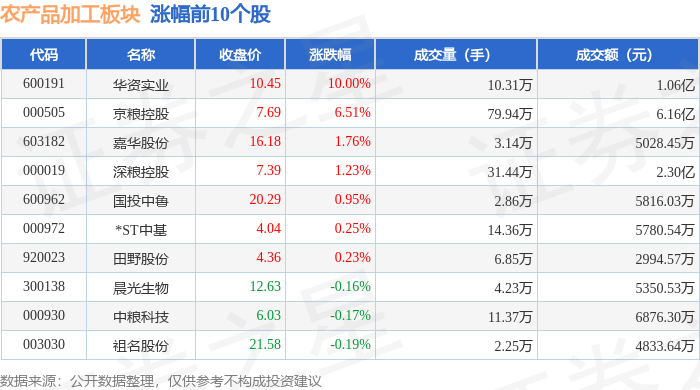
从资金流向上来看,当日农产品加工板块主力资金净流入2399.18万元,游资资金净流出3092.54万元,散 户资金净流入693.36万元。农产品加工板块个股资金流向见下表: 证券之星消息,11月20日农产品加工板块较上一交易日下跌0.71%,*ST佳沃领跌。当日上证指数报收于 3931.05,下跌0.4%。深证成指报收于12980.82,下跌0.76%。农产品加工板块个股涨跌见下表: | 代码 | 名称 | 收盘价 | 涨跌幅 | 成交量(手) | 成交额(元) | | --- | --- | --- | --- | --- | --- | | 600191 | 华资实业 | 10.45 | 10.00% | 10.31万 | 1.06亿 | | 000505 | 京粮控股 | 7.69 | 6.51% | 79.94万 | 6.16亿 | | 603182 | 喜华股份 | 16.18 | 1.76% | 3.14万 | 5028.45万 | | 000019 | 深粮控股 | 7.39 | 1.23% | ﺏ 31.44万 | 2.30亿 | | 600962 | 国投中鲁 | 20.29 | 0.95% ...


索宝蛋白股价连续5天下跌累计跌幅8.35%,国联基金旗下1只基金持2.2万股,浮亏损失4万元
Xin Lang Cai Jing· 2025-11-20 07:27
Core Viewpoint - The stock price of Suobao Protein has been declining for five consecutive days, with a total drop of 8.35% during this period, currently trading at 19.98 CNY per share [1] Company Overview - Suobao Protein Technology Co., Ltd. is located in Ningbo Free Trade Zone, Zhejiang Province, established on October 17, 2003, and listed on December 15, 2023. The company specializes in the research, production, and sales of soybean protein products [1] - The revenue composition of Suobao Protein includes: 32.42% from soybean isolate protein, 20.79% from non-GMO soybean oil, 19.98% from soybean concentrate protein, 17.36% from textured protein, 9.03% from other products, and 0.43% from supplementary products [1] Fund Holdings - Guolian Fund has one fund heavily invested in Suobao Protein. The Guolian Jingsheng One-Year Holding Mixed A Fund (011353) held 22,000 shares in the third quarter, accounting for 0.26% of the fund's net value, ranking as the tenth largest holding. The estimated floating loss today is approximately 7,700 CNY, with a total floating loss of 40,000 CNY during the five-day decline [2] - The Guolian Jingsheng One-Year Holding Mixed A Fund was established on May 14, 2021, with a current size of 144 million CNY. Year-to-date returns are 3.13%, ranking 7,225 out of 8,136 in its category; the one-year return is 5.23%, ranking 6,756 out of 8,055; and the return since inception is 9.07% [2] Fund Manager Information - The fund managers of Guolian Jingsheng One-Year Holding Mixed A Fund are Chen Xinyu, Huo Shunchao, and Ye Tianyang. Chen Xinyu has a tenure of 6 years and 114 days, managing assets totaling 1.211 billion CNY, with the best return of 68.57% and the worst return of -19.21% during his tenure [3] - Huo Shunchao has a tenure of 2 years and 226 days, managing assets of 16.251 billion CNY, with the best return of 30.93% and the worst return of 0.48% [3] - Ye Tianyang has a tenure of 226 days, managing assets of 2.196 billion CNY, with the best return of 2.97% and the worst return of 0.05% [3]
