汽车

Search documents
宝马集团:董事长齐普策随默茨访华 与宁德时代深化可持续发展合作
Zhong Guo Qi Che Bao Wang· 2026-02-27 05:55
Group 1 - BMW Group's Chairman, Zipser, accompanied German Chancellor Merz on a visit to China, highlighting the importance of strengthening Sino-German cooperation in various fields, particularly in the automotive industry [1][3] - During the visit, BMW signed a memorandum of understanding with CATL, focusing on collaborative efforts to reduce carbon footprints in electric vehicle supply chains, marking a significant step in sustainable development and technological innovation [1][3] - The partnership with CATL aims to enhance data exchange, carbon footprint accounting methodologies, and the establishment of a standardized data ecosystem to support long-term industry stability [3][4] Group 2 - Zipser emphasized that China is not only the largest automotive market globally but also a hub for technological innovation, urging companies to establish a strong local presence to remain competitive [4][5] - BMW has invested over 120 billion yuan in its Shenyang production base since 2010, positioning it as a leading center for smart manufacturing and innovation [4][5] - The upcoming launch of the new generation BMW iX3 long-wheelbase model at the Beijing Auto Show in April represents BMW's highest level of localization, tailored to meet Chinese consumer demands [5]




钢铁、芯片与技术未来︱21书评
2 1 Shi Ji Jing Ji Bao Dao· 2026-02-27 05:47
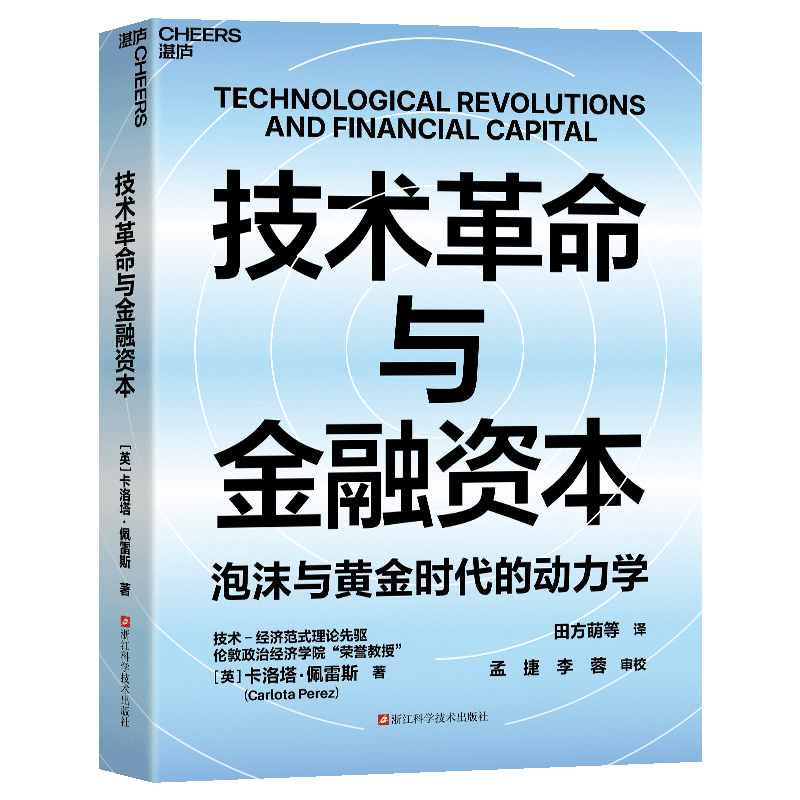
Core Insights - The article discusses the historical context and implications of Carlota Perez's "Technological Revolutions and Financial Capital," emphasizing the cyclical nature of capitalism driven by technological revolutions [1][2] Group 1: Technological Revolutions - The author identifies five technological revolutions that have occurred since the early 21st century: the Industrial Revolution, the Steam and Railway Era, the Steel, Electricity, and Heavy Industry Era, the Oil, Automobile, and Mass Production Era, and the Information and Communication Era [1] - The current technological environment is influenced by the AI revolution, open-source innovation, distributed finance, and global geopolitical competition, which may alter the historical conditions of the "technological-economic paradigm" [2] Group 2: Economic Implications - The article highlights that significant events in the global economy since the book's original publication include the ongoing breakthroughs in the information revolution, the irreversible threat of climate change, and China's rise as the world's second-largest economy [4] - China has leveraged both mature technologies from the fourth technological revolution and emerging technologies from the fifth to achieve substantial economic growth, paralleling the historical achievements of the U.S. and Germany during the third technological revolution [5] Group 3: Institutional Changes - The article emphasizes the necessity of major institutional reforms to facilitate innovation and investment, address social inequality, and achieve a green transition before climate change becomes irreversible [8] - Historical examples illustrate how previous technological revolutions required significant institutional changes to adapt to new economic realities, suggesting that similar reforms are needed today [6][8] Group 4: Challenges Ahead - The article notes that despite the potential for a new golden age of the information revolution, significant changes that could have occurred after the 2000 tech bubble and the 2008 financial crisis did not materialize, leading to continued speculative behavior in finance rather than long-term investments in the real economy [9] - The book aims to provide insights into the relationship between technological, economic, and political changes, rather than making predictions, encouraging readers to learn from historical patterns [9]
韩国综合股价指数抹去跌幅 现代汽车股价大涨
Xin Lang Cai Jing· 2026-02-27 05:37
受三星电子反弹及现代汽车创纪录大涨推动,韩国KOSPI指数抹去此前最多2.4%的跌幅。现代汽车宣布 将投资9万亿韩元(约63亿美元)用于人工智能与机器人中心建设后,股价一度大涨11%。韩美半导体 股价飙升最多19%,此前当地媒体报道该公司推出新型键合机,并向全球存储芯片客户供货。受英伟达 表现平淡、拖累华尔街市场情绪影响,芯片股早盘走弱,KOSPI指数一度下跌。KOSPI指数今年已大涨 50%,为全球表现最佳股指。外资为KOSPI成分股净卖出方,本土机构与散户投资者则在买入。小盘股 Kosdaq指数上涨1%。 责任编辑:王永生 受三星电子反弹及现代汽车创纪录大涨推动,韩国KOSPI指数抹去此前最多2.4%的跌幅。现代汽车宣布 将投资9万亿韩元(约63亿美元)用于人工智能与机器人中心建设后,股价一度大涨11%。韩美半导体 股价飙升最多19%,此前当地媒体报道该公司推出新型键合机,并向全球存储芯片客户供货。受英伟达 表现平淡、拖累华尔街市场情绪影响,芯片股早盘走弱,KOSPI指数一度下跌。KOSPI指数今年已大涨 50%,为全球表现最佳股指。外资为KOSPI成分股净卖出方,本土机构与散户投资者则在买入。小盘股 K ...
访华官宣不到24小时!美底牌就被撕烂,英媒:中国发现了美国弱点
Sou Hu Cai Jing· 2026-02-27 05:32
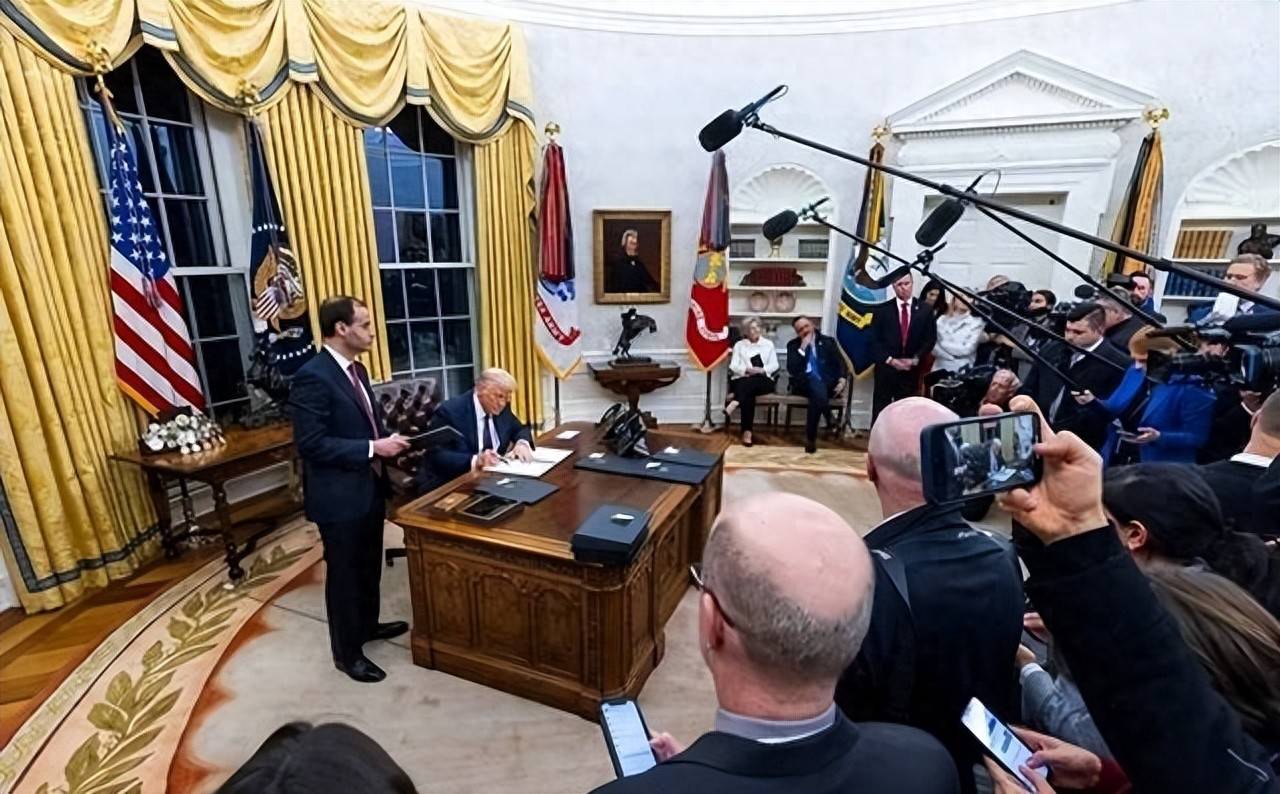
Group 1 - Trump's planned visit to Beijing in April aims to address long-standing trade disputes through direct dialogue, focusing on trade balance, agriculture, and market access commitments from China [1] - The global market reacted slightly positively to the news, with stock markets showing minor gains as there are expectations for progress in trade negotiations [1] - The visit is expected to include high-level meetings addressing core issues such as energy and supply chains, amidst ongoing trade tensions characterized by tariffs and export restrictions [1] Group 2 - The U.S. Supreme Court ruled that tariffs imposed by the Trump administration under emergency economic powers were illegal, stating that such powers are meant for temporary measures, not long-term taxation [3] - The ruling has prompted importers to prepare to reclaim substantial amounts paid in tariffs, indicating a significant financial impact on businesses [3] - The court emphasized that the purpose of the tariffs was to force changes in China's trade practices, which did not align with the legal framework for emergency actions [3] Group 3 - Following the court's decision, Trump expressed dissatisfaction, claiming it undermined national security plans, leading to urgent meetings among White House lawyers to assess the ruling's implications [5] - The automotive and technology sectors are particularly affected, as companies report increased costs and supply chain disruptions due to tariffs [5] - Trump's negotiation strategy is now under reevaluation, as the tariffs that were once leverage have lost their effectiveness [5] Group 4 - British media highlighted that U.S. companies are reluctant to leave the Chinese market, which is a significant revenue source, and warned that restrictions could backfire on U.S. interests [6] - The U.S. dependency on China for rare earth elements poses a risk, particularly for military aircraft production, which relies heavily on these materials [6] - The combination of debt issues and trade deficits limits Trump's ability to act unilaterally in trade negotiations [6] Group 5 - The internal divisions within the U.S. regarding trade policy are becoming more pronounced, with European leaders pursuing business agreements with China, indicating a shift in focus towards practical business rather than U.S.-led containment efforts [8] - U.S. farmers are concerned about the potential impact of export disruptions on their political support base, especially with upcoming midterm elections [8] - China's response to U.S. weaknesses has been measured, leveraging debt and supply chain dependencies to alleviate pressure [8] Group 6 - Trump's executive order aimed at restoring negotiation leverage through global tariffs is seen as ineffective compared to previous tariff policies, as it requires congressional approval and has limited duration [10] - Many industries express that they cannot withdraw from China due to the market's importance for their revenues, particularly in the semiconductor sector [10] - The production of military aircraft is significantly hindered by China's control over rare earth materials, leading to production delays [10] Group 7 - Concerns over export stagnation among U.S. farmers could affect electoral outcomes, highlighting the political ramifications of trade policies [12] - The U.S. is facing increasing pressure from European companies that have already signed trade agreements with China, indicating a loosening of the U.S. containment strategy [12] - Trump's attempts to negotiate compromises have been met with skepticism from Congress, as Beijing perceives insufficient U.S. sincerity [12] Group 8 - The changing international landscape suggests that U.S. unilateralism is becoming untenable, with Trump's visit to China reflecting a recognition of this reality [14] - The combination of debt, electoral pressures, and supply chain dependencies is forcing the U.S. to engage in equal dialogue rather than unilateral actions [14] - The Supreme Court's ruling effectively nullified the tariff strategy, catching Trump off guard just before his planned visit [14] Group 9 - British media noted that China has effectively identified U.S. vulnerabilities, including high debt and reliance on supply chains, which limits Washington's ability to exert pressure [15] - China's position remains firm against unilateral tariffs, advocating for mutually beneficial cooperation [15] - The shift in strategy towards non-tariff cooperation by the Trump administration reflects a significant reduction in negotiating power [15]
首尔股市综合股价指数止跌回升,扭转了早盘2.43%的跌幅。现代汽车延续涨势,涨近...
Xin Lang Cai Jing· 2026-02-27 05:24
来源:滚动播报 首尔股市综合股价指数止跌回升,扭转了早盘2.43%的跌幅。现代汽车延续涨势,涨近8%。 ...
魅族手机业务“停摆”:转型与未来展望
Jing Ji Guan Cha Wang· 2026-02-27 05:05
Group 1 - The core strategy of Meizu Technology is shifting from self-research hardware projects for domestic mobile phones to collaborating with third-party hardware partners, while existing business operations remain unaffected [1] - The domestic smartphone market is highly competitive, leading many brands, including Meizu, to consider strategic contraction. Despite challenges, Meizu aims to maintain normal iterations of its smartphones [1] - The continuous surge in memory prices has made the commercialization of new products increasingly difficult, with DRAM chip prices soaring by 75% year-on-year in Q4 2025, causing storage costs for low-end models to rise from 5% to 20% [1] Group 2 - Meizu's decline is attributed to multiple factors, including slow product innovation, ineffective marketing strategies, and deficiencies in supply chain management and channel development [2] - Although Meizu's mobile phone business is set to exit the market, its FlymeAuto vehicle machine business will operate independently, gaining traction with car manufacturers like Geely's Zeekr [2]
报告: 集成电路工程师年薪超40万 新一线城市薪资加快追赶一线城市
Di Yi Cai Jing· 2026-02-27 05:03
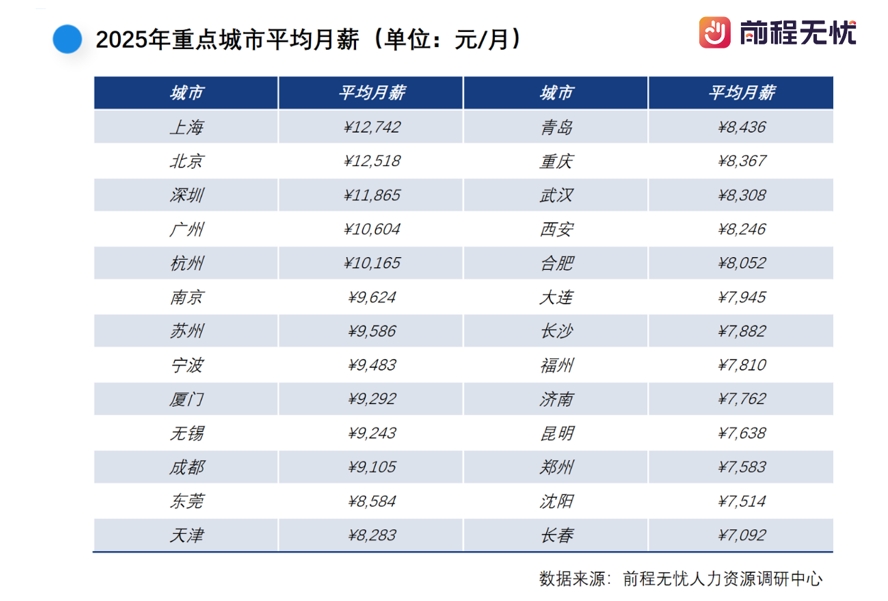
Core Insights - The report highlights the evolving salary landscape in China, indicating that compensation data serves as a barometer for industry health and policy direction amid global economic shifts and technological advancements [1] Group 1: Salary Trends in Major Cities - First-tier cities remain the highest salary hubs, with Shanghai and Beijing leading at 12,742 CNY/month and 12,518 CNY/month respectively, supported by high-tech industries and talent density [2] - New first-tier cities like Hangzhou (10,165 CNY/month) and Nanjing (9,624 CNY/month) are rapidly closing the salary gap with Guangzhou, indicating a potential shift towards becoming "high cost-performance employment centers" [2] - Salary disparities are smaller among grassroots employees across regions, while high-paying mid-to-senior level positions are concentrated in first-tier cities, reflecting a trend of high-end talent migration to Beijing, Shanghai, and Shenzhen [2] Group 2: High-Tech and Integrated Circuit Industry Salaries - The high-tech sector leads with a salary increase of 4.9% in 2025, driven by government support for AI and semiconductor industries, creating a "necessity" for core technical talent [3] - Integrated circuit design engineers earn an average annual salary of 400,591 CNY in first-tier cities, while cloud computing architects approach 491,253 CNY, highlighting the value of these roles in the market [3] - Traditional "blue-collar" roles are transitioning to "digital craftsmen," with automotive algorithm engineers earning 384,258 CNY in first-tier cities, reflecting the shift towards smart vehicles [3] Group 3: Manufacturing and Consumer Goods Salary Adjustments - The manufacturing sector's salary increase is expected to slightly decline to 4.0% in 2026, indicating a shift towards enhancing labor efficiency to mitigate cost pressures [4] - The consumer goods sector is experiencing a more conservative salary increase of 3.7% in 2026, as companies aim to retain core talent amid profitability challenges [5] - Brand managers in the consumer goods industry earn an average of 373,094 CNY in first-tier cities, while e-commerce and live-streaming operations are becoming essential, with salaries around 146,530 CNY and 142,865 CNY respectively [5] Group 4: Future Salary Trends - The salary trends from 2025 to 2026 suggest a shift from "general increases" to "targeted incentives," emphasizing the value of cross-disciplinary, digital, and business-driving talent as core assets in a competitive landscape [6]
报告: 集成电路工程师年薪超40万, 新一线城市薪资加快追赶一线城市
Di Yi Cai Jing· 2026-02-27 04:57
Group 1 - The core point of the article highlights that first-tier cities remain the highest salary centers in China, with significant salary advantages over other regions, particularly in high-tech and advanced industries [1][2] - In 2025, the average monthly salary in Shanghai is ¥12,742 and in Beijing is ¥12,518, indicating strong support from high-tech industries and a dense population of skilled talent [2][3] - New first-tier cities like Hangzhou and Nanjing are rapidly catching up in salary levels, with Hangzhou at ¥10,165 and Nanjing at ¥9,624, suggesting a potential shift towards becoming "high cost-performance employment centers" [2][3] Group 2 - The high-tech industry leads with a salary increase of 4.9% in 2025, driven by competition for core technical talent in key areas like artificial intelligence and semiconductors [4] - Integrated circuit design engineers in first-tier cities earn an average annual salary of ¥400,591, while cloud computing architects approach ¥491,253, reflecting the high value of these positions [4][6] - Traditional "blue-collar" roles are evolving into "digital craftsmen," with automotive algorithm engineers earning up to ¥384,258 in first-tier cities, highlighting the shift towards smart vehicles [4][5] Group 3 - The consumer goods sector is experiencing a slight salary increase, with a forecasted adjustment of 3.7% in 2026, as companies aim to retain core talent amid profitability pressures [7][8] - Brand managers in the consumer goods industry earn an average annual salary of ¥373,094 in first-tier cities, emphasizing the importance of brand asset development [8] - E-commerce and live-streaming operation roles are becoming essential, with e-commerce operation specialists earning approximately ¥146,530 and live-streaming operation specialists earning around ¥142,865 in first-tier cities [8]
领克回应车机语音误关大灯:已第一时间优化控制方案
Bei Jing Shang Bao· 2026-02-27 04:48
北京商报讯(记者 蔺雨葳)2月26日,针对领克Z20车辆行驶中语音误操作控制关闭大灯的情况,领克 汽车销售有限公司副总经理穆军公开回应称,"我们第一时间完成了语音控制优化方案,现已通过云端 推送更新,后续在行驶状态下只能通过手动控制大灯关闭,请大家放心。感谢用户的反馈与监督,对此 带来的困扰深表歉意。" 据媒体此前报道,2月25日凌晨,一名男子在驾驶领克Z20在高速行驶时,试图通过语音指令关闭车 内"阅读灯",结果却触发语音助手错误操作,导致车辆大灯被熄灭,车主大喊"打开车灯"无果,最终发 生车祸。 ...
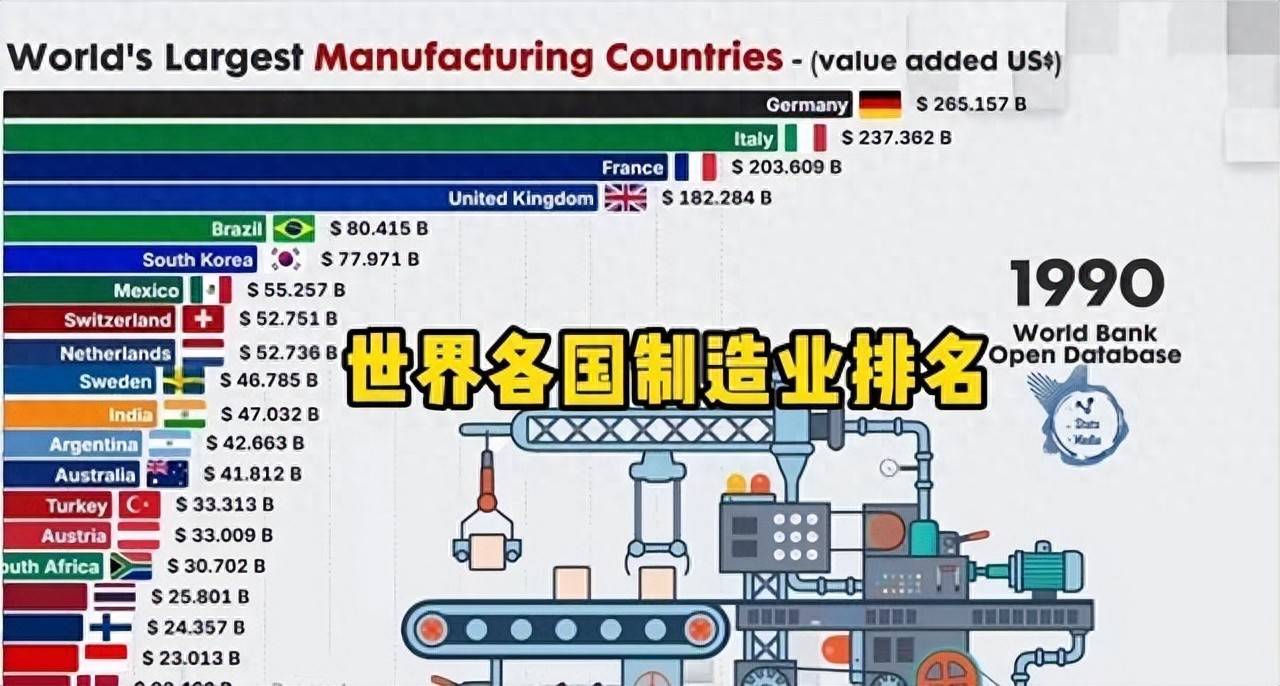
全球制造四分天下:美国、欧盟各占17%,日韩占8%,中国呢?
Sou Hu Cai Jing· 2026-02-27 04:33
Group 1: Historical Context of Manufacturing - Europe, once the center of global economy due to its industrial revolution, has seen a decline in its manufacturing contributions due to rising labor costs, aging population, and a shift in workforce preferences [1] - Japan's manufacturing sector faced significant challenges after the 1985 agreement led to a strong yen, resulting in a loss of export competitiveness and a prolonged economic downturn [3] - The global manufacturing landscape has shifted eastward, with emerging markets rising and developed countries' shares declining, indicating a new normal in global economic dynamics [5] Group 2: Current Manufacturing Landscape - In 2024, global manufacturing output shows China leading with 27.7%, followed by the US at 17.3%, Japan at 5.15%, and Korea at 2.47%, while the EU collectively holds about 17% [5] - North America maintains stability in manufacturing, with the US contributing approximately $2.91 trillion, over 15% of global output, particularly excelling in high-end sectors like medical devices and semiconductors [6] - The EU's manufacturing output totals $2.8 trillion, with Germany as the leader, but the average contribution per member state is only 0.6%, highlighting challenges in competitiveness [8] Group 3: Competitive Strengths of Japan and Korea - Japan, despite its smaller scale, retains competitiveness in niche markets, with companies like Toyota and Fanuc leading in production models and robotics [10] - Korea has established a strong presence in semiconductors, automotive, and shipbuilding, with companies like Samsung and Hyundai ranking among the top globally [10] Group 4: China's Manufacturing Dominance - China's manufacturing output reached $4.66 trillion in 2024, surpassing the combined totals of the US, Japan, and Germany, showcasing its extensive industrial capabilities across all sectors [13] - China leads in over 220 industrial products, with significant advancements in high-tech areas such as electric vehicles, solar components, and lithium batteries, indicating a robust manufacturing ecosystem [13] - The country's manufacturing sector is characterized by resilience and comprehensive coverage, making it a pivotal player in global trade and supply chains [15]